What This Style Is and Who It’s For
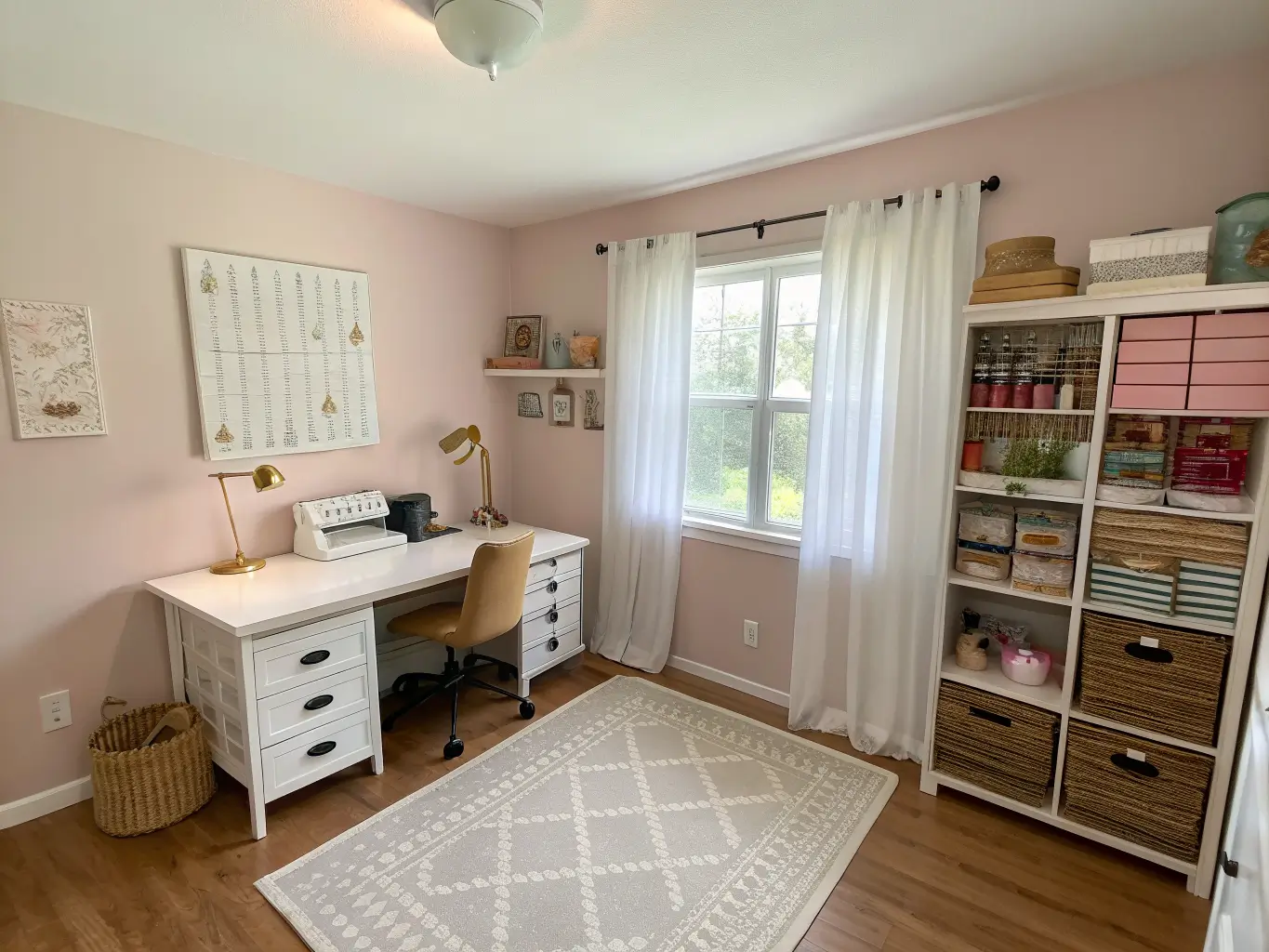
A pink craft room can go two ways. It can look like a grown woman’s actual workspace — one where real projects get finished — or it can tip into cotton-candy-bedroom territory that nobody over age nine wants to sit in for four hours. I’ve had my craft room somewhere in the middle more times than I’d like to admit. The version I have now took two failed paint colors and one very regrettable all-pink shelving unit to get right.
Here’s what I’ve learned actually works.
A pink craft room, done well, is feminine modern with an organized, almost glam-lite edge. Think blush walls, white shelving, a little gold hardware, and enough black or white contrast that it doesn’t read as a nursery. It’s not shabby chic and it’s not Barbie’s dream house — it’s a real workspace that happens to be pink.
This style is perfect for:
– Scrapbookers and Cricut users who need visible, sorted supply storage
– Sewists who want a dedicated cutting and pinning surface
– DIY hobbyists converting a spare bedroom or office nook into a creative zone
– Anyone who works better in a space that feels like theirs, not a beige rental afterthought
It works in a small guest room just as well as a dedicated studio. Most of the best examples I’ve seen online — and my own room — are converted spare bedrooms, not custom-built studios. You don’t need square footage. You need a plan.
Setup Time, Cost, and Skill Level
Be honest with yourself about scope before you start buying bins.
– A basic refresh (new paint, framed prints, storage bins, desk accessories) takes about one weekend and runs $150–$600.
– A fuller makeover — new shelving, a desk, wallpaper, lighting — takes 2–4 weekends spread out and costs $600–$2,500+, depending on whether you’re buying furniture or repurposing what you have.
– Skill level is beginner-to-intermediate for styling and organizing. It moves to intermediate if you’re painting a full room, hanging wallpaper, or building custom shelving.
– This is a year-round style, not a seasonal one. You’re not swapping it out every few months — you’re building a permanent creative space and tweaking around the edges.
The Must-Have Pieces That Make It Work
Pink wall color or accent wall.
This is the single biggest decision in the room. I painted my first craft room a hot pink that looked incredible on the swatch and gave me a headache by week two. I repainted in a soft blush — closer to Sherwin-Williams’ Impatiens Petal — and the whole room calmed down without losing personality. Go lighter than you think you want. You can always add saturated pink through accessories, but you can’t un-paint a wall without redoing the whole weekend.
White shelving or modular storage.
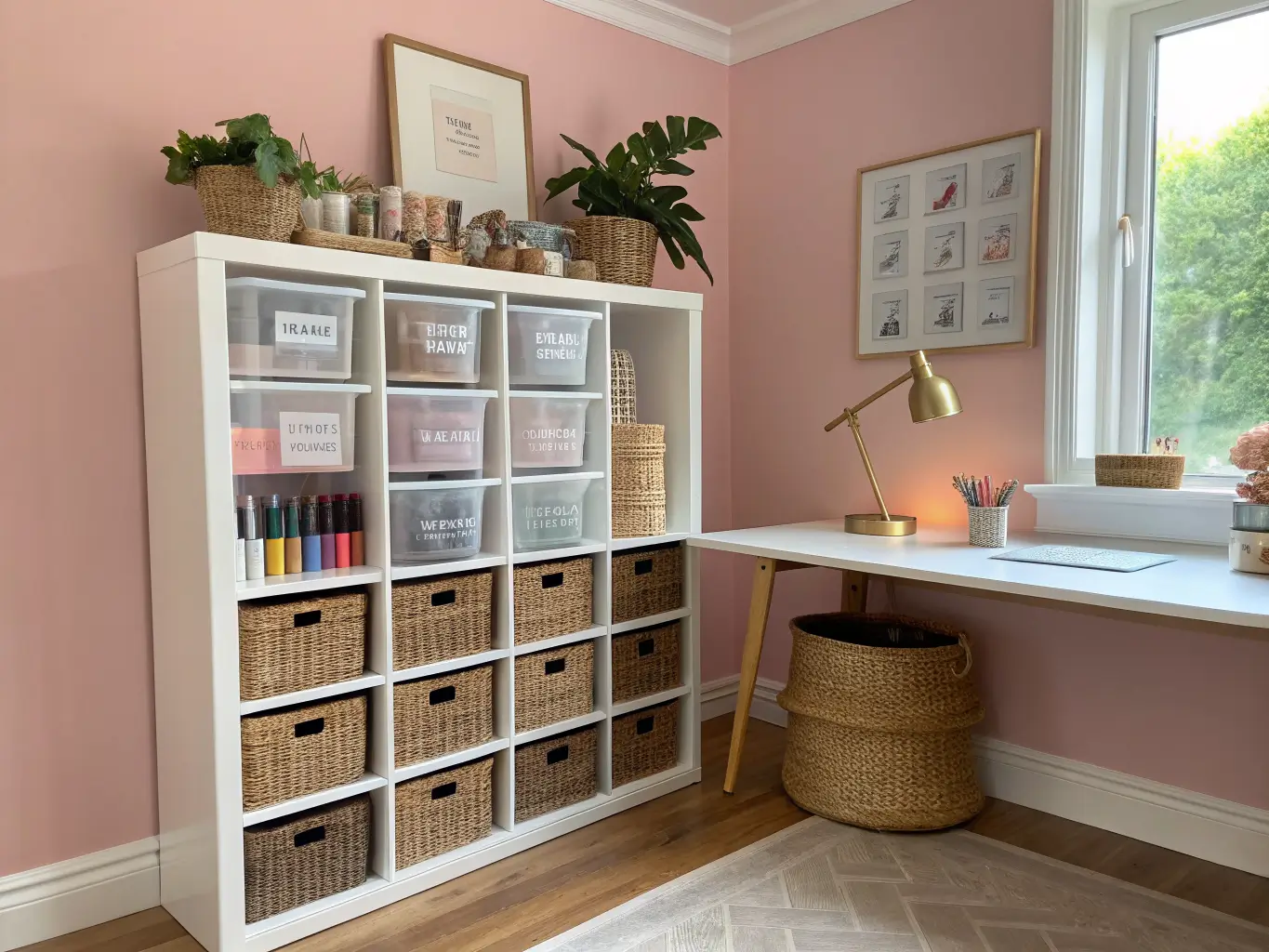
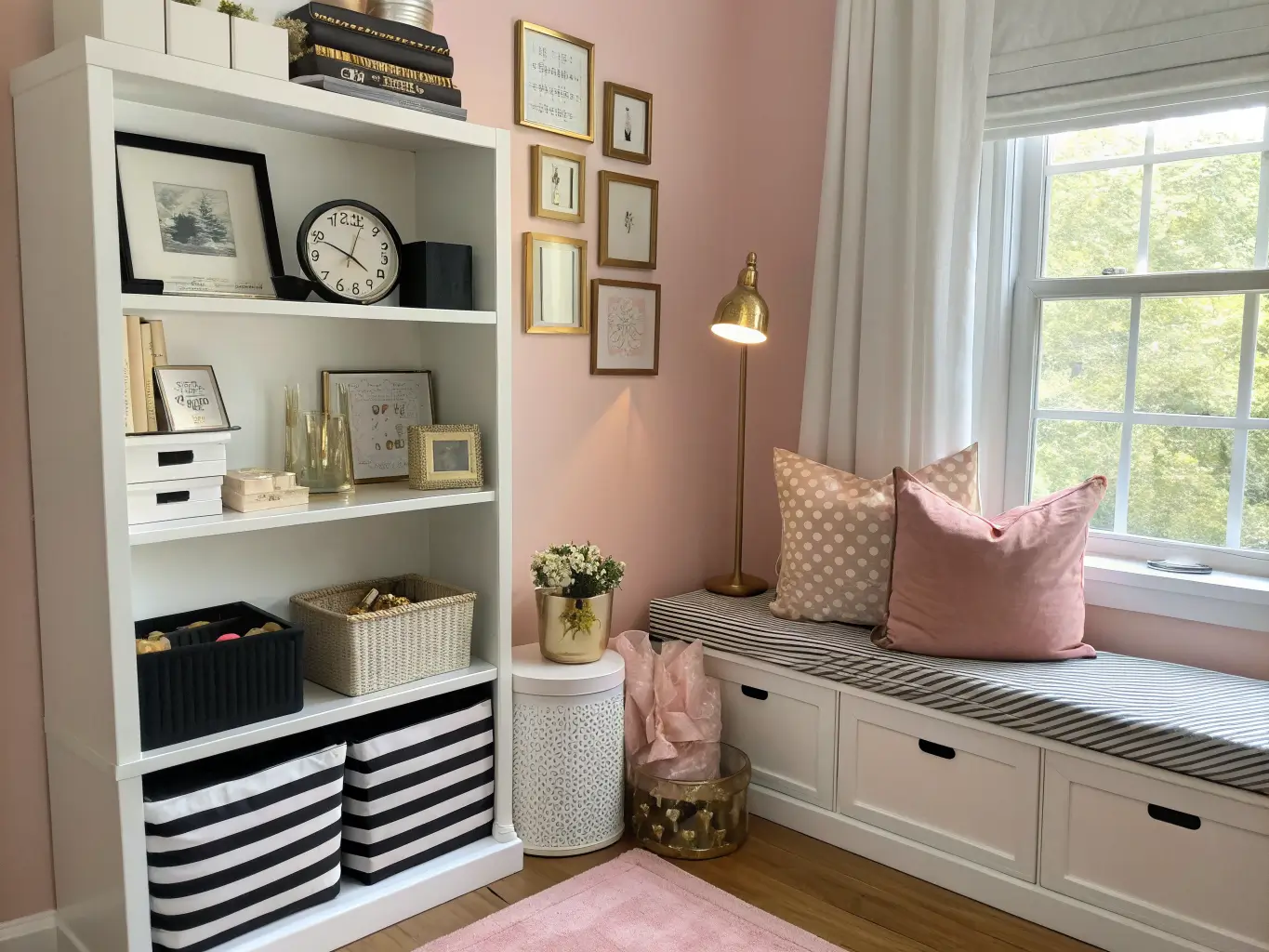
This is what keeps the room from feeling like a marshmallow. White shelving against a pink wall gives your eye somewhere to rest, and it makes your supplies — which are often colorful themselves — the visual focus instead of competing with the walls.
A dedicated worktable.
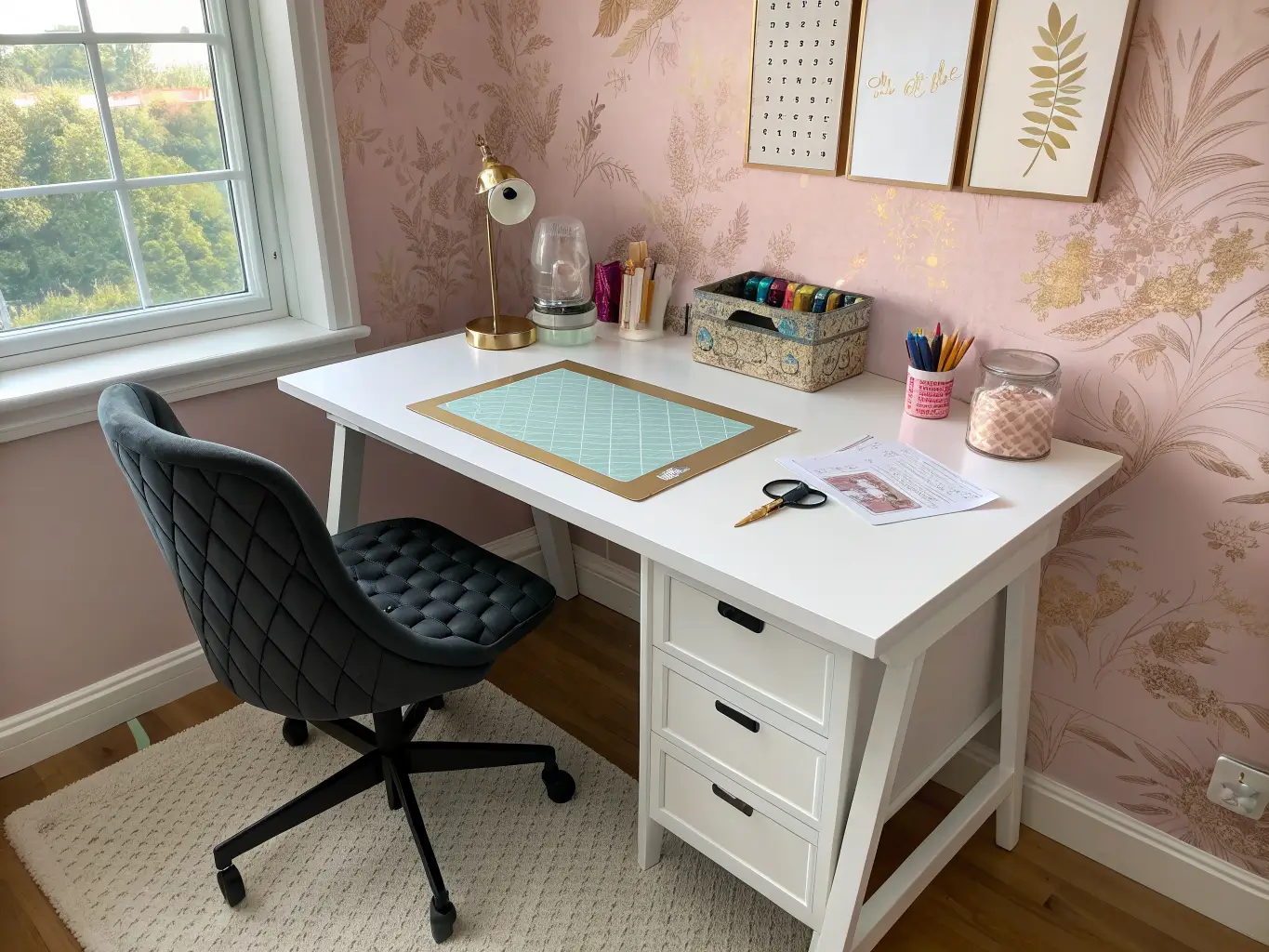
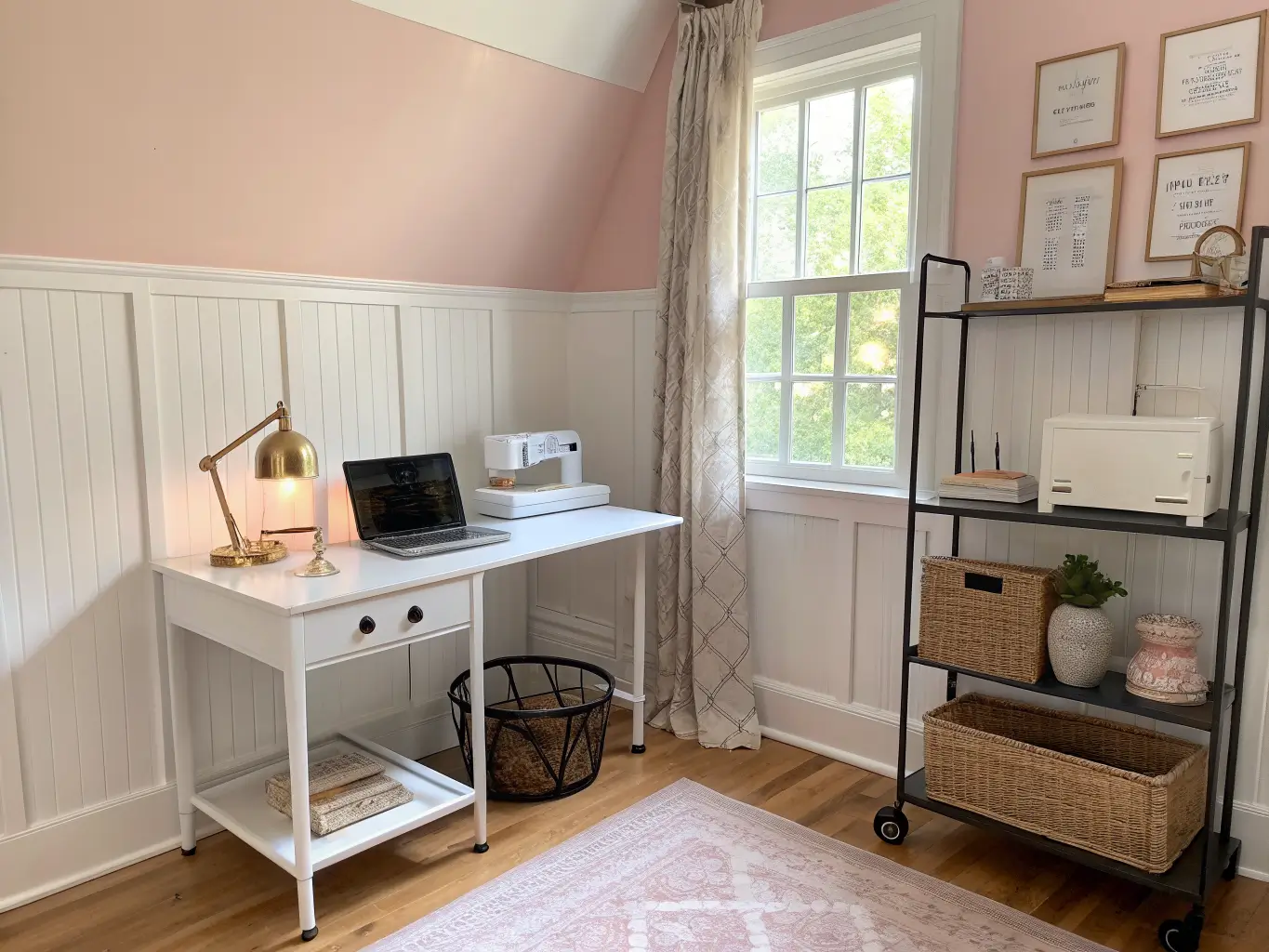
White, light wood, or glass-top, doesn’t matter much, but it needs to be big enough to cut and assemble on. I use a 5-foot IKEA desk with a laminate top because Mod Podge and rotary cutters don’t scare me anymore. Don’t buy a precious antique desk for this room. You will regret it the first time you spill glitter glue on it.
Drawer units for small supplies.
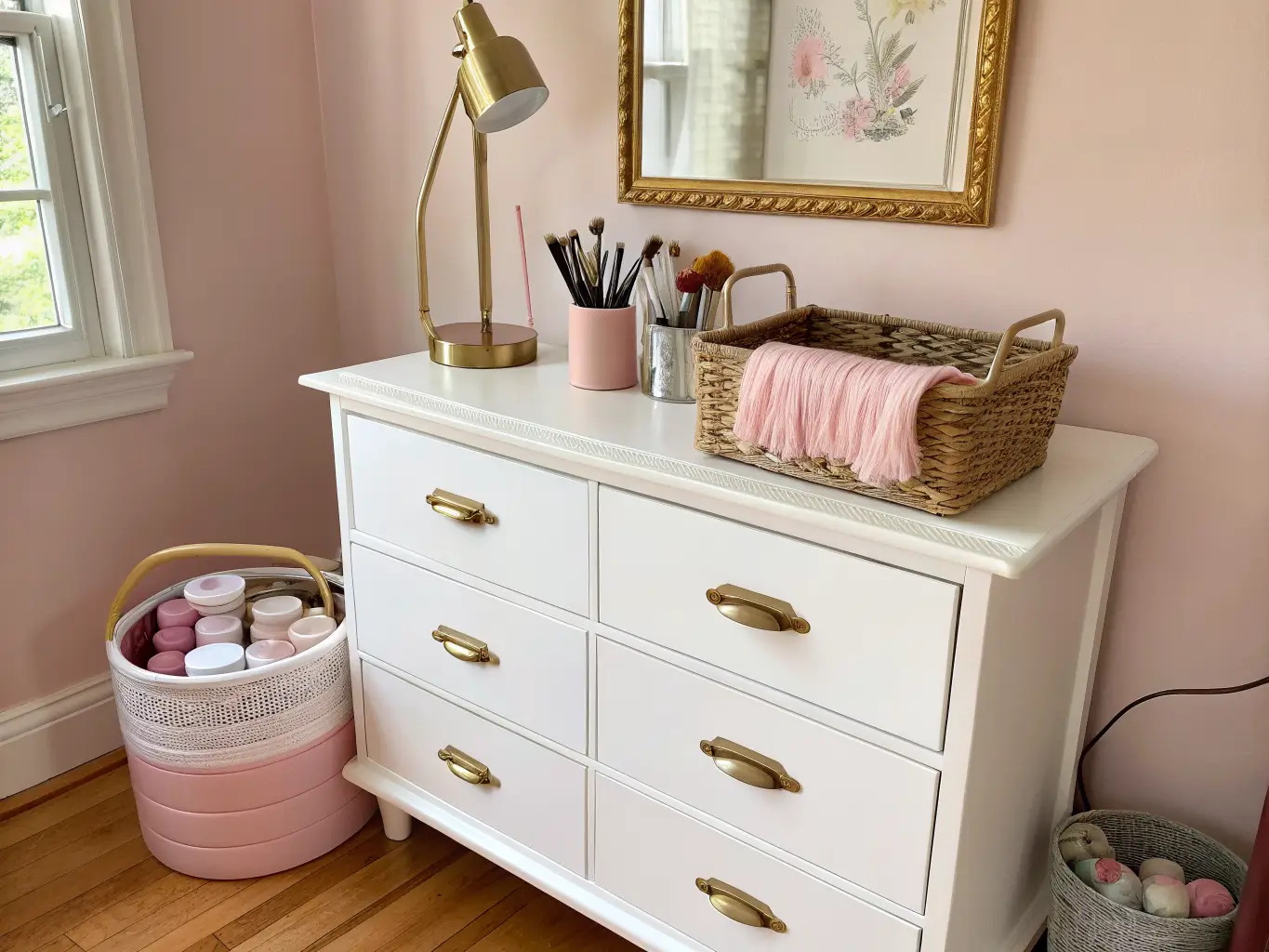
Paints, adhesives, brads, ribbon spools — all the tiny stuff needs somewhere that isn’t a junk pile on the table. I repurposed an old dresser from a bedroom set I was getting rid of and it’s done more work in this room than anything I bought new.
Coordinating contrast accessories.
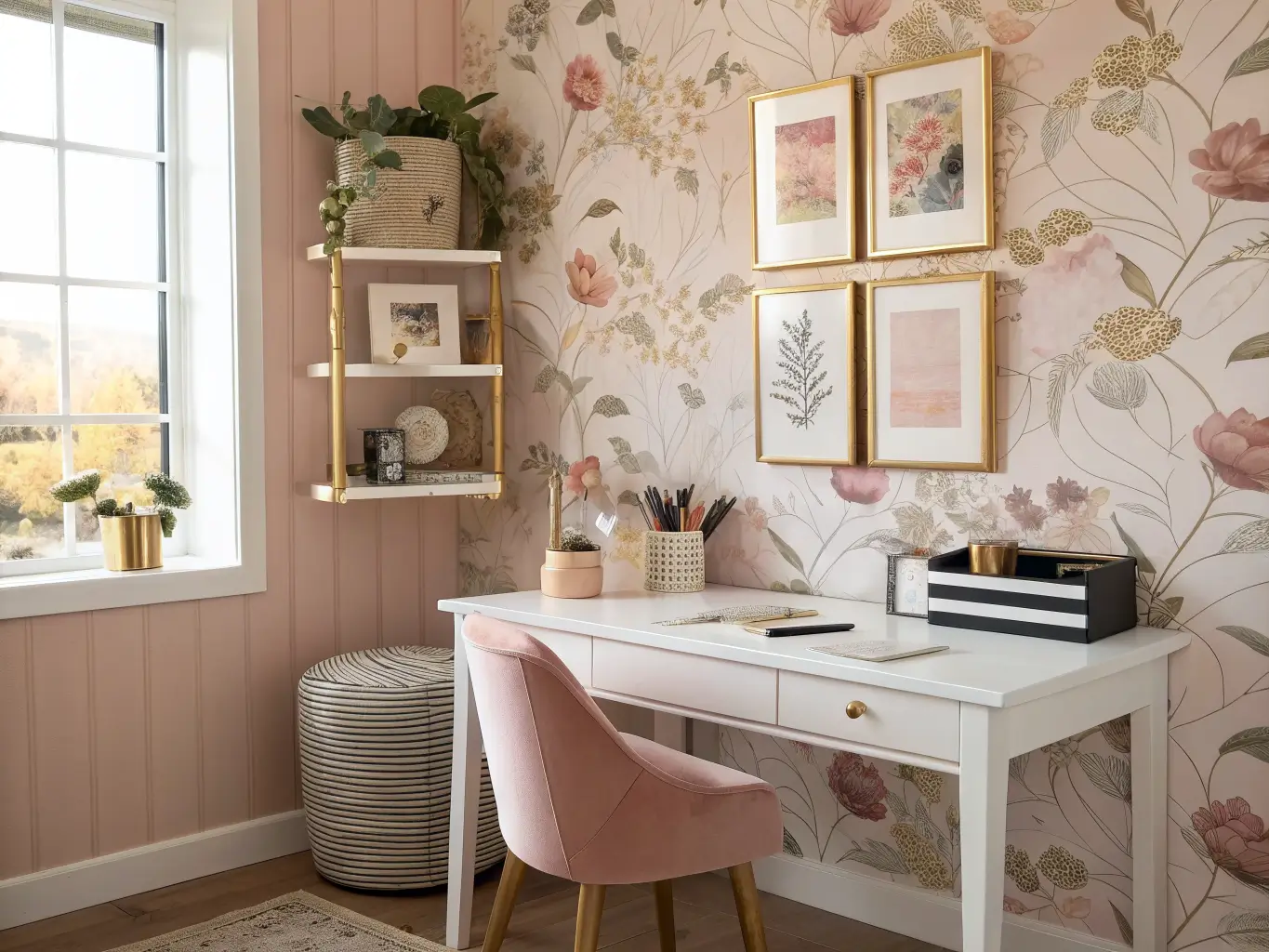
Frames, bins, a desk lamp, a pinboard — pick these in white, black, or gold so they tie the room together instead of adding another shade of pink to keep track of.
A display or gallery wall.
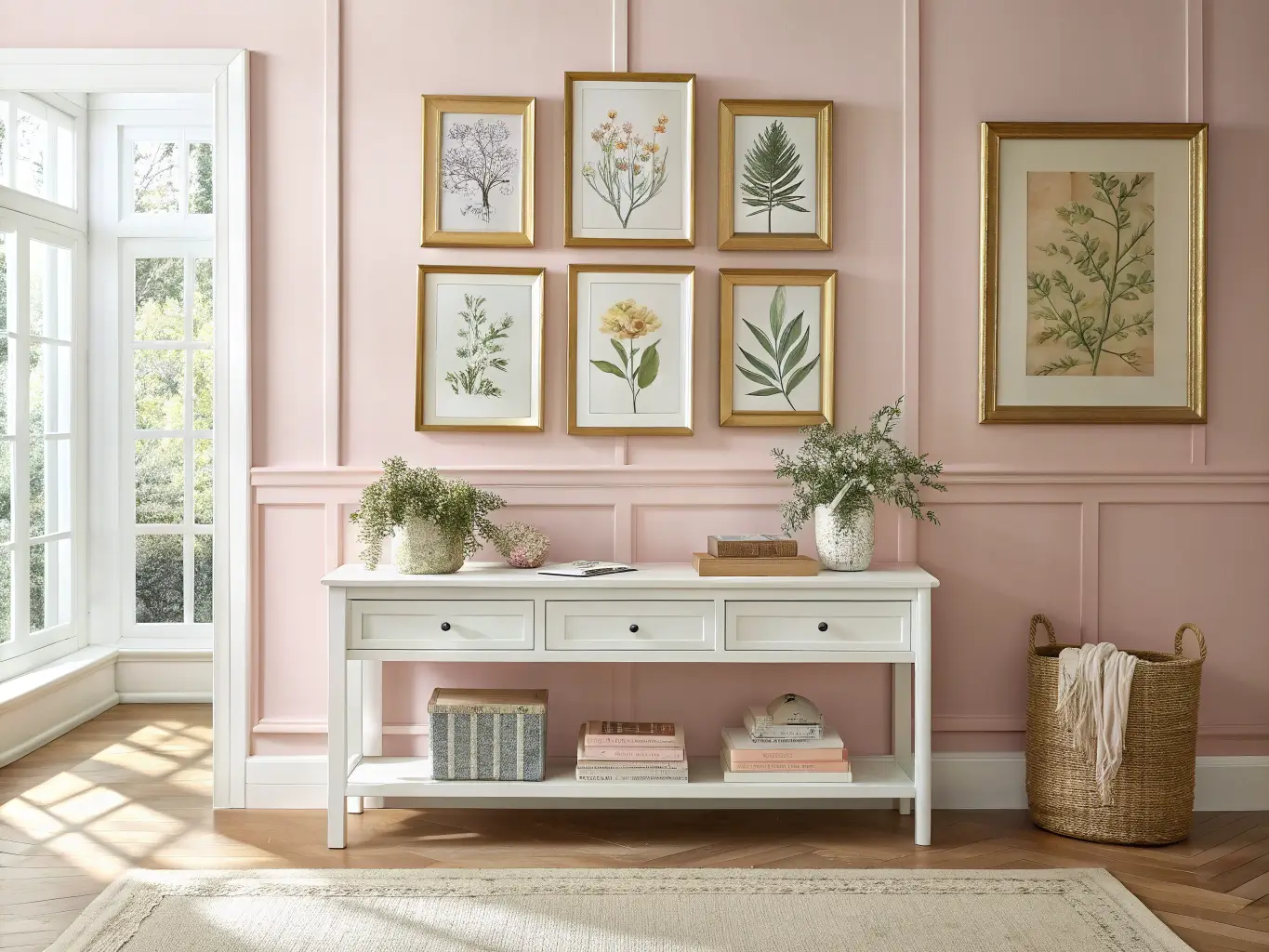
Framed prints, printable art, even a framed piece of pretty scrapbook paper, add personality without eating into your work surface. This is the easiest, cheapest way to make the room feel finished.
Optional Upgrades Worth Considering
– Gold or rose-gold hardware on drawer pulls, frames, or a desk lamp — softens the room without adding another color
– Peel-and-stick wallpaper on one wall if you want pattern without repainting later
– String lights or a warm-toned lamp for evening crafting sessions — cool white LEDs make a pink room look clinical, warm bulbs make it feel intentional
– A plant or two — a small pothos or a bundle of dried pampas grass breaks up the sweetness with actual texture
– Multiple pink tones — pale blush walls, a deeper rose desk chair, maybe a fuchsia throw pillow — layering shades adds depth that one flat pink can’t
– A pastel accent — a soft blue mug, a yellow storage bin — keeps the room from reading as monochromatic pink
How to Put the Room Together
Balance pink with real neutrals.
White, cream, and light wood aren’t filler — they’re doing the heavy lifting of keeping the room bright. A room that’s 80% pink starts to feel smaller than it is, even in daylight.
Use black-and-white contrast on purpose.
A black desk chair, black frame edges, a black-and-white striped bin — these sharpen a pink palette instantly. Without some hard contrast, blush and blush and more blush just blurs together.
Pick one focal wall.
Mine is the wall behind my desk — wallpapered in a small floral print, with three framed prints layered on top once the paper went up. Everything else in the room is quieter so that wall gets to be the statement.
Layer your textures.
Acrylic organizers are glossy. Painted wood furniture is matte. A woven basket is rough. A gold lamp is metallic. Mixing these keeps a pink room from looking like a flat Pinterest board — it’s the difference between a room that photographs well and one that actually feels good to sit in for three hours.
Keep supplies visible but curated.
This isn’t a closet. Open shelving with labeled bins, clear jars of buttons and ribbon, a pegboard for scissors and tape — all of it should look like it belongs there, not like you’re mid-move.
Setting It Up Room by Room
1. Clear everything out first. Sort supplies by category before you touch paint or furniture. You cannot style around a pile.
2. Decide the room’s real job — craft room, office, or both. This changes how much table space versus storage you need. A hybrid room needs a desk that can hold a laptop and a cutting mat without you constantly relocating things.
3. Paint before furniture goes in. Always. I’ve tried painting around furniture to “save time” and ended up taping off a dresser for two hours, which saved nothing.
4. Place the big pieces first — shelving unit, desk, drawer units — then build the smaller layers around them.
5. Style the desktop last, with just a few functional-pretty items: a scissors cup, a small tray for daily-use tools, one or two labeled bins.
6. Add the art and metallics at the end to sharpen the whole look once the bones are in place.
Mistakes I’ve Made So You Don’t Have To
– One flat pink tone everywhere. My first attempt used the same blush on the walls, the chair, and the curtains. It looked like a hospital recovery room. Layer at least two or three shades.
– Too much pink, not enough breathing room. If every surface is pink, the room actually feels smaller and busier, not softer.
– Pretty over functional. I bought decorative baskets before I bought anything that actually organized my paper stash by size. Storage function comes before decor every time — figure out where the ribbon and the cardstock live before you buy a single frame.
– No neutral break. Skip the white or black accents and the whole room turns cloyingly sweet within a week of living in it.
– Buying decor before finalizing your layout. Especially in a small room — measure your desk and shelving footprint first, then shop for what fits the leftover wall space.
Keeping the Room Feeling Fresh, Not Cluttered
Stick to a tight palette: one pink family, one neutral base, one accent color. That’s it. When I want to change something up, I rotate two or three display items at a time — swap the throw pillow, change out one framed print — rather than redoing the whole shelf. It keeps the room feeling curated instead of like it’s constantly mid-renovation.
For seasonal refreshes without touching paint:
– Swap in a pink gingham or floral pillow cover for spring
– Add a new printable art piece in a frame you already own
– Change the rug if the current one’s looking tired
– Repurpose an old drawer or wooden crate as a new storage bin instead of buying new
And if you want to evolve the whole look over time without starting from zero, there are a few directions that work well built on a pink base: pink + black for something more modern and graphic, blush + gold for a softer glam feel, or pink + white for something closer to Scandinavian minimalism. All three use the same bones — just shift your accent color and swap a few textiles.
The room doesn’t need to be finished in one weekend, and it definitely doesn’t need to be one shade of pink to feel cohesive. Mine took about four months of small adjustments before it actually felt done. Give yourself the same room to get it wrong a couple of times.
For another angle on this, my craft room decor guide covers the same space from a different starting point.