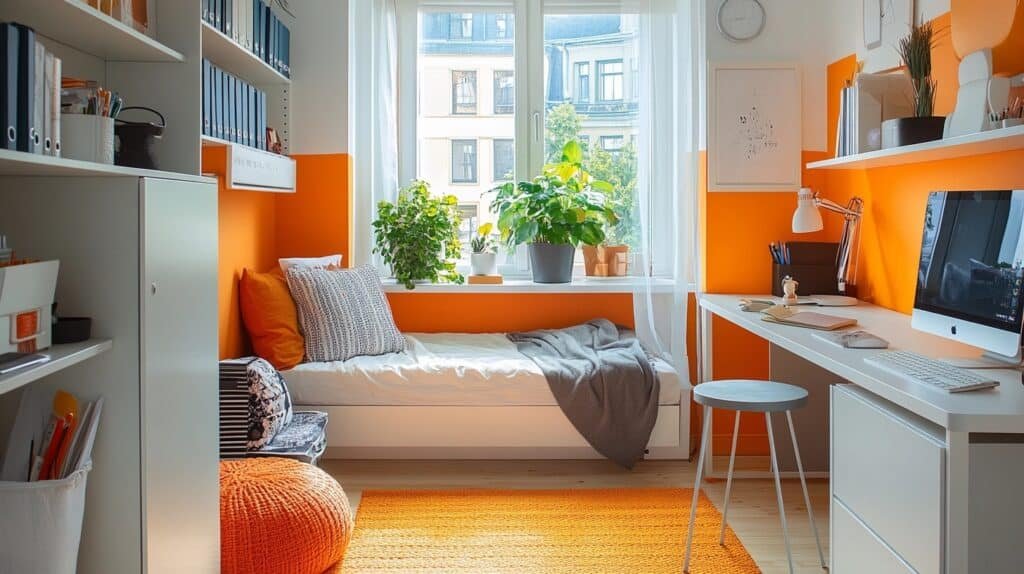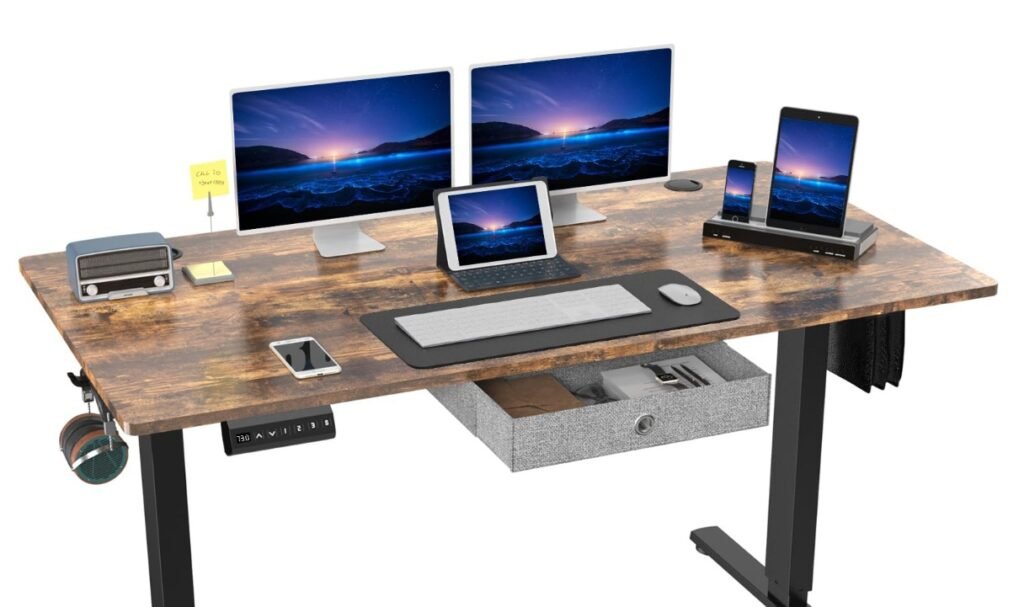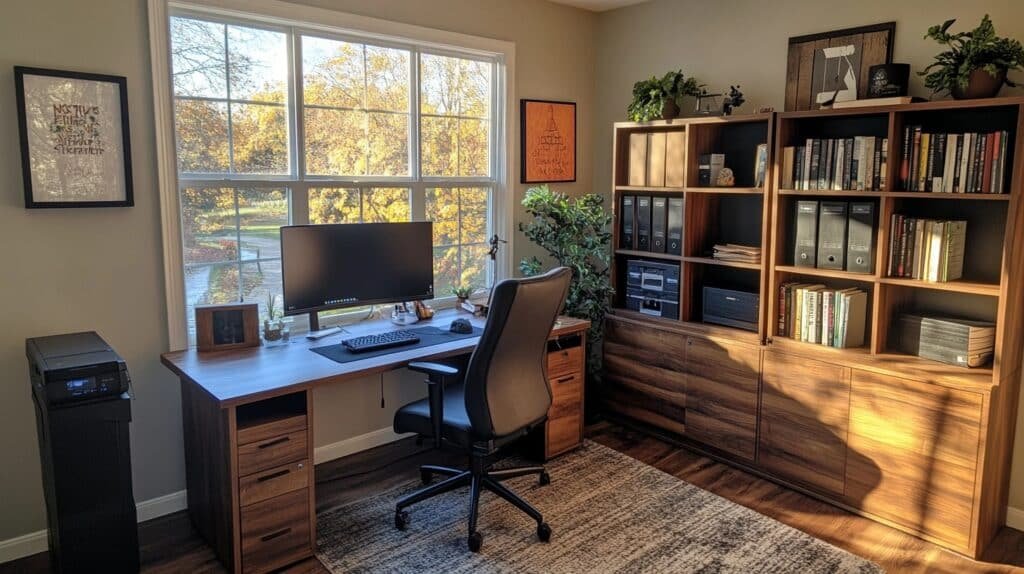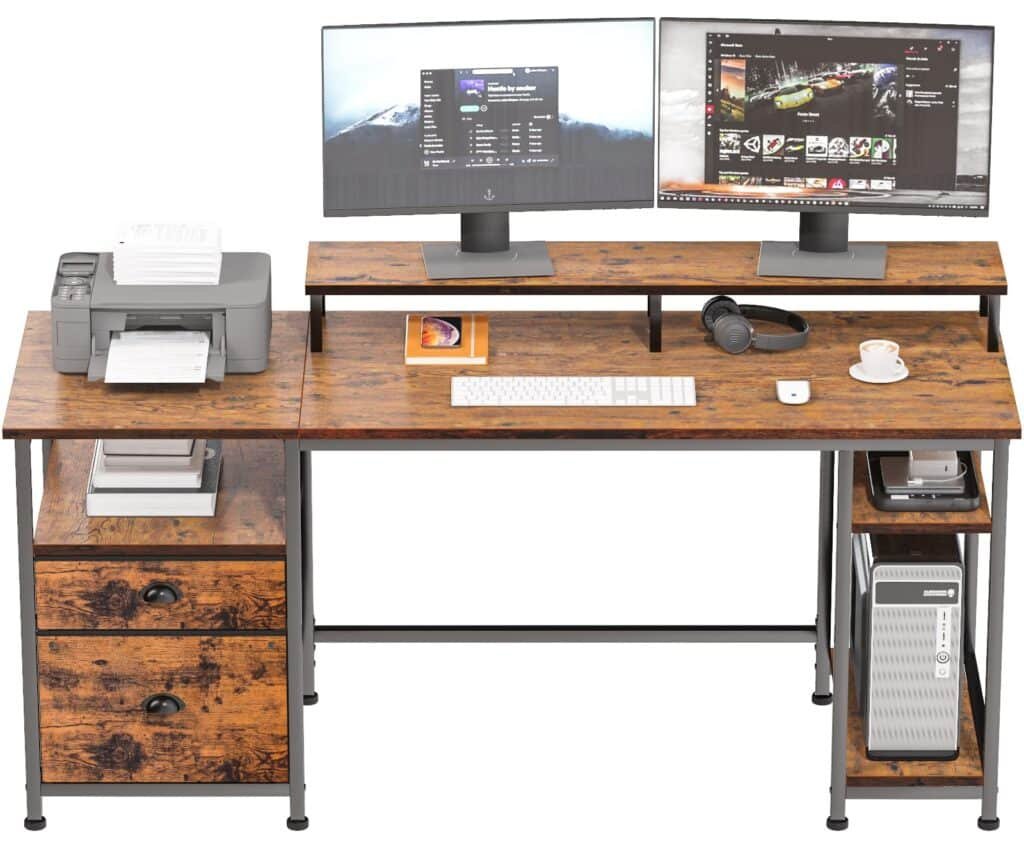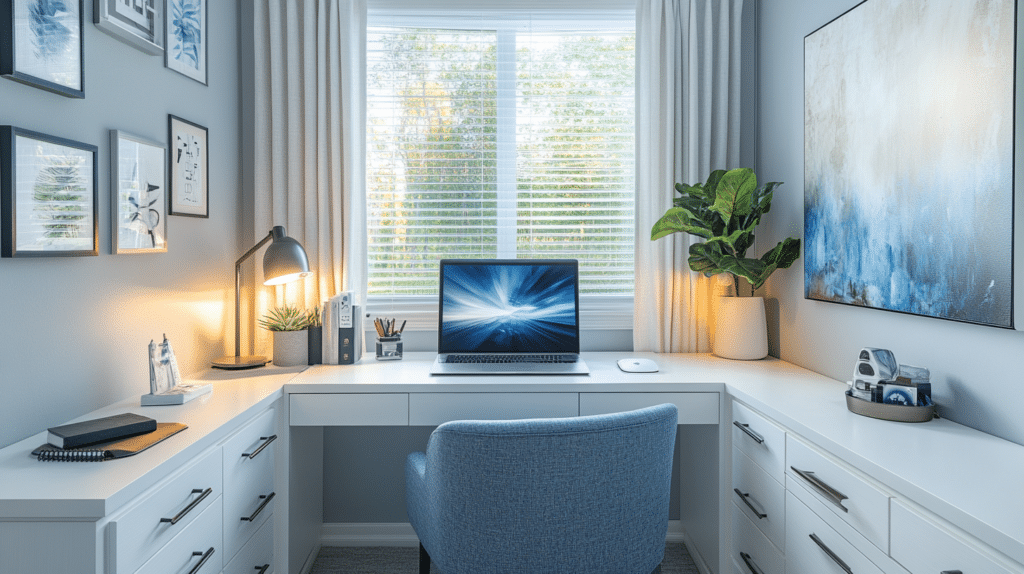
An office reading nook solves a problem I didn’t know I had until I fixed it: my home office was 100% work, all the time, and I never wanted to sit in it unless I was on the clock. I added a chair, a lamp, and a shelf of books in the corner by the window, and now it’s the spot I actually want to be in — coffee, book, no laptop in sight. If your office feels like a place you clock into rather than a room you enjoy, this is the fix.
What This Style Actually Is
Call it cozy modern-calm, because that’s really what it is — it borrows from coastal, boho, Scandinavian, whatever you already lean toward, and just softens it. The point isn’t a new decorating style. It’s carving out a few square feet that feel like the opposite of work: warm light, soft textures, a chair that isn’t ergonomic-office-chair stiff.
This works for remote workers who need a screen break, book people who want their library visible instead of boxed up, and anyone whose “office” is really a guest room or a corner of the living room doing double duty. It fits in home offices, spare rooms, attic corners, under a staircase, even a closet with the door removed. You genuinely don’t need a spare room for this. You need a corner, a window if you’re lucky, and a wall you’re not using.
Colors that work: warm white, cream, greige, taupe, muted sage, dusty blue, with a charcoal or black accent to keep it from going flat.
Materials that work: linen, bouclé, wool, rattan, cane, brushed brass or matte black hardware, real wood over anything glossy.
Time, Cost, and Space You’ll Actually Need
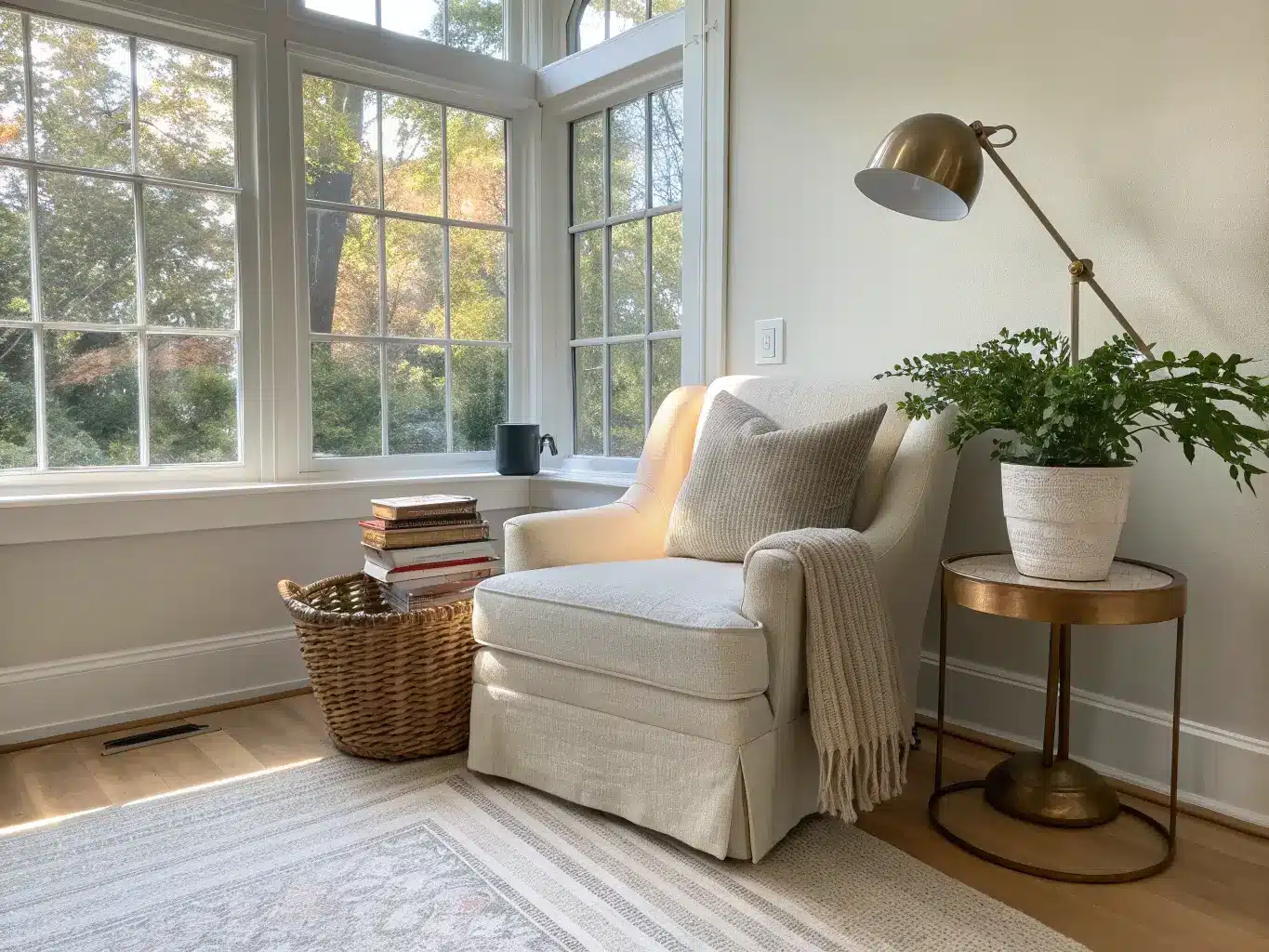
Setup time: A chair-and-lamp version takes an afternoon — 2 to 6 hours, most of which is rearranging furniture and figuring out where the lamp cord reaches. Add shelving or a bench and you’re looking at a full day or two.
Budget, realistically:
– $150–$400 — secondhand or budget chair, a lamp, a small side table, maybe a wall shelf. This is where I started: a $40 chair from a estate sale, a $25 clip-on lamp, and a $15 shelf from the hardware store.
– $500–$1,500 — an actual accent chair, a floor lamp you like the look of, a rug, real shelving, throw pillows and a blanket that match on purpose.
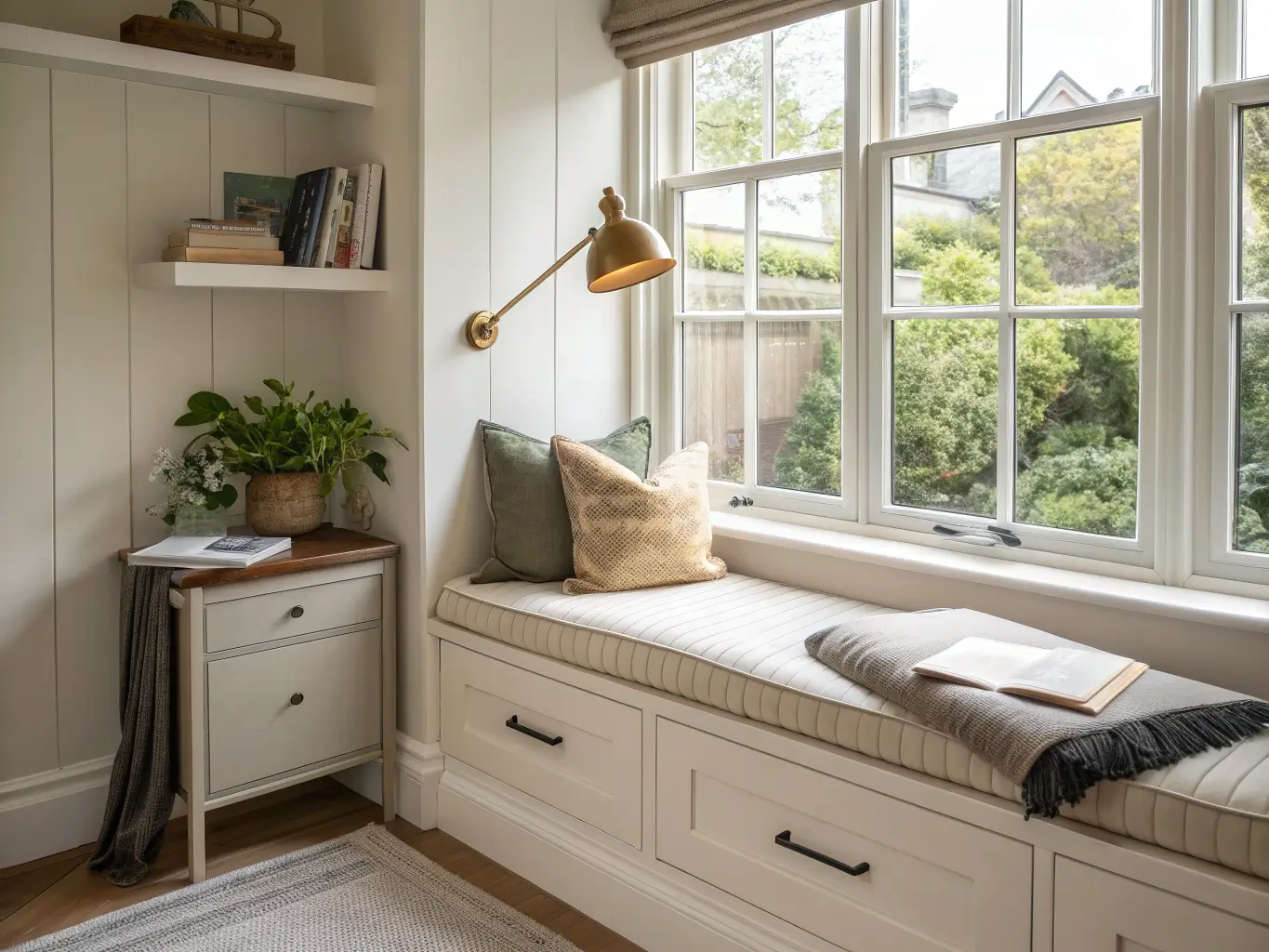
– $2,000+ — built-ins, a window seat, custom millwork. This is where cost stops being about furniture and starts being about carpentry.
Space needed: A corner is enough. If you’re planning the nook as part of a larger office layout, aim for roughly 50 square feet total for office plus nook so you’re not squeezing past furniture to get to your desk. But I’ve seen (and built) nooks in spaces half that size using a slim chair and wall-mounted shelving instead of a bookcase.
Skill level: Chair, lamp, table, textiles — beginner, no tools required. Floating shelves or a wall sconce — intermediate, plan for a drill and maybe a stud finder. A window seat or built-in bench — that’s a real project, hire it out unless you’re comfortable with a saw.
This isn’t seasonal. It works year-round and takes about ten minutes to refresh for a new season — swap the pillow covers, switch the throw, done.
The Pieces That Actually Make It Work
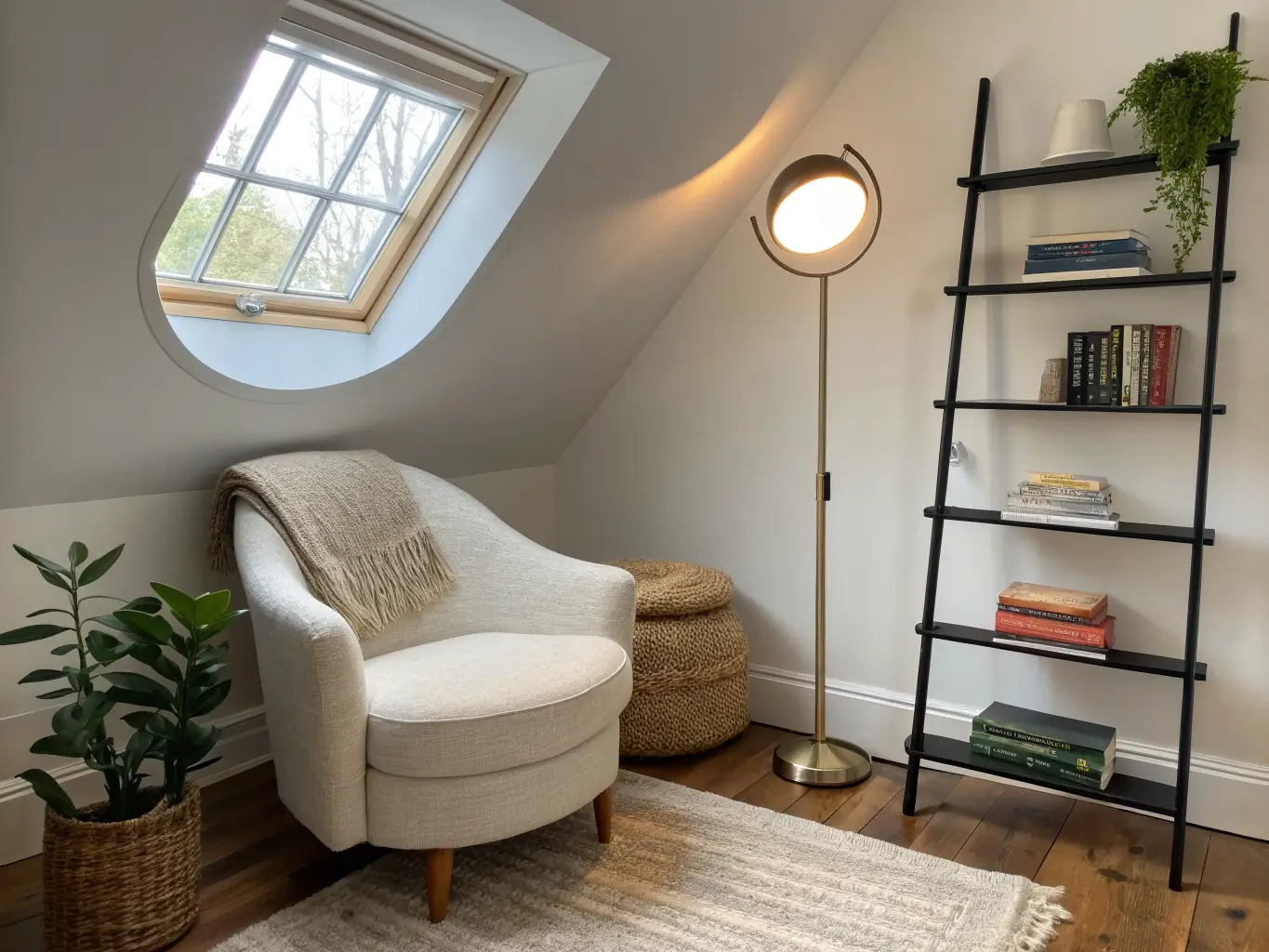
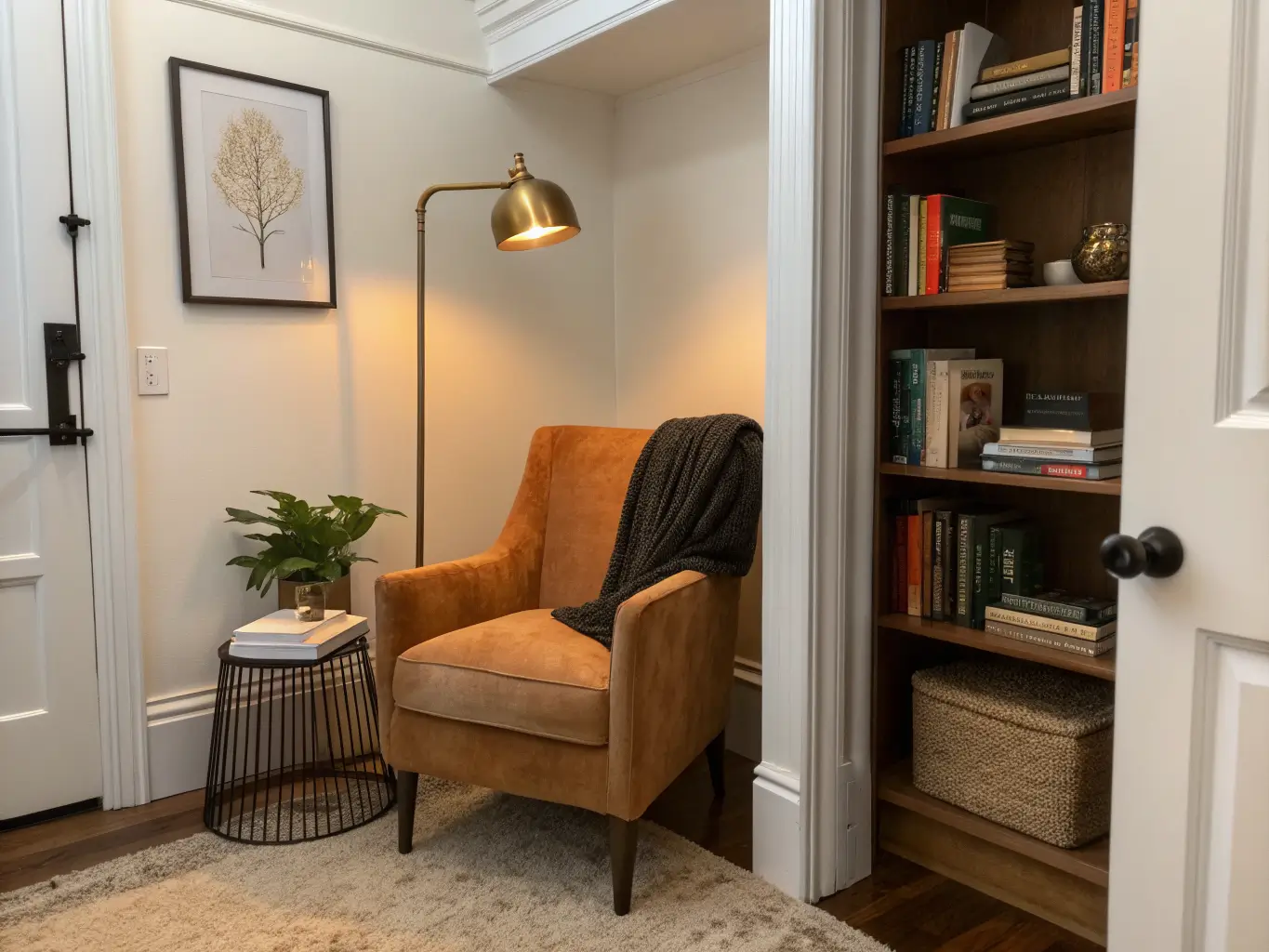
The chair is the whole project. Everything else is decoration around a decision you need to make first: what are you sitting in? I made the mistake of buying a chair because it looked good in the corner — a narrow, upright accent chair with almost no padding. Gorgeous for five minutes, miserable for an actual reading session. I replaced it after three months with a deeper armchair with a slight recline, and that’s the one that stuck.
Options depending on space and how long you plan to sit:
– Armchair or wingback — best for actual long reading sessions, needs the most floor space
– Compact lounge chair or slipper chair — good middle ground for smaller rooms
– Window bench — if you’ve got a windowsill deep enough, this doubles as storage underneath
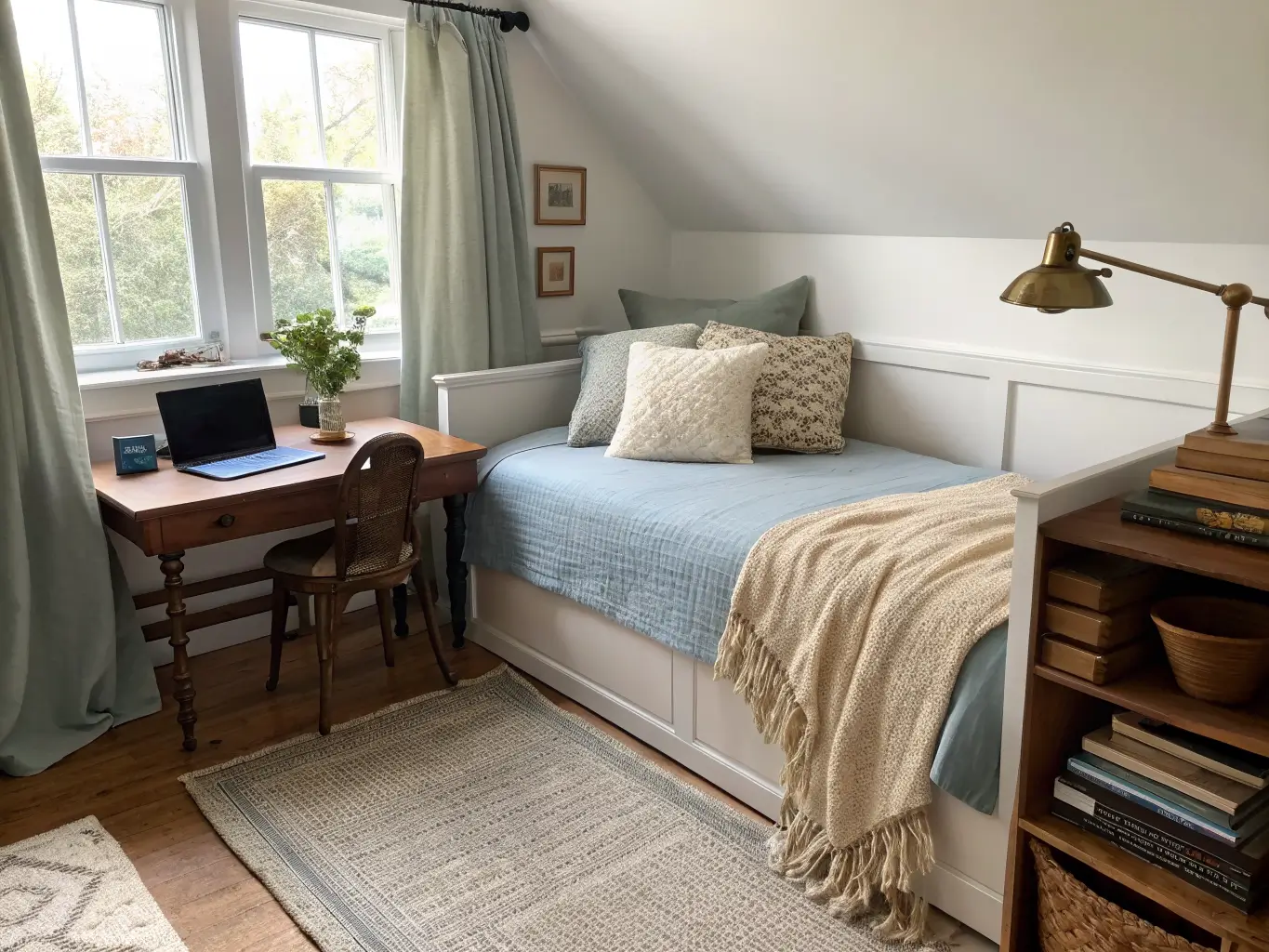
– Daybed — if the “nook” is really doing double duty as a guest bed
Whatever you pick, prioritize seat depth and back support over how it photographs. Add a footstool or ottoman if you’re planning to sit for more than twenty minutes at a time.
Lighting, separate from your desk light. Your overhead office light is not reading light — it’s task light for a screen, and it’ll make the nook feel like an extension of the desk instead of an escape from it. Get a floor lamp or swing-arm wall sconce with a warm bulb (look for 2700K on the box, not daylight white) positioned so it falls over your shoulder onto the page, not into your eyes.
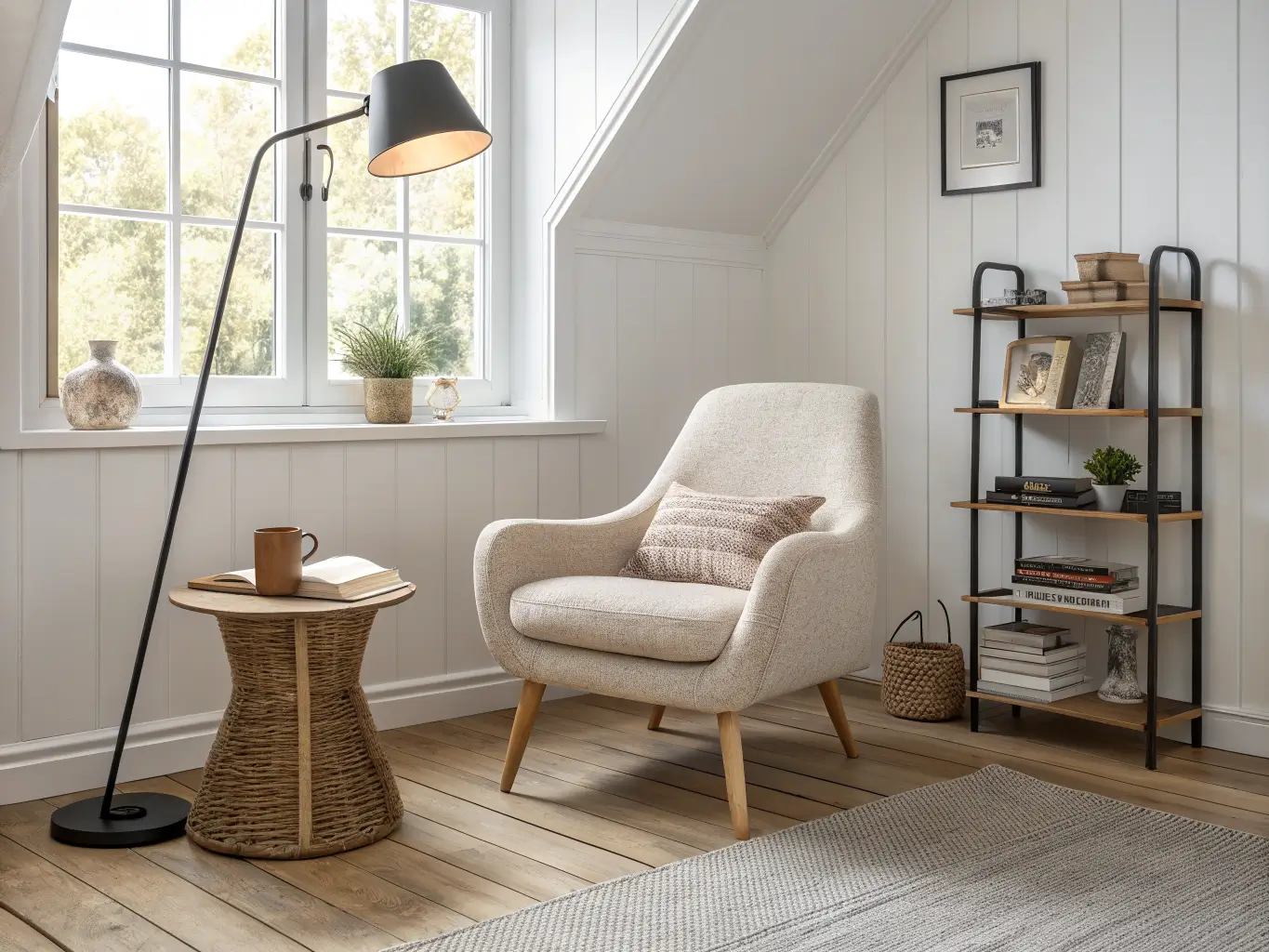
Storage for books you’ll actually reach for. Floating shelves, a ladder shelf, or a small bookcase — whatever fits the footprint. If you’re tight on floor space, go vertical instead of wide. A tall, narrow shelf takes up almost no square footage and holds more than a low, wide one.
A surface within arm’s reach. Small side table, a nesting table, whatever — you need somewhere for a mug, your glasses, your phone face-down (please, face-down).
Something to soften it: one throw blanket, one or two pillows, and a rug underneath the chair to visually separate the nook from the rest of the room. This last part matters more than people think — a rug is doing the work of a wall in an open-plan space.
A divider if your office and nook share a room. A tall bookshelf, a big plant, even a curtain on a tension rod can visually split “I’m working” from “I’m reading” without adding a wall.
Optional Upgrades Worth the Money
Once the basics are in place, these are the additions that make the nook feel finished instead of assembled:
– One or two real plants — I keep a snake plant on the shelf and a small pothos on the side table; both survive my inconsistent watering, which matters more than any design advice
– A textured throw — bouclé or a sheepskin-style throw over the arm of the chair does more visual work than another pillow would
– Brass lamp hardware or black metal bookends — small detail, makes the shelf look styled instead of just stocked
– Seasonal textile swaps — heavier knit throws and deeper tones for fall and winter, linen and pale pillow covers for spring and summer
– A small art print or bulletin board above the shelf for personality — this is the cheapest way to make the corner feel like yours and not a showroom
How to Actually Set It Up
Clear the corner completely first. Take out cables, old mail piles, whatever office overflow has migrated there. You’re starting from empty, not decorating around clutter.
Measure before you buy anything. I didn’t do this the first time and bought a chair that, once placed, blocked the path to my closet. Measure the footprint, then measure the chair’s actual dimensions (not just “looks compact online”), and make sure there’s still a clear walking path.
Decide what the nook is for before you shop. Quick fifteen-minute breaks between meetings need a chair. Long weekend reading sessions want a chair with an ottoman, or a daybed. Journaling and reading together means you need that side table doing more work — room for a notebook, not just a mug.
Put it near your window, but don’t depend on the window. Natural light makes the whole nook feel less like office and more like a room worth sitting in, but you still need the lamp for evenings. Both, not one or the other.
Build it in this order: chair first, side table second, rug third, shelving fourth, then decor. Trying to style before the bones are in place is how you end up with a pretty corner that’s uncomfortable to actually sit in.
Style the shelves like a shelf, not a warehouse. Mix books with one or two framed pieces, a plant, a small object. A good rule: keep visible books to around 50–100 and rotate the rest into a drawer or box elsewhere. Past that, it stops reading as curated and starts reading as cluttered, even if every book on there is one you love.
Where People Get This Wrong
The chair is beautiful but you never actually sit in it. This was my first attempt exactly. If a chair looks stiff, it’ll feel stiff. Sit in it at the store, or check the return policy before you buy online.
Relying on your desk lamp or ceiling light for reading. It’s not enough, and it keeps the nook feeling like an office extension. Get a dedicated warm-bulb lamp — this is a $30–$80 fix that changes the whole feel of the space.
Overloading the shelves. More books does not equal more cozy. It equals visual noise. Edit hard, rotate seasonally, keep surfaces breathing.
Putting the nook in a high-traffic spot. If it’s in the path between the door and the desk, you’ll never relax in it — you’ll feel like you’re in the way. Push it into an actual corner, against a blank wall, or behind a divider.
Making it too pretty to use. If there’s no clear spot for your book, your glasses, and a light source, you’ve built a photo op, not a reading nook. Function first, styling second.
Keeping It Looking Intentional Over Time
Stick to 2–4 colors across the whole nook — the chair fabric, the throw, the pillows, the shelf accessories — and repeat them rather than introducing something new every time you buy an accessory. I default to warm wood, cream textiles, and matte black accents; every new pillow or object gets checked against that before it comes home.
Keep the side table edited: a lamp, one book, one small object. That’s it. The second you start stacking mail and coasters and random stuff on it, the whole nook reads as cluttered instead of calm.
Seasonal refresh without replacing furniture:
– Swap pillow covers and the throw blanket — this alone changes the whole feel for under $50
– Rotate which books are facing out on the shelf
– Add or swap the plant if something’s looking tired
Budget-friendly upgrades that don’t involve new furniture:
– Reupholster or re-cushion a chair you already own instead of replacing it
– DIY a side table from MDF and marble-look contact paper — I did this for about $25 total and it still gets compliments
– Add contact paper or peel-and-stick wallpaper to the back of an open shelving unit for a punch of color with zero commitment
If you want to lean into a specific style:
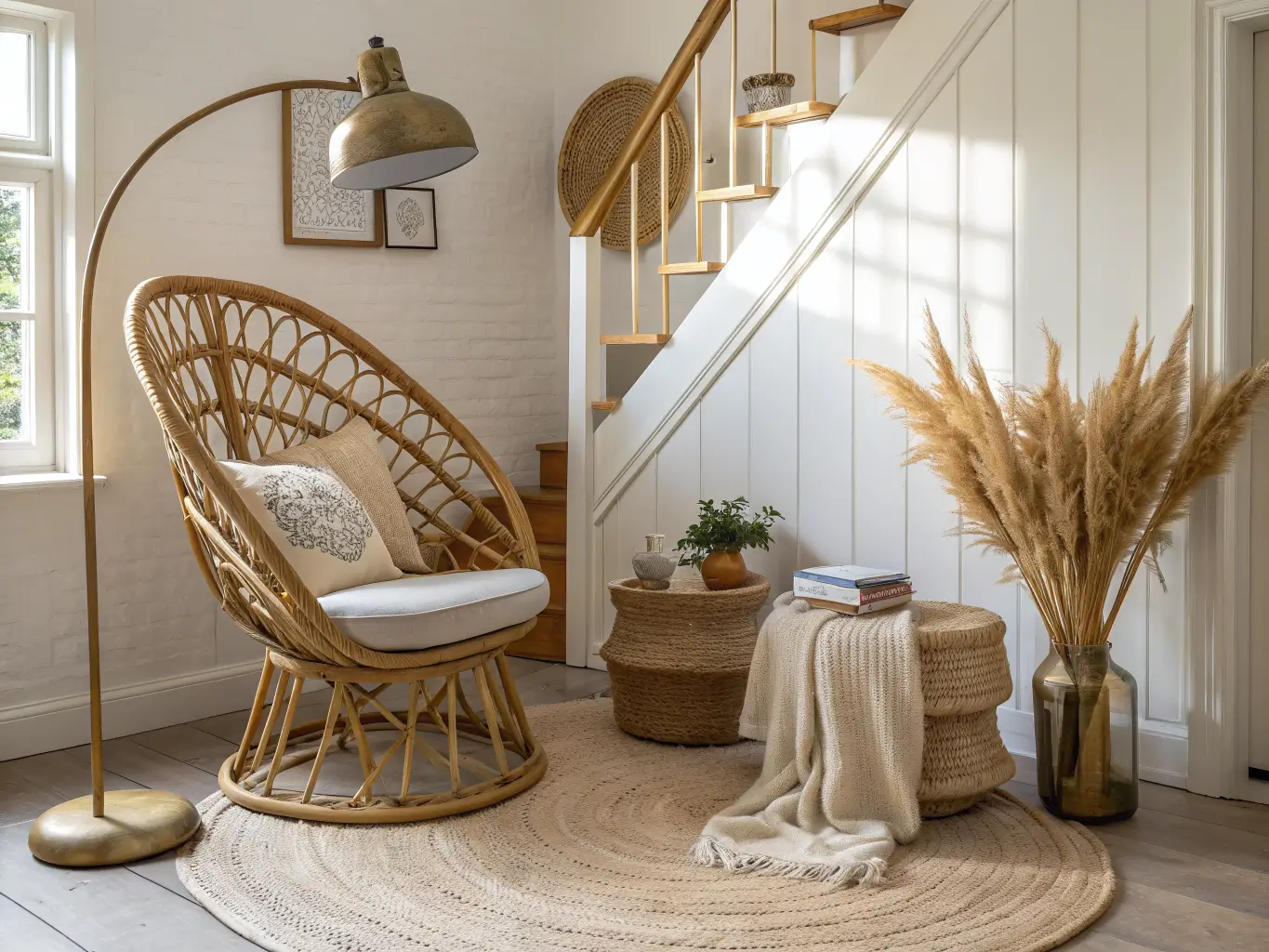
– Boho: rattan chair, woven basket for magazines, linen pillow, one big leafy plant
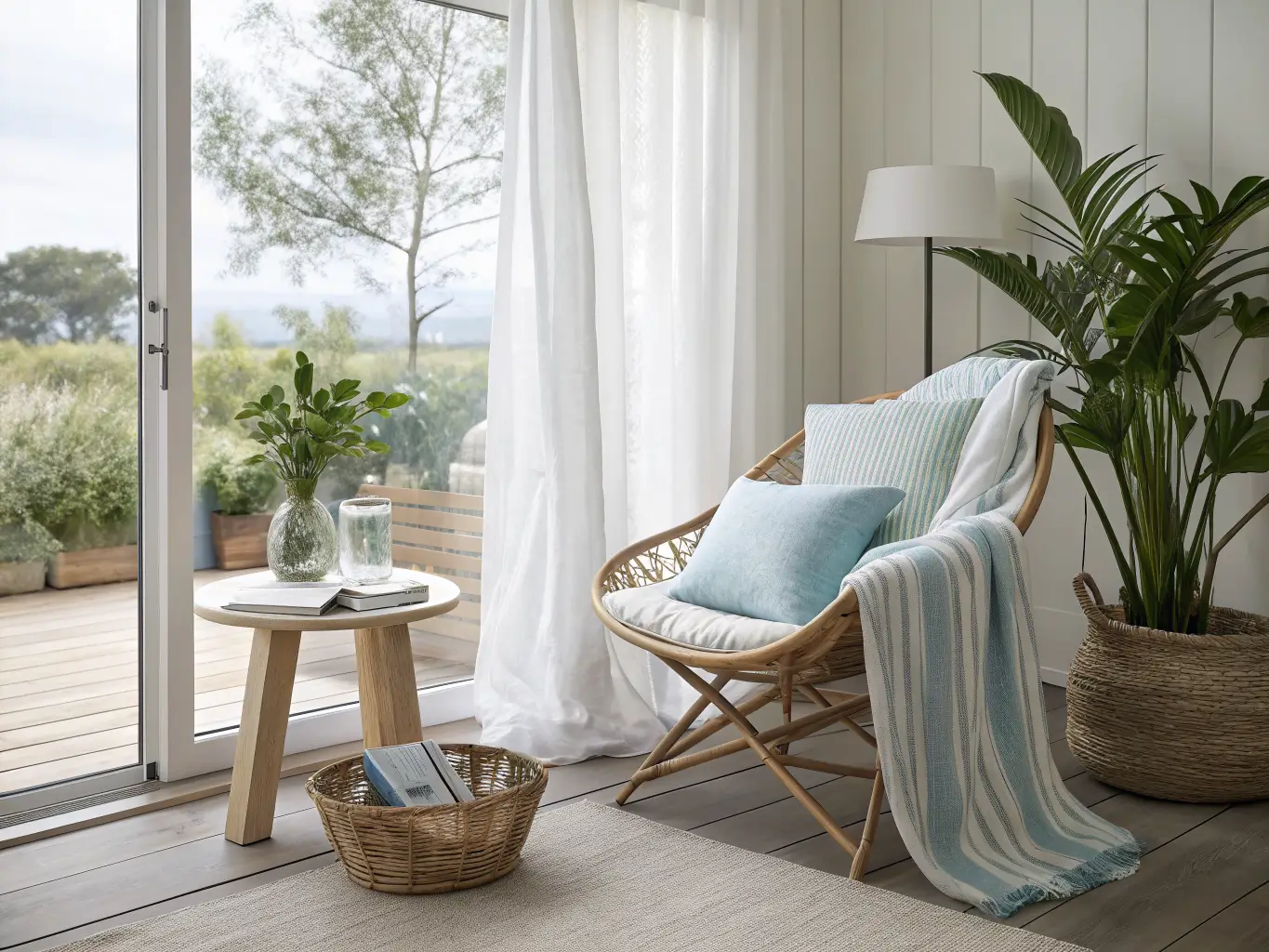
– Coastal: pale blue textiles, white oak furniture, a striped cushion, sheer curtain if there’s a window
– Scandinavian: light wood, bouclé seat, neutral palette, shelf styled with restraint — three or four objects max
If floor space is the real constraint, skip the freestanding furniture entirely. A window-seat bench built into an existing sill, an under-desk bookshelf, or a room-divider bookcase gives you the function of a nook without asking for square footage you don’t have.
For another angle on this, my reading nook in bedroom guide covers the same space from a different starting point.