Reading nook ideas for small spaces usually fall apart at the furniture-buying stage — you find a chair you love, get it home, and realize it eats the entire corner you meant to relax in. I’ve done this. Twice. The second time was a bouclé swivel chair that looked compact online and turned out to have a seat depth built for someone 6’4″. It’s in my guest room now, doing nothing.
Here’s what actually works, from someone who’s built a nook in a rental with zero wall-mounting rights and later redid it properly in a house with an actual window bay.
What This Style Is and Who It’s For
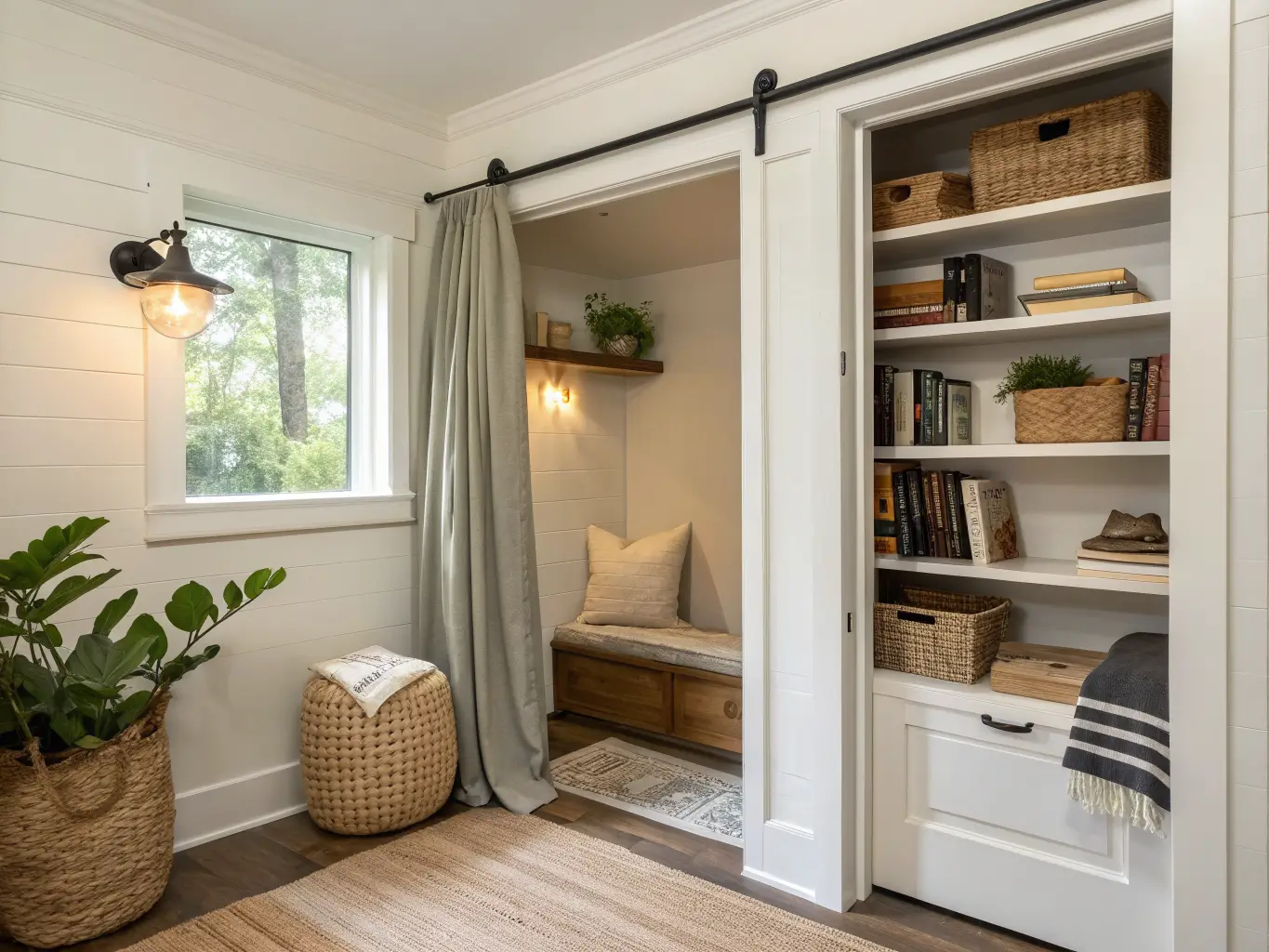
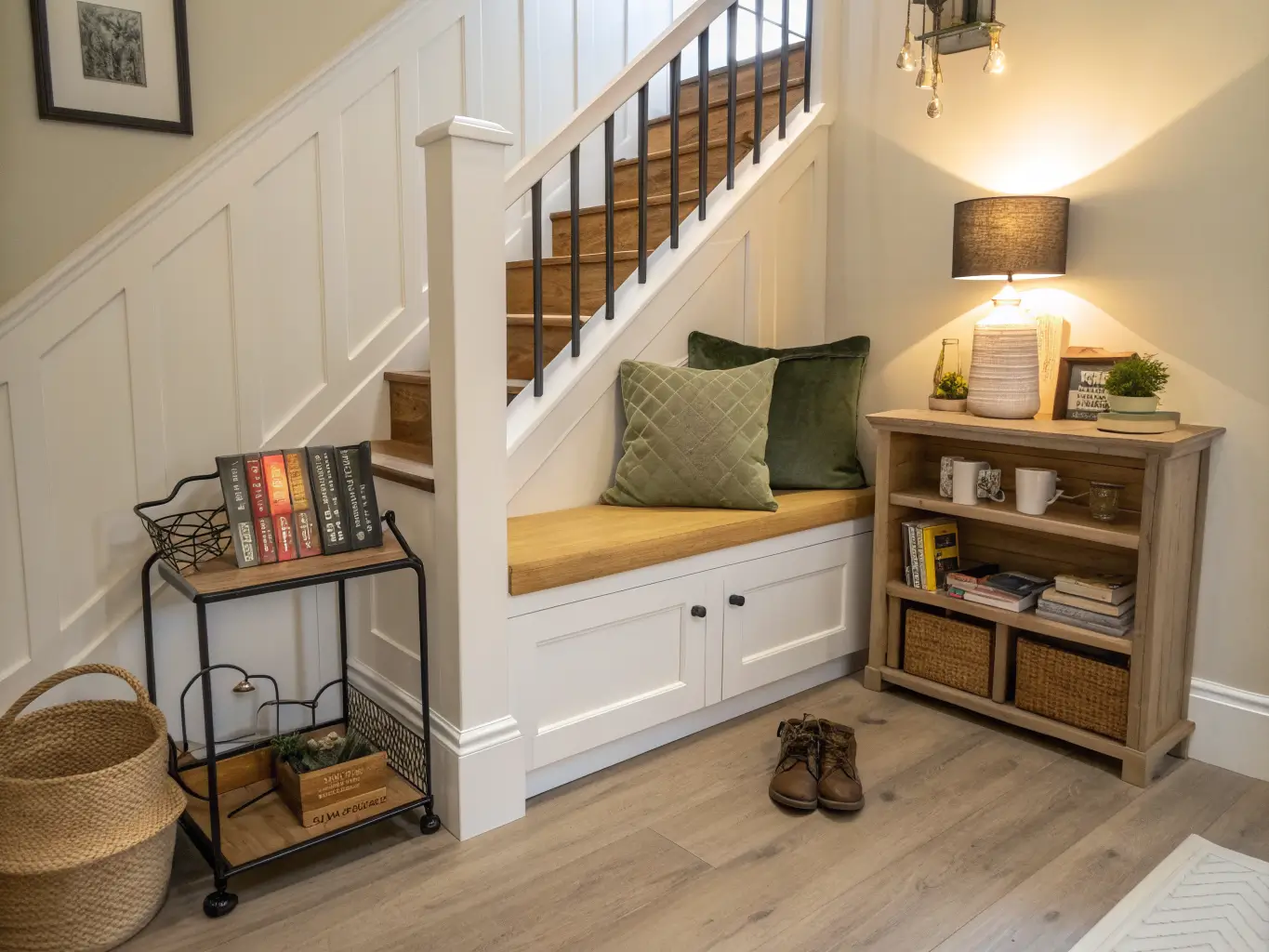
A small-space reading nook isn’t a room. It’s a corner, a window bay, an under-stair gap, the dead zone at the end of a hallway, or even a closet with the door removed. The whole idea is that you’re borrowing 15-25 square feet from somewhere else in your home and giving it one job: sitting down with a book without the rest of your life crowding in.
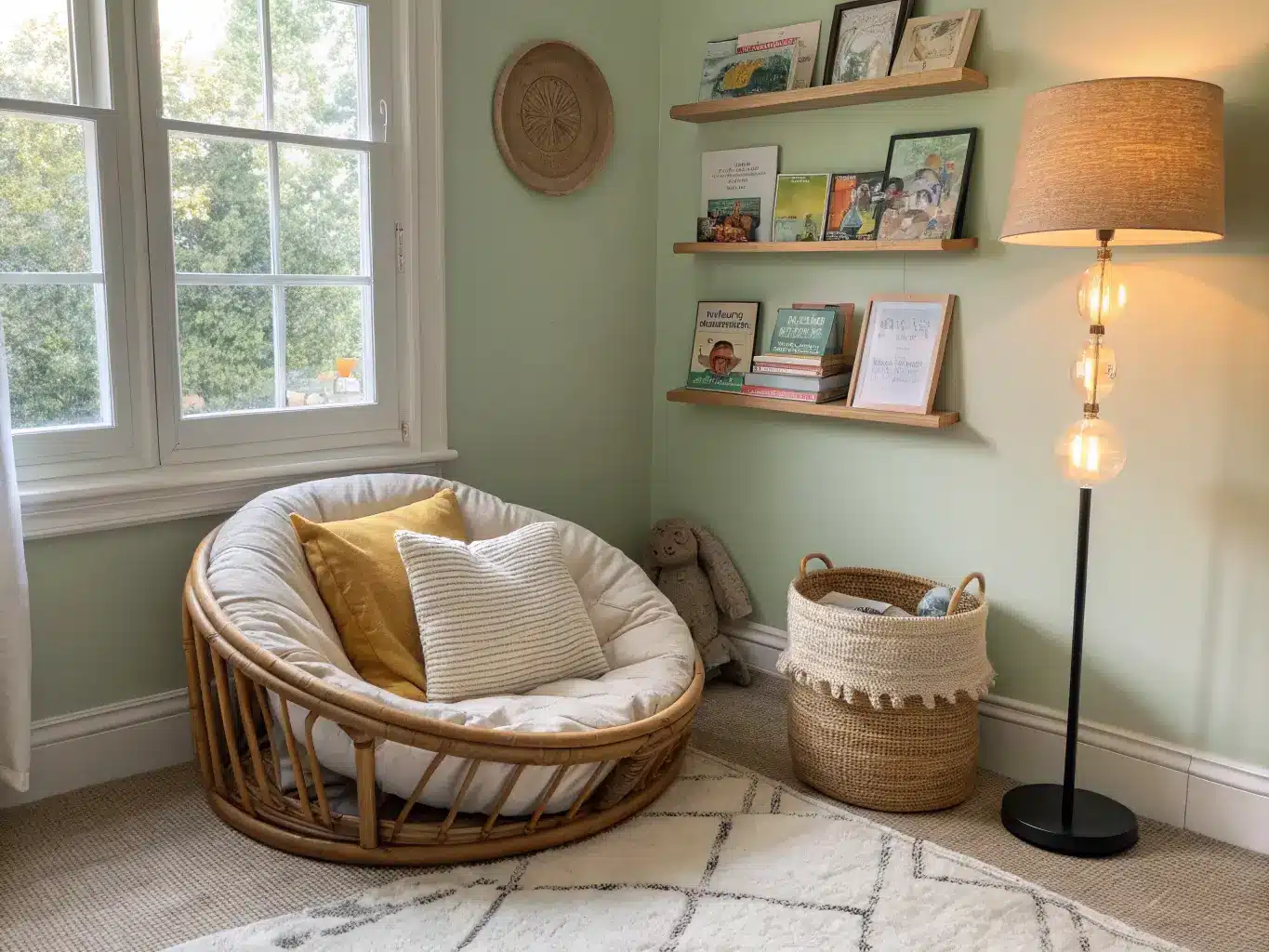
This works for apartment dwellers who don’t have a spare room, for anyone sharing a house who needs five square feet that’s undeniably theirs, and for parents carving a quiet corner out of a kid’s bedroom. It does not require a bay window or built-in carpentry, though both help. I’ve seen gorgeous nooks made from nothing but a $40 papasan chair and a floor lamp.
Time and cost, realistically:
– A basic chair-lamp-basket setup: 1–3 hours, $80–$300
– A window bench, closet conversion, or shelving-supported nook: 1–2 days, $300–$900
– Built-in bench seating, custom millwork, under-stair carpentry: days to weeks, $1,000–$5,000+
Skill-wise, anyone can do the beginner version. Floating shelves and a wall sconce are an easy weekend upgrade if you’re comfortable with a stud finder and a drill. Built-ins are a different animal — that’s contractor territory unless you’re genuinely experienced with woodworking.
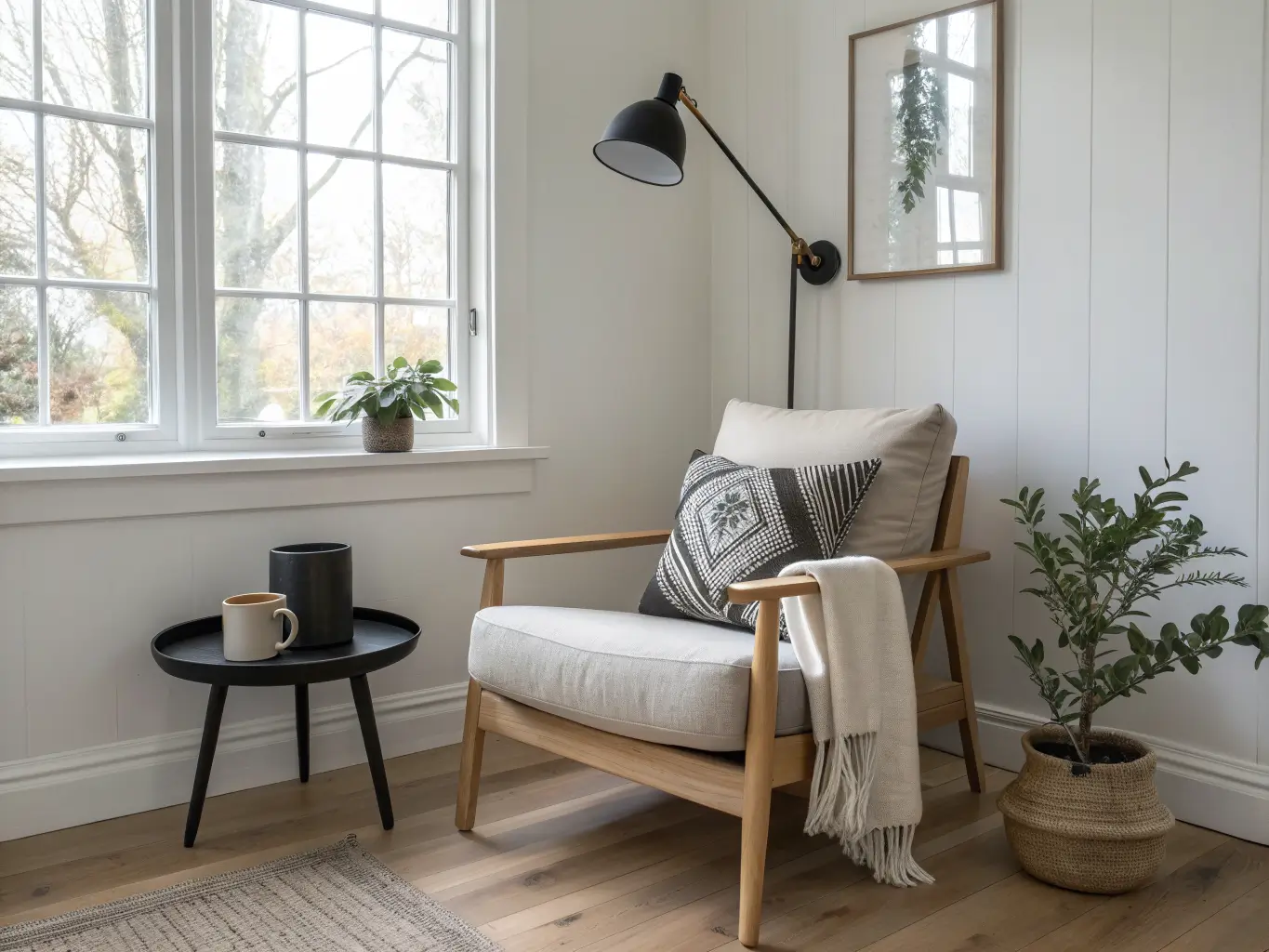
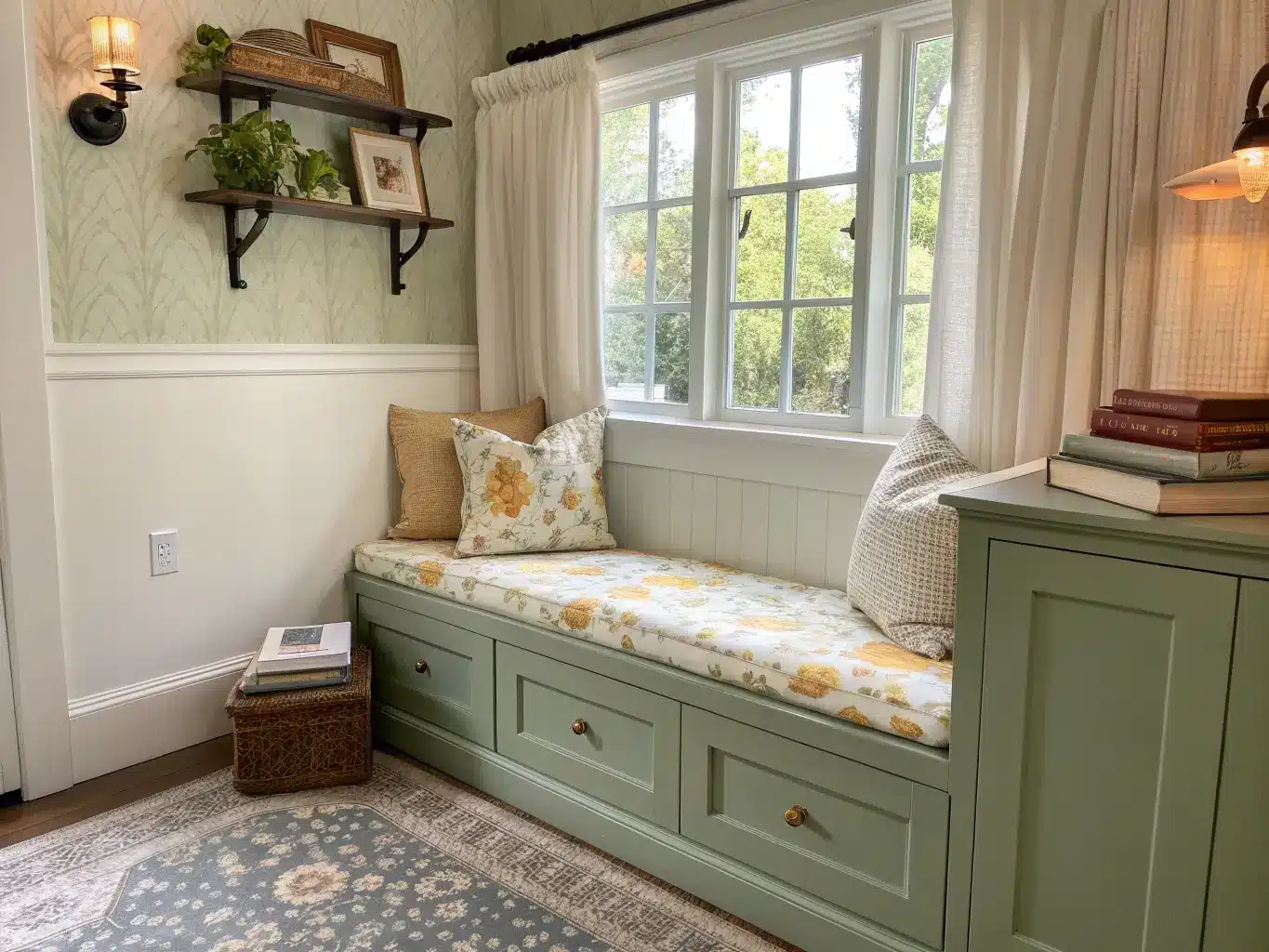
The style itself tends to land in one of a few lanes: cozy minimalist (oak, linen, one plant, nothing extra), soft boho (rattan, woven textures, a patterned throw), Scandinavian (pale wood, white walls, a single black accent), or what I’d call built-in cottage — a painted bench, skirted storage, maybe a floral cushion. Pick one. Don’t blend all four or the nook stops reading as intentional and starts reading as “stuff we didn’t know where else to put.”
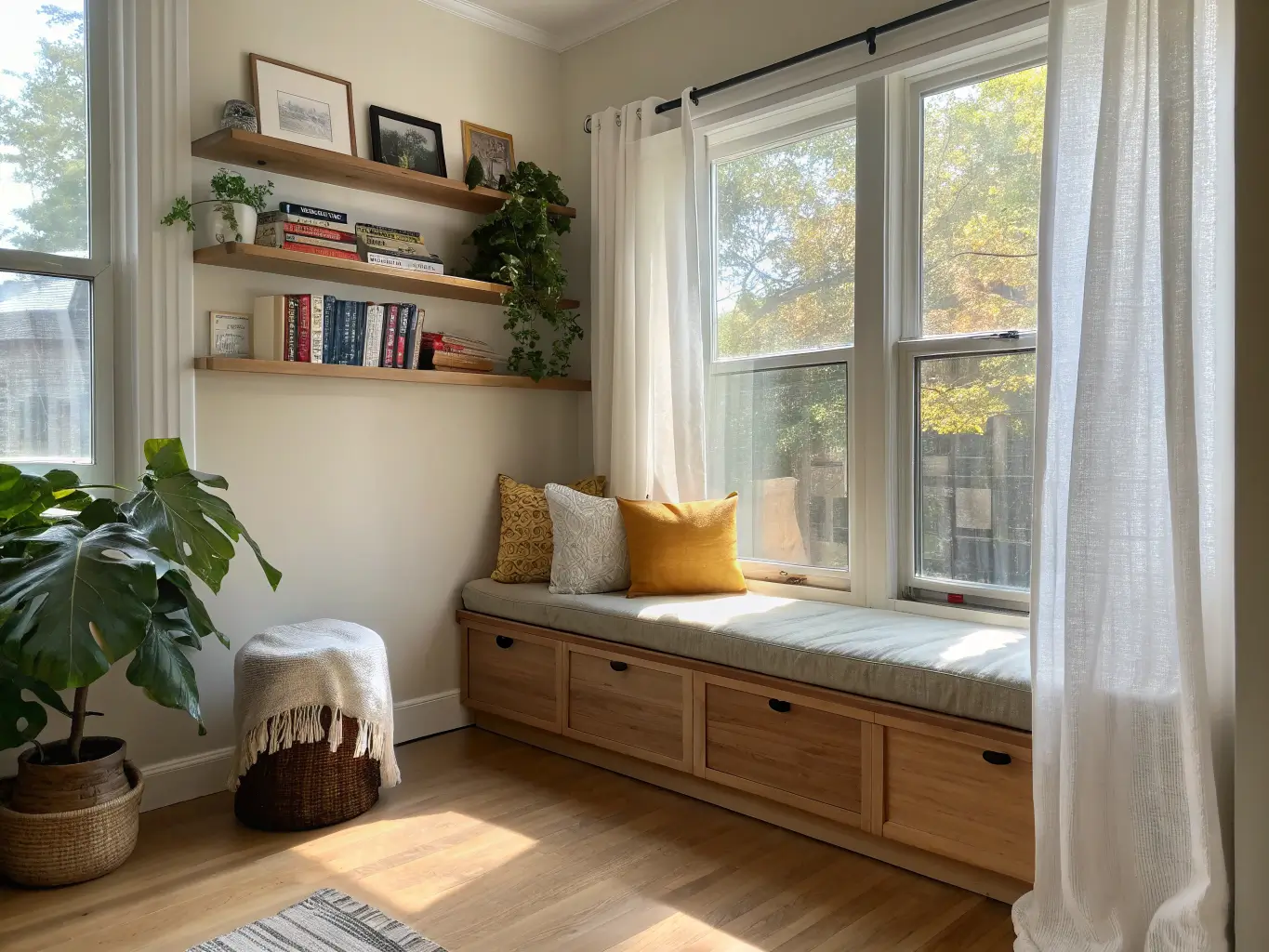
The Pieces That Actually Make a Nook Work
The seat is everything — and smaller is usually better
This is where most people overspend or over-buy. In a tight corner, you want a compact armchair with roughly a 20-inch seat depth, not a deep lounge chair meant for stretching out. If you’ve got a window or wall recess, a window bench around 36 inches wide and 16 inches deep fits most alcoves without crowding the walkway.
No wall to work with? A floor cushion, a low pouf, or even a beanbag solves it — this is genuinely the best option for a closet nook or a kid’s reading corner where floor seating makes more sense than a chair anyway.
Lighting has to be dedicated, not decorative
This is the mistake I made in my first apartment nook: gorgeous chair, pretty pillows, and only the room’s overhead light to read by. Useless after 6 pm. Fix it with a wall-mounted swing-arm sconce (my favorite solution because it frees up the side table) or a slim floor lamp if you can’t drill into the wall. Use warm, high-CRI LED bulbs — the cool white ones make a cozy corner feel like a dentist’s waiting room.
Storage keeps it from turning into a pile
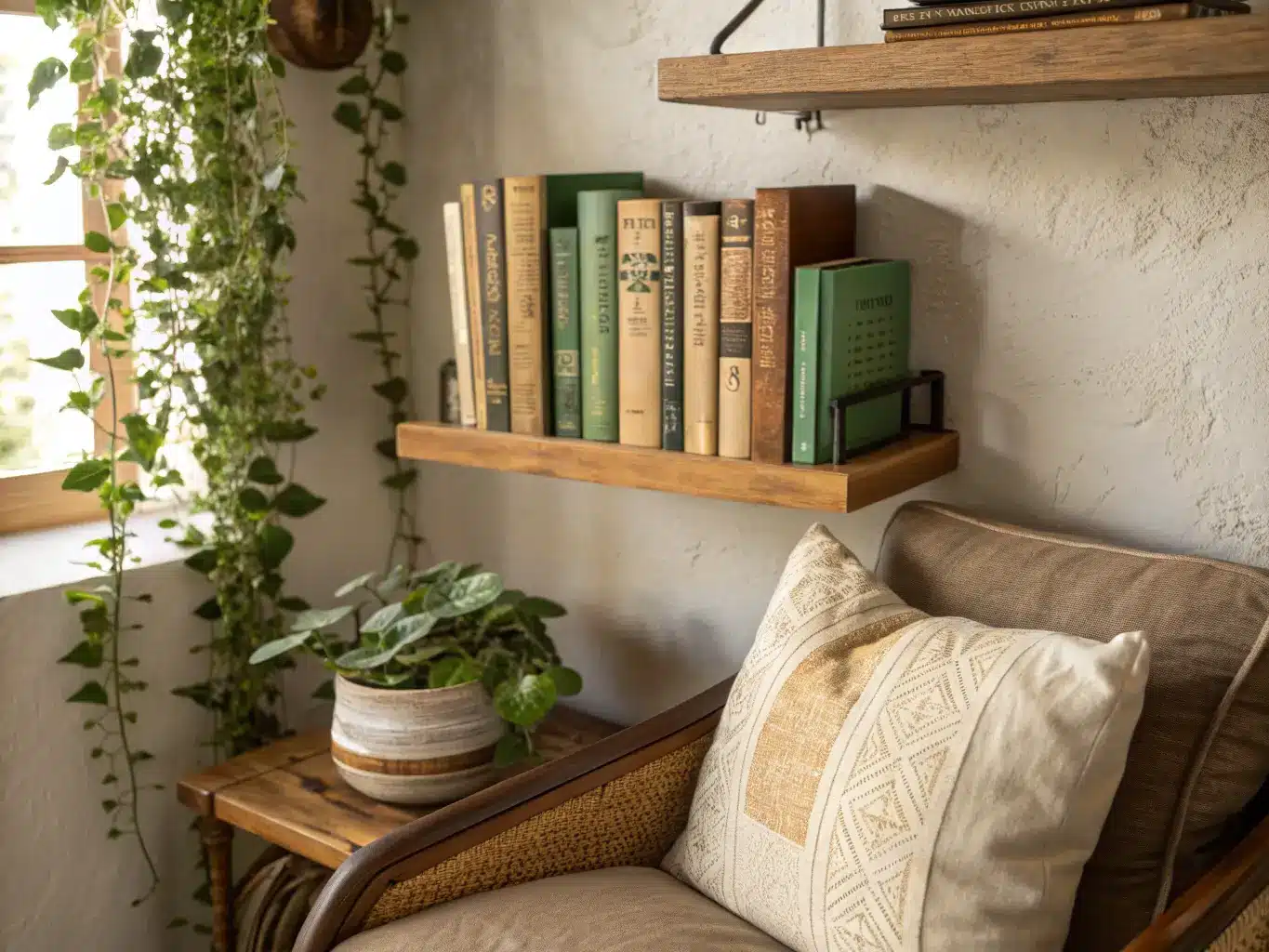
Books on the floor next to the chair is how a nook becomes clutter within a month. Floating shelves, a small book cart, or recessed cubbies if you’re building in, keep the books visible without eating floor space. I use a $60 wire book cart from a secondhand shop — it rolls, it holds about 25 books, and it doubles as a side table in a pinch.
The small stuff that makes it feel finished
– A round side table (about 15 inches across works in tight corners) for a mug or your glasses
– One throw blanket, not three
– One to three pillows — more than that and you’re rebuilding the pile every time you sit down
– A small rug underfoot to define the space, especially if it’s carved out of a larger room
– A tray or small basket for reading glasses, a bookmark, your phone charger
Optional but worth it
A plant in the corner — I use a trailing pothos on the shelf above my chair, costs nothing to maintain and softens all the hard lines of wood and metal. A mirror nearby bounces light back into the nook if it’s naturally dim. And if you want privacy without a wall, a simple curtain on a tension rod does the job in a closet conversion or an open-plan corner.
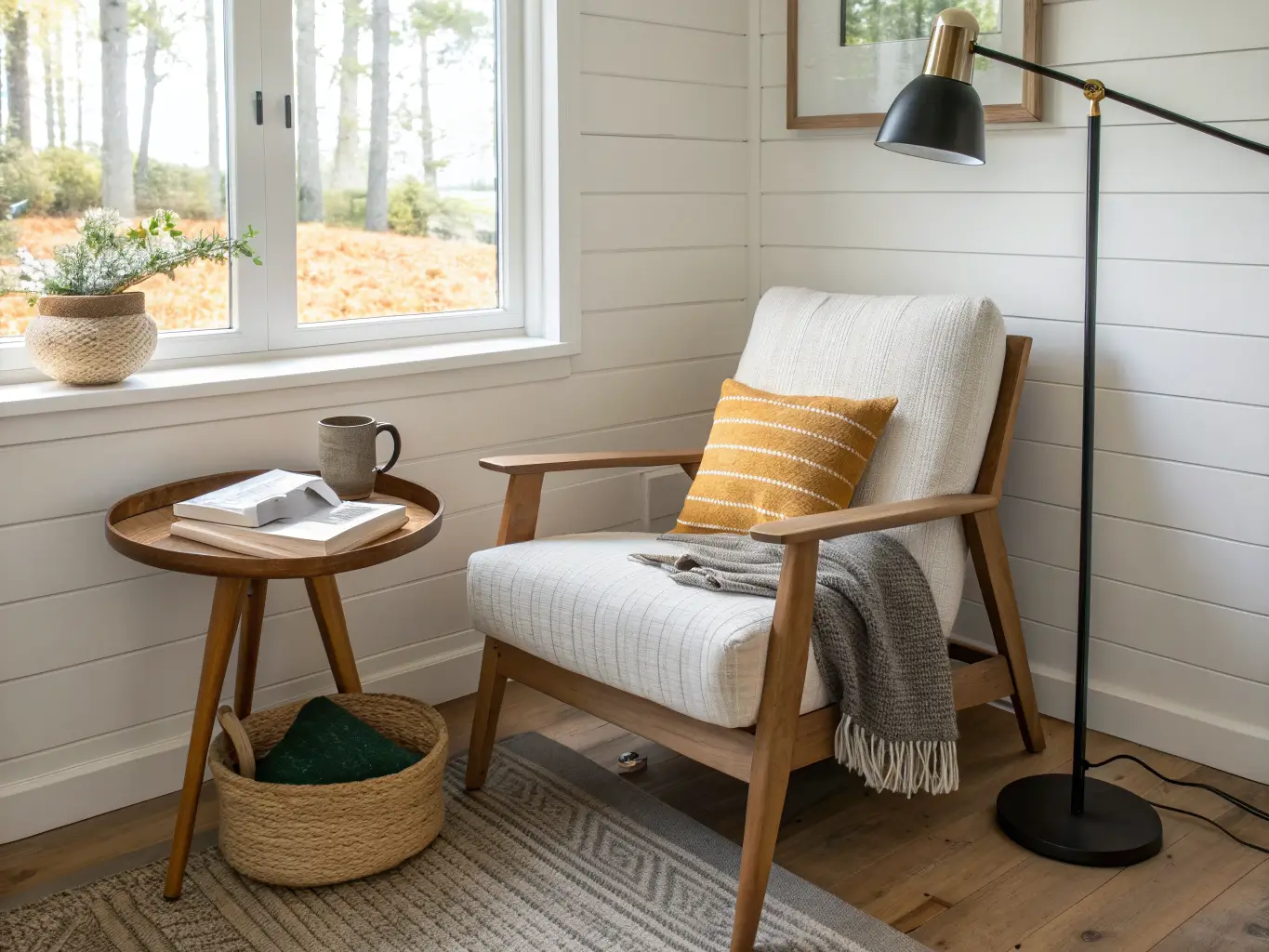
How to Put It Together, Step by Step
Start with the seat. Place it first, before anything else, because everything else is built around it. Choose the smallest chair or bench that’s still genuinely comfortable — sit in it for ten minutes at the store if you can, not thirty seconds.
Add lighting second. Before pillows, before the rug, get light source in place so you know the nook actually functions after dark.
Layer in storage third. Shelf, cart, or basket — whichever fits your space and doesn’t block the seat’s arm or leg room.
Finish with textiles and a surface. One throw, a small stack of pillows, a side table for your drink.
Frame it last. A plant, one piece of art, or a mirror — something that signals “this corner is different from the rest of the room” without adding more stuff to dust.
Before you buy anything, though: measure the space and physically clear it out. I skipped this step once and bought a chair that technically fit but blocked the closet door behind it. Confirm your circulation path first — you need clear passage past the nook, especially if it’s near a doorway, hallway, or the bottom of a staircase.
Also decide early: is this nook staying put, or does it need to fold away for guests? A movable chair and a floor lamp give you flexibility. A built-in bench doesn’t move, ever, so commit before you build it.
Mistakes That Make a Nook Feel Off
– The seat is too big. A deep lounge chair or an overstuffed armchair swallows a small corner and blocks the walkway. Go smaller than feels generous.
– No dedicated light. Pretty in daylight, unusable at 8 pm. Fix this before you fix anything else.
– Too much decor. Five pillows, three throws, a stack of decorative books nobody’s reading — it stops being a retreat and starts being visual noise.
– Books on the floor. Vertical storage isn’t optional in a small nook. Use the wall.
– Harsh, cool-toned bulbs. They kill the mood instantly. Warm white, always.
– Blocking traffic. If people have to angle sideways to get past your nook, it’s in the wrong spot or the furniture’s too big.
Keeping It Looking Intentional Over Time
Stick to two or three main colors plus one accent — I run warm white, oak, and sage in mine, with a single mustard pillow as the accent. Reuse the same metal finish throughout (I went with blackened metal on my sconce and picture light so nothing looks mismatched) and the same wood tone if you can.
When the shelf starts looking crowded, that’s your cue to rotate books out rather than add another shelf. I keep about 15 books visible and the rest in a bin in the closet, swapping every couple months. It keeps the “book wall” look from turning into a hoarder’s pile.
Budget refresh ideas: swap pillow covers seasonally instead of buying new pillows, thrift a side table instead of buying new, use a plug-in sconce if you’re renting and can’t hardwire.
Seasonal tweaks: heavier wool throw and a darker cushion in winter, pale linen and fresh greenery once it warms up. Takes fifteen minutes and completely changes the mood of the corner.
Mixing styles works if you keep discipline about it — rattan chair with a striped pillow and pale blue throw reads coastal-boho; oak bench with ivory bouclé and one brass sconce reads warm minimalist. Pick your lane before you shop, or you’ll end up with a corner that looks like four different Pinterest boards had an argument.
For another angle on this, my small reading nook cozy corner guide covers the same space from a different starting point.