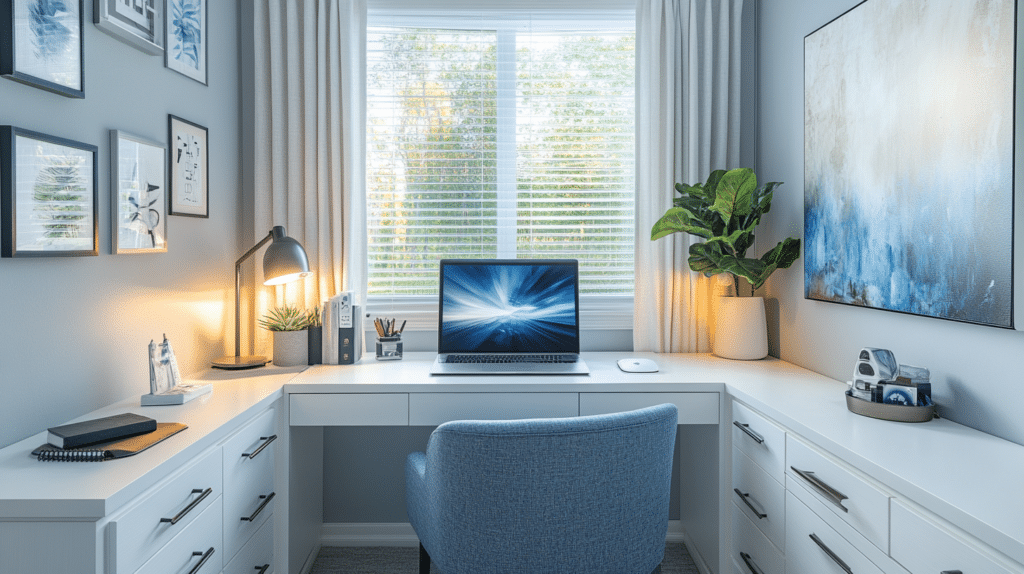
What This Style Actually Looks Like
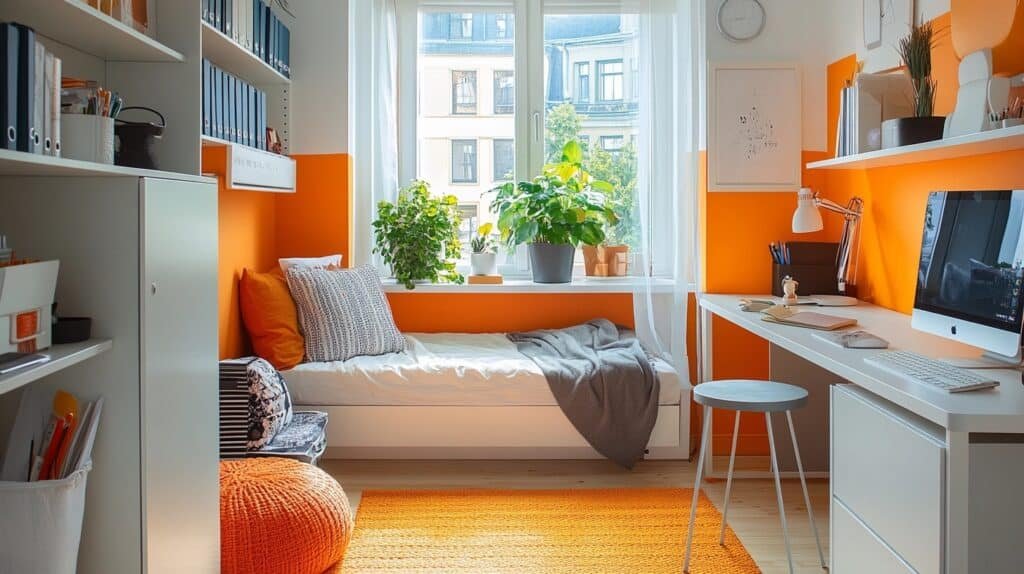
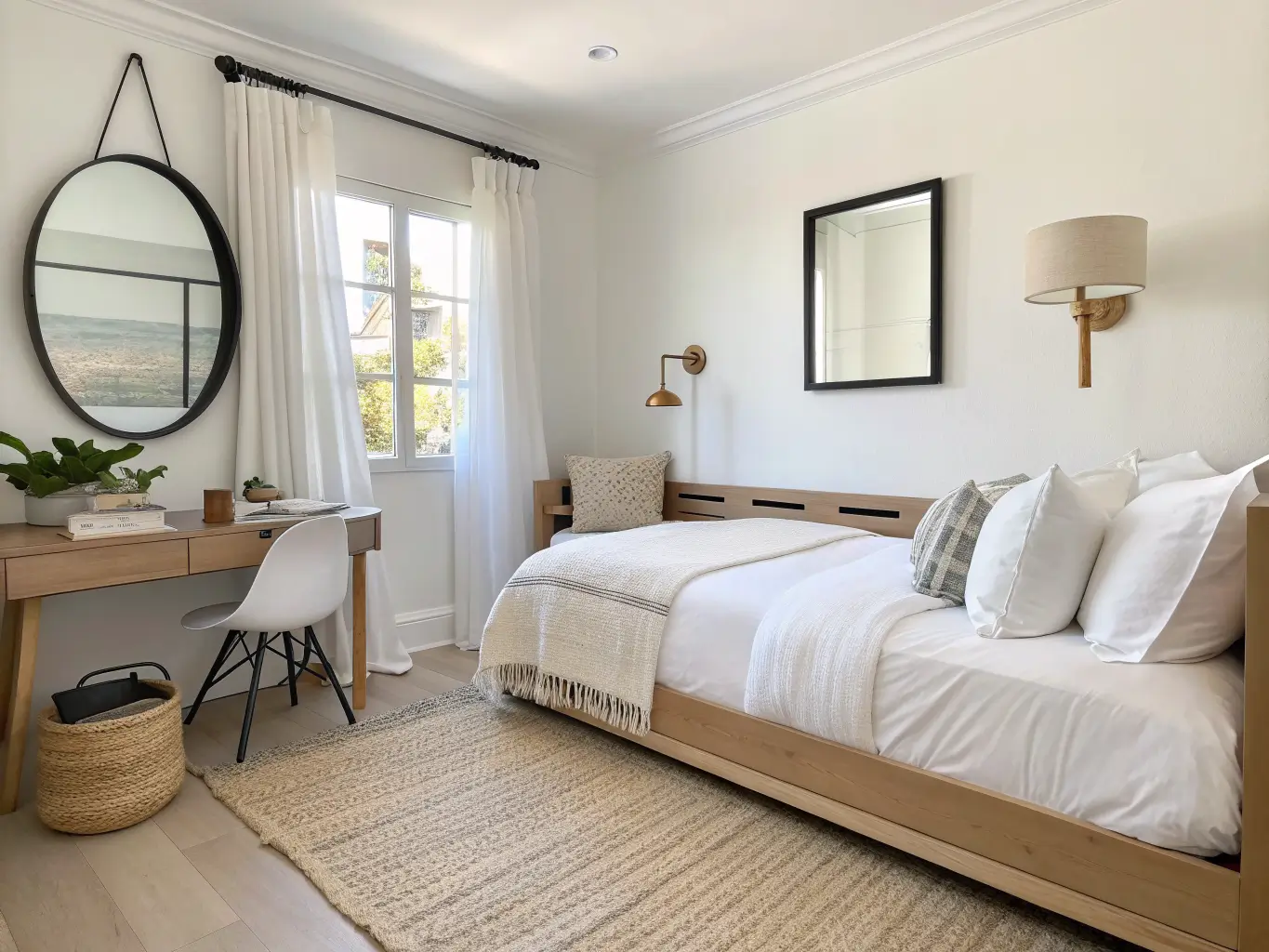
Forget the mental image of a beige office with a pull-out couch shoved against the wall. The rooms that work now don’t look like offices with a bed crammed in, or guest rooms with a laptop stand as an afterthought. They look like calm, hotel-adjacent bedrooms that happen to have a well-placed desk.
Think soft white or greige walls, pale oak furniture, linen bedding, and one black or brass accent to keep it from feeling flat. Materials stay light: wood veneer, woven baskets, cane, glass. Nothing heavy, nothing that screams “corporate.” This look works for remote workers who host family twice a year, couples splitting one spare bedroom into a workspace, and anyone in a smaller home who doesn’t have the luxury of a dedicated office.
It works best in rooms around 10 by 11 feet or larger — enough for a sleep zone, a work zone, and a clear patch of floor for luggage or pulling a chair out without hitting the bed frame.
The Pieces That Actually Make This Work
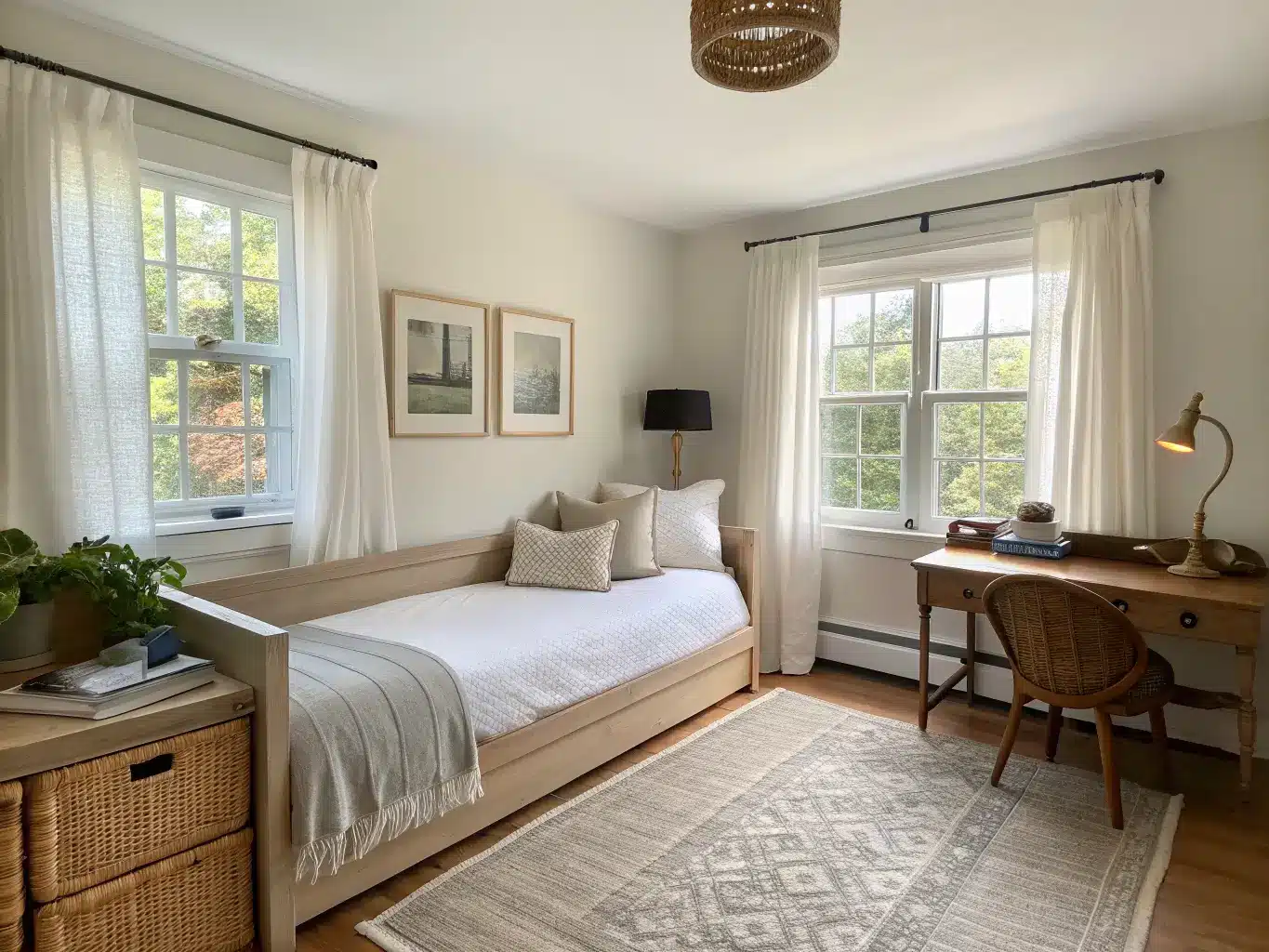
Pick your sleep solution first — it decides everything else
This is the single biggest decision in the whole room, and I made the wrong call the first time. I bought a full-size bed frame because I liked how it looked, then spent six months squeezing around it to get to my desk. Don’t do that. Your sleep solution should match how often you actually host people, not how a bed “looks” in the room.
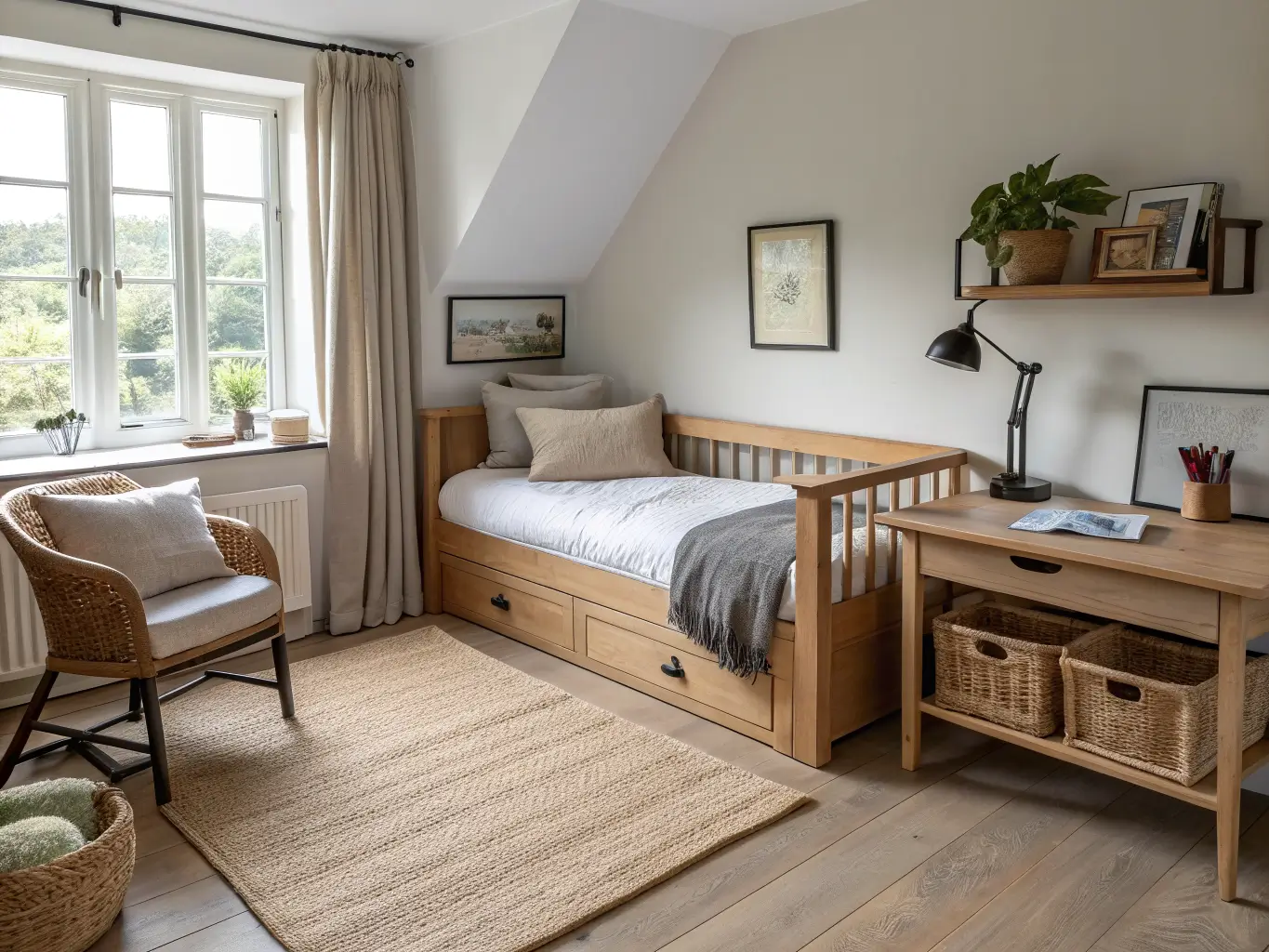
Daybed — my personal pick, and what I eventually switched to. It reads as a couch during the day and a legitimate bed at night with a twin mattress on top. Cleanest look of the three options.
Sleeper sofa — fastest conversion, and the best choice if the room needs to feel like a den or lounge most of the year, not a bedroom.
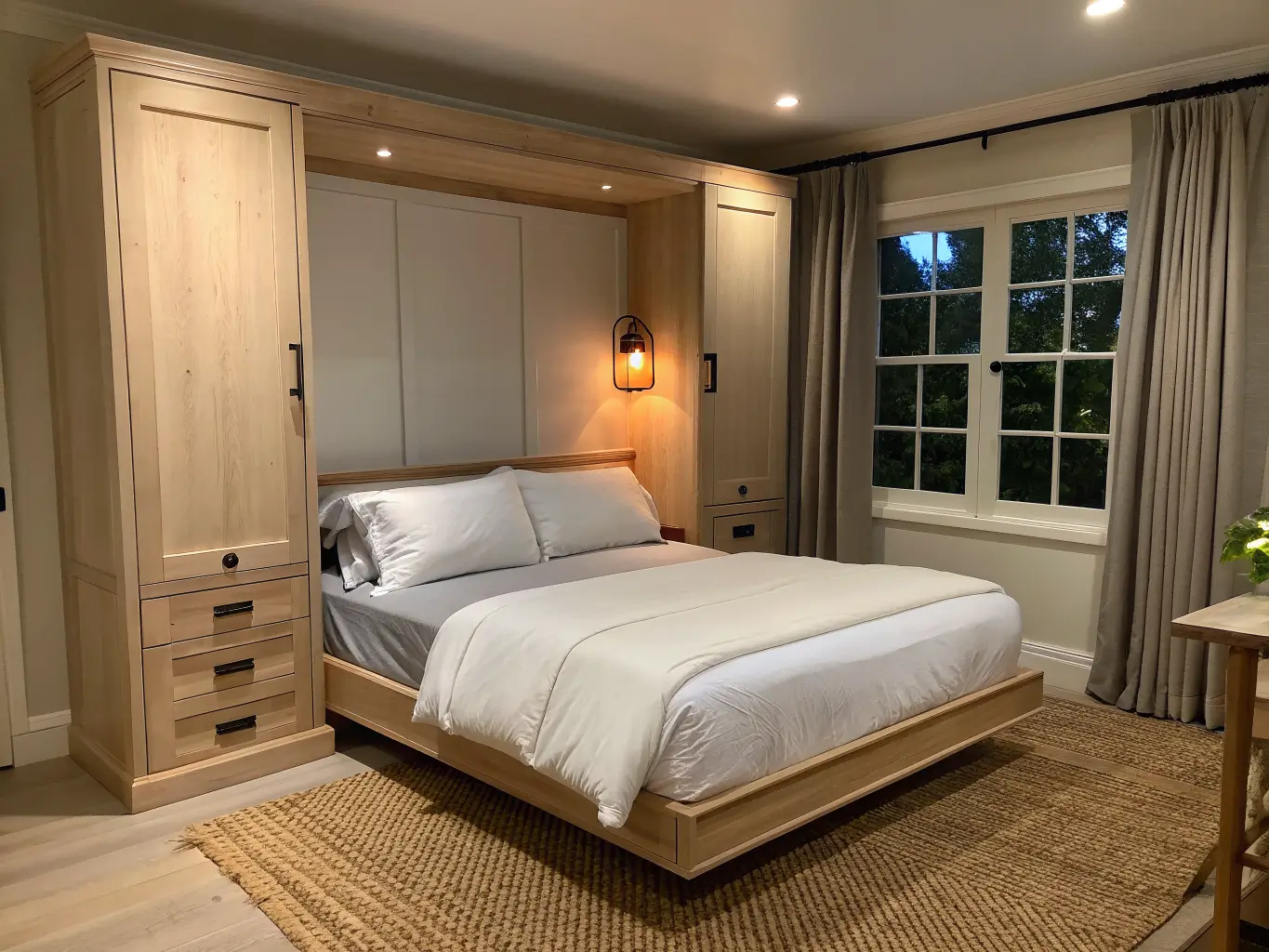
Murphy bed — the most expensive option (budget $1,500–$5,000+ installed) but it gives you back the entire floor during the day. Worth it only if this room is a permanent fixture in your home, not a phase.
The desk needs to be smaller than you think
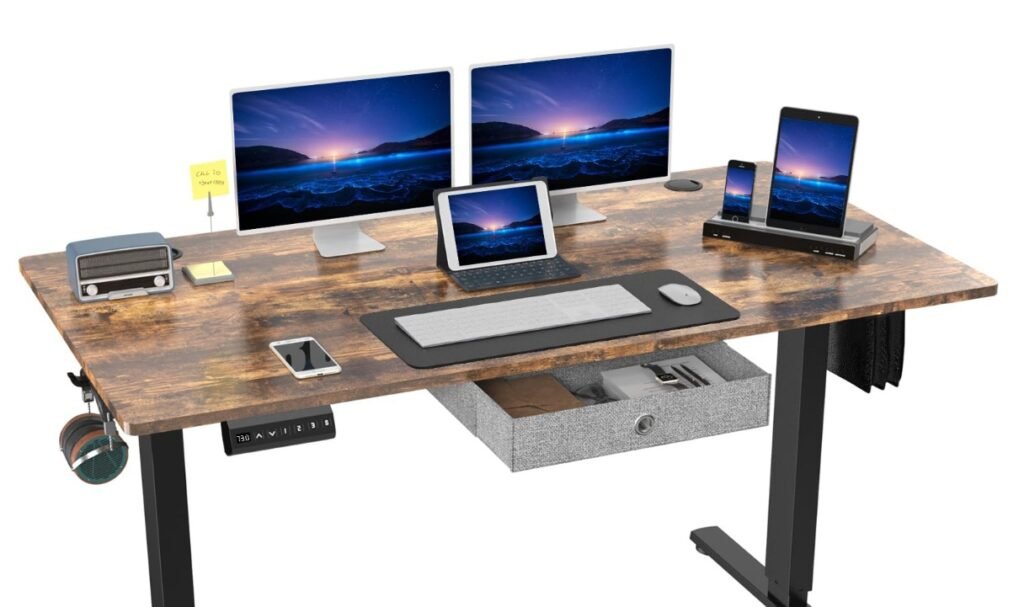
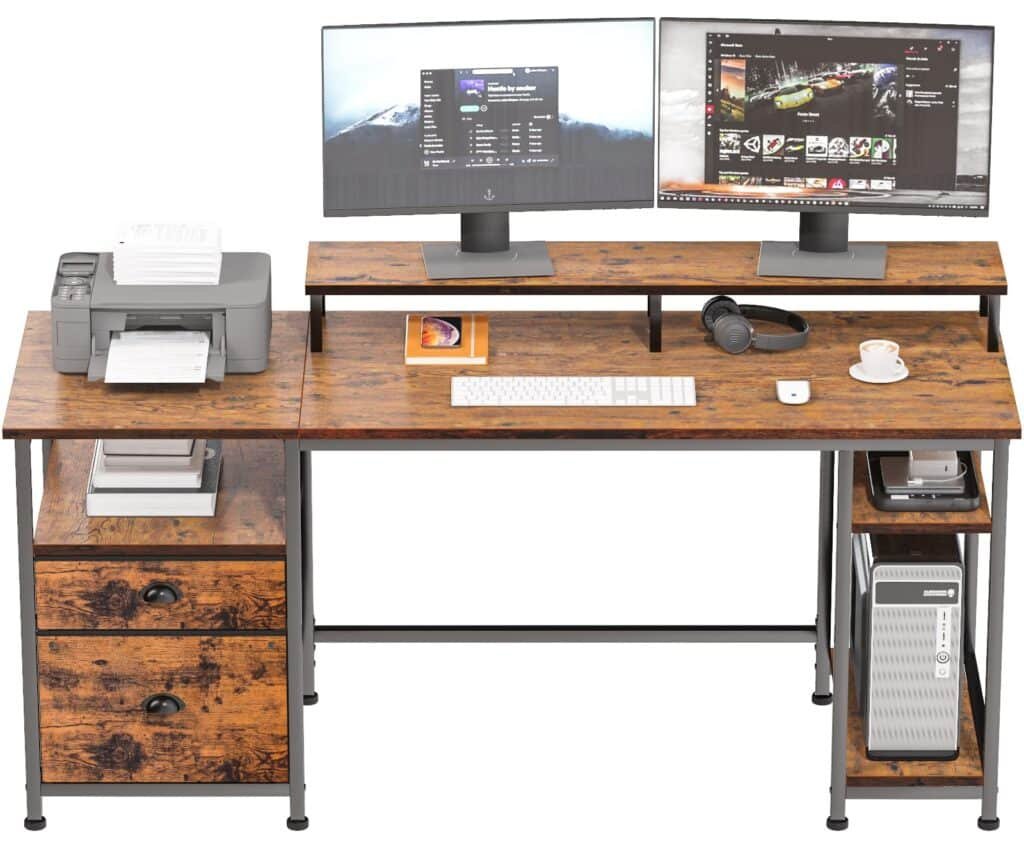
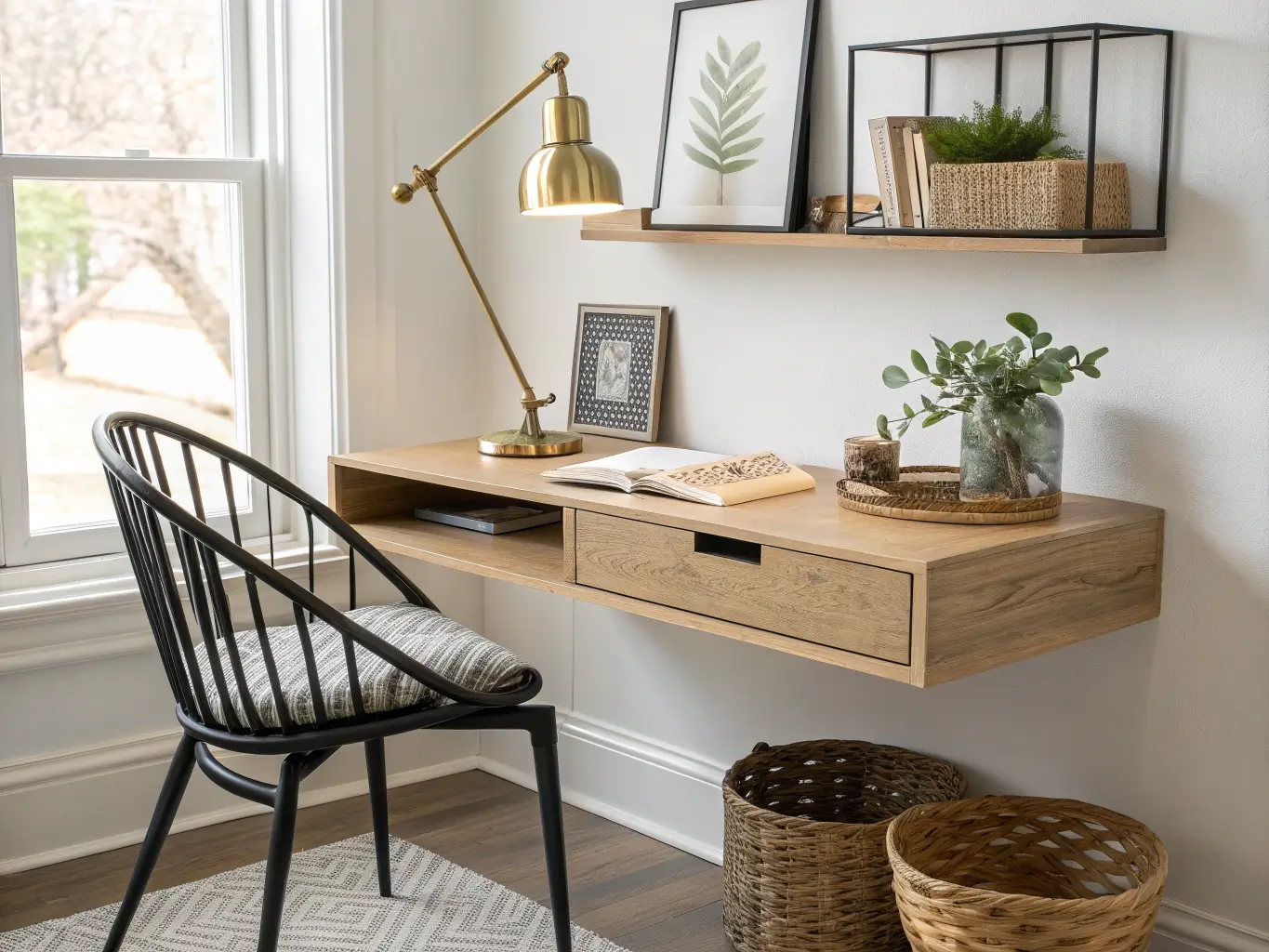
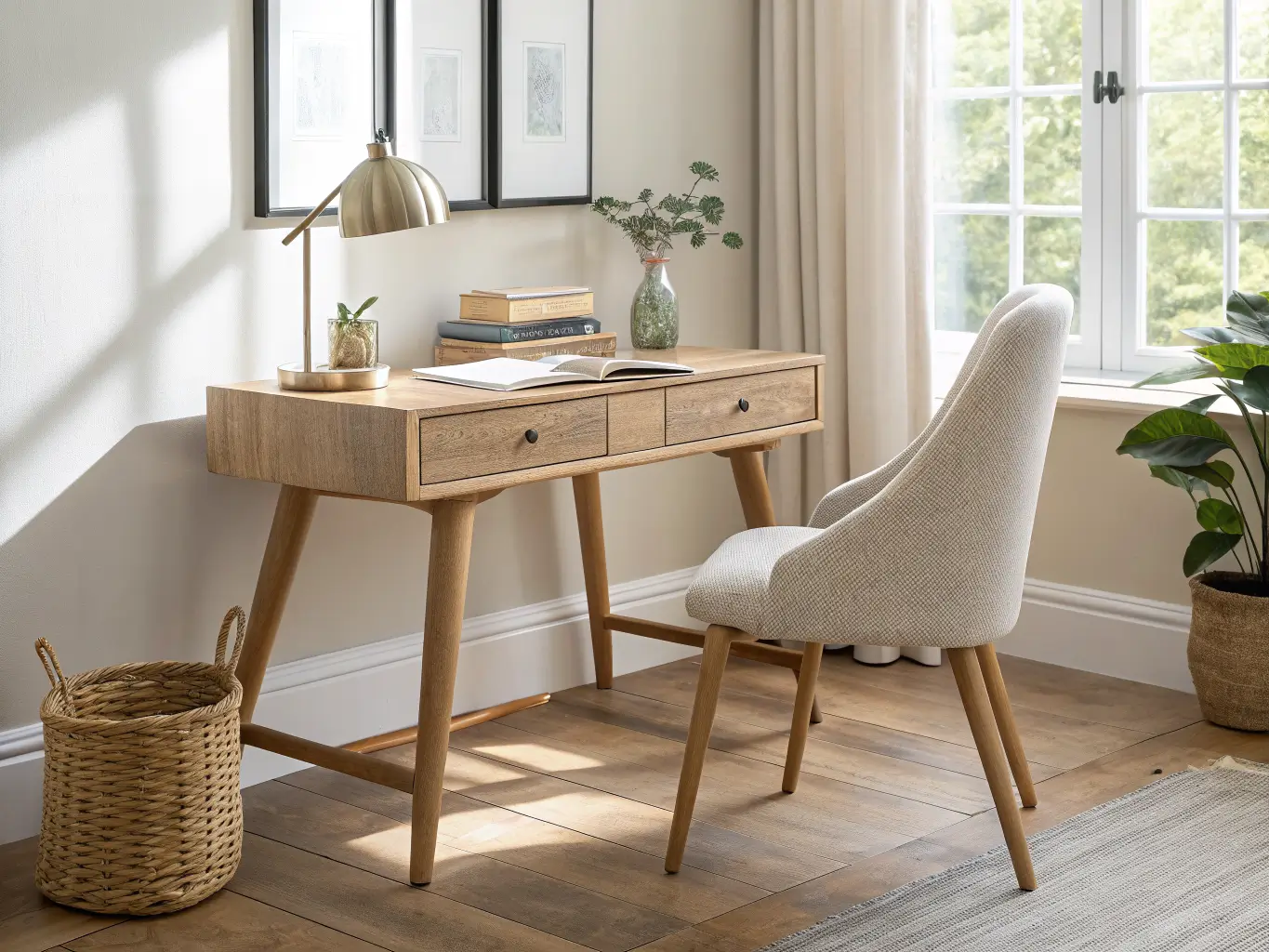
I made this mistake too — bought a 60-inch desk because it was on sale, and it ate the whole room. A compact desk, 36 to 44 inches wide, or a wall-mounted floating desk, keeps the work zone from visually taking over. If you’re tight on space, a floating desk that’s 12–16 inches deep frees up floor space entirely and reads less “office,” more “writing nook.”
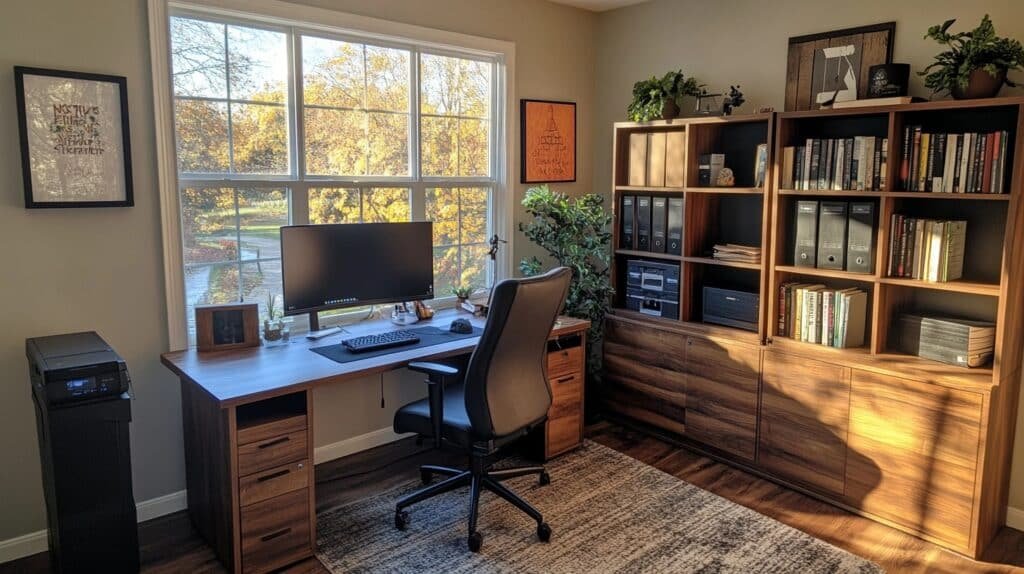
Pair it with a slim, armless desk chair. Bulky ergonomic office chairs are the fastest way to make a guest room look like a call center. If you need real back support, look for upholstered task chairs with a light metal or wood frame — they exist, and they don’t scream “9 to 5.”
Storage is the make-or-break element
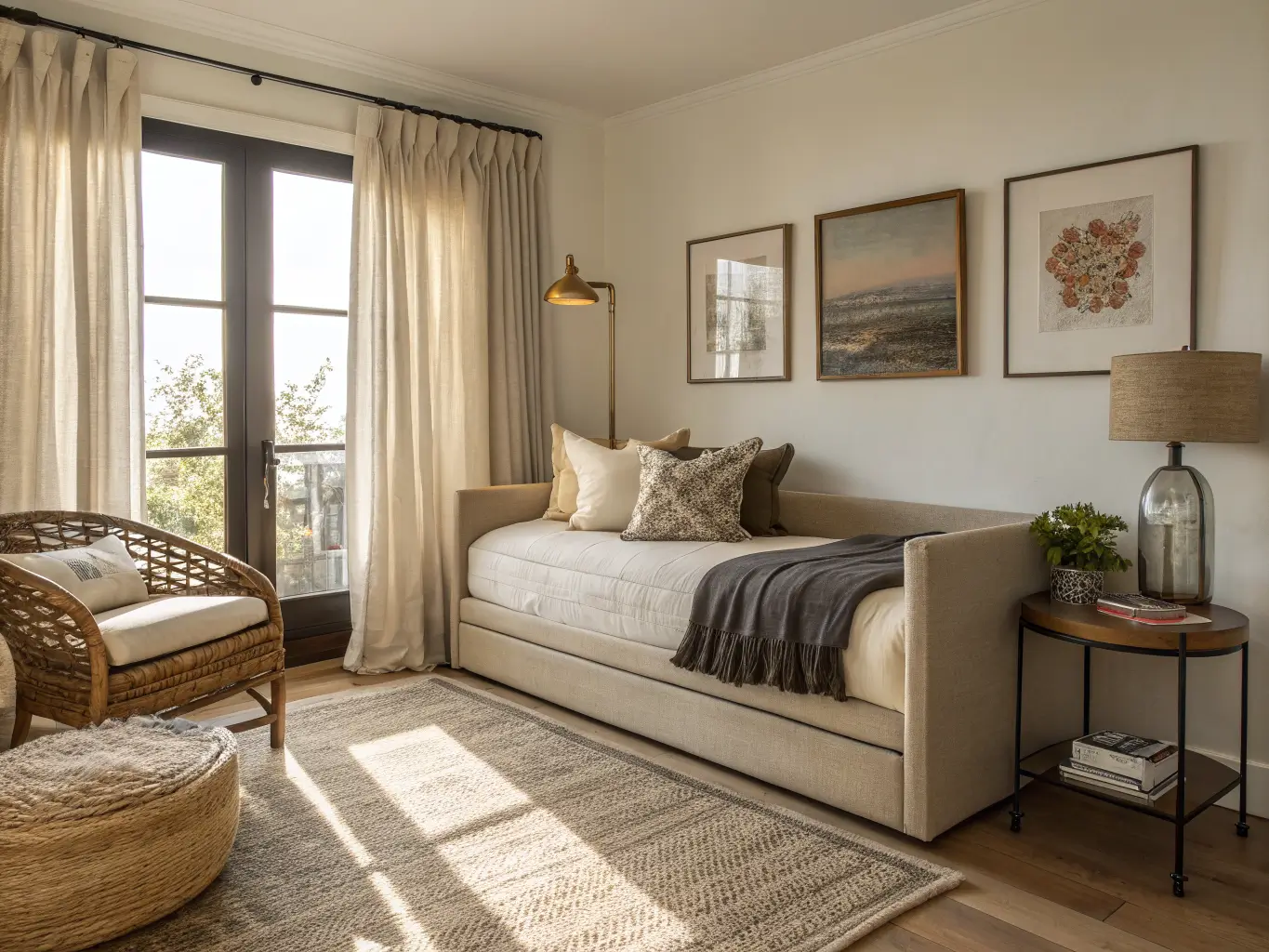
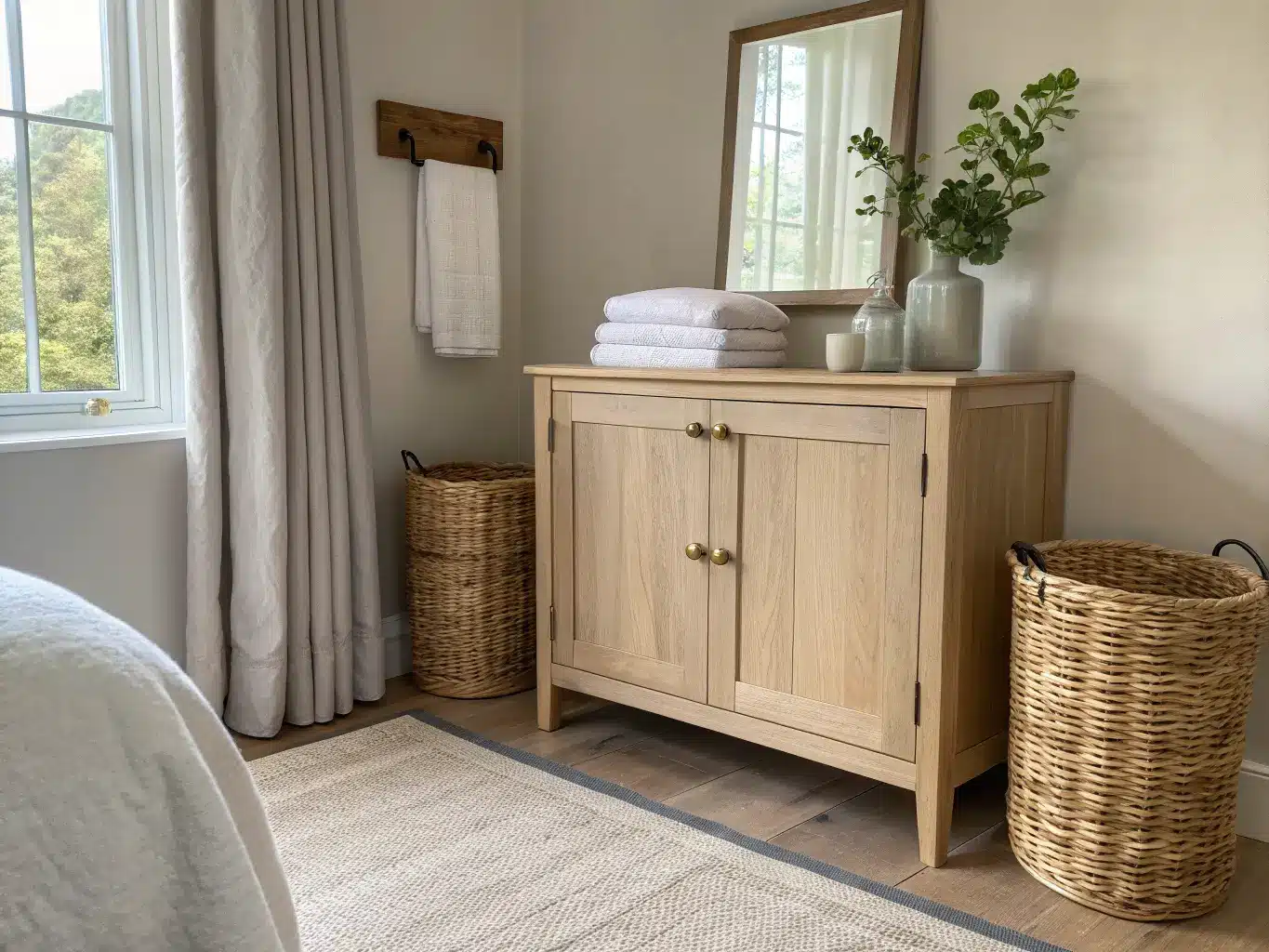
This is the tip I’d tattoo on the wall if I could. Closed storage is what separates a combo room that feels intentional from one that feels like a mess with a bed in it. Cords, chargers, paperwork, printer — all of it needs a door or a lid. I use two lidded baskets under my desk for cables and files, and a small cabinet with doors (not open shelving) for anything guest-related, like extra towels and toiletries. Nothing office-related should be visible when a guest walks in.
Don’t skip the guest comfort layer
A room only feels like a guest room if it has:
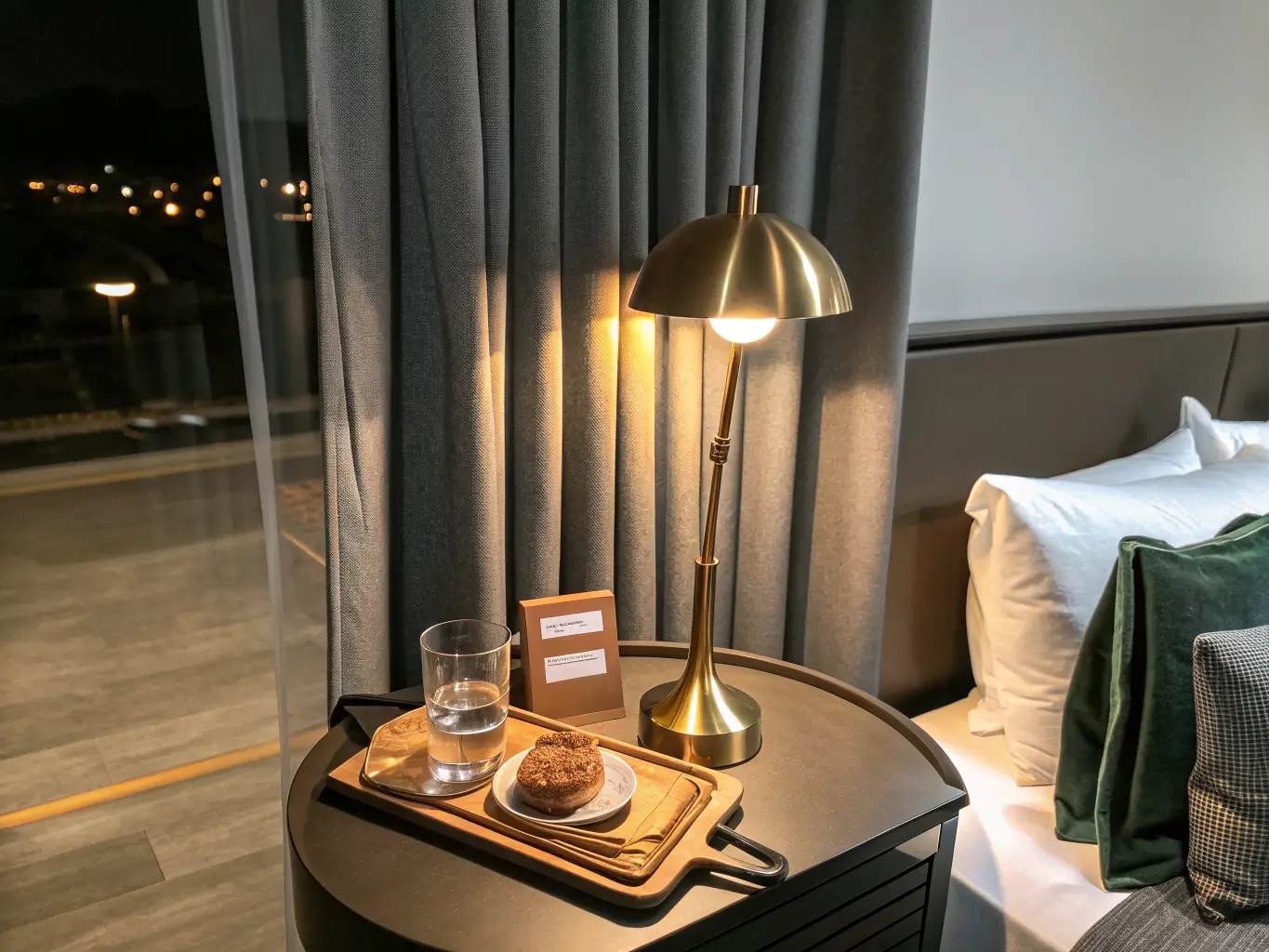
– A bedside table or even just a small tray on the desk corner, with a reading lamp
– A throw blanket and real linens, not whatever sheets were in the closet
– Blackout curtains or shades — this matters more than people think; nobody sleeps well next to a desk lamp glow at 6am
– A small welcome touch: water glass, a couple of snacks, maybe a folded towel with a mint on top. Costs you $10 and guests remember it.
Layering It Together
Set the big furniture first. Bed or daybed, then desk. Everything else is secondary and should wait until those two anchors are placed and you can walk the room without rearranging your shins.
Assign your zones a hierarchy. Whichever function you use daily gets the better wall — usually the one with the window, since natural light matters more for work than for sleep. The guest function gets the secondary wall and borrows the room’s overall softness (bedding, rug, curtains) so it doesn’t feel like an afterthought.
Layer lighting, don’t rely on one fixture. A desk lamp for task light, a wall sconce or small table lamp near the bed for reading. One overhead fixture trying to do both jobs will always feel either too bright for sleep or too dim for work.
Add texture, not more color. My rule: pick two or three tones max — I run warm white, oak, and black in my room — and get variety from materials instead. Linen throw, jute rug, wood desk, woven basket. That’s how you avoid the flat, showroom look without adding more colors to track.
Finish with one or two real decorative moments. A framed print, a small plant, a ceramic tray. Not five things. Restraint is what makes the room feel finished instead of decorated in a panic before guests arrive.
Budget Breakdown
– Budget refresh ($300–$1,500): compact desk, task chair, lamp, storage bins, new bedding, curtains. This is where most people should start.
– Mid-range ($1,500–$5,000): add a daybed or quality sleeper sofa, better task lighting, a real rug.
– Higher-end ($5,000–$15,000+): Murphy bed, custom built-ins, electrician-installed sconces and outlets. Only worth it if this room’s dual purpose is permanent, not a two-year stopgap.
Spend on: the sleep solution and storage. These get used daily and are the hardest to replace once you’ve built the room around them.
Save on: desk chair (unless you have back issues), art, and accessories. Swap these seasonally without guilt.
Mistakes I See Constantly (and Made Myself)
– Treating both zones as equally important. Pick a lead function. The room will look more finished immediately.
– Buying a desk that’s too big. Measure the wall, then measure again before you buy.
– Leaving cords and paper visible. If a guest can see your tax documents from the bed, that’s a storage failure, not a decor one.
– One ceiling light and calling it done. You need at least two light sources doing different jobs.
– No privacy plan. Curtains aren’t optional if this room hosts overnight guests. A lamp glow through sheer curtains at 11pm is not a good look for anyone.
– Over-decorating. The rooms that feel calm are the ones with fewer, better objects — not more baskets, not more throw pillows.
Keeping It Fresh Without Redoing the Whole Room
Swap throw pillow covers, artwork, and the flower situation seasonally — leave the furniture alone. If you want to evolve the room over time, start with the daybed or sleeper sofa and add the desk, shelving, and lighting later as budget allows; you don’t need to buy everything in one weekend.
A few directions if you want to push the style further:
– Minimalist + organic: light oak, linen, woven baskets, nothing shiny
– Modern + traditional: swap the desk for a writing-desk silhouette with turned legs — reads more “guest room,” less “home office”
– Hotel-inspired: crisp white bedding, a styled tray on the nightstand, every cord hidden
Upgrade to a Murphy bed or built-ins only once you’re certain this room isn’t going back to being a nursery, a gym, or storage in a year. Permanent problems deserve permanent solutions. Temporary ones don’t need a $6,000 wall bed.
For another angle on this, my bedroom and study room design guide covers the same space from a different starting point.