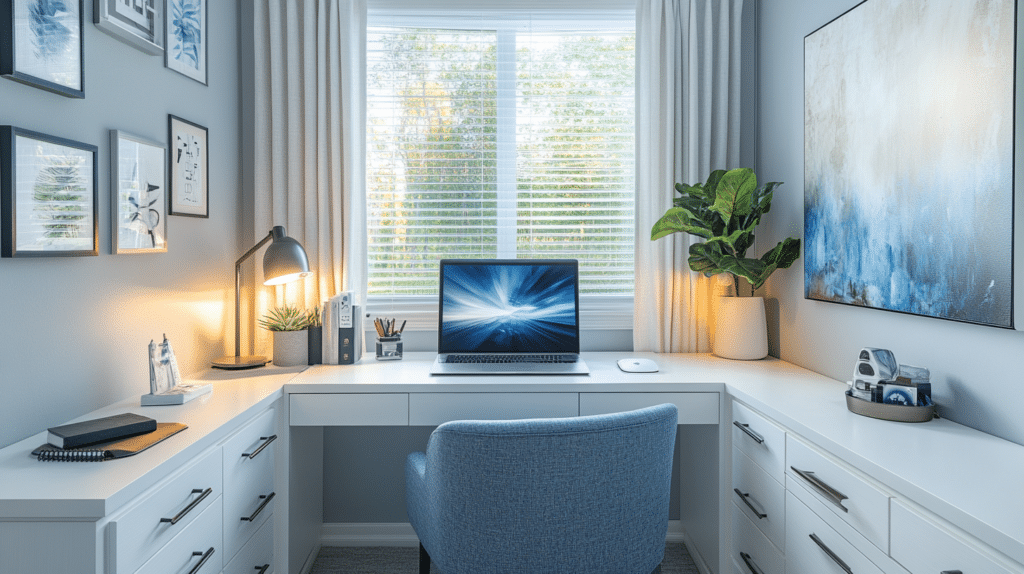
Why this setup works (and why my first try didn’t)
I turned my living room into a study combo two years ago, out of necessity, not inspiration. My spare bedroom became a nursery and my desk had nowhere else to go. My first instinct was to just shove a desk in the corner and call it done. It looked terrible — like someone had abandoned a filing cabinet in a furniture showroom. It took me about four rearranges to figure out that a living room study combo isn’t about finding empty floor space for a desk. It’s about making the desk behave like it belongs to the room.
If you’re trying to do this in your own space, here’s what actually works.
What This Look Is and Who It’s For
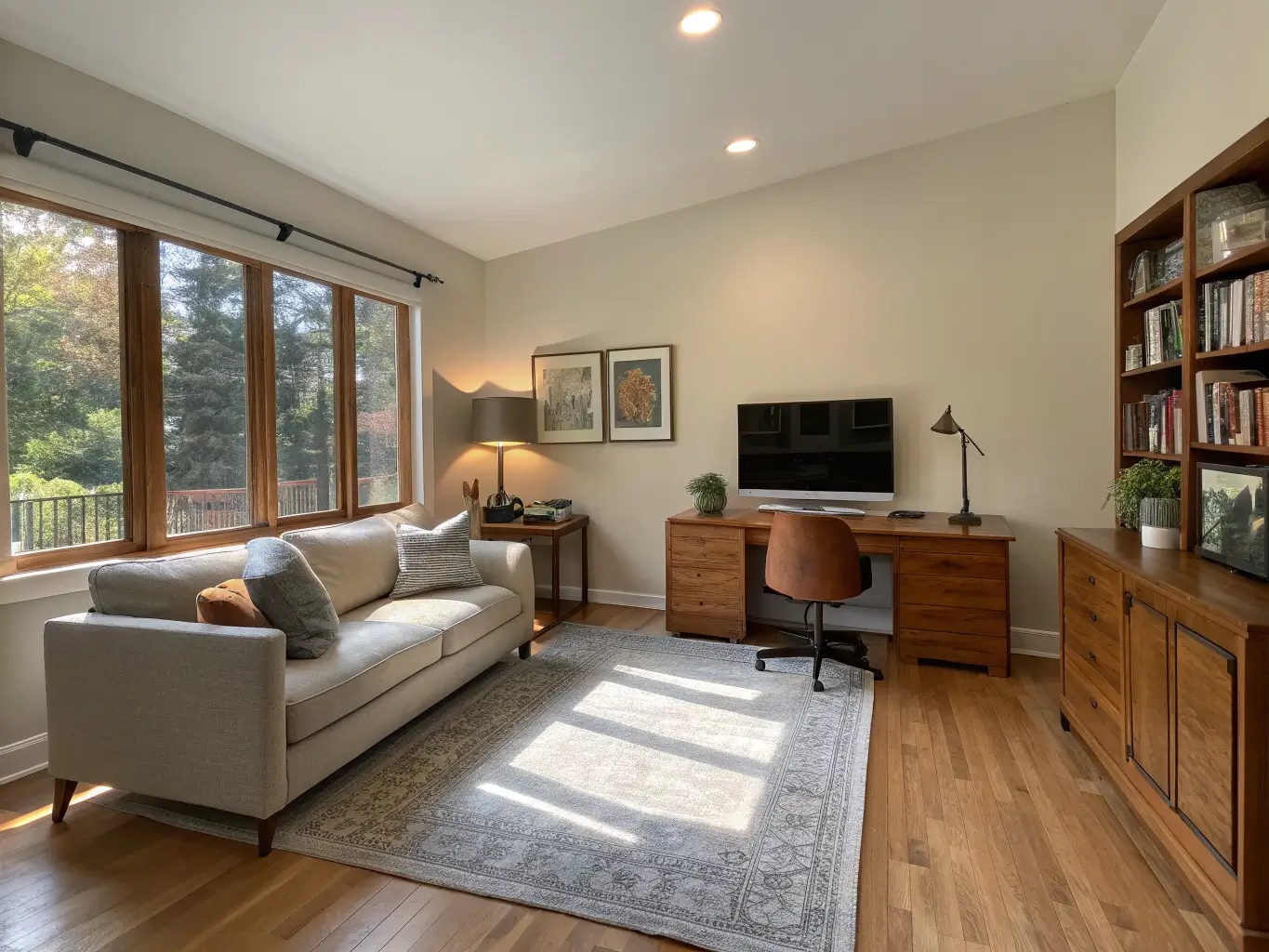
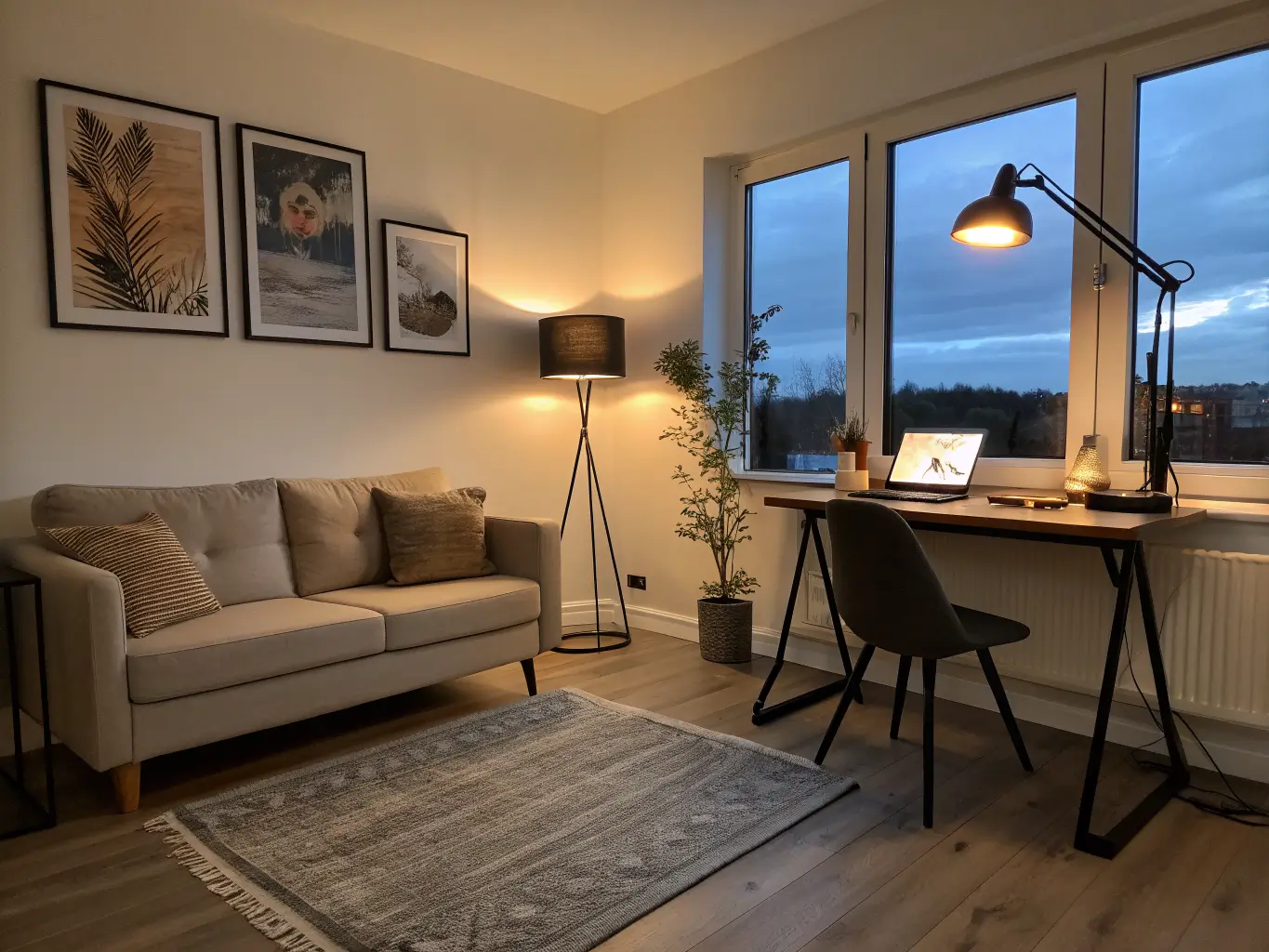
A living room study combo is exactly what it sounds like: a real work zone — desk, chair, storage, lighting — sharing space with your sofa, coffee table, and TV setup, with no wall between them. The goal isn’t to make the living room look like it has an office bolted onto it. The goal is to make both zones feel like they were designed together.
This works for remote workers without a spare room, students in studio apartments, couples sharing one main living space, and honestly anyone who wants a place to pay bills and answer emails without staring at a laptop on the coffee table every night.
Time and cost, realistically:
– A simple version — desk, chair, lamp, a rug to anchor the seating area — takes a weekend and runs $250 to $1,500 depending on furniture quality.
– A built-in-style version with wall-mounted shelving, custom paint, and better furniture takes 1-2 weeks and costs $2,000-$6,000+.
I did the cheap version first, hated it, and eventually upgraded piece by piece. That’s a legitimate path too — you don’t have to nail it in one weekend.
Space needed: This works in small and medium living rooms. You don’t need a dedicated corner the size of a home office. A compact desk — 36 to 60 inches wide, 20 to 24 inches deep — fits into more rooms than people assume, including behind a sofa or in a dead corner near a window.
The Design Identity: Modern, Warm, Not Corporate
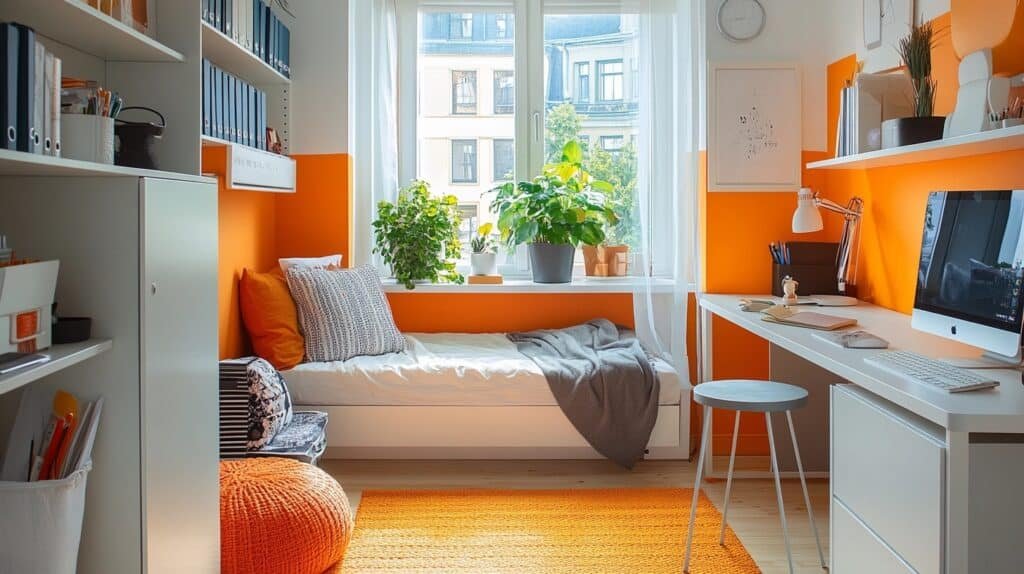
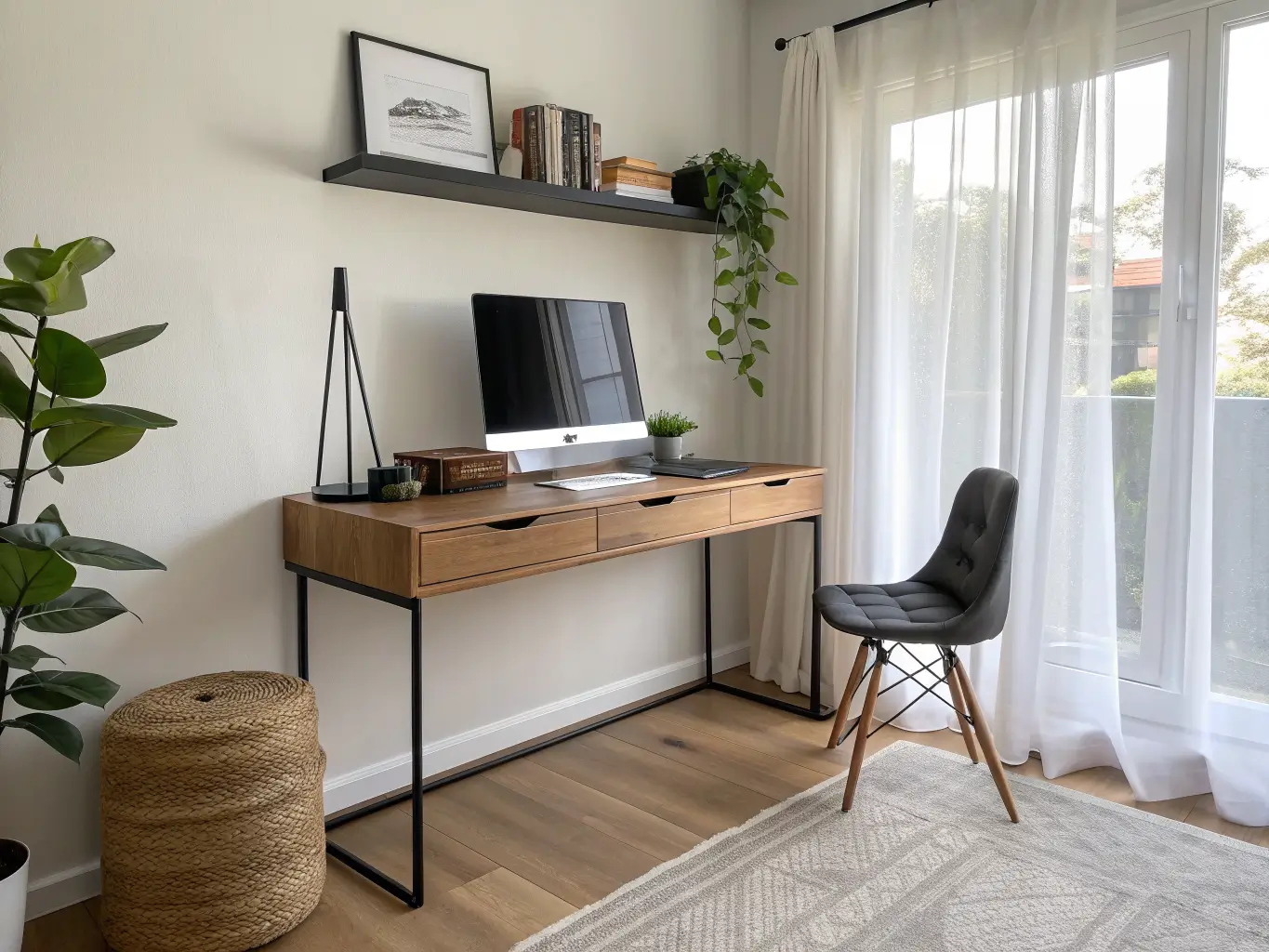
The look that works best here is a hybrid — modern living room bones with just enough function layered in that it reads as a real workspace. Think oak, white, taupe, soft gray, and black accents, not glossy laminate and ergonomic mesh. Materials that pull double duty: light oak or walnut for warmth, matte black metal for contrast, boucle or linen upholstery, a wool rug underfoot.
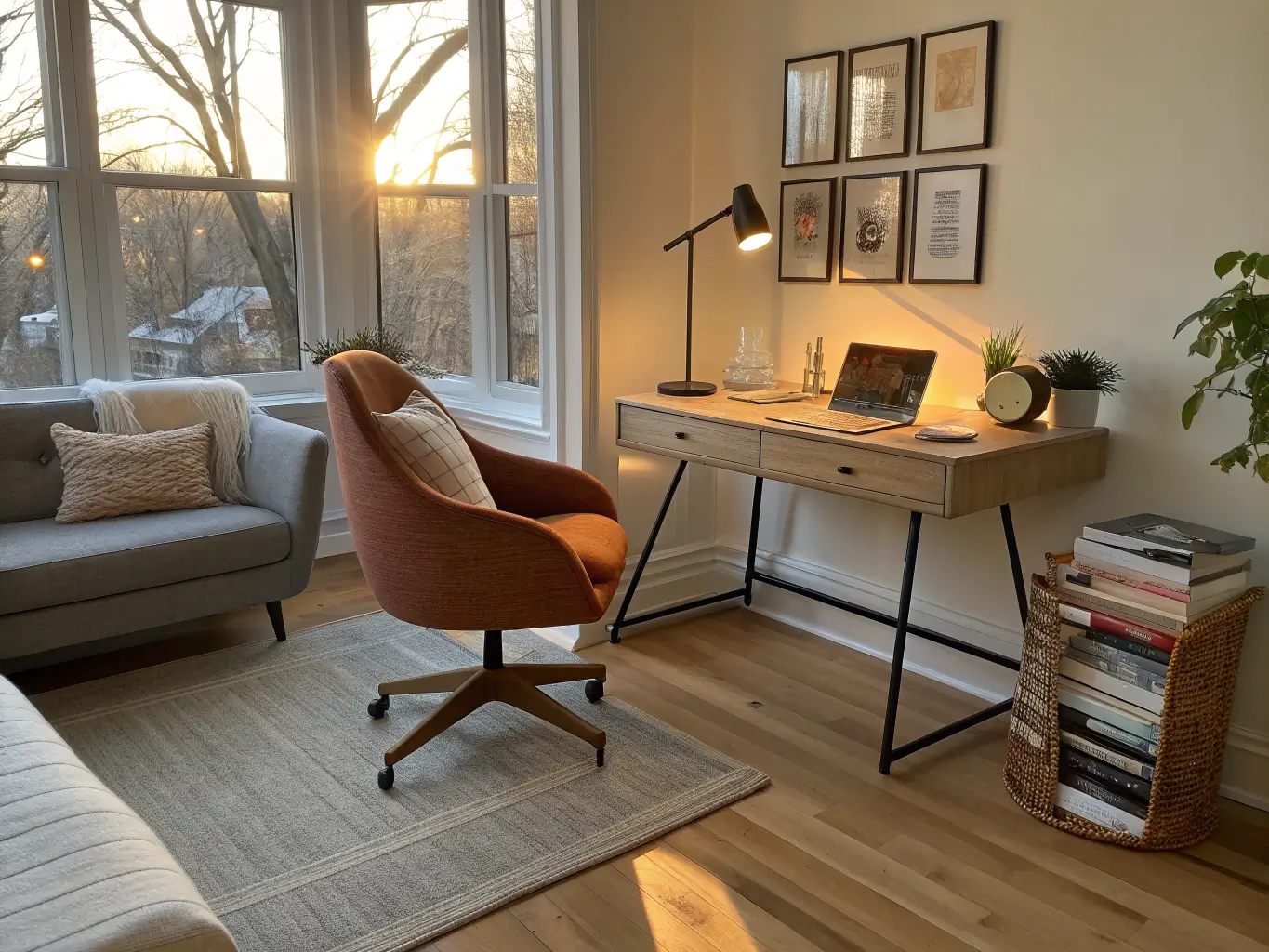
The mistake I made originally was buying an actual “office chair” — black mesh, adjustable everything — and plunking it next to my linen sofa. It looked like two different rooms fighting for dominance. I eventually swapped it for an upholstered swivel chair in a rust boucle that matches nothing “office” about it, and the whole zone calmed down instantly.
The Pieces You Actually Need
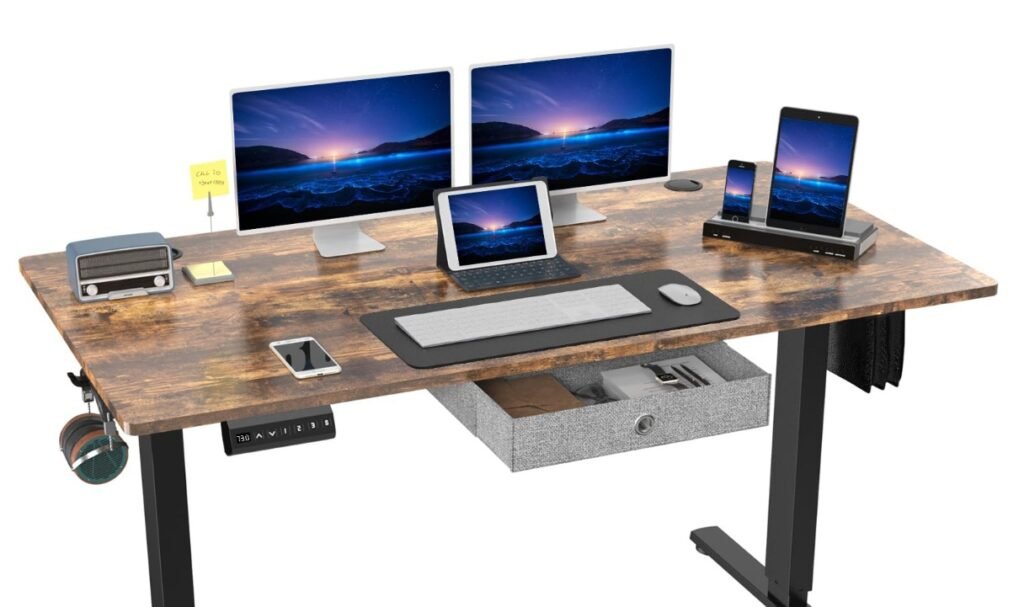
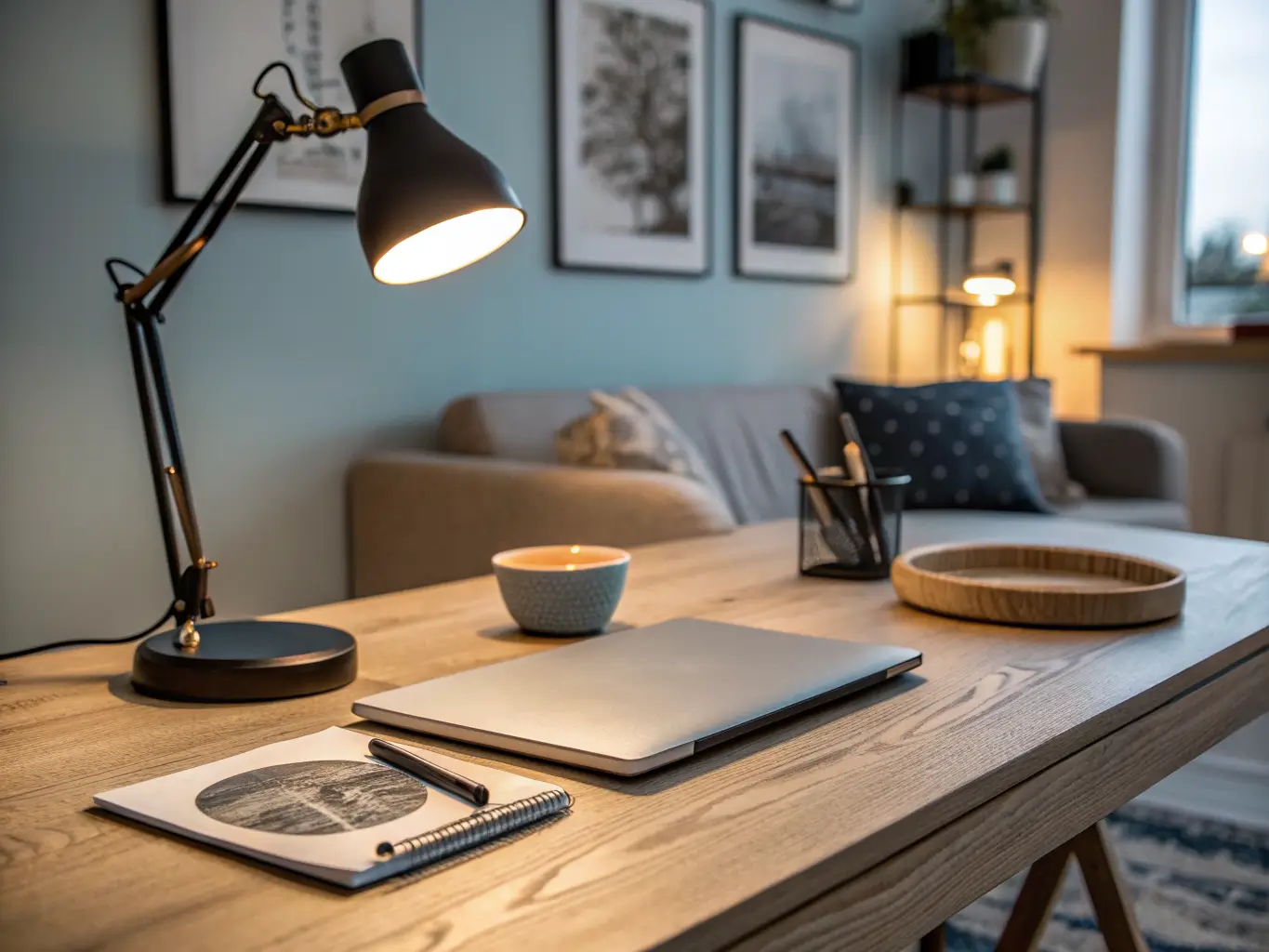
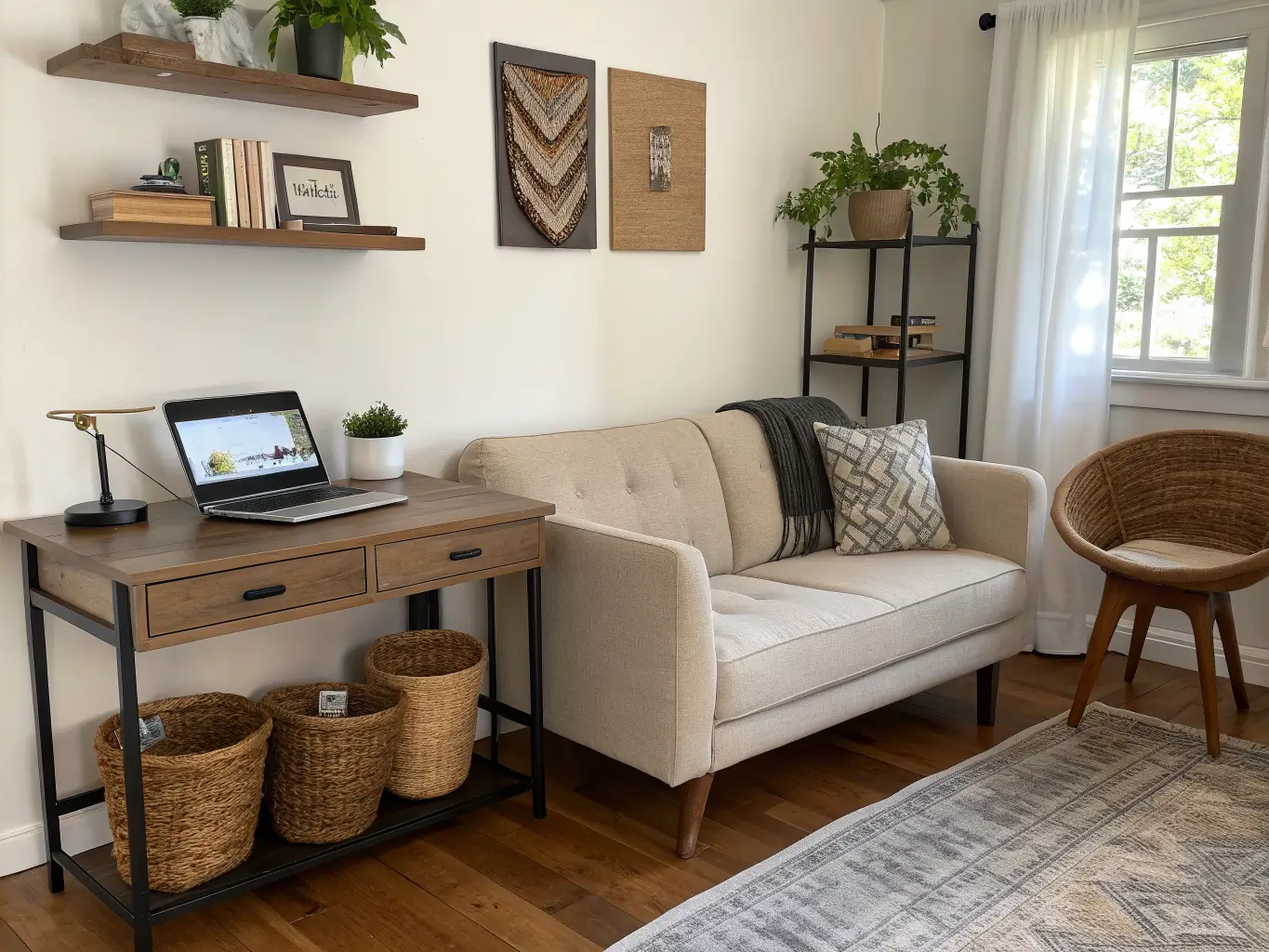
The desk. This is the piece that makes or breaks the room. Go compact: 40-60 inches wide, 20-24 inches deep for a real working desk, or as shallow as 12-16 inches if you’re doing light laptop work and want something closer to a console table. A wall-mounted desk or floating shelf desk is smart if floor space is tight — no legs, no bulk, easier to keep the sightline open.
The chair. Two options, and the right one depends on how hard you actually use the desk:
– If you’re in it 6+ hours a day, get a real task chair, but choose one in a neutral fabric or leather that could pass for a dining or accent chair.
– If it’s occasional use — bills, laptop work a few hours a week — skip the office chair entirely and use an upholstered accent chair. It’ll look like it belongs in the living room because it does.
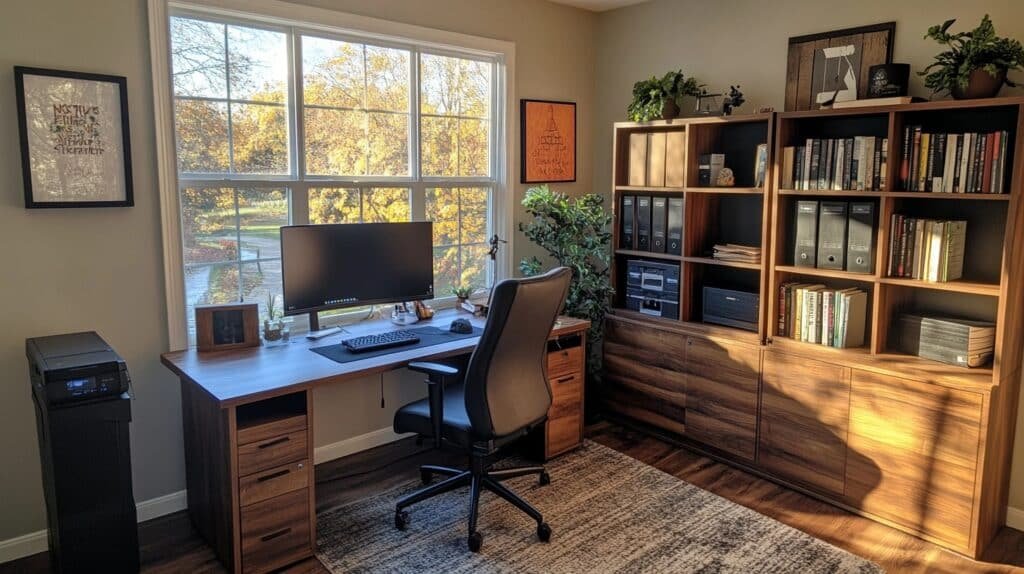
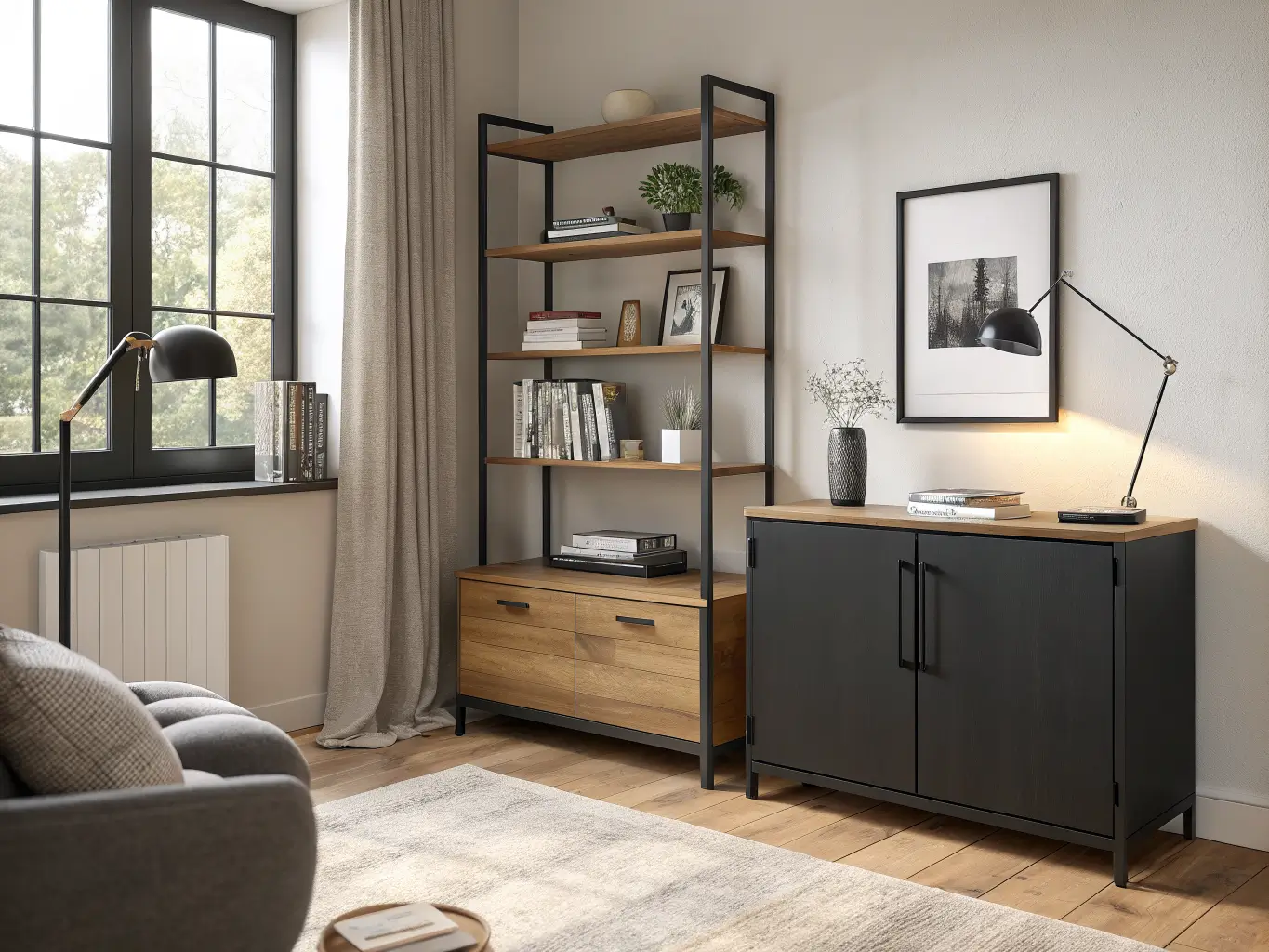
Storage. Mix open and closed. Open shelving for books and a few objects, a closed cabinet or lidded basket for the stuff you don’t want visible — cords, files, chargers. All open storage reads cluttered fast; all closed storage feels sterile. You want both.
Lighting — this one’s non-negotiable. A single overhead light will not carry both a lounge zone and a work zone. Layer it:
– A task lamp or clamp light directly at the desk
– A floor or table lamp for the seating area
– Warm bulbs, 2700-3000K — anything cooler makes the whole room feel clinical
Cable management. Buy a cable tray or a $15 cord box before you buy anything decorative. Visible cords are the single fastest way to make a nice setup look unfinished. I ran mine through a felt cable sleeve stuck to the underside of the desk — took ten minutes, made a bigger visual difference than any decor item I’ve bought since.
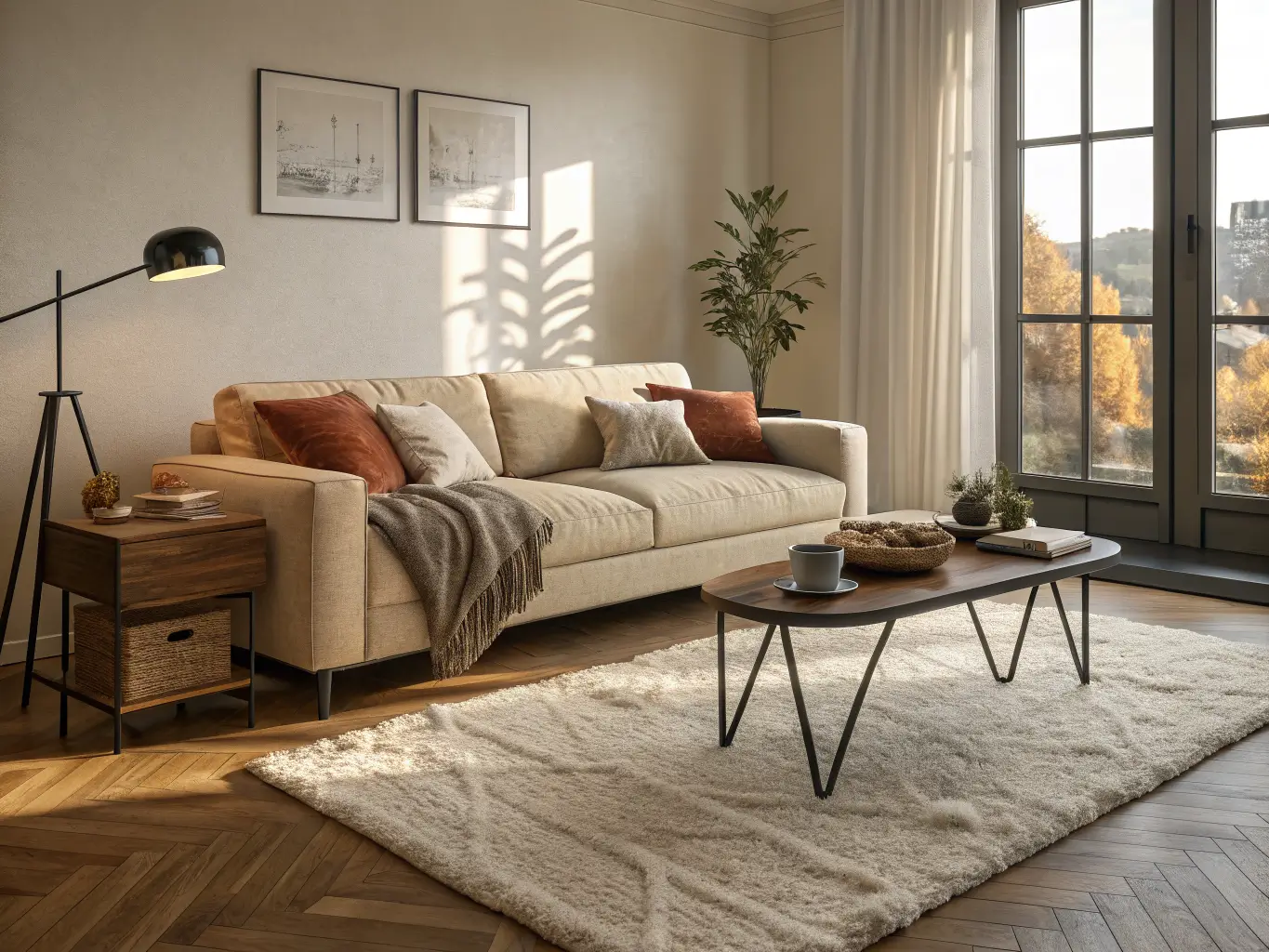
A rug to zone the lounge area. This is the trick that actually separates the two zones without a wall. Put a rug under your sofa and coffee table to visually contain that area, and let the desk sit outside it, against a wall or perimeter. Your eye reads “two zones” even though there’s nothing physically dividing them.
How to Put It Together, Step by Step
1. Measure before you buy anything. Check the wall, corner, or strip behind your sofa. The desk needs to fit without blocking a walking path or cutting across your sofa-to-TV sightline. This sounds obvious; I ignored it once and ended up with a desk I had to sidestep every time I walked to the kitchen.
2. Pick your spot with light in mind. Near a window is good. Directly facing a window with your screen catching glare all afternoon is not. I learned this by trial — my desk faced west for about three months and I couldn’t see my laptop screen after 3 PM in summer.
3. Clear the deadweight first. Pull out any side table, floor lamp, or oversized decor piece currently in the footprint. You need clearance for the chair to pull out fully, plus walking room around it.
4. Plan your outlets and cords before final placement. Figure out where power actually is before you commit to a spot. Under-desk power strips and a cable tray solve 90% of the mess.
5. Place the big anchors first — sofa, rug, then desk or shelving unit — so both zones get breathing room. Don’t add the desk last as an afterthought; treat it as a real anchor piece.
6. Add vertical storage if floor space is tight. Floating shelves above the desk do a lot of work without eating floor footprint.
7. Layer lighting last, once furniture’s settled, so you can see where task light is actually needed.
8. Finish soft. One plant between the desk and sofa to soften the transition. A framed print above the desk so it reads as art, not office. A basket for the stuff you don’t want on display.
Common Mistakes That Make This Look Unfinished
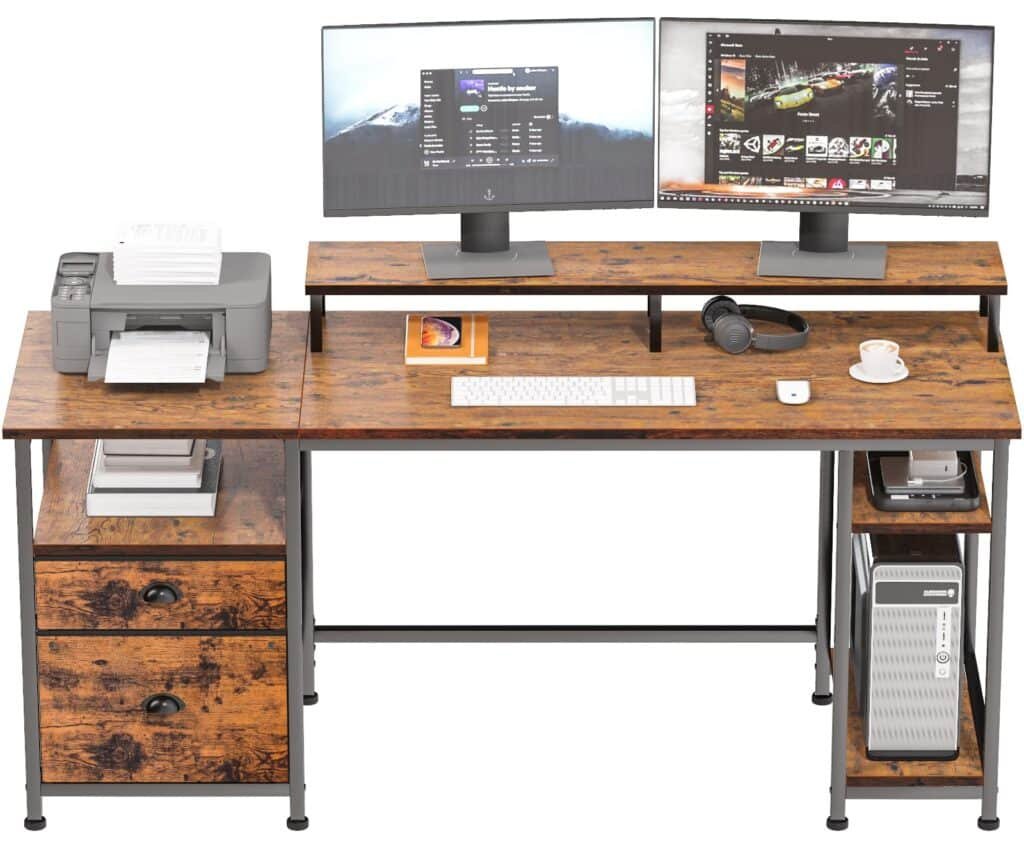
– Desk too big for the room. A 30-inch-deep desk in a small living room eats the whole zone and blocks circulation. Stay compact — 20-24 inches deep is plenty for a laptop and some paperwork.
– One light source for the whole room. You need ambient light for lounging and task light for working. Skipping this makes the space feel either too dim to work in or too harsh to relax in.
– Visible cords everywhere. Handle this before you style anything else.
– Corporate furniture in a residential room. A black mesh office chair or laminate desk against a linen sofa and wool rug looks like two rooms collided. Match your materials.
– An overloaded desktop. Desk organizers, six picture frames, a mug collection — it undermines the calm look you’re going for. Keep the desk surface almost empty when not in use.
– Blocking the main sightline. If the desk interrupts the view from your entry to the sofa, or from the sofa to the TV, it’ll always feel like an obstacle instead of a feature.
Keeping It Cohesive Over Time
Stick to one main neutral (oak, white, greige — pick one) plus one or two accent colors, and repeat that palette across both zones. If your desk is walnut, don’t bring in a gray oak bookshelf — pick one wood tone and stay loyal to it. Repeating the same black metal hardware on shelving and lamp bases does more for cohesion than people expect.
Rotate the soft stuff seasonally — a heavier textured throw in winter, a lighter linen one in summer, a swapped-out pillow — but leave the furniture layout alone. The workspace-living room combo only reads as intentional if the bones stay consistent while the small stuff changes.
If down the line you want the “study” side to feel stronger, add a bookcase as a soft divider or extend shelving into a wall-unit frame around the desk. If you want the “living room” side to dominate more, swap to a console-style desk that closes up or blends into a cabinet — something that can disappear when you’re not using it.
The whole point is that neither side should feel like a compromise. Mine still isn’t perfect — I’ll probably swap the desk again next year for something narrower — but it stopped looking like an office wedged into a living room the day I stopped treating the two zones as separate projects.
For another angle on this, my bedroom and study room design guide covers the same space from a different starting point.