A dark academia reading nook is the corner of my apartment I actually fight my husband for.
It’s a moody, book-stuffed reading spot built around old-library colors, warm lamplight, and furniture that looks like it’s been in the family for decades, even if you bought it last month at a thrift store for $40. If you’ve been scrolling gothic library photos wondering how to get that feeling into your own home without a Victorian mansion or a design budget, here’s what actually works.
I built mine into a dead corner of my bedroom that used to hold a laundry basket and a stack of mail. It took me two failed attempts before it looked right — more on that below — but it now costs me nothing to maintain and gets used almost every night.
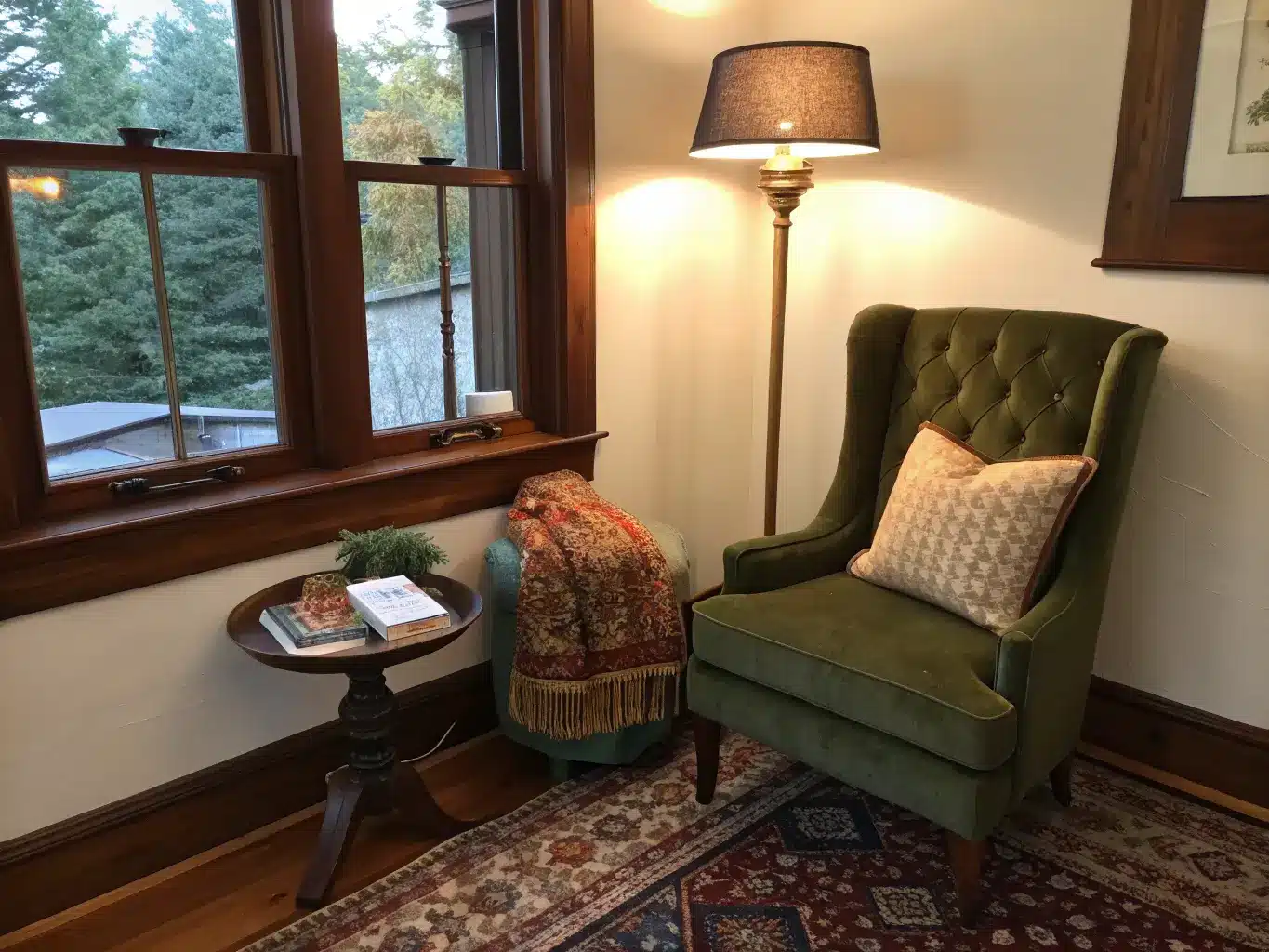
What Dark Academia Actually Means as a Decor Style
It’s not “goth.” It’s gothic-adjacent, but softer — think Victorian study, old university library, secondhand bookshop, rather than Halloween decor. The DNA is gothic + vintage library + old-world academic, collected-looking rather than matchy.
The palette: oxblood, forest green, navy, charcoal, aubergine, plum, espresso brown, balanced against cream, oatmeal, or warm tan.
The materials: leather, velvet, wool, mohair, linen, brass, iron, walnut, oak, reclaimed wood.
This look is made for readers, writers, journal-keepers, and anyone drawn to fantasy or classic literature who wants a quiet retreat instead of a bright, airy lounge. It works in a bedroom corner, a home office, a window seat, an attic nook, or — my personal favorite candidate — that awkward closet you never use.
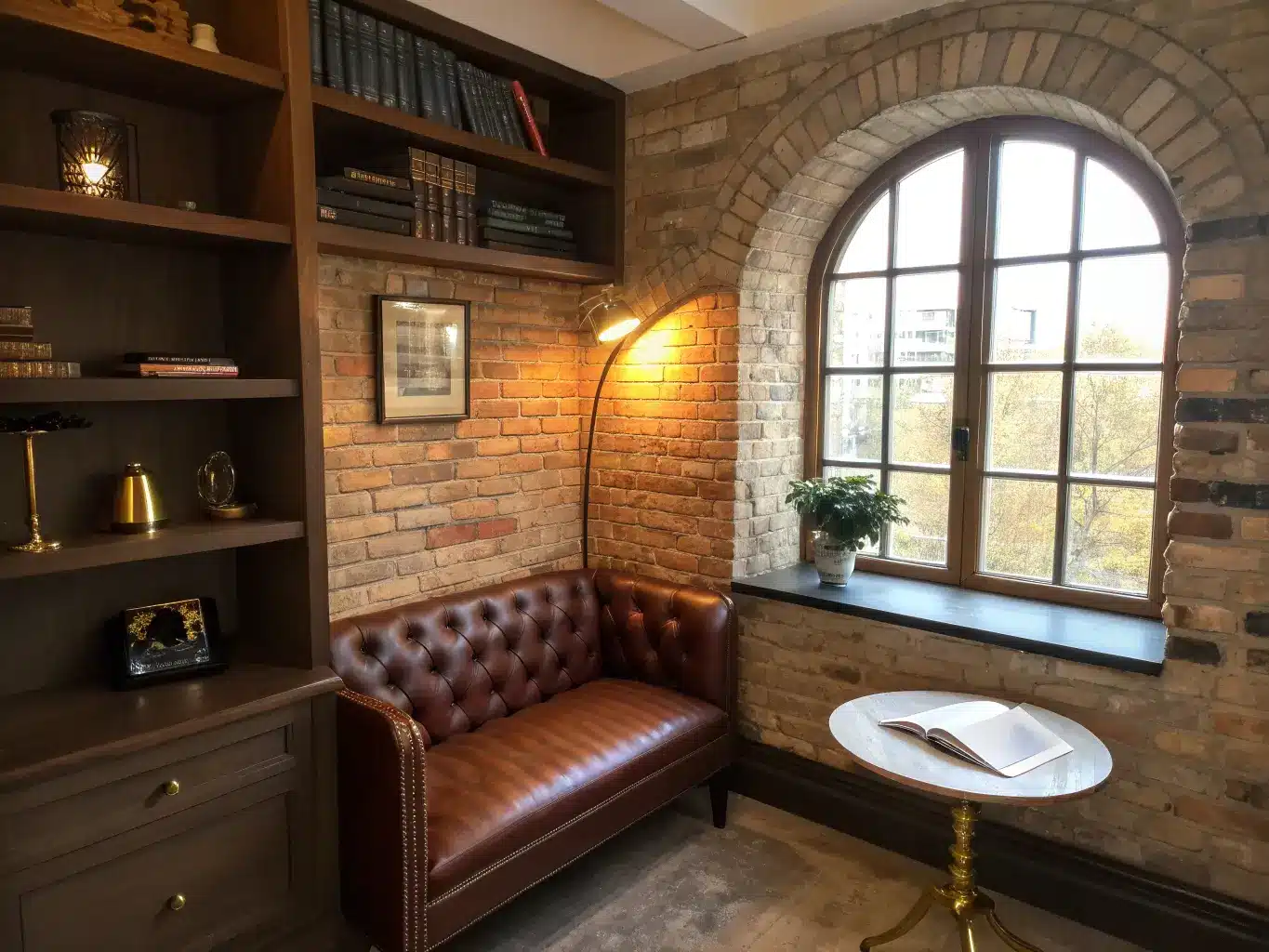
Time, Cost, and Space: What to Actually Expect
Time: A simple styled corner (chair + lamp + books you already own) can come together in an afternoon. A built-in bench or window seat with paint and wallpaper is a weekend project minimum.
Cost:
Budget ($100–$300): thrifted chair, a lamp, a throw, printable vintage art
Mid-range ($400–$1,200): a real chair, side table, rug, layered lighting
High-end ($1,500+): leather loveseat, custom millwork, antique decor
Space: A corner, window alcove, under-stair niche, or deep closet all work. This style actually favors small spaces — it leans on materials and mood, not square footage.
Skill level: Beginner-friendly for a styled corner. Intermediate to expert if you’re adding built-ins or wall treatments.
Season: Reads year-round but peaks in fall and winter, when the moody palette and candlelight just make more sense.
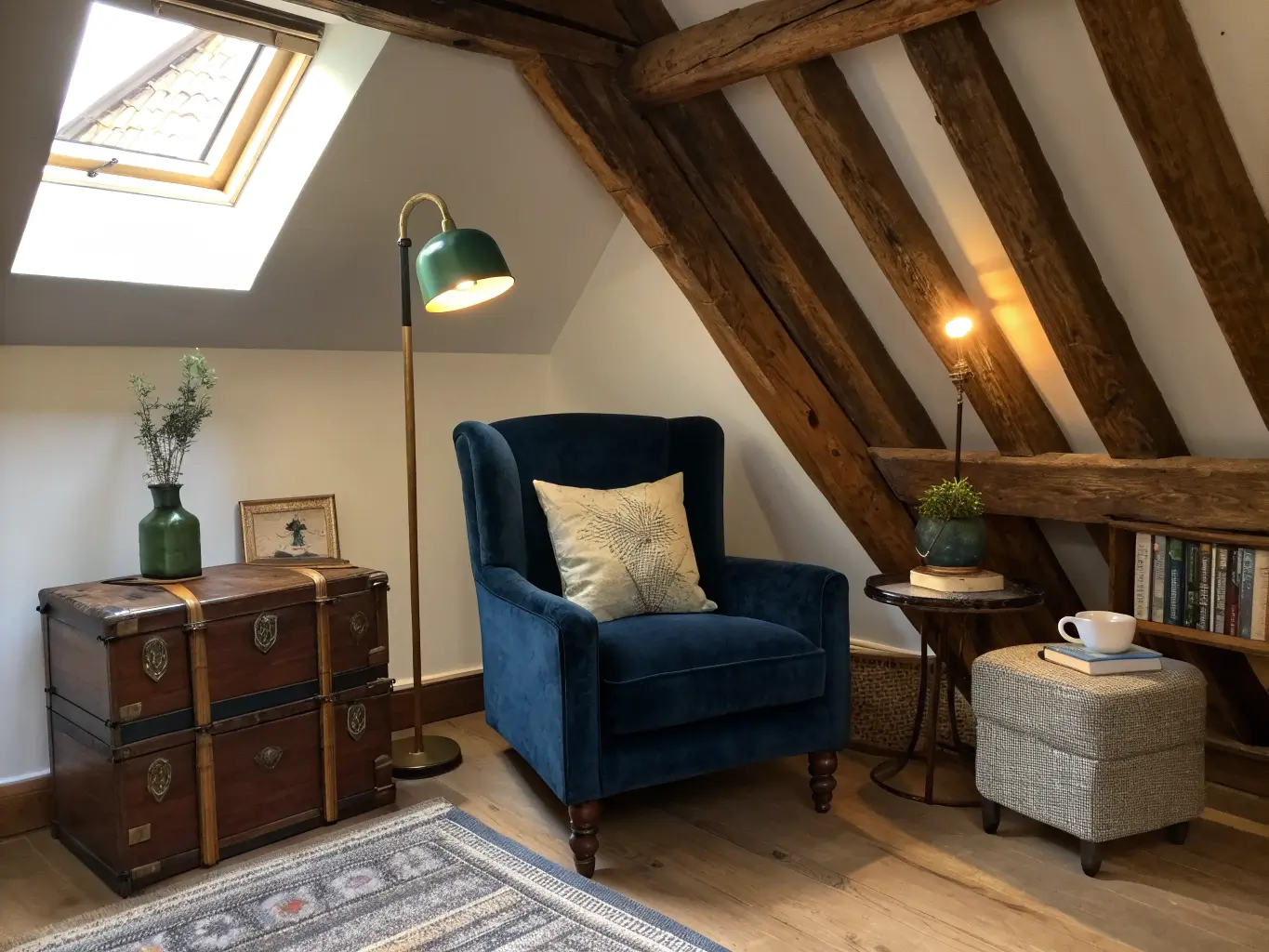
The Must-Have Pieces
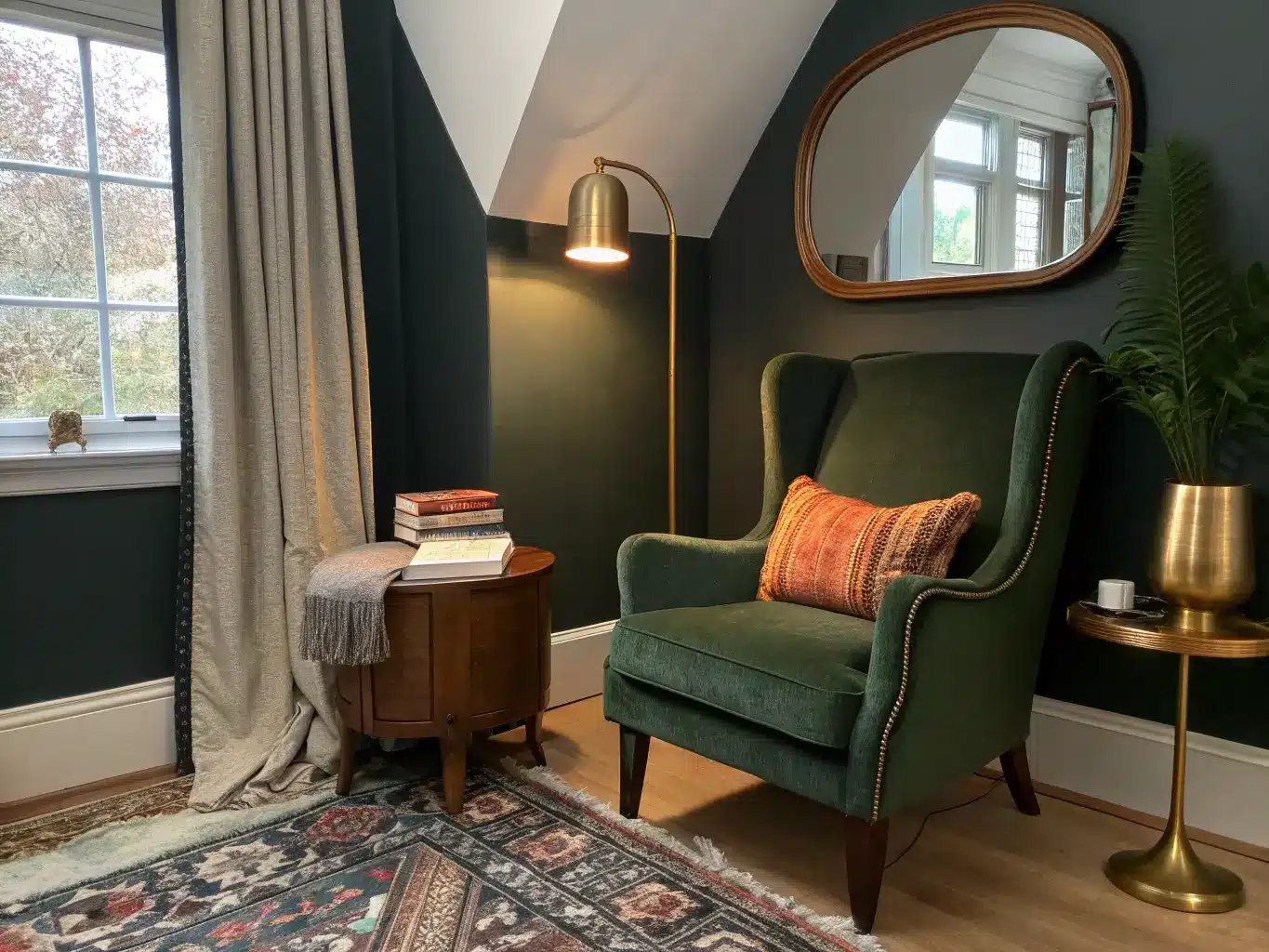
1. A hero chair. This is non-negotiable and where I’d spend real money if I only spend it once. A tufted leather chair, a Chesterfield loveseat, a wingback, or a velvet armchair. Mine is a $65 wingback I found at an estate sale with a torn cushion I recovered in dark green velvet — reupholstery isn’t as scary as it sounds if you can staple gun in a straight line.
2. Warm lighting. A brass articulated wall sconce or a brass desk lamp with a green glass shade does more to sell this style than almost anything else. Skip anything with a cool white bulb — you want 2700K warm light, ideally from a lamp at seat height, not an overhead fixture.
3. A side surface. Small round marble-top table with brass legs, a narrow oak side table, or — cheapest option — a stack of hardcovers doing double duty as a table.
4. Books, obviously. Cloth-bound hardbacks, leather-look spines, faded jewel-tone covers. Thrift stores and library sales are your best source; I’ve never paid more than $2 a book for ones that look right.
5. Textiles. A chunky wool throw, an oatmeal or cream blanket (this is your light anchor — more on that below), velvet or linen cushions, a Persian-style rug or rug fragment.
6. Wall decor. Botanical prints, classical portraits, an arched mirror, or moody toile wallpaper if you’re doing an alcove.
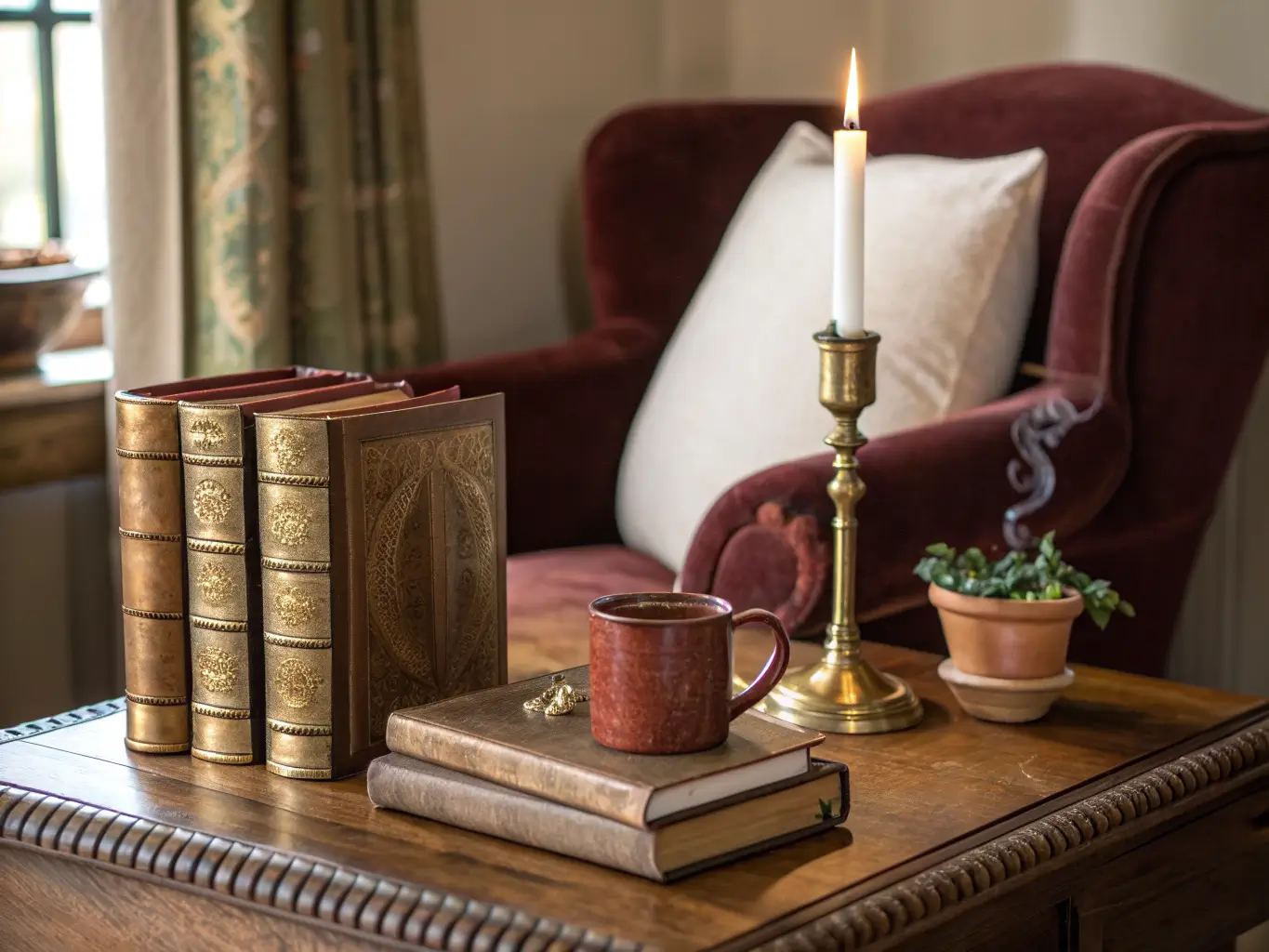
7. Curio accents, in small doses. Brass bookends, a candlestick, an hourglass, a small fern, a closed leather journal on the side table.
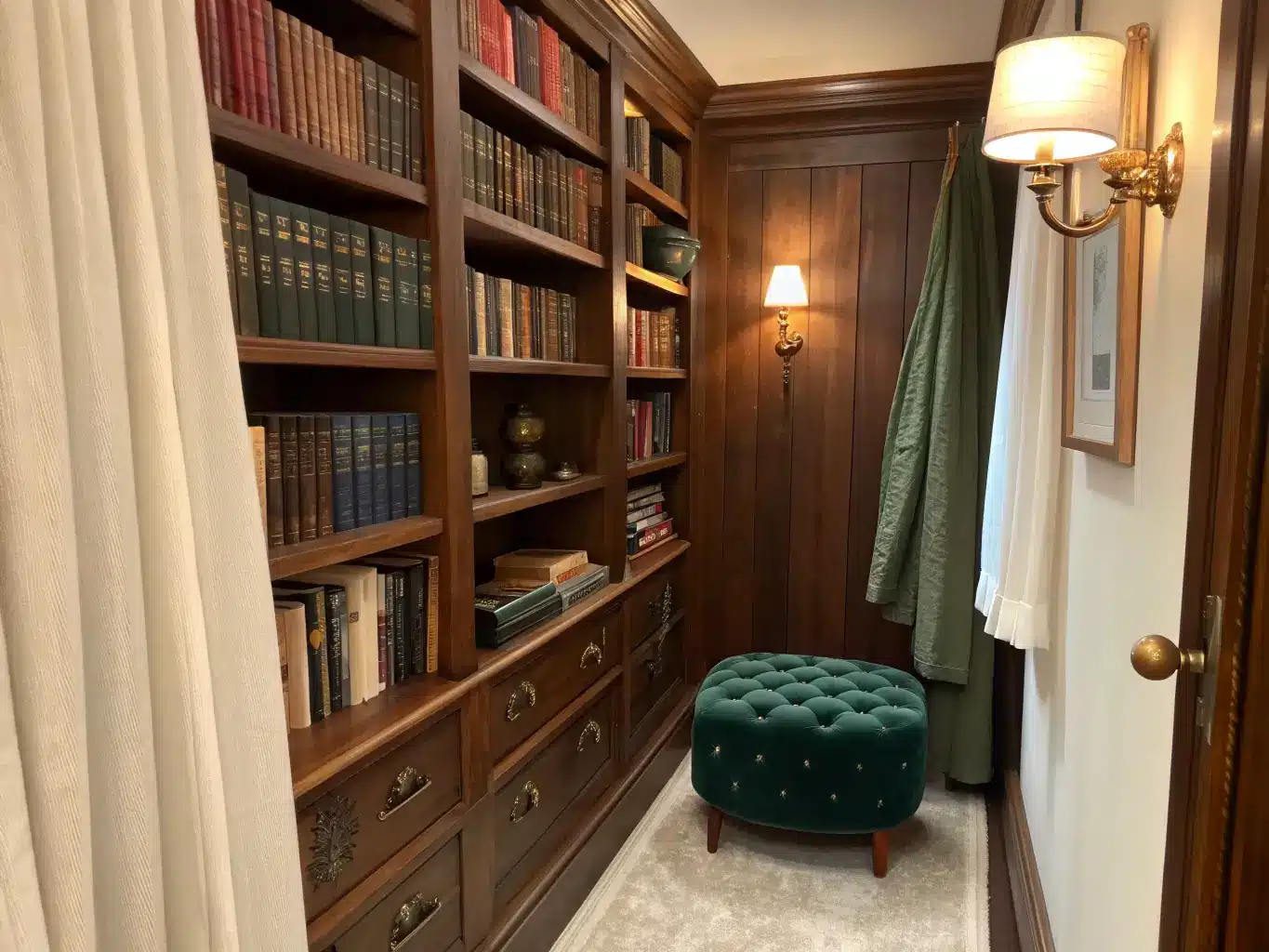
Optional Layers Worth Adding Later
Seasonal: dried roses, eucalyptus, pine in winter, fresh ivy in spring
Organic softening: a potted fern or trailing pothos — this keeps the darker palette from feeling heavy
Luxe metal touches: brass trays, aged brass hooks, gold-framed art
Architectural: arched trim, limewash paint, floor-to-ceiling shelving, a built-in window seat
Atmosphere: flameless candles, a real teacup left on the table, a textured ottoman
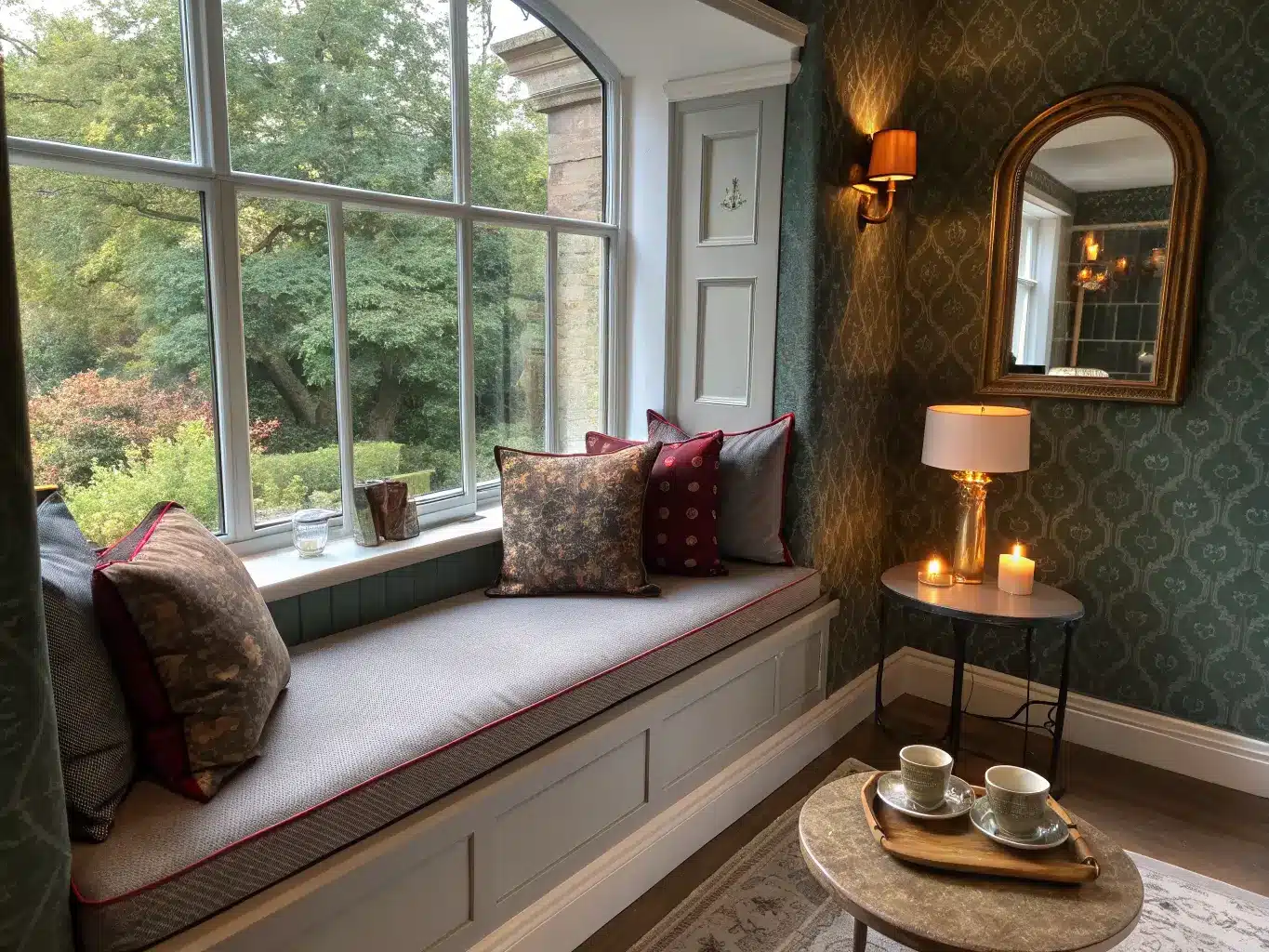
How to Put It Together, Step by Step
Clear the space first. Decide if you’re building a corner seat, window seat, or closet conversion before you buy anything.
Place the chair first. Everything else gets arranged around it. I made the mistake of buying a rug and side table before I had my chair, and neither one fit the footprint once the chair arrived — had to return the table.
Lock in your palette before adding decor. Pick two darks (say, oxblood and forest green) plus brass and one cream. Every new item has to fit that family or it doesn’t come home with you.
Layer soft surfaces next: rug, throw, cushion.
Add lighting at reading height — not overhead, not across the room. You should be able to reach the switch without standing up.
Stack 4–6 books near the chair or on the side table.
Finish with 3–5 accessories, max. A candle, a mug, a small fern, a brass tray, one framed print. That’s it. This is the step people blow past, and it’s the one that makes or breaks the look.
If you have wall space behind the chair, add a mirror or a small shelf. This is what turns “chair in a corner” into “library corner.”
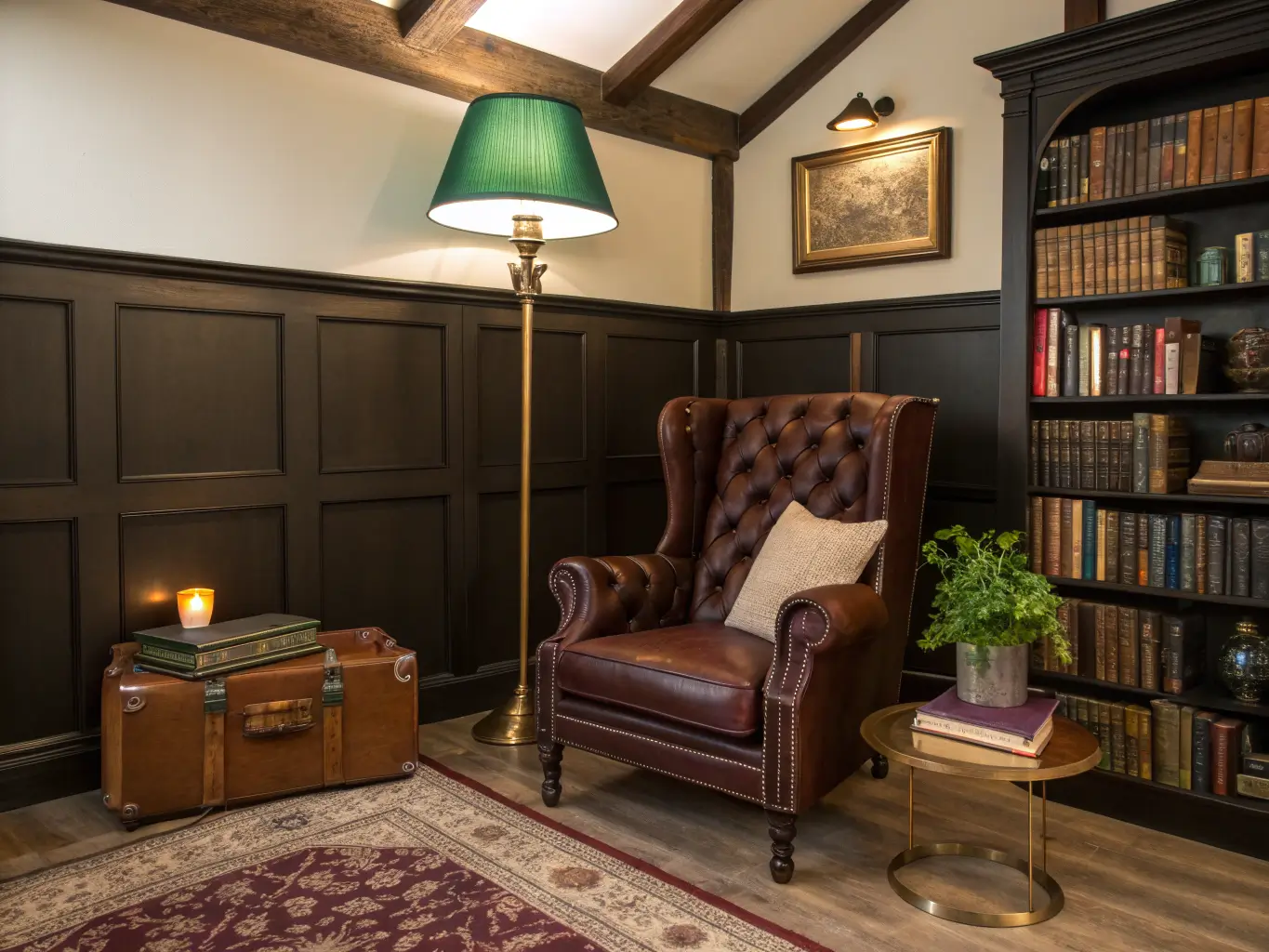
Where to Spend, Where to Save
Spend on:
– The chair — comfort matters more here than anywhere else since you’ll actually sit in it for hours
– The lamp — a cheap lamp with the wrong bulb color will undercut everything else you’ve done
Save on:
– Books — thrift and library sales, always
– Art — printables framed in a $12 thrifted frame look identical to a $150 print
– The side table — I use a vintage suitcase stood on end half the time
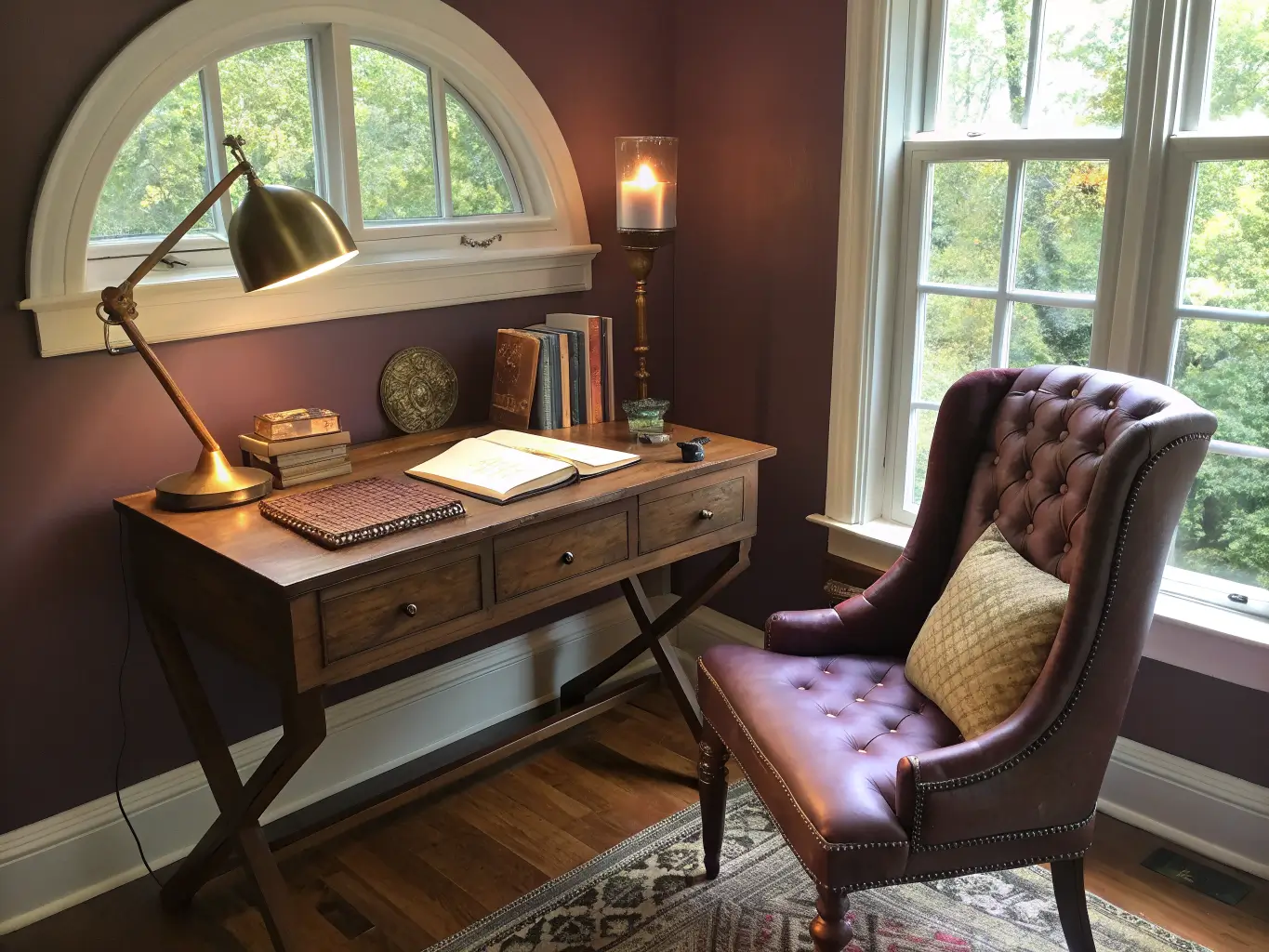
Mistakes I Made (So You Don’t Have To)
Too much black. My first version of this nook was black walls, black frame, black-bound books. It looked like a cave, not a library. Adding cream cushions and the walnut side table fixed it instantly — one light anchor color is the fix for a room that feels too heavy.
Overdoing the props. I once had an actual magnifying glass, a skull candle, and a fake raven on that side table at the same time. It read as Halloween store, not reading nook. I pulled it back to a candle, a mug, and one dried sprig, and it immediately looked more like somewhere a person actually lives.
Cold lighting. A cool-white bulb in a warm room kills the whole mood in about two seconds. This is the single easiest fix if your nook “feels off” and you can’t figure out why — check your bulb temperature before you change anything else.
Skipping comfort for the sake of aesthetic. A gorgeous chair you can’t sit in for more than twenty minutes defeats the entire purpose. Test-sit before you buy.
Making it too matched. A perfectly coordinated three-piece set looks like a showroom. This style wants to look collected over years, not purchased in one trip.
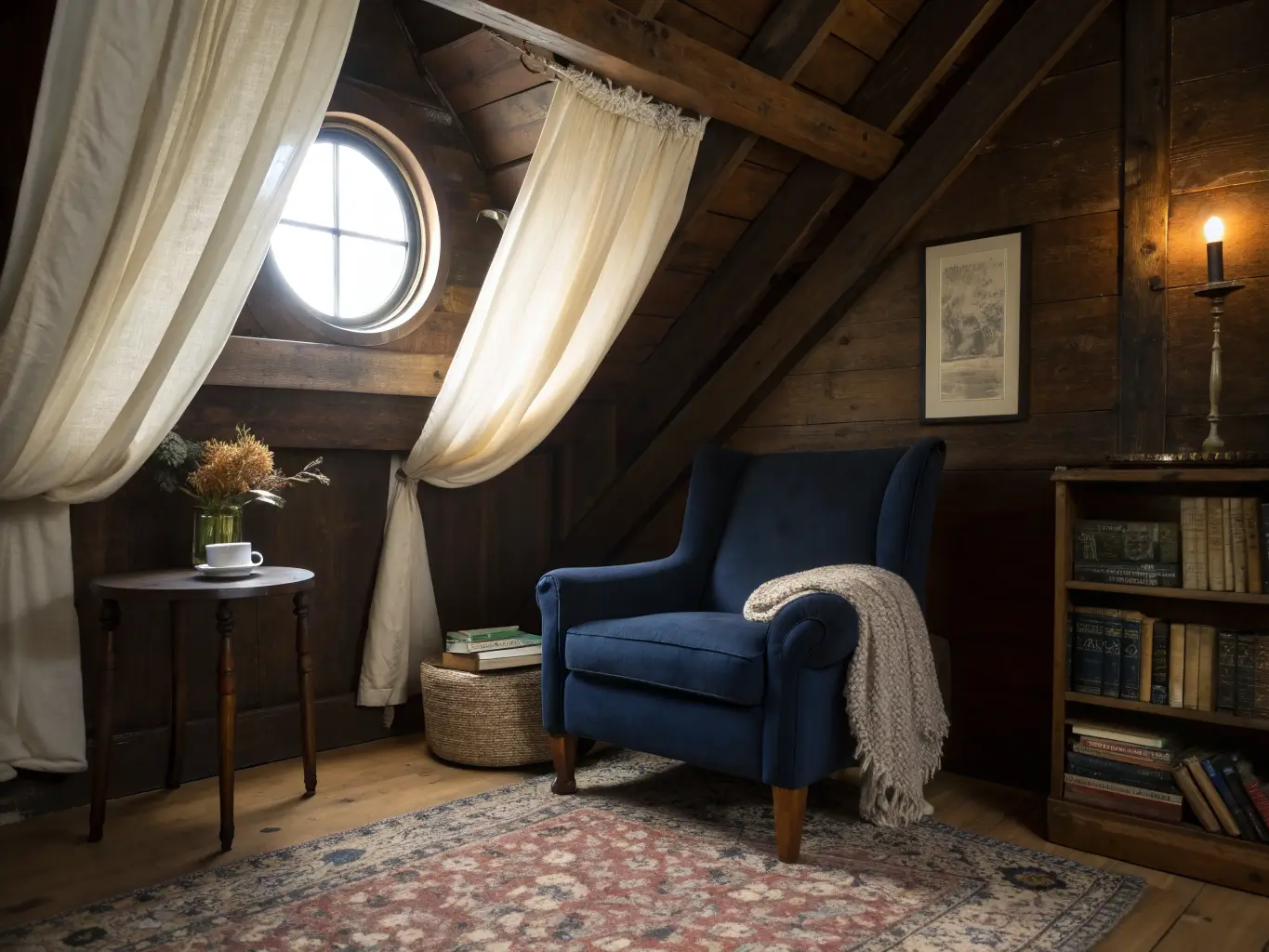
Keeping It Cohesive Without Making It Boring
Repeat your materials. Brass in the lamp and the tray. Wood in the chair legs and the table. Velvet in two spots, not one. This repetition is what makes a room of thrifted odds and ends look pulled-together instead of random.
Pick one motif and let it repeat — I used arches (mirror shape, a small arched frame, even the shape of my bookend) and it quietly ties the corner together without anyone consciously noticing why it works.
Watch clutter creep. Books and objects should feel curated, not accumulated. I do a seasonal edit — anything that’s crept onto that side table without earning its place gets removed.
Updating It Through the Seasons Without Starting Over
– Fall: amber candles, dried leaves, a heavier wool throw
– Winter: add pine, deepen the candle scent, layer a second throw
– Spring: swap in fresh ivy, lighten the linen, pull back one dark layer
The upgrade path, if you’re building this slowly: lamp + chair + books first. Then rug, art, and a side table. Wall treatment or built-ins come last, once you know you actually use the space the way you imagined.
This style doesn’t require an old house or a big budget — it requires restraint, a good chair, and lighting that’s warm instead of clinical. Everything else is just texture layered on top.
For another angle on this, my dark academia study room guide covers the same space from a different starting point.