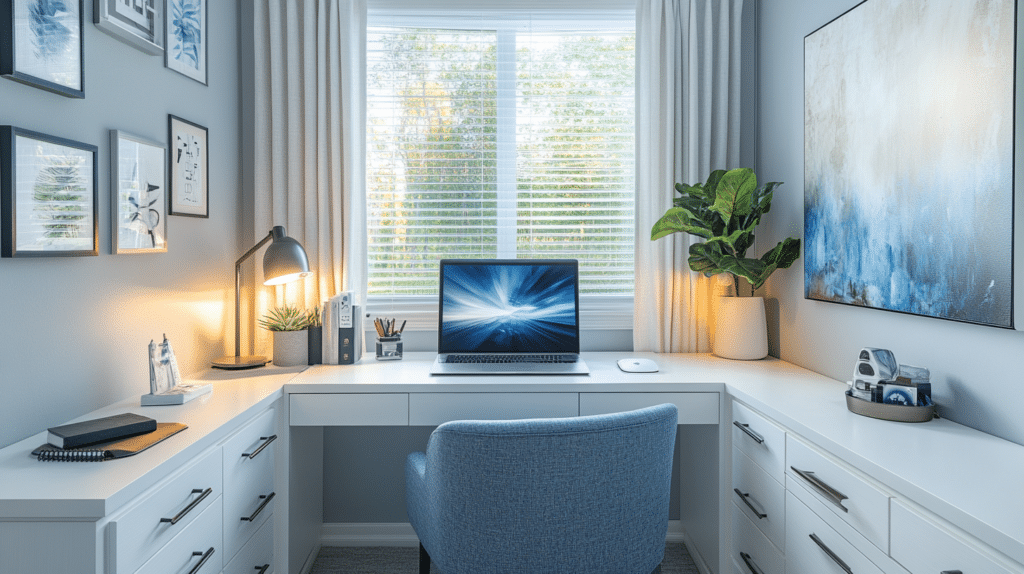
What This Style Is and Who It’s For
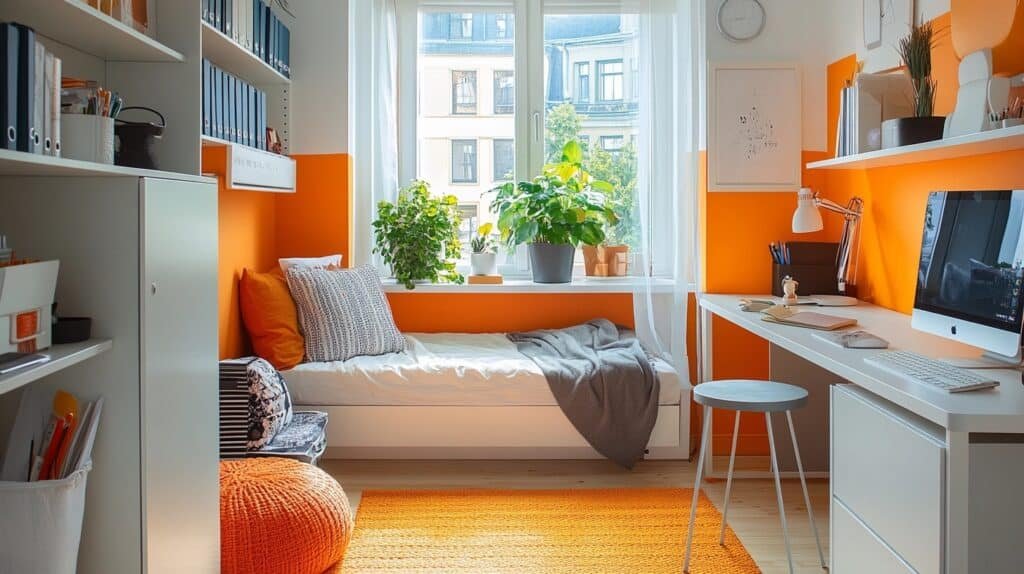
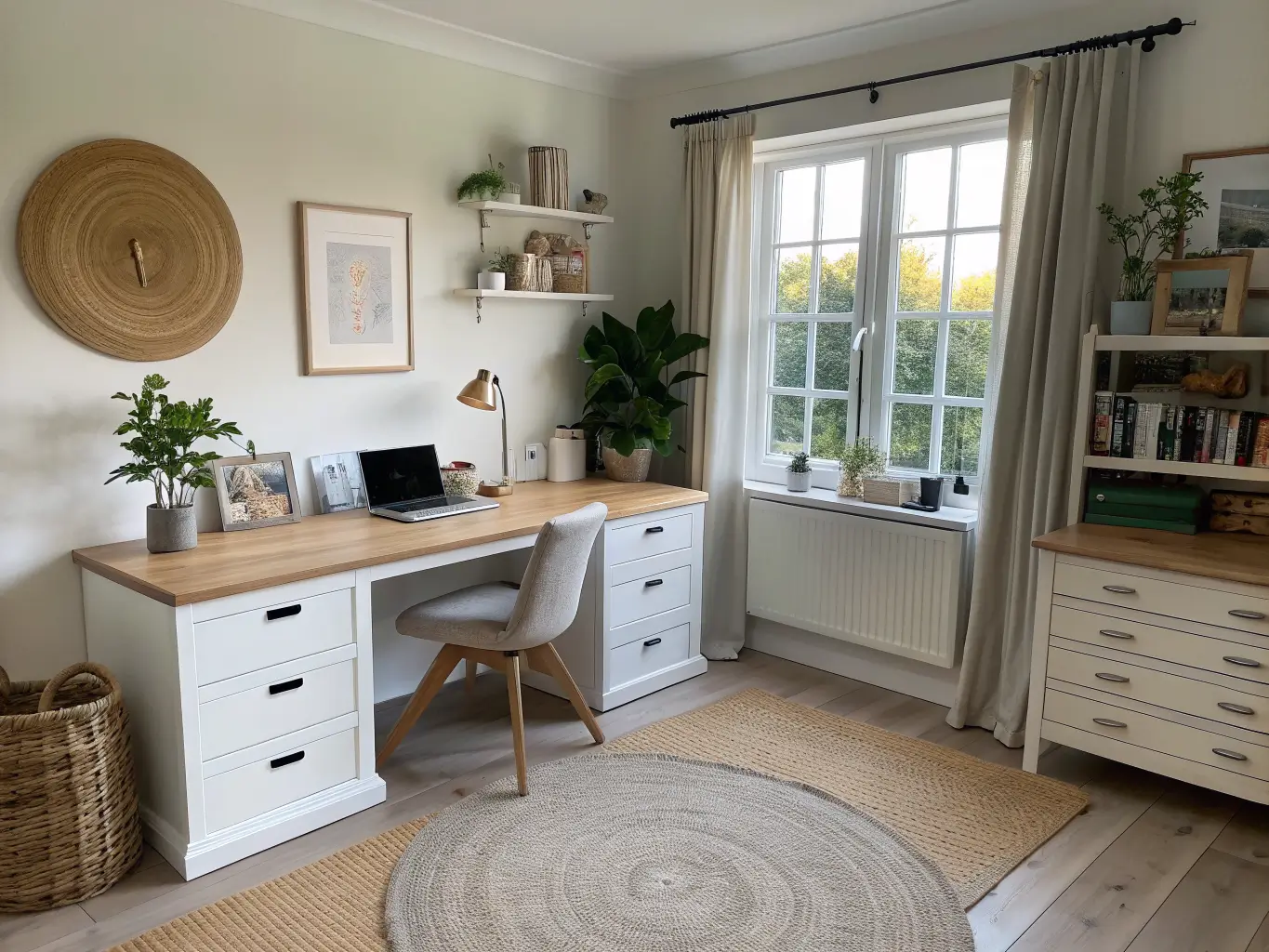
The IKEA home office look is Scandinavian-functional — clean lines, light wood, white walls, and storage that closes instead of gapes open. It’s not minimalist for minimalism’s sake. It’s minimalist because clutter is the enemy of small spaces, and most of us are working in a corner, a closet, or a shared room, not a dedicated study with a door that shuts.
This setup is for:
– Remote workers who need a real desk but don’t have a spare room
– Students working from a bedroom corner
– Anyone sharing one room between “living” and “working”
– People who need the office to visually disappear at 6 pm
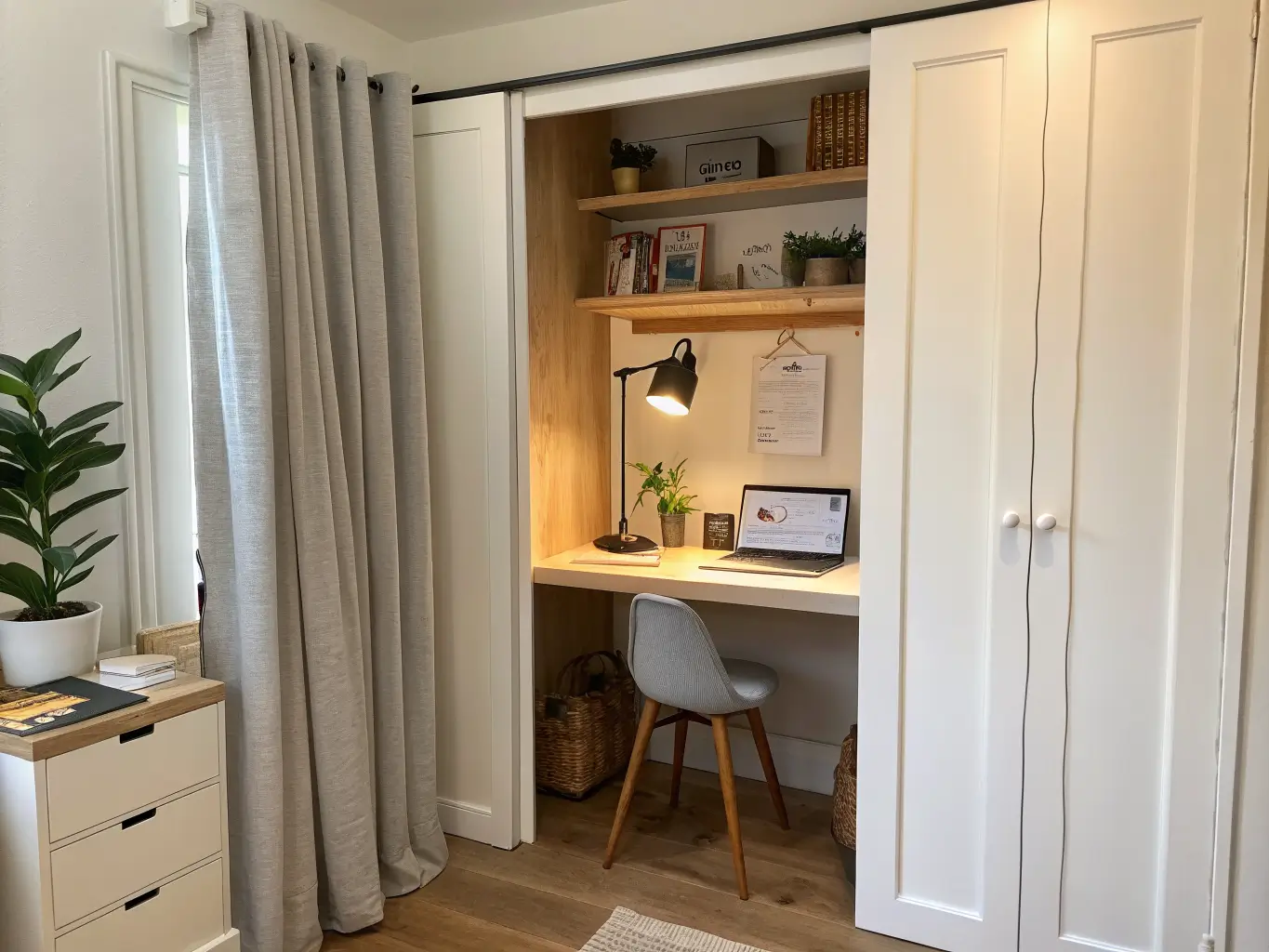
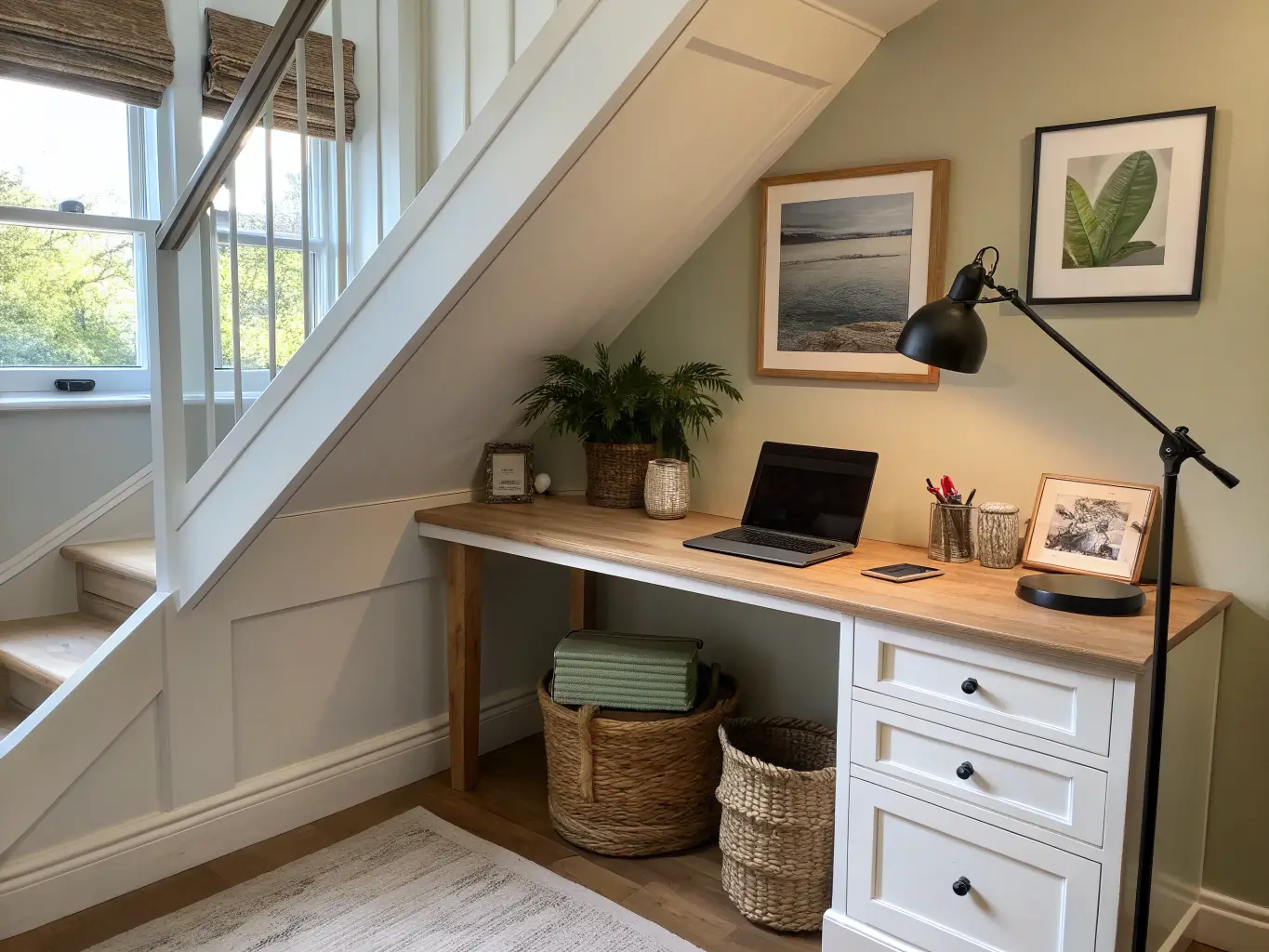
It works in corners, alcoves, guest rooms, closets (yes, “cloffice” is a real word now), under stairs, and living room walls. I’ve done three of these five myself, and the closet one was the one that surprised me most — a $40 LACK shelf and a curtain rod turned an awkward reach-in closet into a workspace that closes up completely when I’m done for the day.
Time and cost, realistically:
– A basic desk-and-chair setup: 1–3 hours, $150–$350
– A fuller build with storage, shelving, and lighting: half a day to two days, $500–$1,200+
– Skill level: assembling furniture is beginner-friendly; countertop desk hacks or closet conversions lean intermediate
The Pieces That Actually Make It Work
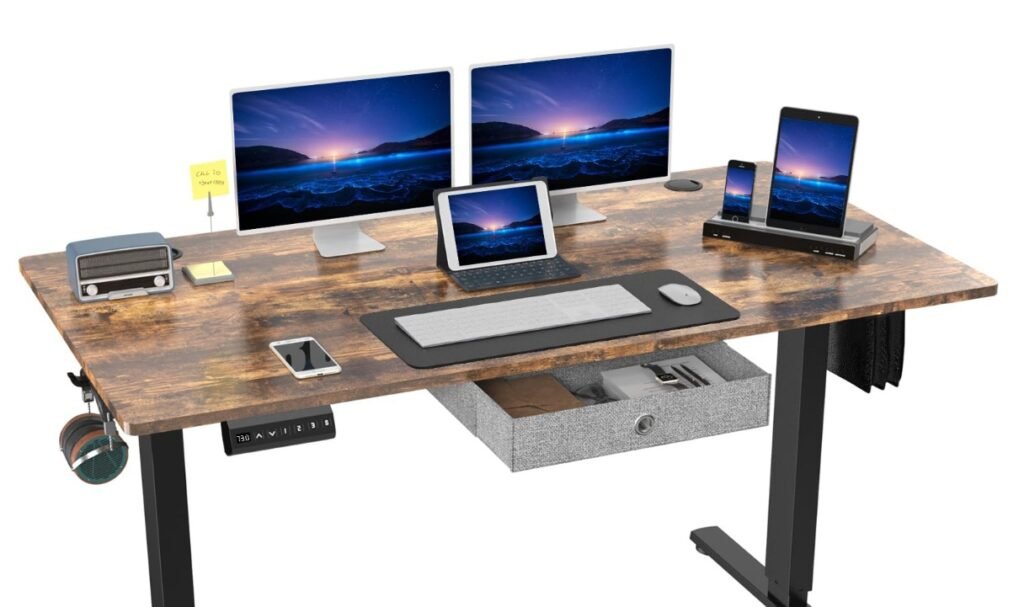
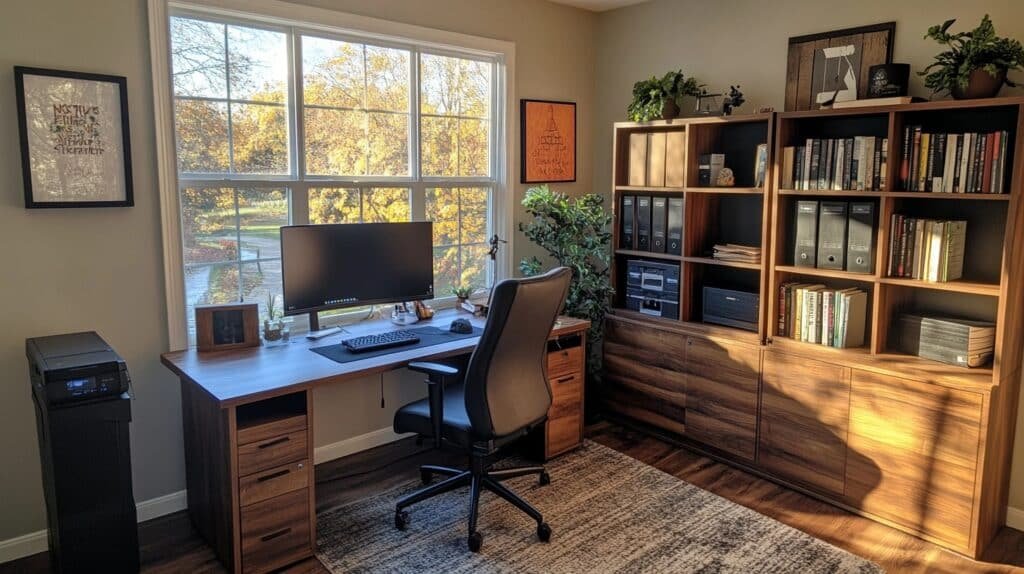
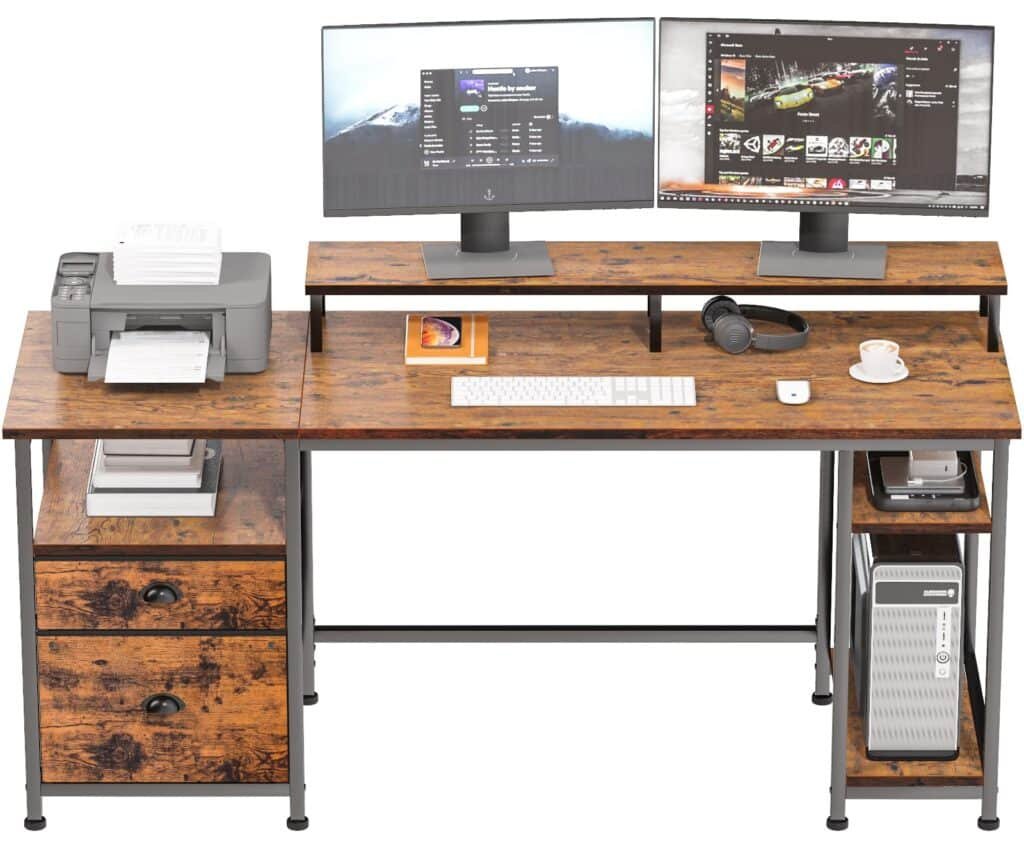
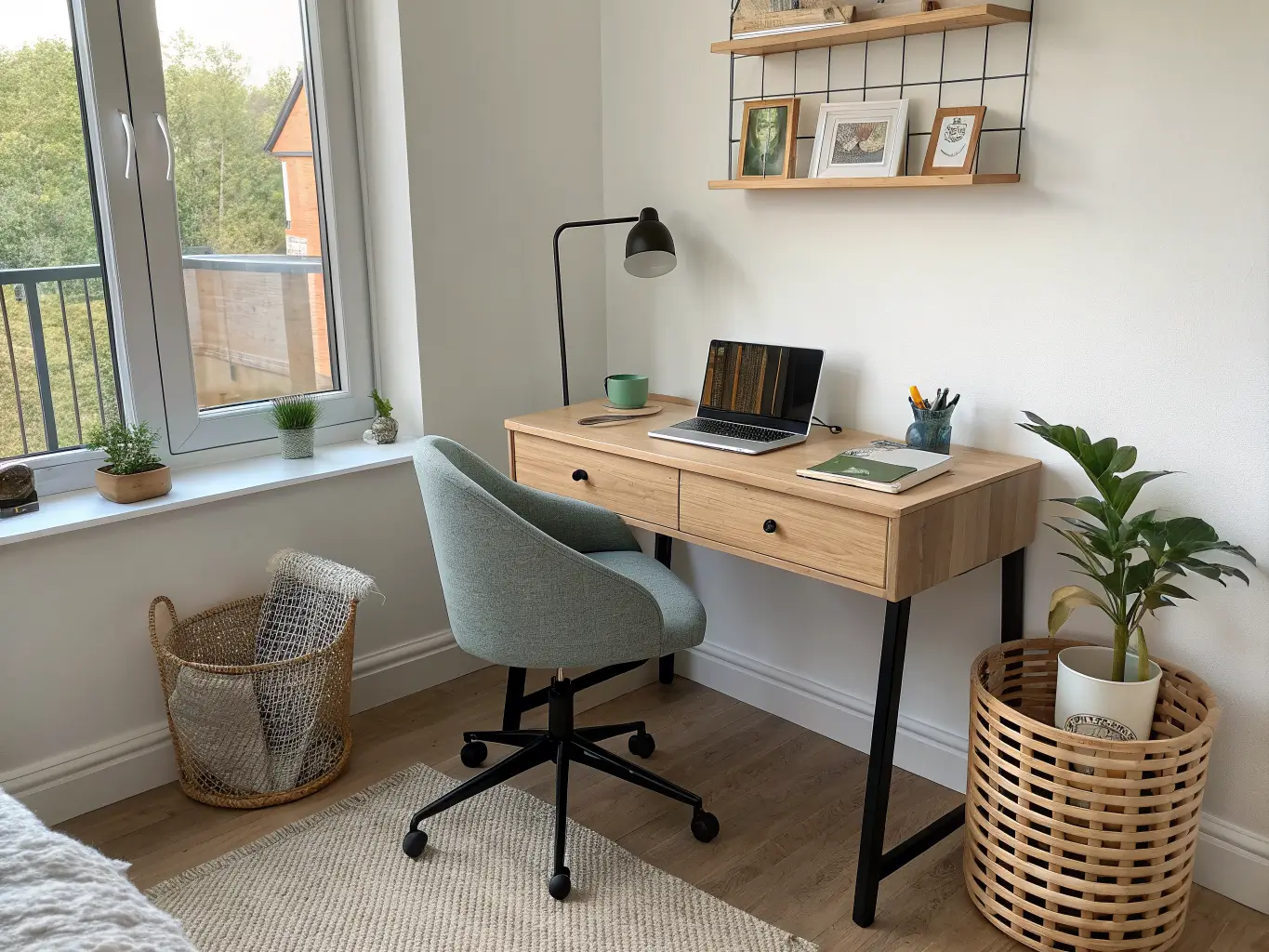
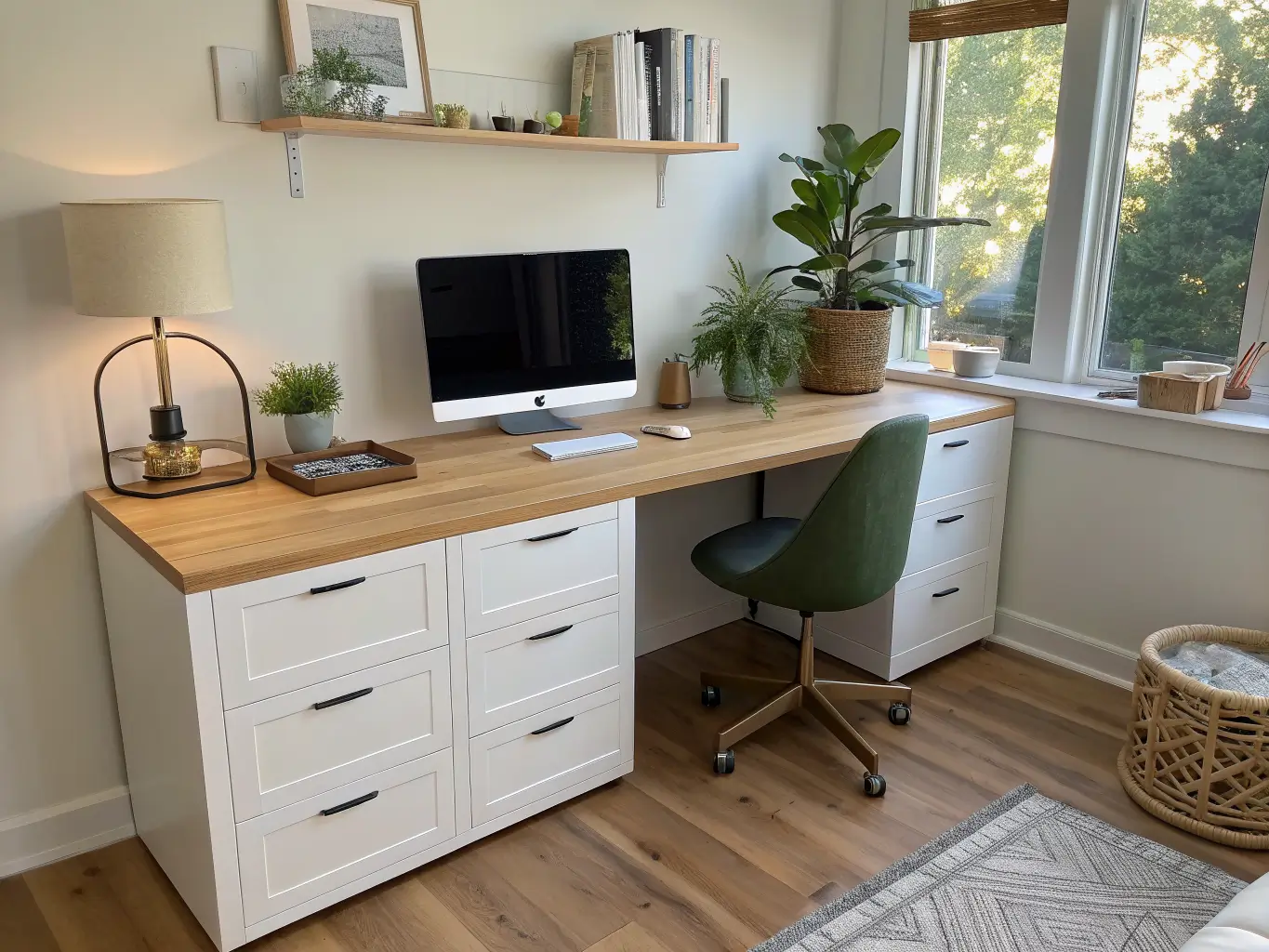
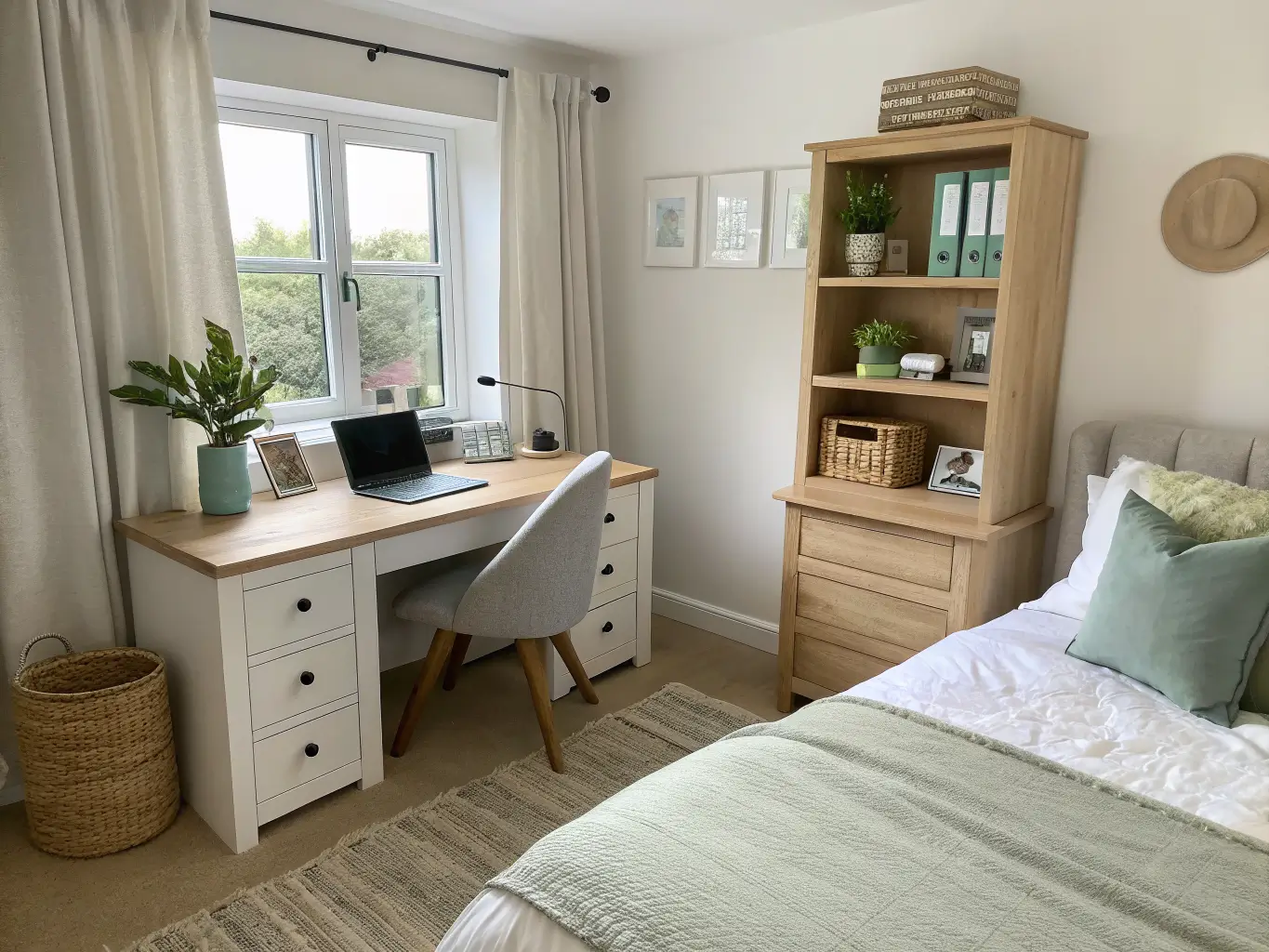
The desk. Don’t just grab the cheapest table. For small spaces, I like the LAGKAPTEN paired with ADILS legs — it’s under $100 and doesn’t look like it. For a more built-in feel, go the countertop-desk route: an EKBACKEN or KARLBY countertop (originally meant for kitchens) set on top of two ALEX drawer units. This is the single best upgrade I’ve made in any home office I’ve set up. It reads custom, costs less than most “real” desks, and gives you drawers on both sides for free.
The chair. This is where I’d tell you to stop being cheap. I used a $60 folding chair for eight months and my lower back still remembers it. Spend on an ergonomic chair — even IKEA’s mid-range options (around $150–$250) have adjustable height and lumbar support that a dining chair never will. You sit in this thing for eight hours. Treat it like it matters.
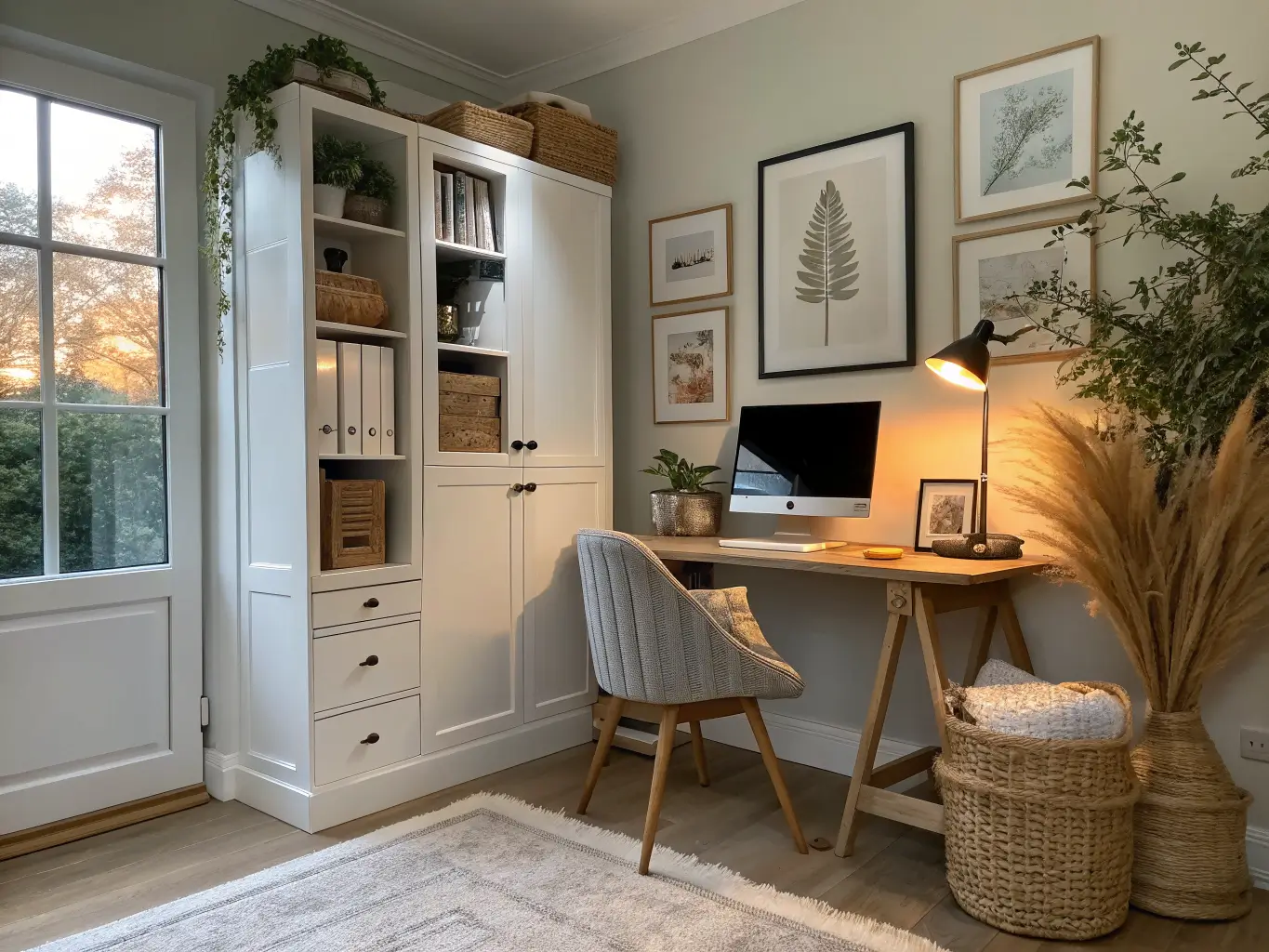
Storage — closed over open, always. ALEX drawer units, BILLY bookcases with doors, EKET cubes, BRIMNES cabinets. The calm, organized look everyone’s chasing right now depends almost entirely on how much stuff is hidden versus how much is out. I learned this the hard way with open cube shelving that looked great empty and looked like a junk drawer exploded within three weeks.
Lighting, layered. One overhead light is not enough and never was. You want three layers:
– A task lamp at the desk (angled from the side, not behind you)
– Ambient ceiling or floor lighting for the room
– Optional strip lighting under shelves if you’re doing a wall unit
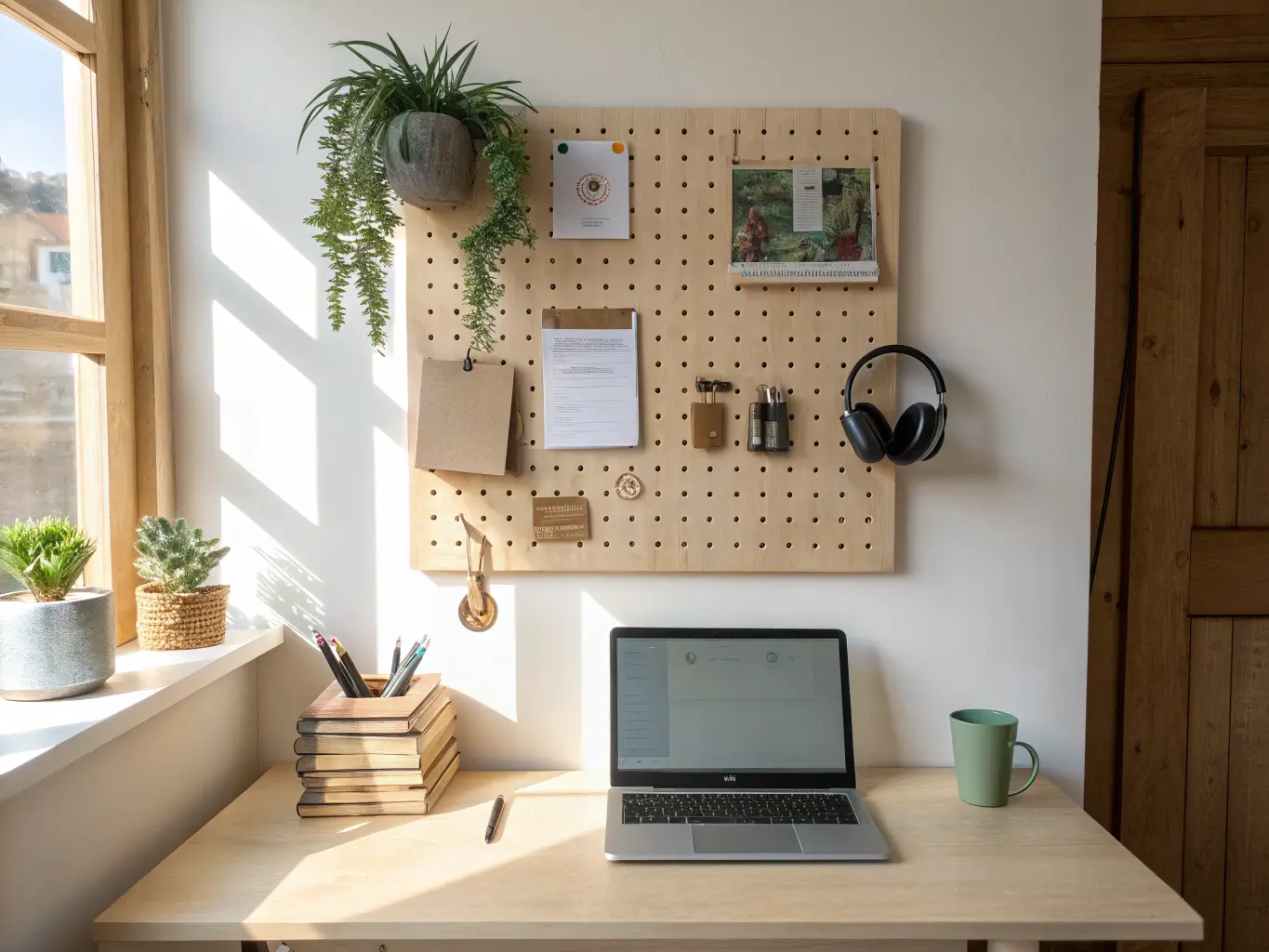
Wall organization. A SKÅDIS pegboard over the desk solves the “where do my scissors live” problem without eating drawer space. I’ve got mine holding a small plant hook, headphones, and a cork strip for reminders — it’s the one piece of “visible” storage I allow because it’s genuinely useful, not just decorative clutter.
Soft accents. One plant, one woven basket, one framed print, one textured rug. That’s it. That’s the whole softening layer — don’t add a fifth thing just because there’s empty space left.
How to Put It Together
Start big, then layer down. Desk, chair, storage, lighting — get the functional bones in first. Only after that do you add vertical storage (shelves, pegboard, rails) to get things off the desktop. Then task organization: trays, cable clips, drawer dividers, labels. Then, last, the soft stuff — rug, plant, art.
Palette discipline is everything. Pick 2–4 tones and stop. My rule: light wood (oak-look laminate) + white + one accent color. Right now mine is sage green — a green desk lamp shade and one green-glazed planter, nothing else. When I tried adding a mustard throw pillow to the reading chair in the same room, it fought with everything. Pulled it within a week.
Mix one smooth surface with one textural one. A clean laminate desktop needs a woven basket or jute rug nearby or the whole room feels flat and showroom-y. I added a small rattan mirror to my wall setup for exactly this reason — it’s the only curved, textured thing in a room full of straight lines, and it keeps the space from feeling sterile.
Light from the side, not behind the screen. If your window is behind your monitor, you’re squinting all day and everyone on your video calls sees a silhouette. Turn the desk 90 degrees if you have to. This one adjustment fixed more eye strain for me than any lamp purchase did.
Give it one focal point. A fluted panel wall behind the desk, a statement pendant light, or one well-styled shelf. Not all three. I put slim vertical slat paneling (about $60 for enough MDF strips to cover a 4-foot section) behind my desk and stopped there — it’s the thing your eye goes to, and everything else supports it.
Setting It Up Without Redoing It Three Times
Measure first. I mean actually measure — I eyeballed my first desk placement and ended up with a drawer that couldn’t fully open because it hit the wall. Now I tape out the footprint on the floor before anything gets built.
Before you buy anything, decide: does this office need to disappear at the end of the day? If yes — shared bedroom, living room corner, guest room that still needs to look like a guest room — build around closed storage and maybe a curtain on a tension rod to hide the whole setup. If the room is dedicated, you have more freedom for open shelving.
Build order that’s saved me redoing things:
1. Big pieces first — desk, chair, main storage unit
2. Vertical storage next — get things off the desktop early so you’re not styling around a mess
3. Task organization — trays, cable management, labels
4. Decor last — rug, plant, art, personal objects
If you’re going the hack route (countertop desk, matched cabinet fronts), commit to matching wood tones and hardware finish across every piece. Half-matched IKEA hacks are the fastest way to make budget furniture look budget.
Where People Go Wrong
Too much open shelving. It photographs great empty. It looks like chaos within a month. Mix in closed cabinets for anything that isn’t genuinely nice to look at.
Treating the chair as an afterthought. A beautiful desk with a bad chair is still a bad workspace. Ergonomics isn’t optional once you’re sitting there daily.
Cramming too much furniture into a small footprint. In a bedroom corner or closet, the furniture list should be short: desk, chair, one storage piece, one light. That’s it. I tried to fit a bookcase into my closet office and had to pull it back out three days later — there wasn’t room to actually sit at the desk with the door open.
Backlighting your screen. Covered above, but it’s the single most common lighting mistake I see in home office photos. Window behind the monitor, glare on the screen, bad video calls.
Mismatched wood tones. IKEA sells at least four different “light oak” finishes and they don’t all match. Stick to one product line’s wood tone if you’re combining pieces, or go all white/black to sidestep the issue entirely.
Keeping It Looking Fresh
Stick to your palette — light wood, white, one accent — and keep basket finishes, frame colors, and drawer pulls consistent across the room. It sounds fussy, but mismatched brass and black hardware in the same six-foot span is what makes a space feel unfinished rather than intentional.
Do a weekly desktop reset. The calm-office look isn’t a one-time achievement, it’s maintenance. Takes me five minutes on Friday afternoons.
Seasonal refreshes that don’t cost much:
– Spring/summer: lighter textiles, a bright plant, swap in an airy woven basket
– Fall/winter: warmer bulb temperature, a wool throw on the chair, richer-toned art
– Any season: rotate in one new plant for color without touching anything else
Upgrade one thing at a time. Started with a basic desk? Add the countertop-and-drawers combo next year. Got open shelving that’s looking cluttered? Swap in one closed cabinet before buying anything else. This is how I’ve built out three different home offices without ever spending more than $200 in a single month.
Cross-style options if you want to push it further:
– Scandi-boho: light wood, jute rug, rattan mirror, one big leafy plant
– Scandi-modern: white and black only, zero patterned textiles, very clean
– Warm contemporary: muted sage or dusty blue wall, brass hardware, fluted cabinet fronts
The IKEA look works because it’s flexible enough to bend toward whatever you actually like, as long as you keep the bones — light wood, closed storage, layered light — consistent underneath it.
For another angle on this, my home office organization guide covers the same space from a different starting point.