Quick Style Snapshot: Time, Cost, and Space Needed
If your “study room” is currently a laptop balanced on your knee and a pile of papers migrating across three different surfaces, you already know the problem. It’s not that you need more stuff. It’s that nothing in the space is set up to help you concentrate. I’ve built study corners in two rental apartments and one actual spare room, and the setups that failed always had the same issue: I bought decor before I solved function. Let me walk you through how to do it in the right order.
A basic refresh — new lamp, decluttered desk, a couple of shelves — takes 1 to 2 days. A full setup with furniture, storage, lighting, and wall decor takes 1 to 2 weeks, mostly because furniture delivery windows are annoying and you’ll want to live with the layout a few days before hanging anything.
Budget swings hard depending on ambition:
– Simple nook refresh: $250–$600 (desk, lamp, a couple of storage bins) – Full furnished setup: $800–$1,800 (desk, ergonomic chair, shelving, lighting, decor) – Built-in or custom room: $2,000–$3,500+
For reference, here’s roughly what things actually cost:
– Desks: $80–$250 for basic, more for solid wood or L-shaped
– Ergonomic chairs: $150–$500 — don’t go below $150, I’ll explain why later
– Task lamps: $25–$120
– Shelving units: $40–$300
– Built-ins/custom cabinetry: $2,000+, easily
Space needed: anything from a closet or window alcove to a full spare room. Some of the best study setups I’ve seen live under a staircase or in a converted closet with the doors removed.
Skill level: beginner-to-intermediate for shelving, desk styling, and lighting. Intermediate-to-expert if you’re building custom cabinetry, sliding doors, or acoustic paneling.
Seasonal appeal: year-round, with easy seasonal refreshes through textiles and lighting warmth — more on that later.
What Style Actually Works for a Study Room
Most study rooms that function well lean modern, minimalist, and practical — built-ins, floating desks, open shelving, clean lines. Not because minimalism is trendy, but because visual noise competes with your brain for attention. I learned this the hard way after painting my first study nook a deep navy with gold accents. It looked incredible in photos. I could not concentrate in that room for more than twenty minutes without my eyes wandering to the wall.
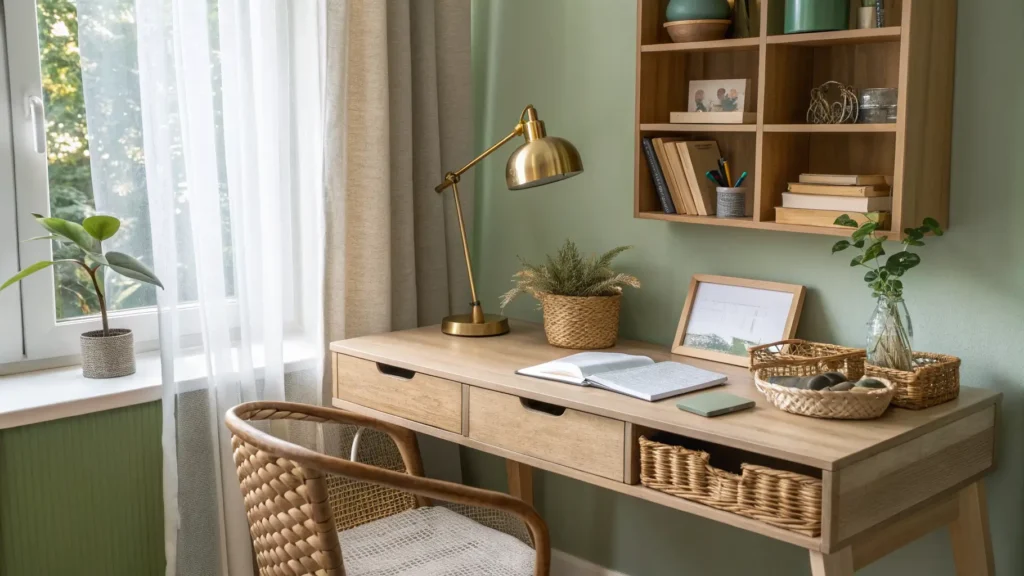
Colors that work: soft white, off-white, cream, pale gray, sage green, soft blue, and light wood tones as your base. Save gold, pink, or bolder colors for small accents — a lamp base, a frame, a single throw pillow.
Materials that hold up: light oak or wood veneer, painted MDF, metal shelf brackets, cork or acoustic panels, glass, and an upholstered chair that can take daily wear.
This setup works for students, remote workers, kids doing homework, and families who need a shared work zone that doesn’t eat the living room. It fits in bedrooms, spare rooms, alcoves, lofts, basements with decent daylight, and yes — closets.
The Must-Have Pieces for Any Study Room
Skip decor shopping until these are settled. In order of priority:
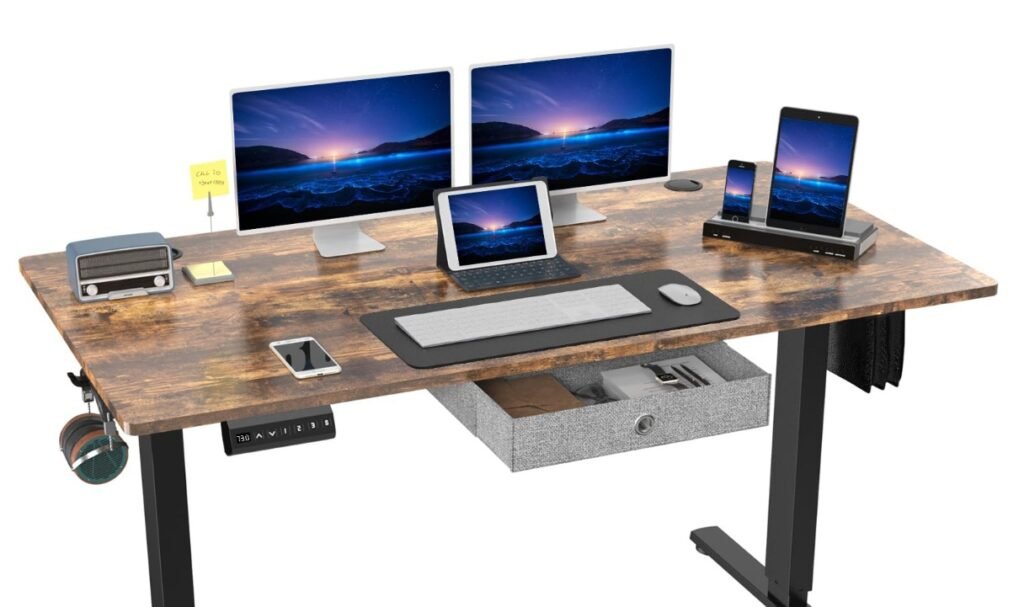
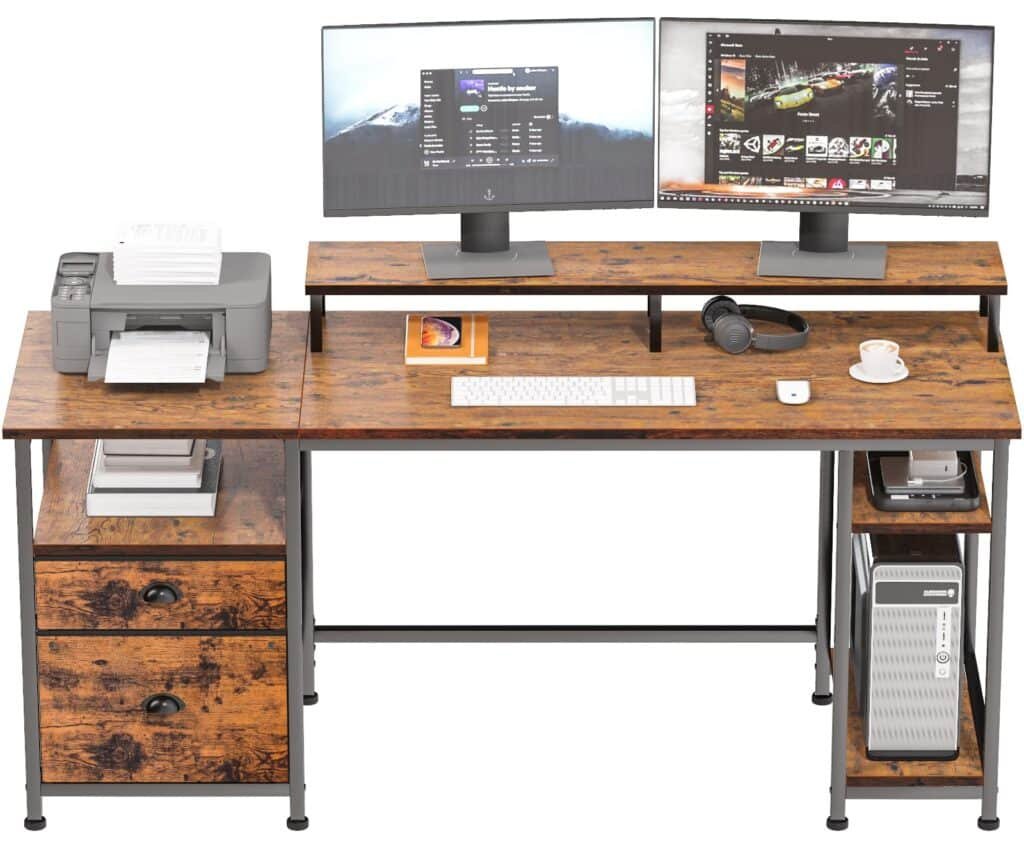
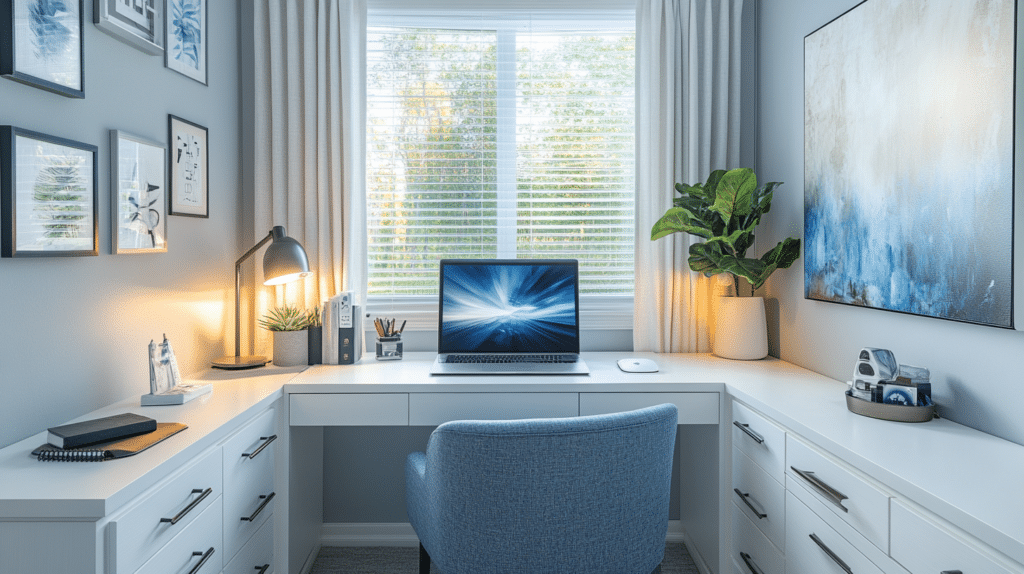
The desk. A single person needs 48–60 inches of desk width, minimum. If you’re sharing the room or need serious storage, go L-shaped — it doubles your surface without eating more floor footprint than you’d think, since the second leg tucks into a corner. Floating desks (wall-mounted, no legs) are the best move in small rooms because they free up visual floor space, which matters more than you’d expect in a room under 80 square feet.
The chair. This is where I tell you not to cheap out. I used a $60 accent chair as my desk chair for eight months because it matched my rug. My lower back still remembers it. Get something with lumbar support, breathable fabric, and adjustable height — budget $150 minimum, ideally $250-$350 for daily use.
Task lighting. You need three light sources layered together: natural light, an overhead fixture, and a desk lamp with an adjustable arm or flexible neck. Overhead light alone creates flat, tiring light for close work. A desk lamp alone leaves the rest of the room dim and creates screen glare. You need all three.
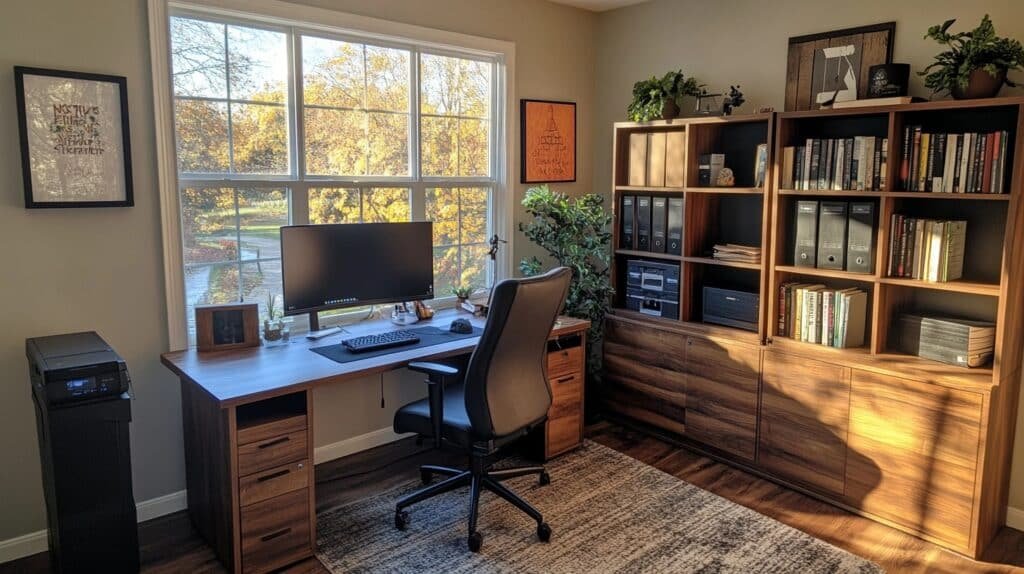
Storage. Open shelves, closed cabinets, drawer units, and baskets — enough that nothing has to live on the desktop permanently. If you can see clutter, you’ll think about clutter.
Window treatments. Sheer curtains or light-filtering shades let you control glare on a screen without blacking out the room.
Small but necessary accessories: a corkboard or magnetic board, a desk organizer tray, a monitor riser, and something for cable management. These sound minor until you’re not fighting a nest of cords every time you sit down.
Optional Upgrades Worth Considering
Once the essentials are in place, here’s where you add personality:
– Greenery — a small pothos or snake plant on the desk, or something trailing from a shelf. I keep a 6-inch snake plant on my desk because it survives my inconsistent watering and still looks alive in photos.
– Wallpaper or a mural on one wall — particularly good in kids’ study spaces where you want visual interest without overwhelming a small room.
– Metallic accents — brass lamp base, black metal shelf brackets, a gold picture frame. Small doses only.
– Acoustic panels — increasingly common in home study setups, and genuinely useful if your study room doubles as a call space or sits near a noisy part of the house.
– A window-seat reading nook — built-in bench with storage underneath, great if your study room has a deep windowsill or bay window you’re not using.
– A charging station with hidden cable routing — unglamorous, but it’s the difference between a desk that looks finished and one that always looks slightly chaotic.
How to Actually Put It Together
Keep your palette to three tones. One wall color, one wood tone, one accent color. That’s it. I know it’s tempting to bring in every color you love, but in a small room, three tones read as intentional and five reads as cluttered.
Layer textures, not objects. Wood desk, linen curtain, metal shelf brackets, a paper pinboard, one soft textile like a rug or seat cushion. That combination feels finished. Piling on more decorative objects doesn’t.
Use your walls. Floating shelves above the desk are the single most repeated small-space trick for a reason — they keep the floor and desktop clear while giving you storage and display space. I added two 24-inch oak shelves above my desk last year and it completely changed how the room felt, without taking a single square foot of usable floor.
Put the desk near the window if you can. Natural light is genuinely tied to how alert and focused you feel, not just a nice-to-have. That said — don’t face the desk directly into the window if you’re on video calls often; you’ll be backlit and hard to see. Position it perpendicular to the window instead, so light comes in from the side.
Pick one focal point. A desk wall with shelving, a book display wall, or a wallpapered accent wall. Not all three. I tried combining a gallery wall and a wallpapered accent in the same small room once and it looked like the room couldn’t decide what it wanted to be.
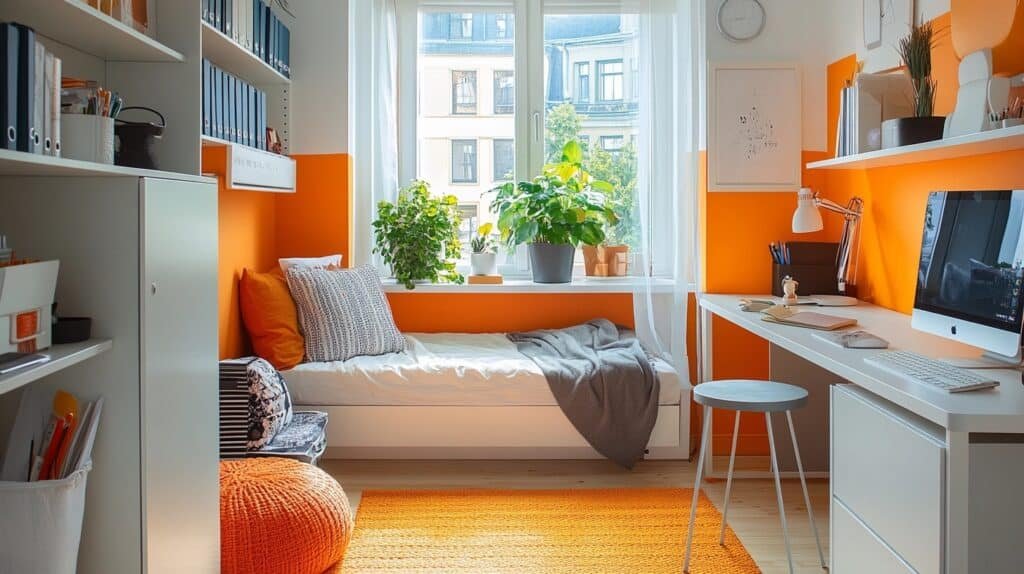
Separate work and rest zones visually if the study area shares a room with a bed or seating. A rug under the desk, an area of shelving, or simply angling the desk away from the bed does this without needing a wall.
Setting It Up: Step by Step
1. Clear the room down to nothing — just the space and its outlets, windows, and doors.
2. Map light, outlets, and traffic flow before buying a single piece of furniture. This determines desk placement more than anything else.
3. Measure desk depth and clearance. In a tight room, a 24-inch-deep desk plus a 20-inch shelf might be the difference between fitting comfortably and clipping the doorway every time you walk past.
4. Position the desk for best light, least foot traffic, and — if it applies — best position for video calls.
5. Buy in this order: desk, chair, lighting, storage, decor. Function first, always.
6. Add shelving above or behind the desk to create a finished backdrop.
7. Put daily-use items into trays and baskets so the desktop surface stays clear.
8. Add one or two decorative touches only — a plant, one art print, maybe a lamp upgrade. Stop there.
9. If it’s a shared room, use matching desks or a single long worktable to keep things visually balanced. Mismatched desk styles in a shared space almost always look unplanned, even if each piece is nice on its own.
Mistakes I’ve Made (So You Don’t Have To)
Too much clutter. Every surface I don’t actively manage becomes a catch-all within a week. Trays and drawers aren’t optional if you want the desk to stay usable.
Relying on one light source. I studied under a single overhead fixture for years and wondered why I got headaches by 9 p.m. Layered lighting fixed it immediately.
Buying the pretty chair over the supportive one. Already covered this. Learn from me.
Overdecorating the wall above the desk. A gallery wall behind your monitor sounds nice until you’re trying to focus and your eyes keep catching on eleven different frames.
Skipping storage because the room is small. Small rooms need more storage discipline, not less. An open desktop in a tiny room reads as chaos twice as fast as it does in a large one.
Bad desk placement. Glare across a screen or a desk positioned in a walking path will undermine an otherwise well-designed room. Fix this before anything else.
Keeping the Room Feeling Fresh
Stay consistent with wood tones across your desk, shelves, and organizers. Mixing a dark walnut desk with light oak shelves is a small thing that reads as unplanned.
Repeat one accent color in small doses — through book spines, a storage box, a cushion — rather than introducing a new color with every new object you buy.
Rotate a few items seasonally, not everything. In spring and summer, I swap in a lighter linen seat cushion and a brighter plant. In fall and winter, a warmer-toned lamp and a textured basket replace them. The bones of the room stay the same; only the accents shift.
Upgrade in stages if budget is tight. Desk first, then chair, then lighting, then storage, then decor. You don’t need to do this all in one weekend, and honestly, living with a stage for a few weeks helps you notice what’s actually missing before you spend more money.
Budget-friendly swaps that work: peel-and-stick wallpaper instead of a full paint job, a thrifted shelving unit instead of new, one good statement lamp instead of an entire lighting overhaul. My favorite shelf in my current study nook cost $12 at a estate sale and just needed a coat of white paint to match everything else.
Blending styles works fine as long as the palette stays controlled — minimalist with organic textures, modern with a boho throw, family-friendly with a more contemporary desk. The style mix matters less than whether your three tones stay consistent throughout.
A study room doesn’t need to look like a magazine spread. It needs to get out of your way so you can actually think. Everything above is in service of that one goal — the decor is just what’s left once the function is handled.