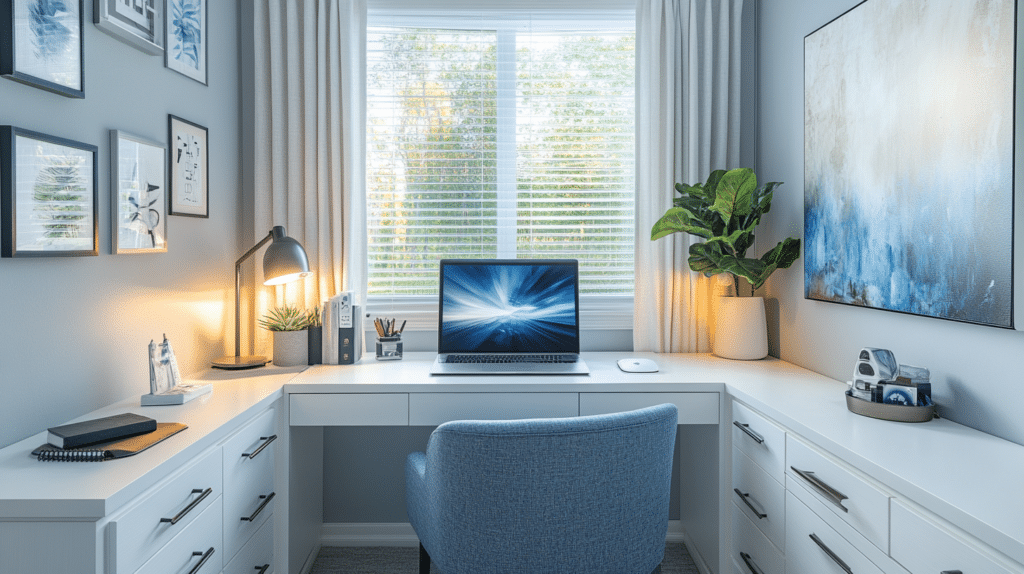
If you’ve ever tried to squeeze a desk into your bedroom and ended up with a room that feels like a dorm from 2009, I get it. I did this exact thing in my last apartment — shoved a desk against the foot of my bed because it was the only open wall — and spent eight months waking up to a pile of cables and a monitor staring back at me like it was judging my sleep schedule. Bedroom and study room design isn’t hard once you understand the actual rule: the bed decides the room, the desk has to work around it, and the two zones need just enough separation to keep your brain from associating “sleep” with “deadline.”
Here’s how I’d do it now, having rearranged that room three separate times before it finally clicked.
What This Style Actually Is (and Who It’s For)
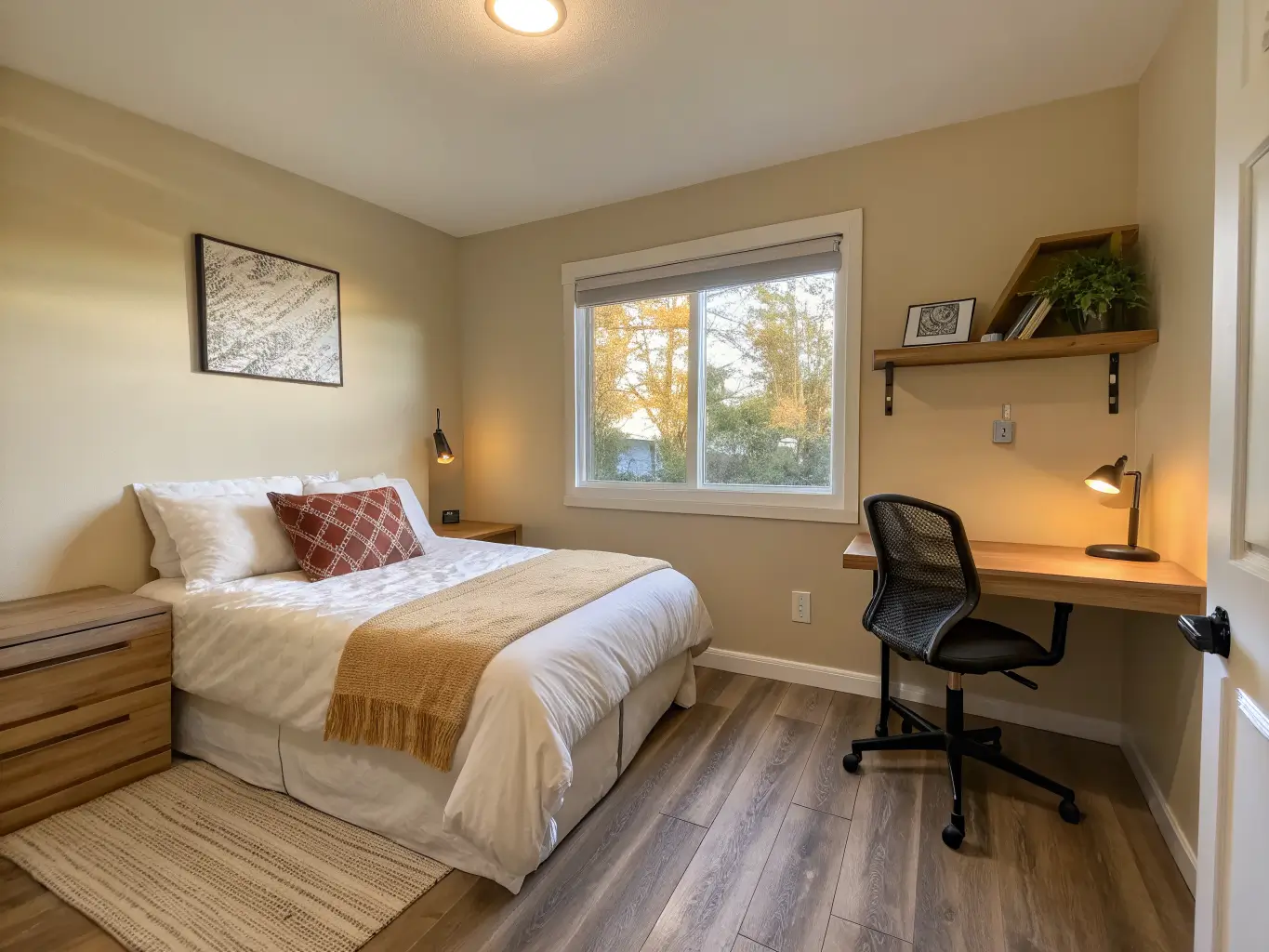
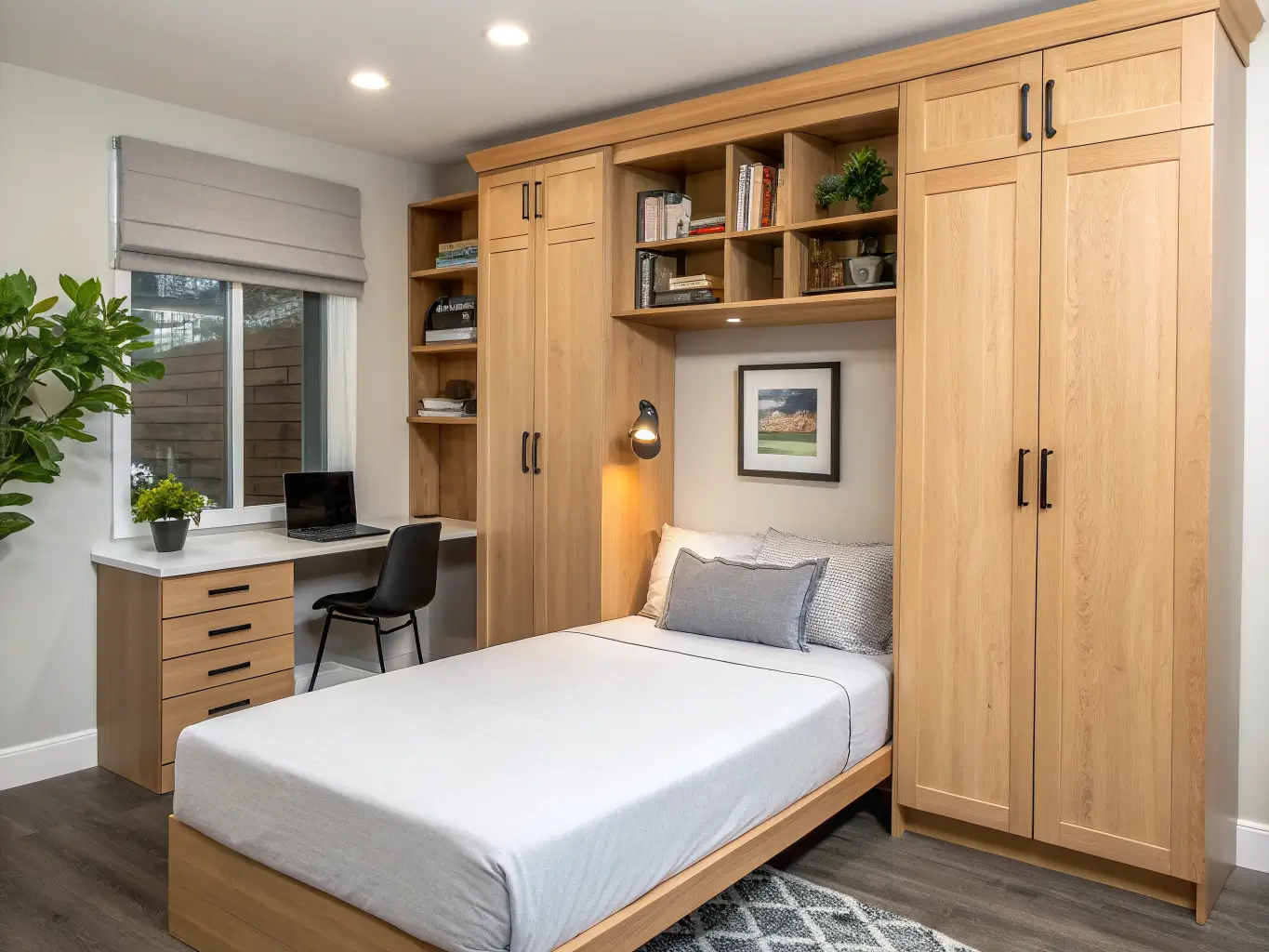
The look that works — consistently, in small rooms — is modern minimalist multifunctional design. Calm bedroom, clean desk zone, one shared palette holding it together. Not two rooms mashed together. One room doing two jobs well.
This is the right move if:
– You live in an apartment or smaller home with no spare room for an office
– You work remotely and need a real desk, not a laptop-on-the-bed situation
– You’re a student or have a teen who studies where they sleep
– You’ve got one dead corner or underused wall with decent light
Colors that actually make this work: warm whites, soft greige, muted gray, light wood tones, and a soft blue or sage green if you want a little personality. Keep darker accents minimal — a black lamp, a walnut shelf bracket — so the desk doesn’t visually shout over the bed. Materials that read “calm” instead of “office”: light wood, painted MDF, woven rugs, linen curtains, glass-front or open shelving, cotton bedding. Avoid glossy laminate and heavy black metal unless you’re going for a deliberately industrial look — it reads corporate fast in a room this size.
Time, Cost, and Skill Level — the Real Numbers
Time: A basic version — desk, chair, shelf, lamp — is a weekend project. Give yourself 1 to 3 days. If you’re adding built-ins, a wall-mounted desk, or a Murphy bed combo, budget 1 to 3 weeks, because now you’re measuring twice, waiting on delivery, and possibly swearing at an Allen wrench.
Cost breakdown, realistically:
– Budget setup: $300–$1,000 — basic desk, simple chair, a couple of shelves, one good lamp
– Mid-range: $1,000–$3,500 — better storage, a real ergonomic chair, coordinated furniture finishes
– Custom/built-in: goes well past that once you’re paying for carpentry, wall-mounting labor, or a Murphy bed frame
Price anchors worth knowing before you shop:
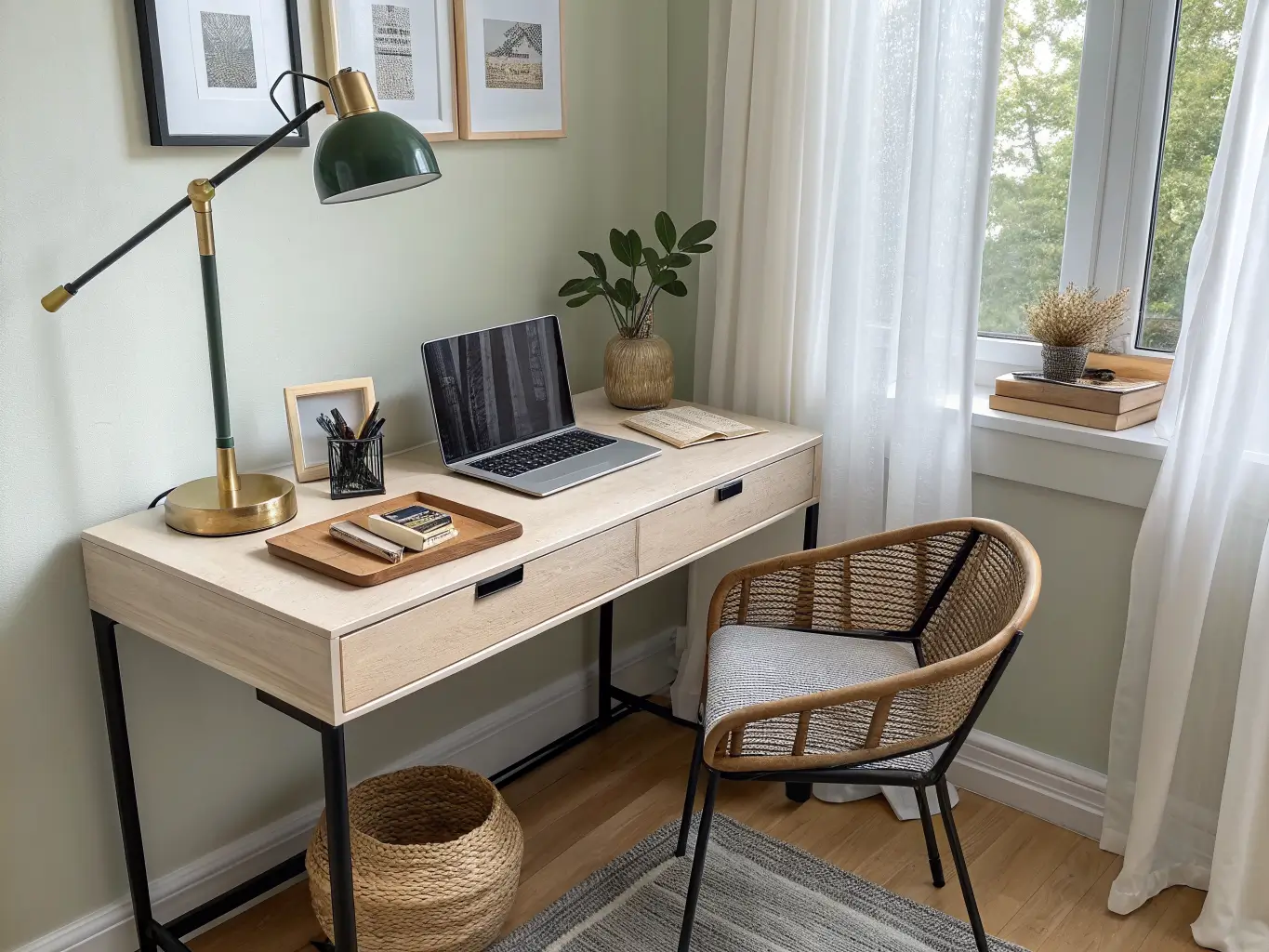
– Desk lamps: $20–$80
– Floating desks or shelving: $50–$300
– Ergonomic chairs: $100–$400+ depending on lumbar adjustability
Skill level: Freestanding furniture and shelf styling — beginner to intermediate, anyone can do this in an afternoon. Built-ins, wall-mounted desks, sliding partitions — intermediate to expert, or hire it out.
The Must-Have Pieces That Actually Make This Function
You don’t need much. You need the right few things.
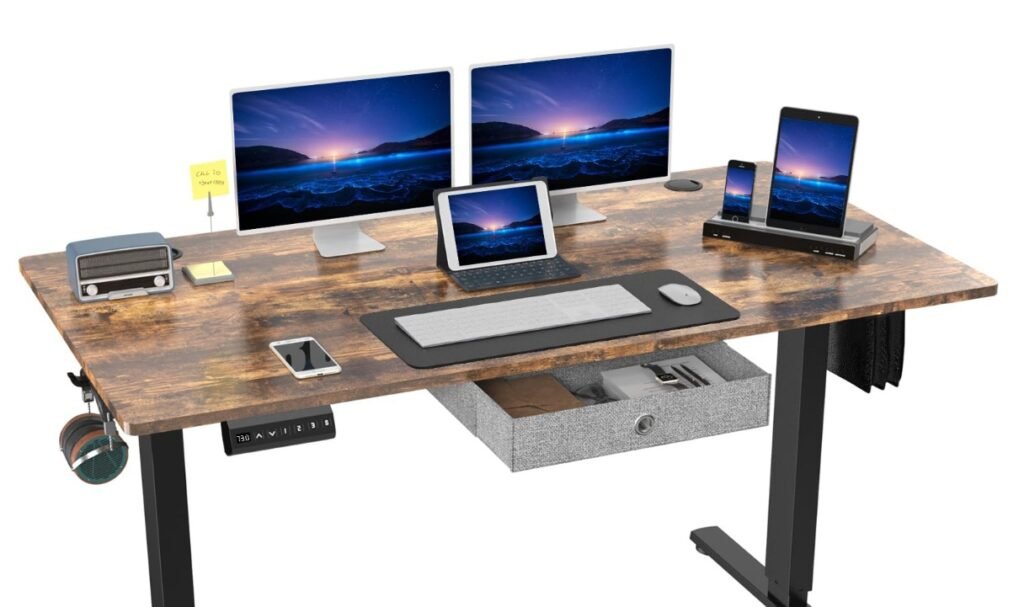
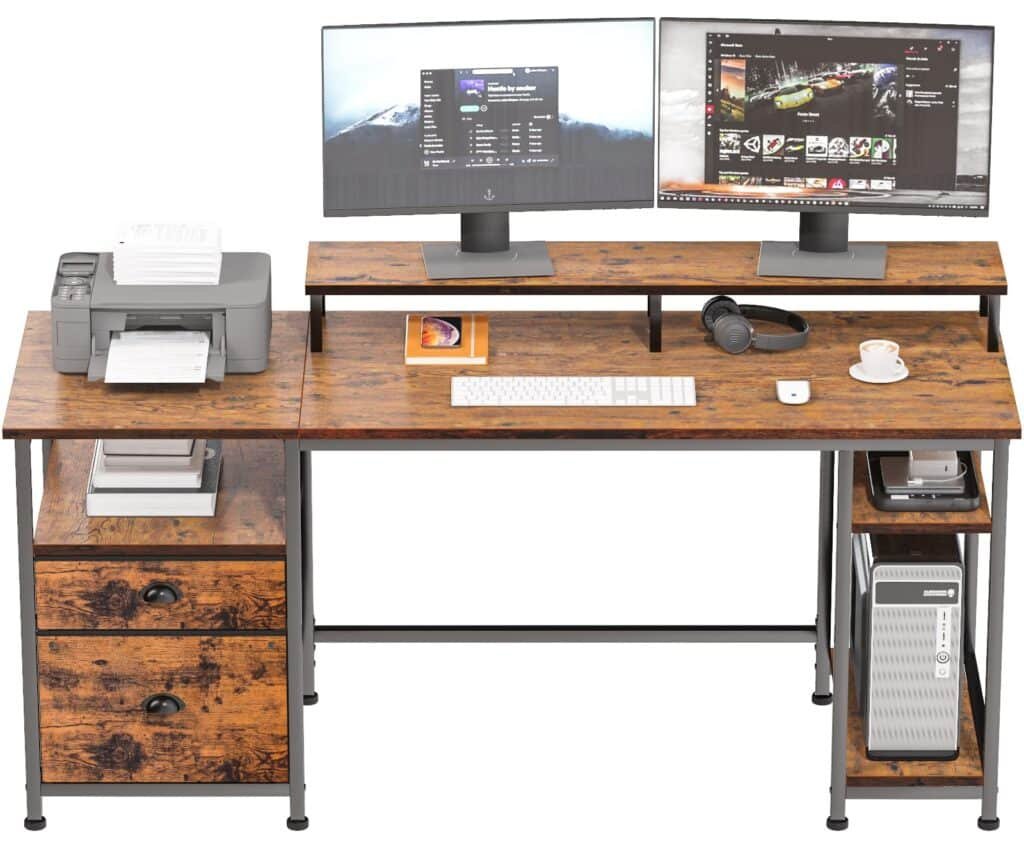
– A compact desk — rectangular, floating, or wall-mounted. In a bedroom under 120 square feet, I wouldn’t go bigger than 42–48 inches wide. Bigger than that and it starts competing with the bed for visual weight.
– An ergonomic chair with lumbar support. I skipped this for a year, used a dining chair, and paid for it in lower back pain that had nothing to do with my mattress. Spend here.
– Task lighting, warm-toned bulb (2700K–3000K), not the cool white 5000K office bulbs — those make a bedroom feel like a exam hall at 9pm.
– Wall-mounted storage — floating shelves or a small organizer above the desk. This keeps your desktop clear and your floor open, which matters enormously in a small footprint.
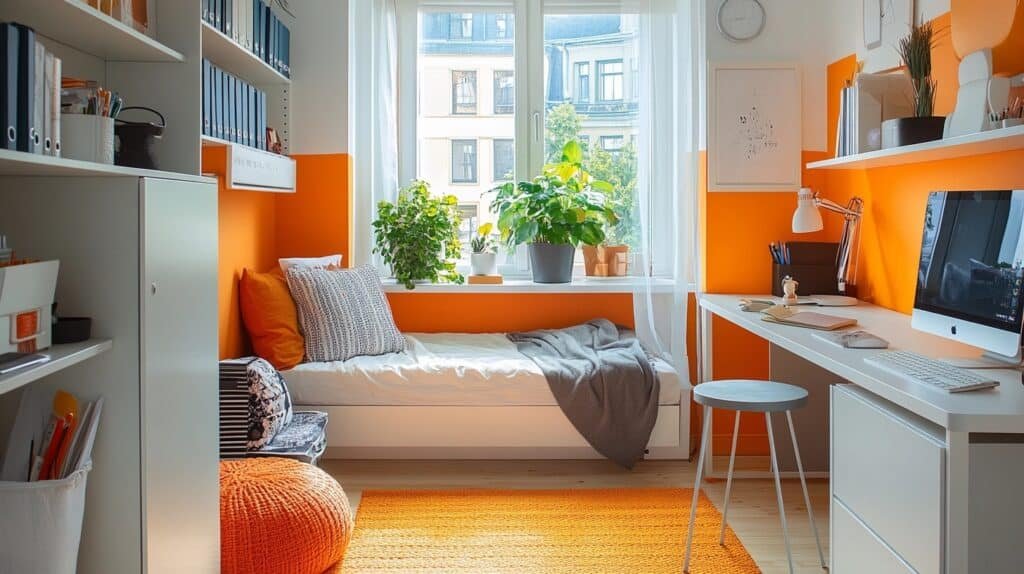
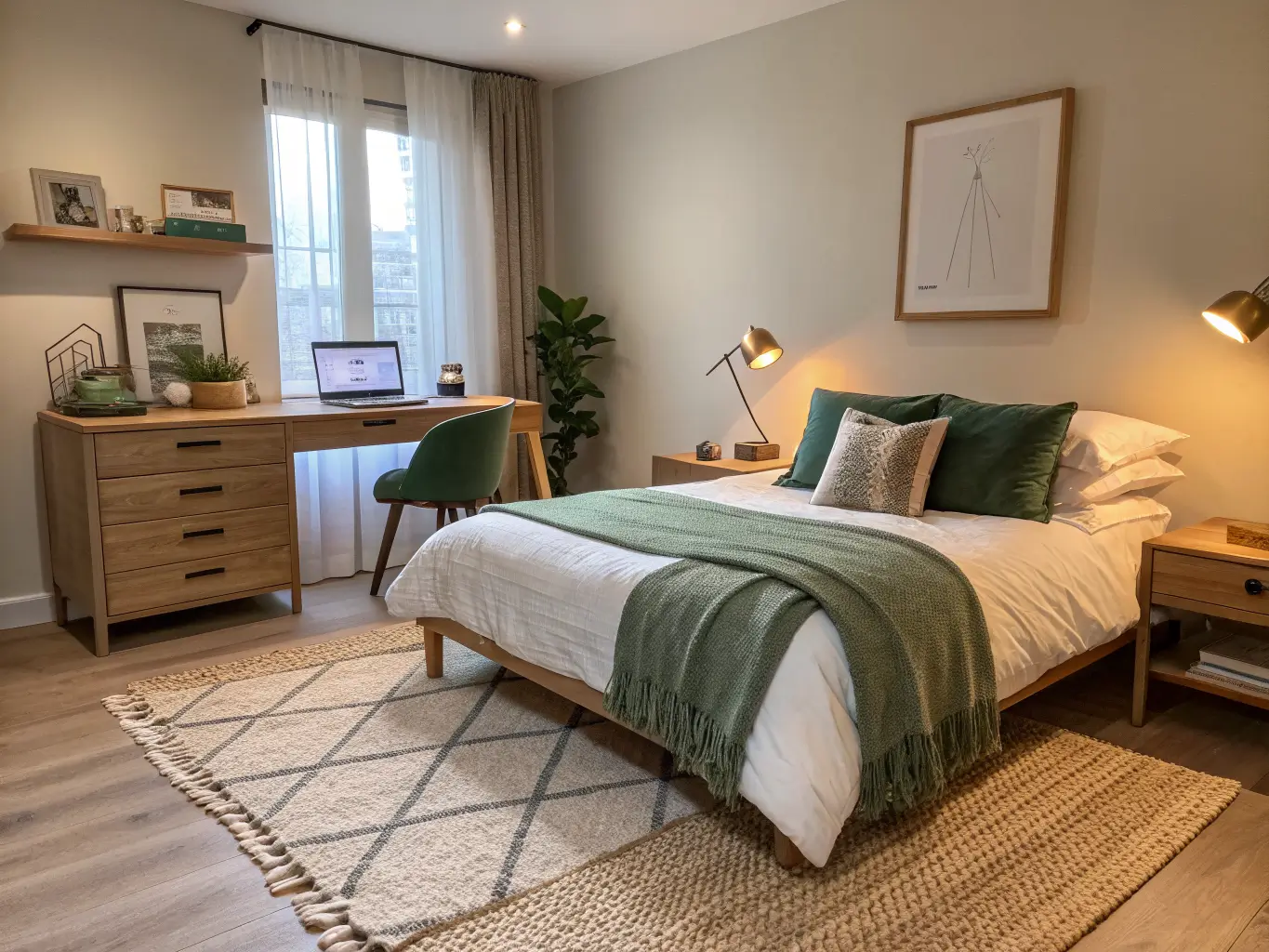
– A visual divider — doesn’t need to be a wall. A low bookshelf, a rug that only covers the desk zone, or even a shift in wall color behind the desk does the job.
– Textiles on the bed side — a textured throw, a couple of cushions — to keep that half of the room feeling soft against the more structured desk area.
– A few decor accents: one small plant, a framed print, maybe a corkboard. Not five things. One or two.
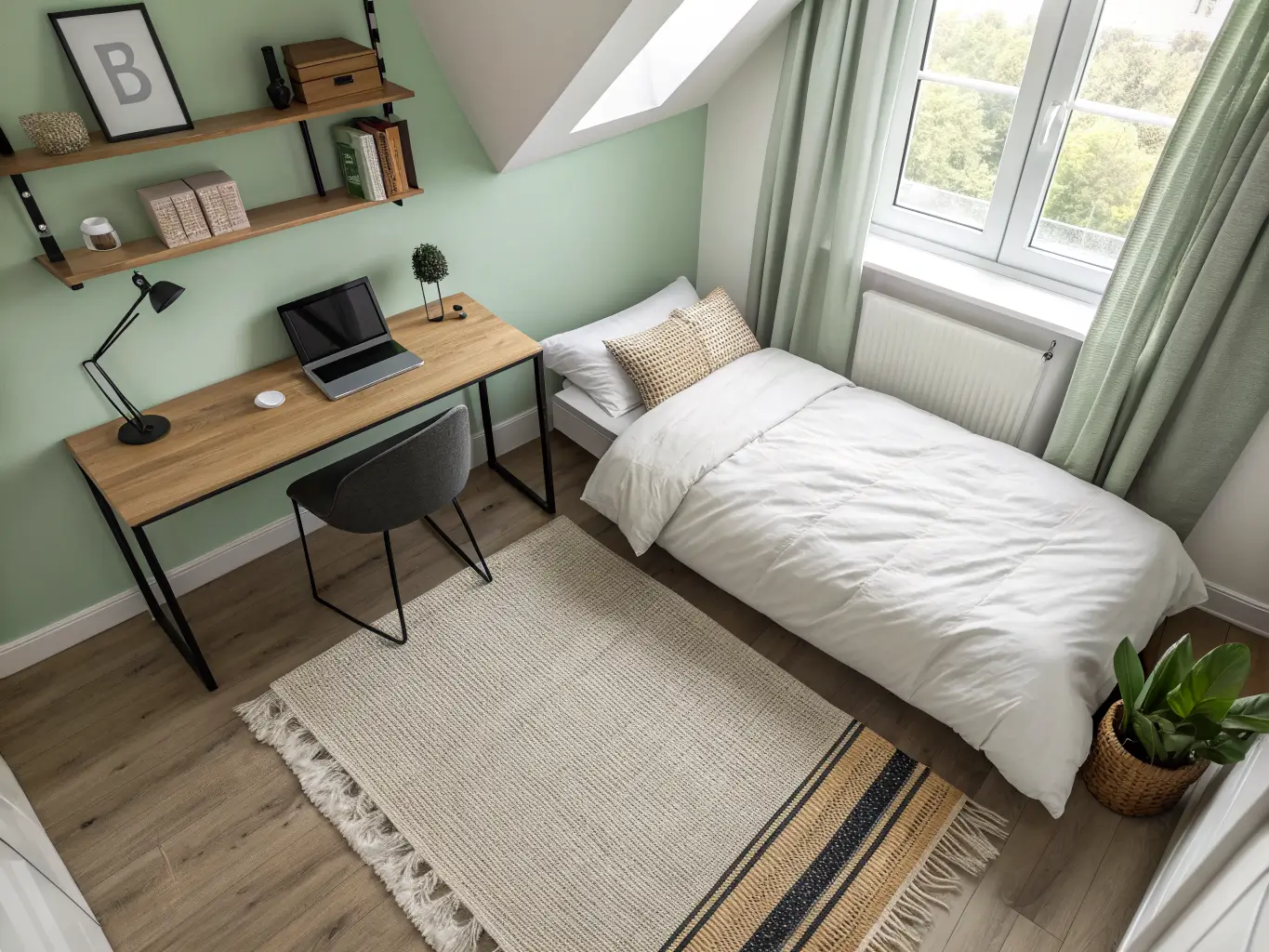
Optional Touches Worth Adding Once the Basics Are In
Once the functional pieces are placed, these are what make it feel finished instead of just furnished:
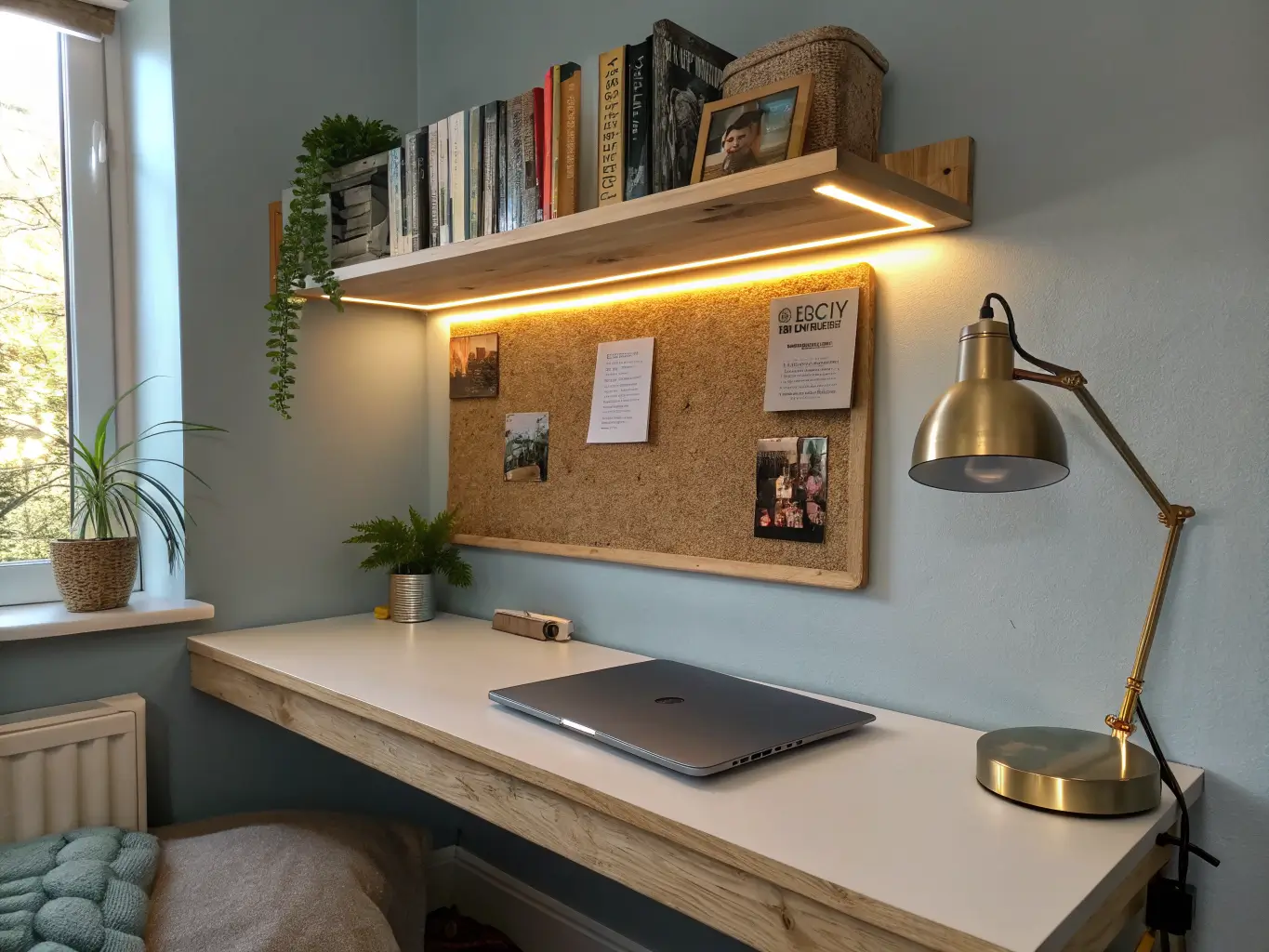
– A trailing plant (pothos or a small snake plant) on the shelf above the desk — keeps it from feeling sterile
– Brass or matte black hardware on shelf brackets or lamp bases for a slightly more polished look
– A rattan basket under the desk for cables and loose supplies — cheap, and it softens the hard lines of a desk setup
– Fairy lights or a slim LED strip behind a shelf, used sparingly, for a teen’s room or a night-owl studier
– One piece of affordable art near the desk — something you actually like looking at during a long study session, not filler
How to Actually Put It Together
Start with the bed. Always. This was my mistake the first time — I planned the desk placement first because it felt like the “project,” then tried to cram the bed into whatever was left. Wrong order. The bed anchors the room; everything else, including the desk, arranges around it.
Once the bed’s placed:
1. Find your desk spot — a corner, a blank wall, or a spot near (not directly under harsh glare from) a window. Natural light is great for a workspace, but if your screen faces the window directly, you’ll get glare all afternoon. Angle the desk beside the window, not facing into it.
2. Measure clearances. You need at least 30 inches behind a desk chair to push back and stand without hitting the bed frame. If you don’t have that, a wall-mounted floating desk with a stool-height chair solves it.
3. Add storage vertically, not horizontally. Floating shelves above the desk, a pegboard for stationery, anything that goes up the wall instead of eating floor space.
4. Use a rug to divide the zones. A 4×6 rug under the desk chair, distinct from whatever’s under or beside the bed, does more to separate “sleep” from “work” than people expect.
5. Style the desk with restraint. Lamp, a small tray for pens, one plant, one object you like. That’s it. Everything else goes in a drawer.
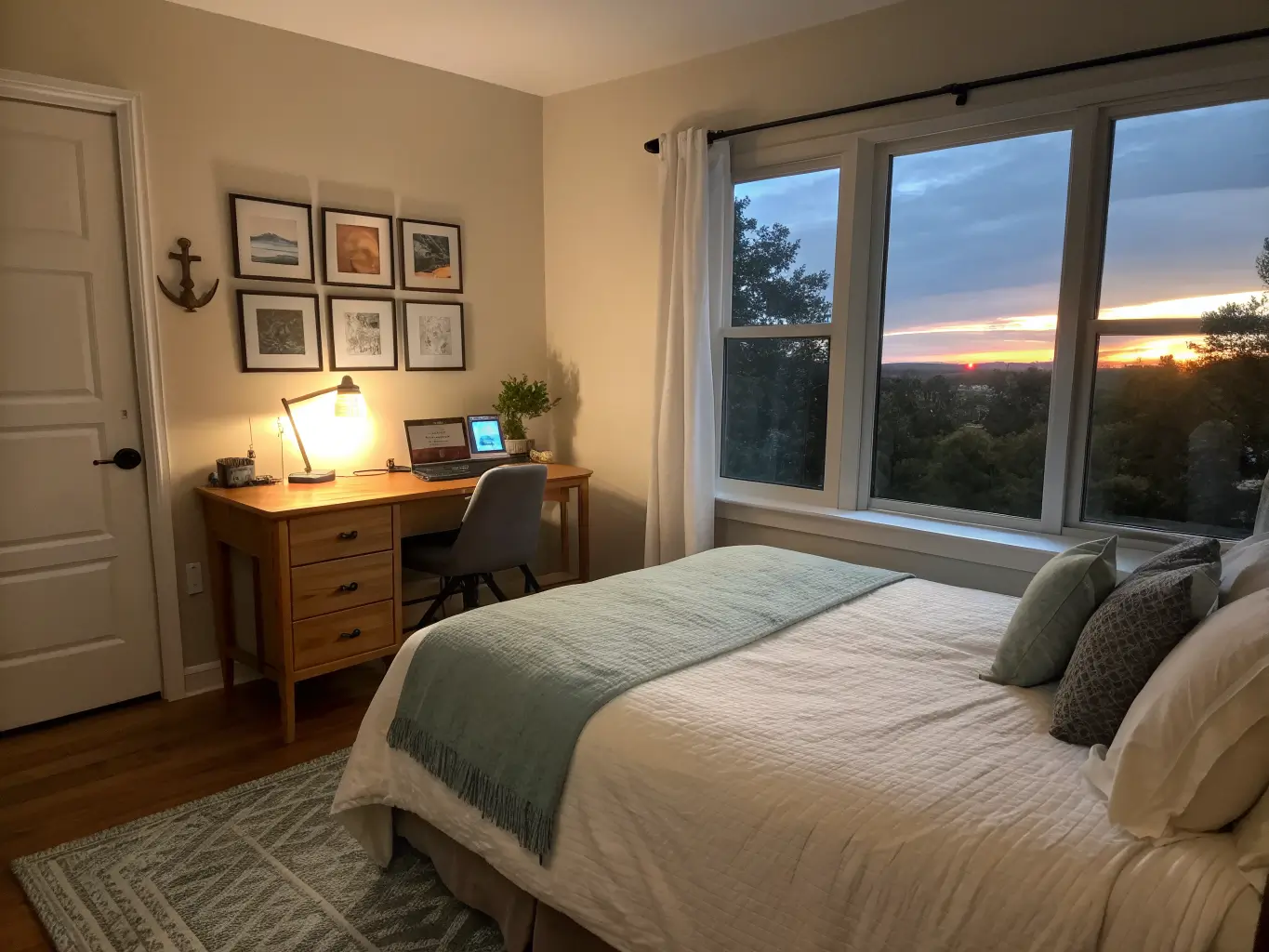
One rule I’d underline: pick one focal point, not two. Either the bed (headboard, a piece of art above it) or the desk wall gets to be the visual anchor. If both are competing for attention, the room feels busy no matter how nice each piece is individually.
Where to Spend, Where to Save
Spend on:
– The chair — your back will remind you daily if you cheaped out here
– The lamp — a warm, well-placed light source does more for mood than almost anything else in the room
– Good wall-mounted shelving that’s actually anchored properly (I used adhesive strips the first time on a floating shelf — it held for three weeks, then dumped four books on my desk at 7am)
Save on:
– The desk itself, especially if it’s floating or simple — a $90 IKEA desk looks identical to a $400 one once it’s styled
– Decor accents — thrift stores are excellent for frames and small objects; my favorite piece on my current desk is a $4 ceramic dish from a church rummage sale that holds paperclips
– Rugs, unless you want a statement piece — a plain jute rug under $60 does the zoning job fine
Mistakes I See Constantly (and Made Myself)
– Desk at the foot of the bed. It feels efficient on paper. In practice, it visually shrinks the room and puts your work directly in your sightline when you’re trying to fall asleep. Avoid it if you have any other wall option.
– Cool white lighting. Kills the restful feeling instantly. Warm bulbs, always, in a combined bedroom-study.
– Overstyled desktop. Five decorative objects plus a laptop plus a planner plus loose pens equals visual noise, and it makes the room feel smaller than it is.
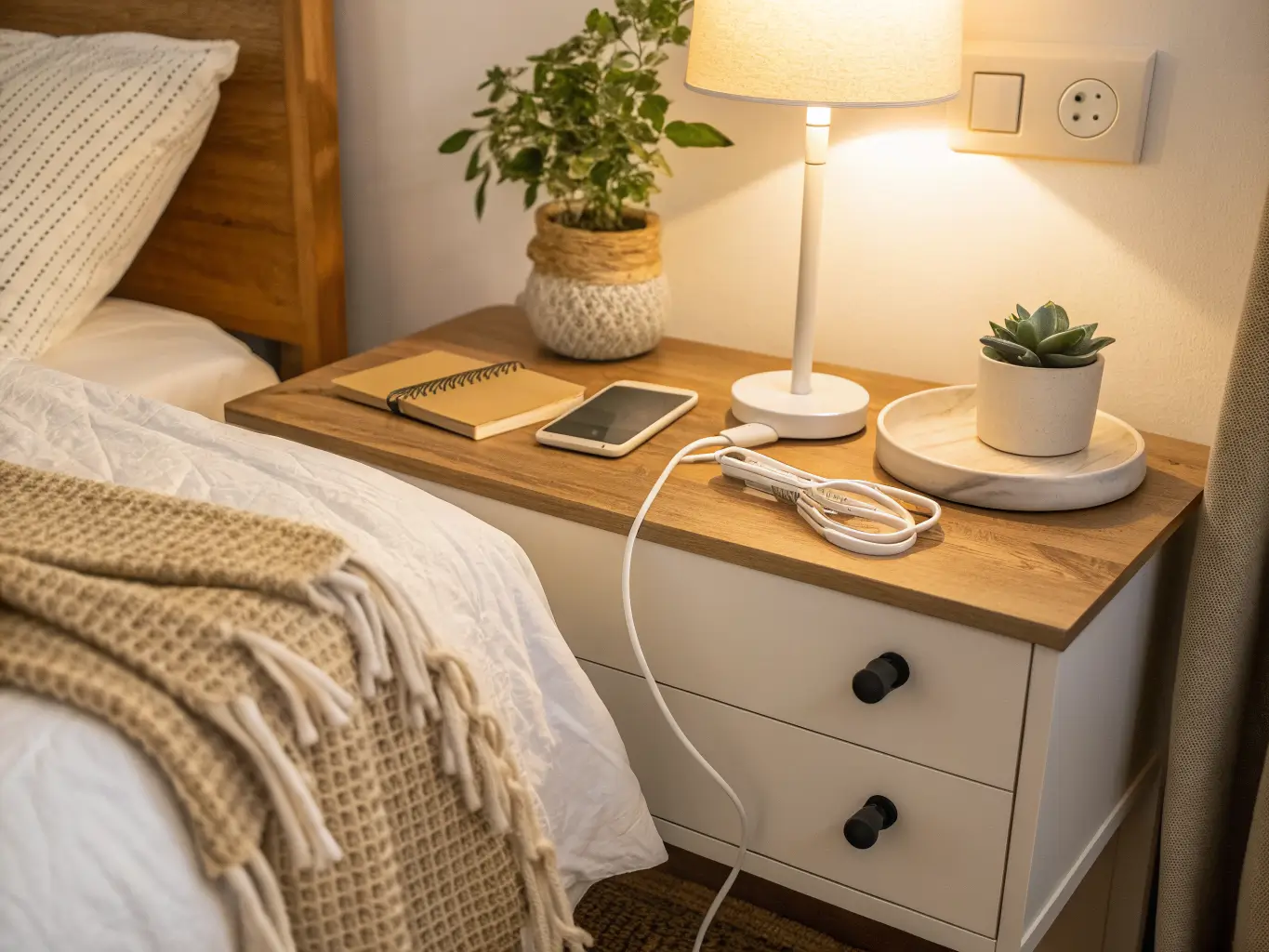
– No cable management. This one’s boring advice but it’s the single biggest thing that separates a “styled” desk photo from real life. A $12 cable clip set solves 90% of the mess.
– Oversized furniture. A full executive desk in a 10×10 bedroom eats the whole room. Go compact or wall-mounted every time in a small space.
– No zone separation at all. If the desk and bed share literally everything — same finish, same colors, no rug break, no shelf divider — the room reads as cluttered rather than intentional, even if it’s tidy.
Keeping It Looking Good Long-Term
Stick to 2–4 core colors total in the room, with maybe one accent tone. Repeat your wood finish or metal finish across both zones — if your desk legs are black metal, echo that in a lamp base or shelf bracket, so it feels chosen rather than accumulated.
Refreshing it seasonally is cheap and easy:
– Swap the throw pillow covers and a small plant for a quick seasonal reset
– New lamp or a corkboard swap before you consider anything structural
– If the room’s started feeling too much like an office, add a softer throw and swap to warmer lighting
– If it’s drifted too bedroom-soft and unproductive-feeling, add one structured storage piece and a sharper task lamp
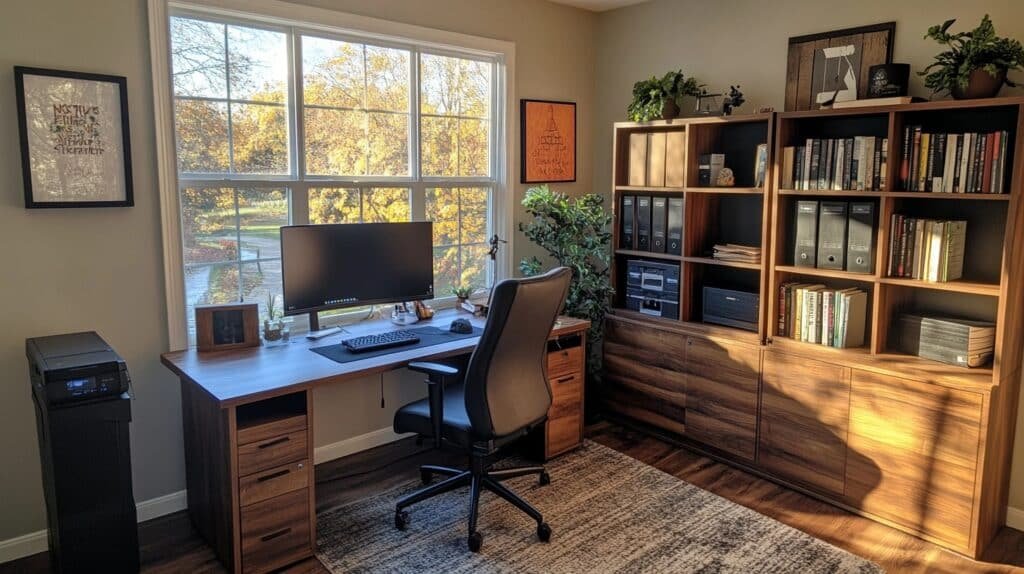
The room I redid — the one with the desk originally jammed at the foot of the bed — now has the desk against the side wall under a window, a jute rug underneath it, and a single shelf above holding three books and a plant. Took me an afternoon to move once I stopped overthinking it. It’s not a big room. It just finally has two clear jobs instead of one confused one.
For another angle on this, my bedroom reading nook guide covers the same space from a different starting point.