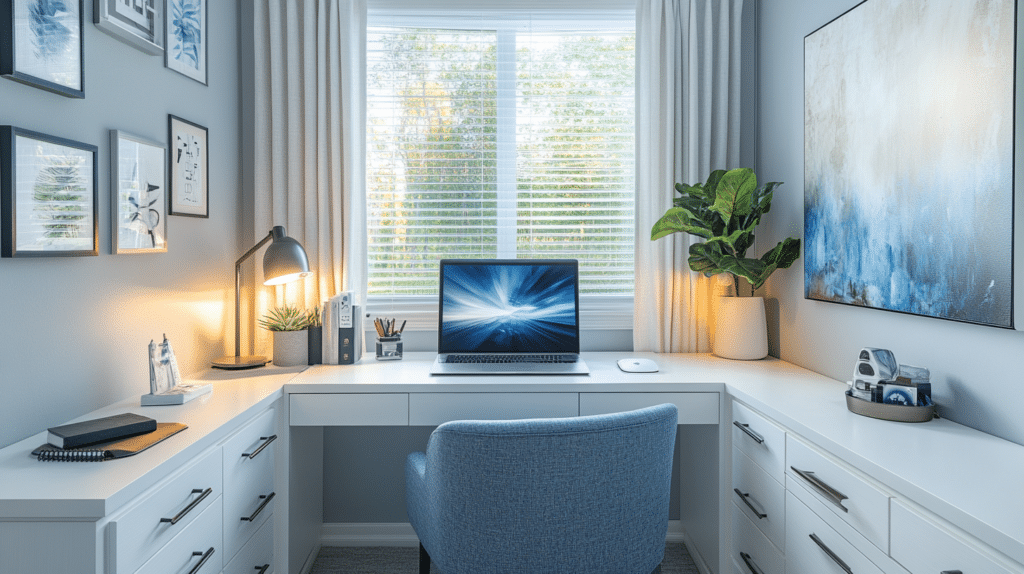
What Makes a Study Room Look Modern (And What Doesn’t)
Modern doesn’t mean cold or sparse to the point of feeling unfinished. It means clean lines, a tight color palette, and furniture that earns its spot in the room. No ornate desk legs, no matchy-matchy accessory sets, no six decorative objects on a shelf that could hold three.
The look leans on:
Simplified layouts — one desk, one chair, storage that doesn’t scream for attention
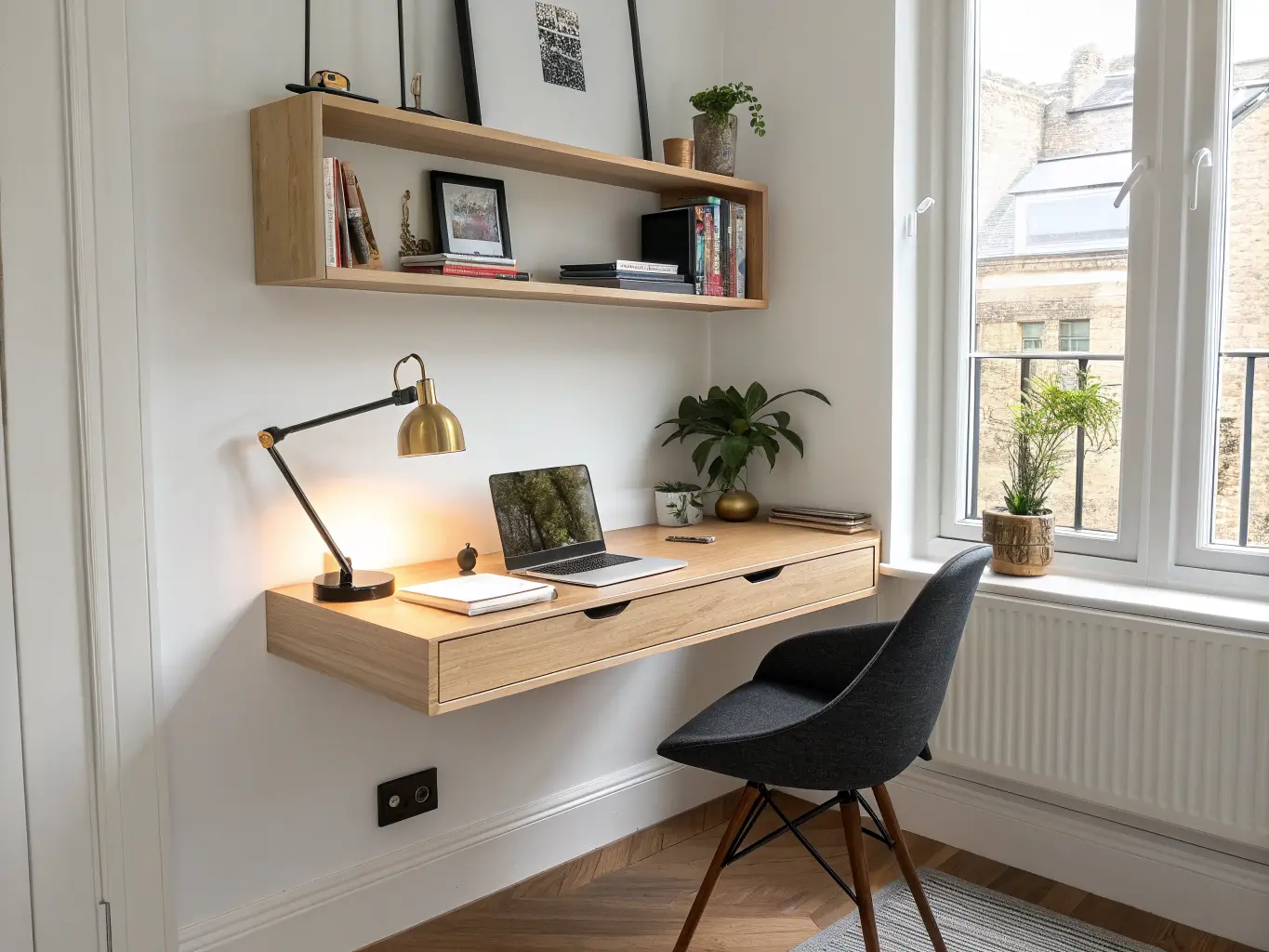
Built-ins or wall-mounted pieces when the room is small enough that floor space matters
A limited palette — I’d say 2 to 4 colors total, including your wood tone and metal finish
Materials that feel current: walnut or oak veneer, matte black hardware, glass, and the occasional brushed brass lamp
This style works for students, remote workers, and anyone who’s turned a bedroom corner or an unused closet into a homework zone. It doesn’t need a dedicated room — my setup is a converted alcove that used to hold a bookshelf nobody looked at.
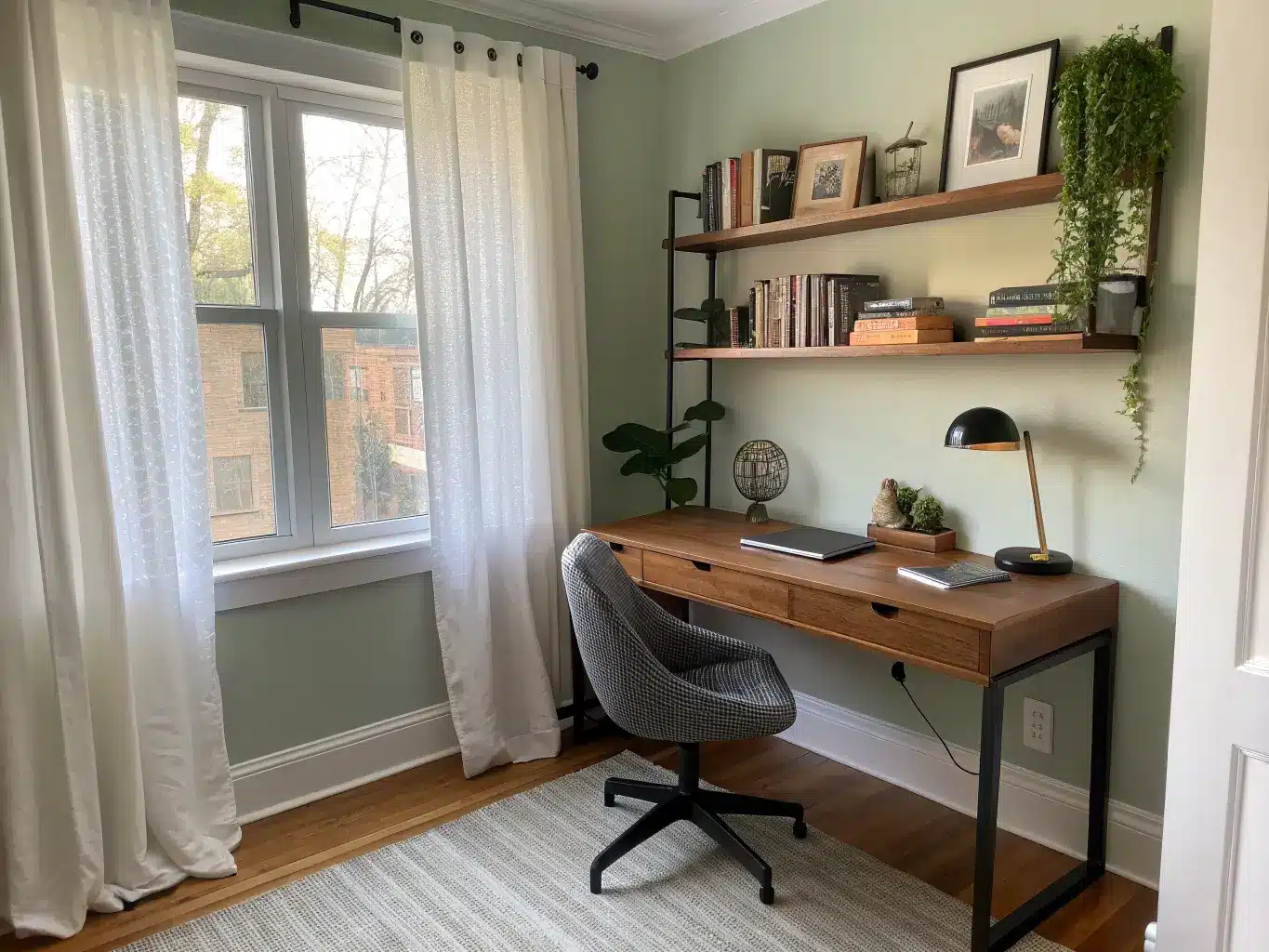
Setup Time and Realistic Costs
Time: A weekend gets you a basic refresh — new desk, chair, lamp, some organization. If you’re adding floating shelves, painting, or running new lighting, budget one to two weeks, mostly because you’re waiting on paint to dry and shelf brackets to ship.
Cost, broken down honestly:
Budget refresh ($250–$800): A simple desk, a decent ergonomic chair, a task lamp, and some drawer organizers. IKEA covers this tier well — I bought my first desk there for $179 and still use it in my son’s room.
Mid-range ($900–$3,000): A larger desk, a genuinely good chair, open shelving, a rug, layered lighting, and some real wall decor. This is where I landed for my own room, closer to $1,800 all in.
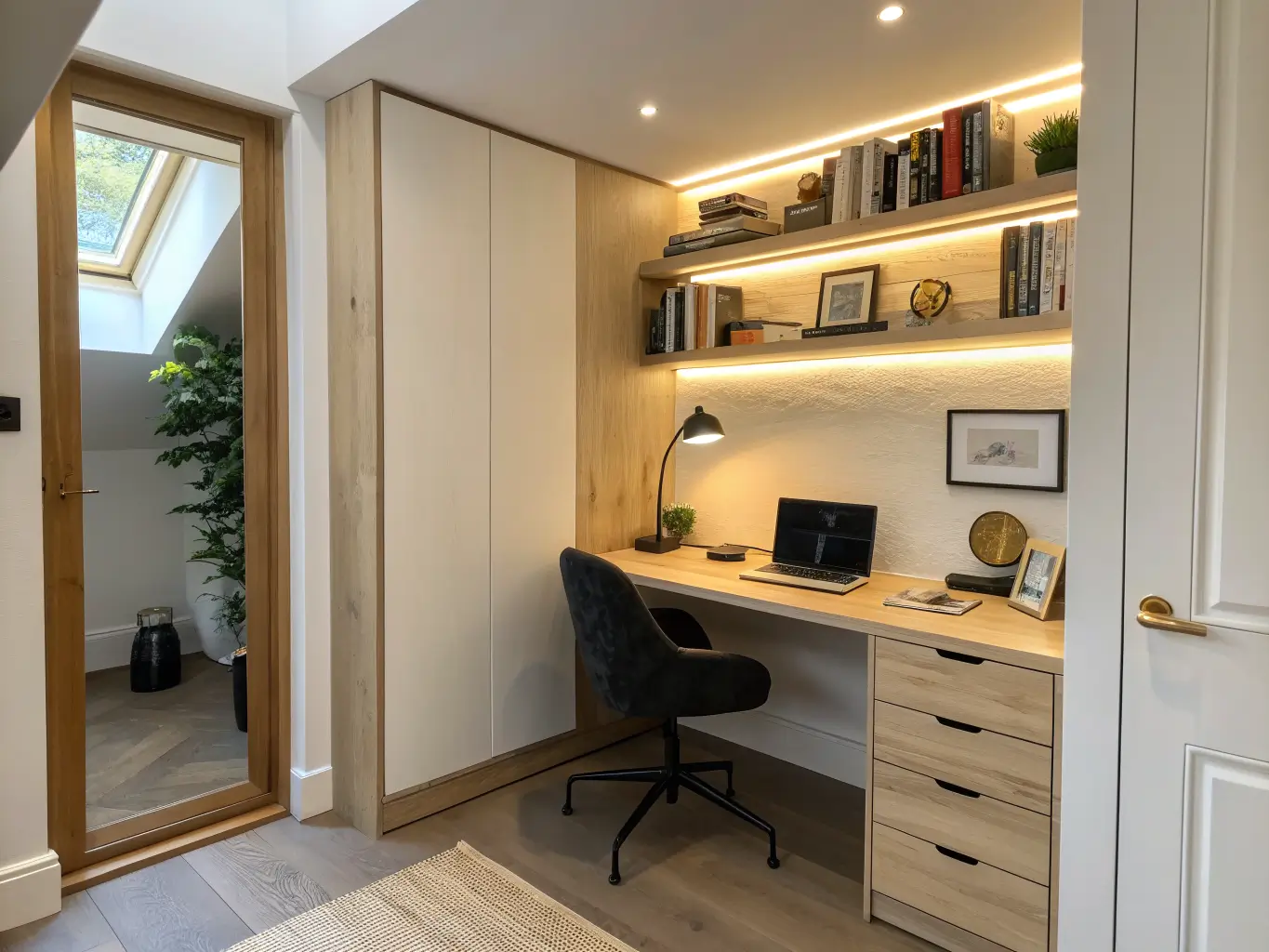
High-end/custom ($3,000–$10,000+): Built-in desks and cabinetry, premium seating, layered lighting plans, custom millwork. This is the territory of design-magazine study rooms with the book wall and the hidden printer cabinet.
Space needed: Anywhere from a 3×5 foot nook to a full 100-square-foot room. Smaller spaces just have to work harder with vertical storage and wall-mounted furniture instead of floor-standing pieces.
This is a year-round project — there’s no seasonal decor cycle here. You’re building function first, then adding a few things you can swap out later.
The Must-Have Pieces
Every modern study room needs these, full stop. Skip one and the room either doesn’t work or doesn’t look finished.
The desk.
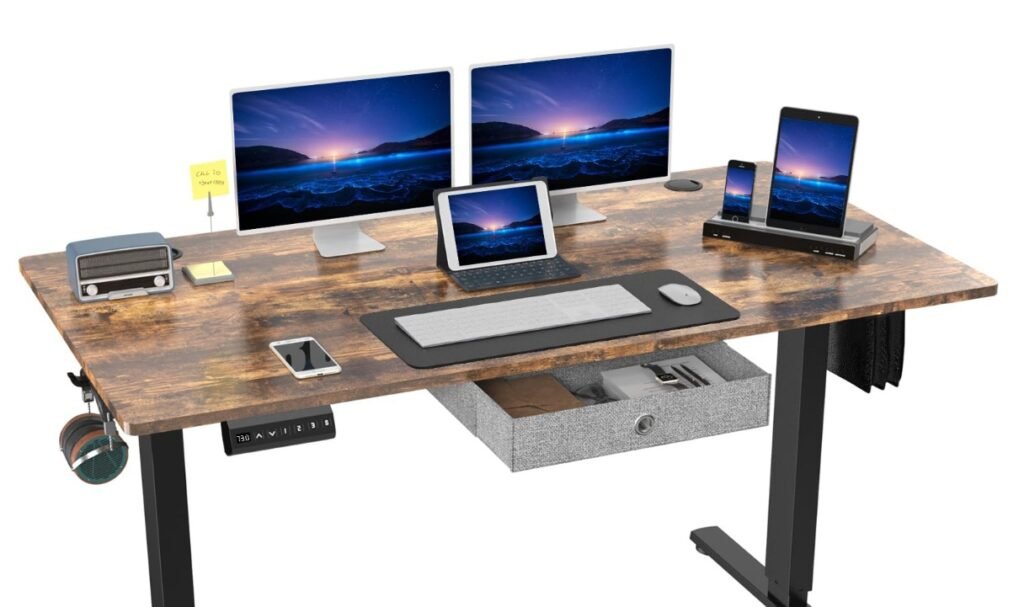
Go with a clean-lined writing desk, a wall-mounted floating desk, or a built-in if you’re renovating. In small rooms, a floating desk 42–48 inches wide does more for the room than a bulky traditional desk with drawers you don’t need. I made the mistake of buying a deep executive-style desk for my first setup — it ate the room and I sold it on Facebook Marketplace for half of what I paid.
The chair.
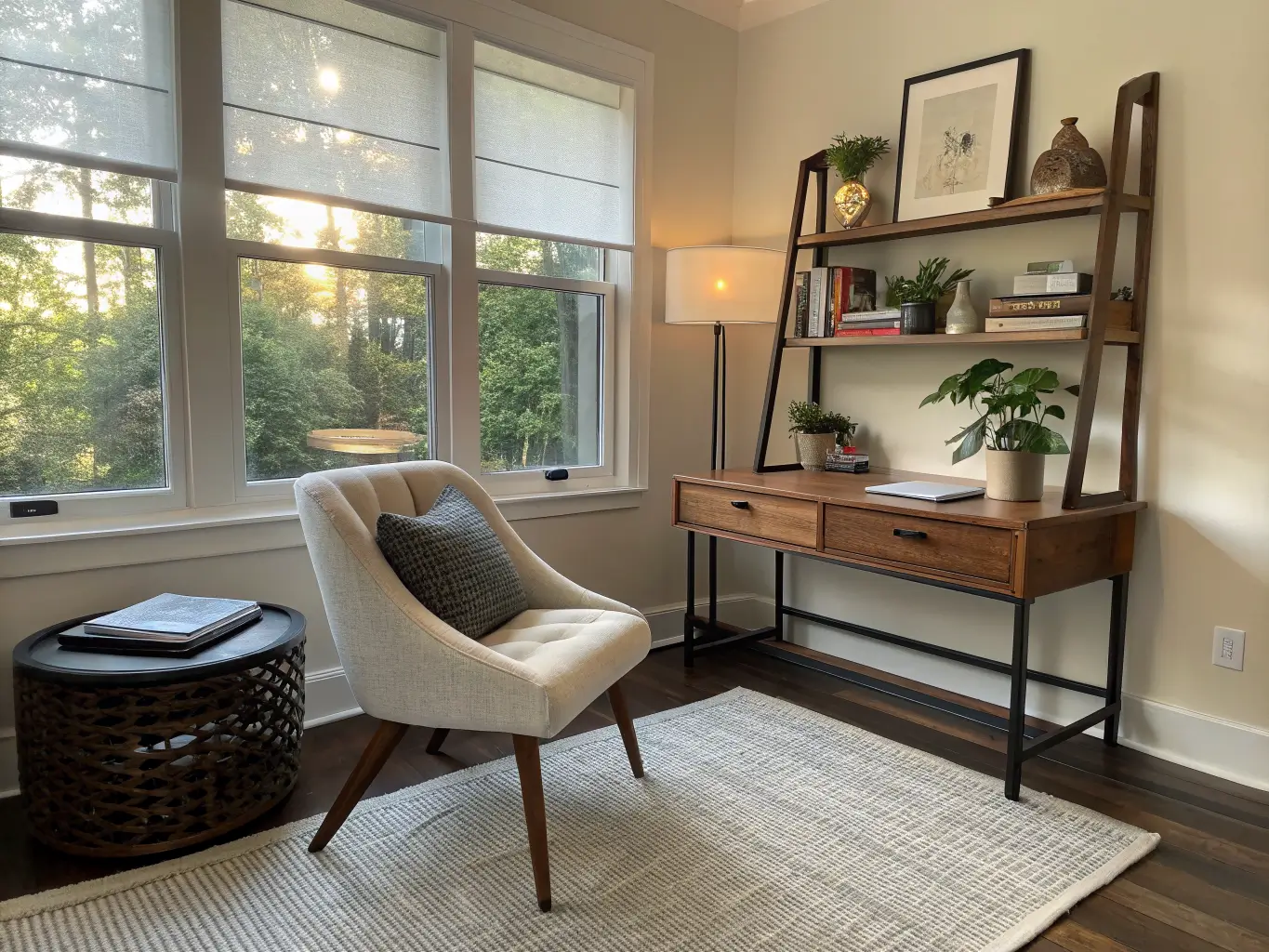
Ergonomic, with real lumbar support, non-negotiable. This is the one place I’d tell you to spend real money — a $300–$500 task chair will outlast three cheap ones and your back will thank you. If the room doubles as a reading nook, add a separate upholstered accent chair instead of trying to make your desk chair do both jobs.
Storage that hides the mess.
Floating shelves, wall cubbies, closed cabinets, a drawer pedestal — whatever fits your space, but plan it before you start decorating. Books, chargers, printer, supplies. Each one needs an assigned spot or they’ll end up on your desk.
Layered lighting.
One ceiling fixture is not enough — you’ll strain your eyes and the room will feel flat. You need:
– A task lamp directly on the desk
– Ambient light from a floor lamp or wall sconce
– Under-shelf LED strips if you have floating shelves above the desk (these cost about $20–$30 and make a bigger visual difference than people expect)
A low-pile rug.
This defines the zone, especially if your study area is a corner of a bedroom or living room rather than a closed-off room. Stick to a neutral tone — it’s grounding, not decorative.
Restrained decor accents.
Framed art, a small pinboard, one or two plants, minimal sculptural objects, and something to manage your cables. That’s it. Current modern study inspiration is not about dense tabletop styling — it’s about negative space, meaning the empty areas around your objects matter as much as the objects themselves.
Optional Layers Worth Considering
Once the essentials are in place, these add personality without breaking the modern look:
– Plants: pothos or a snake plant if you’re bad at remembering to water things (I am, and mine has survived two years of neglect)
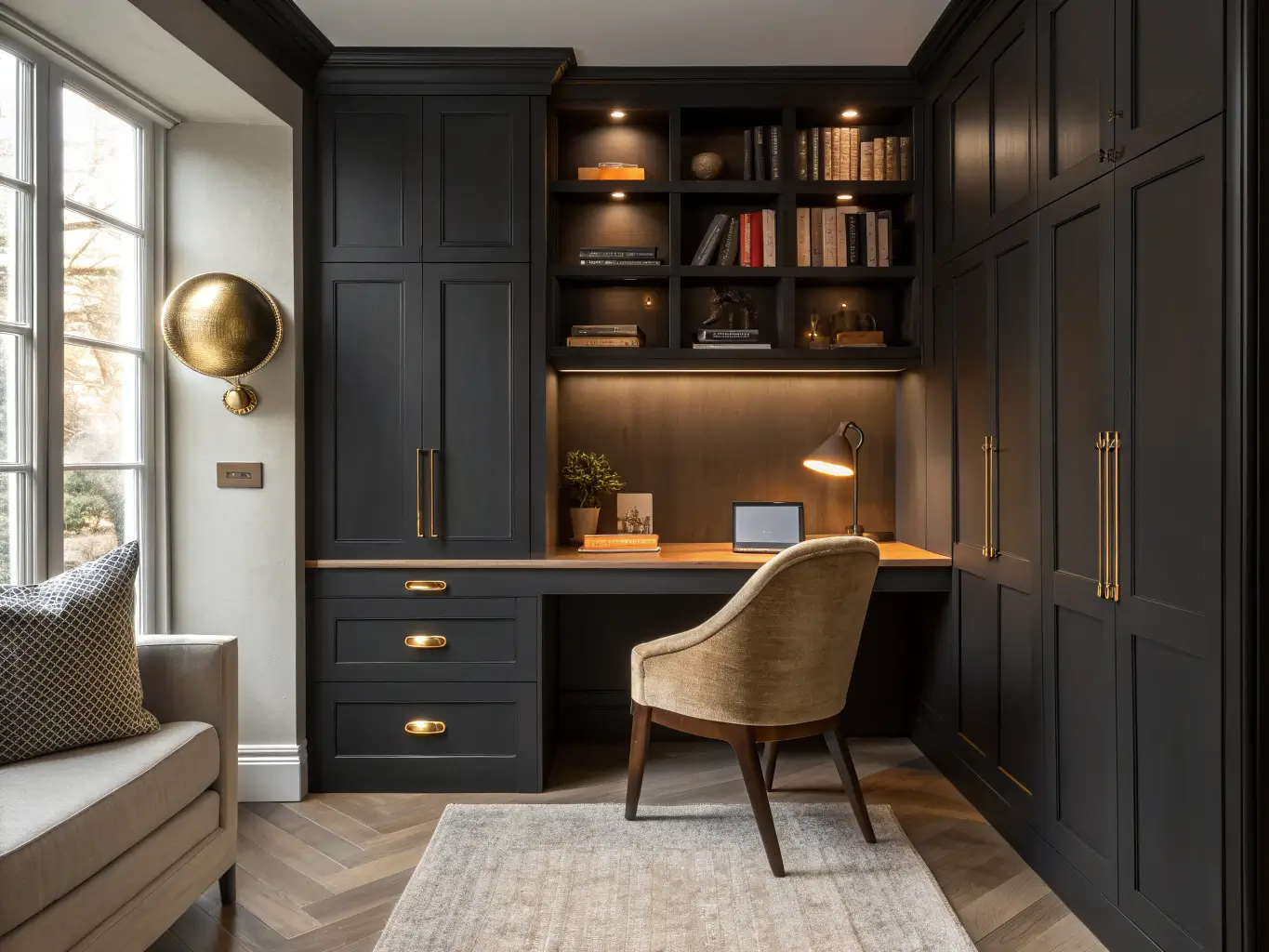
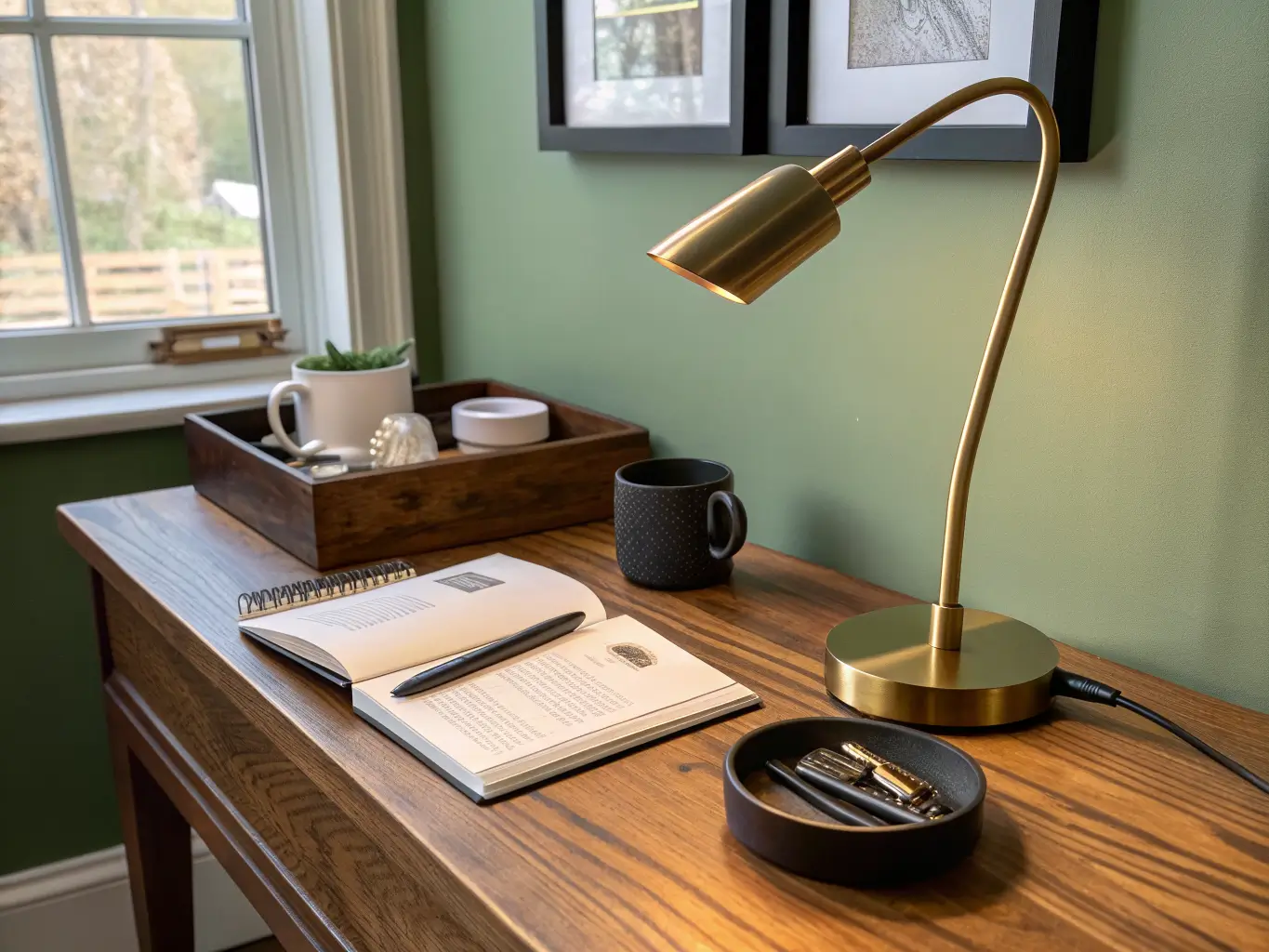
– Metallic accents: matte black hardware, brushed brass lamp, smoked glass desk top for a sharper edge
– Softening textures: a boucle cushion on the reading chair, linen Roman shades, or an acoustic wall panel that also helps with sound if you’re on calls
– One accent color: a sage-green wall behind the desk, or a deep blue on the back of an open bookshelf — one saturated moment, not five
Seasonal changes should happen at the accessory level only. Swap art prints, change the desk tray, rotate in a warmer throw in winter. Don’t touch the furniture or wall color every season — that’s what keeps the room feeling modern instead of trendy-then-dated.
How to Actually Put It Together
Clear the space first. Decide if this room is single-purpose or if it needs to flex — guest space, craft corner, whatever else. That decision changes your storage plan.
Position the desk near natural light, not in direct glare. This is the single most repeated piece of advice in every study room guide for a reason — it’s true. My desk faces a window at an angle, not straight into it, so I get daylight without a washed-out laptop screen at 2pm.
Measure before you buy anything. You need:
– Clearance to walk around the chair when it’s pulled out (minimum 36 inches behind the desk if it’s a walkway)
– Shelf height that clears your head when seated
– Desk depth that actually fits your monitor setup without crowding
Build in this order:
1. Desk, chair, and main storage piece — your anchors
2. Task lighting, so the space is functional before it’s pretty
3. Wall shelving above or beside the desk to use vertical space
4. Desktop styling — lamp, one tray, one plant, one framed piece, a small catchall dish
5. One or two personal touches — art, a print, a pinboard — so it feels like yours without tipping into cluttered
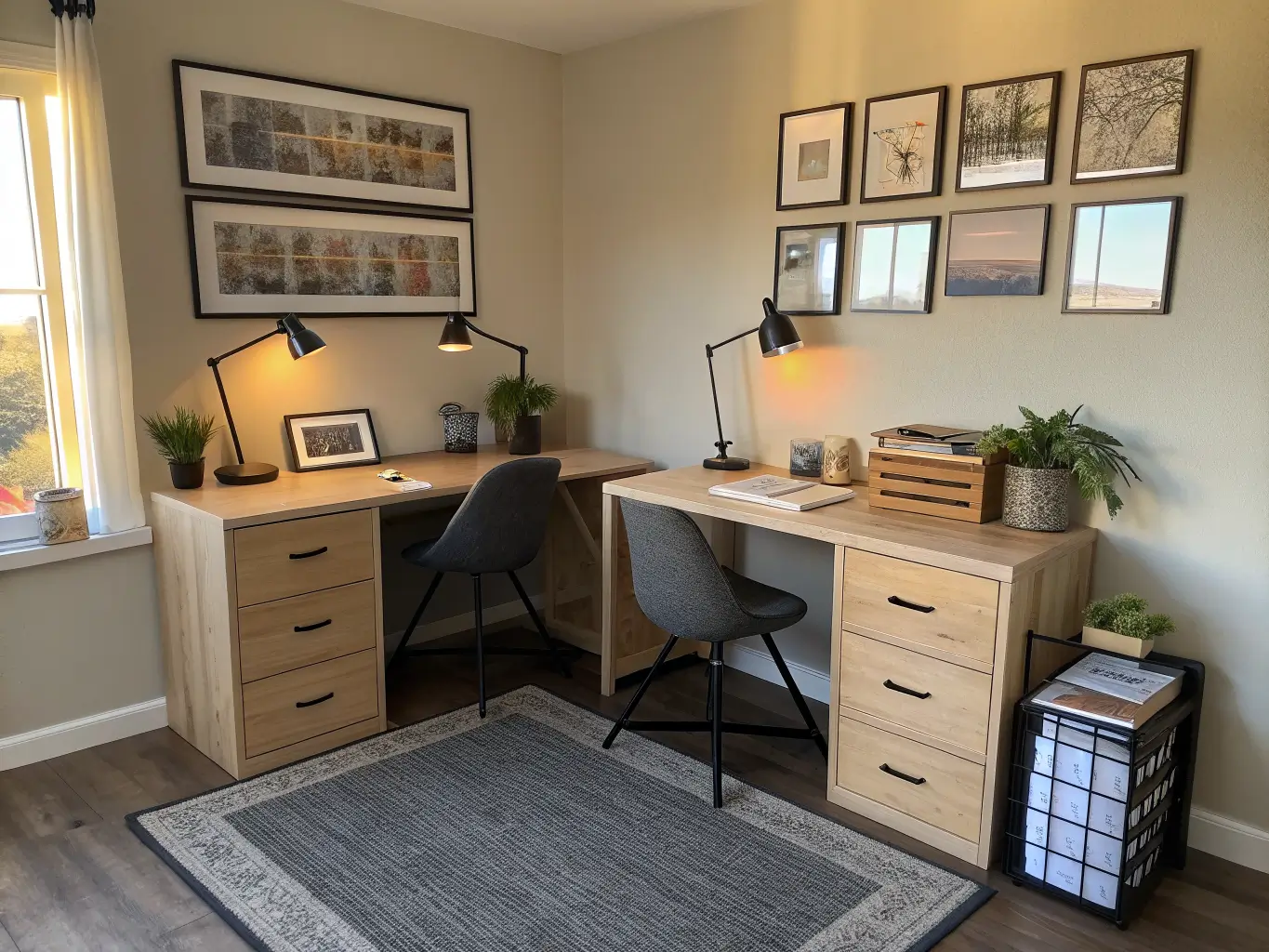
If you’re sharing the room with a sibling or partner, define zones with rug placement or by giving each person their own shelf section rather than mixing everything together. I did this in my son’s shared study nook with two identical desks facing opposite walls — it reads as one cohesive setup instead of two competing ones.
Mistakes I See (and Made Myself)
Overfilling the room. More storage doesn’t fix clutter — it just gives clutter somewhere new to hide, badly. Concealed storage beats extra shelving every time.
Relying on one light source. I worked under a single overhead fixture for months before I added a desk lamp and immediately noticed less eye strain by the end of the day.
Choosing looks over function. That gorgeous acrylic chair with no back support? It’ll sit there looking good while you develop a hunch. Ergonomics first, always.
Buying a desk too big for the room. If you can’t push your chair back without hitting a wall, the desk is wrong for the space — go wall-mounted or narrower.
Ignoring cables. Visible cords undo a clean modern look faster than almost anything else. A $15 cable tray under the desk and some adhesive clips solve 90% of this problem.
Overdecorating with a theme. Modern doesn’t want a matched five-piece desk accessory set. It wants a few good objects and a lot of breathing room around them.
Keeping the Room Looking Right Long-Term
Stick to one wood tone and one metal finish across the whole room — mixing oak with walnut with brass with chrome reads as chaotic, not eclectic. I made this mistake early on, mixing a black metal desk frame with brass shelf brackets, and it never looked intentional no matter how I styled around it. Swapped the brackets to matte black and the whole room suddenly looked pulled together.
Do a weekly sweep: whatever’s sitting on the desk that you haven’t touched in a week goes into a drawer or gets tossed. Closed storage handles paperwork and chargers; open shelving stays for the handful of books and objects you actually want visible.
For seasonal refreshes on a budget, the highest-impact swaps are a new lamp, a bigger or better rug, one large framed print, or matching storage boxes on open shelves. None of these require touching your furniture or your wall color.
If you want to shift the style slightly without starting over:
– Modern + biophilic: more plants, more visible wood grain
– Modern + Scandinavian: pale woods, white walls, decor pared back even further
– Modern + warm luxe: boucle textures, brass fixtures, deeper wall colors like a warm charcoal or clay
– Modern + industrial: black metal shelving, concrete-look flooring, exposed brackets
Pick one direction and let it guide future purchases instead of buying pieces that pull in three different directions at once. That’s the actual secret to a study room that still looks like a room, not a mood board — consistency in the boring decisions so the good pieces get to stand out.
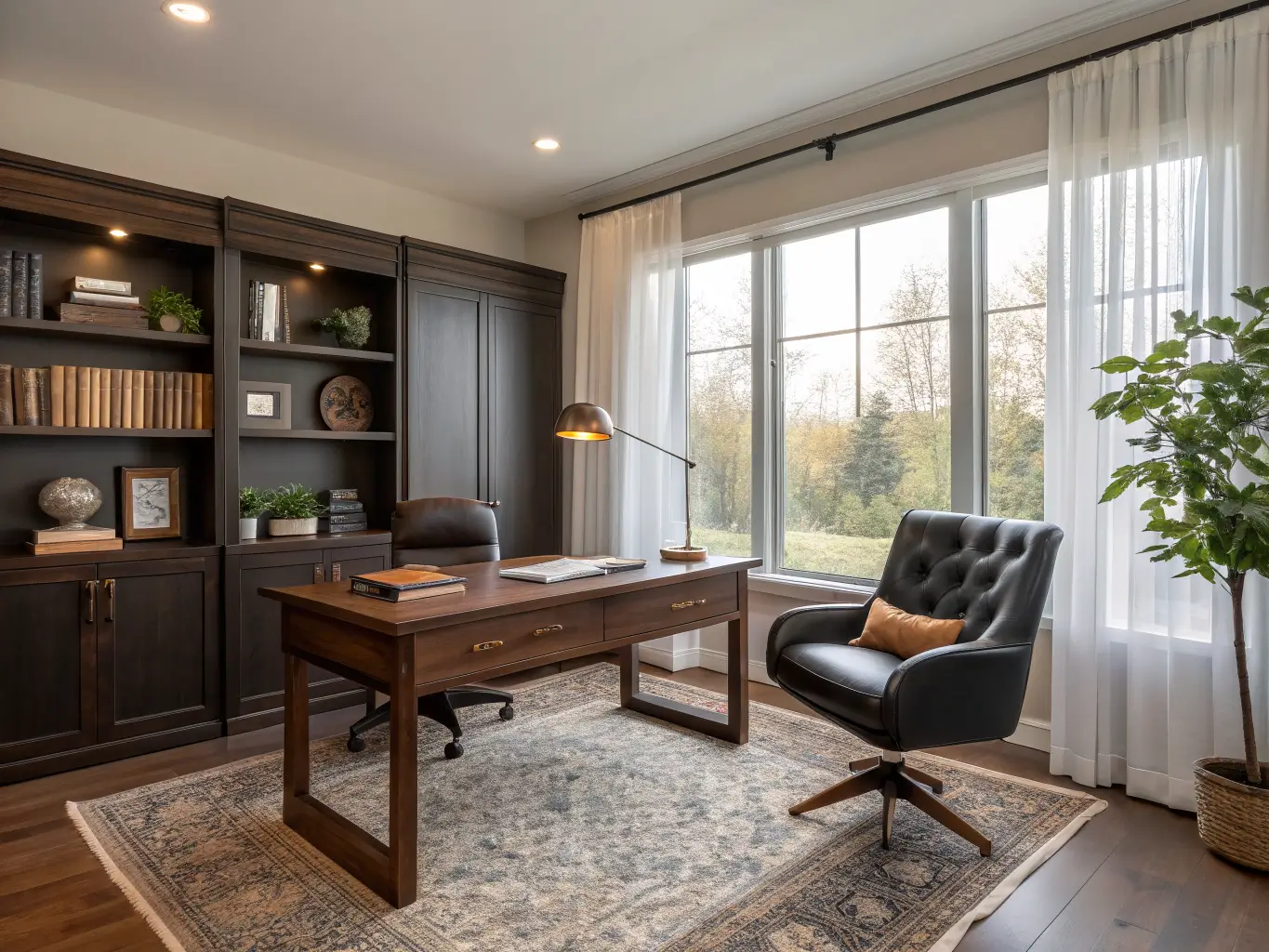
For another angle on this, my study room design guide covers the same space from a different starting point.