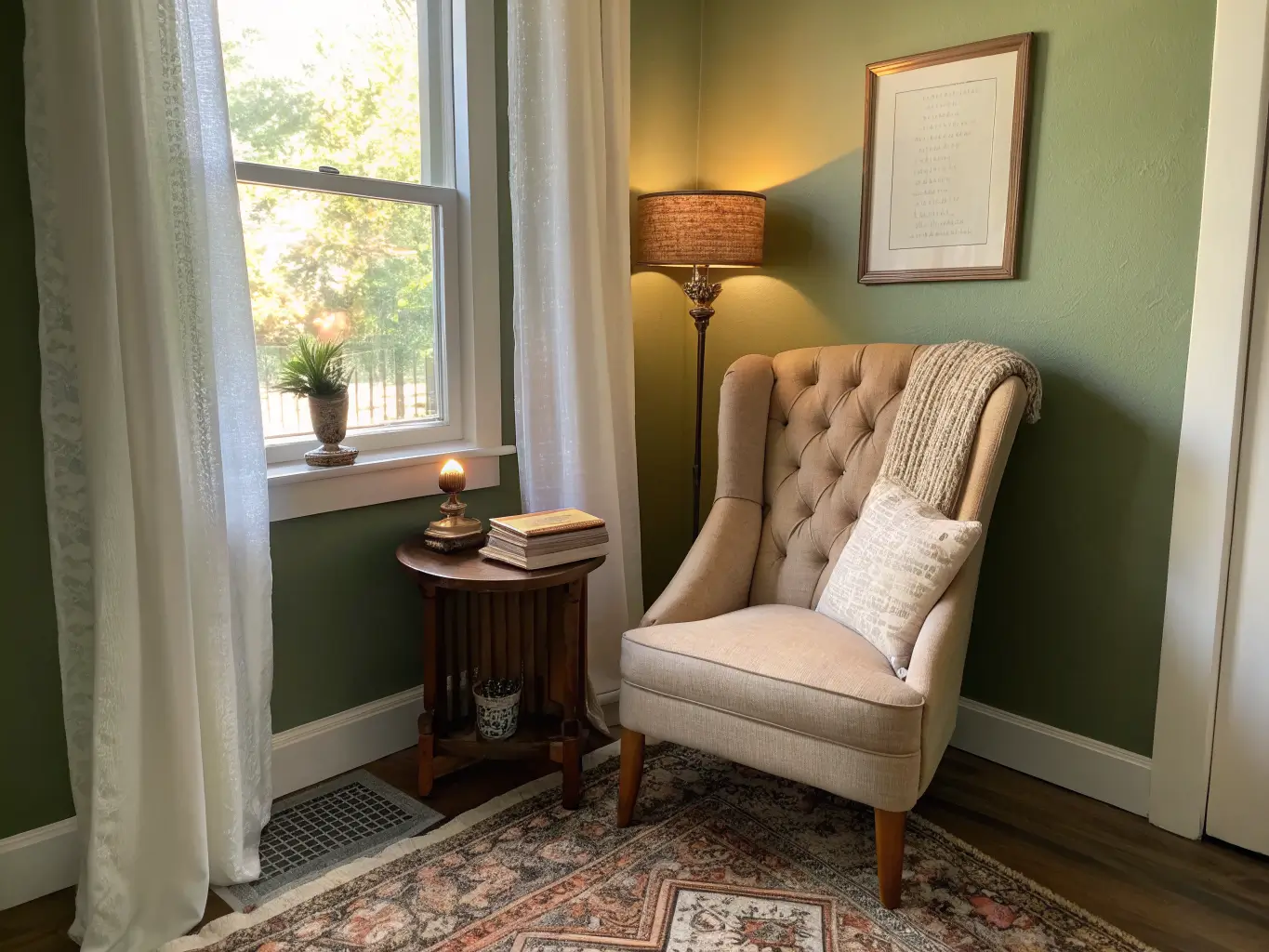
A vintage reading nook is the fastest way to make an unused corner feel like the best seat in the house. I built mine in a dead 4-foot gap between my bedroom window and a wall that was doing absolutely nothing except collecting laundry piles. Two weekends and about $380 later, it’s the spot my husband has to physically pry me out of.
If you’re staring at an awkward alcove, a stair landing, or a corner of your living room wondering what to do with it, here’s exactly how I’d approach it — including the two things I bought and immediately regretted.
What “Vintage” Actually Means Here (And Who This Style Suits)
Vintage reading nook doesn’t mean stuffing a corner with antiques you inherited from a great-aunt. It means borrowing from traditional, library-inspired, and old-world decor — the sub-styles people search for most are dark academia, cottagecore, shabby chic, and mid-century vintage, and honestly you can blend two of them without it looking confused.
Color and material palette that reads vintage:
– Deep greens, warm browns, cream, dusty rose, mustard, burnt orange, olive
– Brass hardware, dark or reclaimed wood, velvet, wool, tweed, plaid, herringbone
– A faded, Persian-style rug (thrifted or an inexpensive machine-made version — nobody can tell from four feet away)
This look is made for book lovers, renters, and thrift-and-upcycle people. You don’t need a library room. You need one good chair, warm light, and restraint. It works in living rooms, bedrooms, home offices, lofts, dormers, window alcoves, even a closet with the door removed.
Space requirement: as little as a 3–5 foot corner. Mine is barely 4 feet wide. A bigger space just means you can add a full bookcase instead of a ladder shelf.
The Must-Have Pieces That Actually Make It Work
You don’t need all of this on day one, but this is the hierarchy — spend here first:
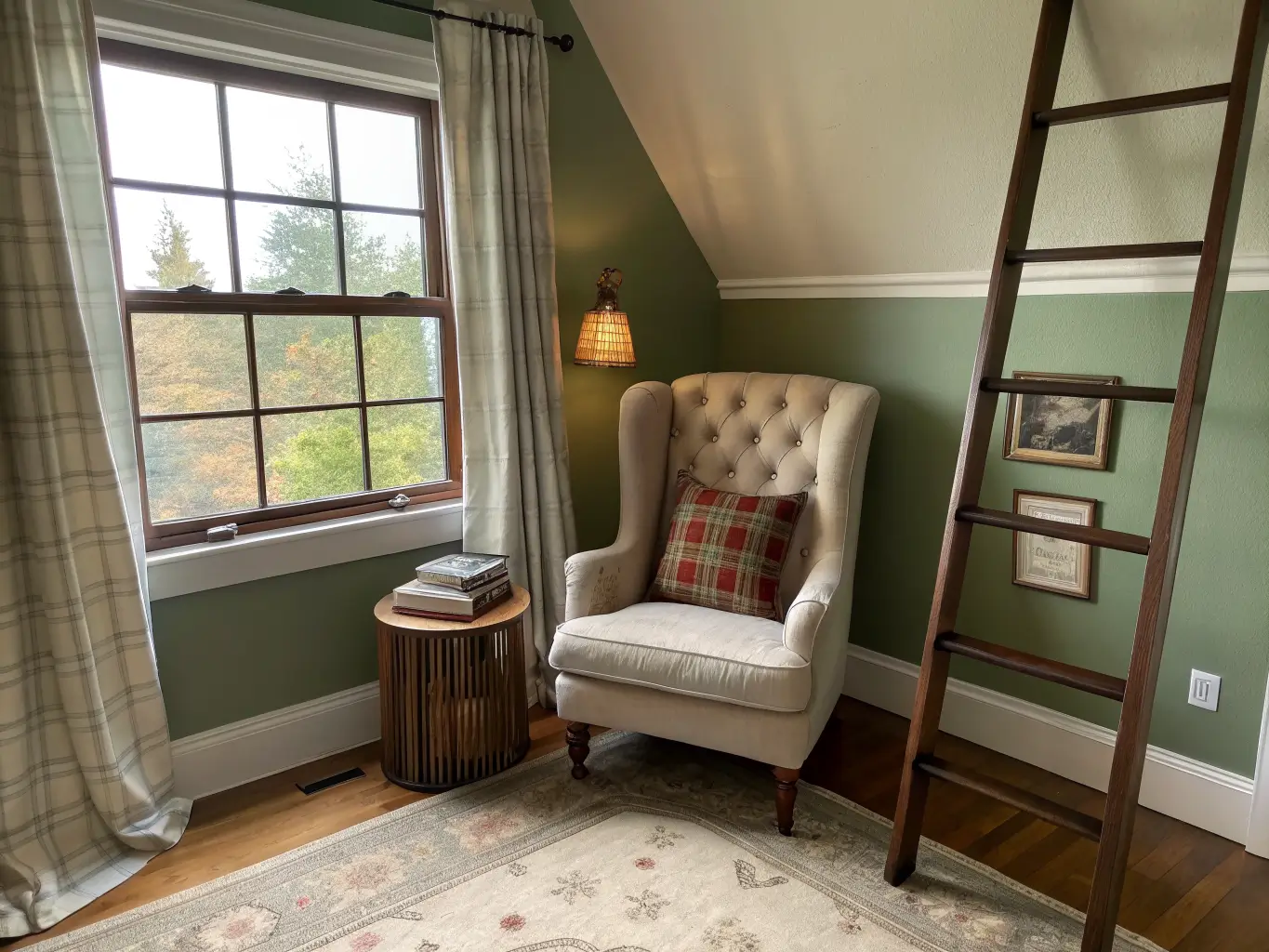
– The chair (your hero piece). A tufted armchair, wingback, vintage rocker, leather club chair, or small chaise. This is 60% of the look. Mine is a $65 wingback from a estate sale that I recovered myself — more on that regret in a minute.
– A side table. Small, wood, within arm’s reach. Antique-style, or a thrifted nightstand you refinish in walnut stain or cream paint.
– Lighting. A brass floor lamp, a table lamp with a fabric or stained-glass shade, or an articulating sconce if you’re tight on floor space.
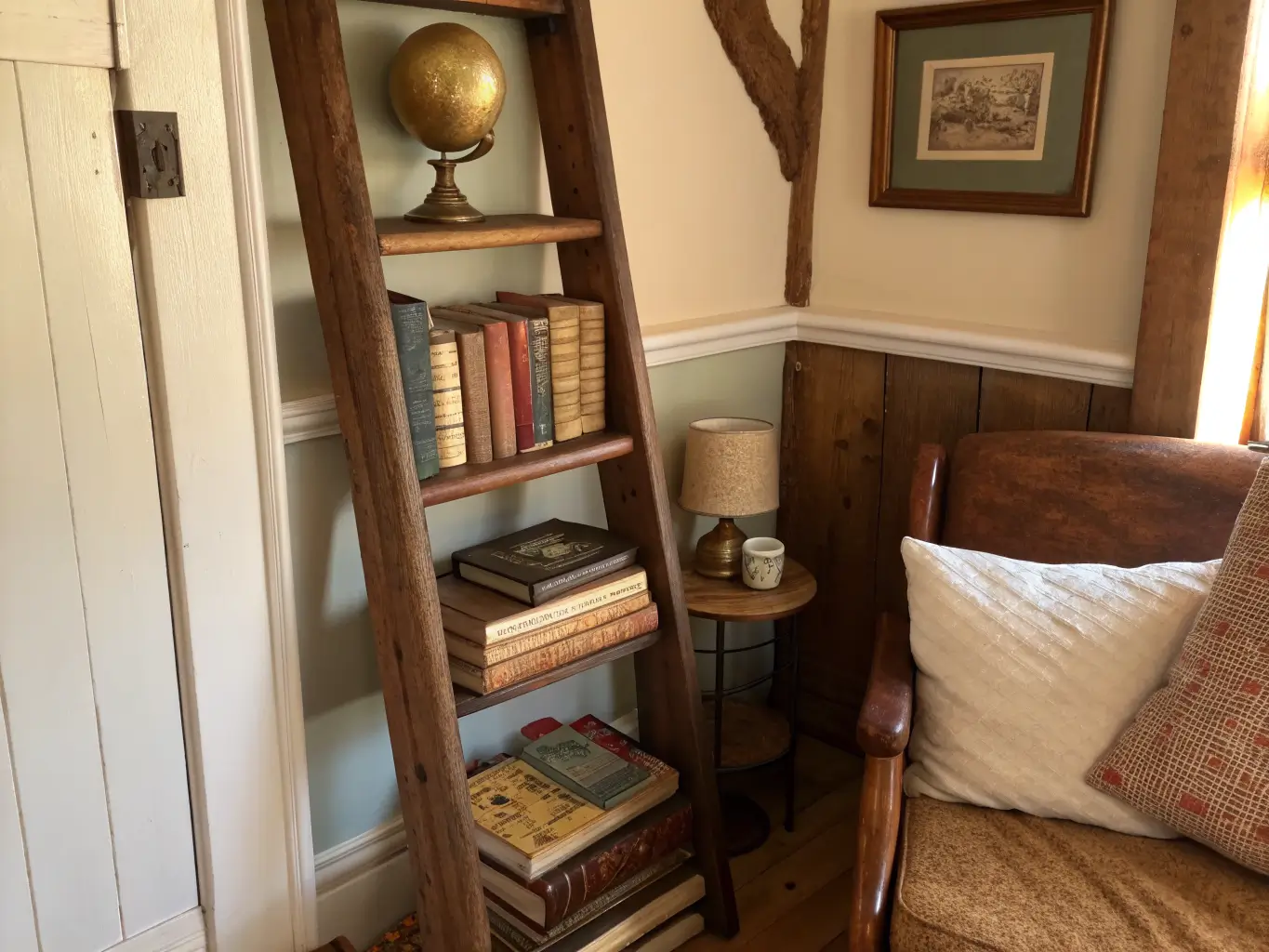
– Storage. A wood bookcase, ladder shelf, floating shelves, or — if you have zero wall space — a stack of two or three vintage wooden crates.
– Textiles. One throw blanket, one to three pillows, one rug. Plaid, paisley, floral cotton, or muted geometric all read vintage.
– Accessories. Candle holders, a framed print, an old globe, a stack of real (not decorative) books, a wooden footstool.
My regret, for the record: I bought a mid-century teak side table because I liked the shape, and it fights with the warm, dark-wood wingback chair every single day. Two different eras of wood tone sitting three feet apart just looks like a mistake, not a “collected” look. I should have thrifted something in the same walnut family as the chair.
How to Put It Together: Layout, Layering, and Light
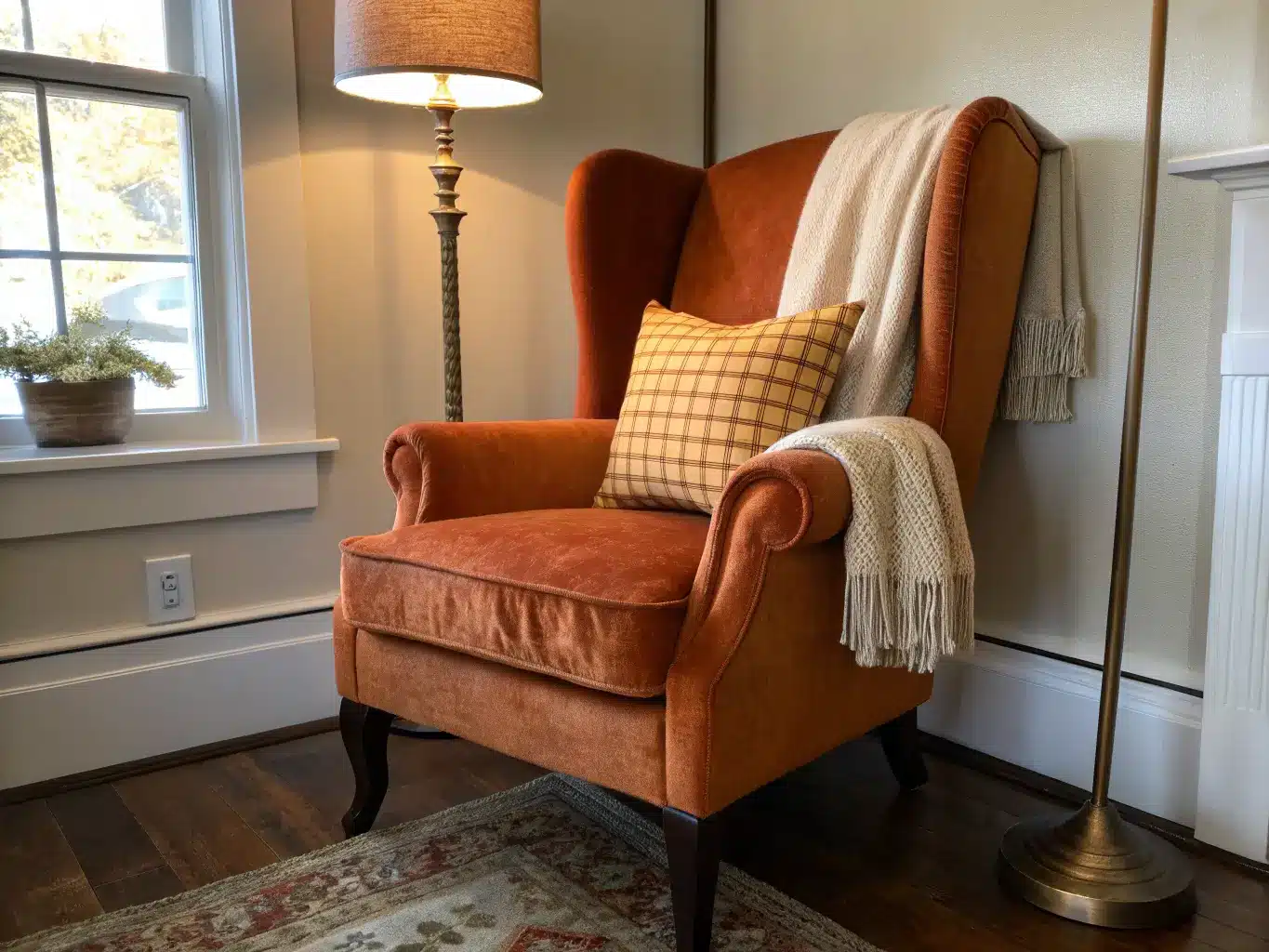
Start with the biggest piece. Chair or chaise goes in first, positioned so it’s not floating in the middle of the corner — back it into the wall or angle it toward the window. Then the side table goes within actual arm’s reach, not just nearby. You should be able to set down a mug without leaning.
Light for reading, not just mood. A lamp that’s purely decorative and dim will make you give up on the nook within a week — this happened to me with my first lamp, a cute little ceramic base with a shade so thick it barely lit the page. I swapped it for a brass floor lamp with a linen shade positioned just behind and to the side of the chair, at shoulder height when seated. That’s the fix. Warm bulb (2700K, not the blue-white daylight kind) is non-negotiable for vintage warmth.
Rug goes last. It defines the footprint and visually separates the nook from the rest of the room. A 4×6 is usually enough for a corner setup — you’re not covering the whole floor, just grounding the chair and table.
Layer textures on purpose, not randomly:
– Structured chair + soft knit throw + one nubby wool or jute rug + one patterned pillow
– That’s it. One patterned textile is enough. Two competing patterns start to look chaotic instead of curated.
Repeat one material to tie it together. If your lamp base is brass, echo it in a picture frame or a candlestick. If your chair is walnut-toned wood, repeat that tone in the shelf. This is the single biggest thing that makes a thrifted, mismatched collection of stuff look intentional instead of accidental.
Budget Breakdown: Where to Spend, Where to Save
Budget route ($150–$450):
– Secondhand chair from Facebook Marketplace or an estate sale: $50–150
– Thrifted lamp, possibly with a shade swap ($15–20 for a new shade): $20–60
– Used rug or a budget jute rug: $40–80
– Throw + pillow covers: $30–60
– Repainted or restained side table you already own or thrifted: $0–40
Polished route ($500–$1,500+):
– Statement chair, new or vintage-reproduction: $400–900
– Quality floor lamp with a real fabric or glass shade: $150–300
– Wool area rug: $150–400
– Solid wood side table: $100–300
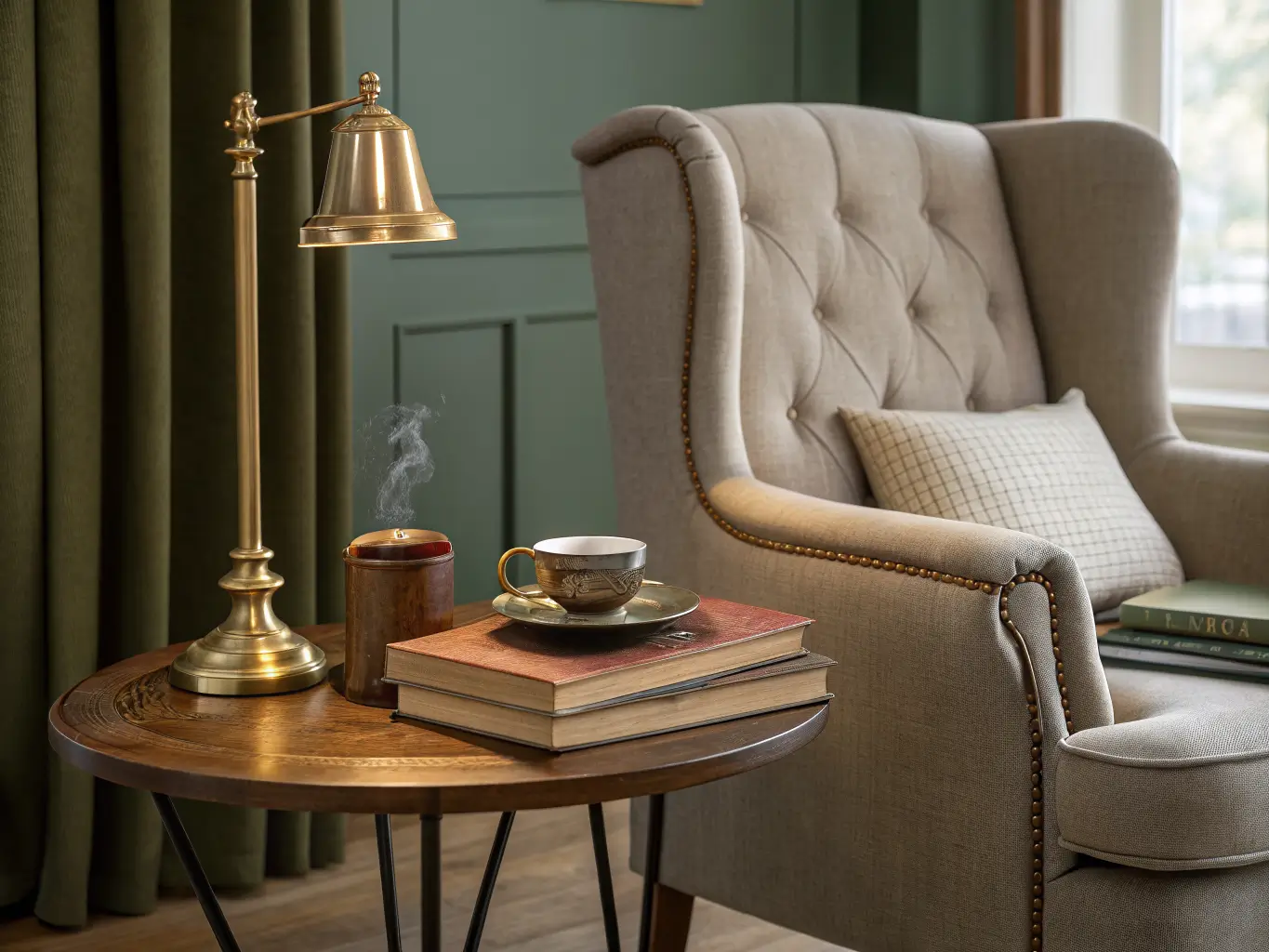
Spend on the chair and the lamp. Those are the two things you’ll touch every single day and the two things that are hardest to fake with a cheap version — a flimsy chair frame and a lamp that flickers or casts cold light will undercut the whole mood no matter how good your pillows look.
Save on accessories, frames, and books. Thrift shops are overflowing with old hardcover books nobody wants for $1 each — buy a stack of 15 and you’ve got a shelf.
Common Mistakes (And What I’d Do Differently)
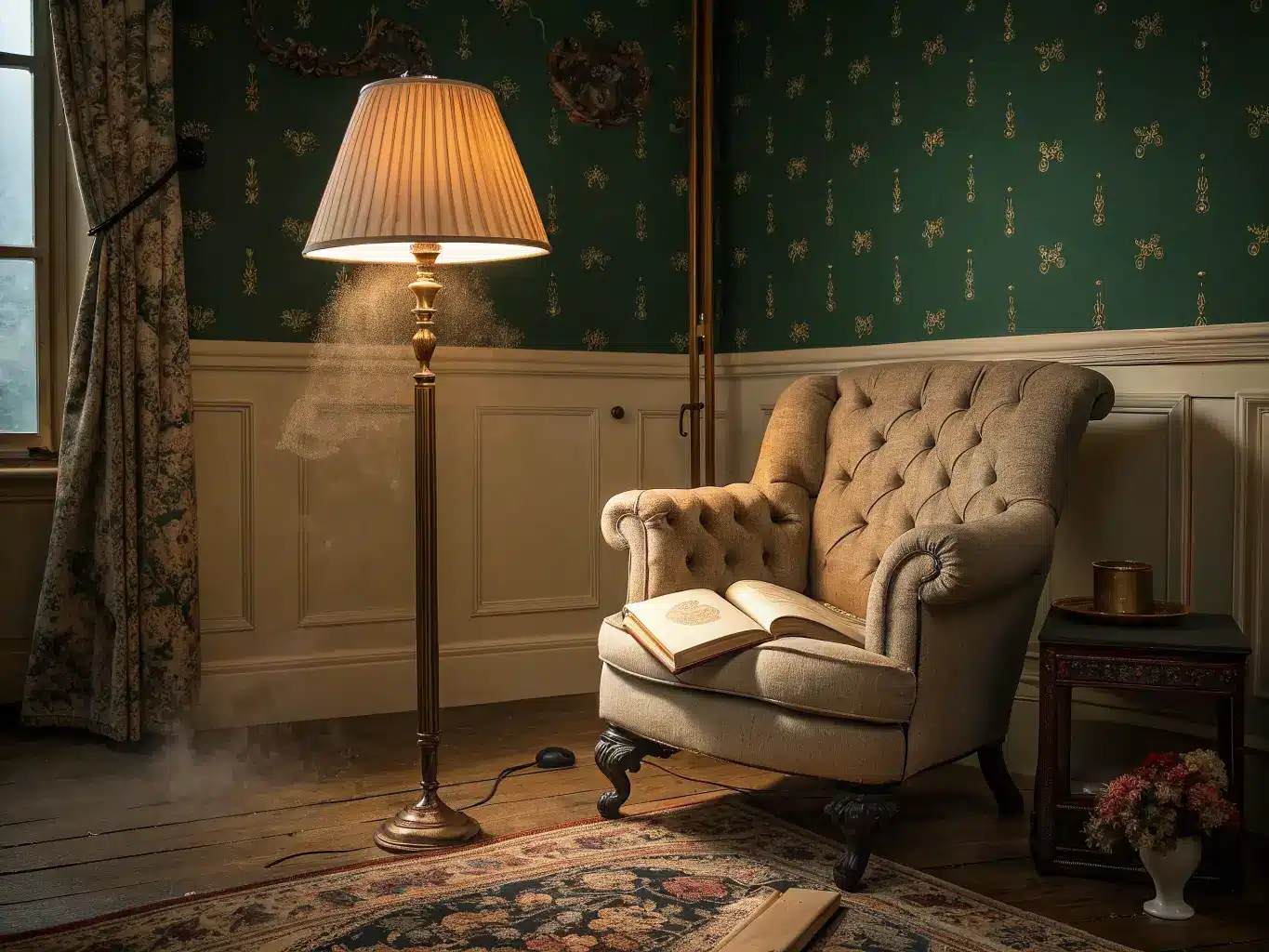
– Overcrowding the corner. My first attempt had a candle, three frames, a plant, a stack of books, and a little dish all on one 18-inch side table. It looked like a yard sale table, not a reading spot. I edited down to one lamp, one book, one small object. Much better.
– Lighting that’s too cool or too dim. Covered above — fix it early, it’s the fastest way to kill the mood.
– Mixing too many eras with no leader. Pick one: mid-century, Victorian, or cottagecore, and let the other influences show up only as accents (one pillow, one frame), not as competing furniture pieces.
– Skipping comfort for looks. A gorgeous chair with no lumbar support becomes a chair you walk past. Add a lumbar pillow or a small footstool — function first, or you won’t use the space.
– Going too big for a small corner. A bulky bookcase in a 4-foot alcove will make the whole thing feel like storage. Narrow ladder shelves or floating shelves solve this without eating the floor space.
Keeping It Fresh Without Buying New Furniture
Stick to your muted, warm palette — cream, olive, wood, brass, dusty rose, deep green — so future additions slot in instead of fighting what’s already there.
Cheap seasonal refresh:
– Fall/winter: swap in a heavier wool or knit throw, darker floral pillow covers, maybe a small dried-flower arrangement
– Spring/summer: lighter linen throw, a small potted plant, sheer curtain panel if there’s a window nearby
Cross-style swaps if you want to evolve the look:
– Vintage + boho: add a woven wall hanging, more plants, a chunkier textured throw
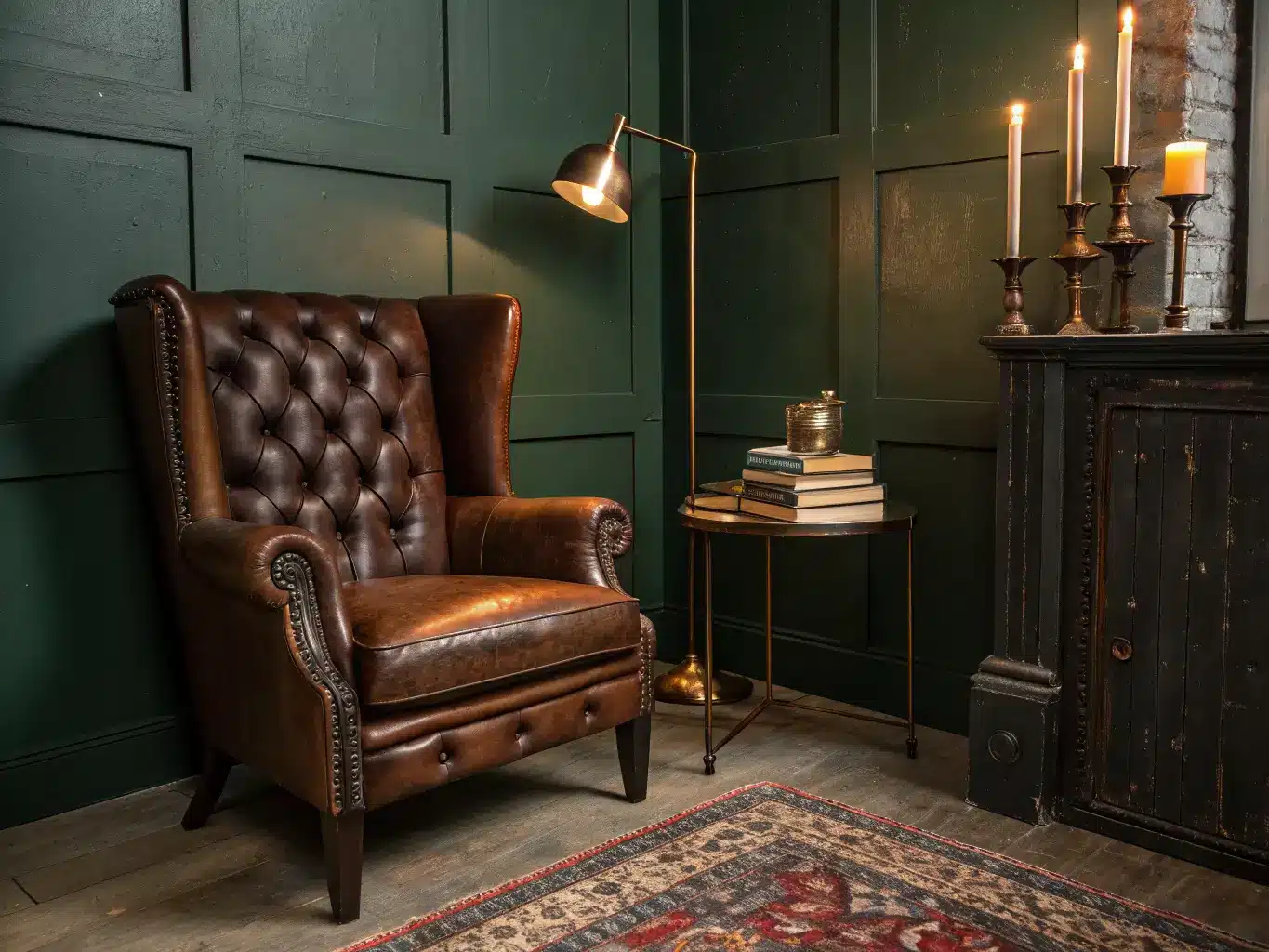
– Vintage + dark academia: darker wall color behind the nook, brass candlesticks, moody framed prints, leather-bound books
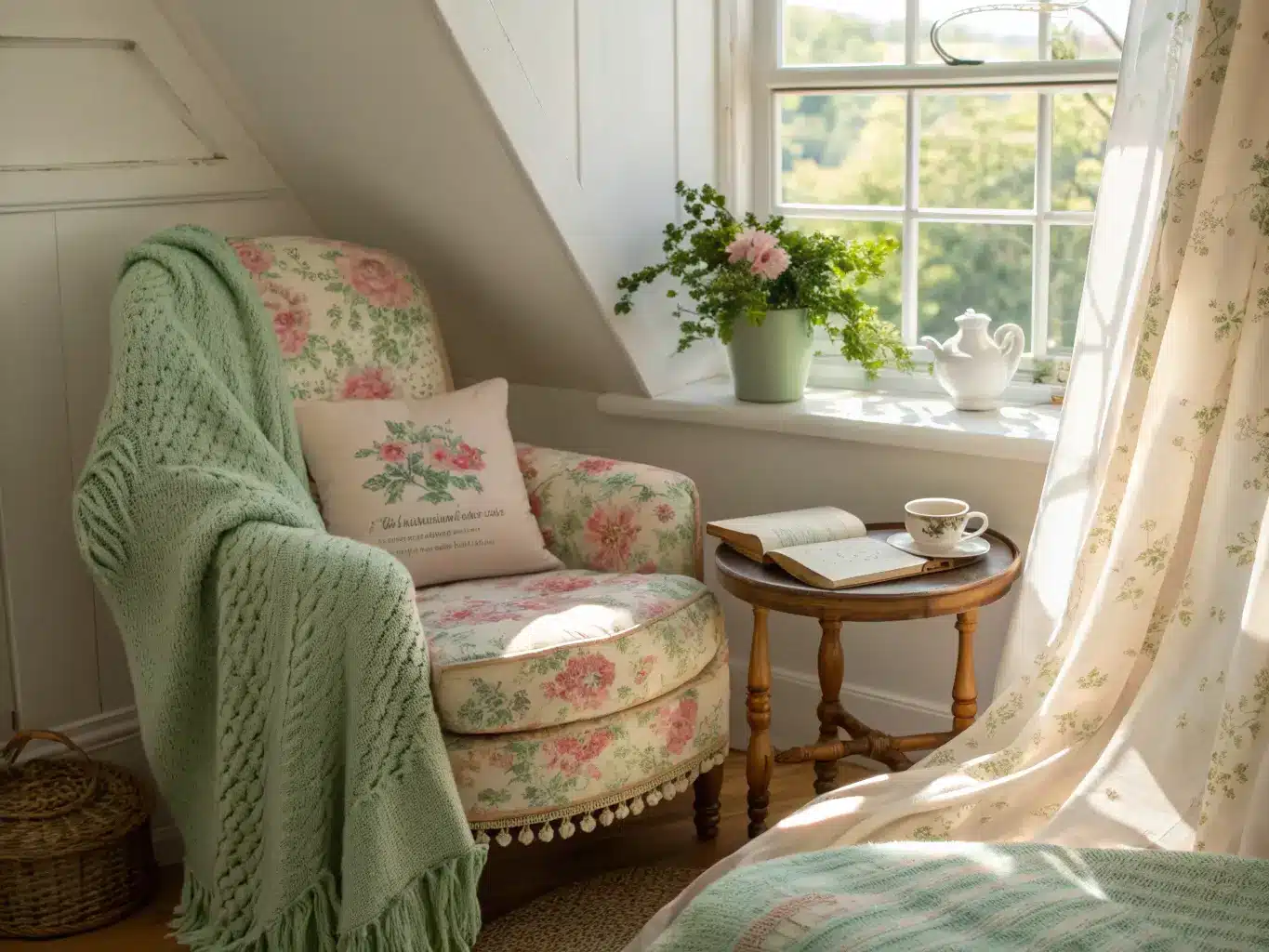
– Vintage + cottagecore: floral cushion covers, a ceramic teacup on the side table, softer pink and cream tones
The whole thing can evolve for under $50 a season — new pillow covers, a thrifted lampshade, one new frame. You don’t need to touch the chair or the lamp base again once those are right.
One last thing: keep books actually visible, not crammed spine-to-spine. A shelf with a few books stacked flat, a few standing, and a small gap with a single object in it looks like it was built over years. A completely packed shelf looks like you just moved in. Give it room to breathe and it’ll look like it’s always been there.
For another angle on this, my vintage craft room guide covers the same space from a different starting point.