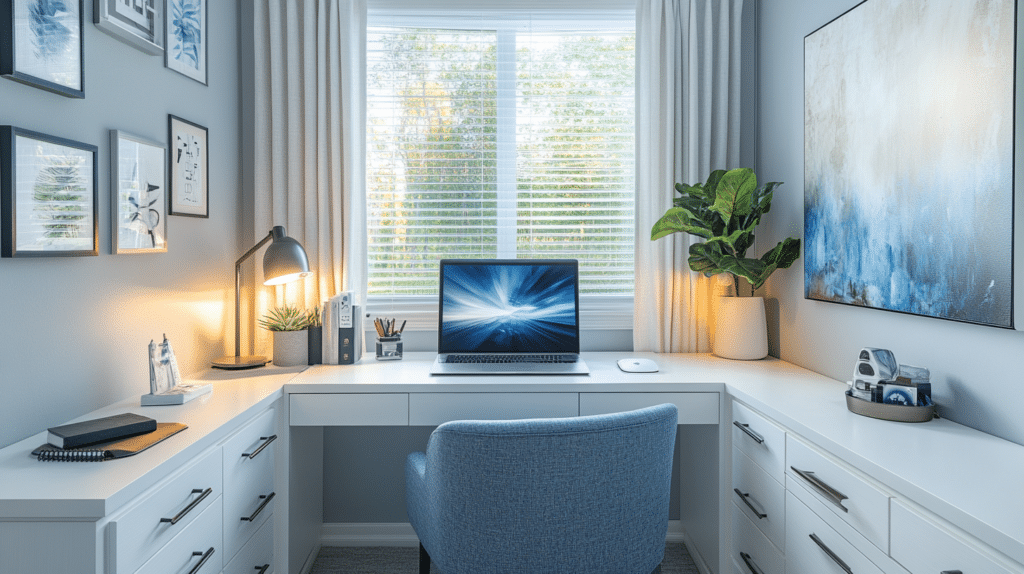
My son’s first “study corner” was a Pinterest board come to life: a tiny white desk, a cloud-shaped shelf, a gallery wall of alphabet prints. It looked incredible. He did his homework at the kitchen table anyway, because the desk faced his bed and the lamp was decorative, not functional. I rebuilt the whole thing eighteen months later around one rule: if it doesn’t help him focus, it doesn’t go in the room. That version is still in use. Here’s what actually works for children’s study room ideas, once you strip away the styling and look at what gets a kid to sit down and do the work.
What This Project Actually Involves
A basic study nook is a weekend job. You’re hanging a shelf, assembling a desk, mounting a lamp, and sorting supplies into bins — nothing structural. If you’re going bigger, with a built-in desk, a divider wall, or custom cabinetry for two kids sharing a room, budget 1 to 3 days plus lead time if you’re waiting on custom pieces.
Cost breaks into three tiers:
– $100–$300 — a basic desk, a clip-on or desk lamp, a couple of storage bins, and a small rug. This is enough for a first setup and honestly enough for most kids under 10.
– $300–$900 — add a real adjustable chair, open shelving, a pegboard system, and better bins with labels. This is where I’d tell most parents to land.
– $1,000+ — built-in desks, custom shelving, wall-mounted fold-down units, millwork. Worth it if you’re renovating a shared bedroom or converting a closet permanently.
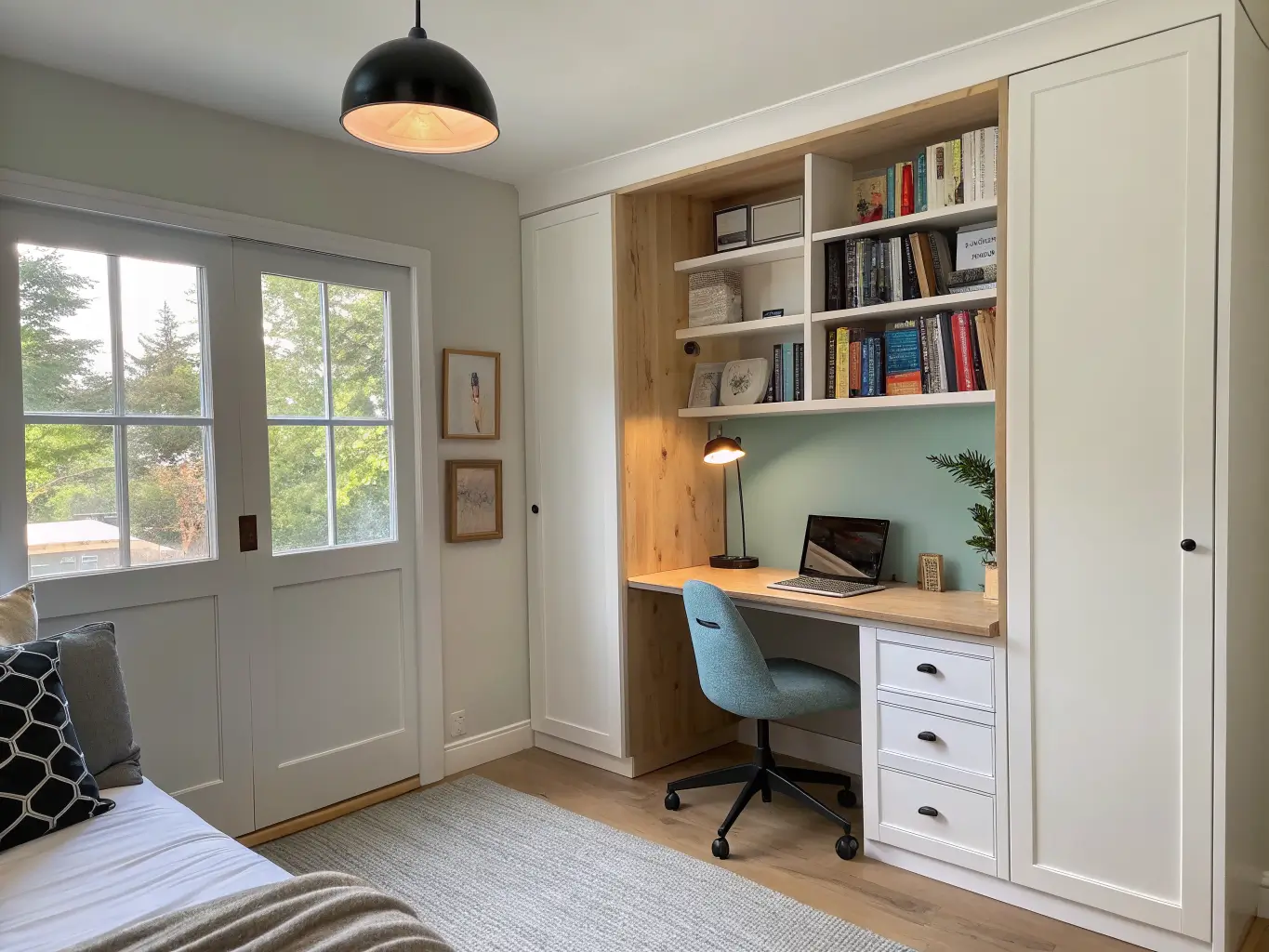
Space needs are smaller than people assume. You don’t need a spare room. A corner, an alcove, the end of a hallway, or a closet with the doors removed all work. For sizing: 36–48 inches of width per child, 54–60 inches if two kids share one surface, and a desk depth of 22–28 inches — enough for a laptop, a notebook, and a lamp without things sliding off the back.
Skill-wise, floating shelves and organizing systems are a beginner job. A wall-mounted fold-down desk or a built-in nook with a divider is intermediate to advanced — budget extra time if you’ve never used a stud finder before yesterday.
The Look: Functional Minimalist, Not a Nursery
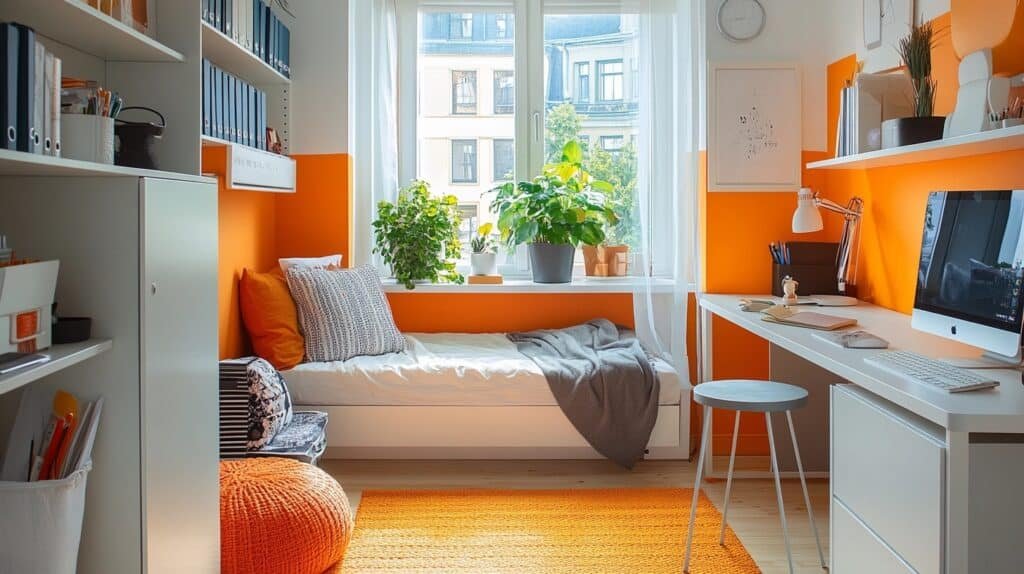
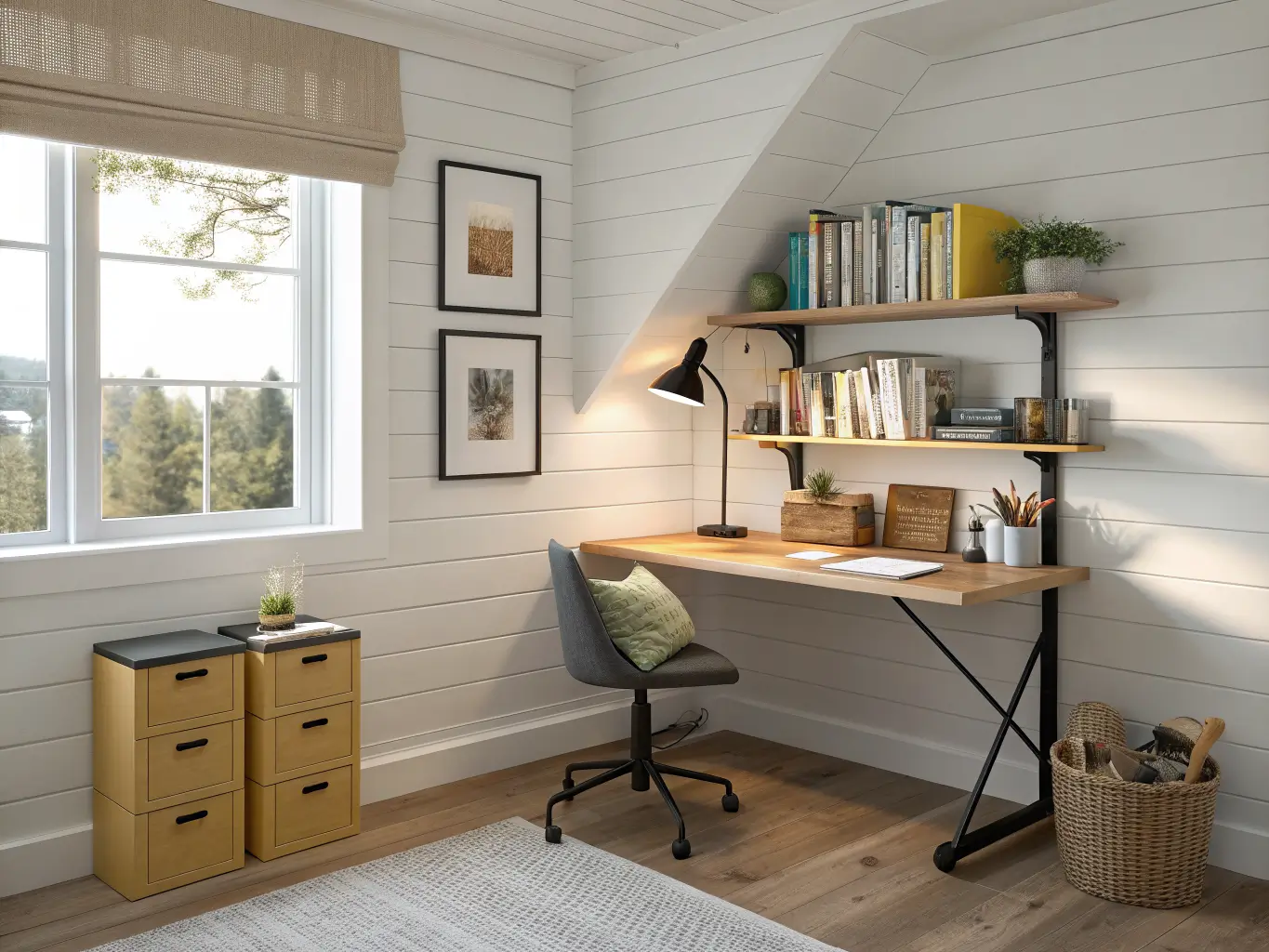
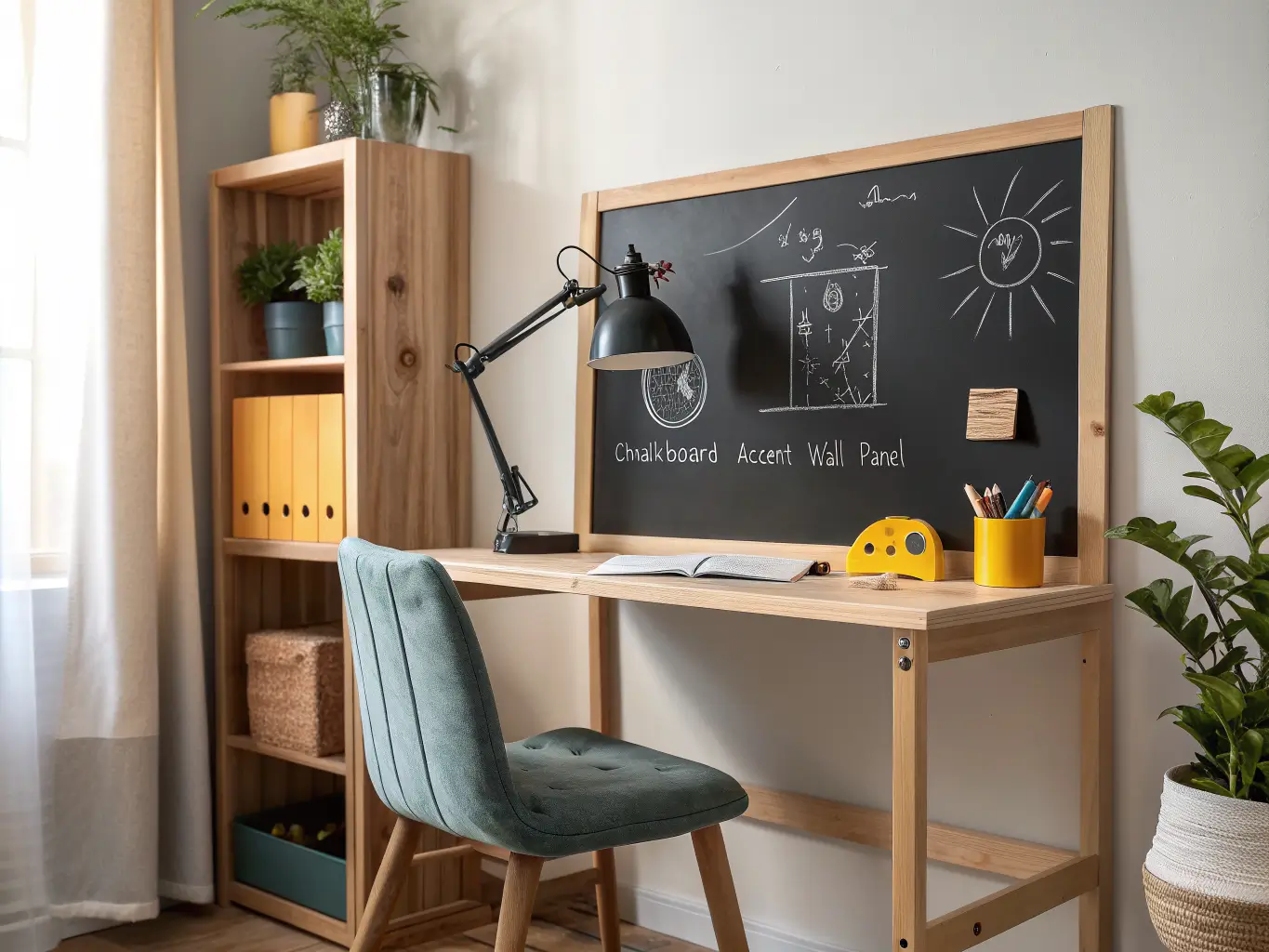
The style that actually holds up over years, not just for a photo, is functional minimalist with one playful layer on top. Think clean-lined desk, open storage, a calm wall color, and then exactly one thing that’s fun — a themed shelf, a chalkboard wall, a single gallery of space posters. Not five fun things at once.
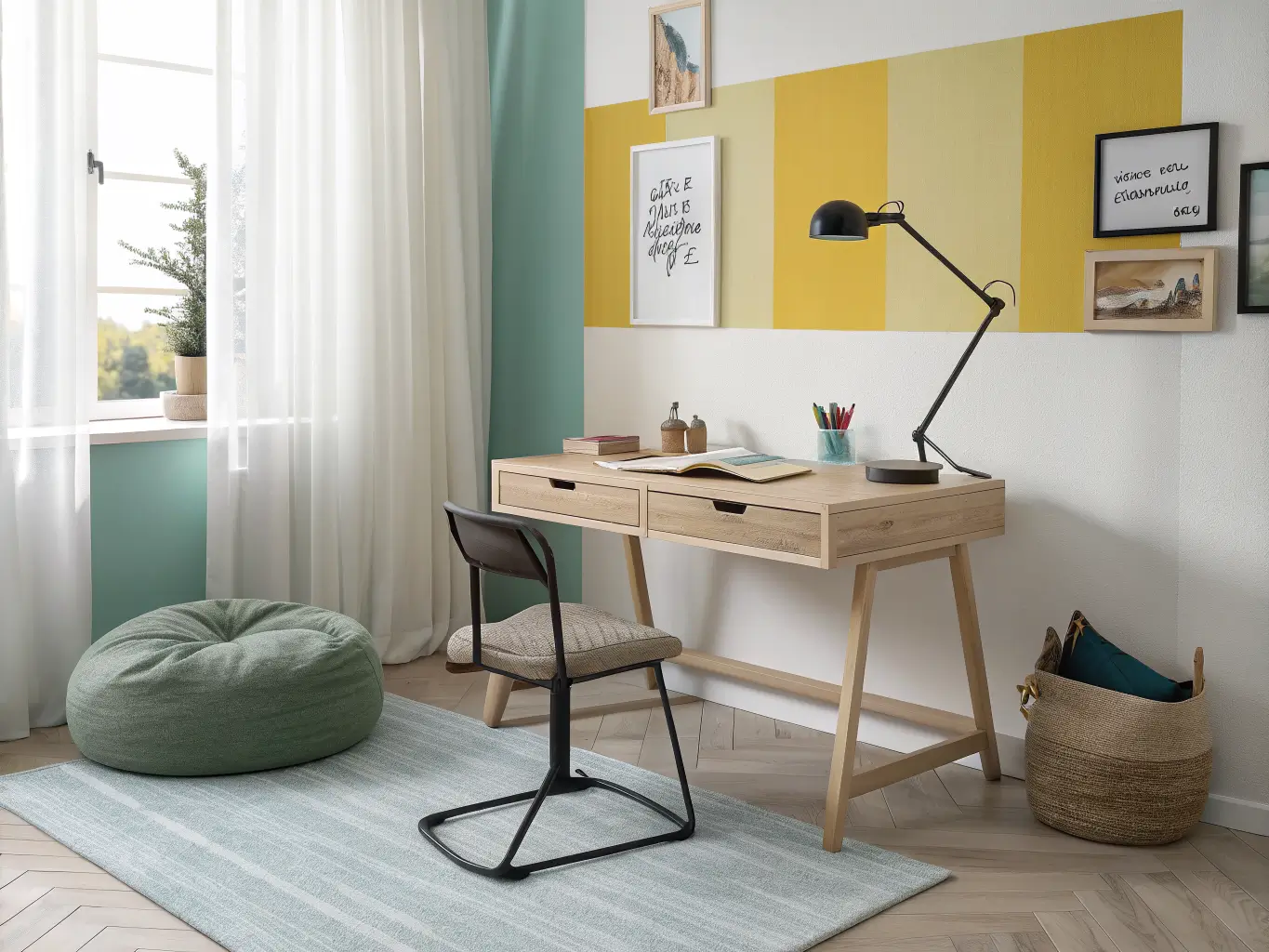
Colors that work: white, warm wood tones, soft sage, pale blue, muted yellow. Pick a neutral base and let one accent color carry the personality — I went with a mustard desk organizer and black metal shelf brackets against white walls, and it’s aged fine from age 7 to age 11.
Materials that hold up: solid wood or good plywood for the desk, metal for shelving brackets, cork or chalkboard paint for a working wall, low-pile rugs that don’t trap pencil shavings and eraser dust.
This setup is built for school-age kids, and it’s especially good for siblings sharing a room — the minimal base makes it easy to give each kid their own accent without the room turning chaotic. It works in bedrooms, playrooms, converted closets, under-stair spaces, and dead-zone alcoves that otherwise collect junk.
The Pieces That Actually Matter
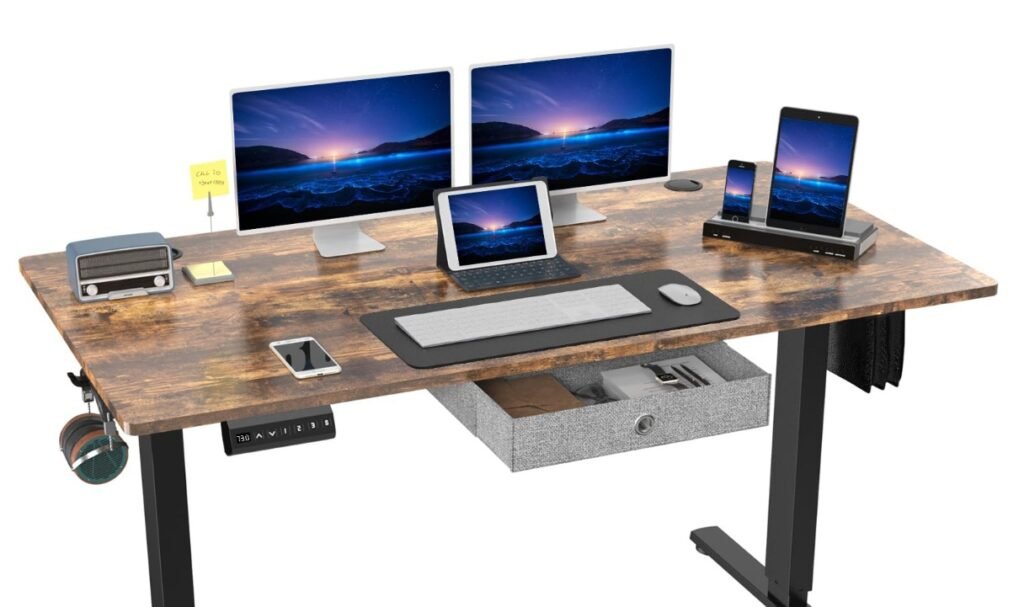
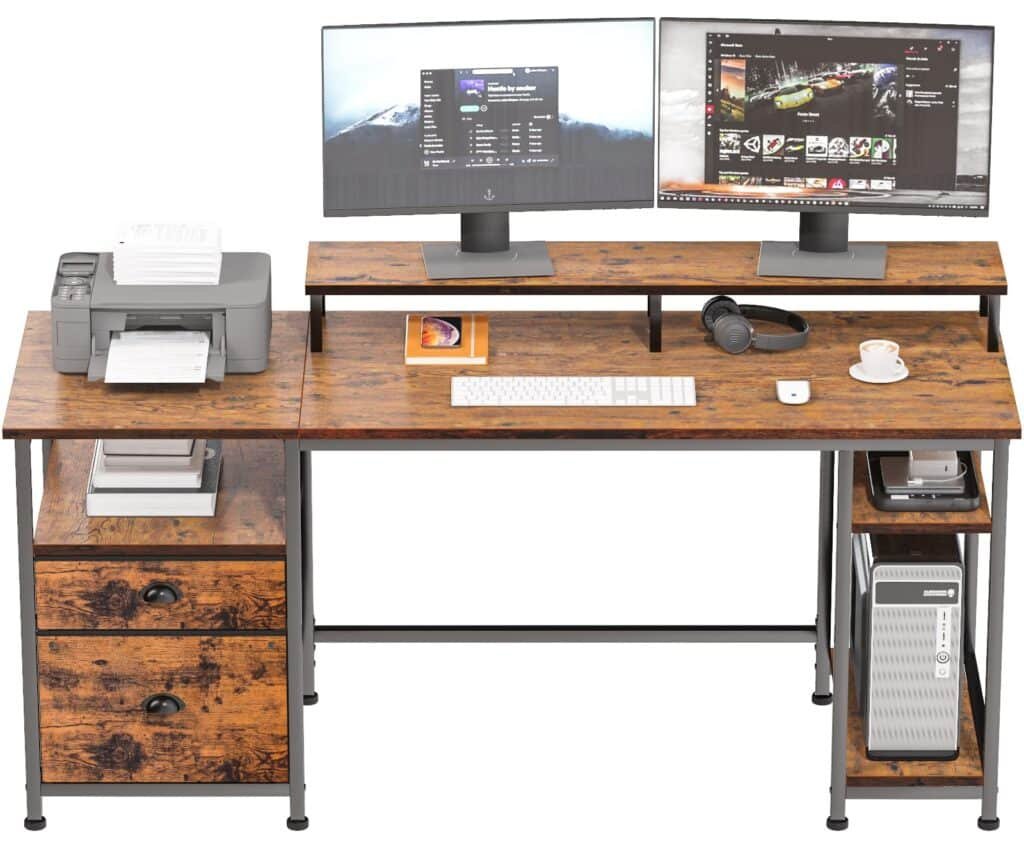
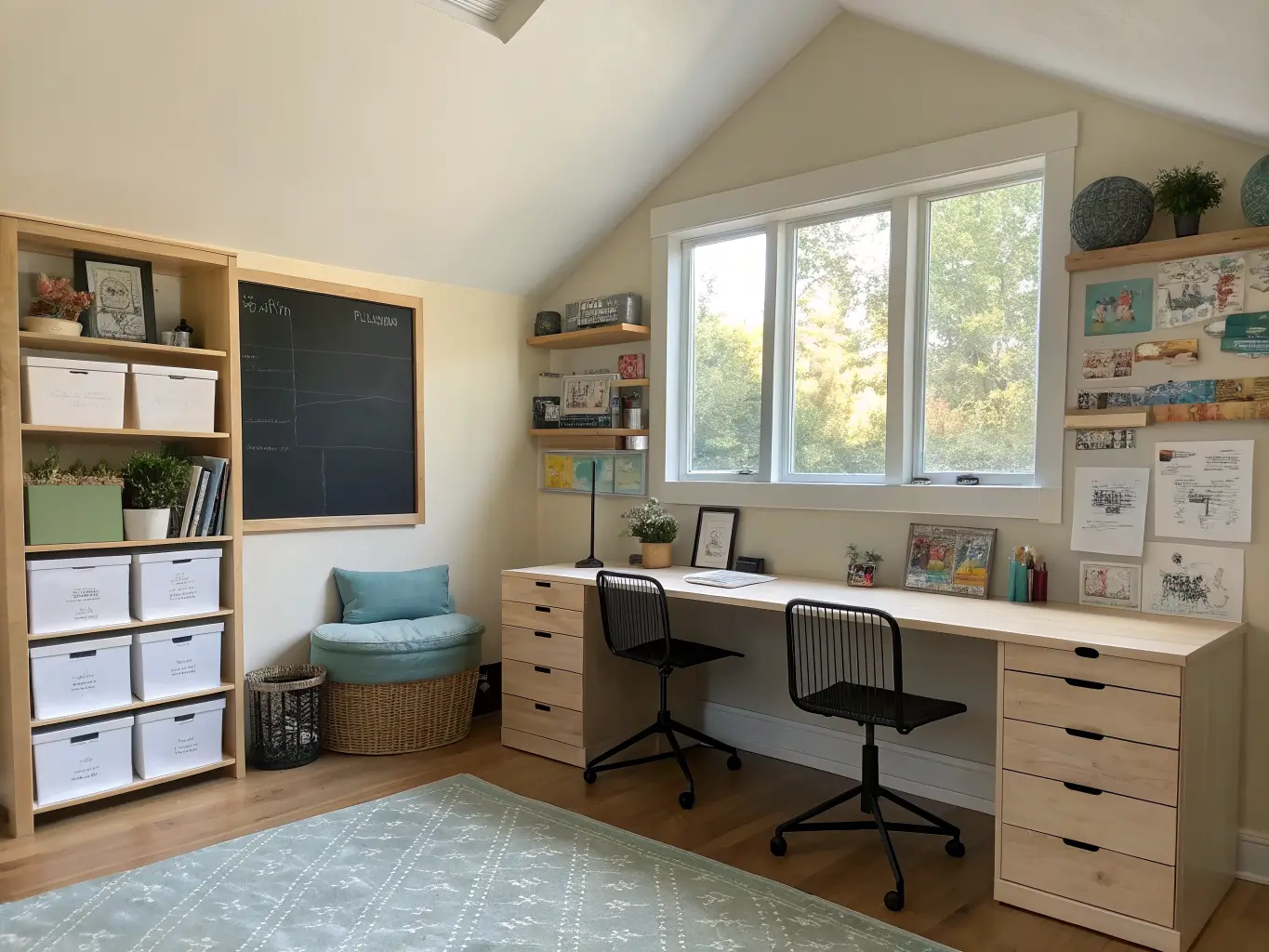
The desk. This is the one thing I wouldn’t skimp on or improvise. If two kids are sharing, a T-shaped desk or two desks pushed into an L gives each of them their own zone without elbow collisions. In a tight room, a wall-mounted fold-down desk solves the space problem entirely — you fold it up when it’s not in use and get the floor back. Stick to that 22–28 inch depth minimum; anything shallower and the laptop ends up balanced on the edge.
The chair. Non-negotiable: it needs to be height-adjustable. Kids grow fast, and a chair that fit at 6 will have them hunched over the desk at 8. Spend real money here before you spend it on decor — a $60 adjustable chair beats a $150 “cute” one that doesn’t move.
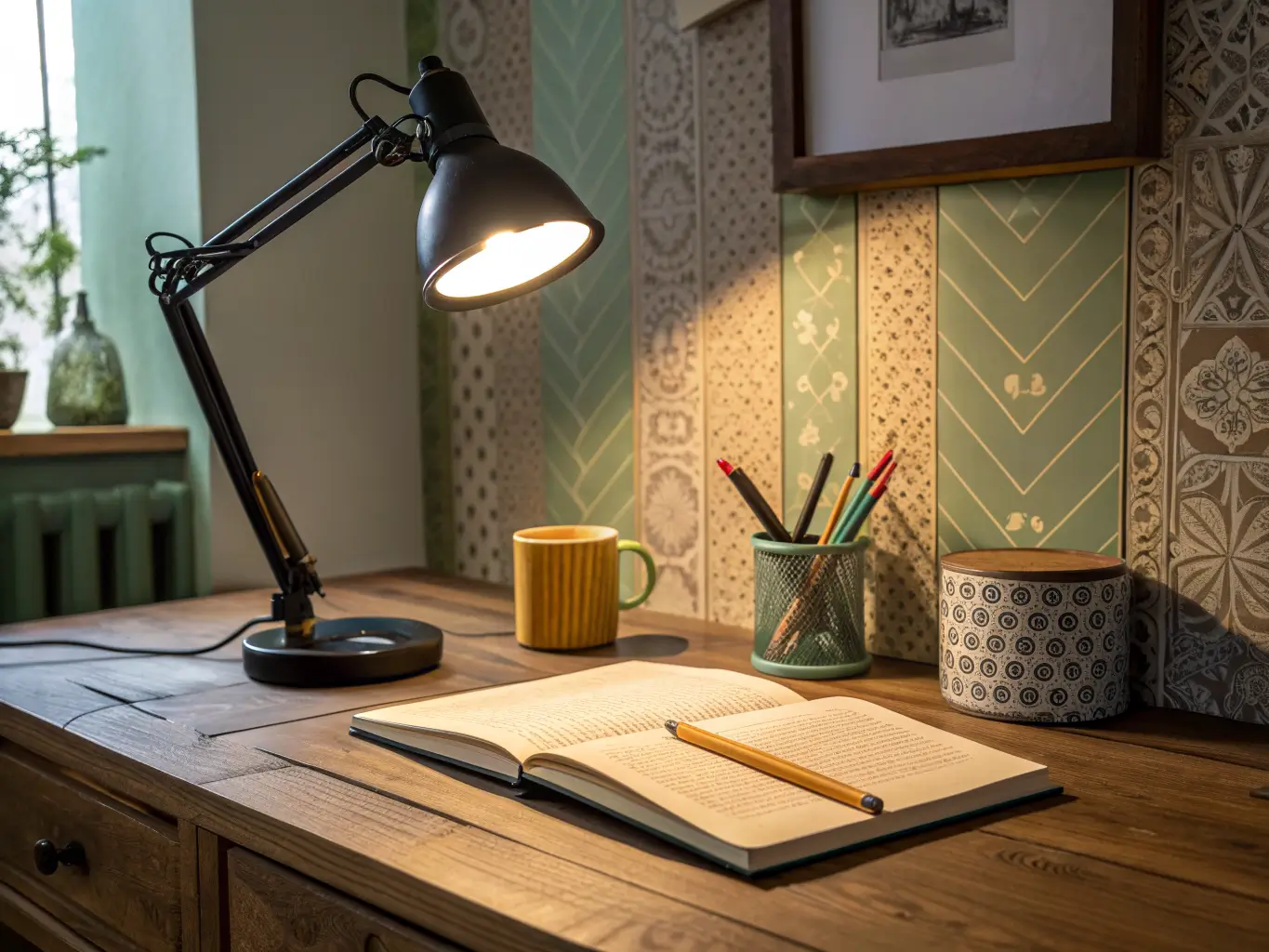
Lighting. A desk lamp with a swiveling head, placed on the opposite side of the writing hand (left side for righties, right for lefties) so the hand doesn’t cast a shadow on the page. Overhead light alone isn’t enough — it flattens everything and kids end up leaning in close to compensate, which is bad for posture and worse for eyes. I learned this the hard way; my son’s first desk sat under a ceiling fixture only, and he was getting eye strain headaches by week three of the school year.
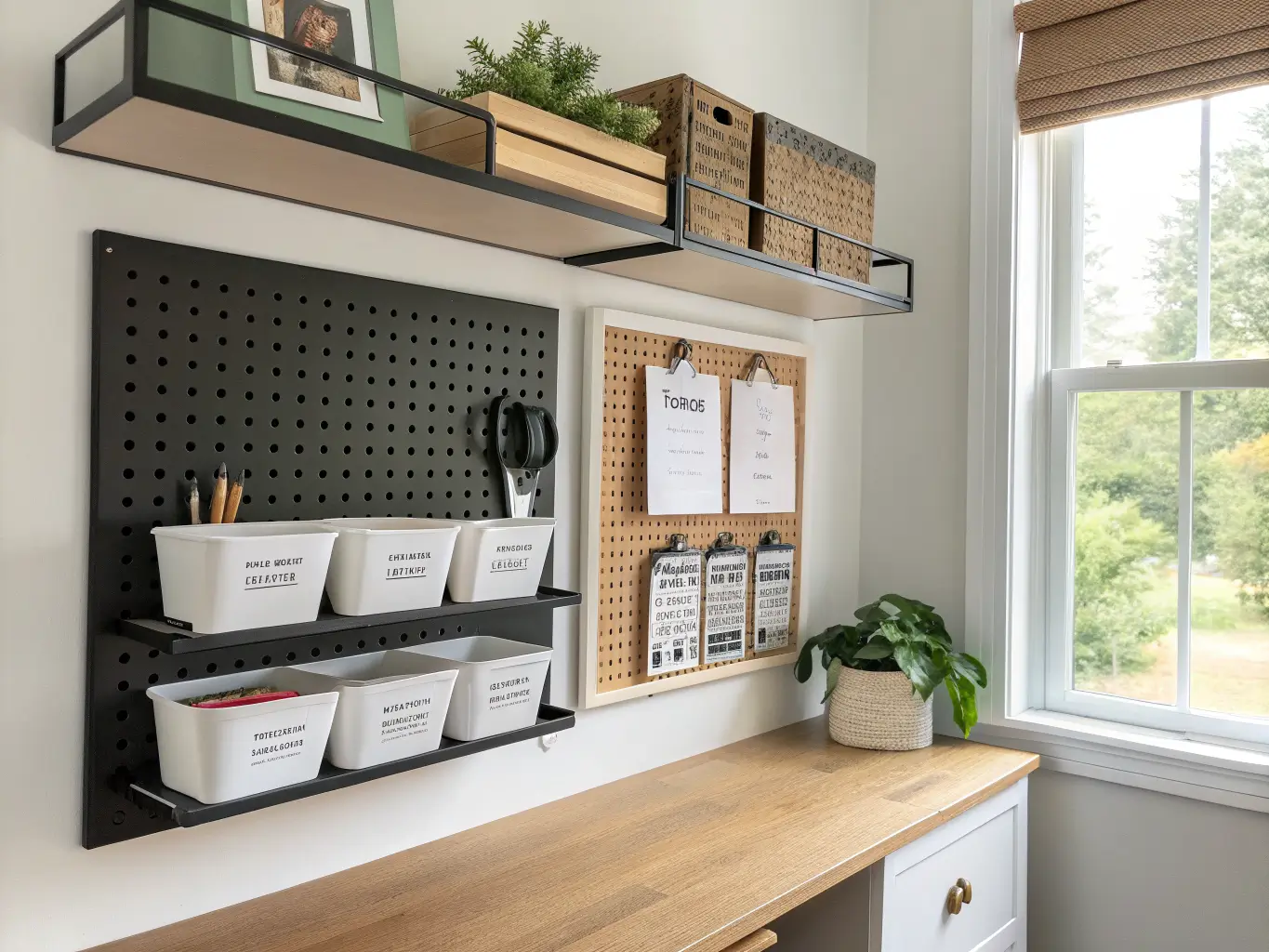
Storage. Floating shelves, a pegboard, labeled bins, and drawer organizers. The goal is everything within arm’s reach but off the desktop itself. Closed cabinets look tidier in photos but kids don’t use them — if they can’t see it, they forget they own it.
A visual boundary. Even in an open room, something needs to signal “this is the work zone.” A rug under the desk, one wallpapered panel, or a painted accent square behind it does the job without needing a wall.
Nice-to-Haves, In Order of Actual Impact
– A themed shelf — a tree-shaped bookcase or geometric wall unit turns storage into the fun element instead of adding clutter on top of storage
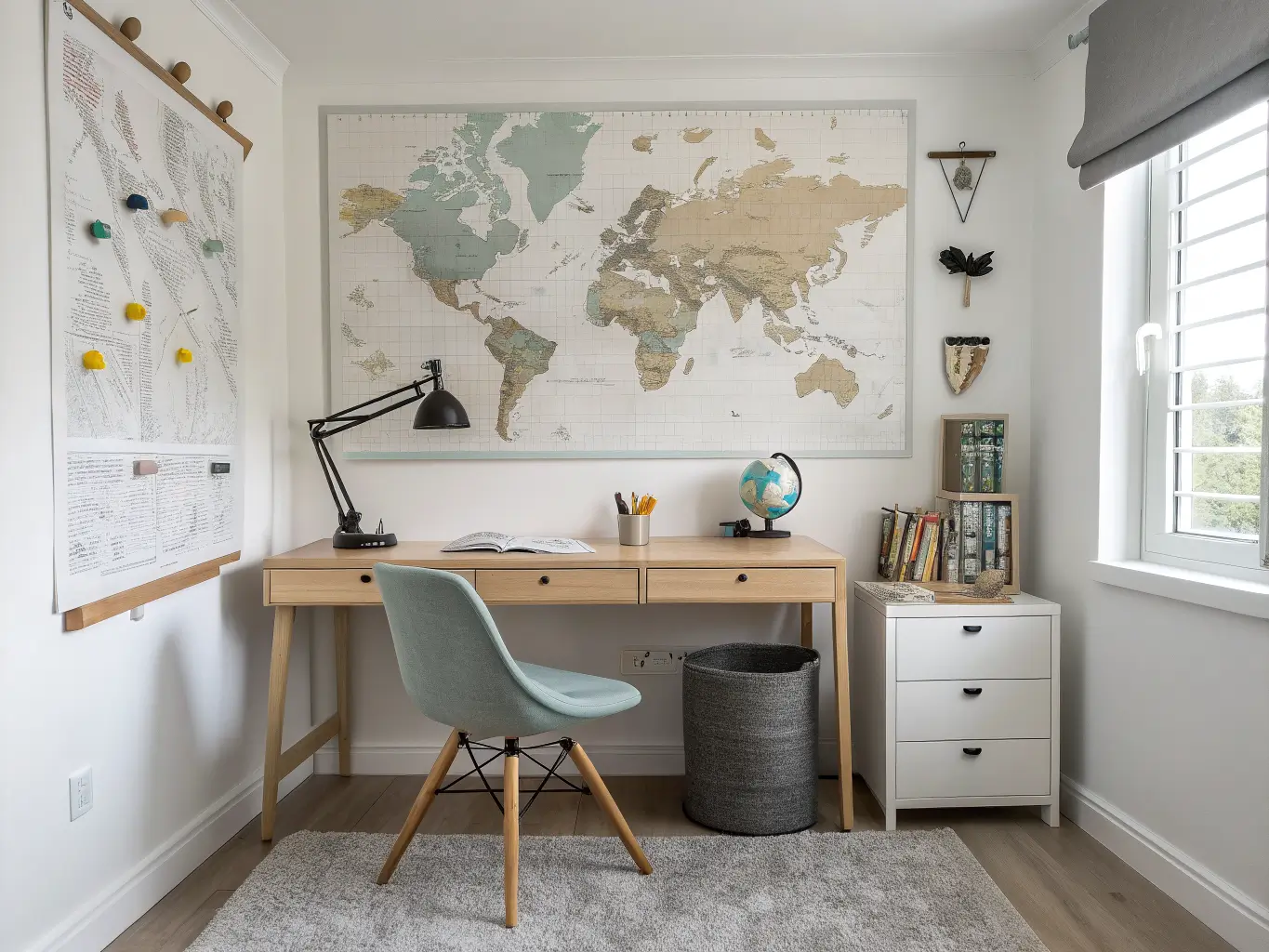
– One wall of educational decor — a map, a alphabet chart, a single motivational print. One wall, not four.
– A chalkboard or whiteboard panel — genuinely useful for spelling practice and doodling breaks, and cheap to add with chalkboard paint (about $15 a quart)
– A plant — pick something close to indestructible (pothos, snake plant) and keep it on a shelf, not the desk, so it’s not competing for workspace
– Soft furnishings — a cushion on the chair, a low-pile rug, simple curtains — these soften the room without getting in the way of function
How to Actually Put It Together
Zone the room before you buy anything. Study, reading, and creative/craft each need their own defined spot, even if that’s just “this corner has the desk, that corner has the beanbag and the bookshelf.” Mixing homework supplies with craft supplies is the fastest way to lose a glue stick right when it’s needed.
Keep the desk out of sightlines to distraction. Don’t face it toward the TV, the door, or a busy hallway. Facing a wall or a window beats facing the room.
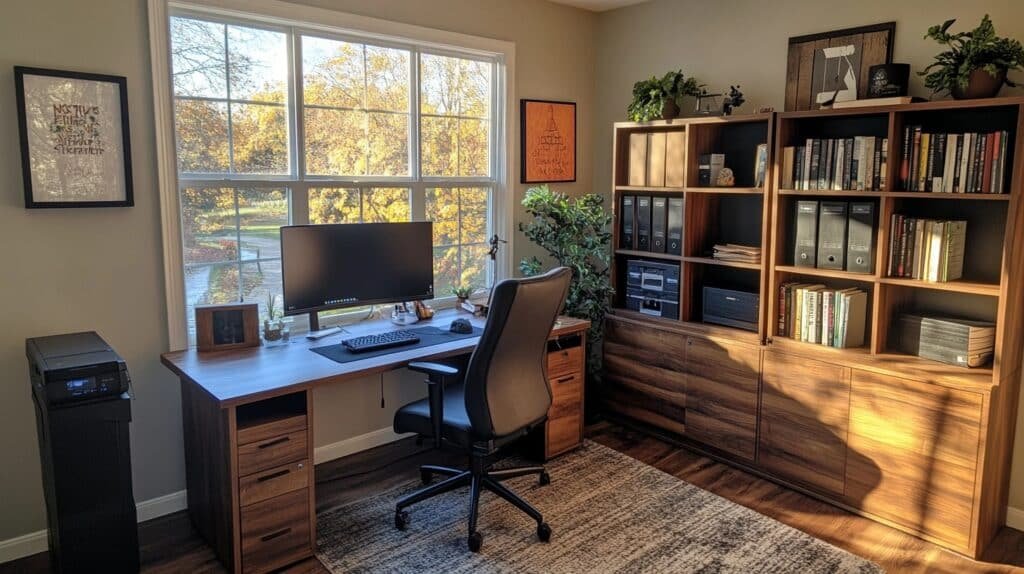
Put the desk near a window, but sideways to it. Perpendicular to the window means daylight comes from the side, which cuts glare on a laptop screen and still gives natural light without anyone squinting into direct sun.
Build it in this order: desk, then chair, then storage, then lighting, then the fun stuff. Function first. If you start with the decor, you’ll build a pretty room that doesn’t work, and you’ll be doing what I did — redoing it a year later.
Limit the desktop to three things: lamp, pencil cup, current project. Everything else goes on the shelf or in a bin. This alone changed how long my son could sit and focus — an empty desk with clear boundaries beat an organized-but-full one.
Where People Go Wrong
– Facing the desk toward the TV or the door. Kids will watch the hallway traffic or angle for TV time instead of working. Turn the desk away from both.
– Buying a desk that’s too small. Under 22 inches deep and everything overflows onto the floor within a week. Measure before you buy, not after.
– Treating the lamp as decorative. A cute lamp that doesn’t actually direct light where the hand is working isn’t doing its job. Function first, looks second.
– Overdecorating. Five posters, three toys, a themed rug, and a wall decal set all in one room reads as chaos to a kid trying to concentrate. Pick one playful element and let the rest stay quiet.
– Storage that’s too high or too closed. If your 8-year-old needs a step stool to reach the pencil sharpener, they won’t bother. Everyday items go at kid-height on open shelves.
Keeping It Fresh Without Redoing the Whole Room
Stick to two or three main colors plus one accent, and repeat a material pairing — I use light wood, white, and black metal throughout mine, so even mismatched furniture I’ve added over time looks intentional instead of thrown together.
Rotate the art and posters every school year instead of touching the paint or furniture. New pencil cups, a fresh rug, different curtains — small swaps refresh the whole feel for under $50.
When needs change, change the format, not the whole room. My daughter’s shared room went from a full two-desk setup to a single fold-down desk built into the closet once her sister moved into her own room — same wall, same shelving, completely different footprint. If space gets tight later, an under-bunk study nook or a closet conversion can replace a full desk setup without starting from scratch.
The room that actually gets used is the one built around how a kid works, not how the room photographs. Get the desk, chair, and light right first. Everything else is just the fun part you add once the bones are solid.
For another angle on this, my kids study room ideas guide covers the same space from a different starting point.