What This Style Actually Is
A small reading nook cozy corner isn’t a design style so much as a design problem — how do you make a small, often awkward patch of floor feel like the best seat in the house? The answer usually lands in one of a few directions: boho (rattan chair, macramé, warm neutrals), modern cottage (linen, wood, soft curves), Scandi-minimal (clean lines, one accent color, lots of breathing room), or library-inspired traditional (leather, brass, deep jewel tones).
None of these require a big space. I’ve done this in a 3-foot-by-3-foot corner of a rented living room, and I’ve seen it done in a closet with the door removed. What matters isn’t square footage — it’s whether the seat, the light, and the books are all within arm’s reach of each other.
Who this is for: apartment dwellers with one unused corner, book lovers who never seem to have anywhere comfortable to actually read, remote workers who need a spot that isn’t the desk, and anyone staring at an awkward alcove wondering what to do with it.
Time and cost, realistically:
– A simple styling refresh takes 1–3 hours and costs $75–$250 — think a floor cushion, a throw, a lamp you already own repositioned.
– A proper setup with a chair, lighting, and a shelf runs $250–$800 and takes a weekend.
– Built-ins, window seats, or designer chairs push past $800, and you’re looking at 1–2 days of work minimum, more if you’re hiring for shelving or an electrician for a hardwired sconce.
The cost driver is almost always the seat and the light. Everything else is trim.
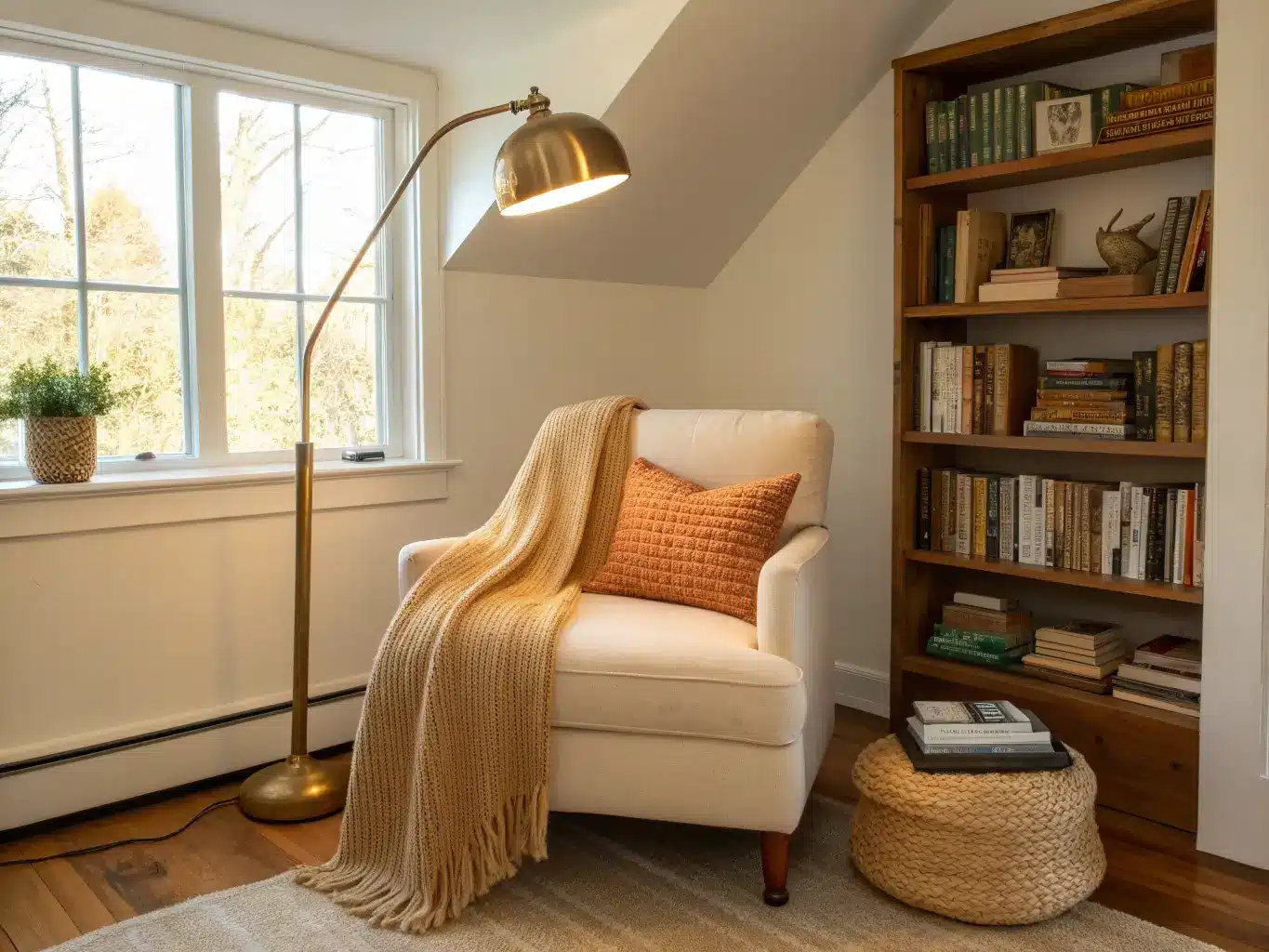
The Must-Have Pieces
You need surprisingly few things for this to work. I’d rather see four well-chosen pieces than twelve mediocre ones.
Seating (pick one):
– A slim armchair or slipper chair — good for apartments where floor space is tight
– A wingback for a more traditional, enclosed feel (skip this if your corner is under 3 feet wide, it’ll look stuffed)
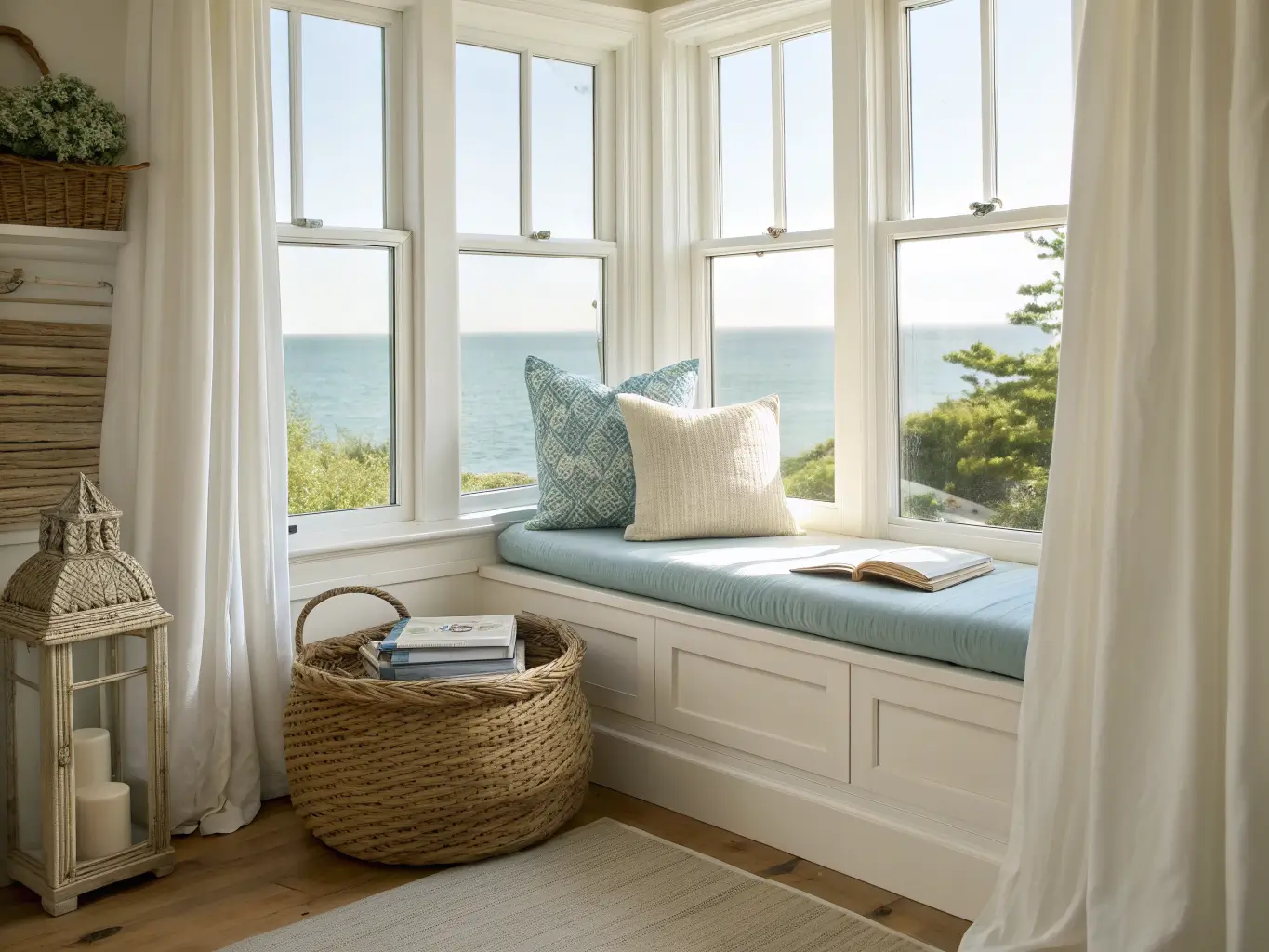
– A window bench or built-in with a cushion, if you’ve got a sill or alcove
– A floor cushion or oversized pouf — the cheapest option and honestly underrated for tiny spaces
Lighting:
a floor lamp angled so the bulb hits the page, not your eyes. This is the single most-skipped step and the reason so many “cozy corners” don’t get used. Look for bulbs around 2700K — that’s the warm, amber-toned light that makes a space feel like evening even at noon, versus the bluish 4000K+ bulbs that feel like an office.
Comfort layers:
one chunky knit throw, one to two pillows (not five — I made this mistake and had to physically remove cushions before I could sit down), and a small rug to visually anchor the corner if it’s not already boxed in by walls.
Book storage:
a floating shelf, a small basket, or a narrow bookcase. Books piled on the floor next to the chair look intentional for about a week, then just look like clutter.
A surface:
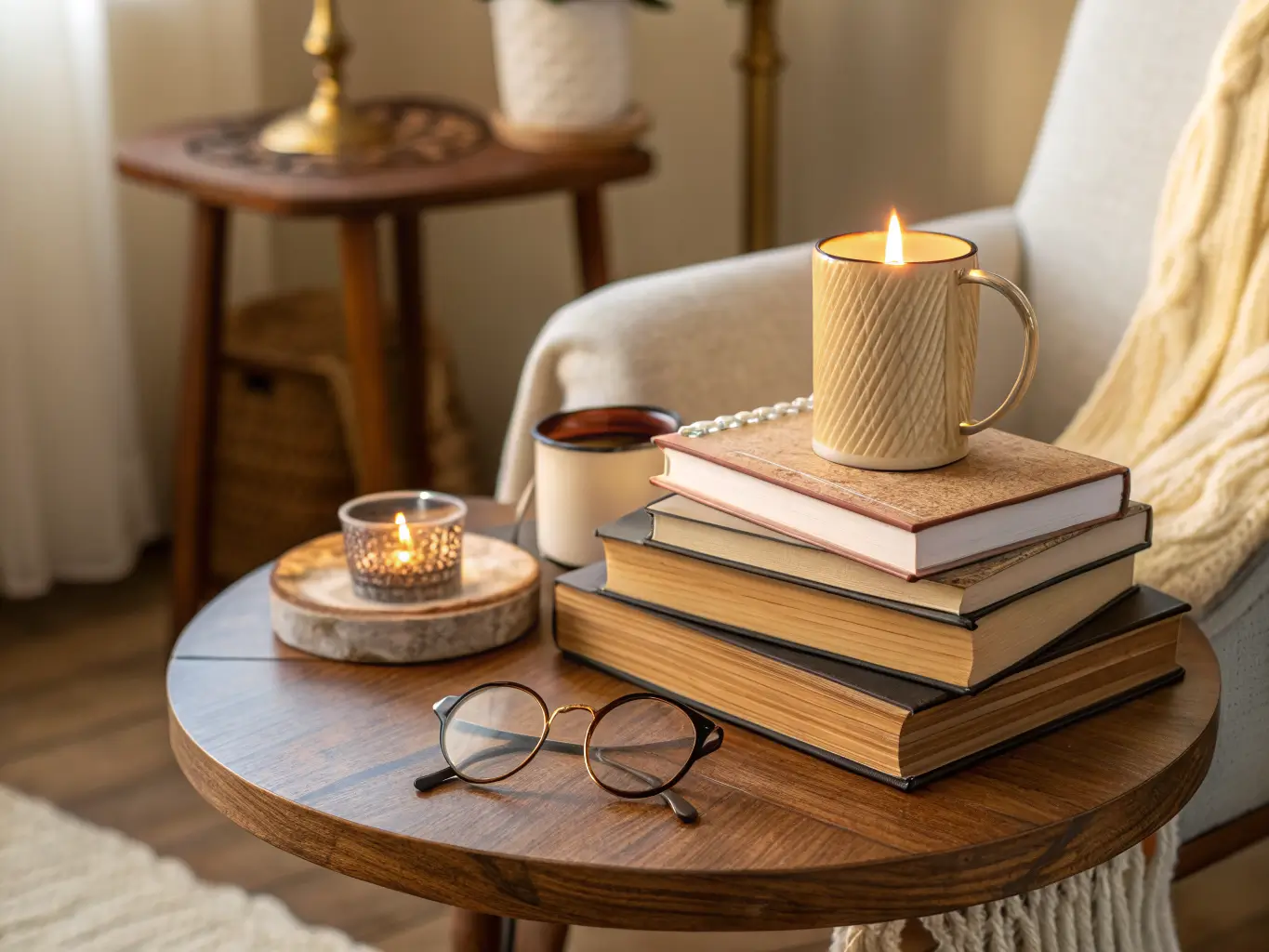
a side table, stool, or even a plant stand — something for your tea or your glasses so they’re not balanced on the arm of the chair.
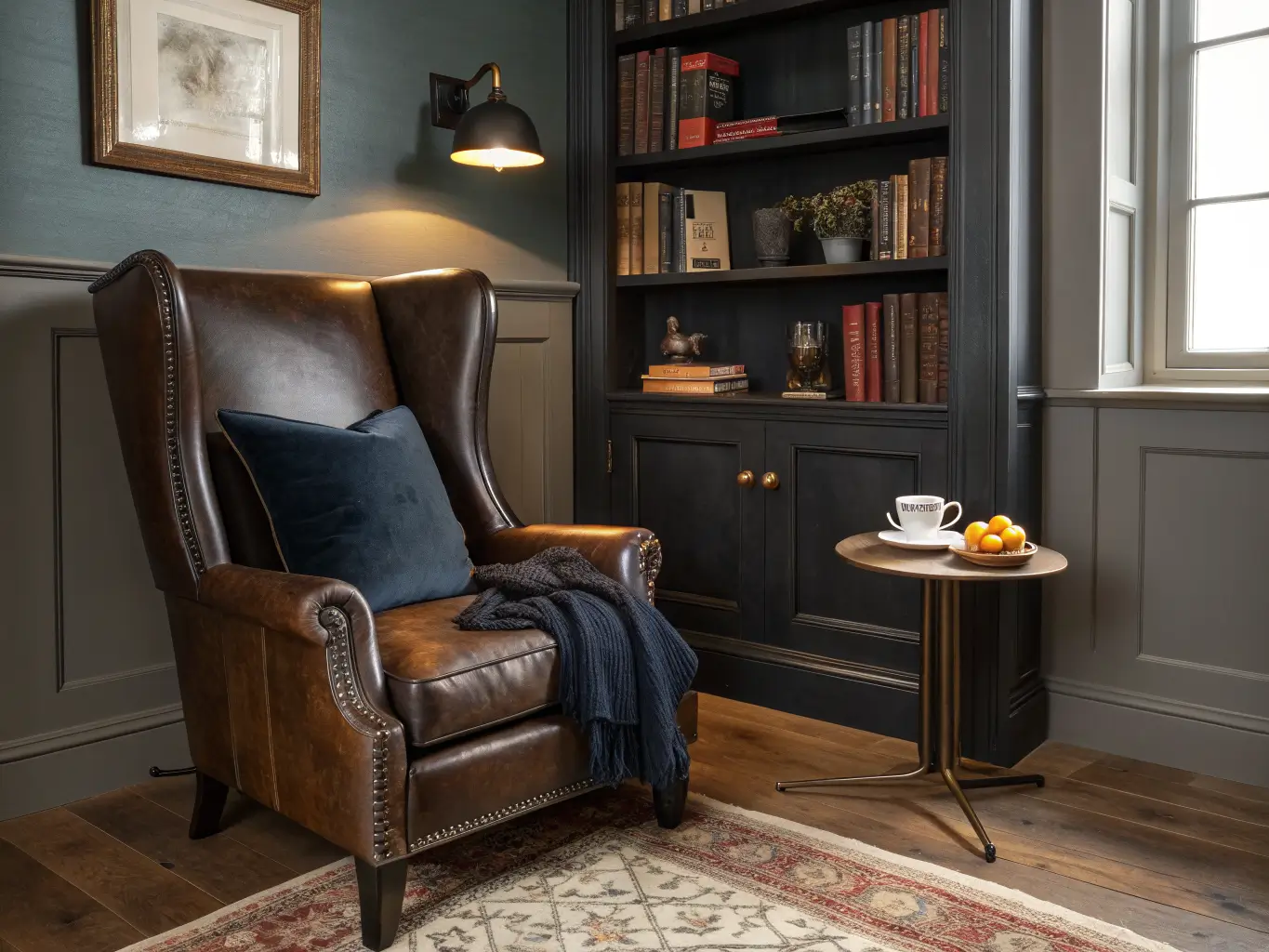
Optional Extras Worth Considering
Once the basics are working, this is where you make it yours:
– Seasonal textiles — linen throw in summer, sherpa or wool in winter
– A plant — I use a 3-foot snake plant in the corner gap next to my chair; it fills dead space without needing light or water attention
– Metallic accents — a brass floor lamp or black wall sconce adds a little polish without changing the whole palette
– Ambient touches — string lights or a flameless candle if you want it to feel like a retreat rather than just a chair with a lamp
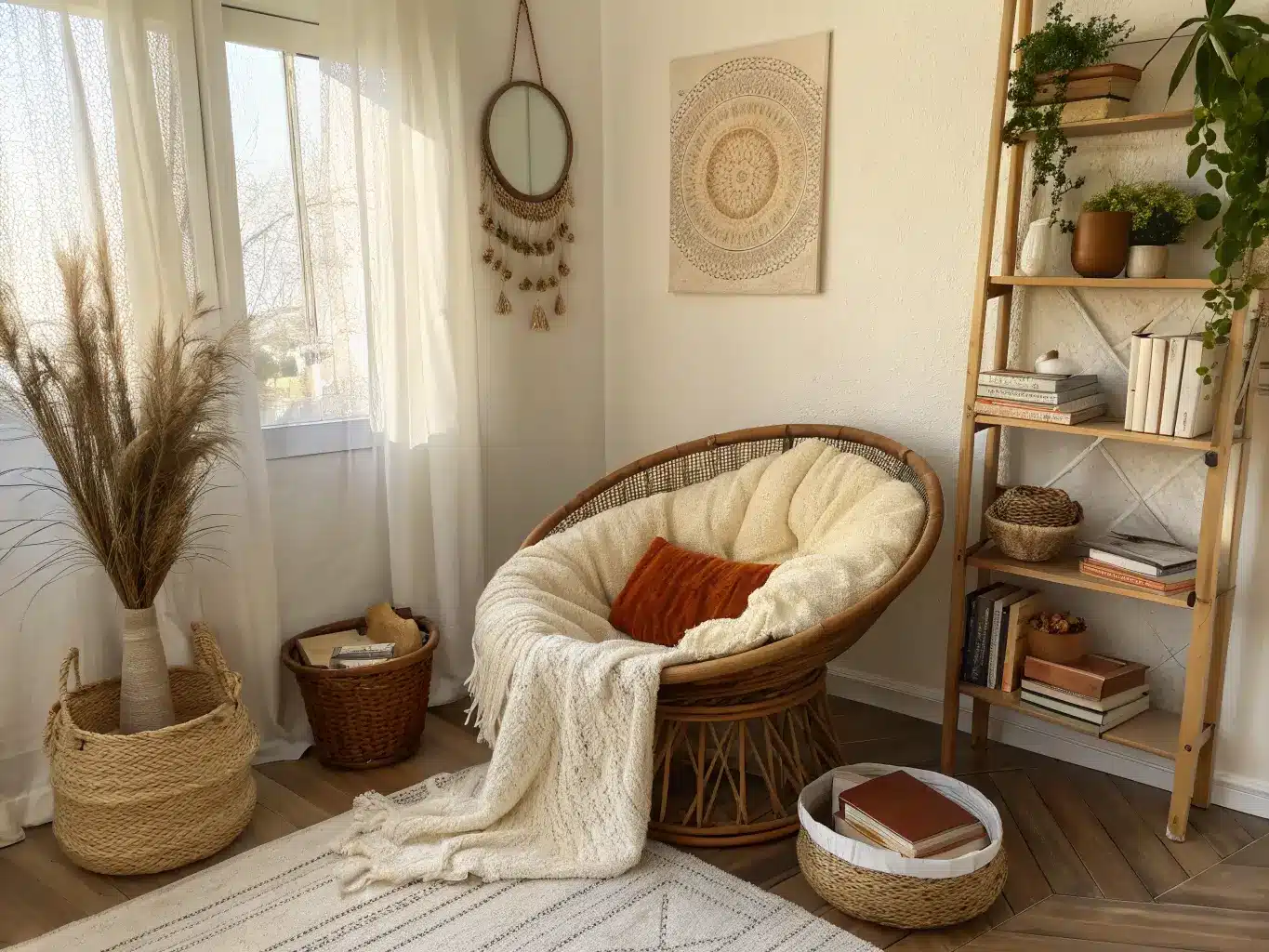
How to Put It Together
Start with measurements, not inspiration photos. Measure your actual corner before you fall in love with a chair on Instagram. A 34-inch-wide armchair in a 36-inch alcove leaves you no room for a side table, and now you’re holding your coffee mug between your knees.
Layer three textures minimum: something structured (the chair frame or a wood bench), something soft (the throw), and something tactile (a woven basket, a boucle pillow, a low-pile rug). This is what makes a corner feel layered instead of thrown together. Skip a texture and it reads flat, even if the color palette is right.
Keep the palette to three tones. One base neutral (cream, taupe, warm white), one secondary (olive, charcoal, camel), one accent (rust, navy, brass). I learned this the hard way — my first nook had five different “warm neutrals” that were all just slightly wrong shades of beige next to each other, and it looked like a mistake rather than a choice.
Angle the chair toward the light source, whether that’s a window or your floor lamp. A chair facing straight into the room looks staged. A chair angled 15–20 degrees toward the window looks like someone actually sits there.
Build vertically. In a tight footprint, floor space is precious — so put a floating shelf above the chair instead of a floor-standing bookcase beside it. Wall art above the seat draws the eye up and makes the whole corner feel taller than it is.
Assembly order that actually works:
1. Place the chair or bench first
2. Add the lamp, positioned for actual reading
3. Add storage (shelf, basket, cart)
4. Layer in throw, pillows, rug
5. Finish with one focal point — art, a sconce, or the chair itself if it’s a statement shape
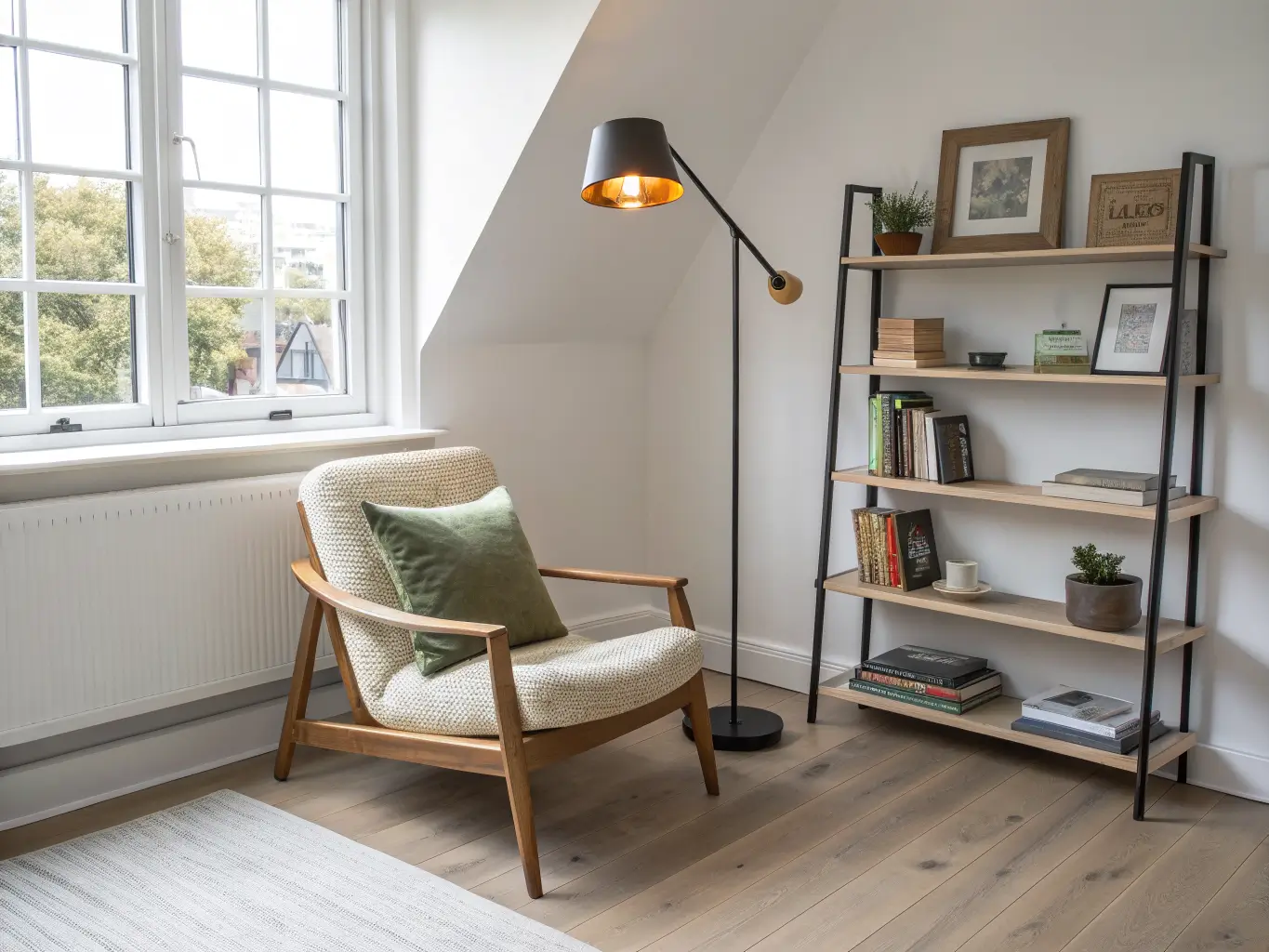
Mistakes That Kill a Reading Nook
I’ve made most of these personally.
– Choosing the pretty chair over the comfortable one. A gorgeous slipper chair that’s too low or too upright gets abandoned after one 20-minute sit. Test it before you commit — sit in it for the length of an actual chapter.
– Decorative lighting that doesn’t light anything. A dim Edison-bulb lamp looks great in photos and is useless for actual reading. If you can’t read a paperback in it after dark without squinting, it’s not doing its job.
– Too many pillows. I once had four pillows on a single slipper chair. There was no room left for a person. Two, max.
– No storage plan. Books and blankets need a landing spot or they end up on the floor, and a nook with clutter around it stops feeling like a retreat and starts feeling like a pile.
– Putting it in a high-traffic spot. A nook next to the front door or TV isn’t a nook, it’s just a chair. Corners, window bays, and dead-end alcoves work because they’re naturally out of the flow of foot traffic.
Keeping It Fresh Without Starting Over
Stick to your color story and material pairing — mine has been wood, linen, and brass for two years now across three apartments, and it’s the reason the nook always feels finished even when the furniture changes. Repeated materials create rhythm; random ones create noise.
To refresh it seasonally or on a budget, change the cheap stuff first: a new pillow cover, a different throw, a basket swap. Save furniture changes for when something’s actually not working, not just because you’re bored.
A few directions to take it:
– Boho: rattan chair, macramé wall hanging, a woven basket for blankets, earthy neutrals throughout
– Coastal: pale wood tones, cream linen, one soft blue accent pillow, nothing heavy
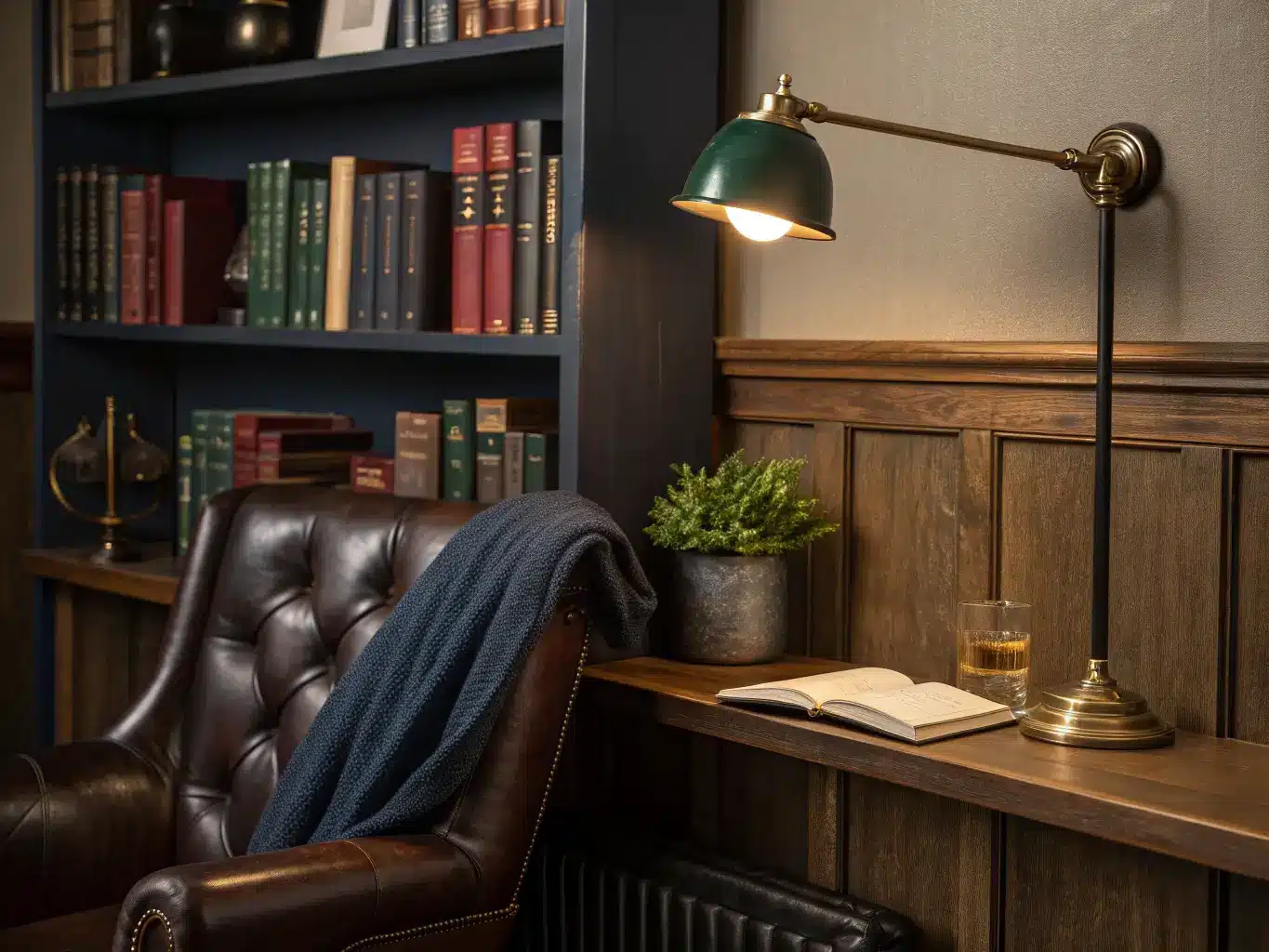
– Modern library: black wall sconce, a tailored leather-look chair, a compact dark-wood bookcase, deeper tones like navy or forest green
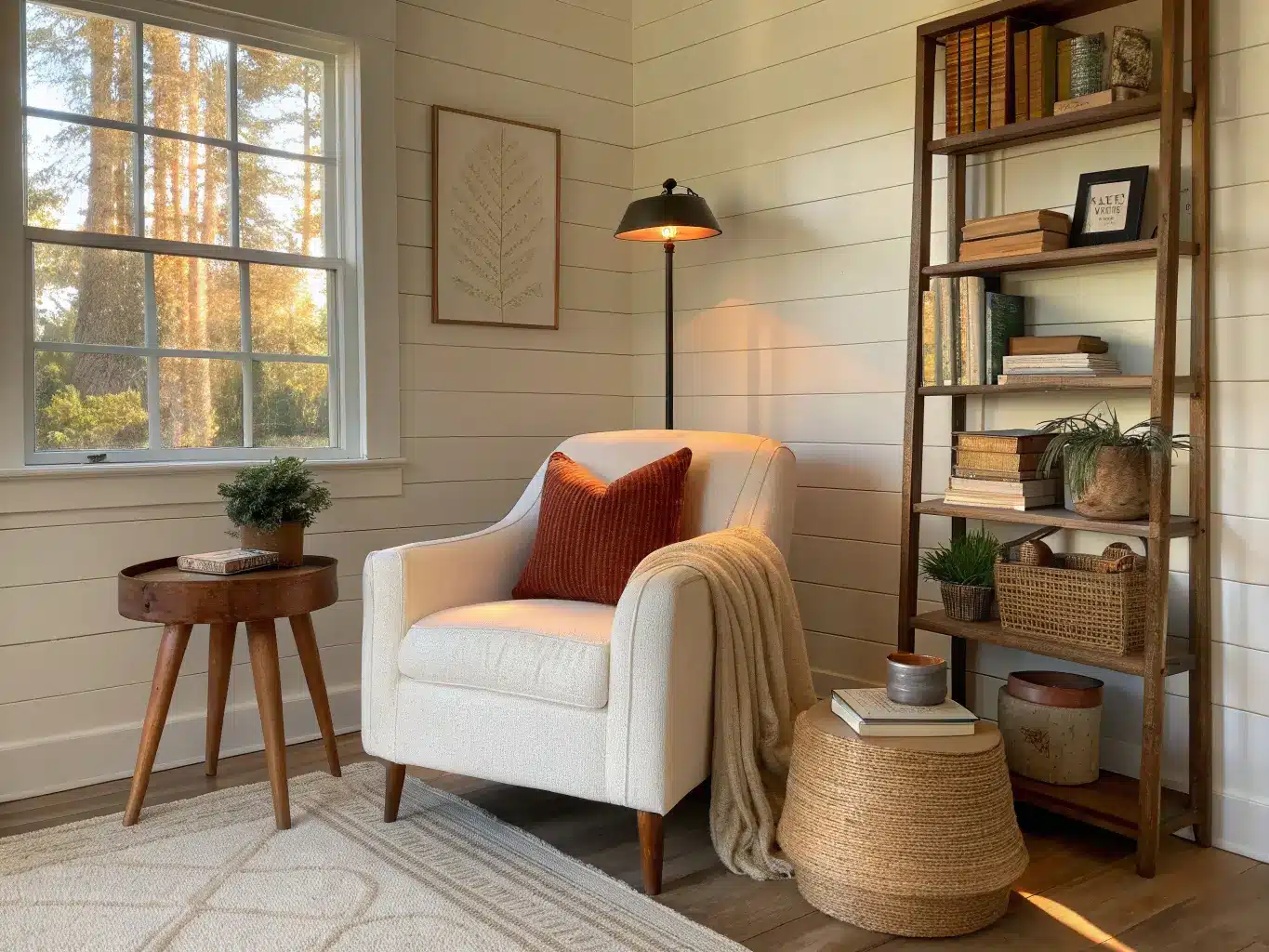
The corner that finally worked for me was the least decorated one I’d tried. One chair, one lamp aimed correctly, one shelf, one throw, one plant. It’s the first reading spot I’ve had that I actually use every single night instead of just walking past.
For another angle on this, my tiny reading nook guide covers the same space from a different starting point.