Quick Style Snapshot
Time: A basic corner refresh — chair, lamp, rug, styling — takes 2 to 6 hours. If you’re painting walls, hanging shelves, or wiring a sconce, block out 1 to 3 days, mostly because paint needs two coats and dry time in between.
Cost: I built my first version for about $380 using a thrifted wingback chair ($65), a floor lamp from Facebook Marketplace ($30), a $40 wool rug remnant, and paint. A more polished version — real upholstered chair, built-in-style shelving, layered lighting, brass fixtures — runs $900 to $2,500+. There’s no shame in the cheap version. Mine looked better than the expensive one for the first year.
Space needed: A 4-foot by 4-foot corner is plenty. This also works in window alcoves, that dead zone under a staircase, or a closet you gut and convert. I’ve done all three.
Skill level: Styling a corner is beginner-friendly. Painting dark walls, building shelves, or installing a sconce bumps it to intermediate — nothing you can’t YouTube your way through, but budget a weekend if you’re new to it.
Seasonality: Works year-round, but it genuinely shines in fall and winter. Dark colors and warm light just make more sense when it’s getting dark at 5pm.
What “Moody” Actually Means Here
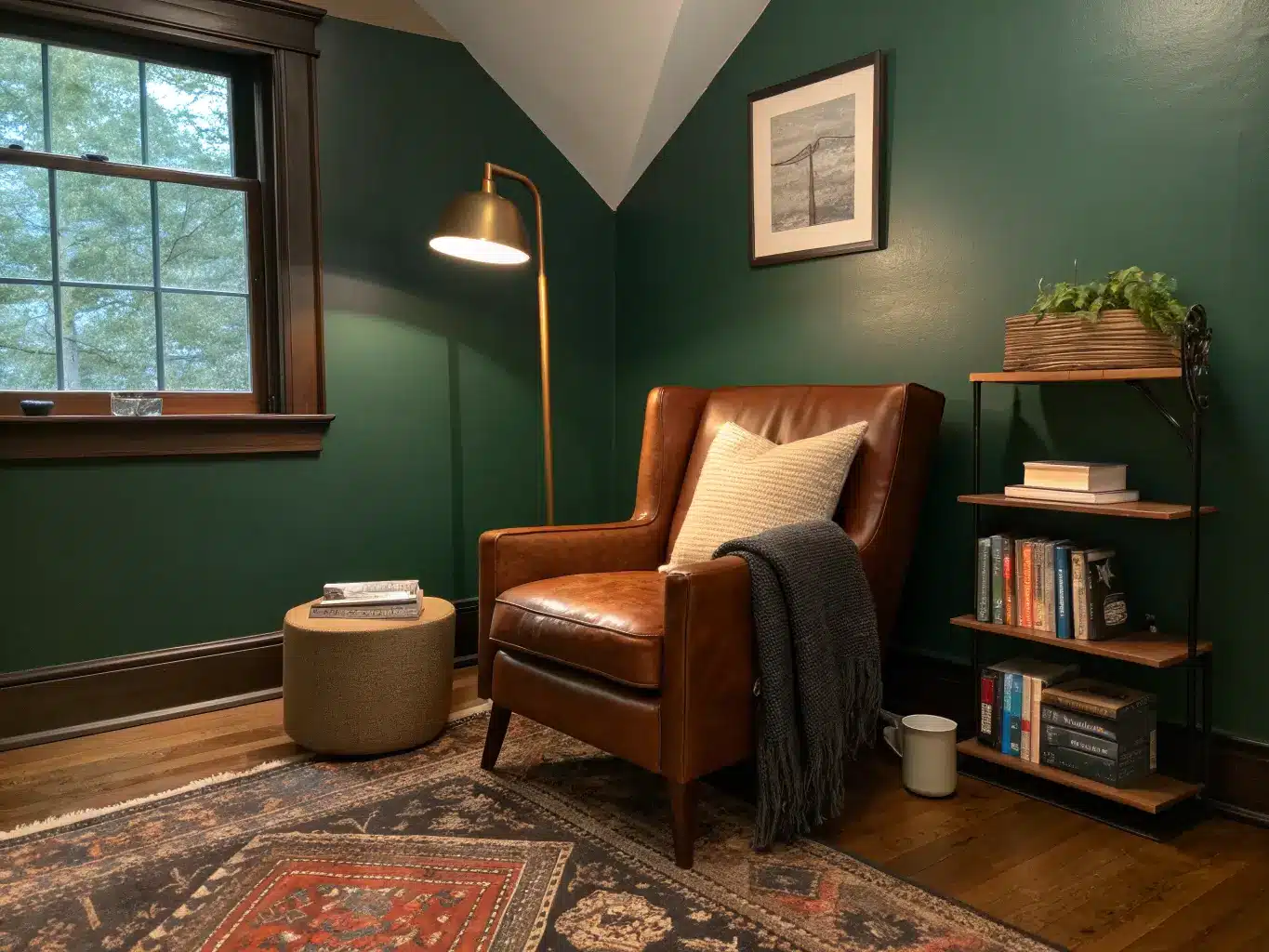
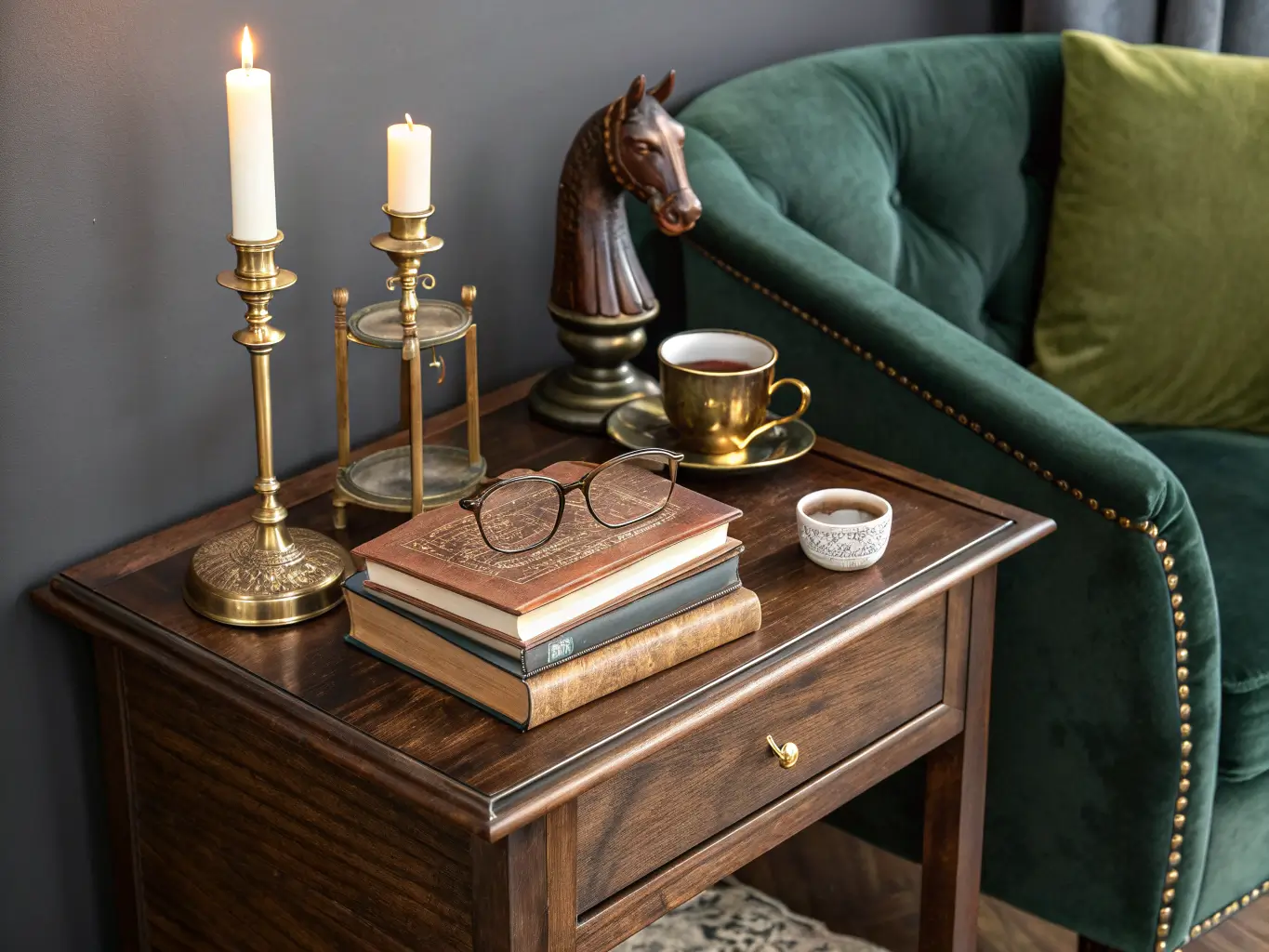
A moody reading nook borrows from dark academia, vintage library style, and what I’d call cozy-retreat energy — some people push it more glam, some more botanical, some more maximalist with pattern. The common thread is a deep, saturated color palette (forest green, charcoal, navy, blackened brown) paired with warm materials: walnut wood, leather, velvet, brass, woven textiles.
This is for people who want a corner that feels like it’s holding its breath a little — private, low-glare, a little bit like you’re hiding. It’s not for anyone chasing bright, airy, Scandinavian minimalism. Those two moods cancel each other out.
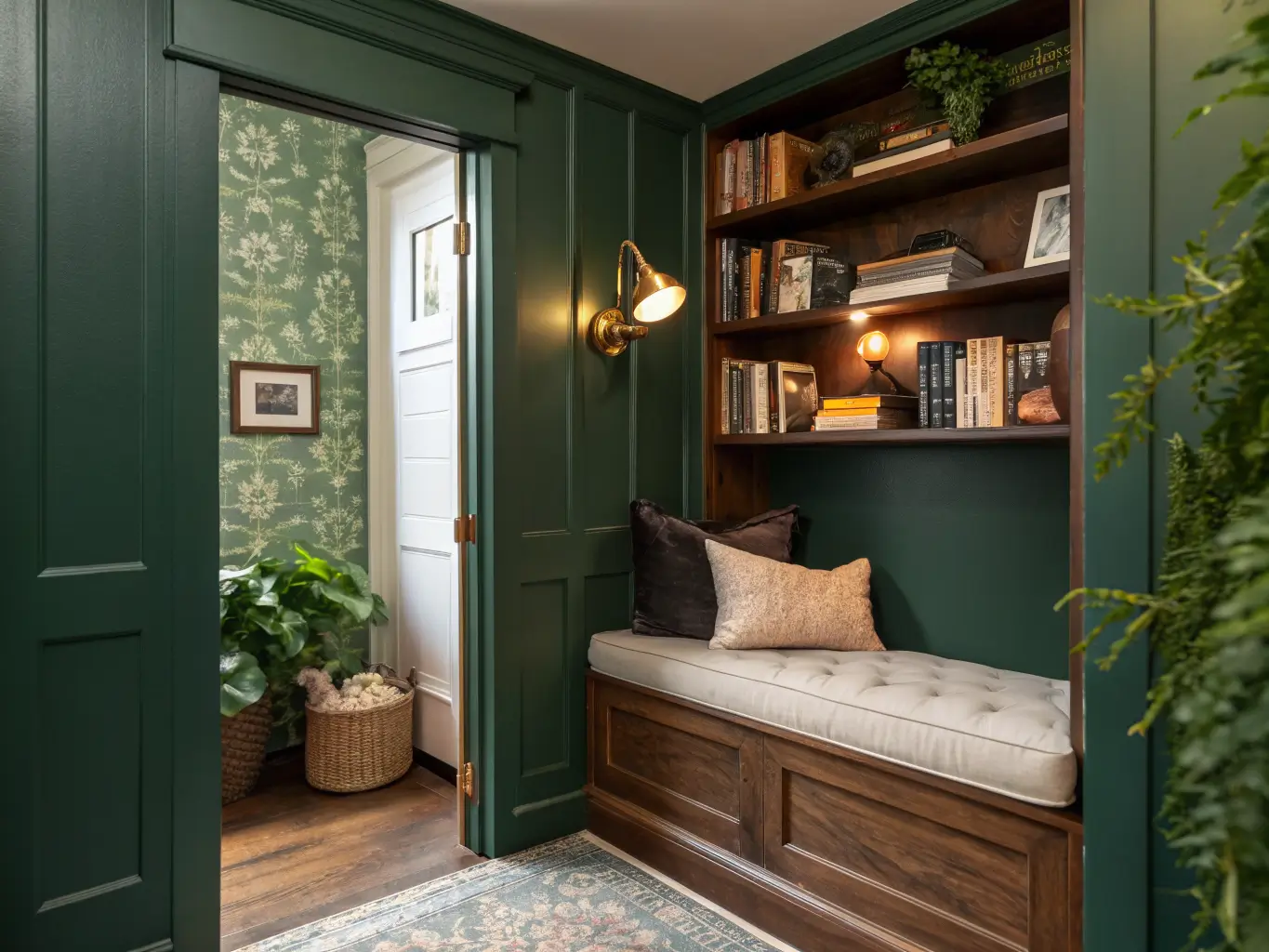
It works in living room corners, bedroom corners, home offices, finished basements, window seats, and hallway alcoves. My favorite version I’ve built was a converted coat closet — took the door off, painted the inside forest green, and it became the most requested seat in the house.
The Essential Pieces
Seating comes first, always
Get a plush armchair, deep-seated accent chair, or small chaise — something with actual cushion depth, not a decorative chair you wouldn’t sit in for more than ten minutes. I made this mistake early: bought a beautiful curved-back chair for $180 because it looked right in photos, and it was so upright and stiff I never used it. Sold it at a loss six months later. Comfort has to come before silhouette, or the whole nook becomes a photo prop instead of a place you go.
One strong, warm light source
Skip overhead lighting entirely if you can. A floor lamp, table lamp, or wall sconce with a warm bulb (look for 2700K color temperature, not the bluish 4000K+ office bulbs) does the actual work of making the space feel moody rather than just dark. My closet nook uses a single brass wall sconce on a dimmer, and that dimmer switch was maybe the best $18 I’ve spent on this entire project.
Shelving within arm’s reach
Built-ins are the dream, but Billy bookcases with extensions, floating shelves, or even a single ledge shelf work fine. Keep it practical: shelf access should sit roughly 24 to 30 inches above the top of your cushion stack so you’re not standing up to grab a book every ten minutes. I ignored this once and put a shelf too high “for visual balance” — it looked great and I never used it, because getting up mid-chapter kills momentum.
Textiles that soften everything
Velvet cushions, a wool throw, linen pillows, a soft area rug. The rug matters more than people think — it absorbs sound in a small enclosed nook and keeps hard flooring from making the space feel cold, which fights against the whole mood you’re building.
The small stuff that makes it feel finished
Candles (real or flameless — I use flameless in the closet nook because there’s zero ventilation), vintage bookends, one framed piece of art, a small side table for tea or glasses. Small, specific objects do more than a shelf full of generic decor.
Optional Layers Worth Adding
– Plants: a small pothos or snake plant keeps dark walls from feeling heavy. I keep a pothos on my side table that I’ve killed and replaced twice — worth it anyway.
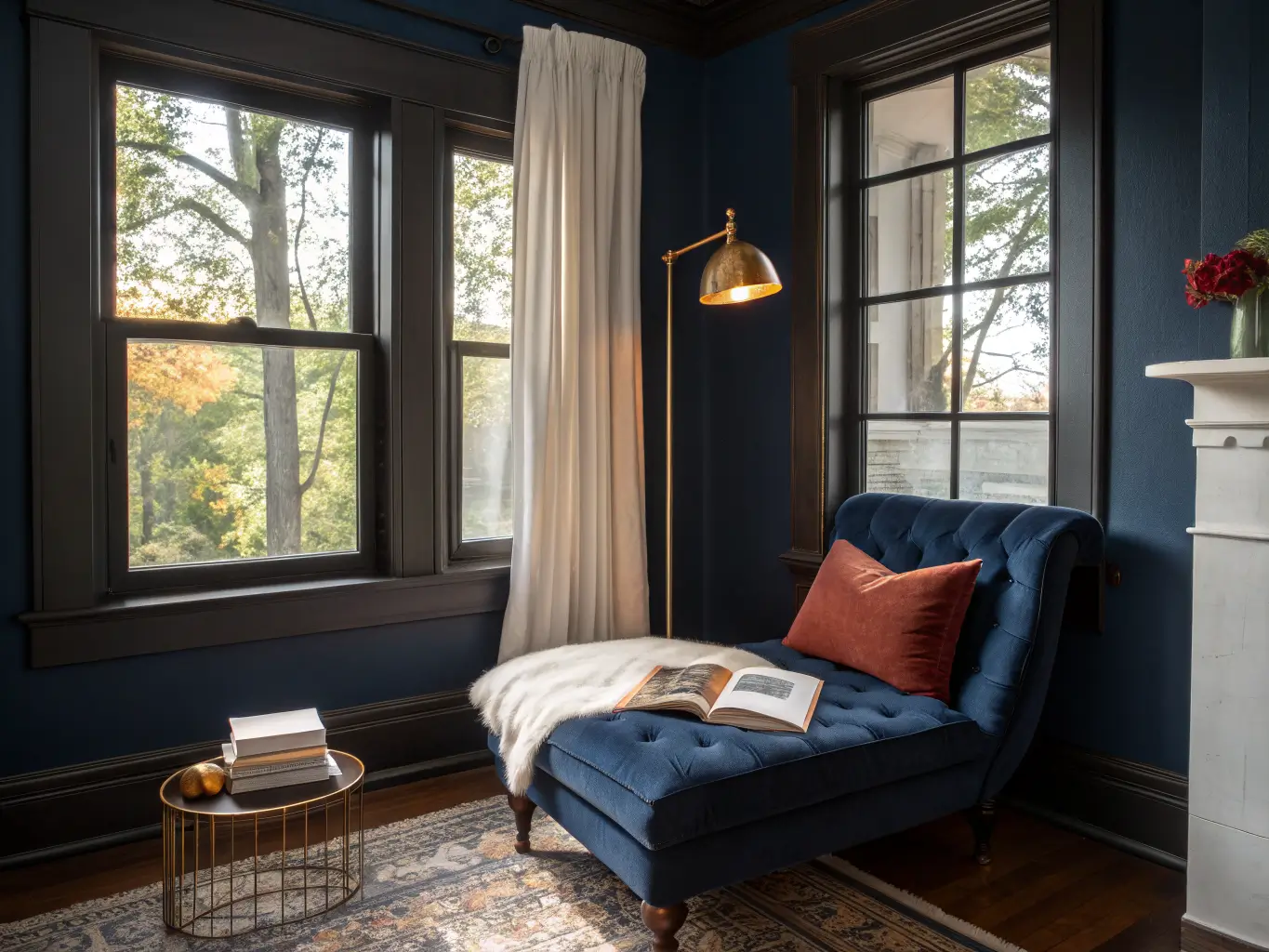
– Brass or gold hardware: reflects the low light and keeps the palette from going flat.
– Seasonal swaps: taper candles and rust-toned throws for fall/winter; swap to lighter linen layers for spring while keeping the dark base.
– Atmosphere extras: a draped curtain across an alcove opening, a small mirror to bounce light back into the space, a picture light over your art.
Pro Styling Rules I Actually Follow
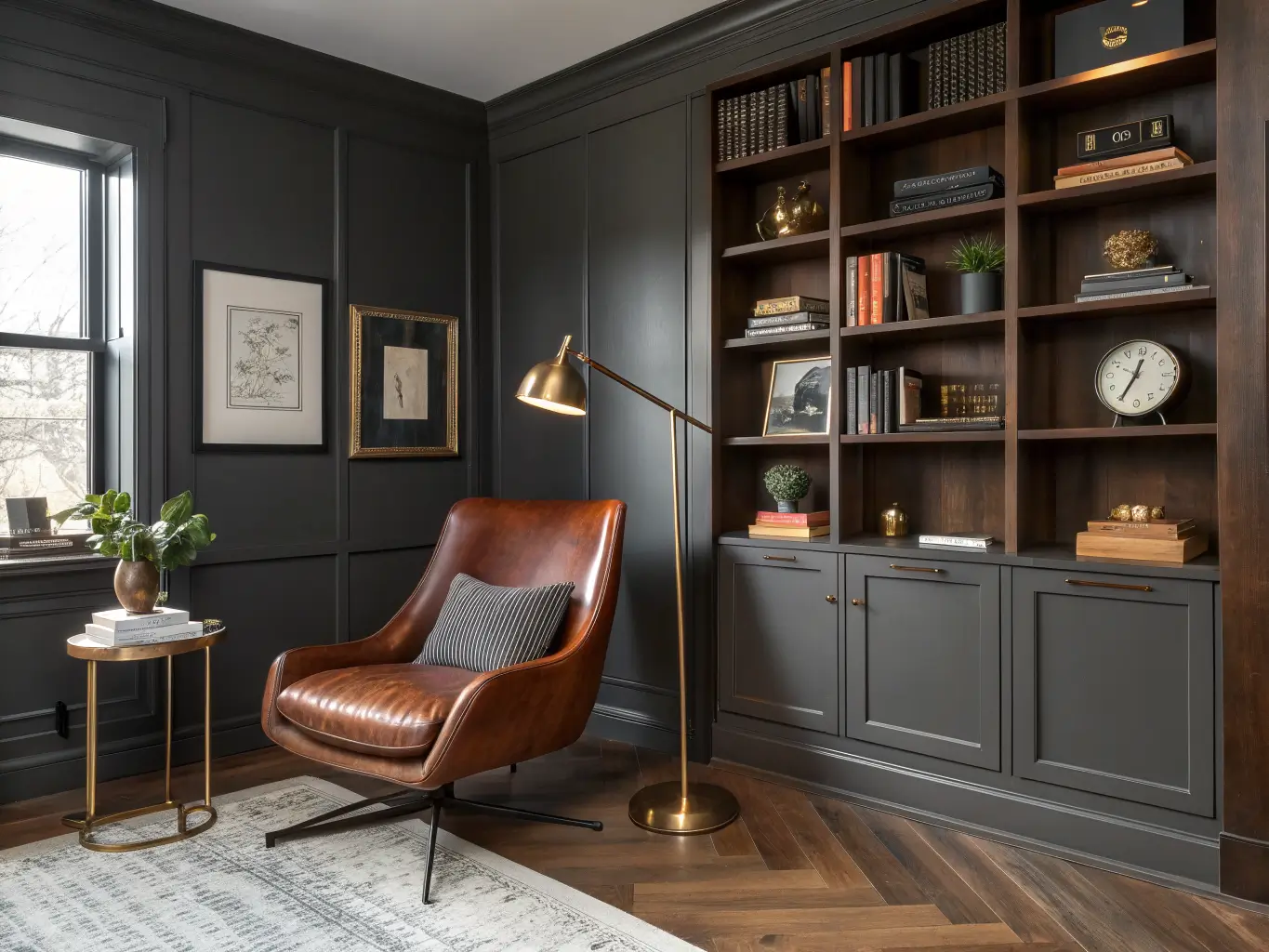
Pick one dominant dark color, then layer 2–3 supporting tones. All-black or all-brown reads flat. My green nook has the forest green wall, walnut shelving, a cream cushion, and brass fixtures — four tones, one clear lead.
Mix soft against structured. Velvet with wood. Wool with metal. Linen with leather. Same texture repeated everywhere goes stale fast.
Pick one anchor point. Chair, light, or shelf wall — choose one hero and let the rest support it. My mistake in round one was trying to make the chair, the lamp, and a big gallery wall all compete for attention. It looked busy instead of curated.
Add one warm reflective surface. Brass, polished wood, even a glass candle holder. Without it, dark spaces can feel visually heavy, almost like a hole in the room.
Leave negative space. Don’t fill every shelf, every surface. A moody nook should feel calm, not like a display case.
Setting It Up: Step by Step
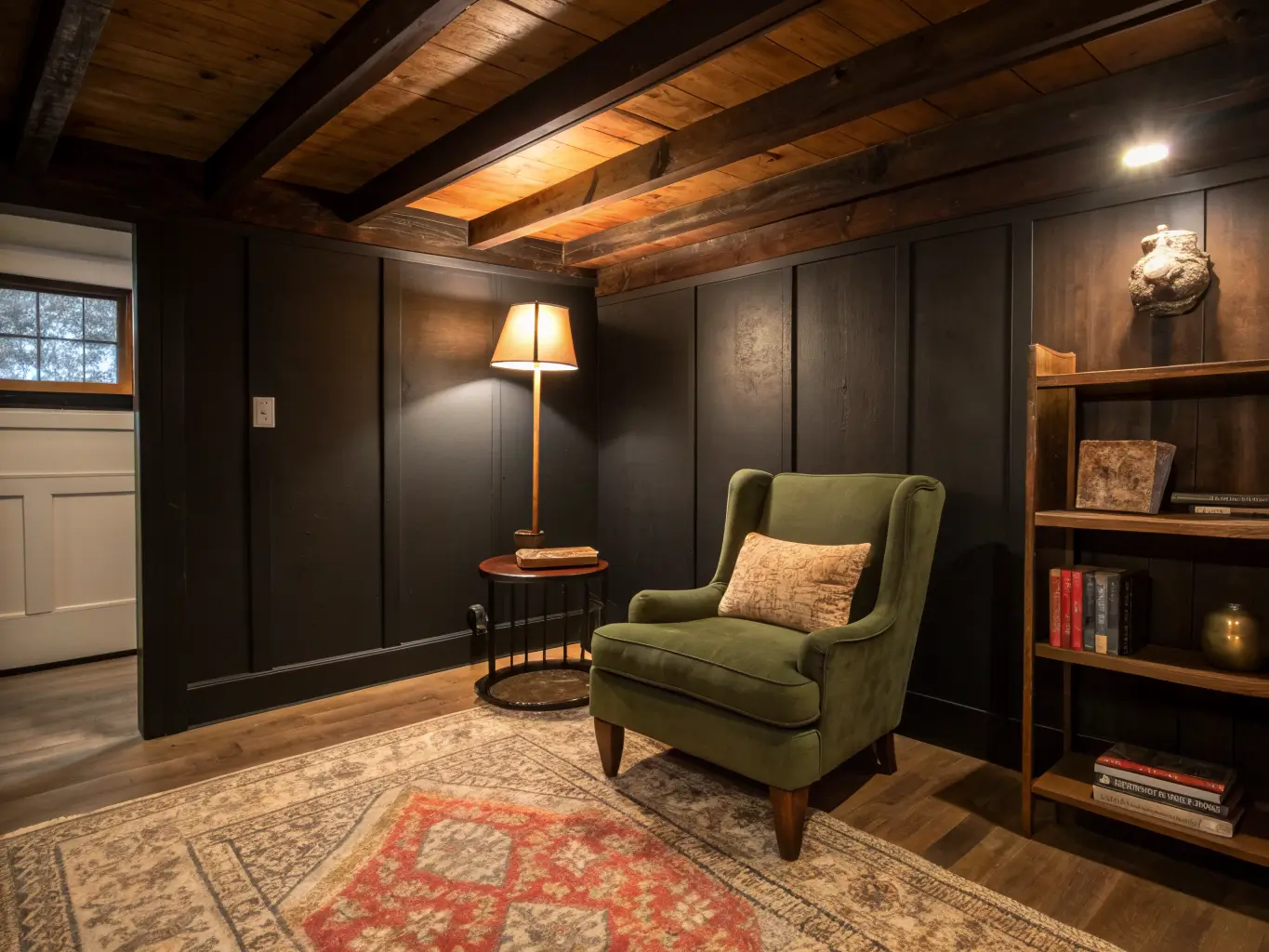
1. Clear the area completely. Get rid of anything not serving the reading function — storage overflow, mismatched lamps, random decor that wandered in over time.
2. Decide the nook’s actual job. Reading corner, mini library, or sleepy retreat? This decision changes your seating depth, shelf height, and lighting choice. A sleepy retreat wants a chaise and dim ambient light; a working reading corner wants a proper armchair and a brighter, more direct task lamp.
3. Place the biggest piece first. Chair or chaise goes in before anything else. Then the lamp and side table. Books and textiles come last — always.
4. Check shelf height against your seated position, not standing. Sit in the chair, reach toward the shelf. If it’s a stretch, move it down.
Building the Look
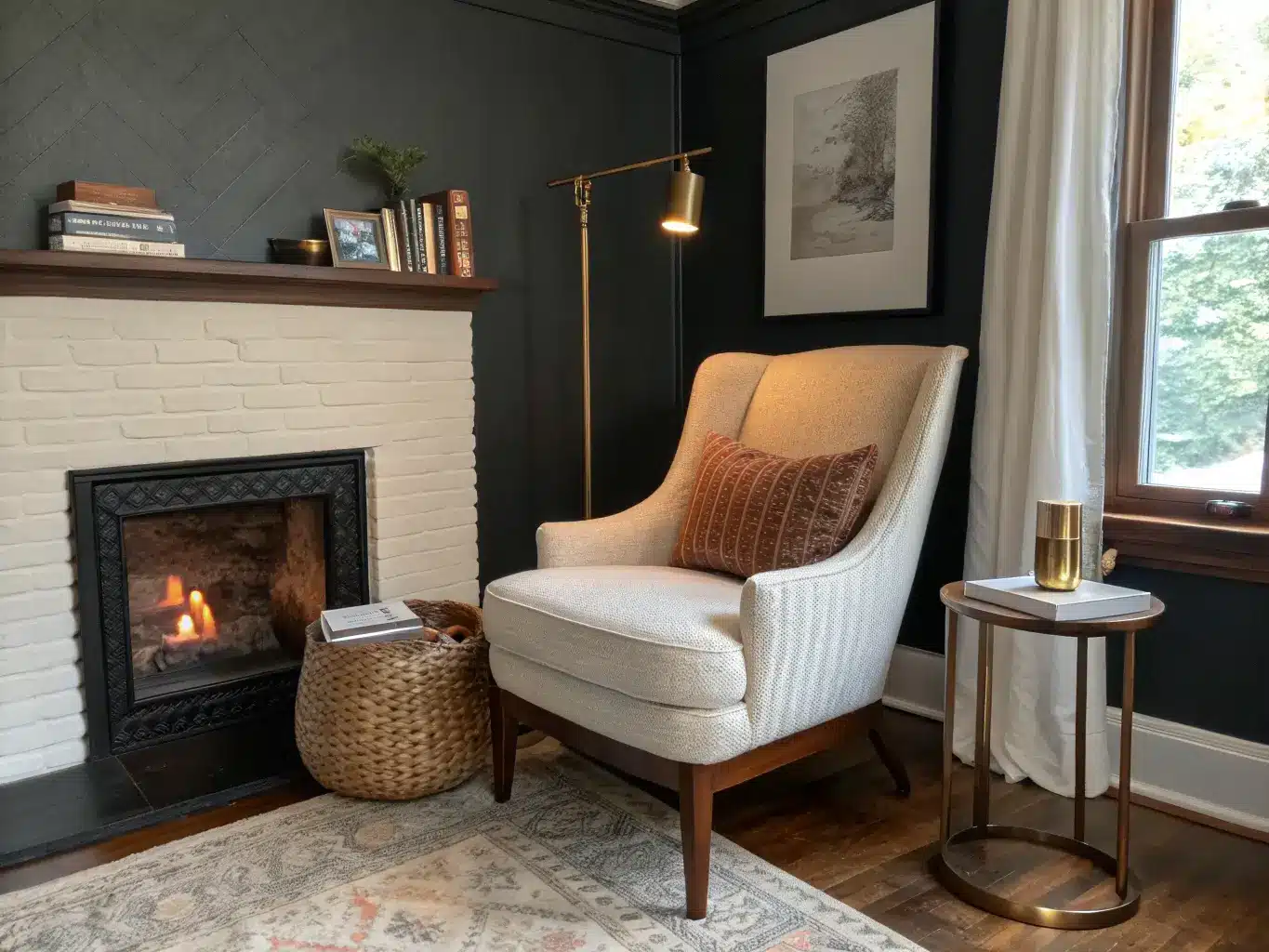
– Ground it with a dark wall color — deep green, moody blue, charcoal, or near-black brown. If you’re renting, a large fabric panel or curtain in the same tone gets you 80% of the effect with zero paint commitment.
– Add the seat, padded and throw-draped.
– Layer warm, low-glare lighting — this is what separates “moody” from “just dark and hard to read in.”
– Curate the books. A tidy stack of 8–10 books says more than a fully packed shelf of 60.
– Finish with one or two personality pieces — art, a candle, a vintage find. This is the step people skip and it’s the one that makes a space feel lived-in instead of staged.
Where This Goes Wrong
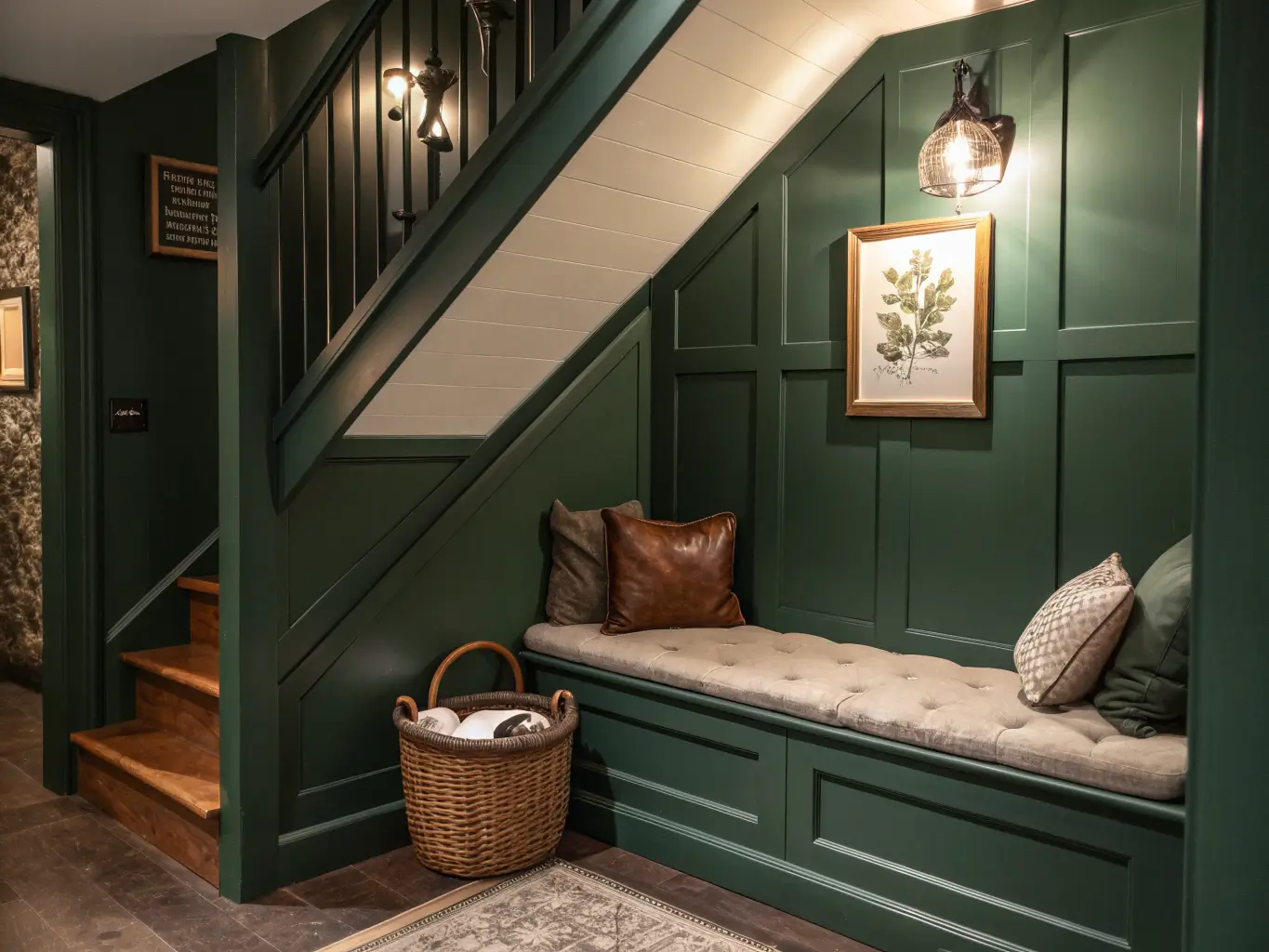
Too dark, no contrast. If your walls, chair, and textiles are all reading the same flat black-brown, the eye has nothing to land on. Bring in wood tone, brass, or a cream cushion to break it up.
Overhead lighting. Harsh ceiling light undoes everything. This style depends on soft, layered light sources at different heights in the room, not one bright source from above.
Too much stuff. Books stacked three-deep, five decorative objects competing on one shelf, a pattern-on-pattern situation that never resolves. Edit hard.
Furniture that photographs well but isn’t comfortable. I already learned this one the expensive way. Test-sit for at least five minutes before buying any chair for this space.
Shelves you can’t actually reach. Function beats symmetry every time in a nook this size.
Keeping It Fresh Without Starting Over
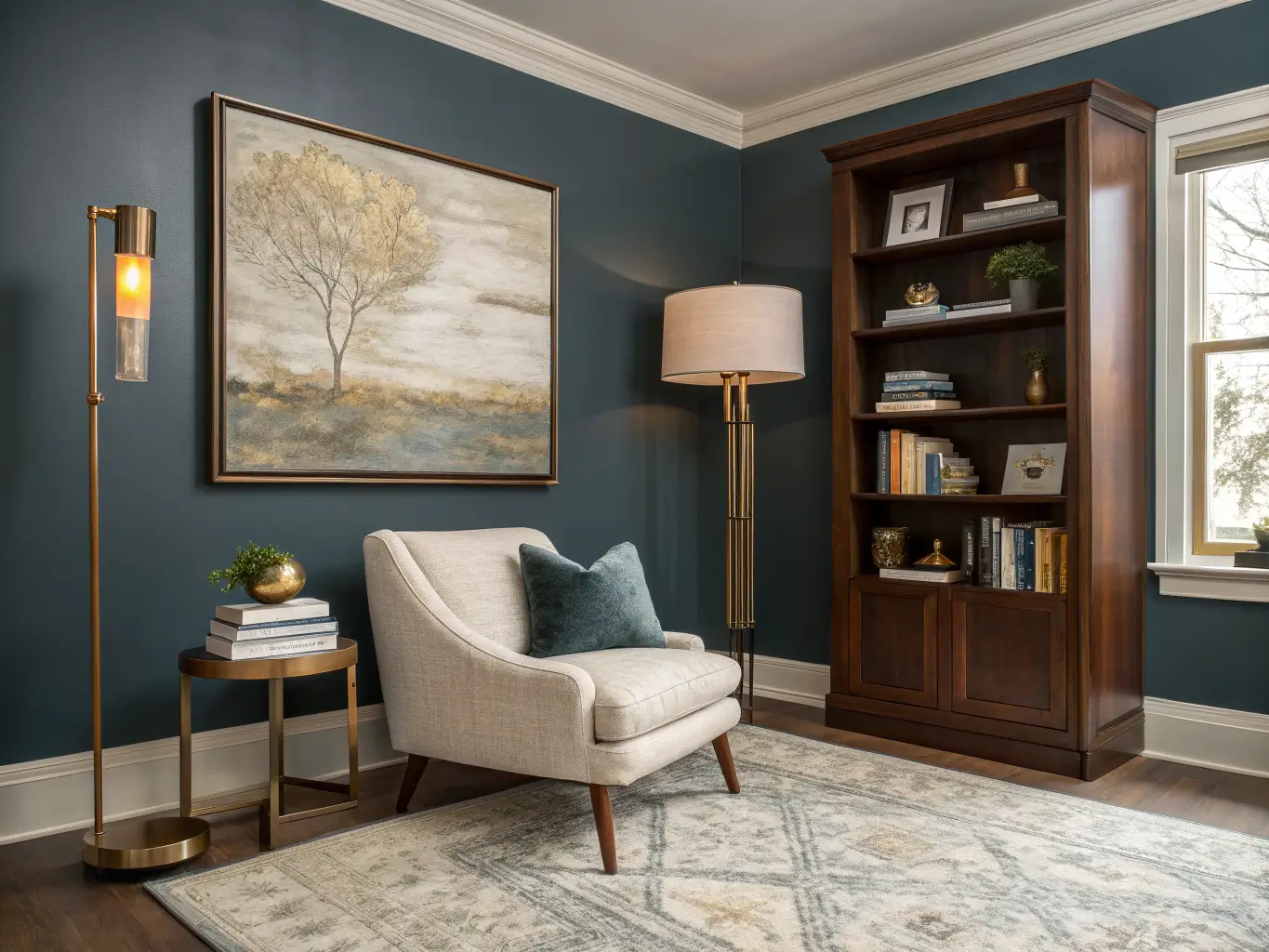
Stick to a tight palette: your dark base, one warm metal, one natural wood tone. Repeat those same materials — walnut, brass, velvet — throughout so the small space reads as cohesive rather than assembled from leftover pieces.
For seasonal updates, only swap the soft stuff: throw blanket, pillow covers, candles, a small plant. Don’t repaint every season — that’s how projects stall out.
Budget-conscious upgrades that actually move the needle: a thrifted armchair reupholstered in velvet (way cheaper than buying new), a secondhand bookshelf painted to match your wall color so it reads as built-in, and a plug-in sconce instead of hardwiring if you’re not ready for an electrician.
If you want to soften the mood without losing it, add more linen, pale wood, or a mirror or two. You keep the dark identity, but it stops feeling like a cave — which matters if the nook shares a wall with a brighter room.
The version of this that’s lasted longest for me isn’t the one that looked best in photos. It’s the closet nook — small, a little imperfect, painted by me on a Saturday afternoon with a $12 quart of sample paint. I sit in it almost every night. That’s the actual test.
For another angle on this, my dark academia reading nook guide covers the same space from a different starting point.