What This Style Actually Is
A cozy reading nook isn’t a Pinterest fantasy that requires a bay window and a home library. It’s a hybrid of cozy minimalism, English cottage warmth, and what people are now calling “bookshelf wealth” — that collected, lived-in look with good books and warm brass fixtures instead of matchy-matchy furniture sets.
The palette leans warm neutrals — oatmeal, cream, linen, camel, mushroom — anchored by one deeper tone like forest green, oxblood, or charcoal. The materials do the heavy lifting: linen, velvet, wool, boucle, brass, rattan. Nothing glossy, nothing cold.
This works for readers obviously, but also remote workers who need a screen-free reset spot, apartment dwellers with a dead corner, and parents trying to carve out one quiet zone in a loud house. Best locations: bedrooms, window bays, stair landings, or any spot away from kitchen noise and TV traffic. I made the mistake once of setting mine up next to our open-plan kitchen. Gorgeous corner, completely useless — I could never actually concentrate on a page with dishes clanking six feet away.
Time and cost, realistically:
– A simple corner refresh with furniture you already own: 1–3 hours
– Adding shelving, paint, or a window seat build-in: 1–2 days
– Budget setup: $150–$600
– Polished mid-range: $600–$1,500
– Custom built-ins or designer lighting: $1,500+
For reference, a decent upholstered accent chair runs $150–$400, a floor lamp $50–$250, a small side table $40–$200, a rug $80–$300, and throws or pillows $20–$120 depending on whether you’re buying linen or polyester-blend.
Skill level is beginner if you’re just furnishing and styling. It moves to intermediate once you add paint, curtains, or peel-and-stick wallpaper, and expert territory if you’re building a window bench or running new lighting.
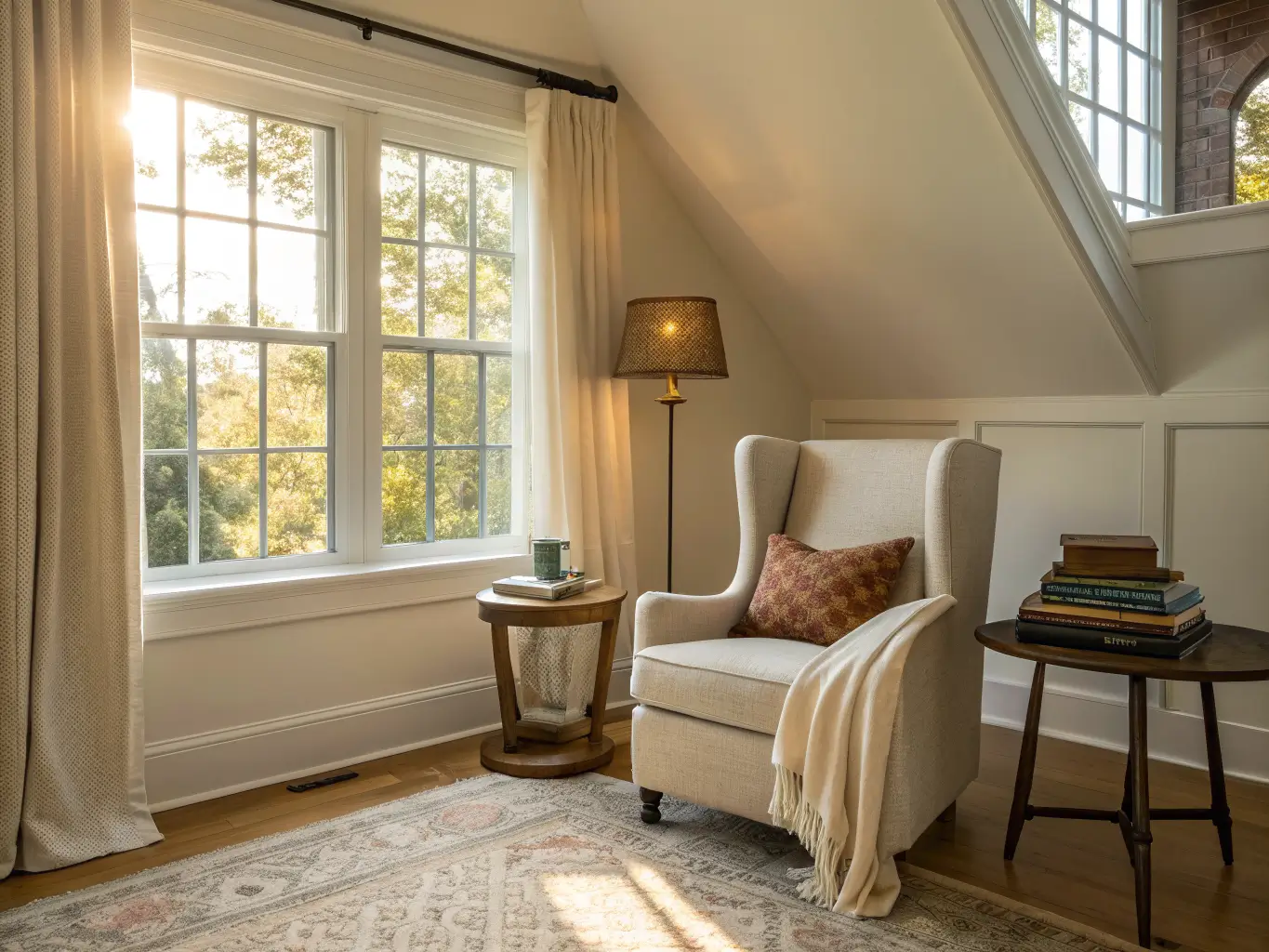
The Must-Have Pieces (Don’t Skip Any of These)
Every reading nook that actually works has the same bones. Skip one and the whole thing falls apart — usually the lighting, which I’ll get to.
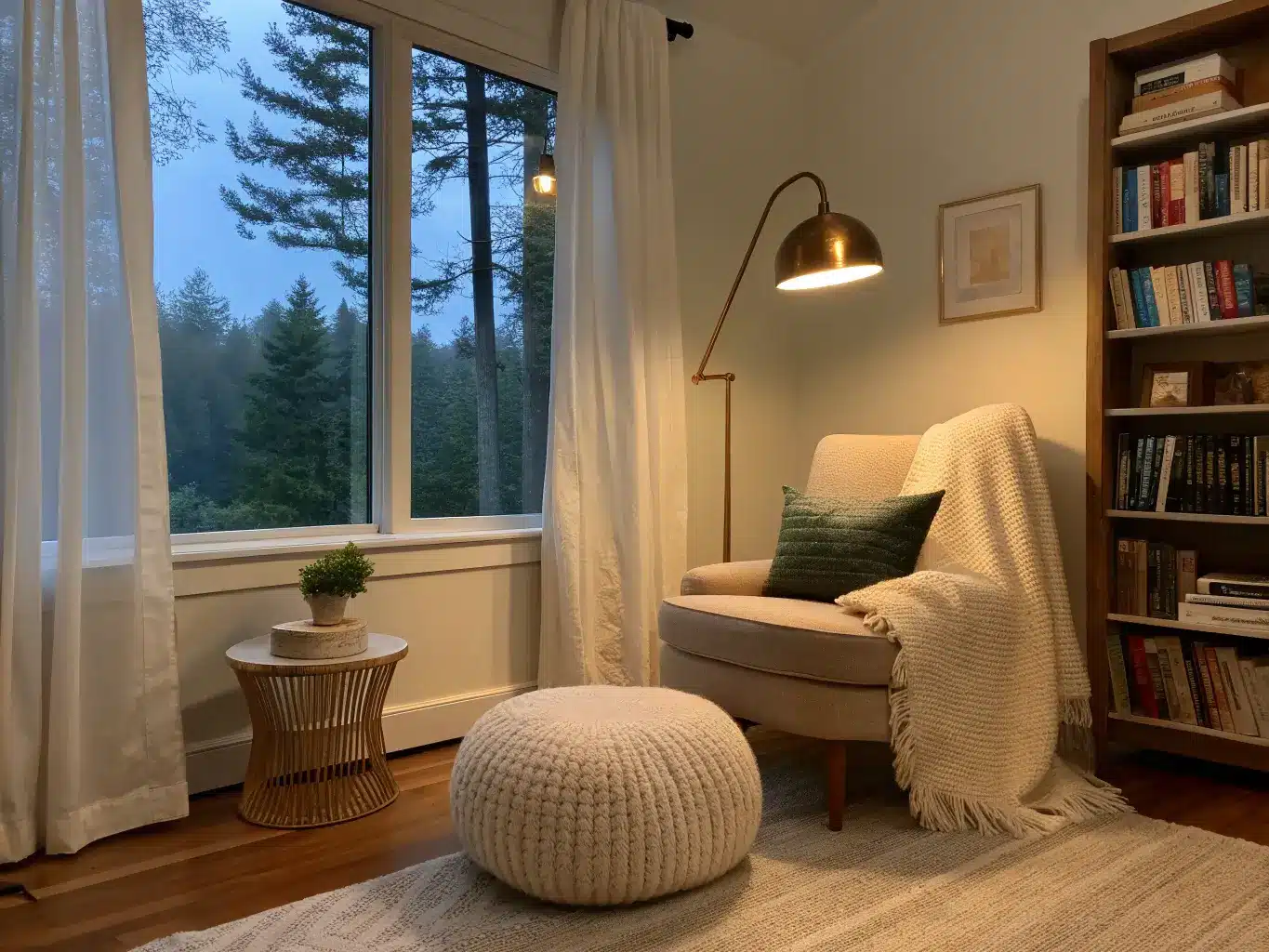
Seating. This is the one place to spend real money. A deep armchair, wingback, upholstered slipper chair, or small chaise. Whatever you pick, sit in it for at least ten minutes before buying — I bought a gorgeous barrel chair off a showroom floor once because it photographed beautifully, and it turned out to have zero back support. It sits in my hallway now holding a plant.
Task lighting. Non-negotiable. A pharmacy-style floor lamp, library lamp, or adjustable brass floor lamp with a warm bulb (look for 2700K–3000K — anything higher reads cold and clinical). Library lights and pharmacy lamps are having a real moment right now, and there’s a reason: the adjustable arm lets you actually aim light at your page instead of just lighting the room.
Side table. Small round pedestal table, C-table, or nesting table — something that can hold a mug, a book, and a candle without you having to reach far.
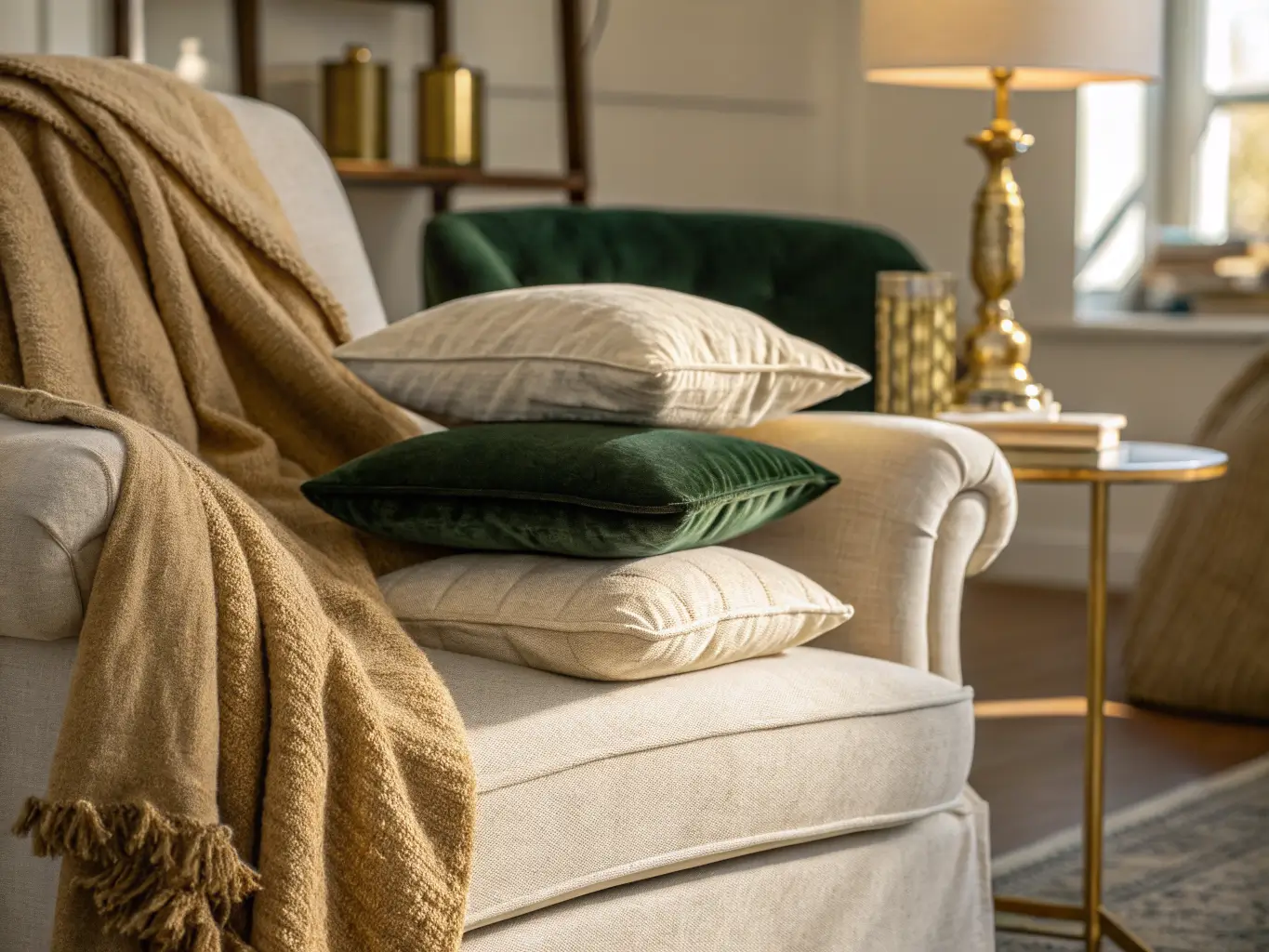
Textiles. One throw blanket minimum, one or two pillows. This is where you introduce your accent color.
A rug. Even a 3×5 rug under the chair and table visually separates the nook from the rest of the room. This is the trick most people skip in open-plan spaces, and it’s the single fastest way to make a corner read as “a place” instead of “some furniture”.
Book storage. A small wall shelf, ladder shelf, or just a curated stack on the side table. You don’t need a full wall of books for this to work.
Optional: a footrest. An ottoman or pouf if you’re planning on actually sitting for long stretches.
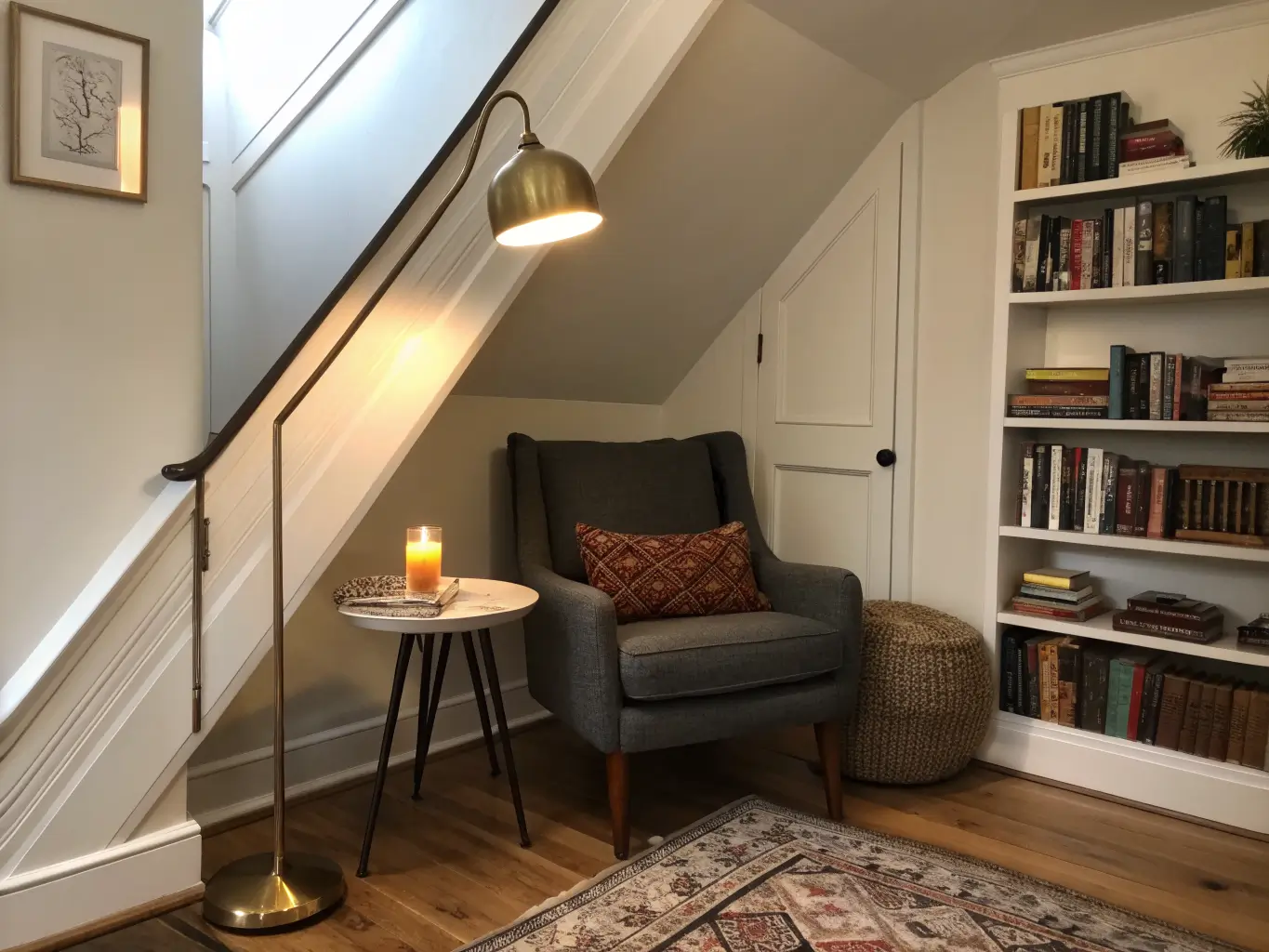
Optional Layers That Take It Further
Once the essentials are in place, these are the details that separate “nice corner” from “I want to live here”:
– A tall plant — I use a 4-foot fiddle-leaf fig in the corner behind my chair, and it softens what would otherwise be a hard right angle where two walls meet
– A candle for evening ambiance
– Sheer linen curtains if you’re near a window — they filter light without blocking it
– One piece of art or a personal print, not a gallery wall
– Marble or brass bookends — small detail, but it’s the kind of thing that makes a corner feel considered rather than assembled
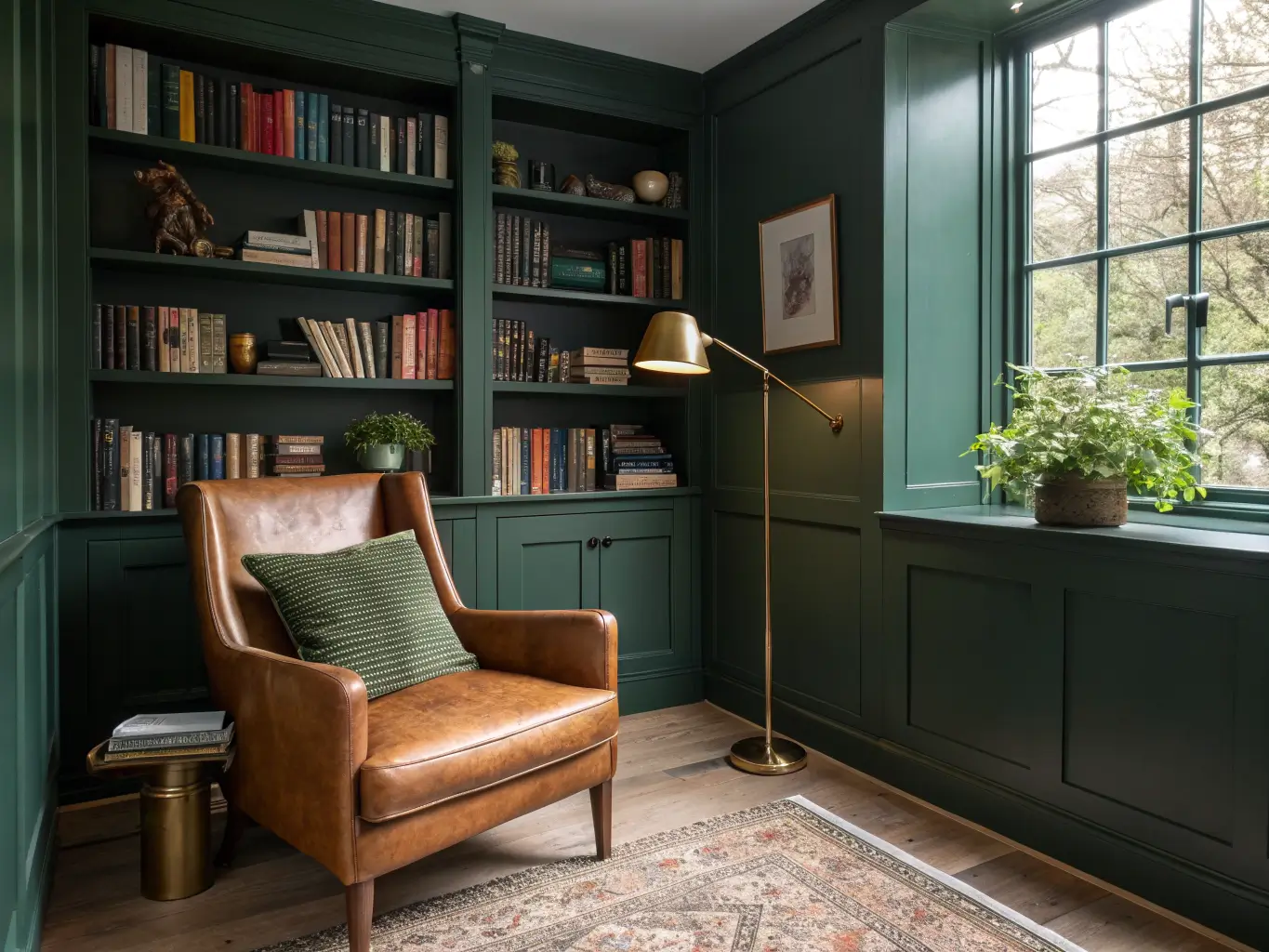
– Color-drenching the nook — painting the walls, trim, and even shelving the same deep color to make the corner feel like its own enclosed world
That last one is bolder than most people attempt, but it’s genuinely one of the more effective moves in cozy-corner design right now. I did this in my current apartment — painted a nook wall and the adjoining bookshelf in Farrow & Ball’s “Bancha,” a deep, slightly murky green — and the corner immediately felt like a separate room instead of an afterthought against a white wall.
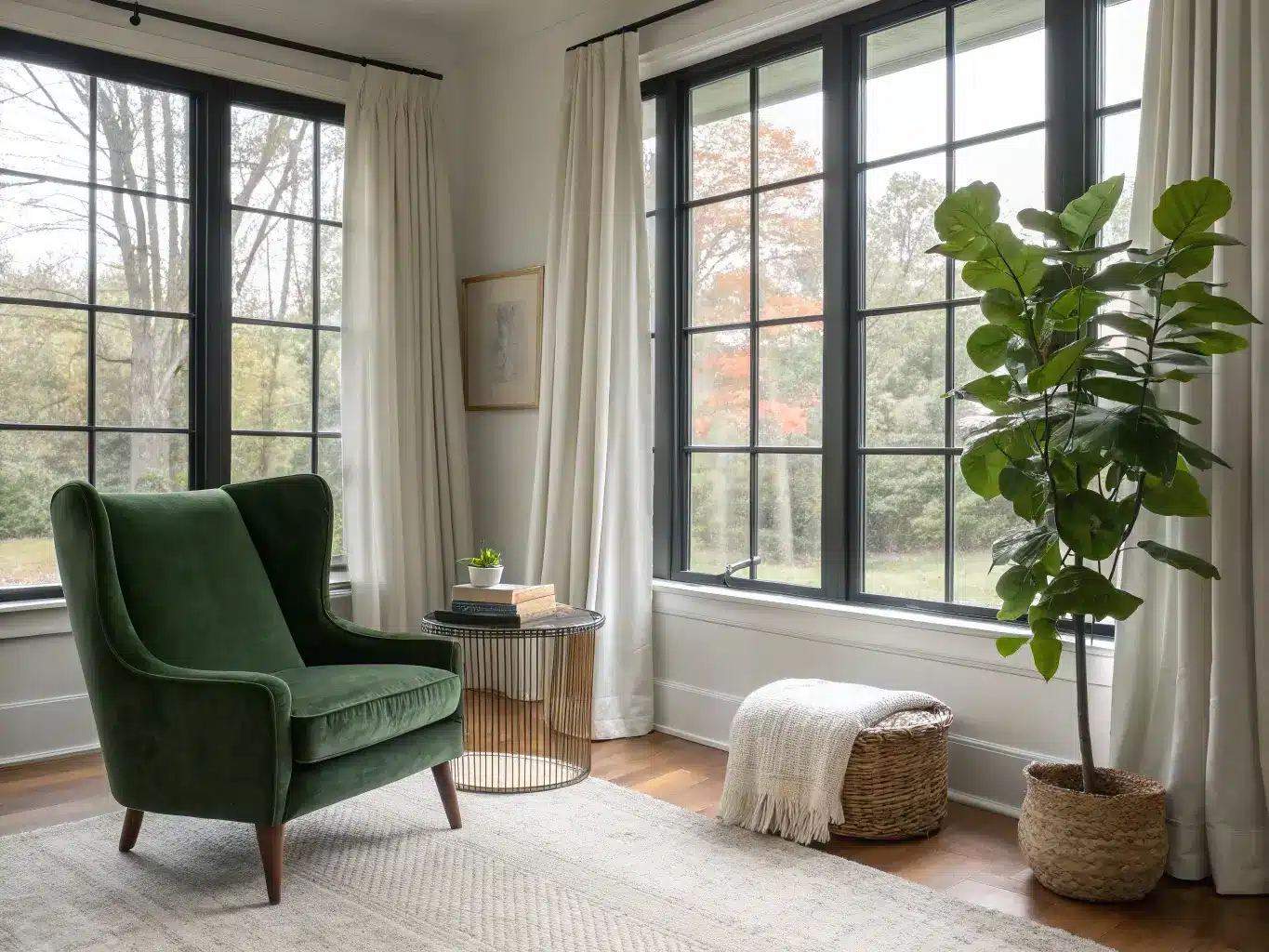
How to Layer It So It Doesn’t Look Sparse or Cluttered
Think of it as four layers, and don’t skip any:
1. One structured piece — the chair or bench
2. One soft piece — the throw
3. One support piece — the pillow
4. One functional piece — the lamp or table
That’s the whole formula. The rule I use: if the chair is plush and heavily upholstered, keep the lamp and table silhouettes clean and simple. If the room around the nook is already busy — patterned wallpaper, lots of art — pull the accessories in the nook itself way back.
Keep your eye on the seat-light-books triad. That’s the actual function of the space. Everything else is garnish.
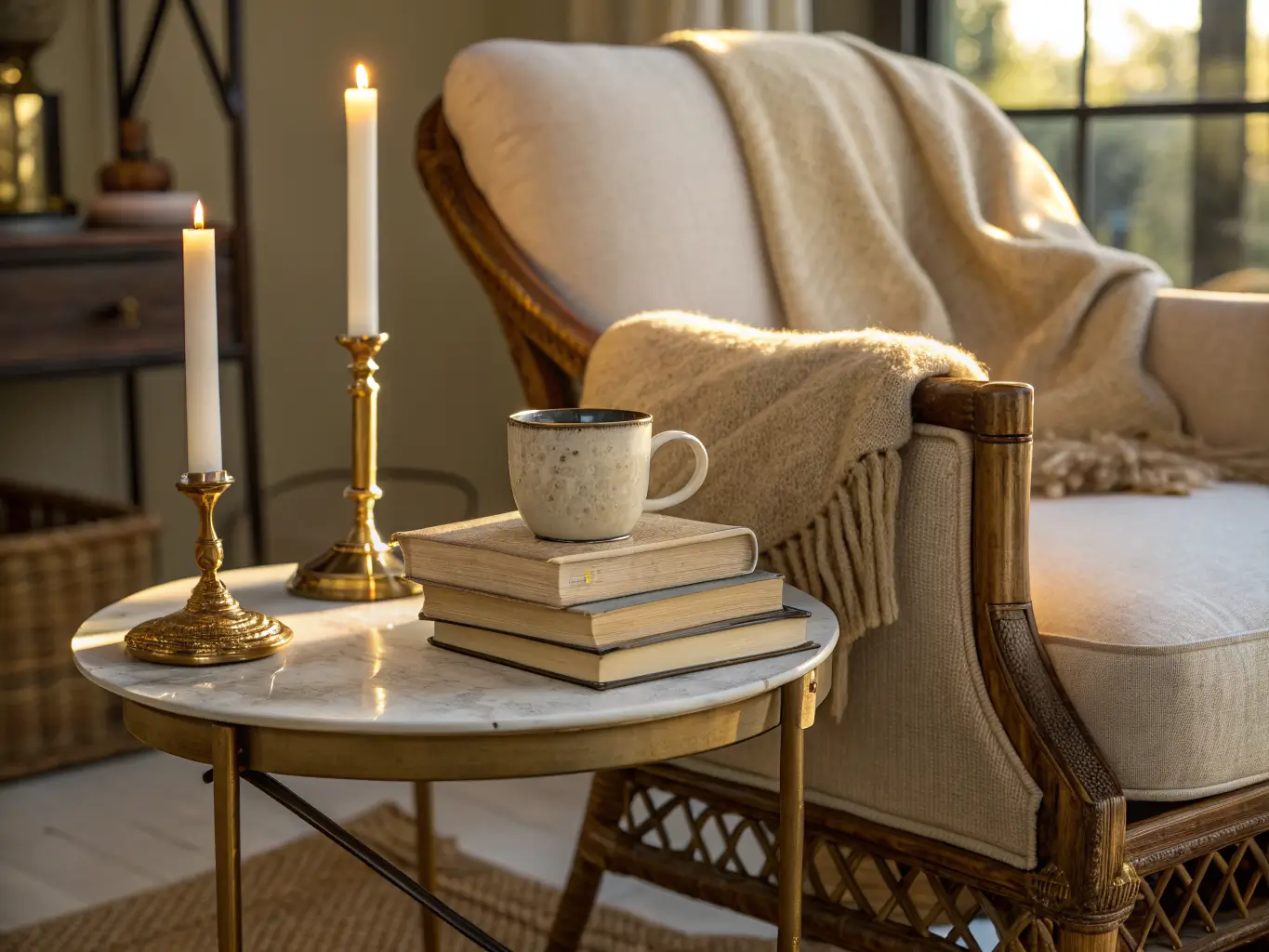
Setting It Up: Step by Step
Start with the spot. Pick somewhere quiet, ideally with natural light or near a window. Clear whatever clutter has accumulated there — mine was originally a dumping ground for laundry that hadn’t made it upstairs yet, which tells you something about how “used” corners get repurposed.
Define the perimeter first. Lay the rug down before you place furniture. It tells you the actual footprint you’re working with.
Place the chair, pulled slightly away from the wall rather than jammed into the corner — it looks more intentional and gives you room to actually get in and out of it.
Add the side table within arm’s reach of the chair’s arm, not its front.
Bring in the lamp — position it so light falls over your shoulder onto a book, not into your eyes.
Layer the throw and pillow last. These are your color and texture moment.
Add books within reach — a short stack on the table or a narrow shelf mounted just above head height when seated.
Stop at one or two personality pieces. A plant, a candle, a mug you like. Resist the urge to keep adding “one more thing” — that’s how a reading nook turns into a display shelf nobody sits at.
Where This Goes Wrong
I’ve made most of these mistakes myself, so consider this the shortcut around them:
– Prioritizing looks over comfort. A beautiful chair with no lumbar support gets used exactly once. Sit in it before you commit.
– Skipping proper lighting. A nook with only ambient overhead light looks cozy in photos and is unusable for actual reading after 6 pm.
– Overcrowding the corner. Six throw pillows and four decorative objects turns a retreat into clutter. Edit hard.
– Ignoring scale. An oversized wingback swallows a 4-foot corner. A tiny accent chair looks lost in a full window alcove. Measure your space before you fall in love with a piece online.
– Using cold, high-contrast colors with no warm balance. Stark white walls and a black metal lamp can look sharp in a photo, but it won’t feel like anywhere you want to curl up. Warm it up somewhere — the wood tone, the lamp shade, the throw.
Keeping It Looking Intentional Over Time
Stick to a tight palette of 3–5 colors — a light neutral base plus one or two deeper accents — and repeat materials across the space. Wood and linen. Brass and velvet. Don’t introduce a third or fourth material family or the corner starts feeling random instead of edited.
Keep surfaces functional, not decorative. One candle, one mug, one book stack. That’s plenty.
Budget refreshes that actually move the needle:
– Swap pillow covers seasonally instead of buying new pillows
– Thrift the chair and reupholster it — I paid $40 for a chair frame at an estate sale and $180 to have it reupholstered in a green boucle, which is less than half what a comparable new chair would’ve cost
– Peel-and-stick wallpaper on just the nook wall for a low-commitment color-drench effect
Seasonal shifts: heavier wool throws and deeper tones in winter, then swap to linen and lighter shades — pale blue, cream, sand — for summer.
Cross-style variations if you want to push the aesthetic:
– Boho: rattan chair, layered textiles, clay and terracotta tones
– Coastal: washed linen, pale wood, blue-gray palette, airy sheers
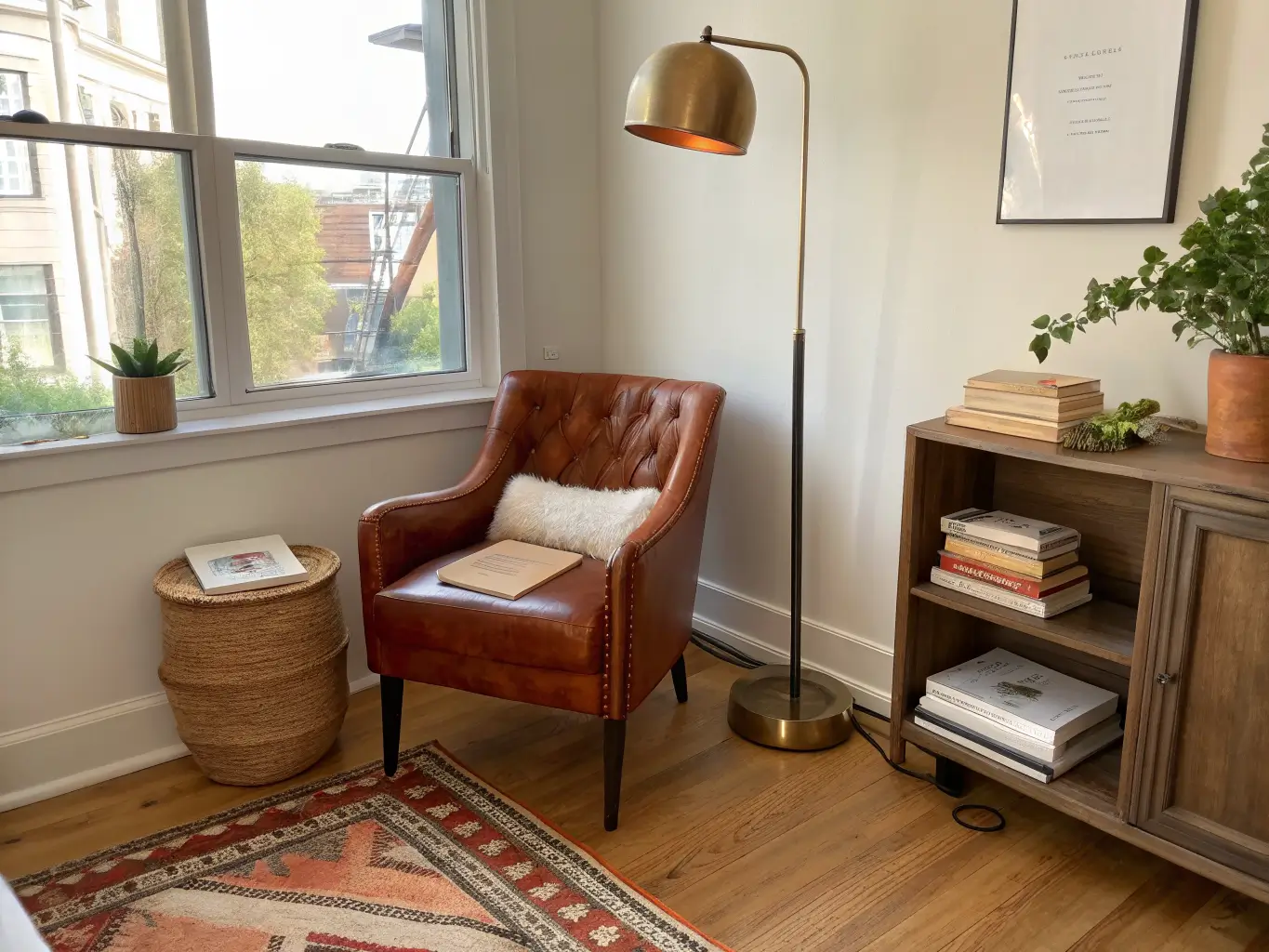
– Vintage: brass lamp, worn leather or velvet chair, an antique side table with some patina on it
The corner doesn’t need to be big and it doesn’t need a renovation. It needs a chair worth sitting in, a light worth reading under, and the discipline to stop adding things once it works.
For another angle on this, my reading nook aesthetic guide covers the same space from a different starting point.