I built my first reading nook in a corner of my bedroom that was doing absolutely nothing — just dead space next to a window where I dropped laundry I hadn’t folded yet. It took me three tries to get it right, and the biggest lesson I learned is this: a reading nook aesthetic only works if the nook gets used. A gorgeous chair nobody sits in is just furniture. This guide covers what actually makes a reading corner both beautiful and functional, from the chair you choose to the lamp you skip at your own peril.
What a Reading Nook Actually Needs (Time, Cost, Space)
You can pull together a simple nook in 1 to 3 hours — I did my second attempt on a Saturday morning before I’d even had coffee. A built-in version with a window seat, cabinetry, or wallpaper is a different animal: budget 1 to 3 days once you factor in assembly, painting, and the fussy work of styling shelves so they don’t look like a display case.
Cost depends entirely on how far you take it:
– Budget nook ($150–$500): a floor cushion or basic accent chair, a throw, a lamp from Target, a small side table. This is exactly how I started, and it looked better than I expected.
– Mid-range nook ($500–$1,500): an upholstered armchair or chaise, a proper rug, a floor lamp with some design intention, shelving, layered textiles.
– Custom nook ($1,500–$5,000+): built-in bench seating, cabinetry, wallpaper, real upholstery, designer lighting. This is the window-seat-with-storage-drawers version people pin on Pinterest and then never build.
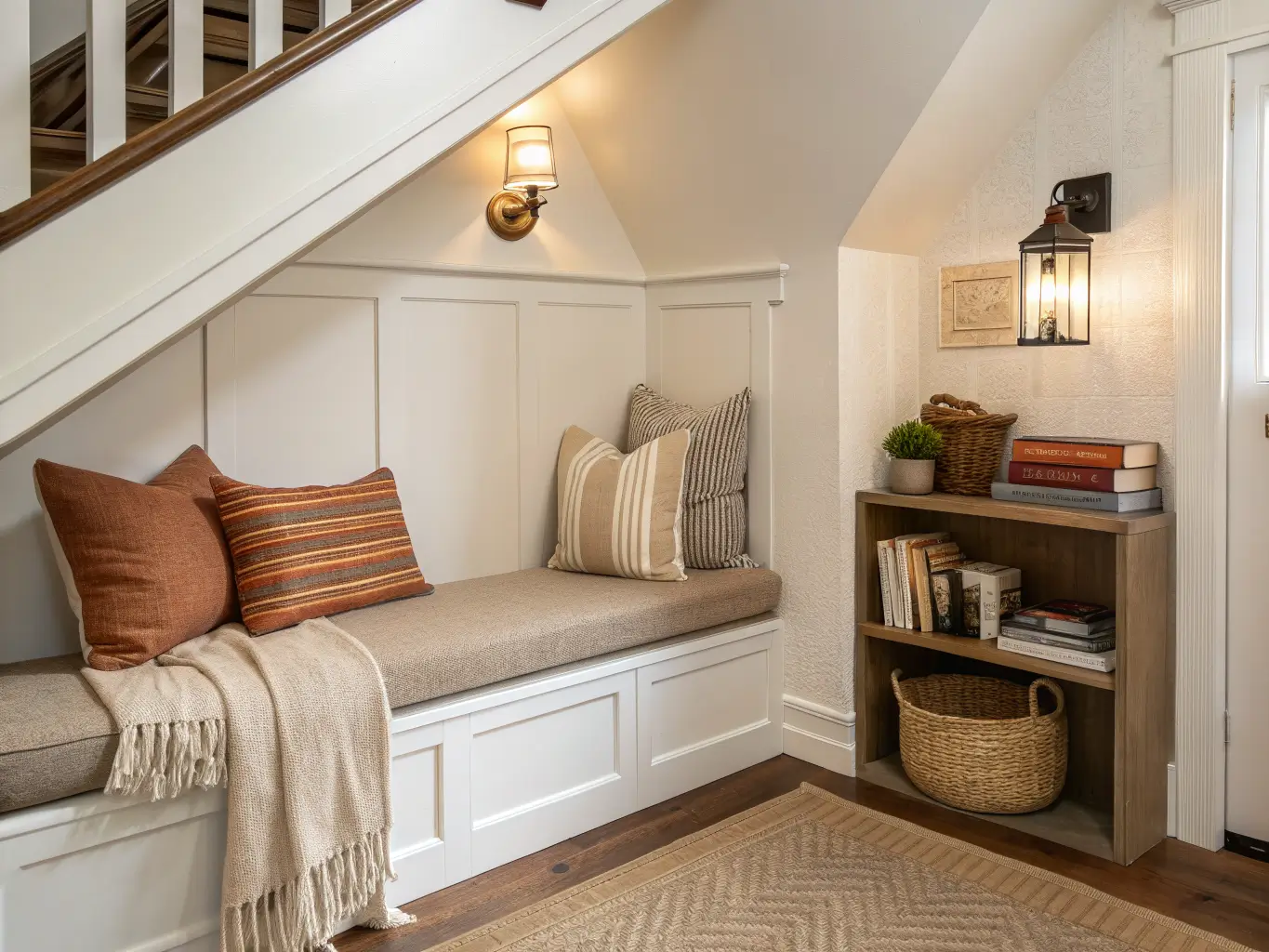
You don’t need a spare room for this. A corner of a bedroom, a window bay, a stair landing, or a recessed alcove is enough space — literally just enough room for a chair, a small table, and a light source. My whole setup takes up about 5 feet by 4 feet.
Skill-wise, a chair-and-accessories nook is beginner-friendly. The second you add wallpaper, contrast paint, custom shelves, or a built-in bench, you’re in intermediate-to-expert territory, and I’d budget extra time for that learning curve — my first wallpaper attempt had a visible seam I stared at for a year before fixing it.
The Design Identity: What Style Is This, Exactly?
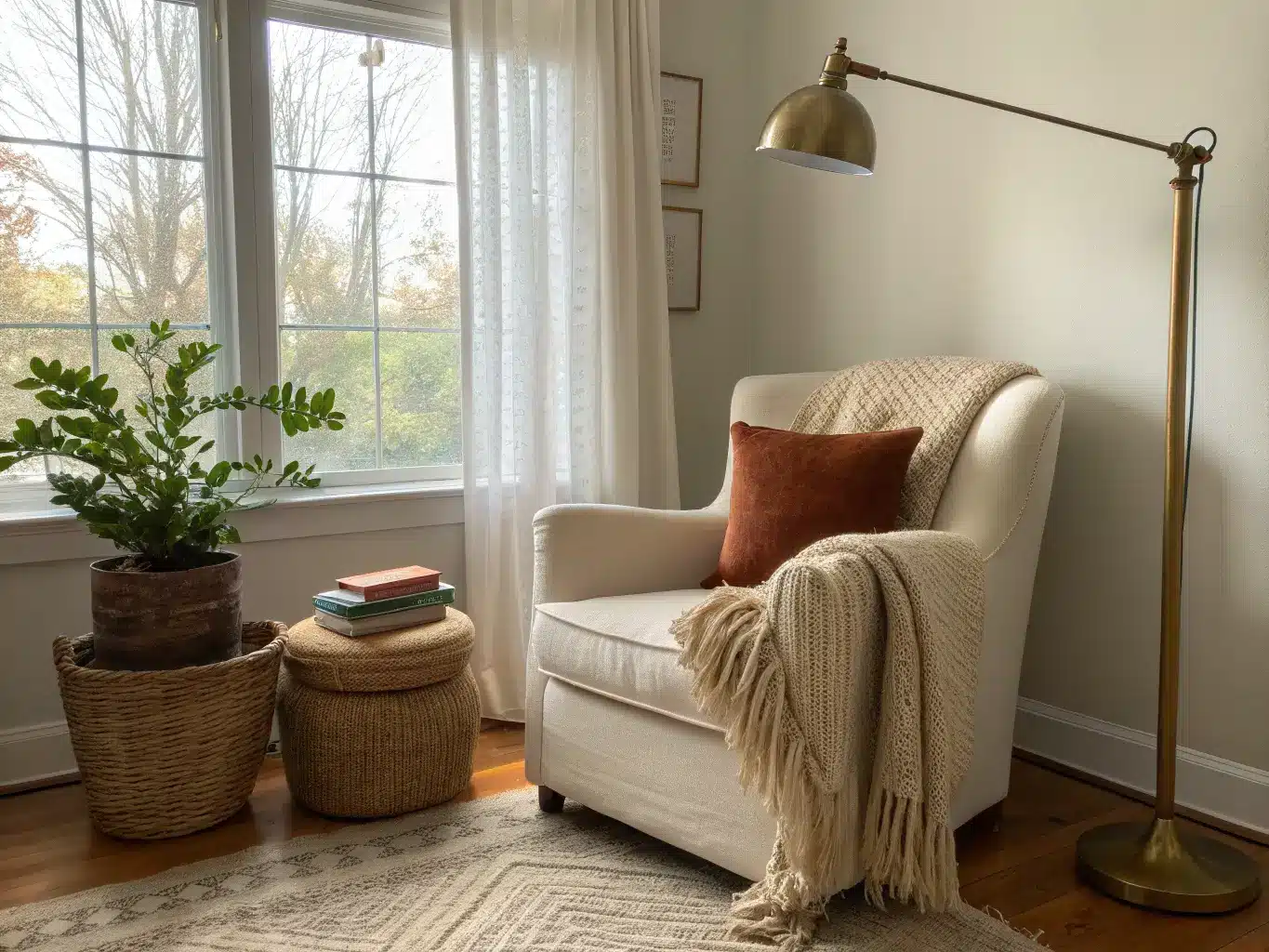
Here’s the thing nobody tells you: “reading nook” isn’t a design style, it’s a function that borrows from other styles. The current version of this look is soft, personal, and a little imperfect — not the stiff mini-library with matched leather chairs you might picture. It pairs naturally with organic modern, boho, modern traditional, English cottage, and minimalist hygge, plus a newer trend I’d call bookish maximalism, where the books themselves are the main decor statement.
Colors that work: warm neutrals, oatmeal, cream, camel, taupe, chocolate, moss, sage, dusty blue, rust, soft black accents. I went with a warm taupe wall and cream linen chair, then added rust-colored pillow covers in fall. Some people even match their palette to the genre of books they read there — moody blues and blacks for mysteries, warm earth tones for literary fiction. Slightly extra, but I get it.
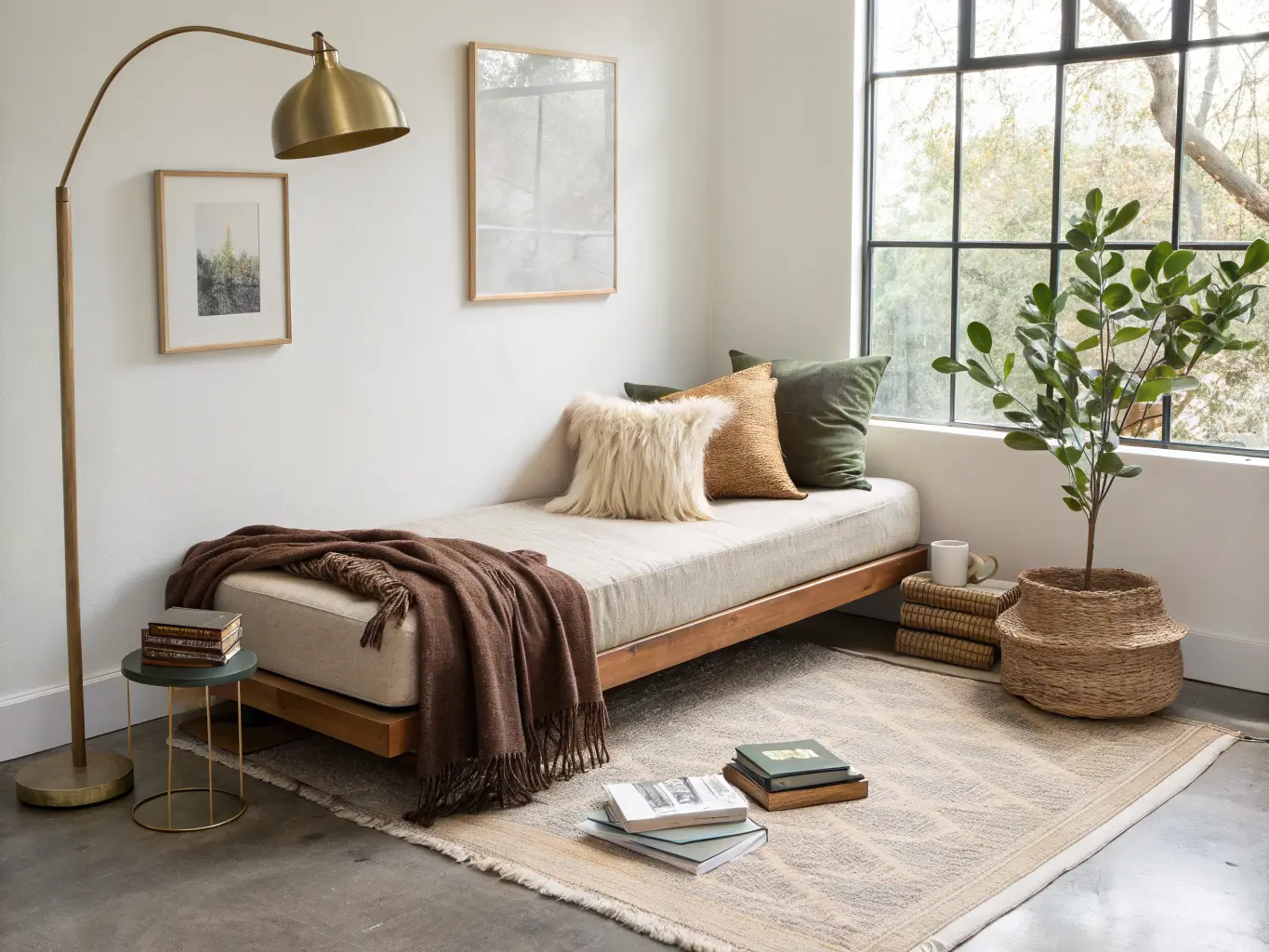
Materials that read “reading nook”: linen, velvet, wool, sheepskin, woven fiber baskets, wood, ceramic, brass, and a touch of marble. Mixing textures is what separates a nook that feels intentional from one that feels like a chair someone forgot to move.
This works best for people who want a small, calm retreat — apartment dwellers short on square footage, parents who need one quiet zone that’s theirs, and readers who want their space to look as good as it feels. It lives well in bedrooms, living room corners, window bays, home offices, under-stair alcoves, wide hallways, guest rooms, and dens.
The Must-Have Pieces (Don’t Skip These)
Seating comes first
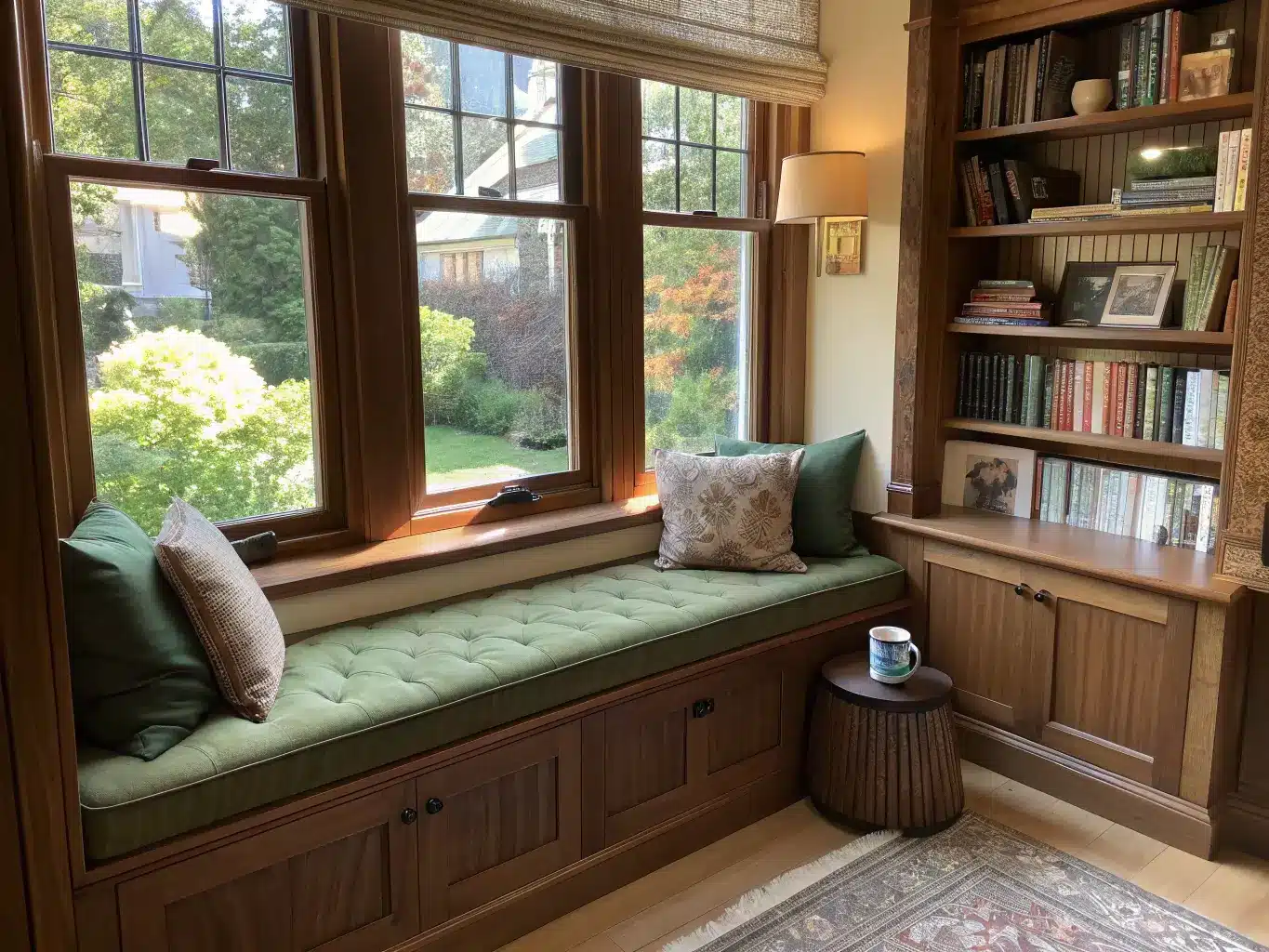
Your hero piece is a deep armchair, window seat, loveseat, chaise, or daybed. I made the mistake of buying a narrow accent chair the first time because it “matched the room.” I lasted two weeks before I sold it — it looked fine and was miserable to sit in for more than twenty minutes. Depth matters more than style here. Look for a seat depth of at least 22 inches if you like to curl your legs up.
Lighting is non-negotiable
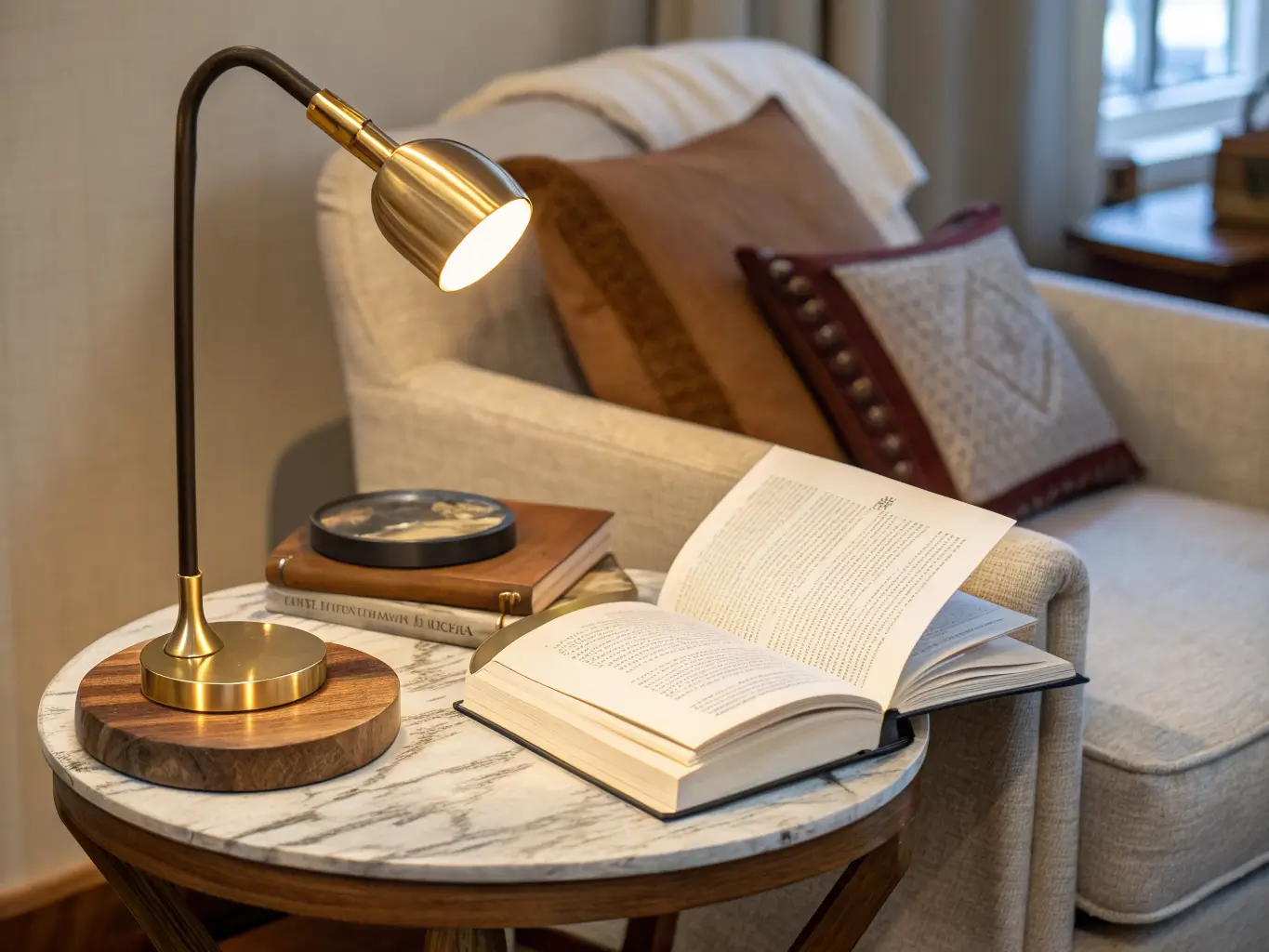
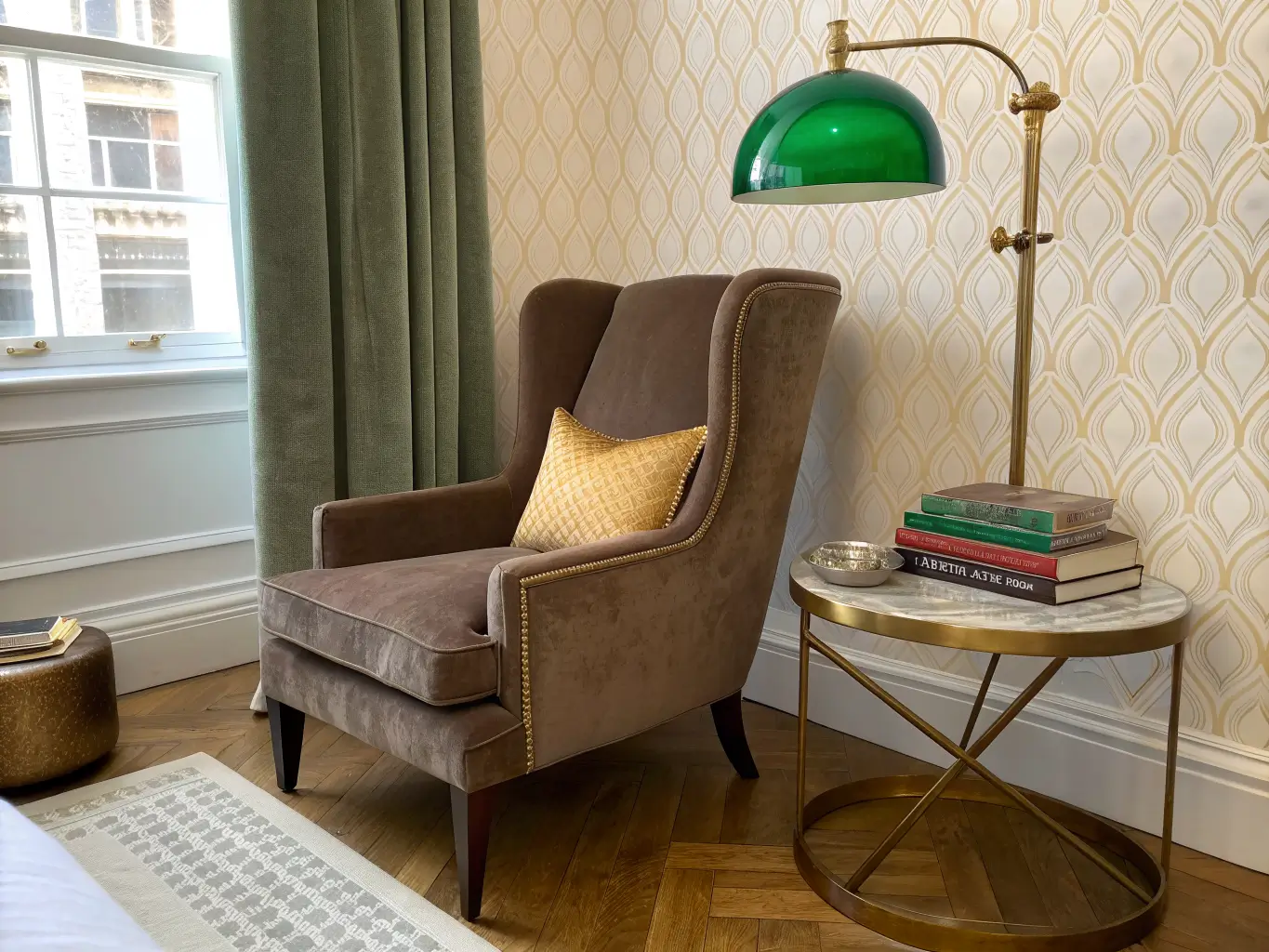
A floor lamp, task lamp, library light, or adjustable pharmacy-style lamp is the single most skipped item, and it’s the reason so many “reading nooks” never get read in. Overhead light creates glare on the page and flattens the whole mood. I use a brass pharmacy lamp with an adjustable arm, angled down over my left shoulder — cost about $90, and it’s done more for the space than any pillow I’ve bought.
Give books somewhere to live
Floating shelves, a wall-mounted book ledge, a small bookcase, or a built-in keeps your current reads within arm’s reach instead of stacked on the floor (which I did for six months, and it looked exactly as bad as you’d think).
A surface for your stuff
A small accent table, C-table, or tray-top side table for your drink, glasses, and whatever bookmark you’ve lost twice already.
Comfort layers
A throw blanket, a lumbar pillow, a floor cushion, and a rug — the rug especially, because it visually defines the nook as its own zone even when it’s just a corner of a bigger room.
The accessories that give it identity
– Bookends — marble, wood, or brass, whatever fits your material story
– One piece of framed art or a tiny gallery moment, not a full wall
– Greenery — I use a small trailing pothos on the side table, easy to keep alive even with inconsistent light
– A ceramic vase or trinket dish for the stuff that otherwise ends up loose in your pocket
Optional Upgrades Worth Considering
If you want the nook to feel deliberately built rather than assembled, an accent wall in paint or wallpaper behind the chair does more heavy lifting than almost anything else on this list. It signals “this corner is a place,” not just leftover space.
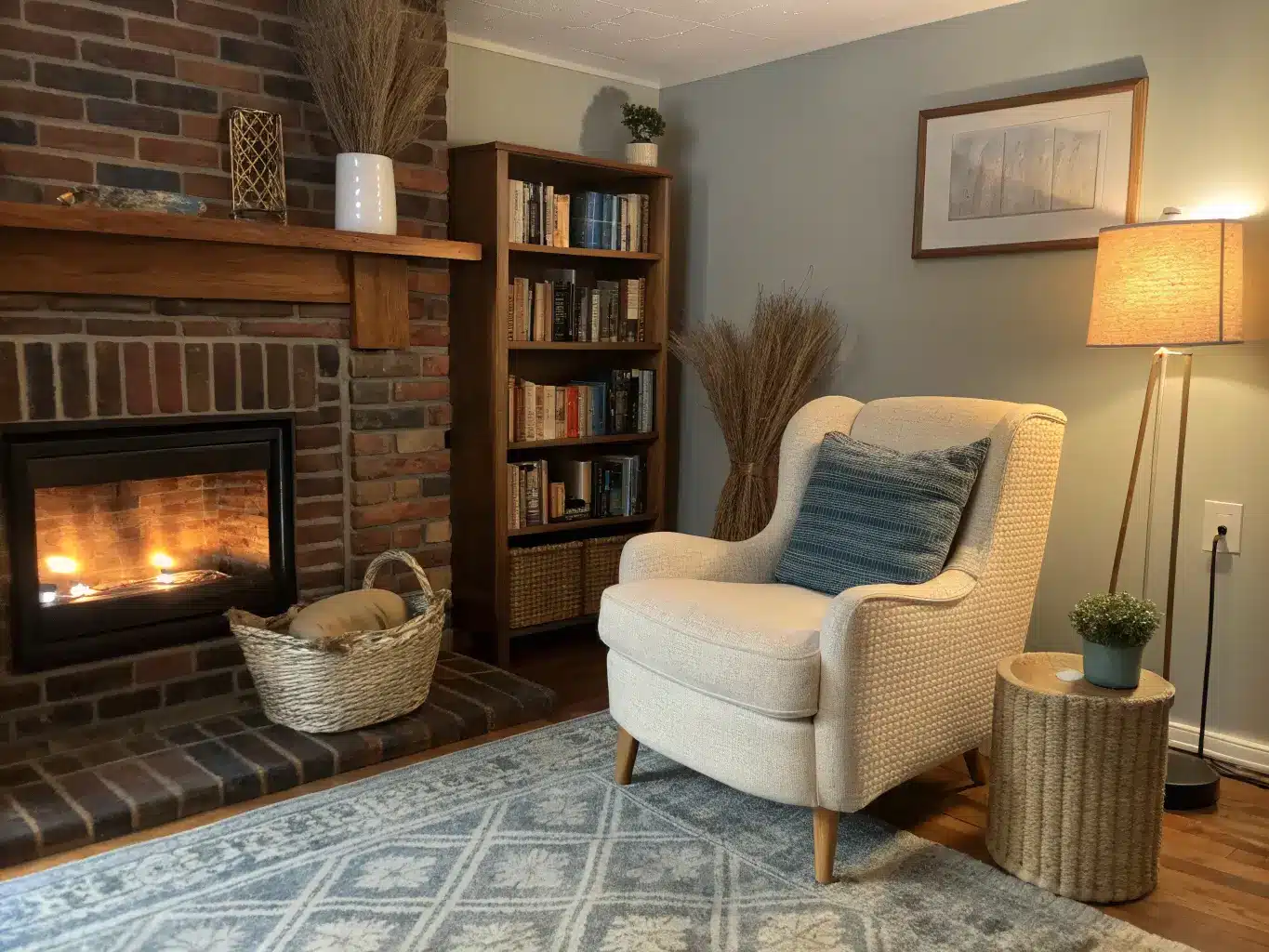
Window treatments matter more than people think — linen curtains or a light-diffusing Roman shade cut glare during peak reading hours and soften the whole look. If you’re lucky enough to have a fireplace nearby, put the nook next to it. Instant focal point, zero effort.
For seasonal texture:
– Summer: linen throws, lighter cotton pillow covers, pale ceramics
– Fall/winter: wool throws, faux fur, deeper jewel tones, candles going
And if you want to push it toward “luxe,” a brass lamp, honed marble bookends, and velvet upholstery do the job without redoing the whole room.
How to Style It So It Actually Looks Pulled Together
Layer textures on purpose. Linen and wool and wood and ceramic together read as “collected.” All one material — all velvet, say — reads as a furniture showroom. I aim for at least three different textures within arm’s reach of the chair.
Mix how you stack books. Some flat, some upright, a couple leaned against a bookend at an angle. Perfectly vertical rows look like a library display, not a place someone actually reads.
Pick one focal point and let everything else support it. Usually that’s the chair, the lamp, or the window view — not all three fighting for attention. In my nook, the window is the focal point during the day and the lamp takes over at night. Everything else stays quiet.
Keep the palette tight. Two to four core tones, repeated across the chair, the throw, the art, and the vase. This is the fastest way to make a random collection of stuff look curated instead of thrifted-in-a-hurry (even when it is).
Aim for collected, not cluttered. This is the current mood of the whole aesthetic — personal objects, edited down. If you can’t remember why something’s on the shelf, it probably shouldn’t be there.
Setting It Up: Step by Step
1. Pick a quiet spot, ideally near a window, away from foot traffic. Not next to the kitchen, not in a hallway people cut through.
2. Clear the space completely before you start placing furniture. Decide up front whether the anchor is a chair, a window seat, a daybed, or floor cushions.
3. Place the big stuff first — seating, lighting, storage — then layer in textiles and small decor last. I did this backwards the first time (decor first) and had to redo it once the chair arrived and nothing fit the way I’d imagined.
4. Zone it visually with a rug or a low bookcase if the nook sits inside a bigger room, so it doesn’t just dissolve into the rest of the space.
5. Put the lamp within actual reach of the seat — not across the room, not requiring you to get up. Adjustable arm or swing head if you can find one.
6. Add books within reach, whether that’s a shelf, a ledge, or just a small stack on the side table.
7. Layer in the throw, pillow, and rug last, once the bones are in place.
8. Finish with two or three personal objects — a mug you actually use, a small framed photo, a plant. Stop there.
Mistakes I’ve Made (So You Don’t Have To)
– Not enough light. Said it twice already because it’s the number one failure. A beautiful chair under bad lighting just becomes a place to sit while you scroll your phone instead of reading.
– Choosing looks over comfort. That narrow chair I mentioned? Gorgeous, useless. Sit in a chair for 20 minutes before you commit.
– Overdecorating. My second attempt had too many objects on the side table — a candle, two books, a coaster, a small sculpture, a mug. It looked like a garage sale table. I cut it down to one object plus the lamp and it instantly felt calmer.
– Ignoring traffic flow. If people walk past it constantly, it’s not a nook, it’s a hallway with a chair in it.
– No book storage. Even one small basket solves this. Books on the floor multiply fast.
Keeping It Looking Good Long-Term
Stick to your 2–4 core tones and repeat them across everything you add later — new pillow, new art, new throw, same family of colors. Keep a consistent material story too: I run wood, linen, and brass through mine, so even new additions feel like they belong.
Rotate instead of accumulate. Swap books and small decor seasonally rather than piling on more stuff every year. Use a tray or basket to keep loose items corralled so surfaces stay calm.
Budget refreshes that work: new pillow covers, a thrifted lamp (mine was $12 at an estate sale, just needed a new shade), a repainted accent wall, or peel-and-stick wallpaper behind the chair if you’re renting.
Seasonal swaps: lighter linens and fresh stems in spring and summer, heavier knits and amber lighting and candles once it gets cold.
If you want to bend the aesthetic toward a style you already love:
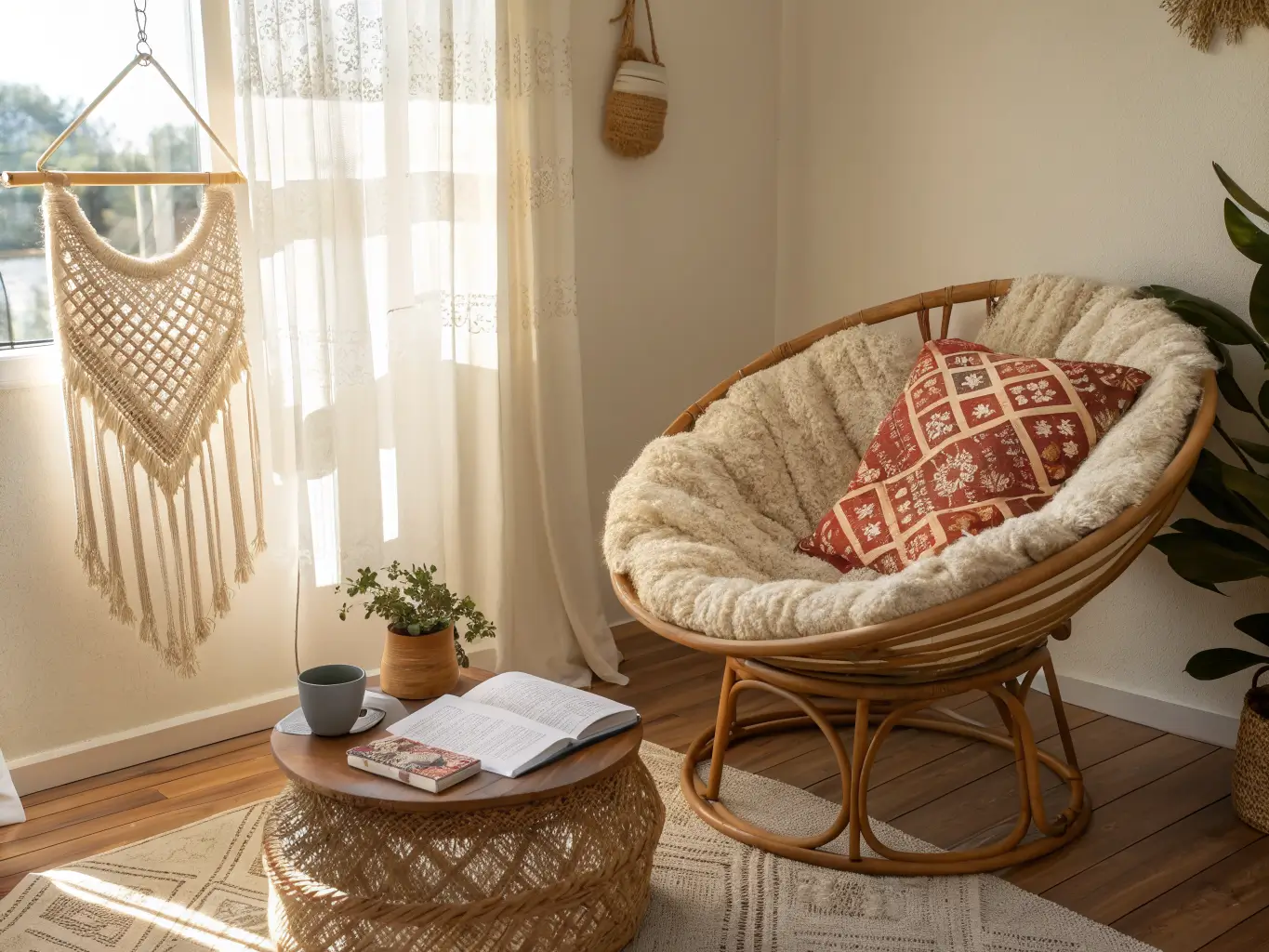
– Boho: rattan accents, layered textiles, more plants
– Coastal: pale wood, striped cushions, airy linen
– Modern traditional: a tailored chair, a library lamp, one framed piece of art
– Cottage: floral textiles, soft greens, vintage finds from actual secondhand shops, not the “vintage-look” version
The through-line in all of it — the thing that separates a reading nook from a chair that happens to be near some books — is warm lighting, real texture, and books that look read, not staged. Mine still has a coffee ring on the side table from the first week. I haven’t sanded it out. It’s the most honest thing in the room.
For another angle on this, my cozy reading nook guide covers the same space from a different starting point.