What a Cozy Reading Nook Actually Is (And Who It’s For)
A reading nook is a small, defined spot built around one activity: sitting still with a book for longer than five minutes. That’s it. It doesn’t need square footage — it needs a chair, decent light, and something to store your books within arm’s reach.
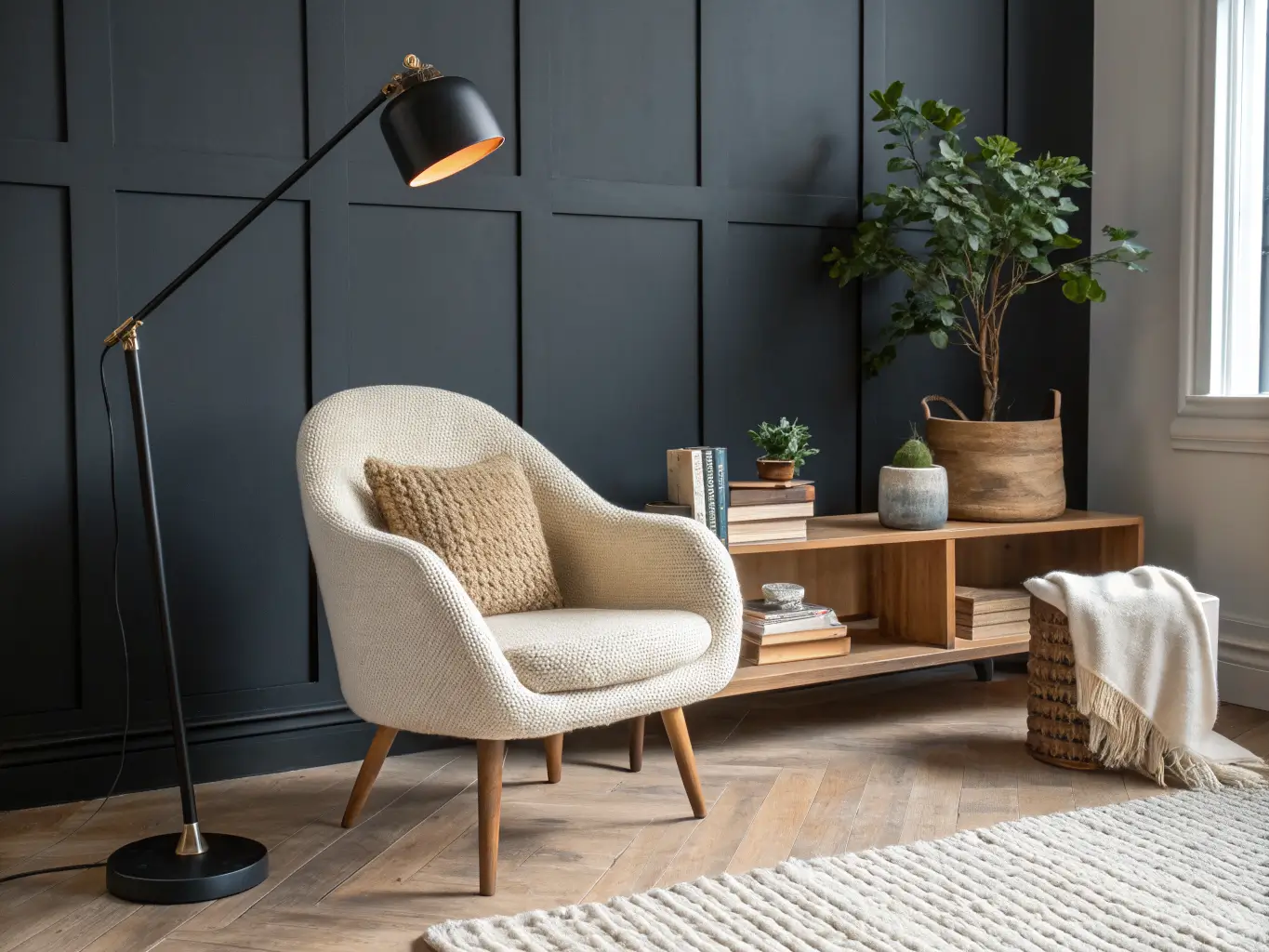
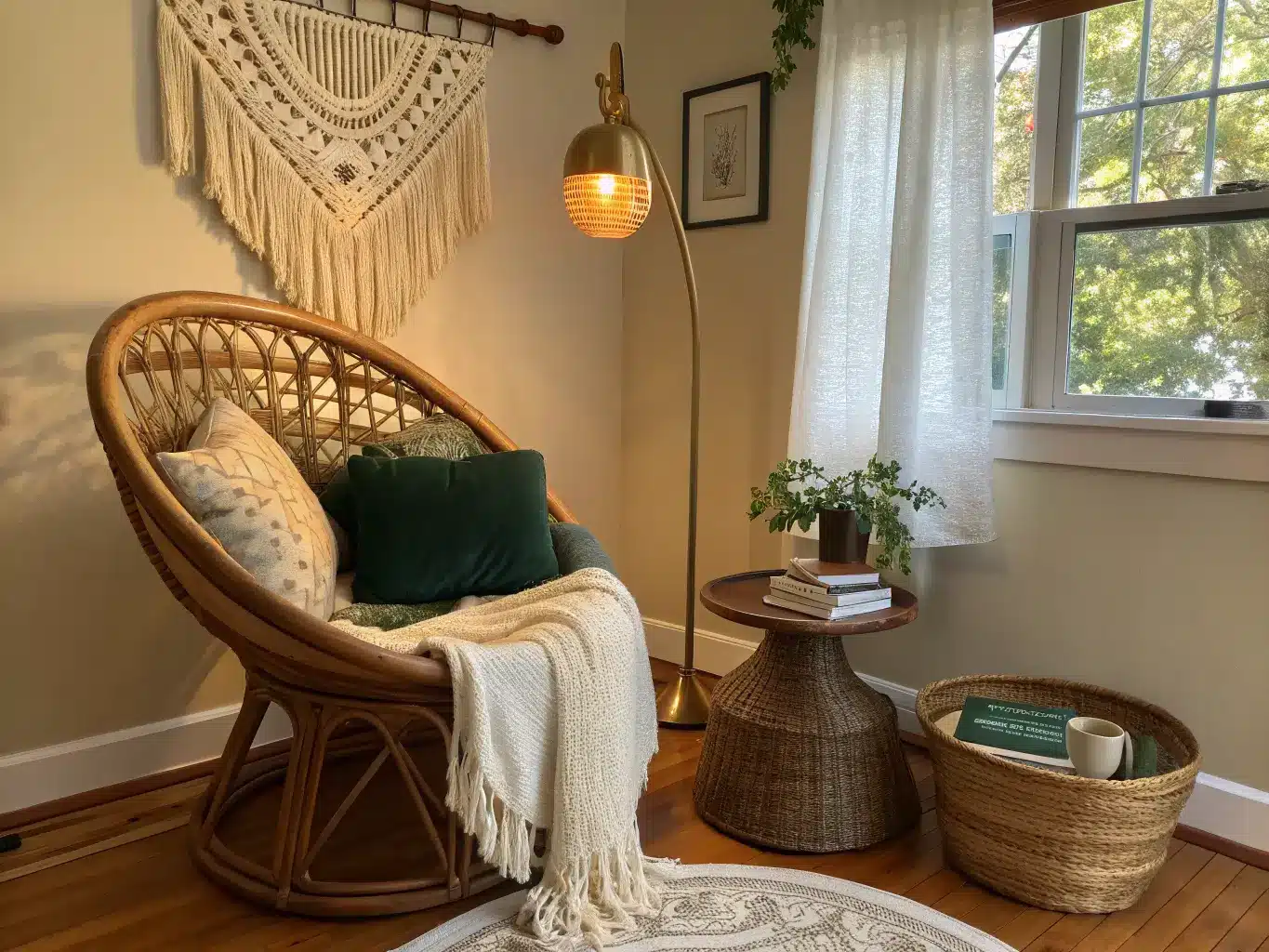
This works whether your style is traditional, cottagecore, boho, modern organic, or farmhouse. The bones are the same; the materials just shift. A rattan chair with linen pillows reads boho. A wingback with plaid wool reads farmhouse. A boucle chair with a black sconce and oak side table reads modern organic. Same formula, different fabric.
Who this is for:
– Apartment dwellers with one awkward unused corner
– Parents who want a kid-free zone that isn’t the bedroom
– Remote workers who need a spot that isn’t the desk
– Anyone whose “cozy” living room somehow has nowhere to actually sit and read
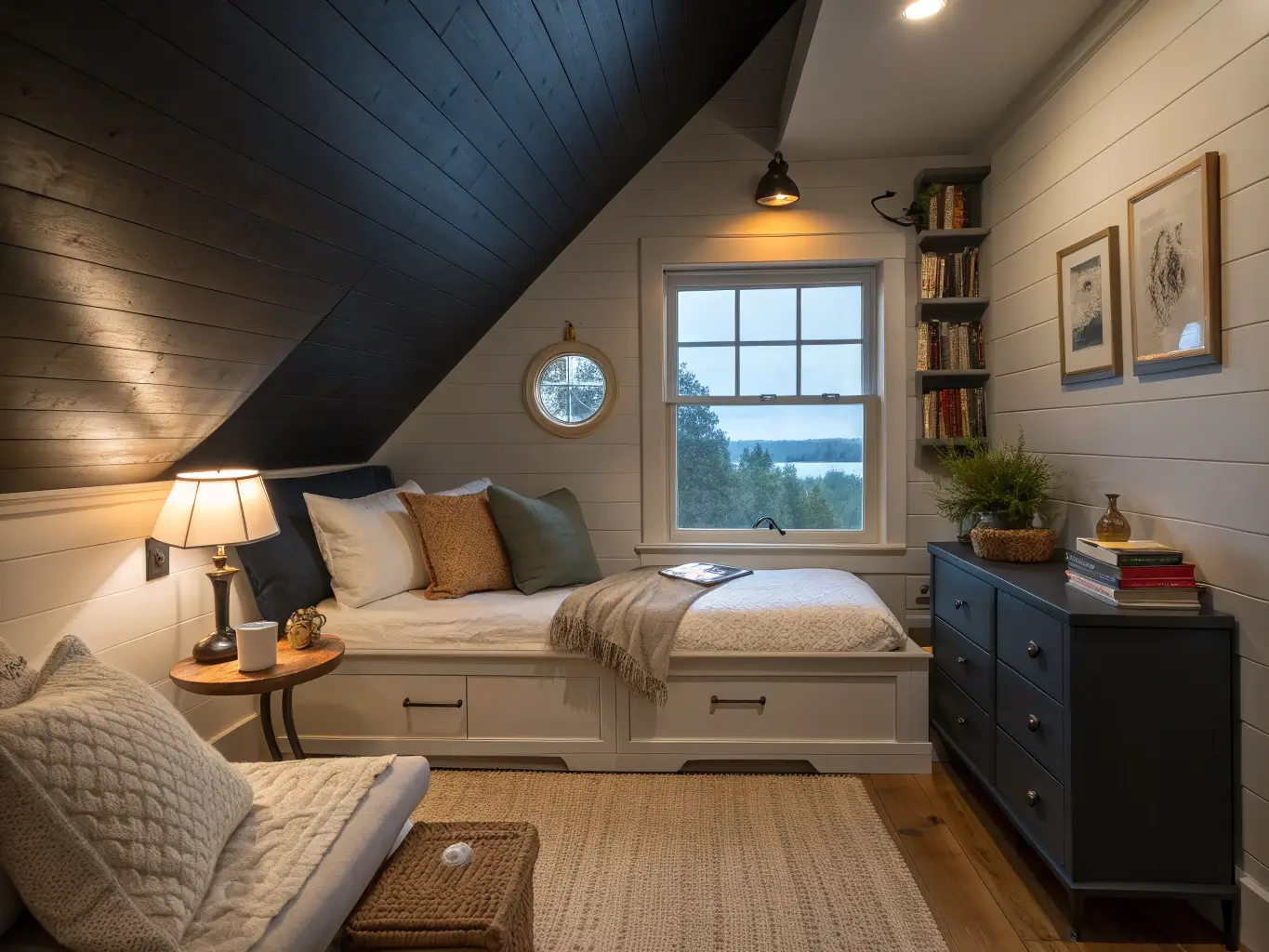
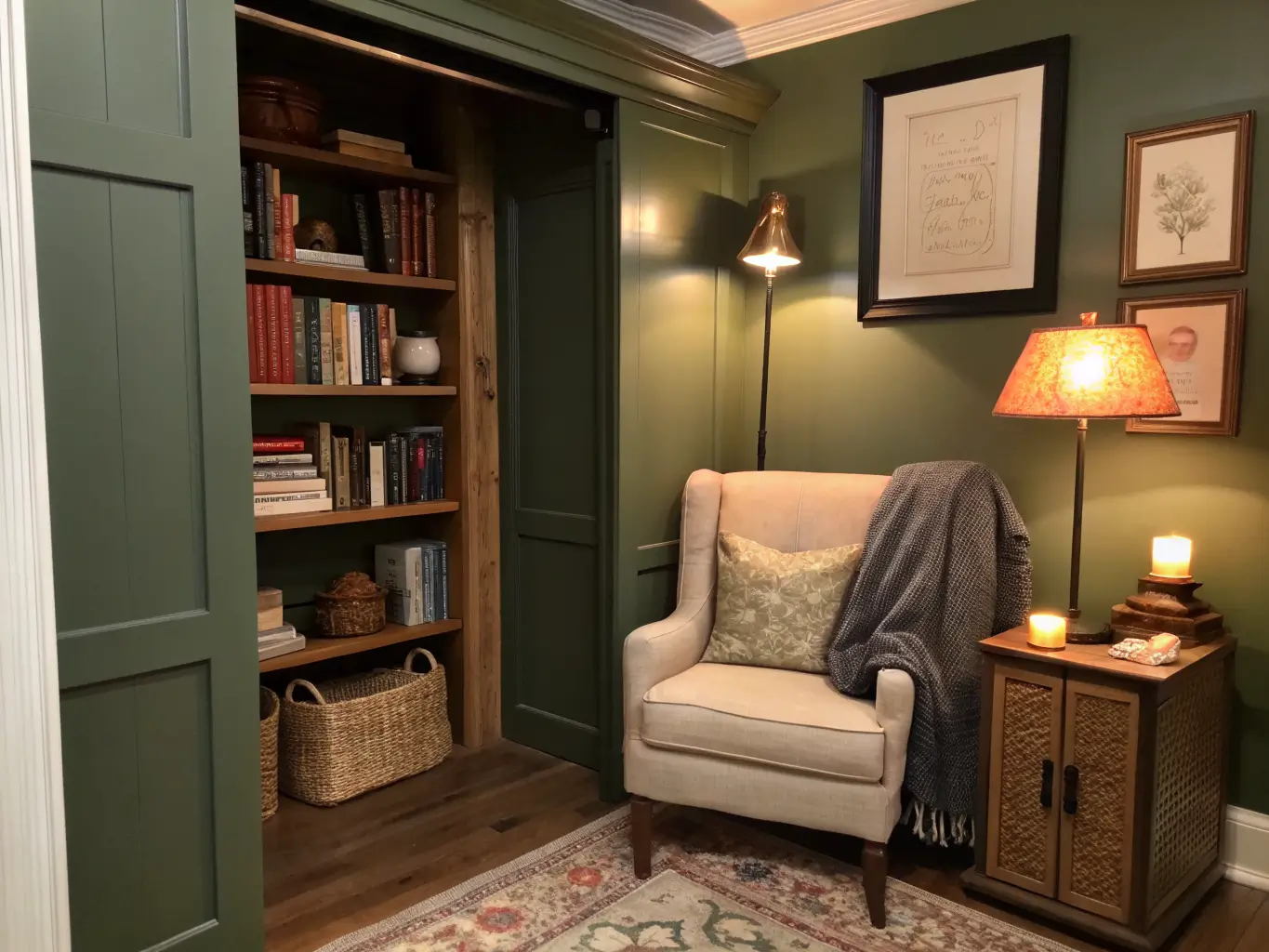
Where it works: bedroom corners, bay windows, under-stair recesses, closets (yes, really), dormers, or a dead zone in the living room you’ve been ignoring for a year.
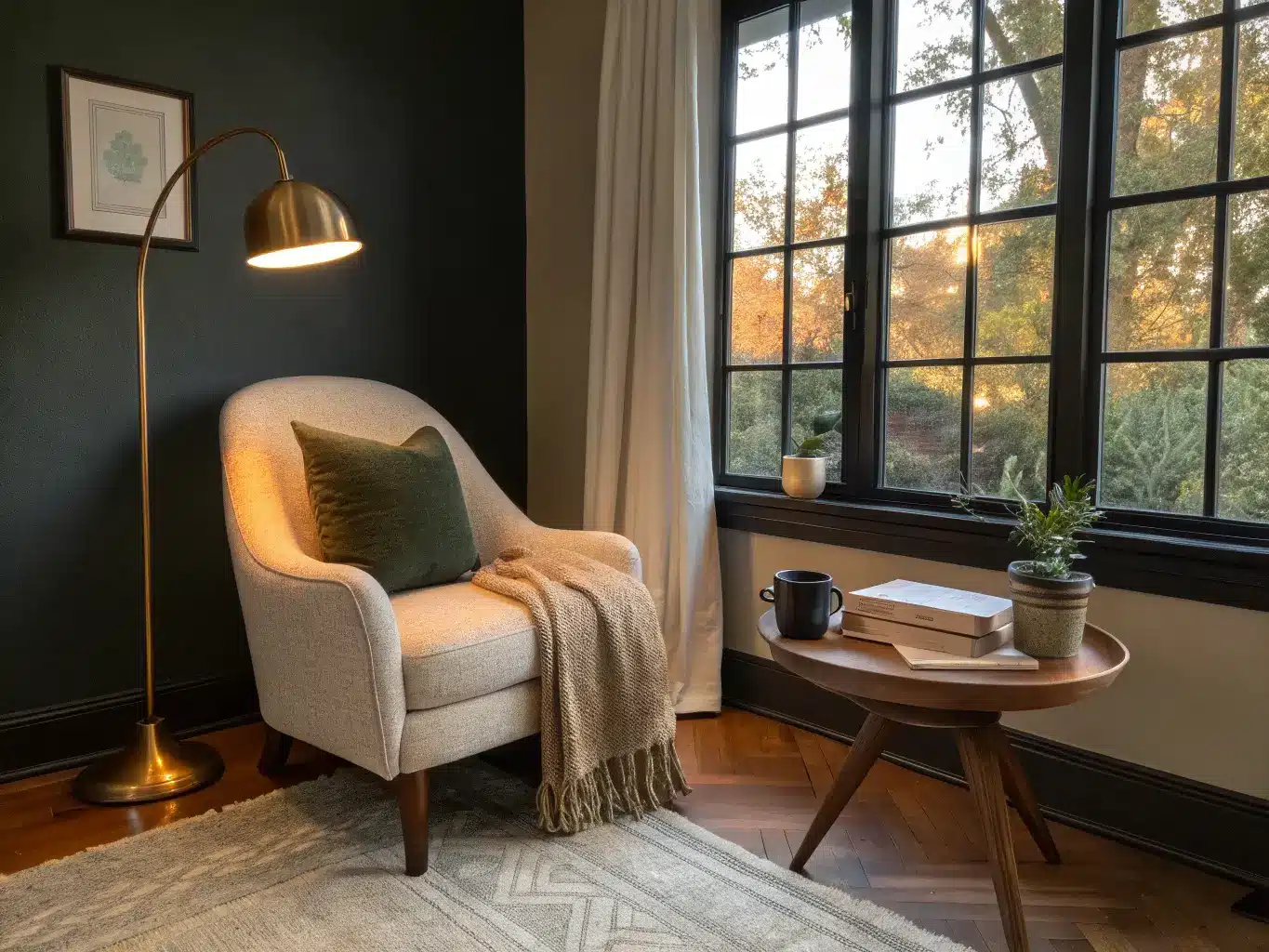
Time, Cost, and Skill Level — What to Actually Expect
Don’t let inspiration photos convince you this requires a renovation.
– Simple chair-based nook: 1–3 hours. Chair, lamp, throw, done.
– Shelving, bench, or window-seat styling: half a day to two days.
– Built-in with millwork: this is a multi-day contractor project, not a weekend one.
Budget breakdown:
– Budget nook ($100–$350): Secondhand chair, basic floor lamp, one throw, one pillow, small side table or bar cart repurposed as a book stand. This is the version I’d recommend for a first attempt — you’re testing whether you’ll actually use the spot before you invest more.
– Mid-range nook ($400–$1,200): A quality accent chair or small loveseat, an actual rug (not a bath mat pretending to be one), a proper lamp, and layered textiles.
– Built-in or custom ($1,500–$5,000+): Window-seat bench, custom shelving, upholstery. Beautiful, but not a requirement — most of the coziest nooks I’ve seen in real homes are chair-and-lamp setups, not carpentry projects.
Skill level: Styling-only is beginner-friendly. Adding shelves or a curtain divider is intermediate. Built-ins and banquettes are expert territory — hire someone or accept a long weekend of frustration.
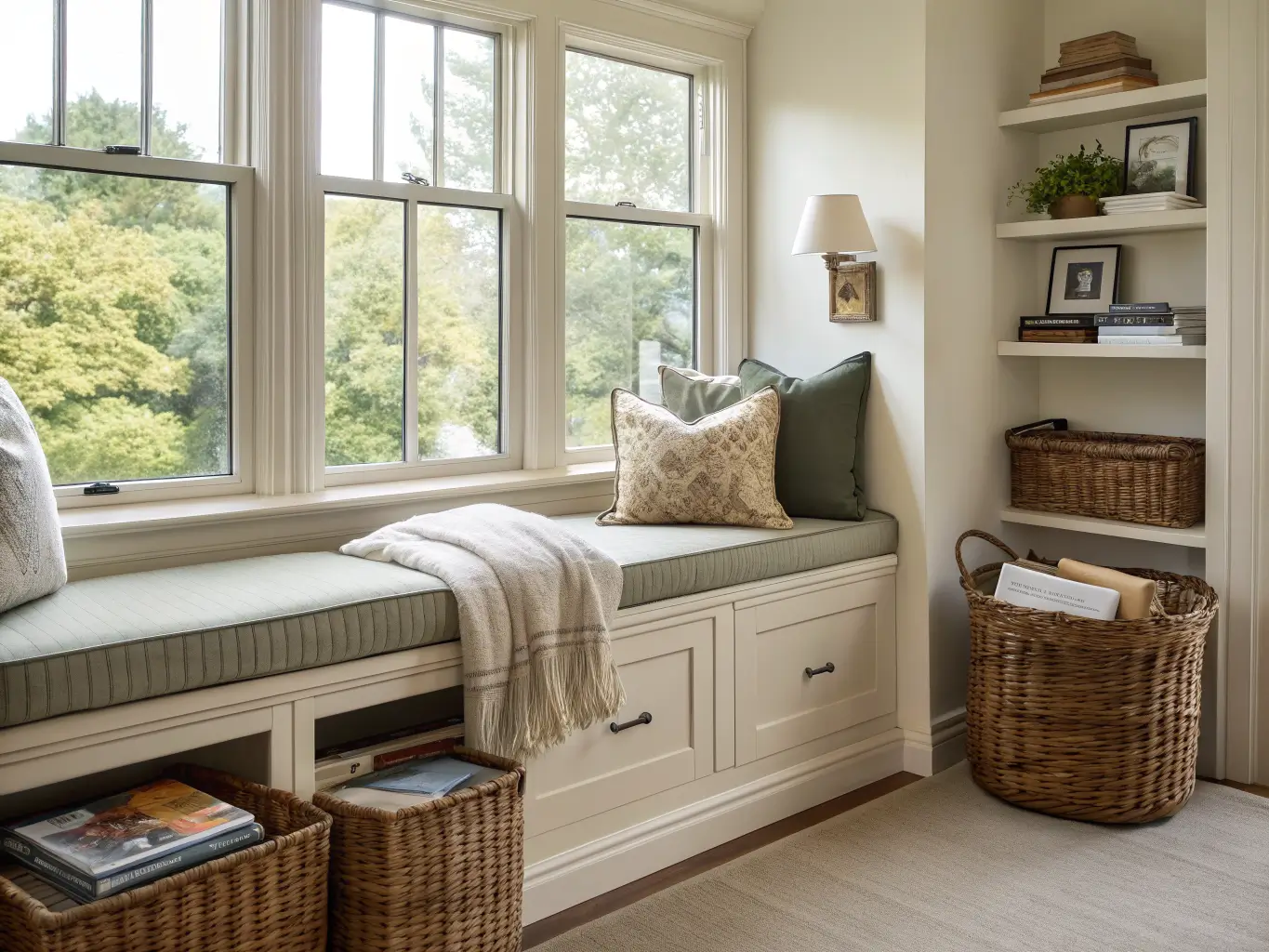
The Must-Have Pieces (Skip These and the Nook Won’t Work)
Seating — pick one, and pick it for comfort first
– A deep armchair with a high back or wing arms — the kind you sink into but can still get out of without help
– A window seat or built-in bench with cushions, if you’ve got the architecture for it
– A daybed or small loveseat if the space is generous
– A beanbag or floor cushion for kids’ rooms or casual, low-commitment corners
My mistake with that boucle chair wasn’t the fabric — it was the depth. Sit in any chair for ten minutes before you buy it if you can. If you can’t test it, look for a seat depth around 21–23 inches and a back height of at least 30 inches. Anything deeper starts to swallow you.
Lighting — this is the piece people skip and shouldn’t
A floor lamp or task lamp is non-negotiable. Ambient light is nice; it is not sufficient to actually read by. I use a brass articulating floor lamp angled over my left shoulder — adjustable arms matter more than style here, because you need the light falling on the page, not the ceiling.
– Floor lamp or table lamp for direct light
– A wall sconce with an adjustable arm if floor space is tight
– String lights or candles for ambiance only — never as your main source
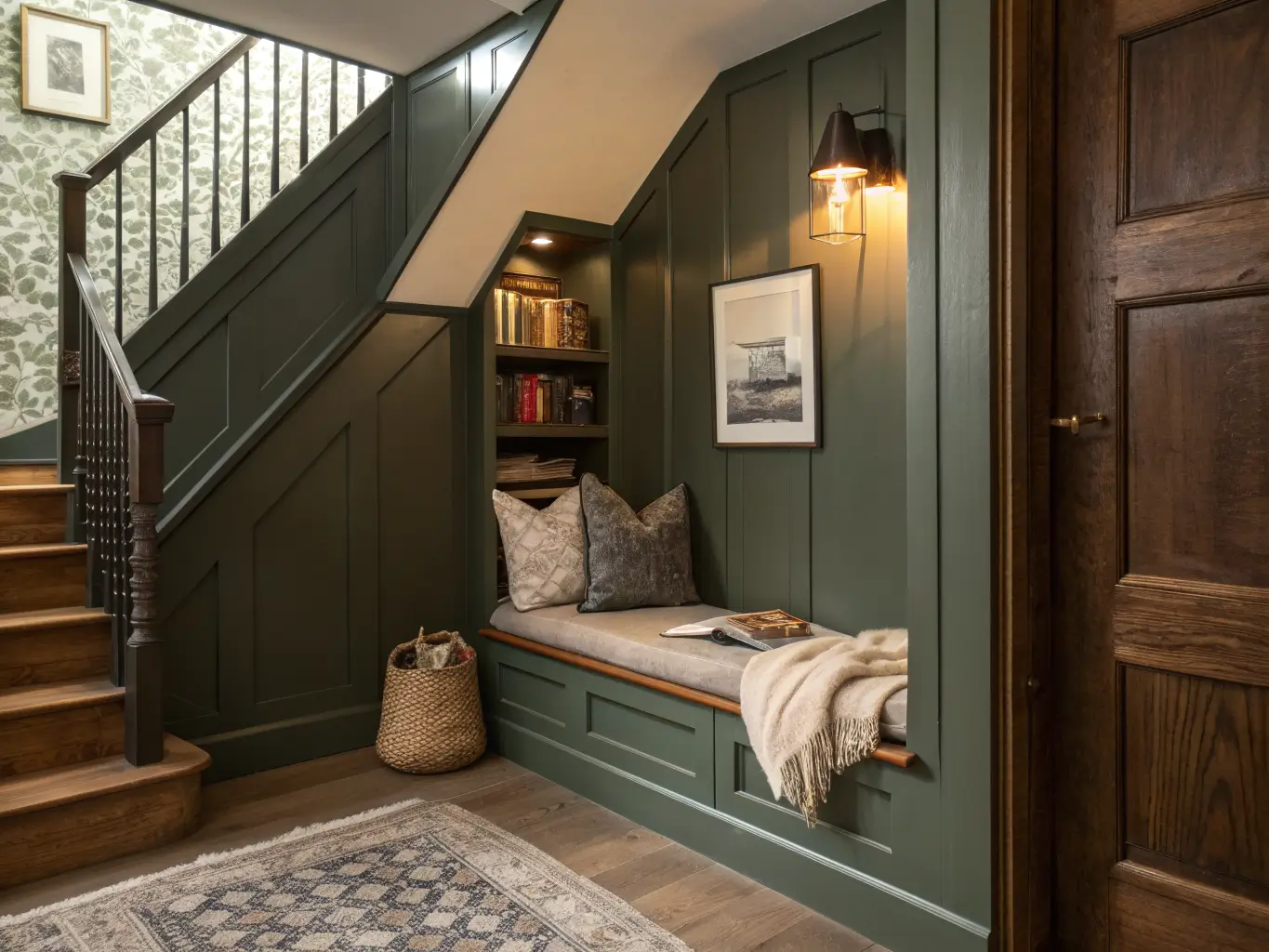
Soft furnishings
– One chunky knit or wool throw — faux fur works too, quilted cotton for warmer climates
– One to three pillows, no more — enough for lumbar support, not a pillow fort
– A rug, even a small one, to define the footprint and absorb sound
Storage within reach
A bookshelf, a small book cart, wall-mounted shelves, or a side table with a shelf underneath. The rule: if your current book is more than an arm’s length away, the nook fails its main job.
Decor accents
Art, a stack of books, a ceramic vessel, bookends, a candle, one plant. Not all of these at once — more on that below.
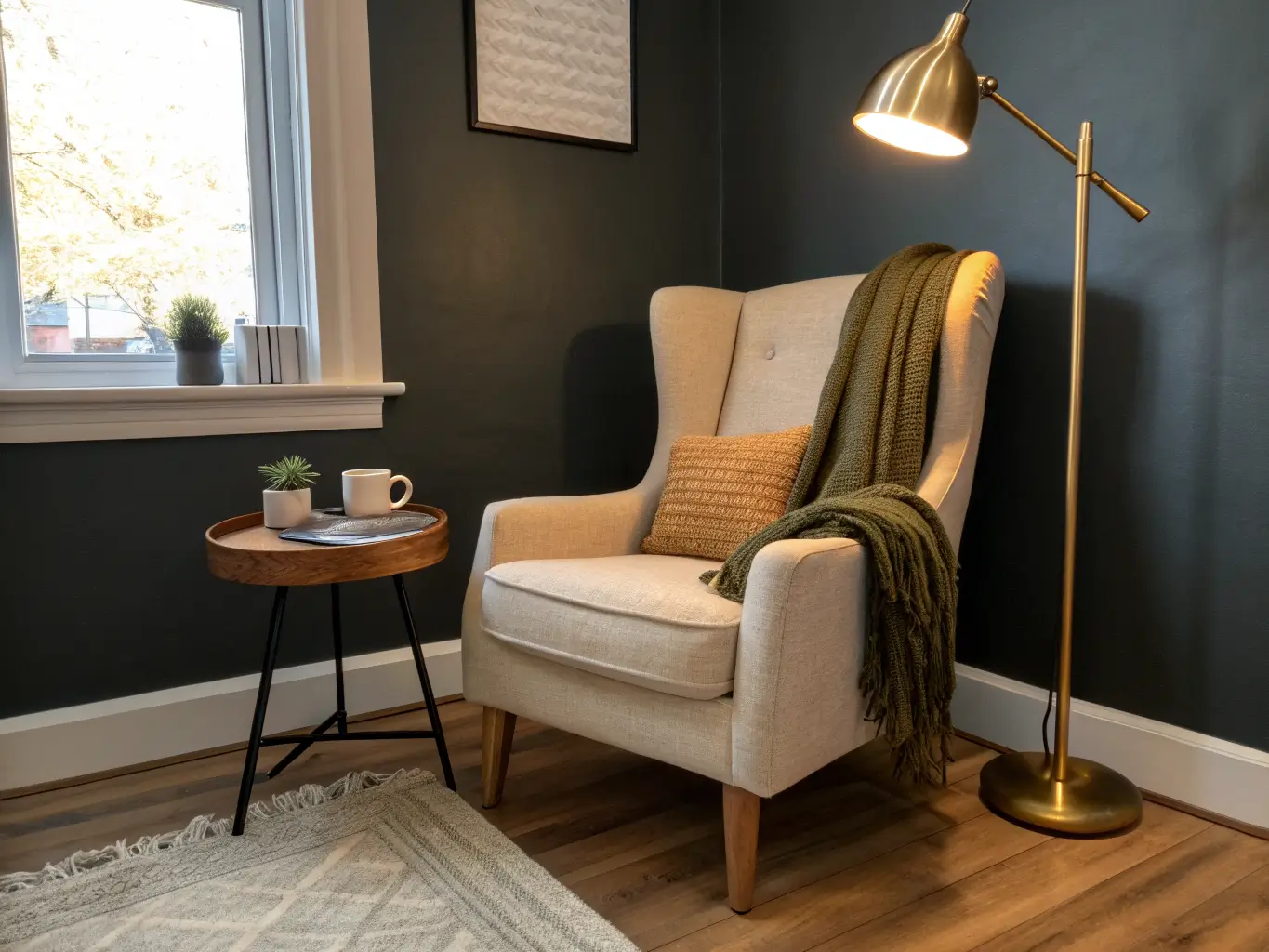
How to Put It Together: Layout, Layering, and Focal Points
Layer three textures minimum. One smooth, one plush, one natural. My current setup: a velvet chair, a wool throw, and an oak side table. That combination does more visual work than any amount of extra decor.
Anchor it with a rug. Even a 3×5 rug under the chair and table tells your eye “this is a zone,” not just “a chair someone left here.”
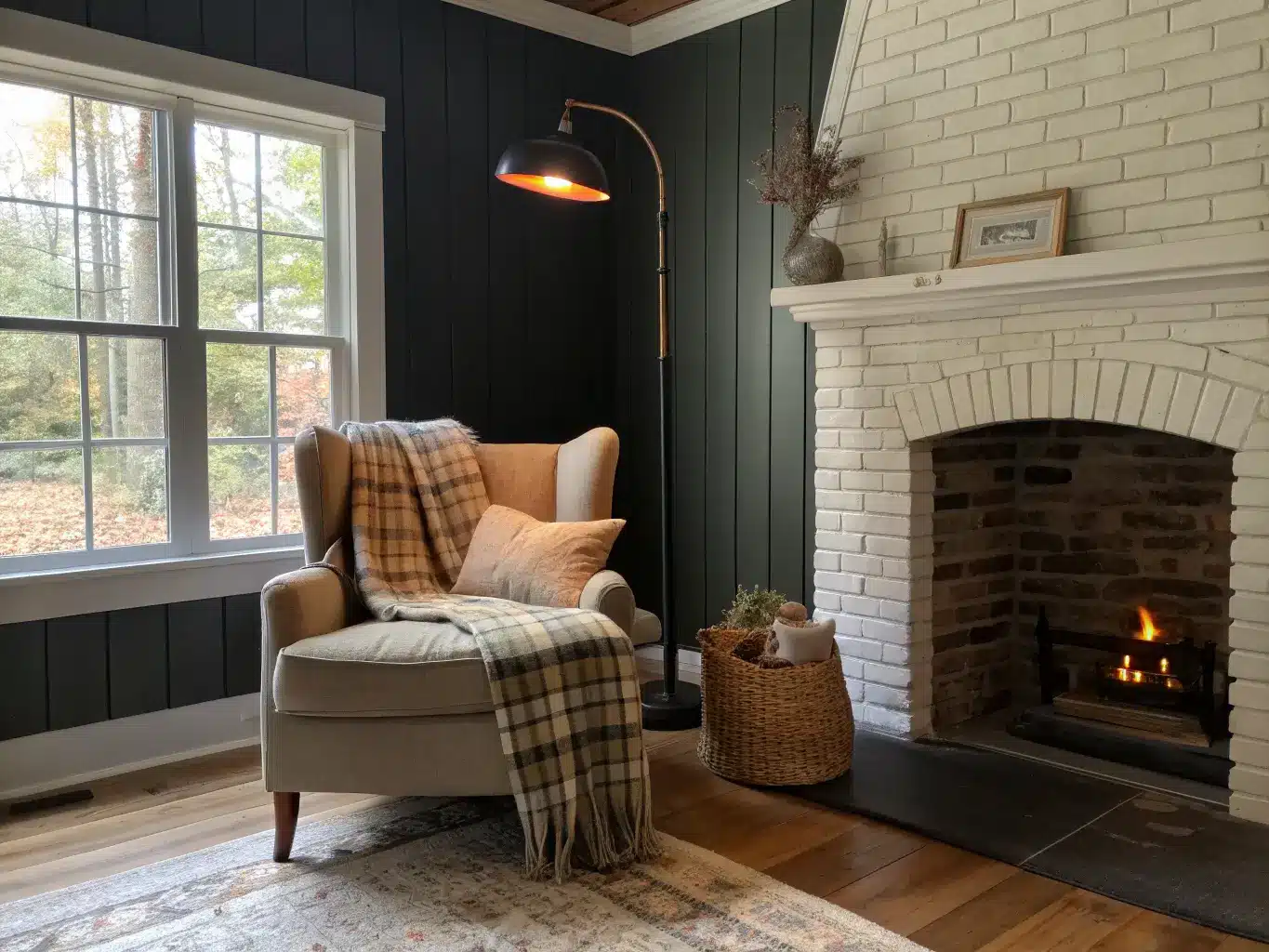
Balance your contrast. If your walls are pale, let the chair carry color or pattern. If you’re going moody — and I’d actually encourage a darker paint color like a deep olive or charcoal here, since reading nooks benefit from feeling enclosed rather than airy — keep the chair lighter so it doesn’t disappear into the wall.
One focal point only. Usually the chair or window seat. Everything else — lamp, books, art — supports it. The second you have two things competing for attention (a bold chair AND a statement gallery wall AND a patterned rug), the corner stops feeling restful and starts feeling busy.
Build vertically. Lamp or sconce on one side, art or a shelf above, textiles at seat level, a plant or object filling the middle gap. Picture the corner as a stack, not a flat scene.
Setting It Up: Step by Step
1. Clear the corner completely. Even a small pile of unrelated stuff (mail, shoes, whatever migrated there) kills the effect before you start.
2. Position near your best light source — the brightest window, or the quietest corner of the room if daylight isn’t available.
3. Install the primary light first. Function before styling, always.
4. Bring in the chair or bench.
5. Add storage — shelf, cart, or side table — close enough to reach without standing up.
6. Layer comfort: pillow, throw, ottoman or footrest if there’s room.
7. Add “pause items”: a mug, a candle, a small stack of books, a tray. These are what make it look lived-in rather than staged.
8. Finish with personality: one piece of art, one plant, your actual favorite books instead of color-coordinated decoy ones.
Mistakes I’ve Made (So You Don’t Have To)
– Relying on ambient or mood lighting only. A candle looks nice. It does not let you read past 7pm.
– Overcrowding it. I once had five pillows on one chair. It looked like a display, not a place to sit. Two, max, plus a throw.
– Ignoring how sound bounces around a bare corner. A rug and a heavier curtain cut down on echo more than you’d expect, especially in a room with hard floors.
– Choosing the pretty chair over the comfortable one. If the seat’s too shallow or the back’s too upright, you’ll use the chair for exactly one week.
– Putting books somewhere else in the house. If your bookshelf is in a different room, the “reading nook” becomes just a chair you occasionally sit in.
Keeping It Fresh Without Redoing the Whole Thing
Stick to 2–4 main tones plus one accent color. My nook is oatmeal, charcoal, and brass, with one olive green pillow as the accent. Adding a fifth color usually means something needs to go, not join.
Repeat materials rather than introducing new ones. Oak and linen. Brass and velvet. Pick a pairing and stay loyal to it across the lamp, table, and frames.
Hide the overflow. A basket under the side table for extra blankets keeps the visible surface calm even when the rest of your life isn’t.
Seasonal swaps that take twenty minutes
– Fall/winter: heavier throw, warmer bulb (2700K, not the blue-white 5000K stuff), a candle, a darker pillow cover
– Spring/summer: linen or cotton throw, fresh flowers instead of a candle, swap in a brighter print for the art
Budget-friendly refreshes
– Swap pillow covers, not whole pillows — a $15 cover does the same job as a $60 new pillow
– Use a bar cart instead of built-in shelving
– Thrift the chair, reupholster or just add a slipcover
– Peel-and-stick wallpaper on the back wall instead of paint or millwork if you’re renting
I’ve rebuilt this corner in my apartment three separate times now — chair swapped twice, lamp upgraded once after the first one turned out too dim to actually read by. Each version got simpler, not more elaborate. That’s the real lesson here: the coziest reading nooks aren’t the most decorated ones. They’re the ones where every single piece has a reason to be there.
For another angle on this, my reading nook ideas guide covers the same space from a different starting point.