Why Green Works for a Study or Home Office
Green sits in this strange, useful middle ground. It’s not as sterile as white, not as moody as navy, and not as aggressive as anything warm-toned like red or orange. It’s the color most associated with the outdoors, and there’s a real reason “bringing the outside in” isn’t just a design cliché — rooms with green and natural materials genuinely feel less mentally exhausting to sit in for hours. If you’re going to spend four to eight hours a day at a desk, that matters more than whatever’s trending on Pinterest this month.
It also works year-round. Unlike blush pink or terracotta, which read seasonal, green just shifts mood with its shade — sage and pale green feel like spring, deep bottle green and forest tones feel like a study you’d find in an old house in November. Same wall, different accessories, completely different feel.
Who this is for
Students who need to actually sit still and read. Remote workers tired of staring at a blank white box on video calls. Anyone converting a bedroom corner, a closet, or an awkward nook into a real workspace. If you want a room that feels intentional rather than like leftover furniture got shoved somewhere, this is a solid direction.
Setting Expectations: Time, Cost, and Space
Before you buy a single thing, know what you’re actually signing up for.
Time:
– A styling refresh (paint, lamp, desk accessories, textiles) — 1 to 3 days
– A fuller redesign with new furniture, shelving, or built-ins — 1 to 2 weeks
Budget (this is where people get surprised):
– Budget refresh: $150–$500 — paint, a lamp, desk organizers, one or two plants
– Mid-range setup: $700–$2,500 — new desk, ergonomic chair, open shelving, art, rug
– Full redesign: $3,000+ — built-in storage, custom cabinetry, premium wood finishes
I’d tell anyone starting out: don’t skip straight to the full redesign. Do the budget refresh first, live in the room for a month, and you’ll know exactly where you actually need to spend more.
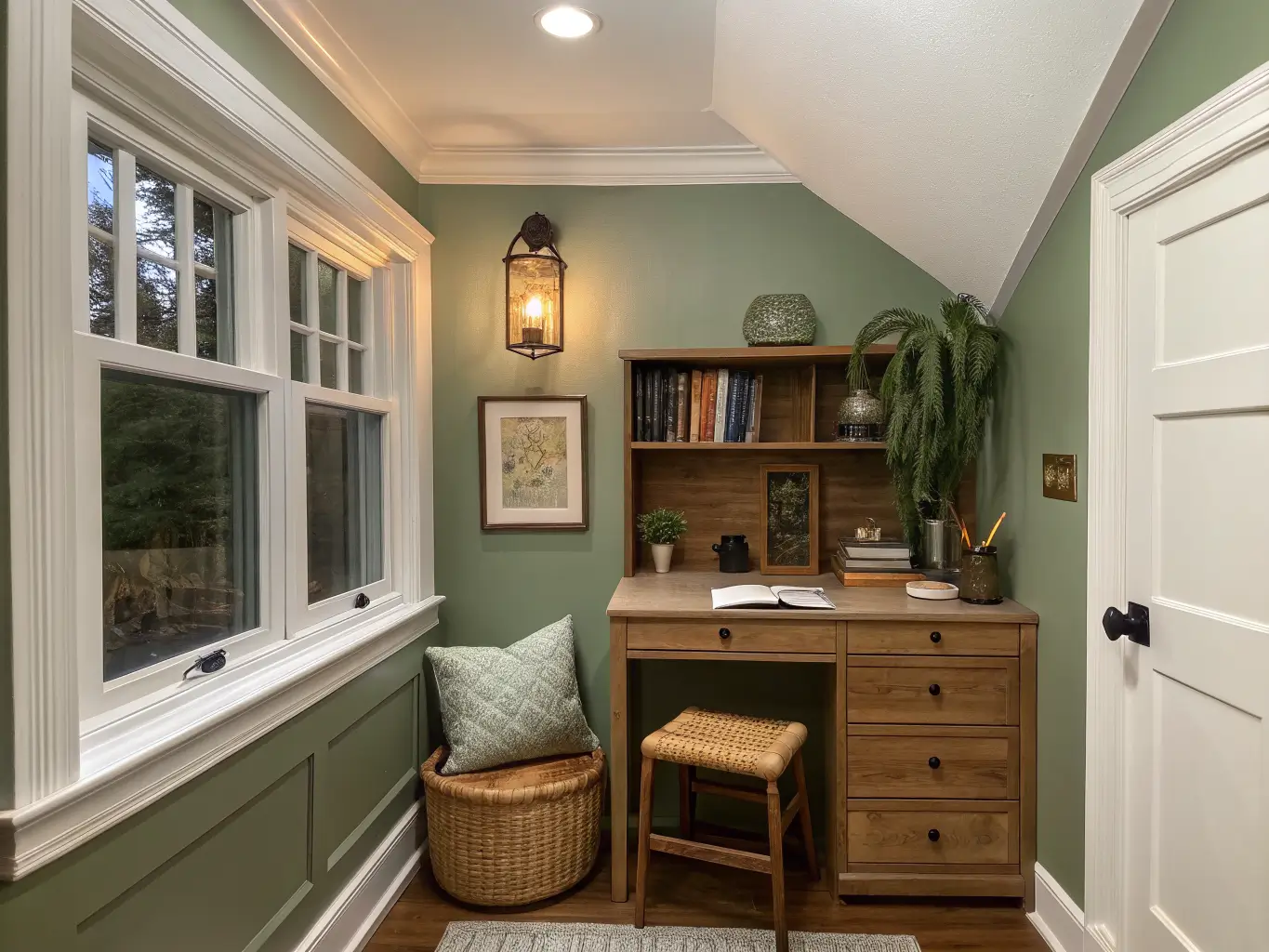
Space: Green works especially well in small rooms and corners, which surprises people. A deep color on all four walls of a large room can feel heavy, but in a small nook, a rich green combined with light wood and closed storage reads as cozy-smart, not cramped. The trick is contrast, which I’ll get into below.
Skill level: Beginner-to-intermediate if you’re styling with what you have or buying ready-made pieces. Intermediate-to-expert if you’re painting an accent wall yourself, adding built-ins, or hiding wiring behind cabinetry.
The Design Styles That Actually Work With Green
Green study rooms aren’t one look. I’ve seen four distinct directions done well:
– Contemporary — clean lines, matte green cabinetry, minimal hardware
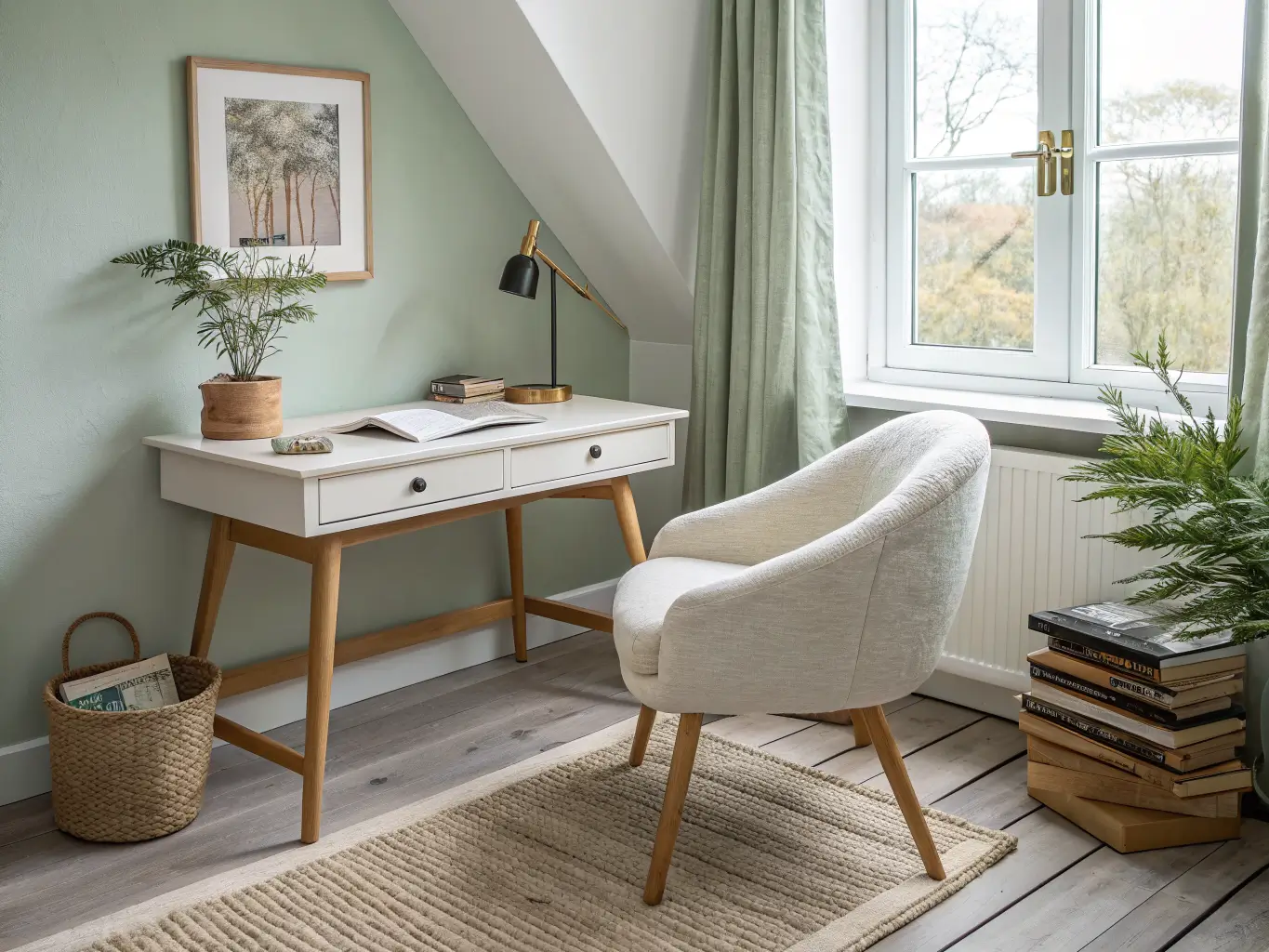
– Scandinavian/organic minimal — pale green, birch or white ash wood, linen textiles
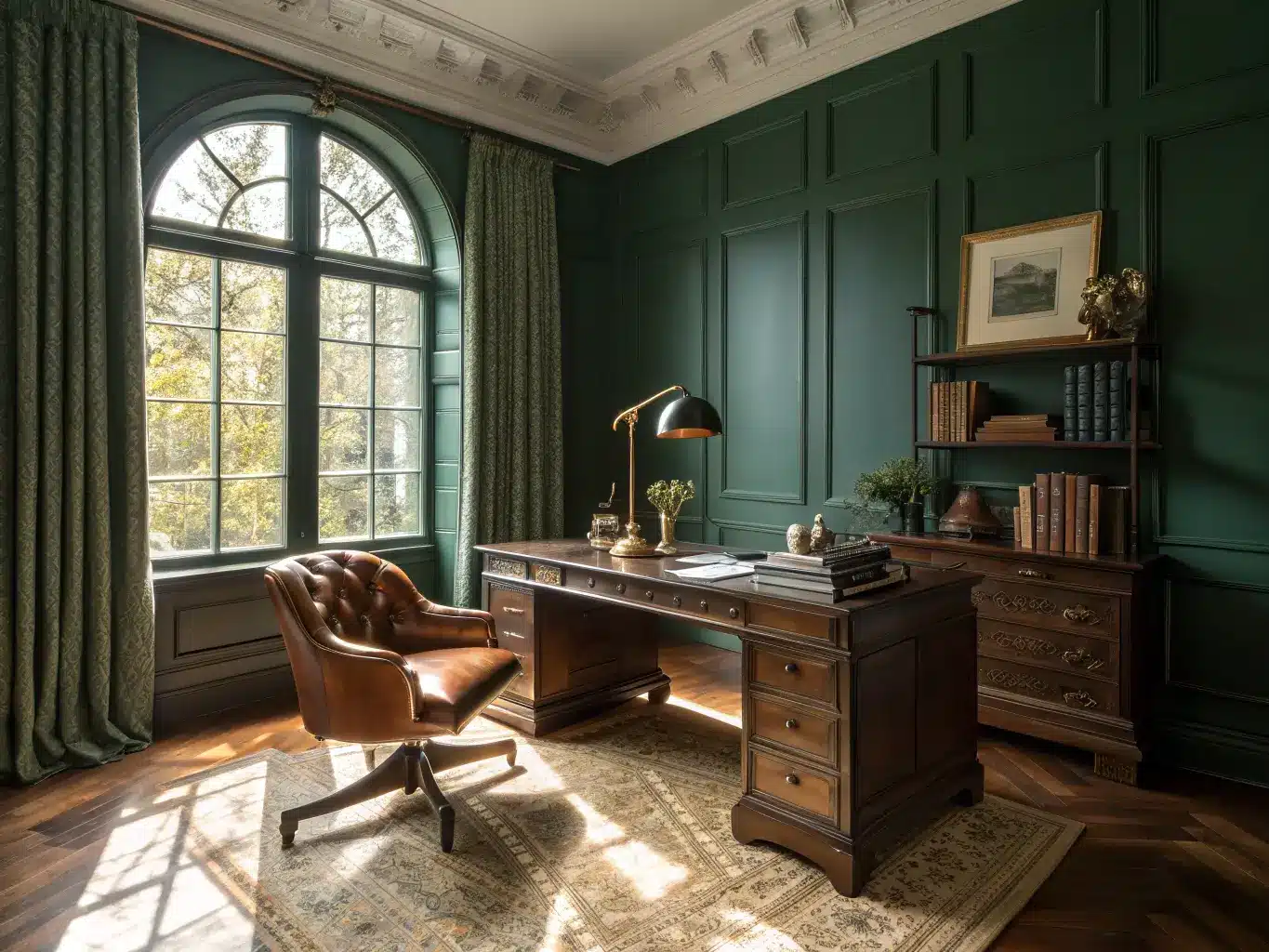
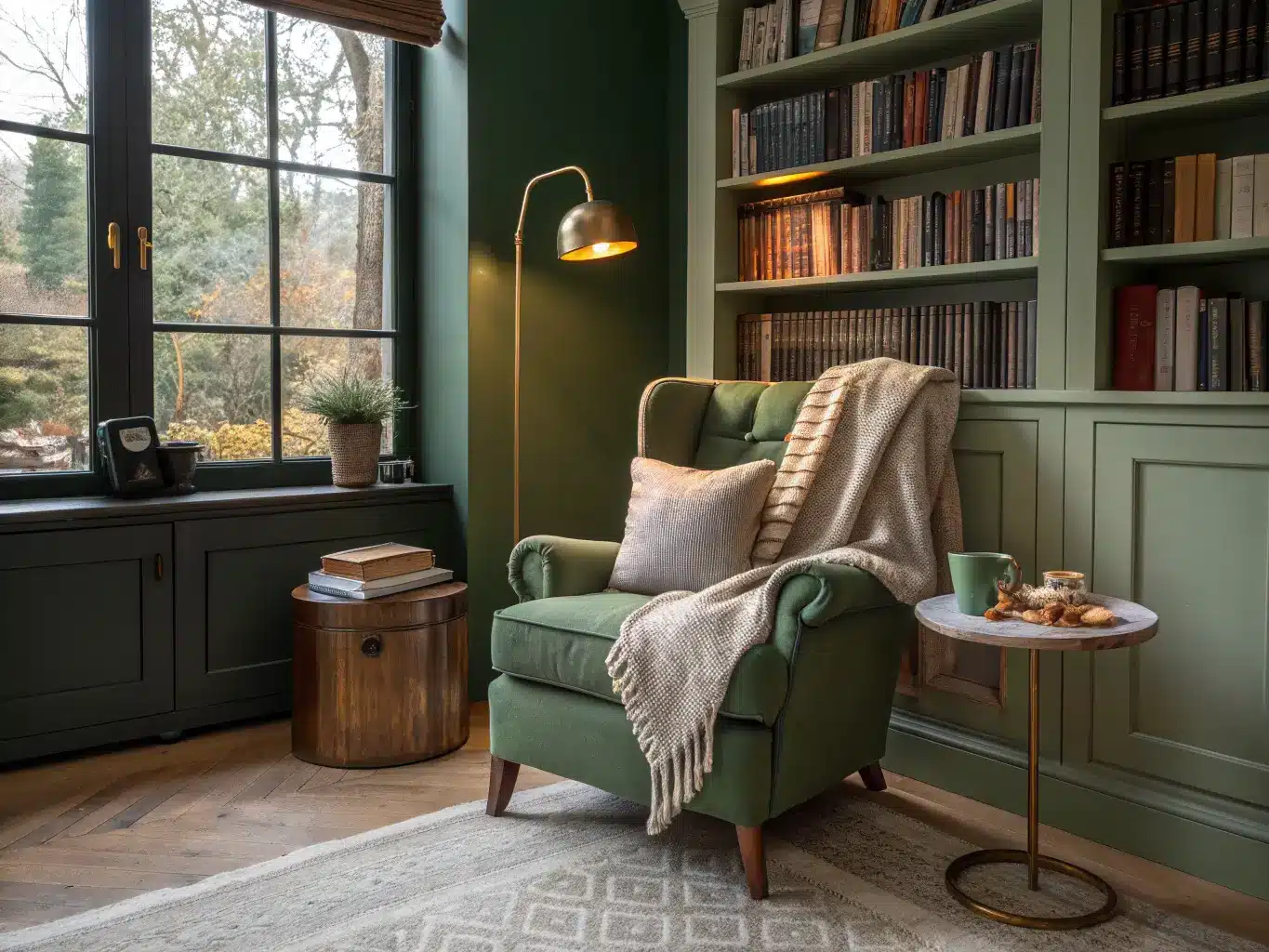
– Traditional — deep green walls, aged brass hardware, dark wood desk
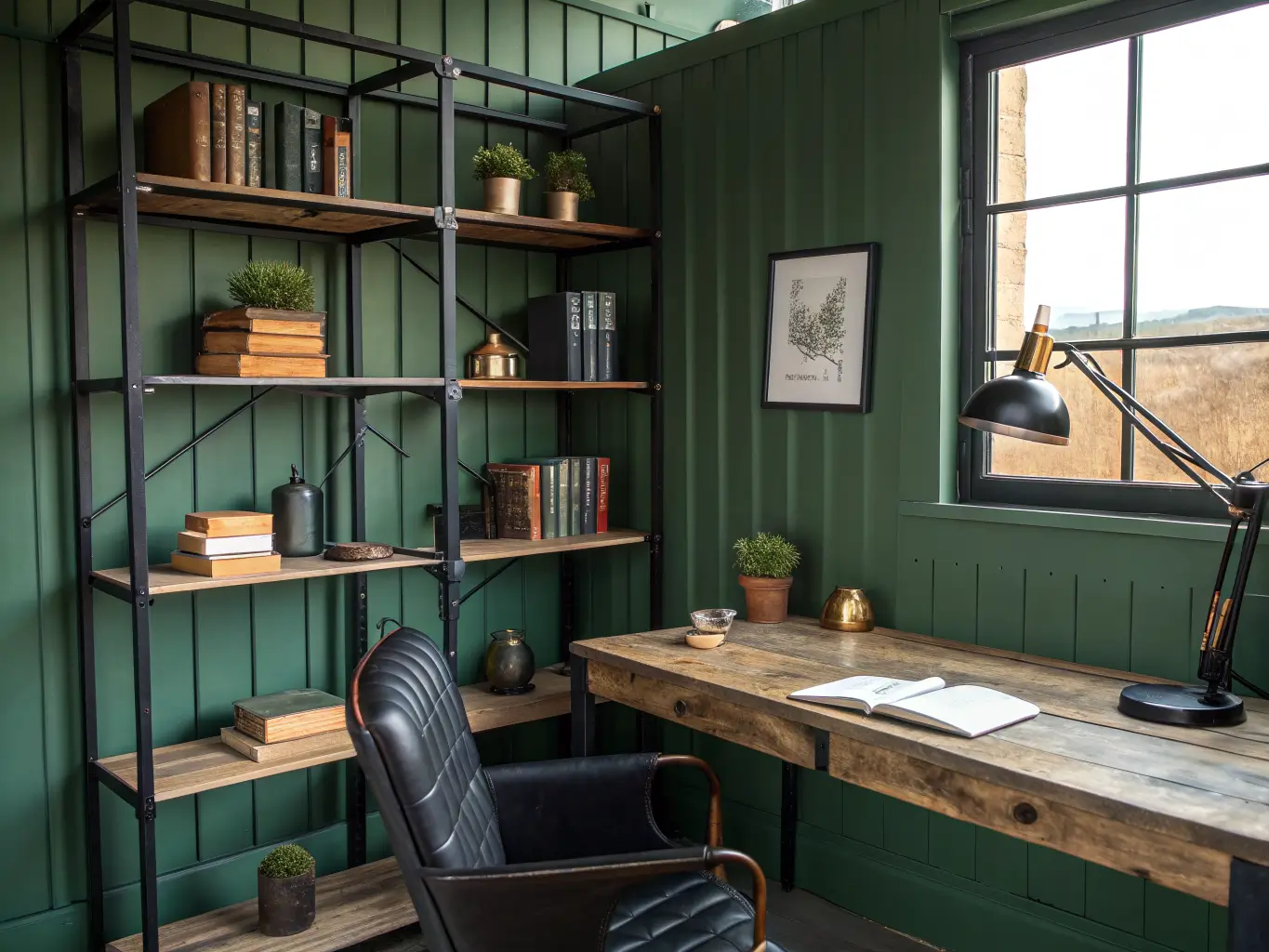
– Industrial — green paired with powder-coated black steel, exposed shelving, leather
Pick one. The single biggest mistake I see (and the mistake I made) is trying to blend all four — brass and black steel and cane and glass. Choose a lane before you shop.
The color and material palette
Greens that work:
– Soft green or pale green (sage-adjacent) — best for small or low-light rooms
– Cedar green — a warmer, more traditional mid-tone
– Deep or dark green, Phthalo Green, Obsidian Green — dramatic, best with strong contrast and good lighting
Pair with: white, cream, coffee brown, grey, light wood tones, aged brass.
Materials that show up again and again: white ash, birchwood, teakwood, reclaimed wood, powder-coated steel, linen, cane, recycled glass. Low-VOC paint is worth seeking out too — you’re going to be breathing this room’s air for hours at a time, and it’s not much more expensive.
The Must-Have Pieces
Here’s what actually makes a green study room function, not just photograph well:
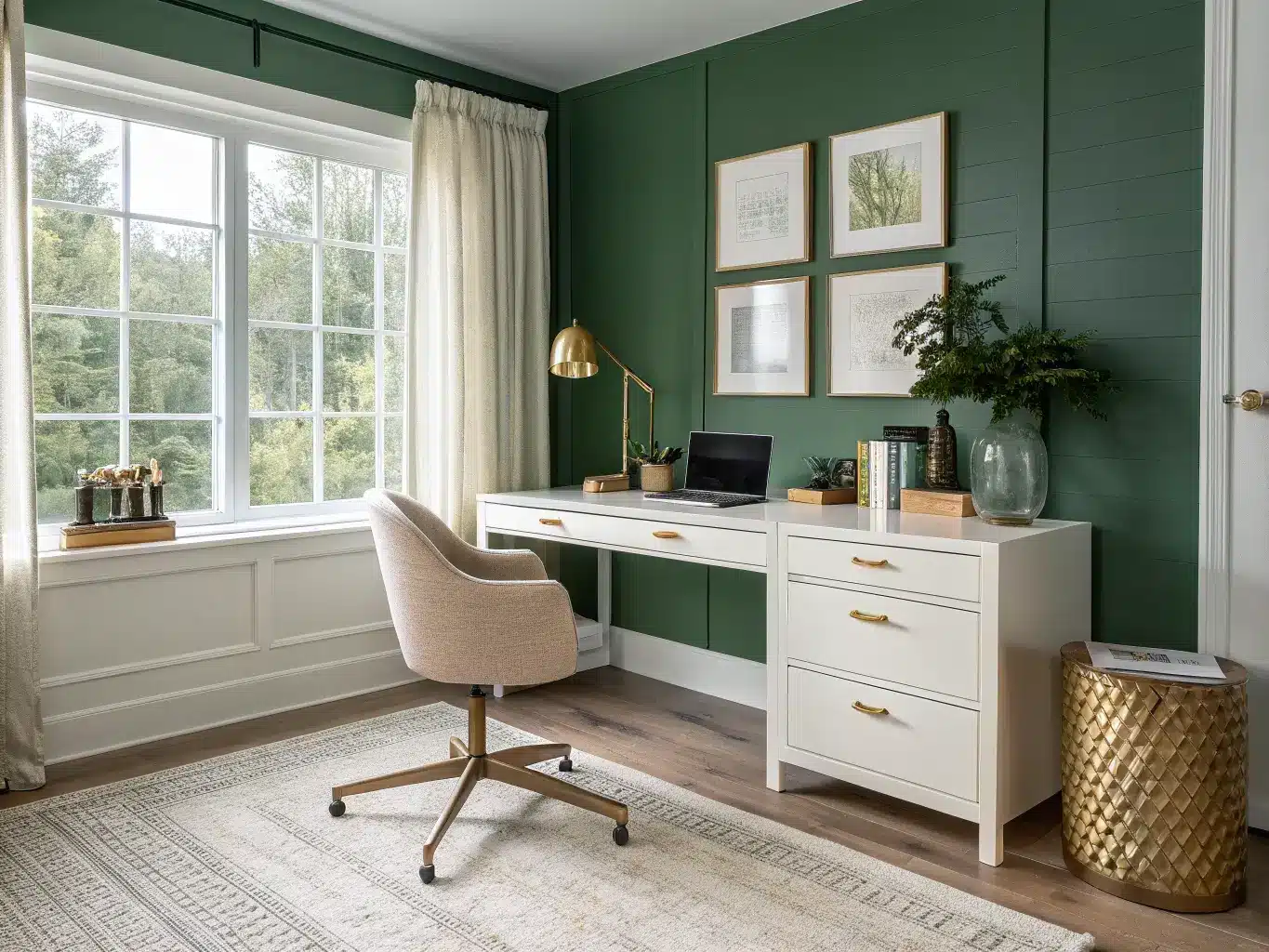
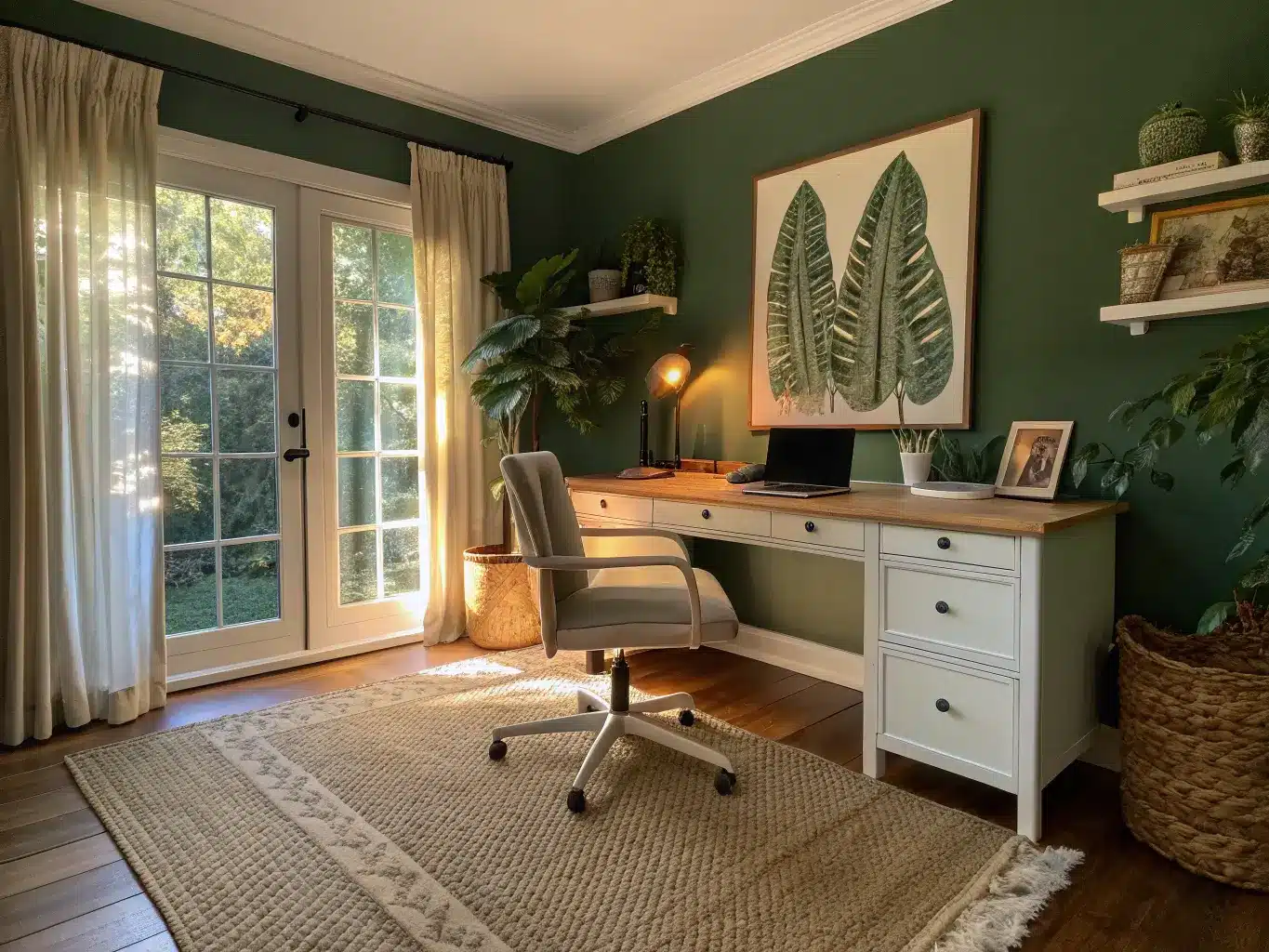
– A green wall or feature wall — usually behind the desk, so it becomes the visual anchor without swallowing the whole room
– A desk in light or dark wood, chosen to either soften or ground the green (light wood softens deep green; dark wood grounds pale green)
– An ergonomic chair — linen or leather upholstery, or matte black metal, both read well against green
– Task lighting — a proper adjustable desk lamp, not just an overhead fixture. Warm LED, around 2700–3000K, is easier on the eyes for long sessions
– Closed storage — wall-mounted cabinets, under-desk drawers, anything that hides the daily mess. I cannot stress this enough after living with open shelving that looked great for a week and chaotic for the following year
– Plants — even one is enough. A single pothos or snake plant on the desk corner does more for the “calm, focused” feel than three throw pillows
– Textiles — linen curtains, a flatweave or wool rug, muted cushions if there’s a reading chair
– Artwork — botanical prints, an abstract green-toned piece, or a quiet landscape
Optional upgrades if you want to push the look further
– Aged brass hardware or a brass desk lamp for a more traditional feel
– Recycled glass vases or a glass desk organizer for a contemporary, eco-conscious touch
– Cane-front cabinet doors for texture and warmth
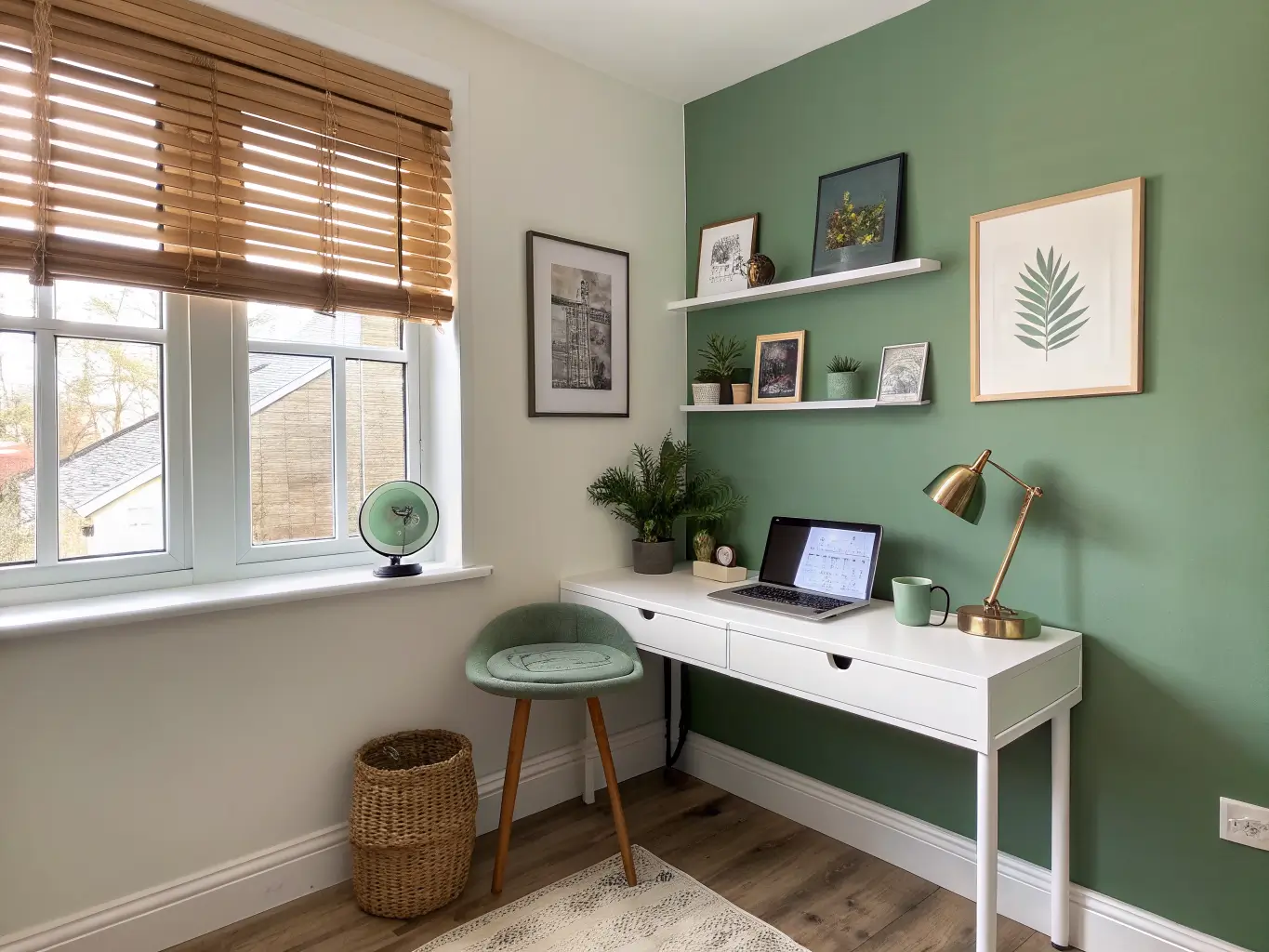
– Two-tone or horizontal color-blocked walls — paint the bottom two-thirds green, leave the top white, which keeps a small room from feeling boxed in
– Sheer curtains instead of heavy drapes, to keep daylight moving through the room
– Woven wood blinds for texture without darkening the space
How to Actually Put the Room Together
Step 1: Clear the room down to essentials. Desk, chair, lamp, storage. Everything else comes back in later, deliberately.
Step 2: Decide where the green lives before buying anything else. Wall color? Cabinet fronts? Just an accent chair? Pick one primary application. This decision drives every other purchase, so don’t skip it.
Step 3: Measure before you fall in love with furniture. Desk depth, shelf height, chair clearance — a study room usually isn’t a large room, and six extra inches of desk can mean you can’t push your chair back comfortably. I learned this after buying a desk that was 2 inches too deep for my alcove and having to return it.
Step 4: Plan your cables and charging setup now, not after the desk is against the wall. Under-desk cable trays and a power strip mounted to the underside of the desk are cheap and save you from a permanent tangle on the floor.
Step 5: Build in this order — paint or wall treatment first, then desk and storage (the big anchors), then chair and lamp (so the space is functional), then plants, books, and objects in small groups of two or three, then finally art, rug, and one metallic or textured accent piece.
Step 6: Pick one thing to highlight — a window, a built-in bookshelf, the green wall itself — and let everything else stay quiet. A room with one clear focal point looks designed. A room with five competing ones looks cluttered no matter how nice each individual piece is.
Common Mistakes (I’ve Made Most of These)
– Going too dark without enough contrast. My forest-green cave phase happened because I had zero white or light wood in the room to break it up. Fix: pair deep green with white trim, cream textiles, or pale wood furniture — aim for the room to be roughly 60% light tones if the green is dark.
– Mixing too many greens. Sage curtains, olive rug, emerald wall — it reads as accidental, not intentional. Pick one green family and repeat it.
– Skipping storage because open shelving looks nice in photos. It looks nice for about a week. Then it’s where your mail lives.
– Beautiful room, terrible lighting. A gorgeous lamp that puts out warm ambient light is not the same as functional task lighting. You need both.
– Overfilling every surface. Leave negative space — empty space that isn’t holding anything — on your desk and shelves. It’s what makes the room feel calm instead of busy.
Keeping the Room Feeling Cohesive Over Time
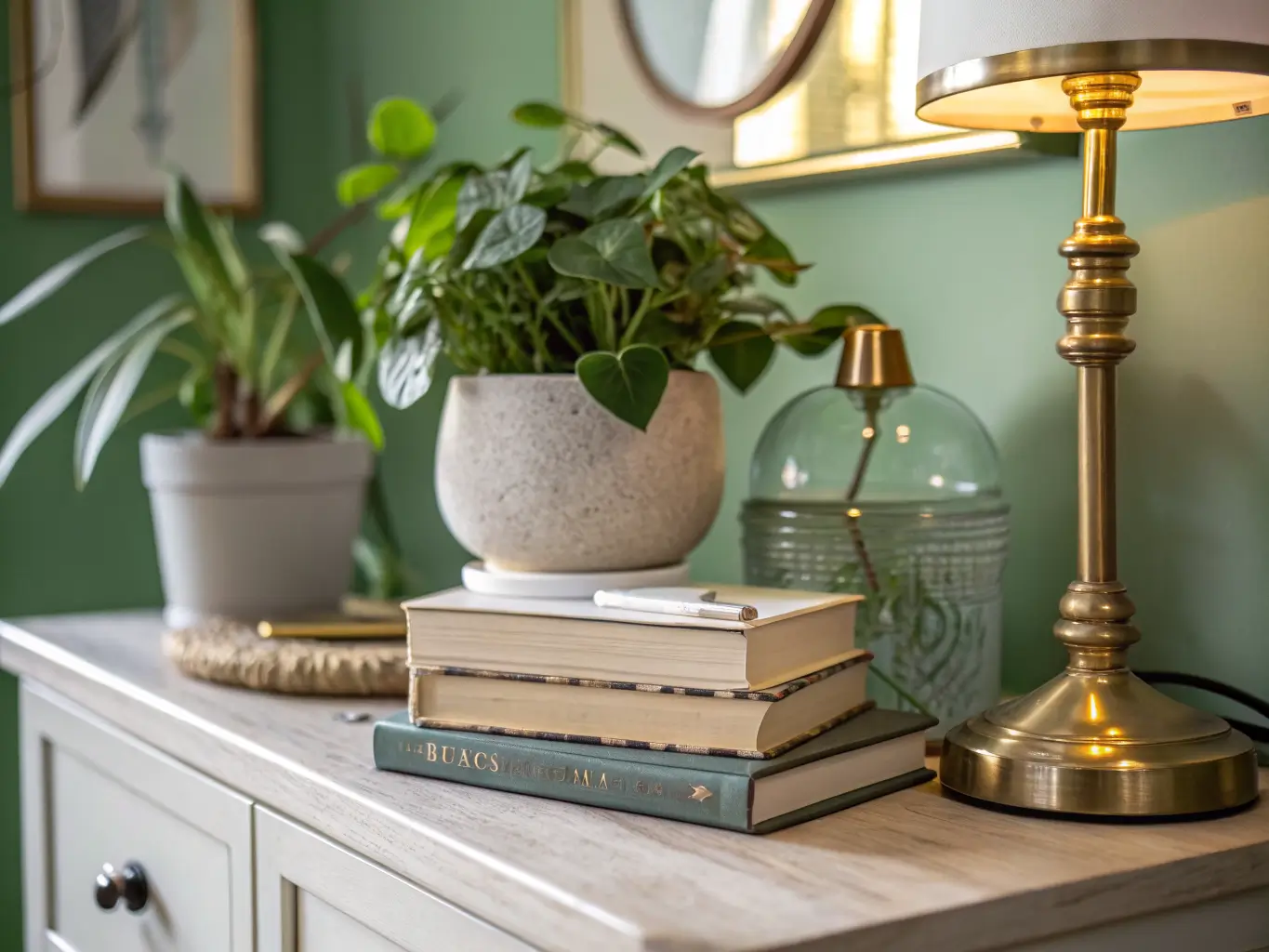
Stick to your green family and your material list (wood, linen, cane, steel, ceramic) for every future purchase. If you started in warm cedar green with brass hardware, don’t introduce cool grey-green and matte black six months later — it’ll feel like two different rooms stitched together.
Keep your finishes consistent too: matte paint with matte metal hardware and soft textiles reads as intentional. Mixing in high-gloss surfaces randomly breaks that.
Seasonal tweaks that don’t require repainting
– Spring/summer: lighter textiles, an extra plant or two, swap in white or cream accessories
– Fall/winter: lean into brass accents, warmer lamp light, maybe a deeper green throw or cushion
Budget-friendly refreshes
– New lamp shade — $20–$40
– Desk organizer set — $25–$60
– Swap curtains — $40–$100
– One statement print for the focal wall — $30–$150
None of that requires touching a paint can, and any one of them can make a six-month-old room feel new again.
The green study room works because it does two things at once — it looks calm and it functions well — but only if you resist the urge to over-decorate it. Pick your green, pick your wood, pick your style lane, and then stop adding things. That restraint is the actual design skill here, more than the paint color itself.
For another angle on this, my study room color ideas guide covers the same space from a different starting point.