My study used to look like a Container Store aisle threw up in the corner of my bedroom. Bins everywhere, cool-white LED strip lighting that made my skin look gray, and a desk from a big-box store that had zero personality. I redid it eighteen months ago in what I now know is called Japandi — Japanese minimalism crossed with Scandinavian warmth — and it’s the first workspace I’ve had that actually makes me want to sit down and focus instead of dreading the visual noise around my laptop.
If you’ve searched “Japandi study room,” you already know the aesthetic from Pinterest: oak desks, linen cushions, a single ceramic vase, everything looking effortlessly uncluttered. What nobody tells you is how much editing that look requires, and how easy it is to get wrong by either going too stark (sterile, cold, IKEA-showroom-with-nothing-in-it) or too soft (suddenly you’re just doing cottagecore with a desk). Here’s how I actually built mine, what I’d change, and what I’d tell you to skip.
What a Japandi Study Room Actually Is
Japandi blends wabi-sabi‘s appreciation for imperfect, natural materials with Scandinavian hygge‘s warmth and function. In a study room, that means: clean lines, hidden storage, warm wood tones, and almost nothing on the desk except what you’re actively using. It’s minimalism with a pulse — not the cold, empty-room minimalism people mistake it for.
This style is built for:
– Remote workers and students who need to concentrate without visual clutter pulling their attention
– Small spaces — nooks, condo corners, HDB-style compact rooms — because Japandi prioritizes clear sightlines and hidden storage over decorative bulk
– Anyone doing video calls regularly, since the warm lighting and soft materials genuinely photograph and read better on camera than a stark white home office
It works year-round. There’s no seasonal reset required, which is honestly one of my favorite things about it — I’m not swapping out a whole color scheme every three months.
Time and cost, realistically:
A simple refresh — new lamp, some linen cushions, a couple of ceramic pieces, better storage baskets — takes a weekend and about $150–$500. A full build-out with a real desk, proper chair, layered lighting, and storage runs $800–$2,500+. I’ve seen single hero desks listed north of $1,900 at retail, which tells you how far you can go if you want the investment piece. I did not spend $1,900 on a desk. I bought mine secondhand for $180 and sanded it down myself, which I’ll get to.
The Colors and Materials That Make It Work
Japandi lives in a narrow, warm neutral band. If you remember nothing else, remember this palette:
– Base tones: warm grey, cream, off-white, taupe, soft brown
– Accent/grounding tones: charcoal, black, muted sage
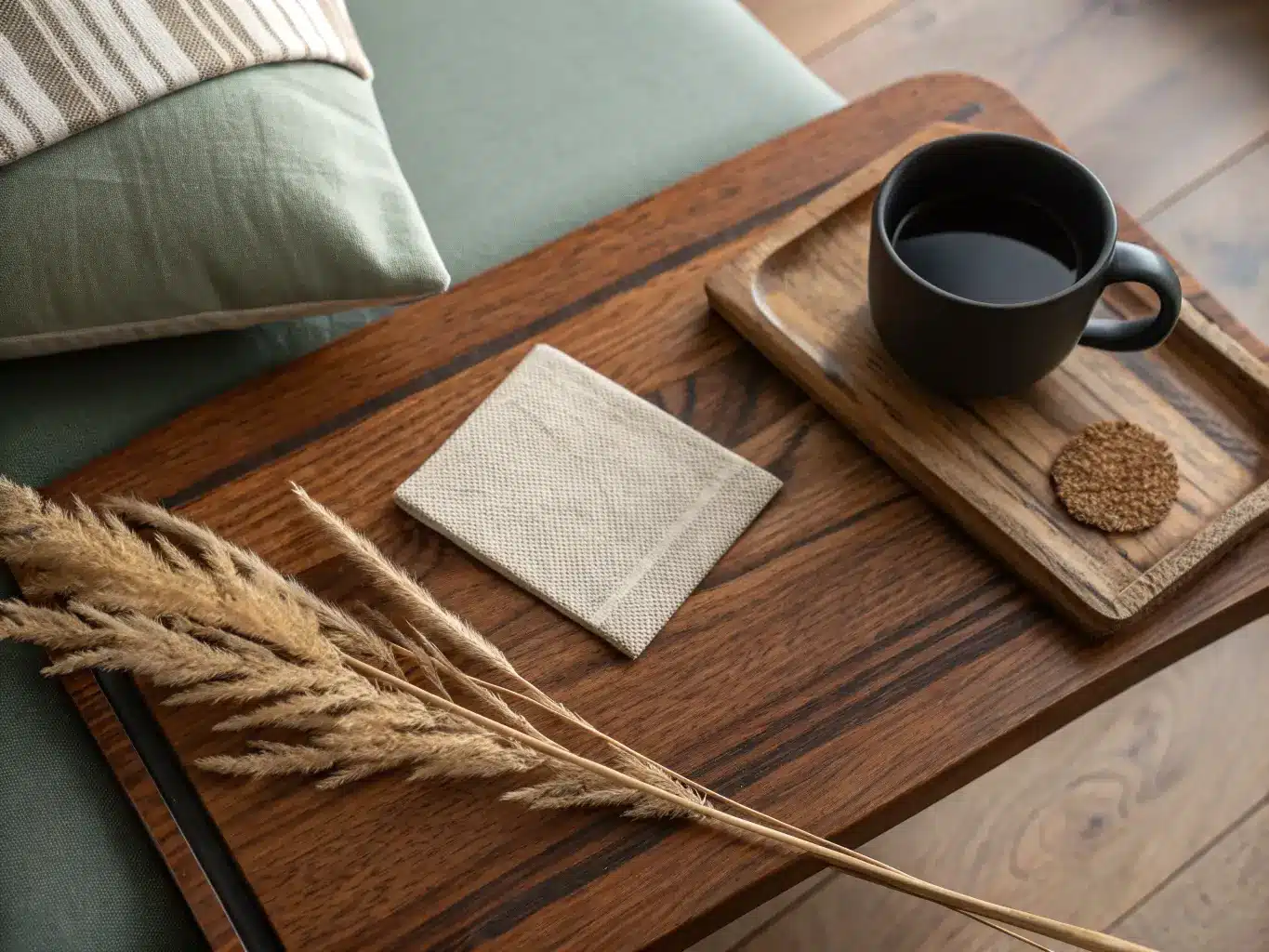
– Materials: oak, ash, or walnut wood; linen and bouclé textiles; rattan and bamboo; ceramic; paper (think washi-style pendant shades)
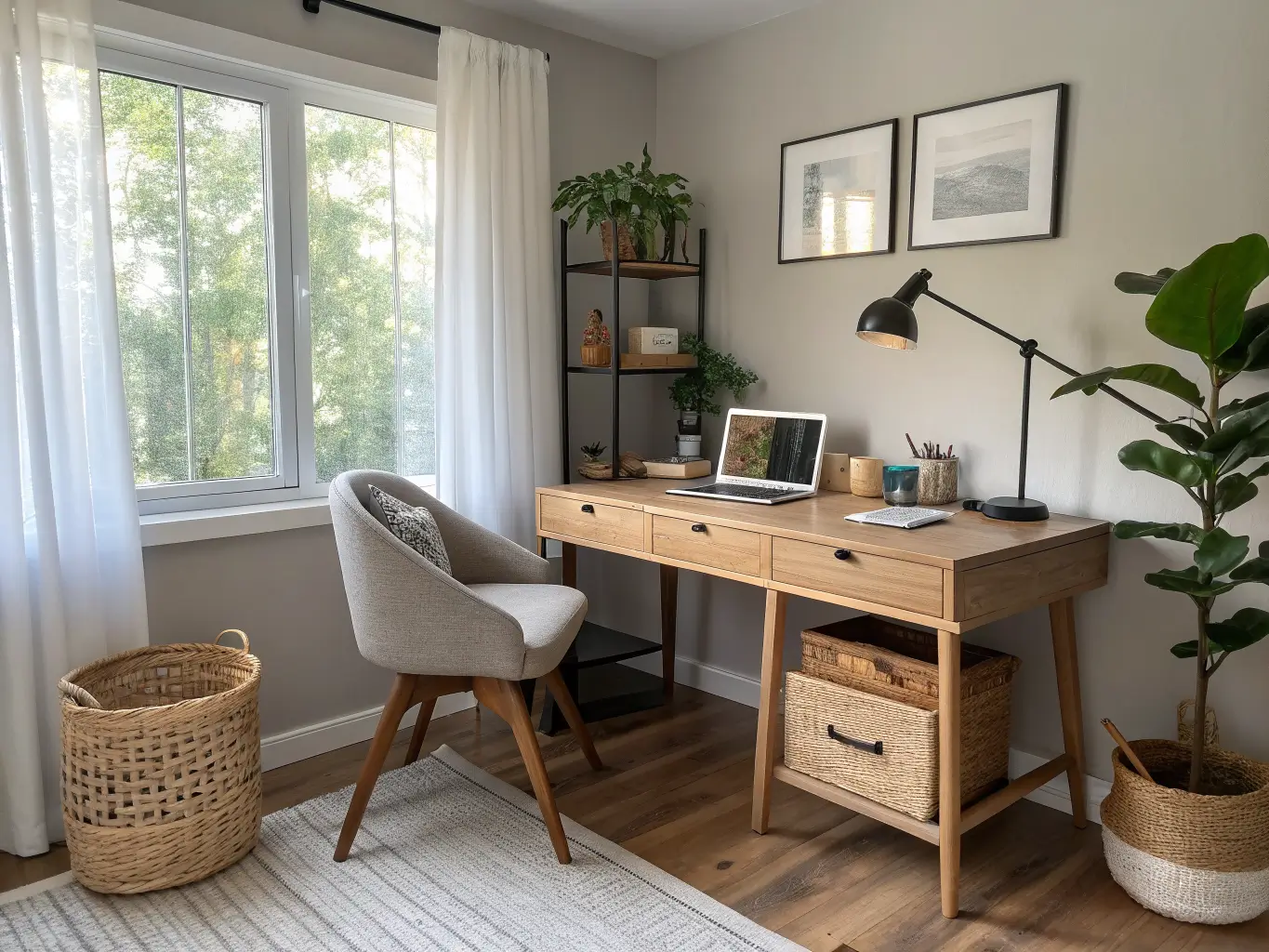
The mistake I made first: I painted my study wall a flat white thinking “clean is Japandi.” It read like a dentist’s office. I repainted in a warm greige (Benjamin Moore’s Revere Pewter, roughly $60 a gallon) and suddenly the same furniture looked intentional instead of empty.
Must-Have Pieces for a Japandi Study Room
The Desk
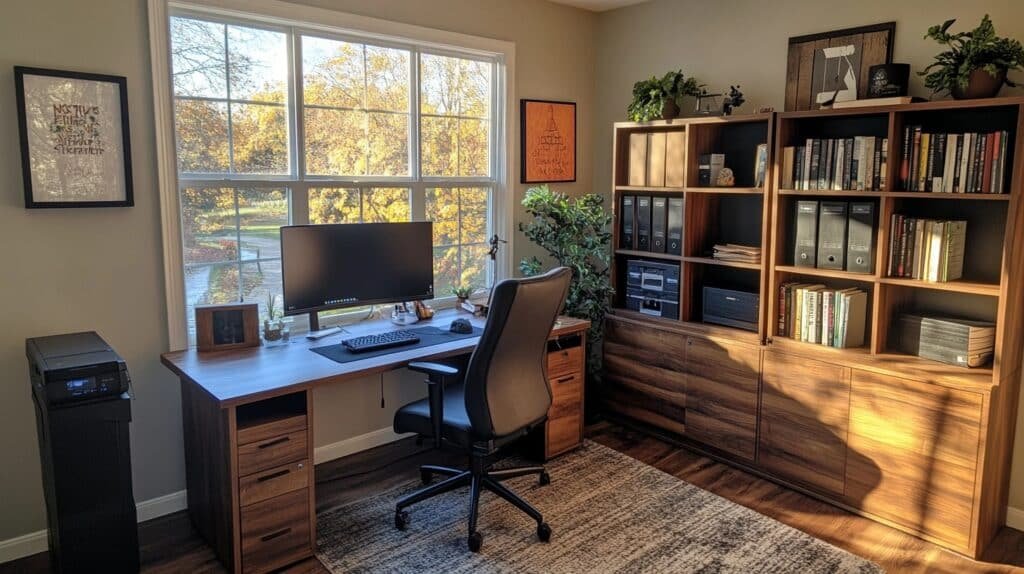
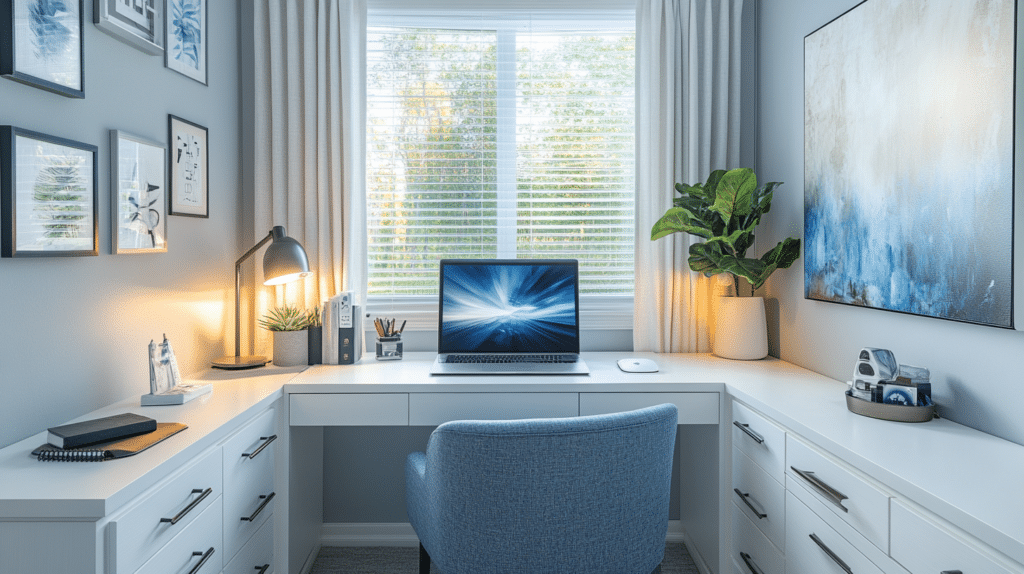
Go with a light oak or walnut wood desk with clean, unfussy legs — no ornate carving, no glass top. If your room is small, an L-shaped desk gives you real work surface without eating floor space, since it hugs two walls instead of jutting into the room.
The Chair
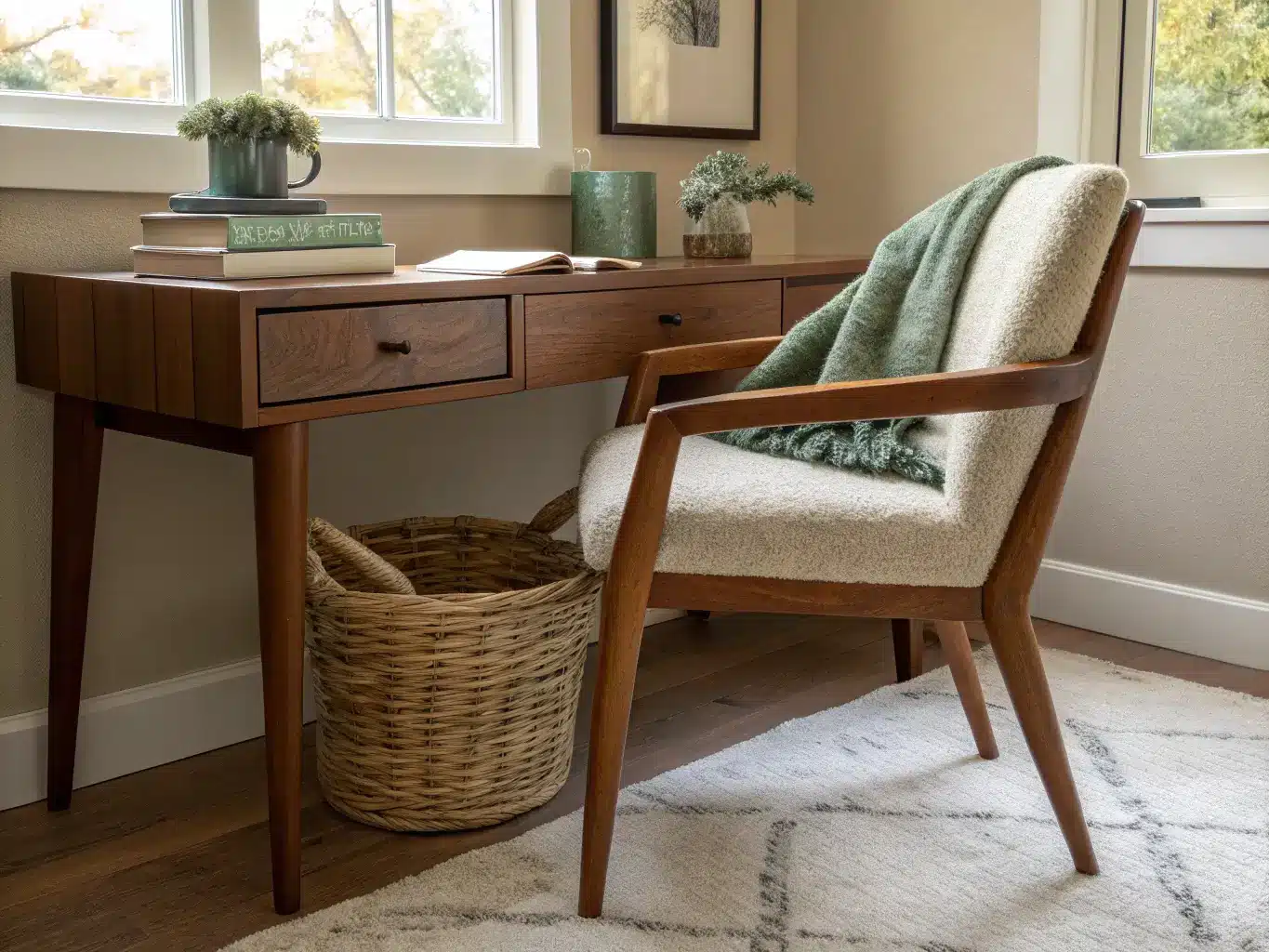
Skip the black mesh ergonomic chair — it fights the whole aesthetic. Look for wood-framed chairs with linen or bouclé upholstery. You want something that looks like furniture, not equipment. I use a secondhand wood-framed chair I re-covered in oatmeal linen for about $40 in fabric.
Storage — this is non-negotiable
Japandi collapses the second clutter is visible. You need:
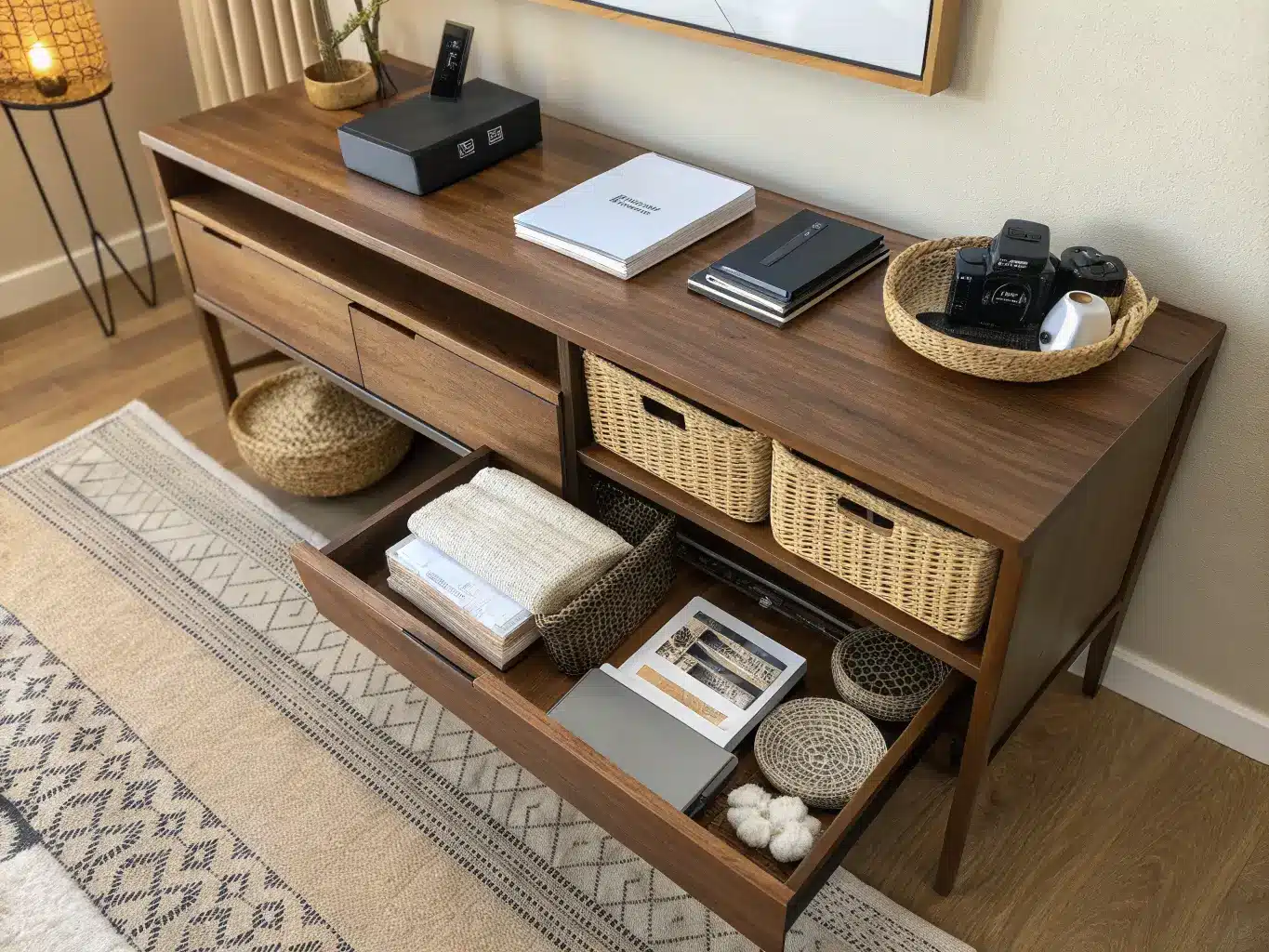
– A low credenza or drawer unit to get papers and cables out of sight
– Woven baskets for things you use daily but don’t want on display (chargers, notebooks, mail)
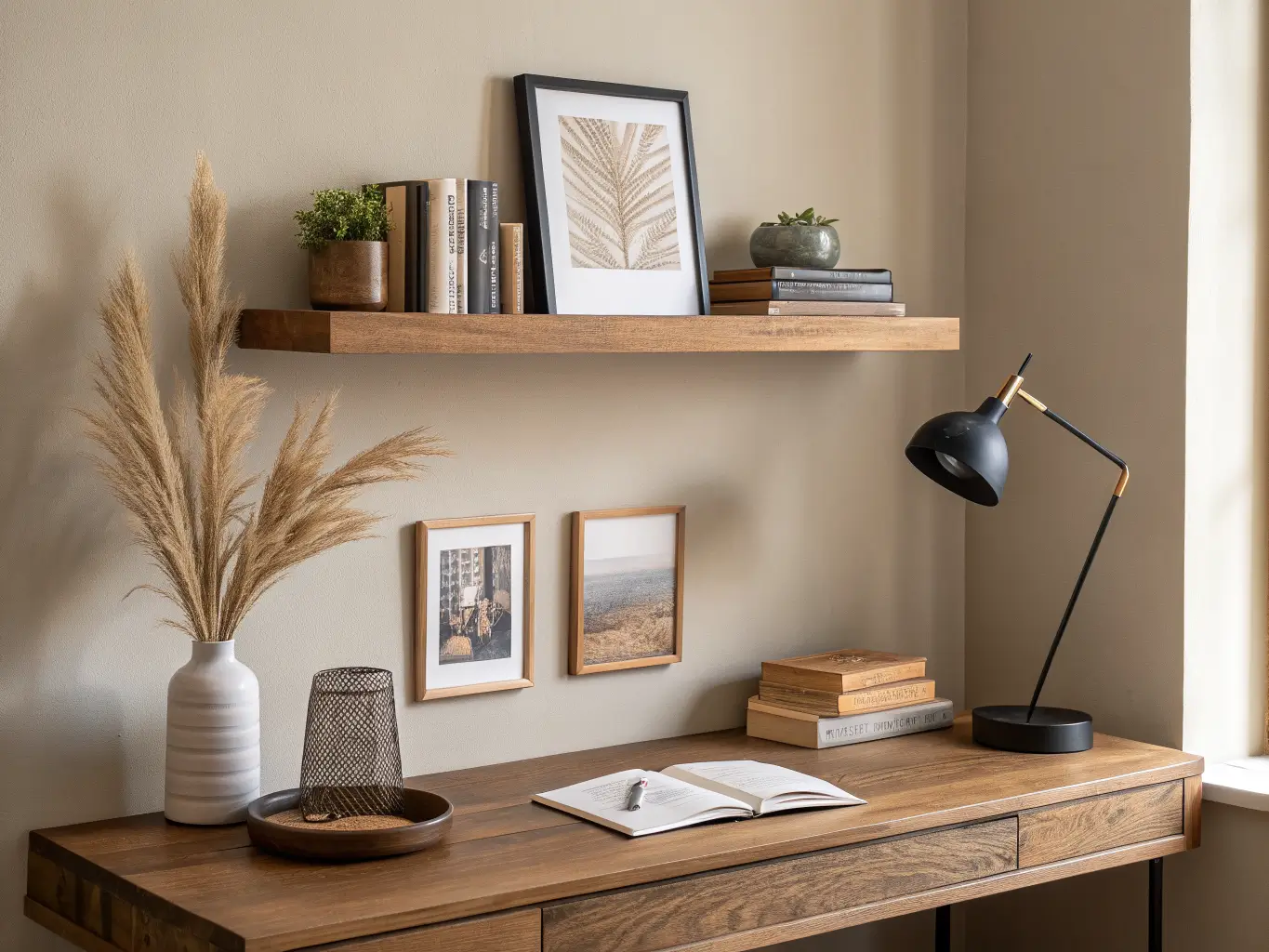
– Wall-mounted shelving — one shelf, styled sparingly, beats three shelves crammed with stuff
Lighting
This is where most people accidentally ruin the mood. Use warm 2700K bulbs — that’s the number on the box, and it matters more than the fixture itself. Cool white (4000K+) or fluorescent overhead light will flatten every warm tone in the room and make it feel like an office supply store. Layer it:
– A task lamp at the desk (matte black or wood base, warm bulb)
– One ambient source — a floor lamp or wall sconce — so the room isn’t lit like an interrogation
Textiles and Natural Accents
One linen cushion, one wool throw if you’ve got a reading chair, a woven basket or two. Then one or two plants — I have a small snake plant on my credenza and a single stem of dried pampas grass in a ceramic vase, and that’s genuinely it. Restraint is the point.
Wall Treatment
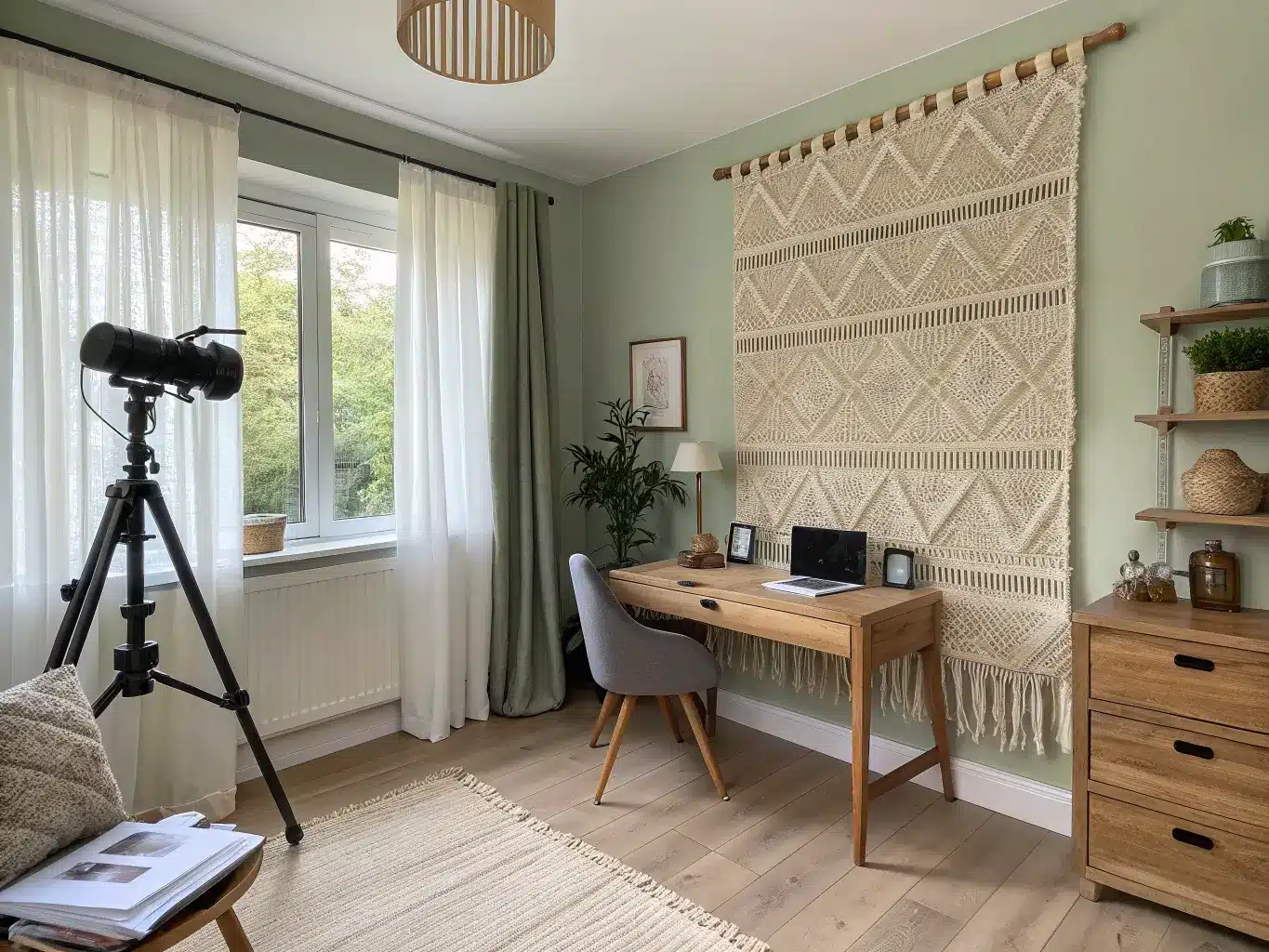
If you’re on video calls a lot, consider sound-absorbing wall panels or textured art — felt panels or a woven wall hanging do double duty, softening both the look and the echo in the room.
How to Put It Together, Step by Step
1. Clear everything out first. Sort into keep, store, remove. I did this ruthlessly and ended up donating an entire desk organizer set I’d bought a year earlier and never liked.
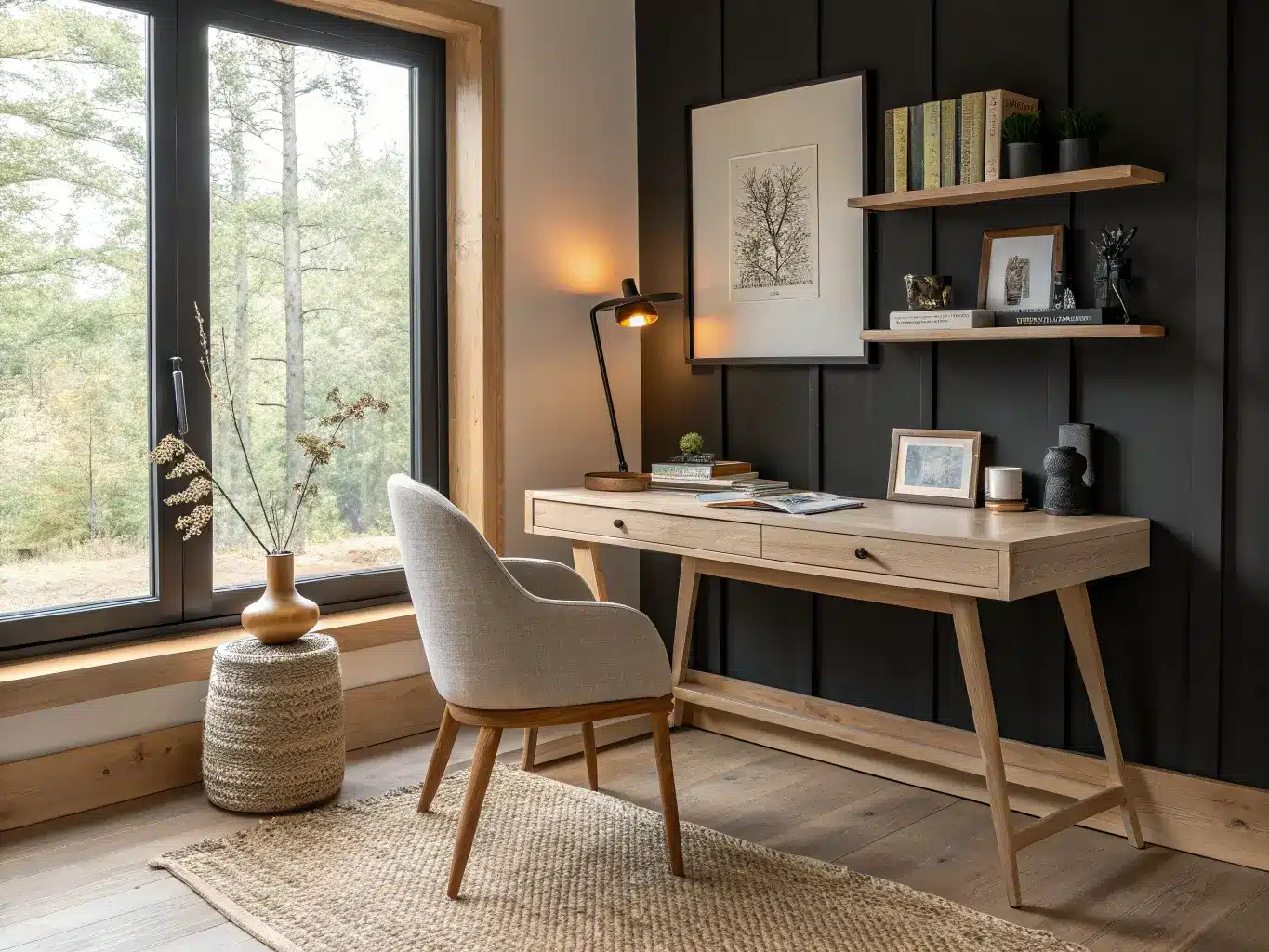
2. Position the desk near natural light, ideally facing or beside a window, not with your back to it (glare on a screen is miserable).
3. Settle your base palette before buying decor. Wall color, flooring, and the desk/chair/storage should agree with each other first. Everything else is seasoning.
4. Bring in the big wood pieces first — desk, chair, shelving, credenza — before you touch a single decorative object.
5. Layer the lighting — task lamp, then ambient light.
6. Style the desktop last, and sparingly: a lamp, a notebook, a pen holder, one small plant or ceramic piece. If you can’t name why an object is there, it goes in a drawer.
7. Use vertical space carefully. One curated shelf with visible gaps between objects reads as intentional. A packed shelf reads as storage overflow.
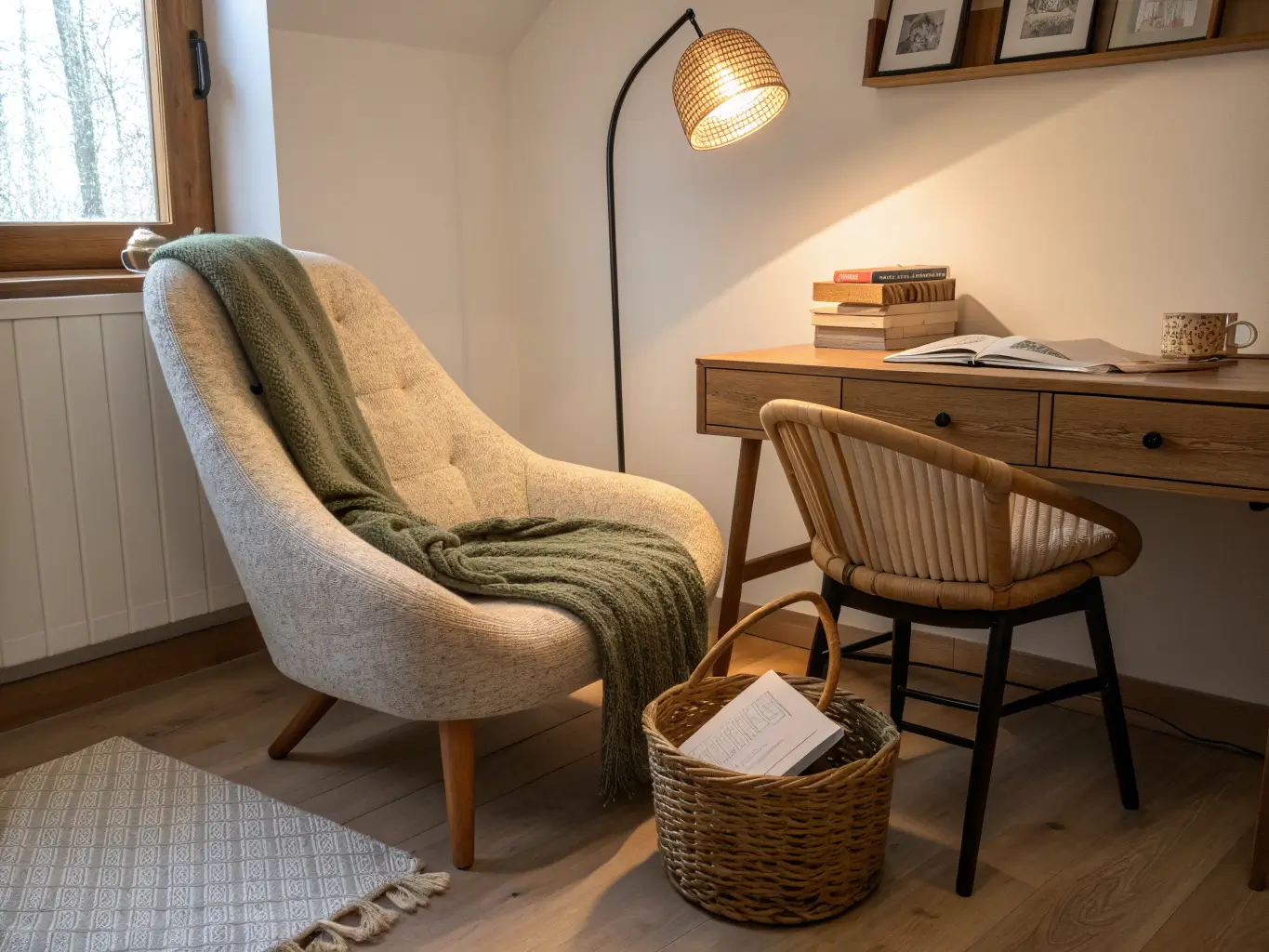
If your study room doubles as a reading nook, add a small lounge chair or a floor cushion in natural fabric off to the side — but keep it visually secondary to the desk. The room needs one clear focal point, not two competing zones.
Common Mistakes (I Made Most of These)
– Going all-white. Japandi is not sterile minimalism. Without wood grain and texture, it just looks unfinished. Bring in warmth or the room reads cold.
– Overfilling the shelf. I initially put nine objects on one 36-inch shelf. It looked like a gift shop. I got it down to four — a stack of two books, one small vase, one framed print leaning (not hung) against the wall — and the whole room calmed down.
– Cool lighting. If your bulb box says anything above 3000K, it’s too cold for this look.
– No hidden storage. This is the one people skip to save money, and it’s the one that matters most. Visible clutter kills Japandi faster than the wrong paint color.
– Buying “Japandi-looking” decor instead of useful pieces. A ceramic object that does nothing but sit there should be the exception, not the rule. The style’s beauty comes from things that work well and are also nice to look at — not ornaments.
Keeping It Fresh Without Redoing the Room
– Anchor the palette — oak, cream, warm grey, taupe, black accents — and don’t stray from it when you buy new pieces. Anything you add should speak the same material language: wood, linen, ceramic, rattan, paper, matte metal.
– Do a monthly walk-through. Sit in the chair, look at every surface, and ask if each object still earns its spot. This takes five minutes and is the actual maintenance secret — not a product, a habit.
– Rotate soft layers seasonally, not structure. I swap my cushion cover and vase stem with the seasons — dusty terracotta and olive in fall, pale sage in spring — and leave the furniture and wall color untouched.
– Upgrade one piece at a time. Lamp, then chair, then storage, then desk. You don’t need $2,000 on day one. I’m still using that $180 secondhand desk sixteen months later and have zero urge to replace it.
Mixing Japandi With Other Styles
You don’t have to stay purist about it:
– Japandi + Muji-inspired works especially well for ultra-minimal organization — think pale woods and modular storage systems.
– Japandi + reading nook — add a lounge chair, a floor lamp, and a small curated bookshelf, but keep negative space around it so it doesn’t compete with the desk.
– Japandi + acoustic office — lean into felt panels and textured wall art if your study room is also your Zoom room. It solves an actual problem while staying on-theme.
The room I ended up with isn’t magazine-perfect. There’s a coffee ring on my desk I never bothered to sand out, and my “curated” shelf currently has a kid’s drawing taped next to the ceramic vase because that’s real life. But it’s quiet, it’s warm, and I sit down at it without wanting to leave immediately — which is the only metric that actually matters for a study room.
For another angle on this, my study room ideas modern guide covers the same space from a different starting point.