A cozy reading nook comes down to four things: a comfortable seat, good light, soft layers, and somewhere to put your book down. That’s it. I say this because I spent almost a year overthinking mine — buying throw pillows before I owned a chair, agonizing over paint colors for a corner that didn’t even have a lamp yet — before I figured out that order matters more than taste here. Get the bones right and the styling takes care of itself.
I turned an awkward dead corner in my bedroom, next to a window that got great afternoon light and nothing else going for it, into the spot I actually use every single night now. Here’s everything I learned doing it, plus what I’d do differently.
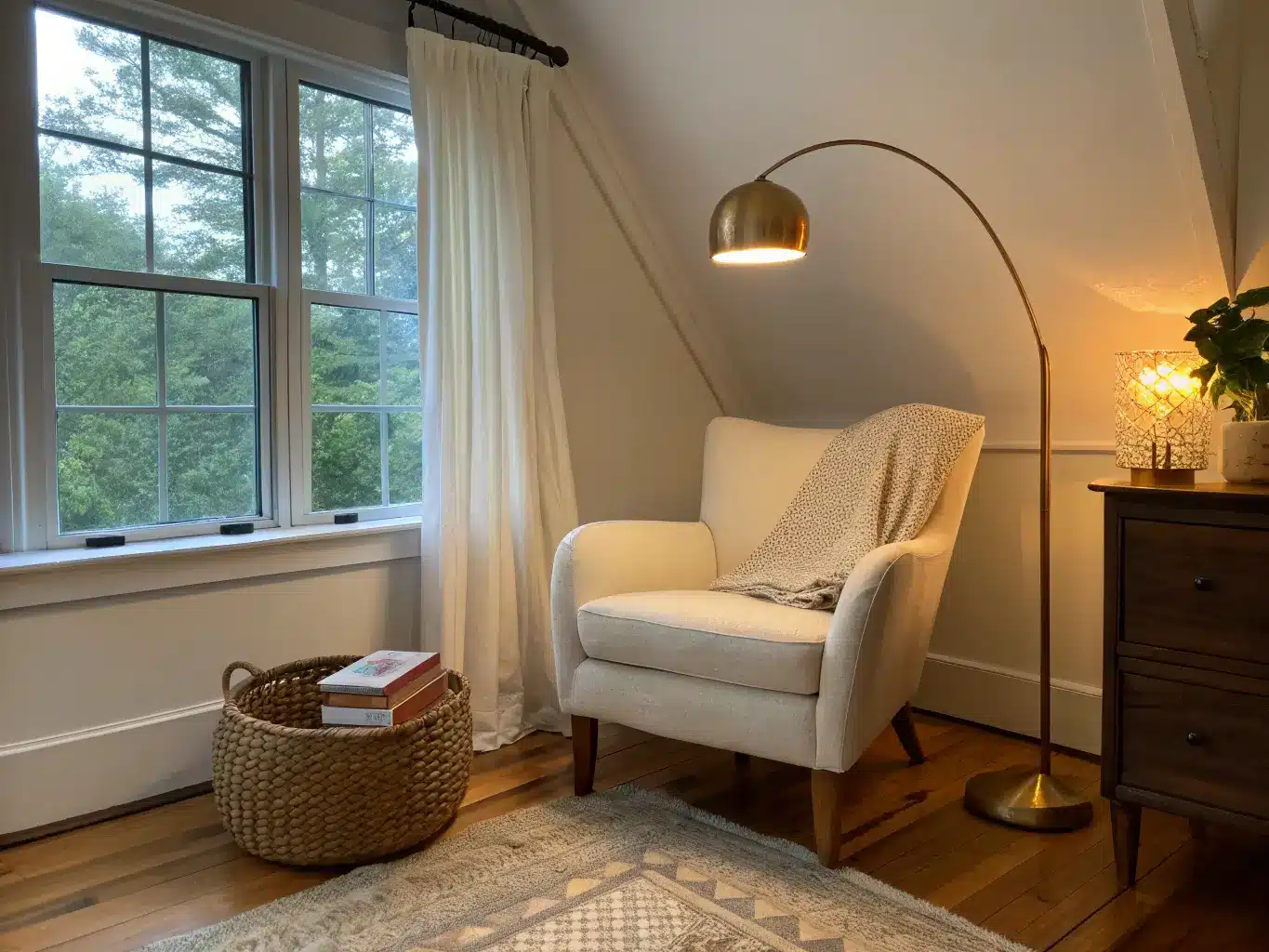
What a Reading Nook Actually Needs
Time: A simple corner refresh takes 2–6 hours — chair, lamp, rug, done. If you’re painting, hanging shelves, or building a bench, budget 1–3 days.
Cost: You can do this for $150–$400 if you’re thrifting and using what you own. A nicer version with a real armchair, a proper floor lamp, and a good rug lands around $400–$1,200. Built-ins or a designer-level nook with custom cushions and millwork? $1,200 and up, easily.
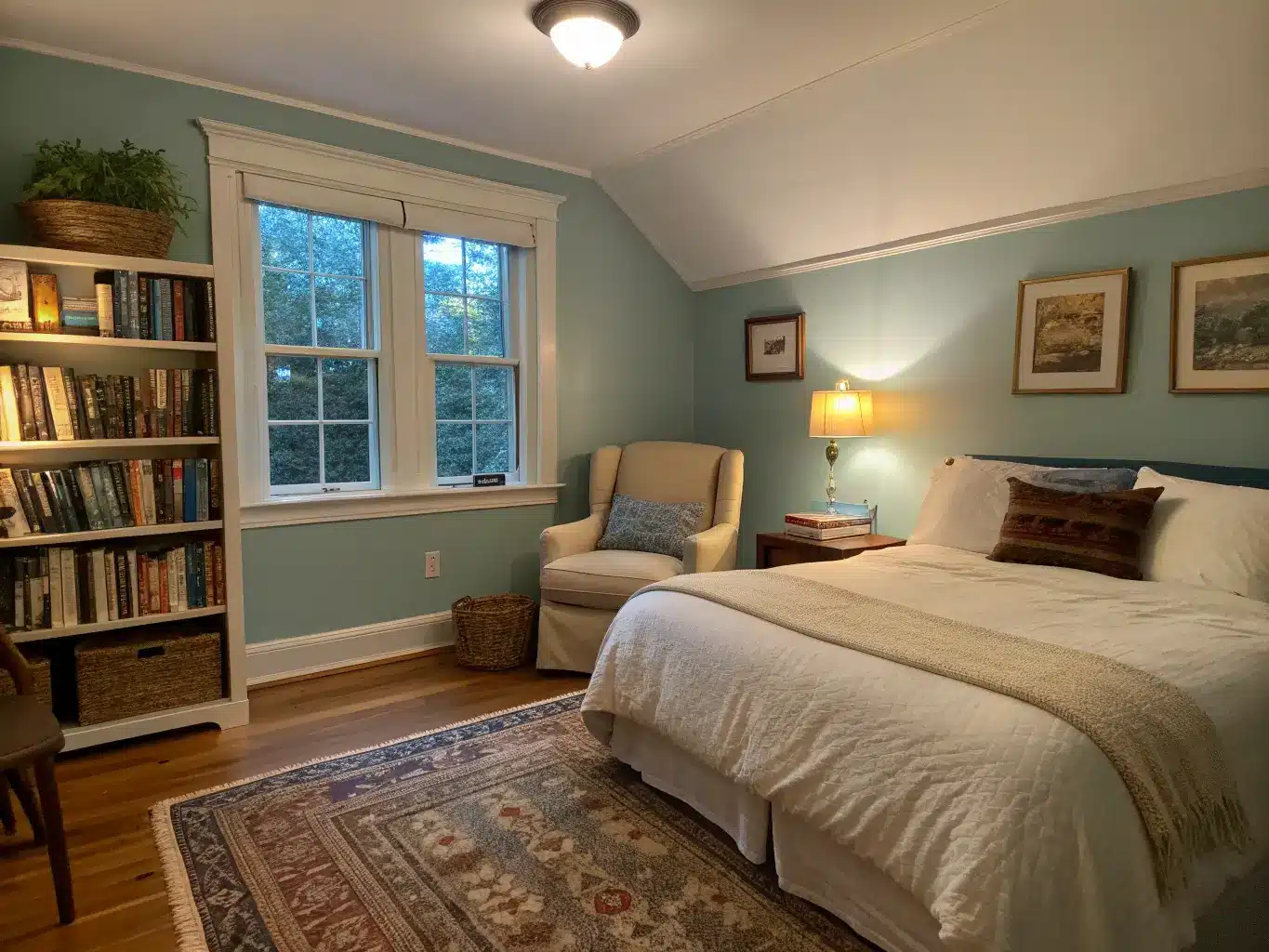
Space: A corner, a window bay, an alcove, under a staircase, a closet you never use, a recess in a bedroom wall. Mine is 4 feet by 5 feet and fits a chair, a small table, and a rug with room to walk past. You don’t need much — you need the right shape.
Skill level: Beginner-to-intermediate for a furnished corner. Intermediate-to-expert if you’re adding a window bench or wall sconces with actual wiring.
Season: Year-round, but it earns its keep in winter. Nobody’s curling up under a chunky knit blanket in July, but you’ll still use the chair.
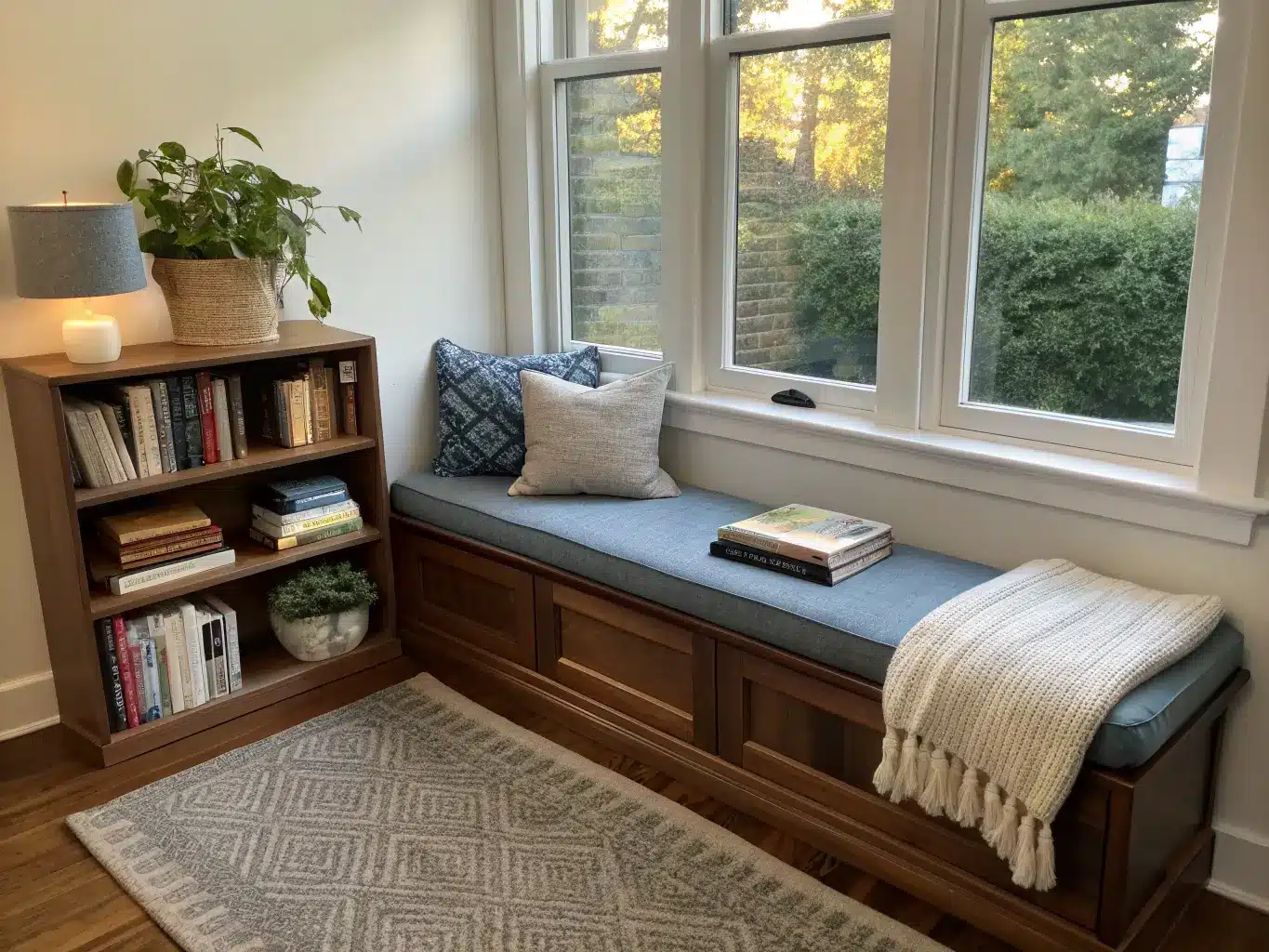
The Style: Comfort First, Aesthetic Second
A reading nook isn’t really its own design style — it’s a function that borrows from whatever style you already live in. Cottage, traditional, boho, farmhouse, library-inspired, quiet luxury — the formula bends to fit all of them. What doesn’t bend is the comfort requirement.
Colors that work: warm neutrals, soft cream, muted sage, dusty blue, charcoal, earthy brown. These read as calm rather than cold.
Materials that do the heavy lifting: linen, velvet, wool, chunky knits, wood, brass, marble, natural fiber rugs (jute, sisal). Mix at least three textures or the space reads flat under lamplight.
Who this is for: people who read before bed, remote workers who need a screen-free break spot, apartment dwellers with one spare corner, parents wanting a kid-sized book corner, anyone who wants one low-tech zone in the house.
Best locations: bedroom corners, window bays, hallway alcoves, under stairs, an emptied-out closet, a guest room nobody uses during the day. Avoid anything near the kitchen or a main walkway — foot traffic kills the “retreat” feeling fast.
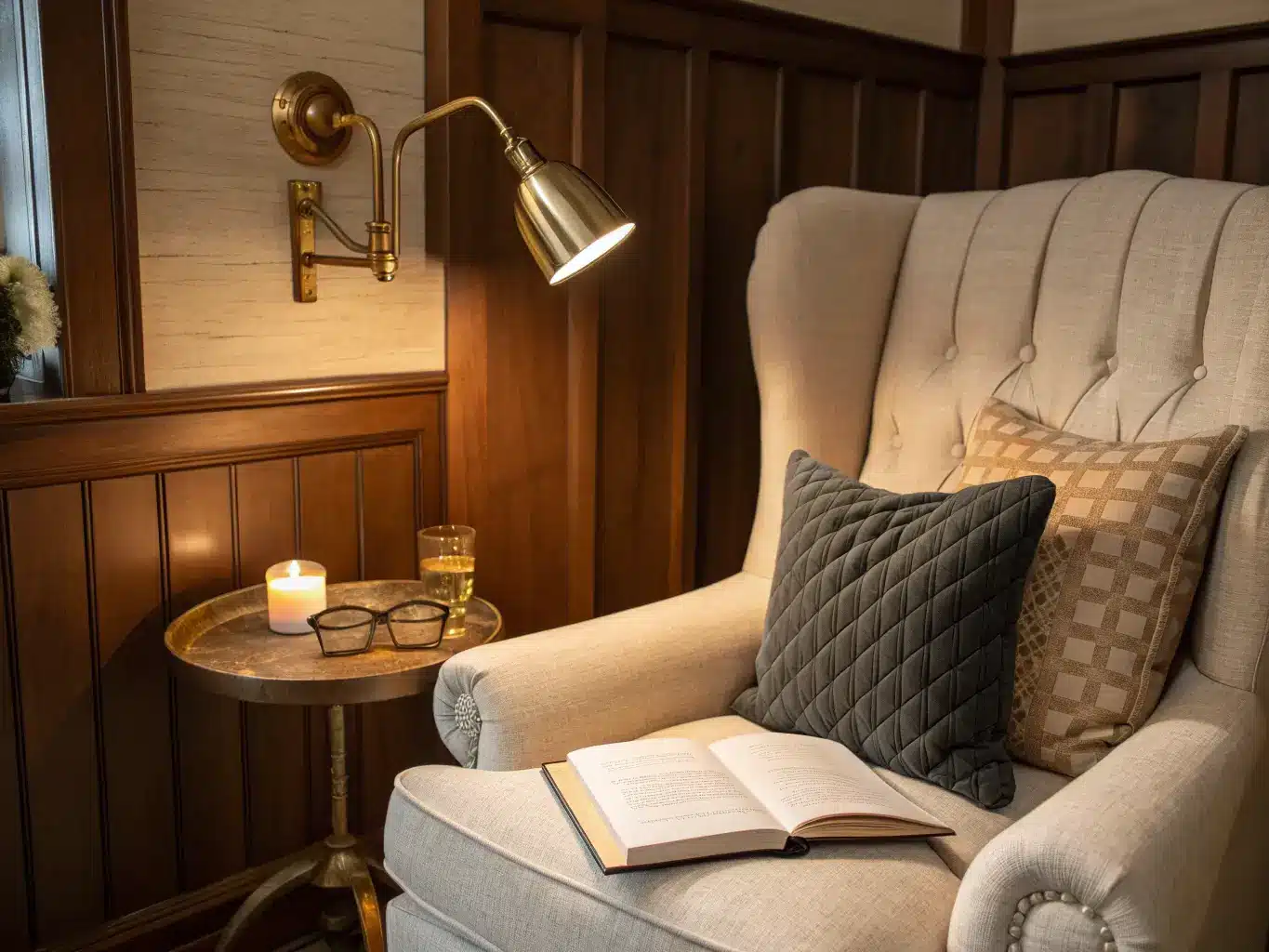
The Essential Pieces
Hero seating
This is where I went wrong the first time. I bought a gorgeous slipper chair because it matched my rug, and it was too shallow and too firm to sit in for more than twenty minutes. I sold it eight months later and got a deep armchair with a low back and real cushioning. Comfort has to win over looks every time — you can find a chair that does both, but if you have to choose, choose comfort.
Good options:
– Deep armchair or wingback — best all-around choice, works in almost any room
– Small loveseat or settee — good if two people might use the space
– Window bench — great for a bay window, add a thick cushion (at least 4 inches of foam)
– Daybed — works if the nook doubles as a guest spot
Reading light — non-negotiable
Skip this and you’ve built a decorative corner, not a reading corner. I learned this the hard way: my nook looked finished for three weeks before I realized I’d never actually sat in it after dark because the overhead light was across the room and too harsh anyway.
Get one of these, positioned within arm’s reach of the seat:
– Adjustable floor lamp (arc or gooseneck style, so you can angle the light over your shoulder)
– Wall sconce with a swing arm
– Library light mounted over a shelf — genuinely trending right now, and it does double duty lighting books and the seat below
Rule of thumb: the bulb should sit roughly level with your shoulder when seated, not overhead. Overhead light on a book creates shadow from your own hand.
A surface for your stuff
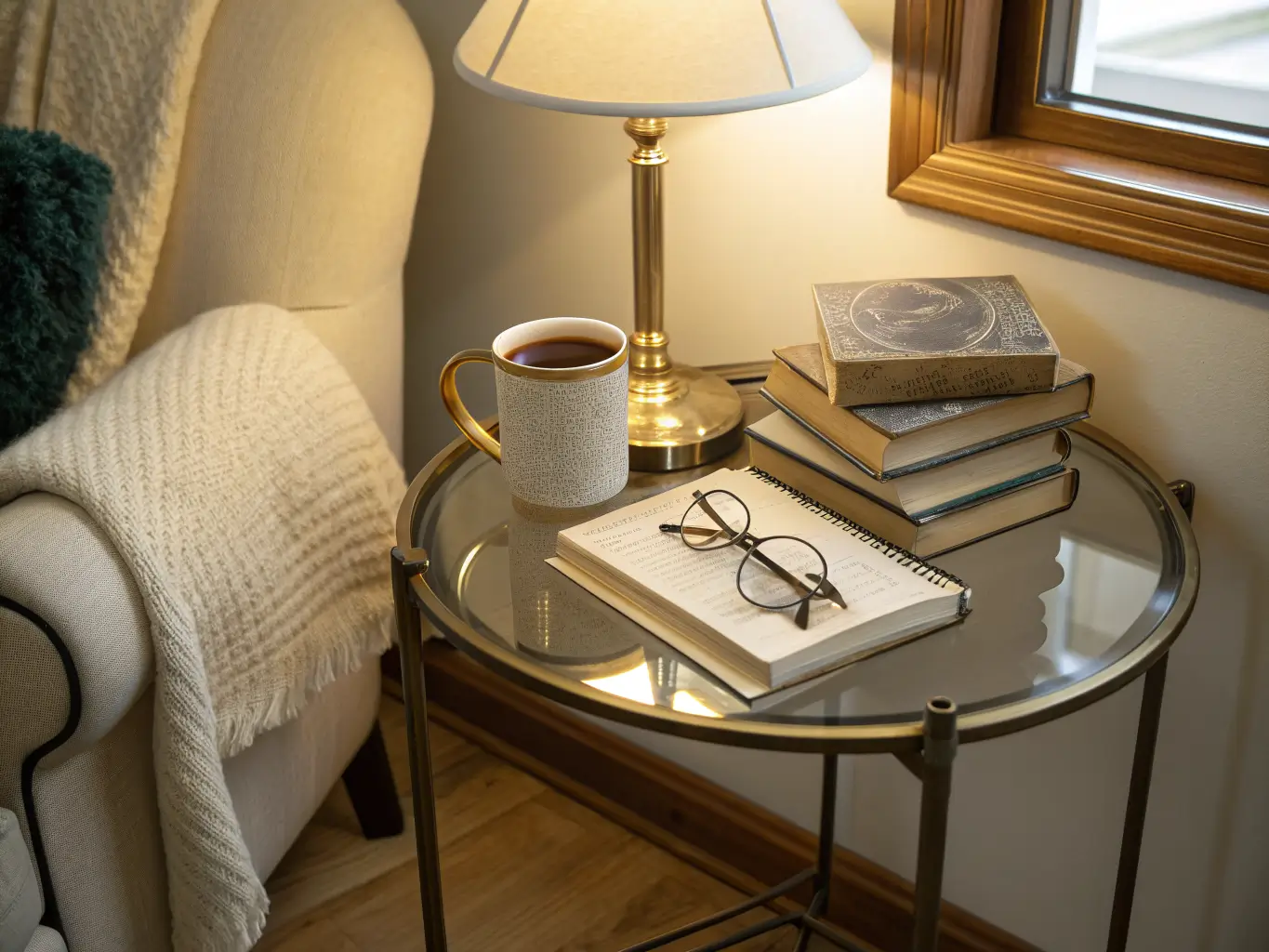
A side table, a small nesting table, a garden stool, even a bar cart. I use a $40 vintage brass-and-glass side table I found at an estate sale — it holds a mug, my glasses, and whatever I’m reading with room to spare. You need somewhere for a drink and a book that isn’t the floor.
Soft layers
– One throw blanket (knit for winter, linen or waffle-weave for summer)
– 2–3 pillows, mixing sizes — one 20-inch square, one lumbar, maybe one small round one
– A rug underfoot, even a small 3×5, to visually box in the space and take the chill off tile or hardwood
Book storage
Doesn’t have to be inside the nook. A floating shelf above the chair, a small cubby, or even a stack of 3–5 books on the side table signals what the space is for. I keep an open-front cube shelf against the adjacent wall — close enough to grab from the chair, out of the direct sightline so it doesn’t crowd the corner.
The finishing touches
A candle, a small plant, one framed print, a mug tray. Pick one or two — this is where clutter creeps in fastest.
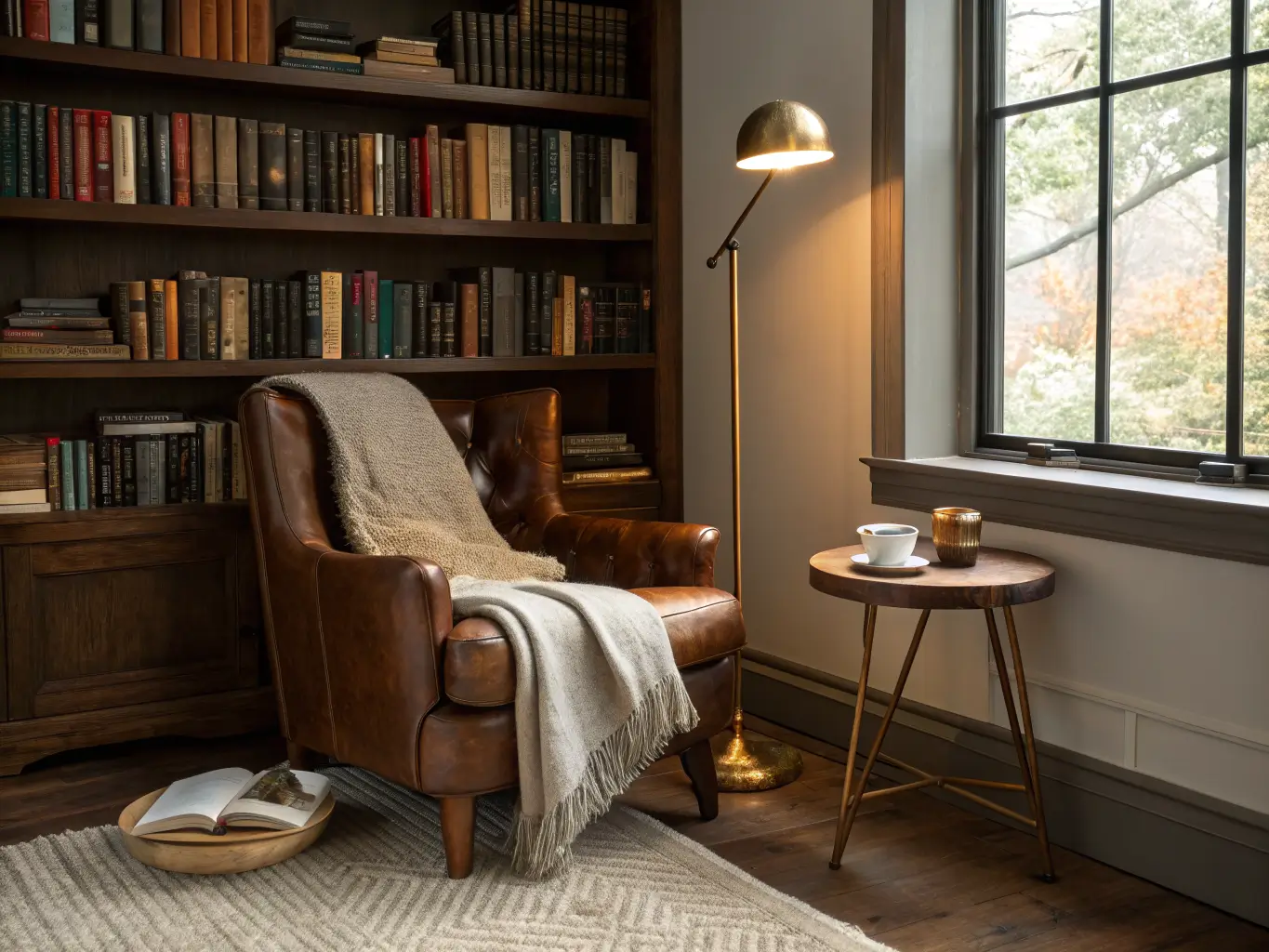
How to Actually Set It Up
1. Clear the space completely. Decide if it’s a one-chair nook or something bigger before you bring anything in.
2. Place the seat first. Sit in it. Check you can get in and out without hitting furniture, and that there’s a wall or window nearby for your head to rest against.
3. Add the light next, before anything decorative. Test it at night — daylight lies to you about how a corner will feel at 9 p.m.
4. Lay the rug, then layer in the side table, throw, pillows, books, and one plant, in that order.
5. Step back and remove one thing. There’s almost always one item too many.
If your nook sits near a window, keep the treatment minimal — a simple linen curtain or nothing at all. The daylight is doing free styling work; don’t block it with heavy drapery.
Mistakes I’ve Made (So You Don’t Have To)
– Prioritizing looks over comfort. Covered this above, but it bears repeating — it’s the single most common reason a reading nook goes unused.
– Skipping the lamp. A nook without task lighting turns into a spot where you pile laundry.
– Overloading it. My second attempt had six pillows, a blanket ladder, two plants, and a gallery wall behind the chair. It looked like a furniture showroom. I pulled it back to one blanket, two pillows, one plant. Better immediately.
– Wrong scale. A giant recliner swallows a small alcove; a tiny accent chair in a big bay window looks like an afterthought. Measure the space and buy for it, not for the picture you saw online.
– Wrong location. I originally wanted to put mine in the living room, three feet from the TV. It never would have worked — too much noise, too much traffic. The quiet bedroom corner made the whole thing click.
Keeping It Looking Intentional
Stick to one dominant color palette with one or two accents — don’t let every textile be a different shade of blue-adjacent-but-not-quite. Repeat two or three materials throughout: I went with walnut wood, brass fixtures, and cream wool, and it shows up in the lamp base, the side table legs, and the throw. That repetition is what makes a thrown-together corner look designed.
Edit the books and objects regularly. A nook should feel collected, not crowded — if you can’t remember why an object is there, it probably shouldn’t be.
Seasonal and Budget Refreshes
Cheap updates that make a real difference:
– Swap pillow covers seasonally (a $15–20 spend versus buying whole new pillows)
– Rotate in a thrifted lamp instead of buying new
– Use a wooden stool as a side table if you don’t have one yet
Seasonal shifts:
– Winter: chunkier knits, faux fur throw, darker moody accent color
– Summer: swap to linen, lighten the palette, add a stem of eucalyptus or a small potted fern
Cross-style variations, if you want to push the look further:
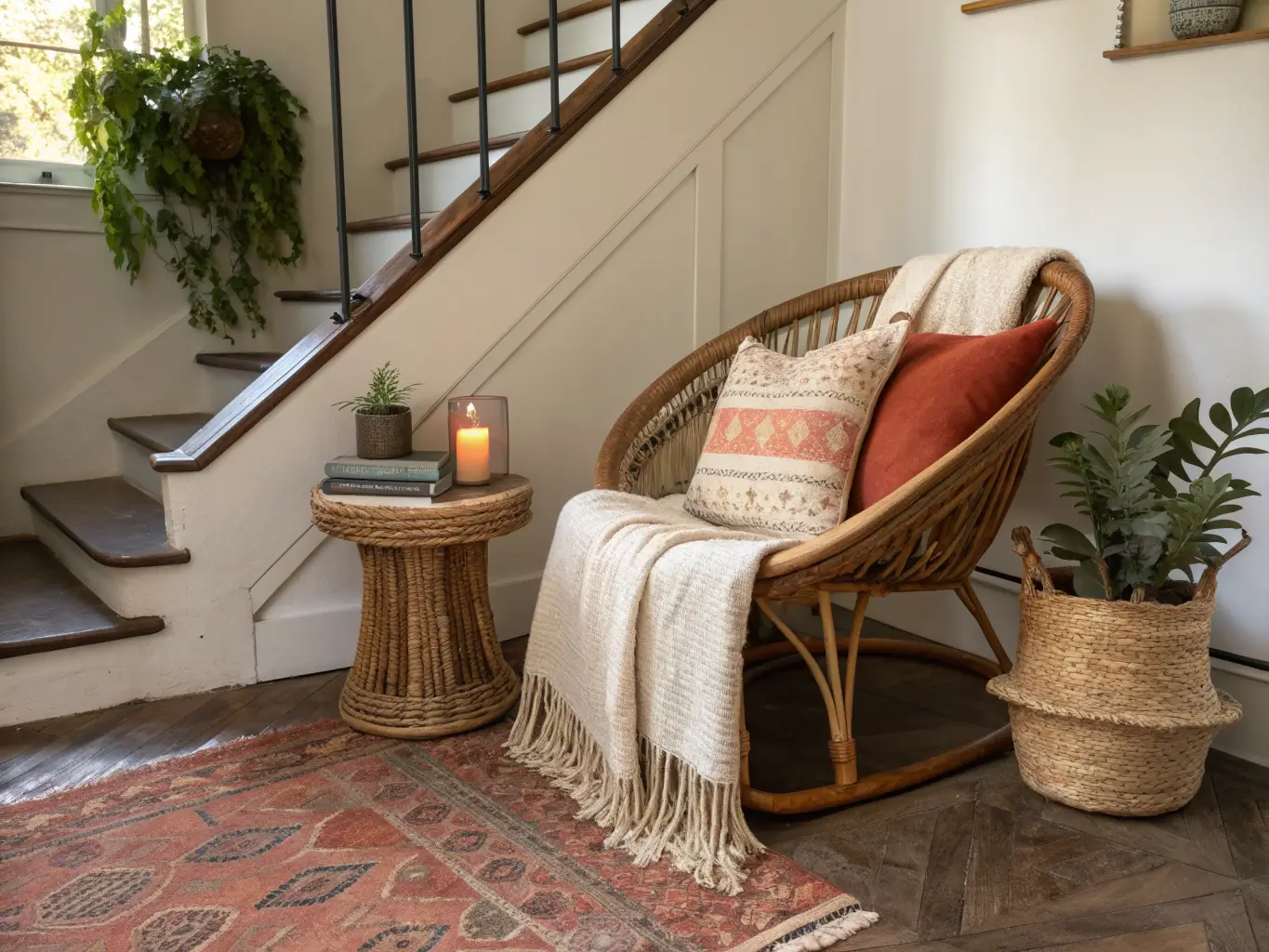
– Boho: rattan chair, layered vintage rugs, fringe-trimmed throw, terracotta accents
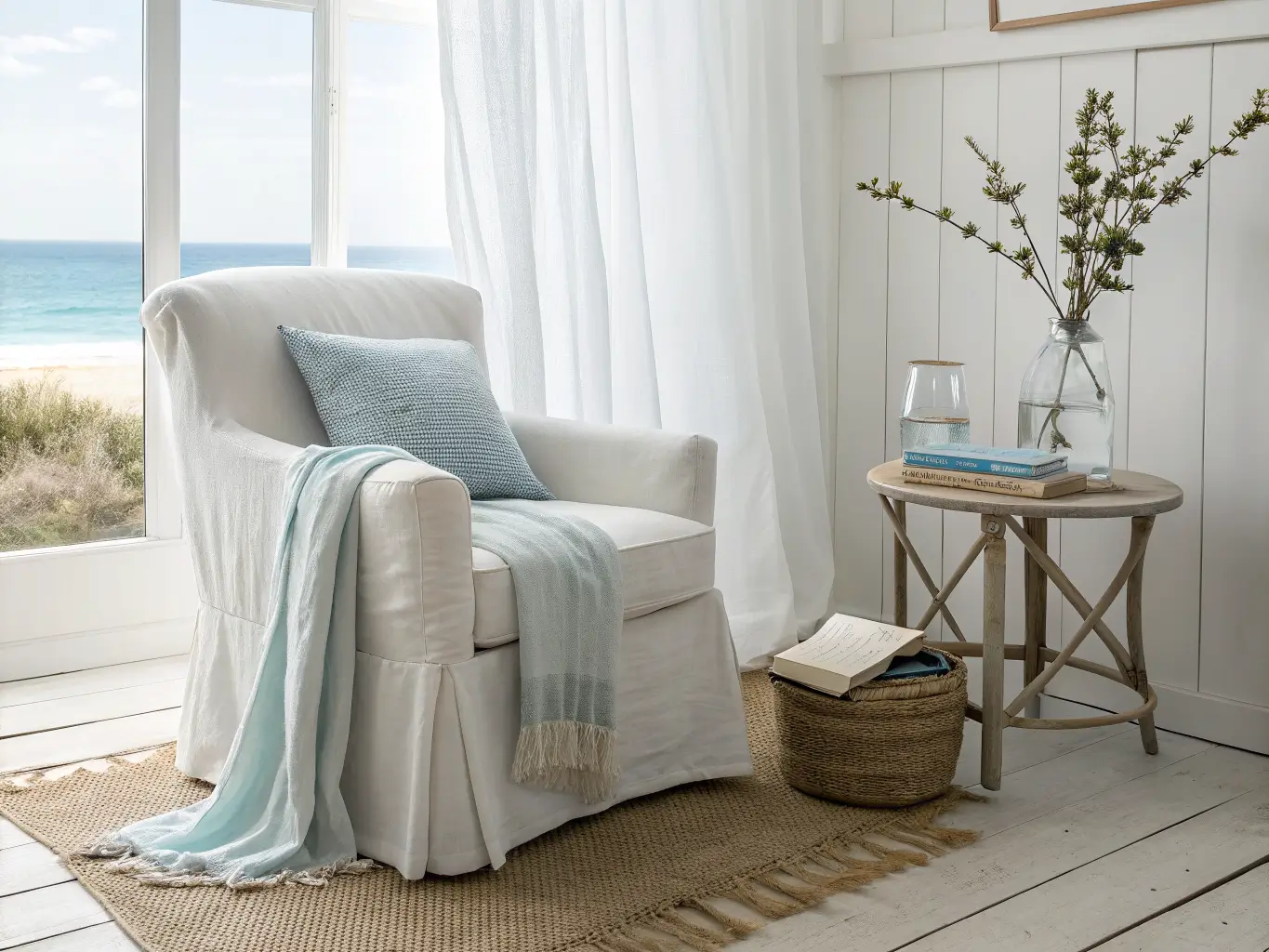
– Coastal: slipcovered chair, pale washed wood, soft blue pillow, linen everywhere
– Library-inspired: wall-mounted shelves, brass library light, leather chair, a marble bookend or two
Upgrade path if the nook earns its keep: start with chair, lamp, rug, throw. A year in, if you’re actually using it nightly, that’s when it’s worth investing in a built-in bench, a hardwired sconce, or custom cushions. Don’t build the built-in first — figure out if you’ll use the space at all before you commit carpentry to it.
The whole point is a spot you actually sit in, not a corner staged for photos. Mine has a coffee ring on that brass side table now. That’s how I know it’s working.
For another angle on this, my reading nook ideas guide covers the same space from a different starting point.