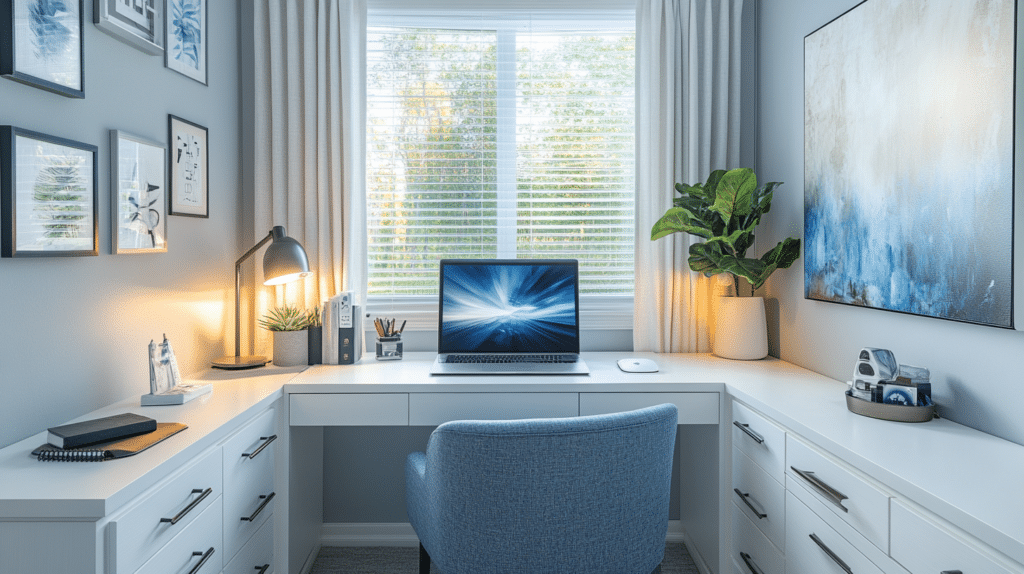
What the Study Room Aesthetic Actually Is
It’s not one look. It’s a blend — mostly modern minimalism with Scandinavian warmth, sometimes tipped toward dark academia if you like moodier tones and a library feel. What ties all the versions together is restraint: light wood, muted color, controlled clutter, and lighting that doesn’t strain your eyes by 8pm.
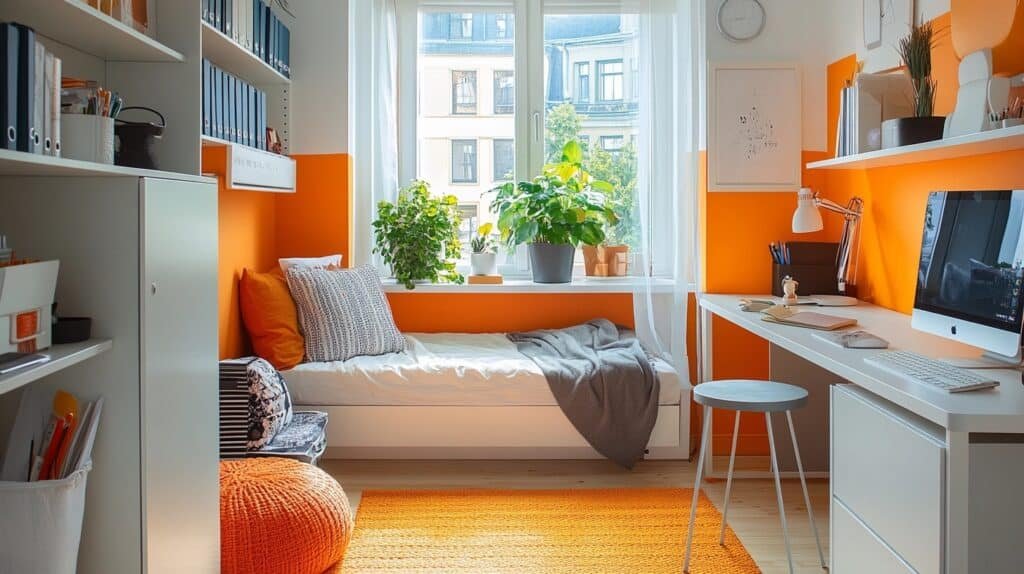
This style is for students, remote workers, and anyone who reads or works from home and wants the room to look intentional without turning into a Pinterest board that stops functioning the moment you add a coffee mug and a charger cable. It works in home offices, spare bedrooms, bedroom corners, and even a single wall in a shared space — you don’t need a dedicated room, you need a dedicated 6-foot stretch of wall.
Core palette: sage green, sand beige, ivory, pale blue, soft gray, muted green. Core materials: light wood (oak or ash, not orange-toned pine), matte cabinetry, fluted wood panels, black or brass metal fixtures, linen, and a low-pile rug. I learned the hard way that glossy white lacquer furniture photographs great and shows every fingerprint and dust speck within a week. Matte finishes win, always.
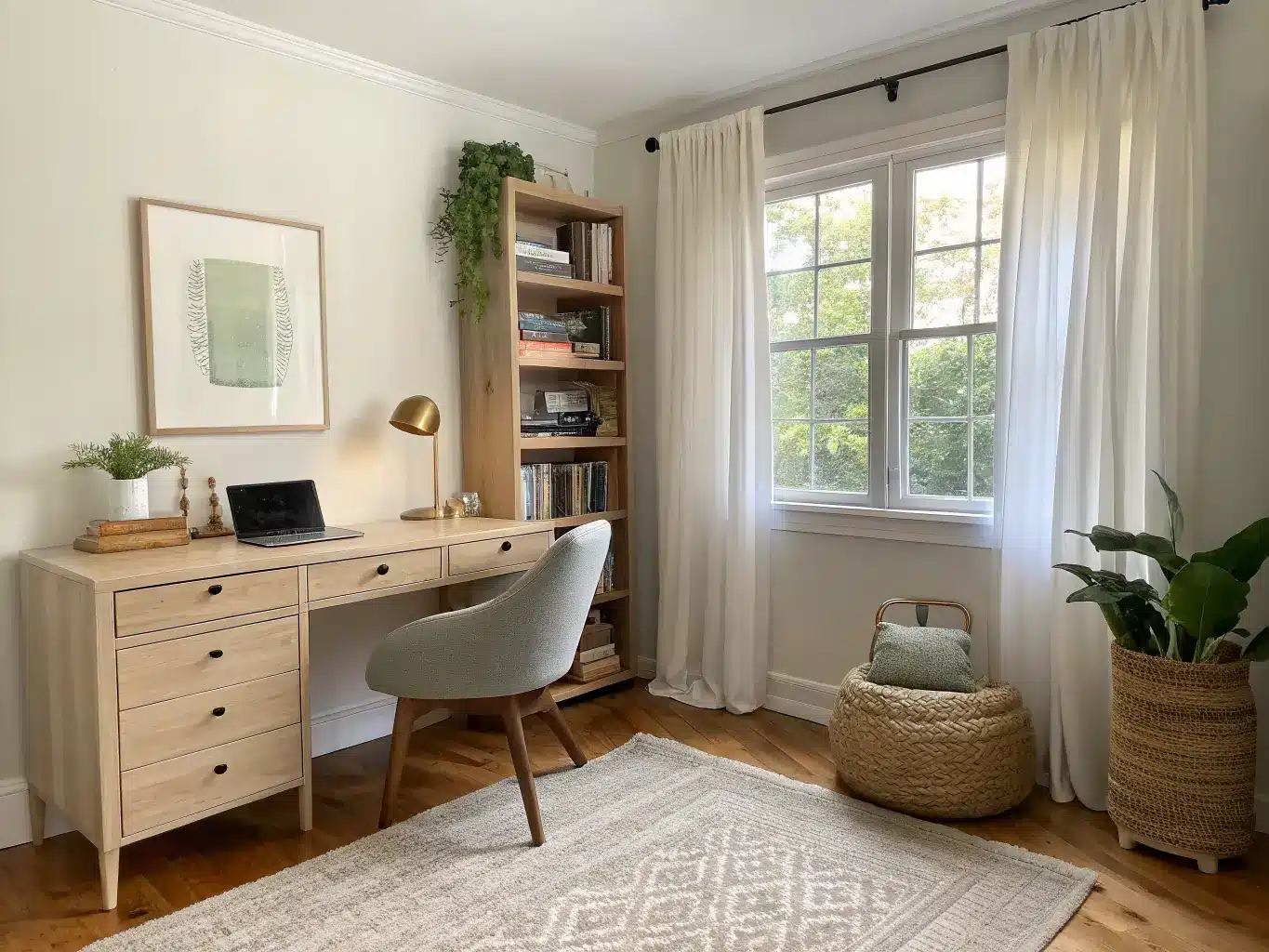
Setup Time, Cost, and Space Requirements
- Time: A simple refresh (new lamp, rearranged desk, decluttered surfaces) takes 1–3 days. A full redo with paint, assembled storage, and new lighting is realistically 1–2 weekends.
- Budget refresh: $150–$500 covers a lamp, desk organizers, a rug, and some wall art.
- Full setup: $600–$2,500+ if you’re buying an ergonomic chair, a real desk, layered lighting, and built-in or modular storage. The chair alone can eat $300–$600 of that if you go with something like a Herman Miller or Steelcase — worth it if you sit for hours daily, overkill if you study for 45 minutes at a time.
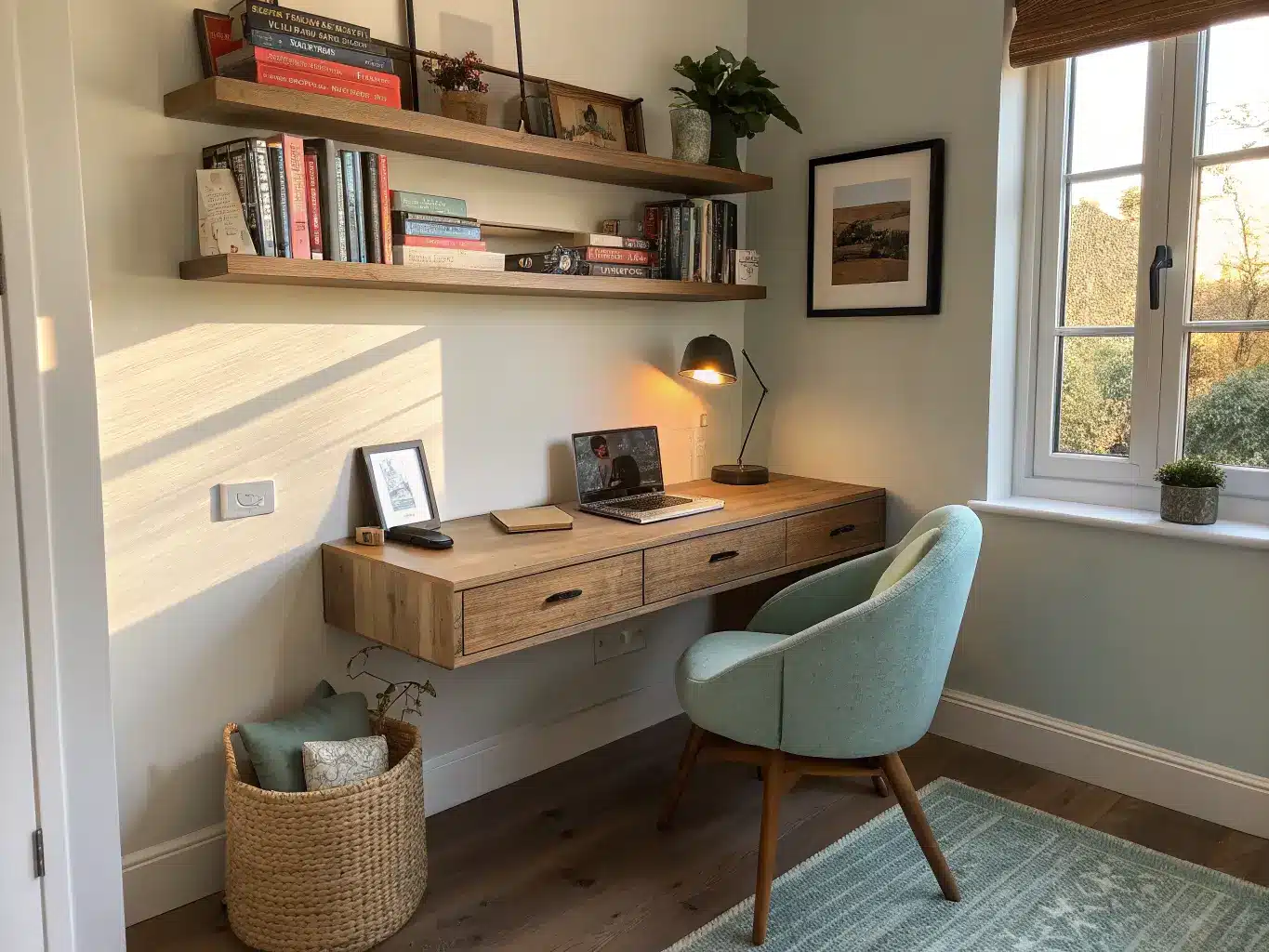
- Space: Works in nooks as small as 3 feet wide. Wall-mounted desks and vertical shelving are what make tiny spaces work — you’re not fighting for floor space, you’re building up.
- Skill level: Beginner for styling and rearranging. Intermediate if you’re painting, mounting floating shelves, or dealing with cable management behind a desk against a wall.
- Seasonal appeal: Year-round. This isn’t a look built around trends that expire — it’s built around light, storage, and calm color, which don’t go out of style because they’re not really “style,” they’re function dressed up nicely.
The Must-Have Pieces That Make It Work
Skip the decor shopping until these are sorted. Everything else is garnish.
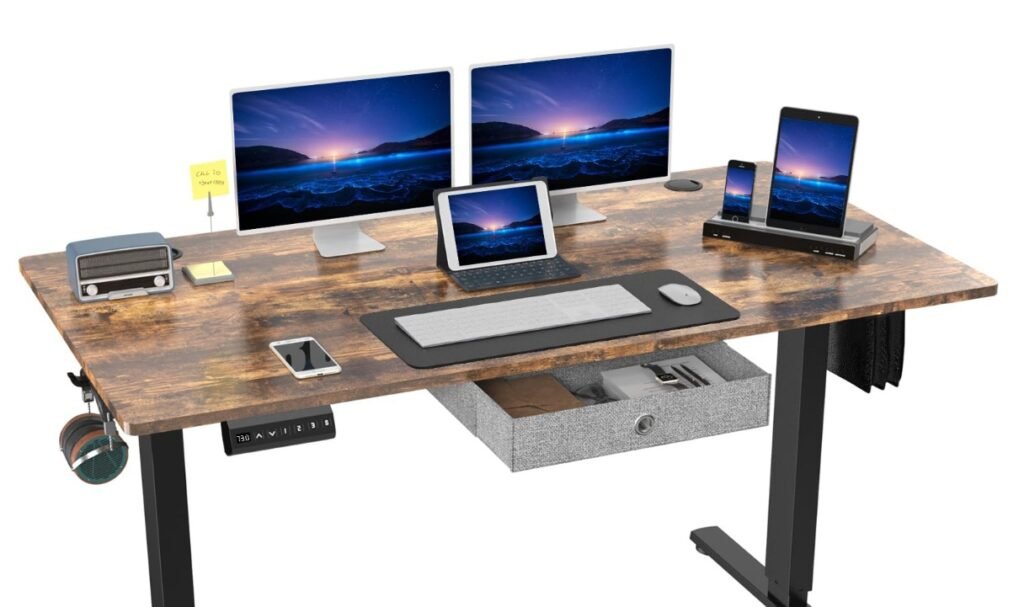
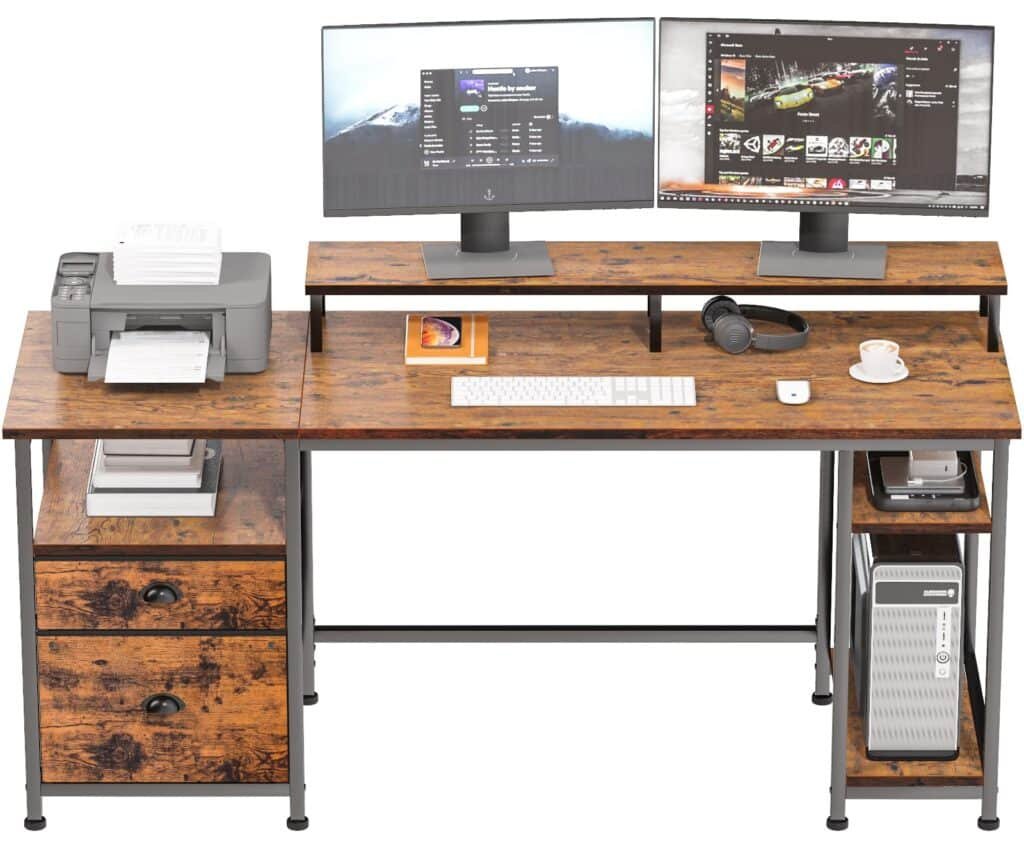
- Desk: Rectangular, simple lines. For small rooms, go wall-mounted or keep the depth around 55–60 cm so it doesn’t eat the room. I made the mistake of buying an 80cm deep desk for a room that was barely 8 feet across — it looked substantial in the store, and then it swallowed a third of my walking space at home.
- Ergonomic chair: Non-negotiable. A beautiful chair with no lower-back support will wreck a two-hour study session. Test the seat height against your desk before buying — your elbows should sit at roughly 90 degrees when typing.
- Task lighting, layered three ways:
- Ambient — a ceiling fixture or floor lamp for general light
- Task — a proper desk lamp, adjustable arm, warm-white bulb (2700K–3000K, not the blue-white 5000K office glare)
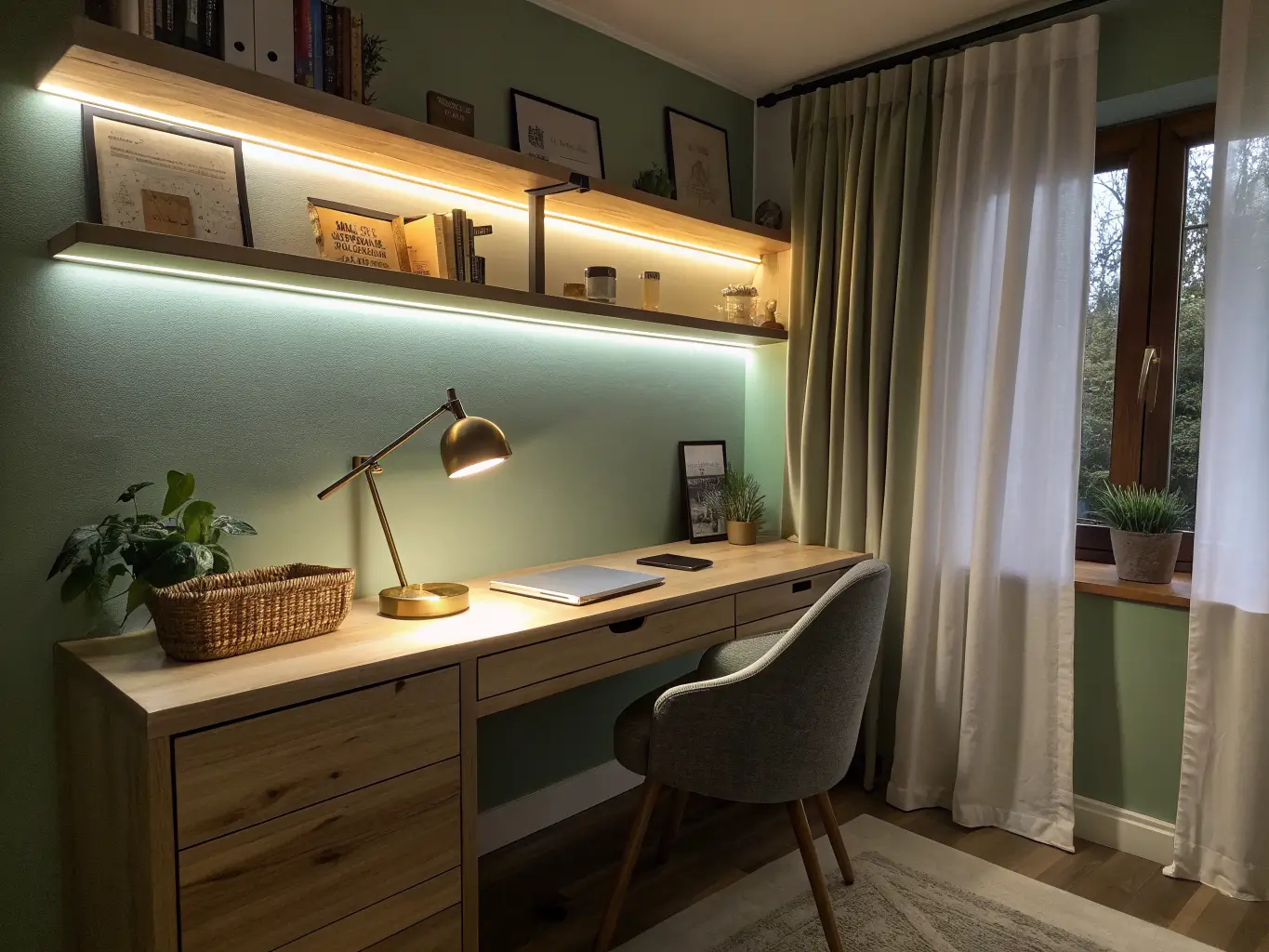
- Accent — a small lamp or LED strip for evening softness so the room doesn’t feel like an exam hall at 9pm
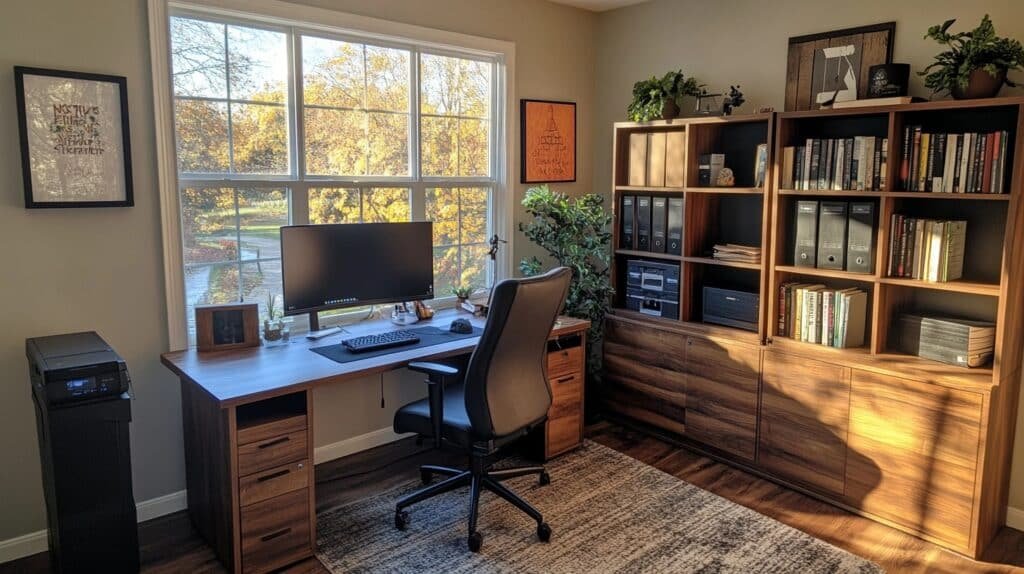
- Storage: A mix of open shelving (for books you actually use) and closed cabinets (for the cable chargers, old notebooks, and junk you don’t want visible). Open-only storage looks great for about two weeks before it becomes a clutter shelf.
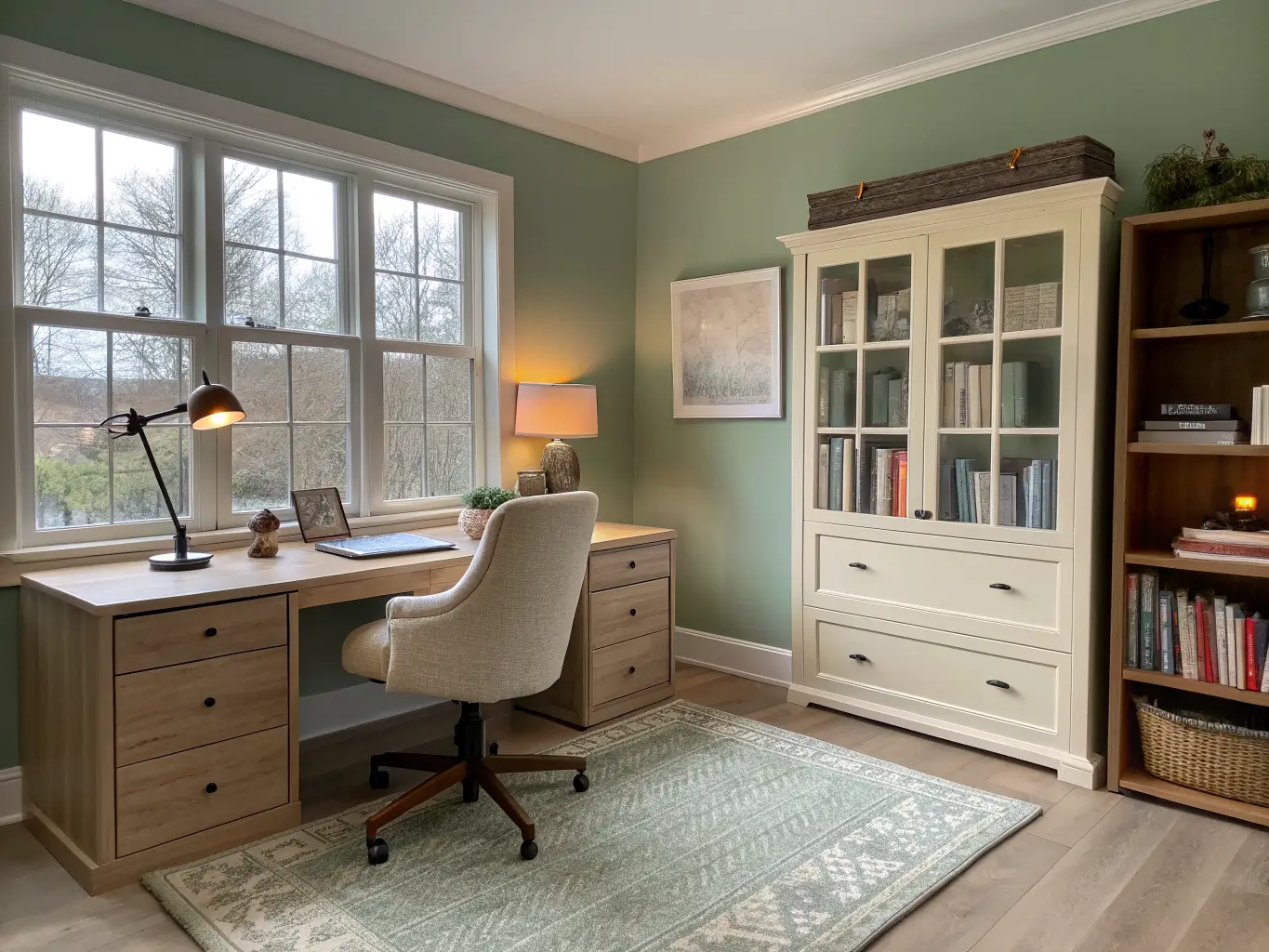
- Window treatment: Sheer curtains or blinds that cut glare without blocking daylight. Position the desk beside a window, not directly facing it — facing it means glare on your face during video calls, and facing away means glare on your screen.
- Decor accents: One piece of framed art, a corkboard or pegboard for loose notes, a small plant, and a rug under or near the desk to soften hard flooring.
Optional Touches That Push It from Fine to Aesthetic
Once the essentials are in place, these are what separate “functional desk in a room” from “a study room people compliment.”
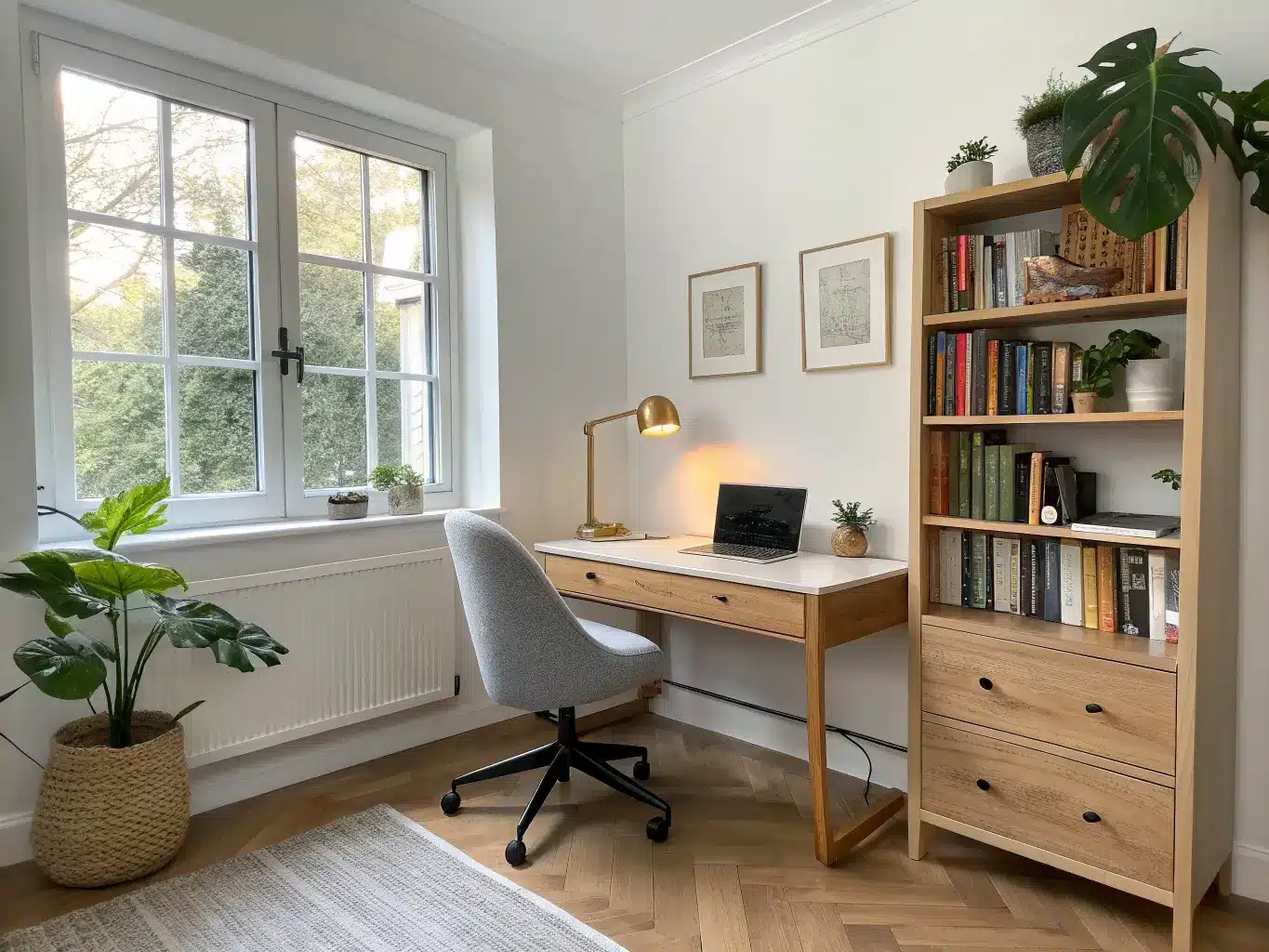
- Organic texture: a woven basket for blankets or cables, a small snake plant or pothos (both survive low light and neglect — I’ve killed everything else I’ve tried in that room), visible wood grain on the desk or shelves.
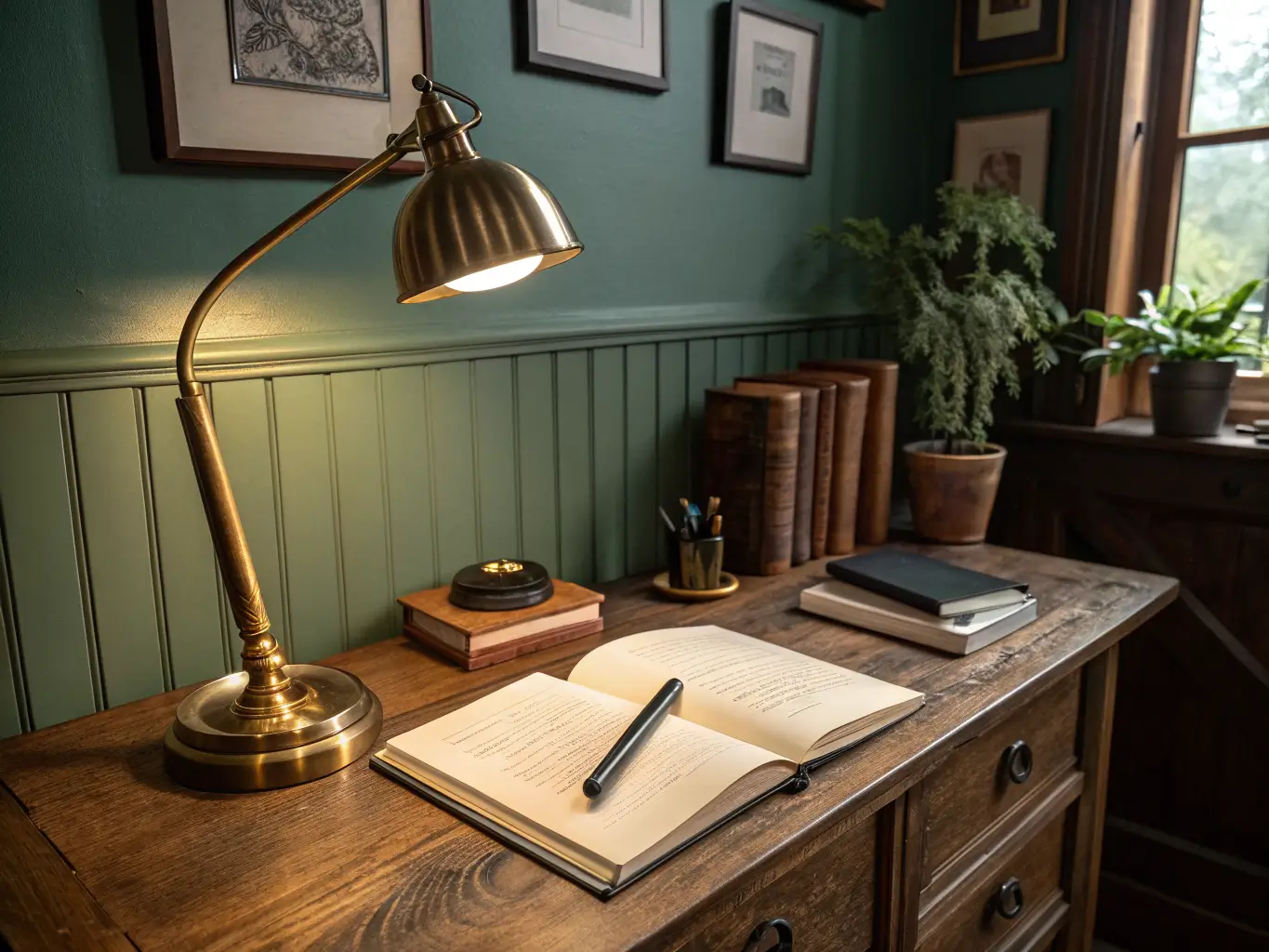
- Metallic details: matte black hardware on drawers, a brass-necked desk lamp, fluted cabinet fronts if you’re renovating built-ins. Small doses — this is an accent, not a theme.
- LED strip lighting behind a shelf or under a floating cabinet. Cheap ($15–$30), and it makes open shelving look intentional instead of half-finished after dark.
- Seasonal swaps: change the desk mat, a throw pillow on the reading chair, or the artwork twice a year. Don’t repaint or rebuy furniture for a season — that’s the fastest way to blow a budget on a room that’s supposed to save you money by keeping you home and focused.
How to Actually Put It Together
Start empty. Clear the corner or room completely before placing a single piece back. It’s tempting to work around what’s already there, but you’ll just rebuild the same clutter problem you’re trying to fix.
Place the desk first, near natural light but angled to avoid glare. Then the chair. Then storage. Only after the functional layout is locked in do you add decor — lamp, plant, art, one organizing tray. I used to do this backwards, buying the cute desk accessories before I even knew where the desk would sit, and ended up with a gorgeous desk caddy that didn’t fit anywhere once the real furniture went in.
Plan your cables before you plan your outlets. Nothing kills the aesthetic faster than a nest of cords crawling across the floor to the only outlet in the room. A $12 cable tray under the desk solves 90% of this.
Build vertically in small spaces. Floating shelves above the desk, a pegboard on the wall instead of a bulky organizer on the surface — every inch you take off the floor is an inch the room gets to breathe.
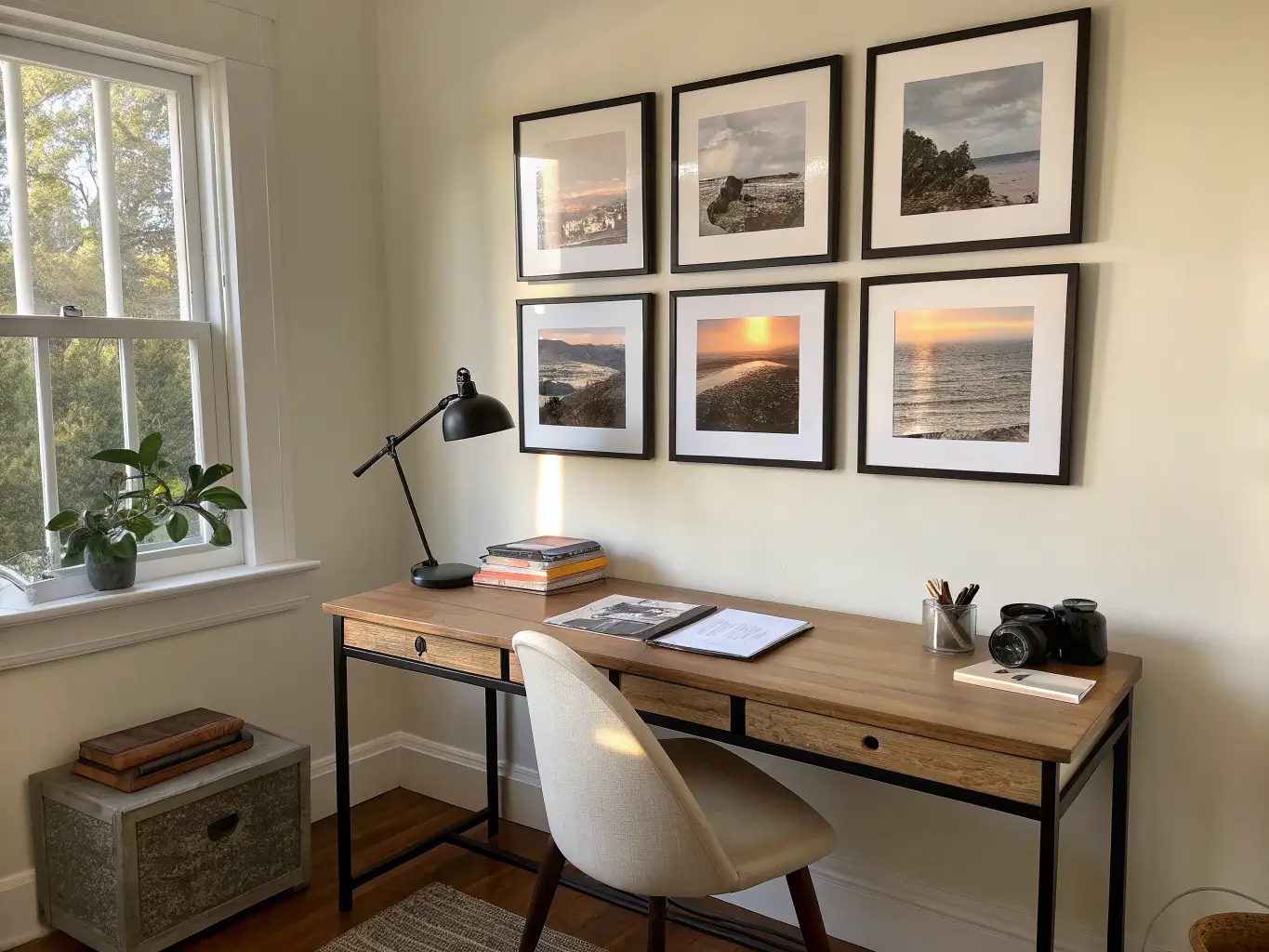
Pick one focal point. Mine is a gallery wall of three black-frame prints above the desk. It could be a window, a statement lamp, or a full bookcase wall. Just pick one — a room with three competing focal points feels busy no matter how clean the color palette is.
Finish with softness. A rug, curtains, a plant. Without at least one of these, even a perfectly organized study room reads cold and a little clinical.
Mistakes That Wreck the Look (and How to Dodge Them)
- Too much stuff on the desk. If it’s not used daily, it goes in a drawer. A cluttered surface is the single fastest way to kill the calm this style depends on.
- One overhead light and nothing else. This is the most common lighting mistake I see. A single ceiling fixture creates flat, harsh light and forces you to squint at your laptop by evening. Layer it.
- Choosing looks over back support. I bought a gorgeous rattan chair once because it matched the room perfectly. Lasted three weeks before my back made the decision for me and it got demoted to “reading chair in the corner,” which, fine, it’s good at that.
- Overdecorating a small room. Dark, heavy furniture and too many objects make a small study nook feel like a storage closet. Fewer, lighter pieces always read bigger.
- Blocking your own light. Desks jammed into the darkest corner of a room because “that’s where it fits” waste the one resource that’s free: daylight. Rearrange the room around the window, not around the outlet.
Keeping It Cohesive Over Time
Stick to 2–3 tones max through the whole room — I run sage, oak, and ivory through mine, and every new piece has to fit that palette or it doesn’t come home with me. This is the easiest way to keep a room from feeling like a collection of separate impulse buys.
Every object should earn its spot by organizing something, lighting something, or genuinely inspiring you to sit down and work. If it does none of those, it’s just clutter with good intentions.
When the room starts feeling stale, edit before you shop. Remove three things before you add one new thing. I do this every few months — pull everything off the shelves, put back only what I actually used that season, and suddenly the “new” item I add feels like an upgrade instead of more noise.
Budget refresh ideas: a $40 can of paint, a $60 floating shelf, a $50 lamp swap, or just moving the desk to a different wall — all of these change the feel of a room without a full renovation.
Seasonal tweaks: swap the desk mat, the throw pillow, the artwork, or the plant. Keep the bones — desk, chair, storage, lighting — exactly where they are.
Cross-style ideas if you want to push the aesthetic further:
- Modern Scandinavian: white walls, light oak, minimal objects, soft neutral textiles
- Modern dark academia: deeper wood tones, brass lamps, stacked books, framed prints, a slightly moodier palette that still stays organized rather than cluttered
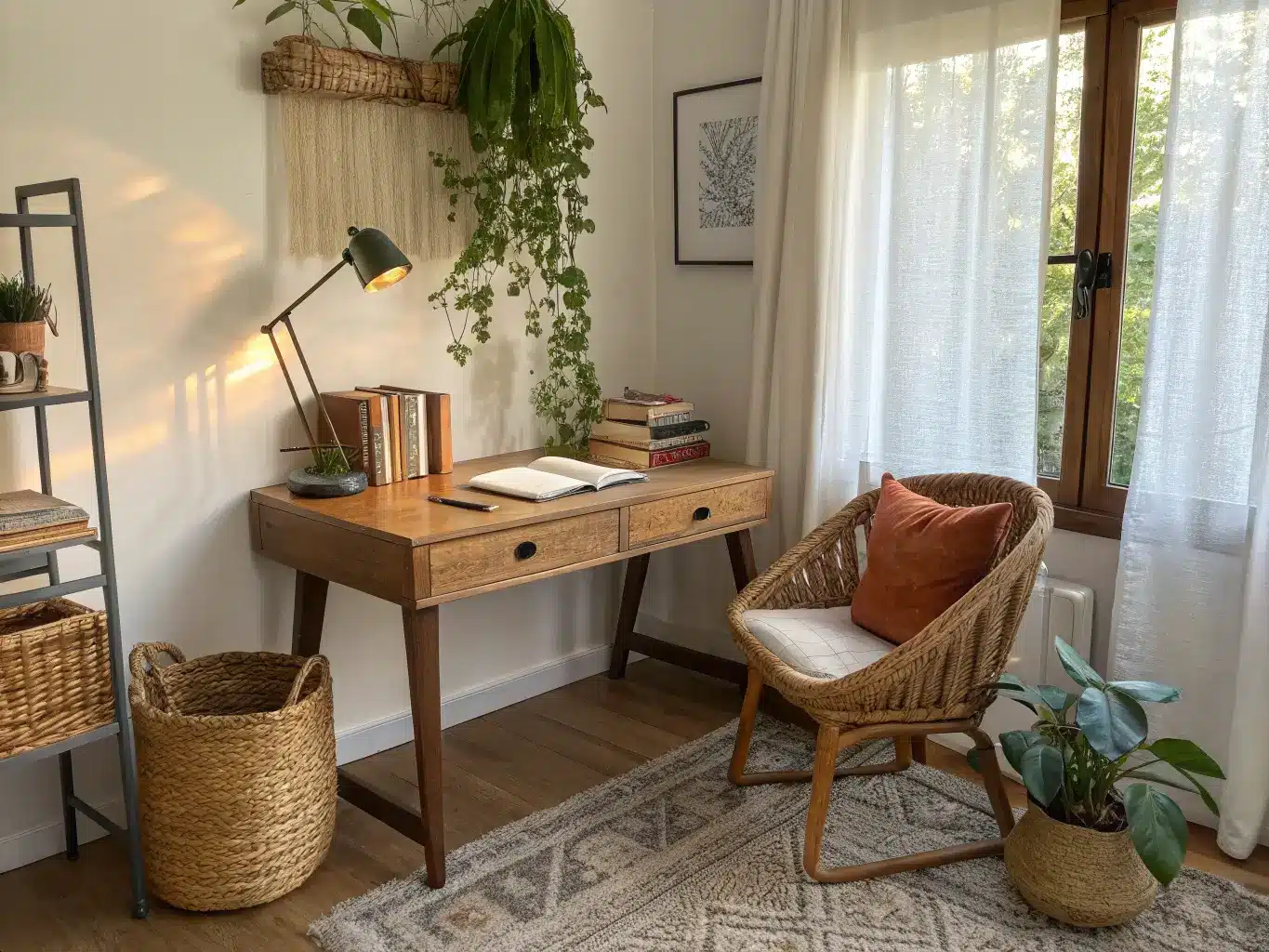
- Boho study corner: woven baskets, warmer wood tones, more greenery — just keep the actual desk surface clear, because boho’s love of layered texture is the enemy of a focused workspace if it creeps onto where you’re trying to type
The room that looks the best in photos and the room that gets you through a semester or a work deadline should be the same room. That only happens when you build the function first and let the aesthetic follow it.
For another angle on this, my study room decor guide covers the same space from a different starting point.