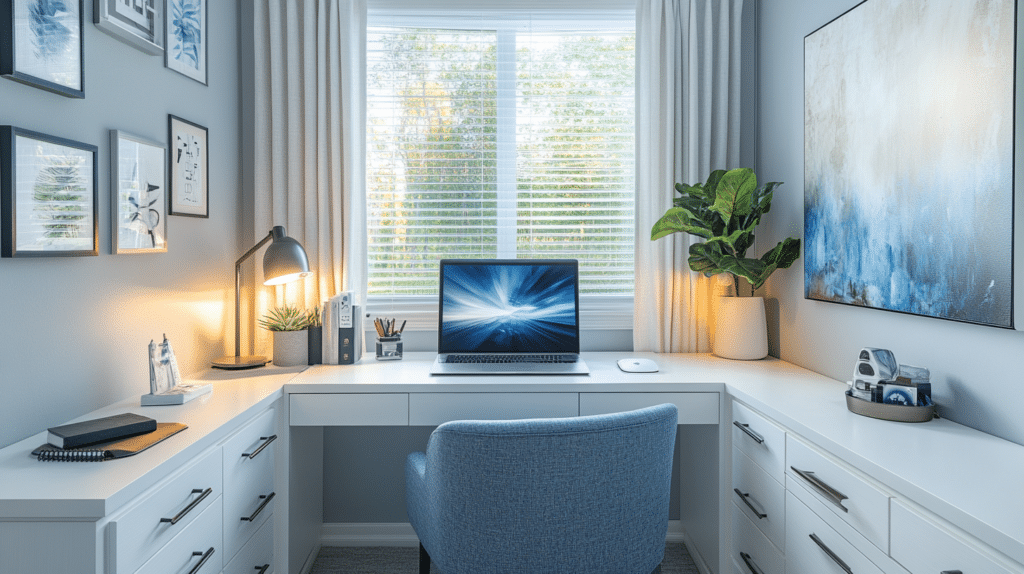
Quick Style Snapshot: Time, Cost, and Scope
Time: A simple refresh — new lamp, a rug, decluttering, hanging one shelf — takes about a day. If you’re painting, mounting shelves, hiding cables properly, or swapping furniture, budget 2 to 5 days, mostly because paint needs drying time and you’ll inevitably rearrange the desk twice before it feels right. I did.
Cost: You can do a real refresh for $200–$400. My actual shopping list the second time around: a desk with built-in shelves ($90), an adjustable desk lamp ($25), an ergonomic seat cushion ($20) instead of a whole new chair, two floating shelves ($30), a faux fiddle-leaf plant in a ceramic pot ($15), and a small jute rug ($20). That’s under $200 and it changed the entire feel of the room.
If you’re starting from zero — no desk, no real chair, nothing — expect $500 to $1,500+ depending on furniture quality. A decent ergonomic chair alone can run $150–$300, and it’s worth every dollar.
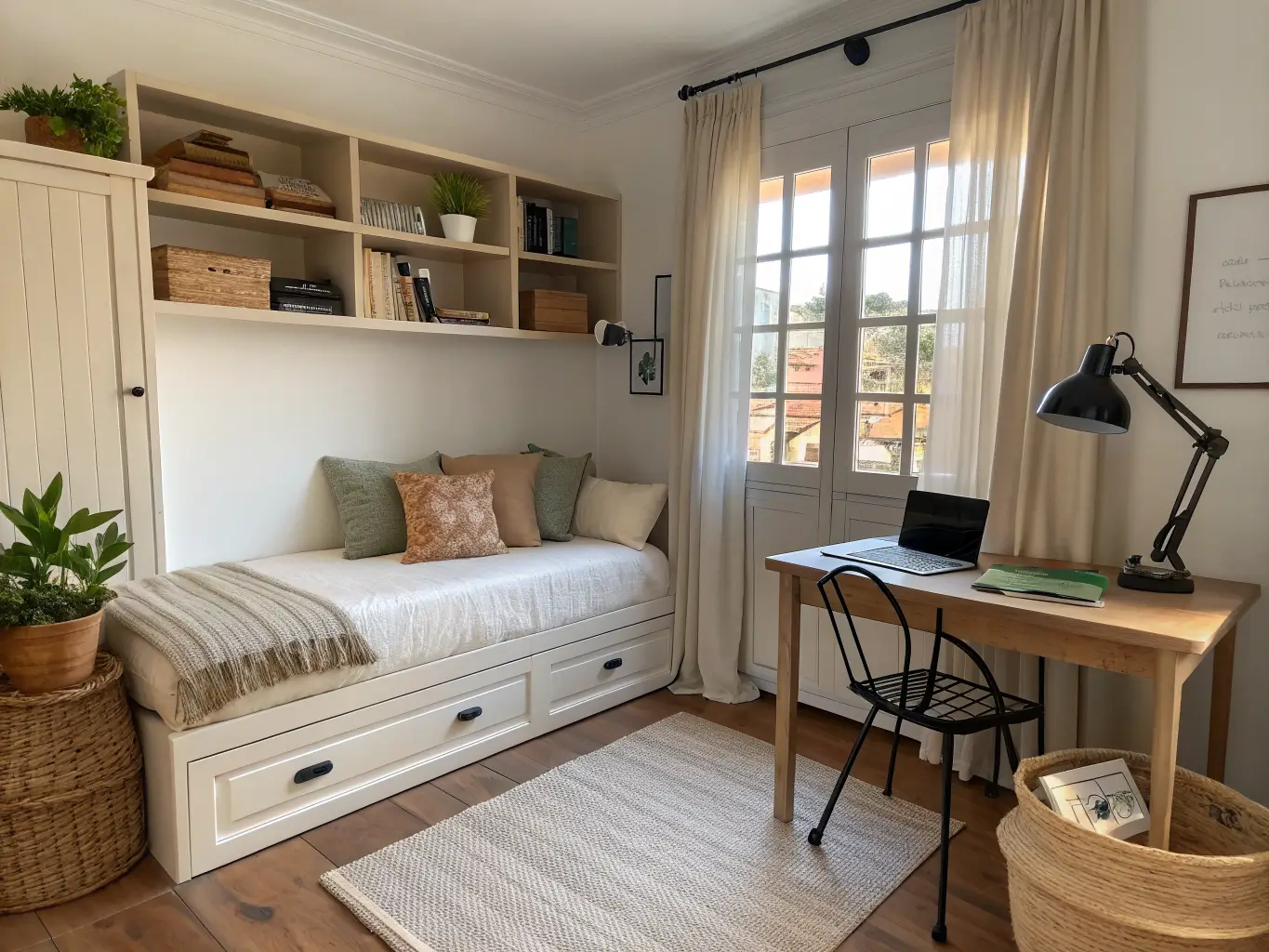
Space size: This works in a dorm corner, a spare bedroom, a converted closet, or a full dedicated room. Small spaces just mean you lean harder on vertical storage — wall shelves and slim desks — instead of floor furniture.
Skill level: Beginner if you’re just styling. Intermediate once you’re drilling into walls for shelves or running an accent wall.
Seasonal appeal: Year-round. Swap a throw blanket or the artwork with the seasons and you’re set.
What This Style Actually Is
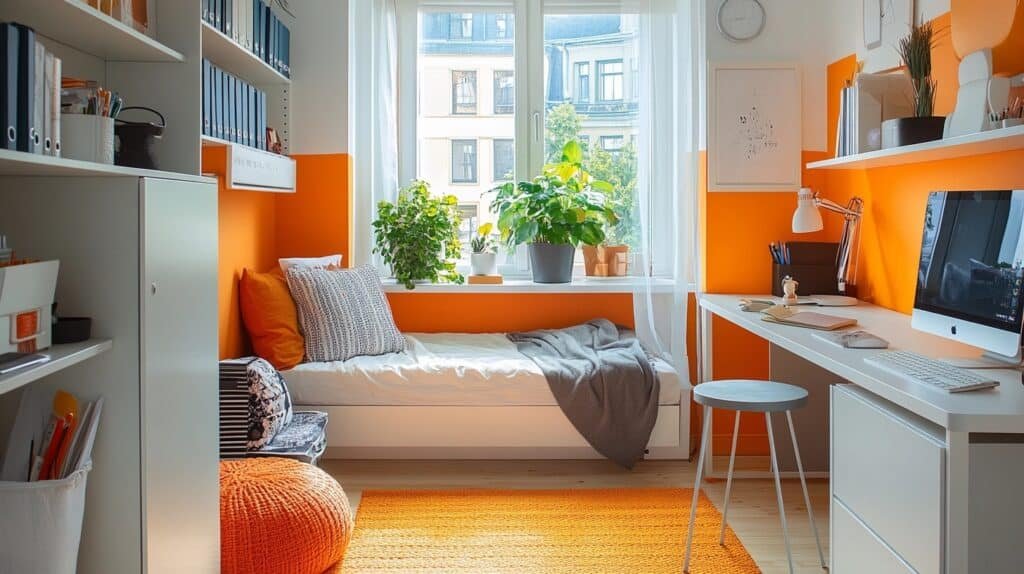
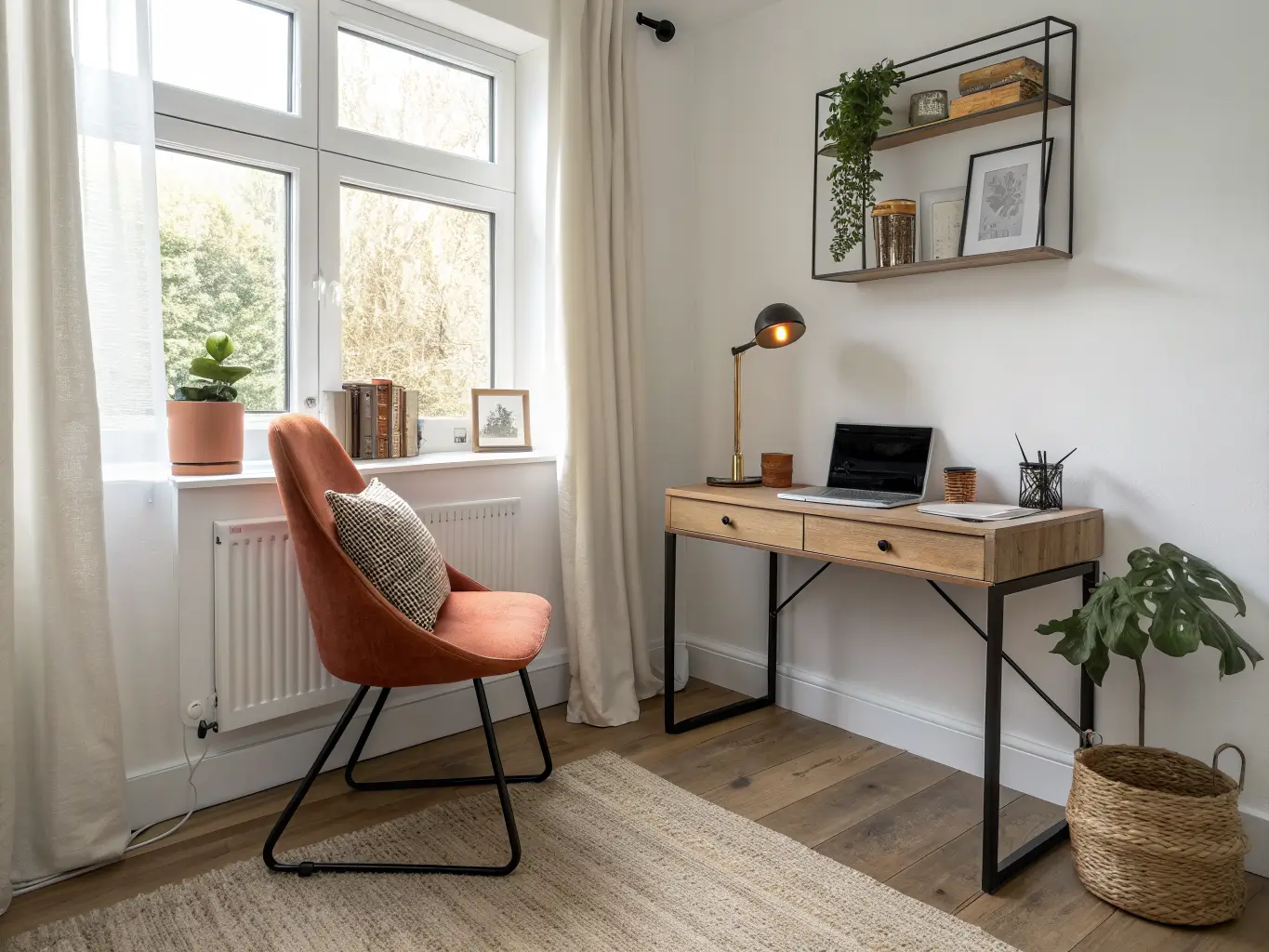
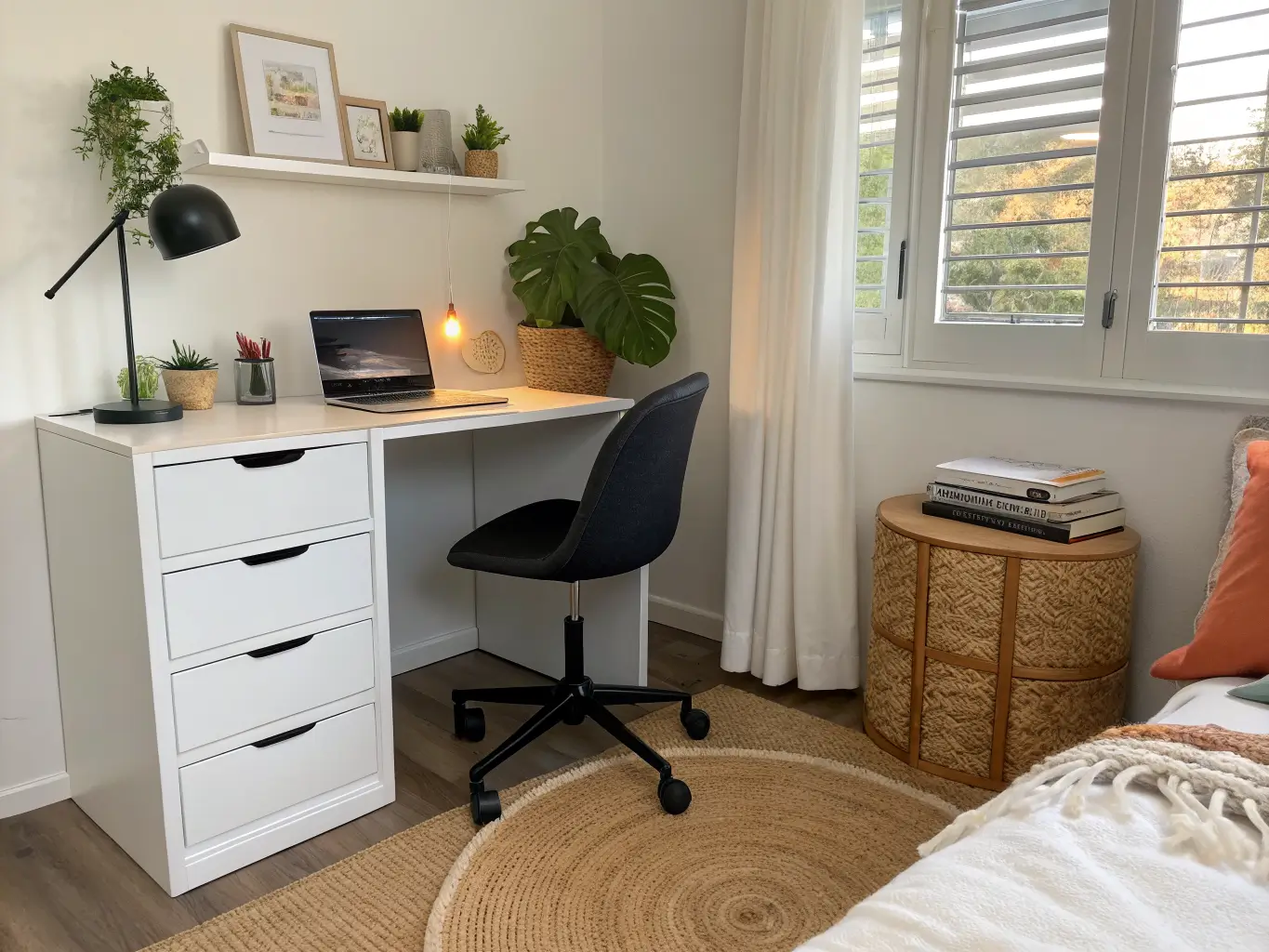
The look that keeps showing up in every current study-room refresh — and the one I landed on after abandoning a “cozy maximalist” phase that made my desk impossible to actually use — is clean, modern, and quietly functional. Think warm white walls, wood tones, one soft accent color, and almost nothing on the desk surface itself.
Popular variations right now:
– Modern minimalist — white, black metal, lots of negative space (empty, uncluttered space that gives the eye a rest)
– Cozy neutral — beige, cream, linen textures, warmer and softer
– Scandi-inspired — pale wood, black accents, simple lines
– Budget-friendly contemporary — whatever you’ve already got, styled with restraint
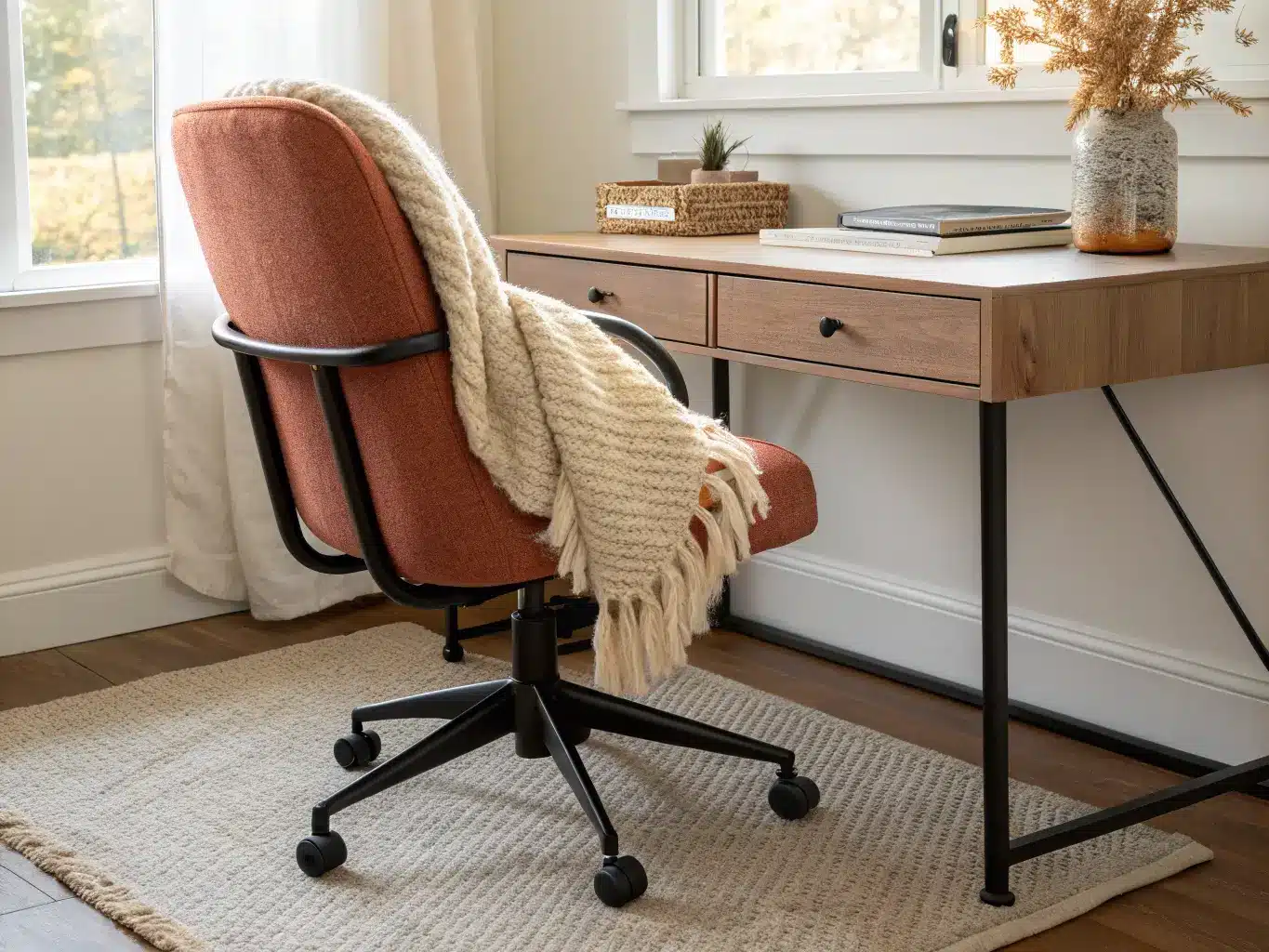
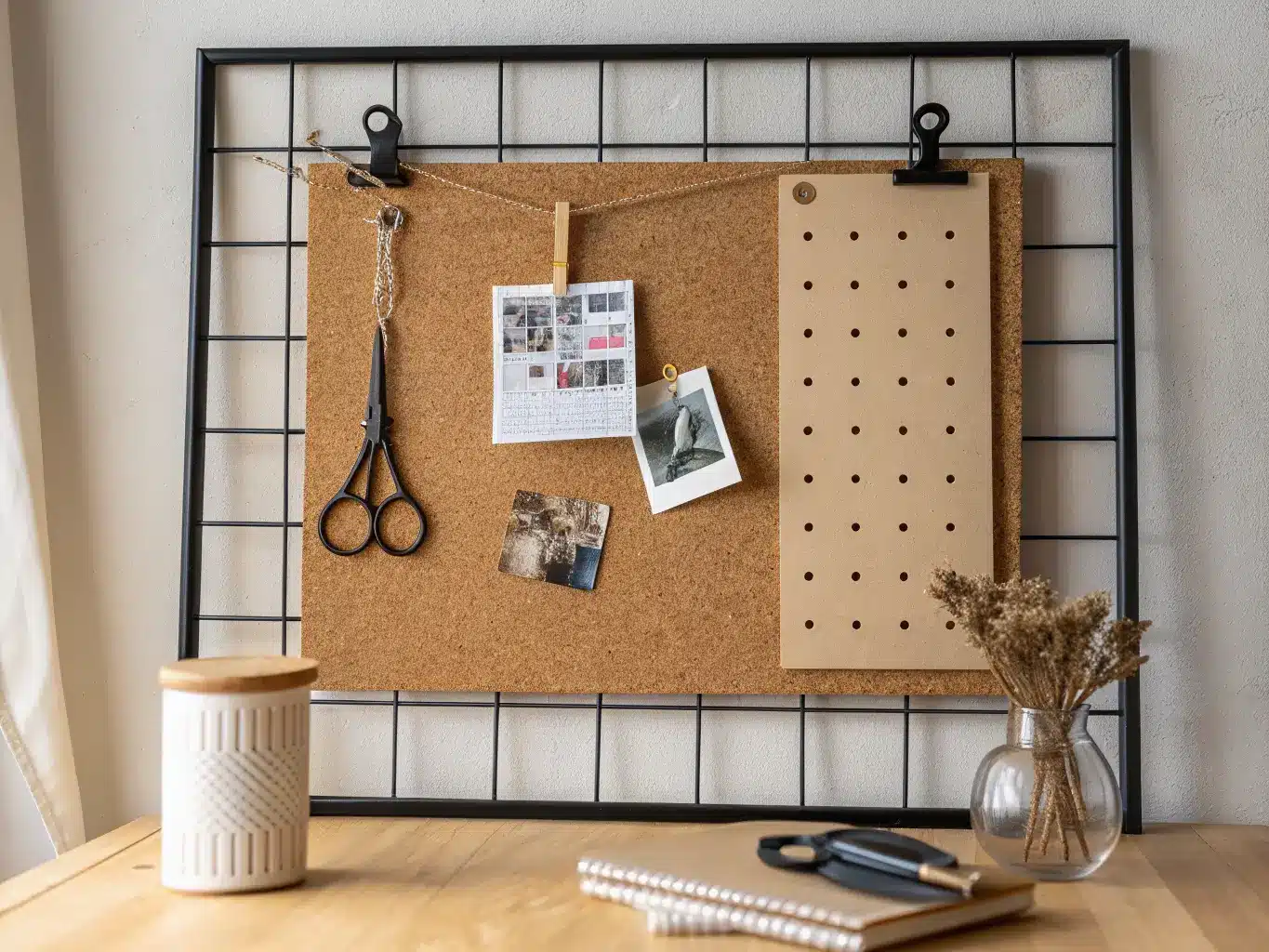
Colors and materials that hold up: warm white, beige, soft gray, muted blue, natural wood. Pick one accent color — I use a dusty terracotta in my desk chair and one framed print, nothing else — and repeat it in small doses. Materials that keep showing up for good reason: laminate or solid wood desks, black metal shelf brackets, adjustable task lamps, and cork boards for pinning notes without nail holes everywhere.
Who it’s for: students, remote workers, teens who need somewhere other than their bed to do homework, anyone who needs a low-distraction zone. Where it works: a dedicated room, a guest room doing double duty, a bedroom corner near a window, a dorm nook.
Must-Have Pieces (Buy These First, Style Later)
I learned this the hard way — I bought a gorgeous brass desk lamp before I owned a chair I could sit in for more than twenty minutes. Function first, always.
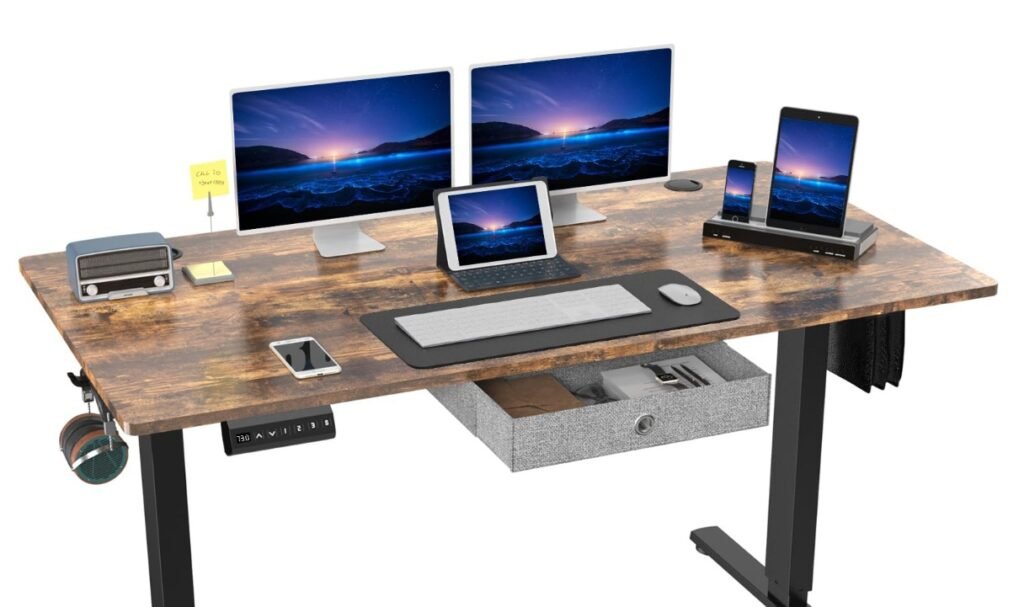
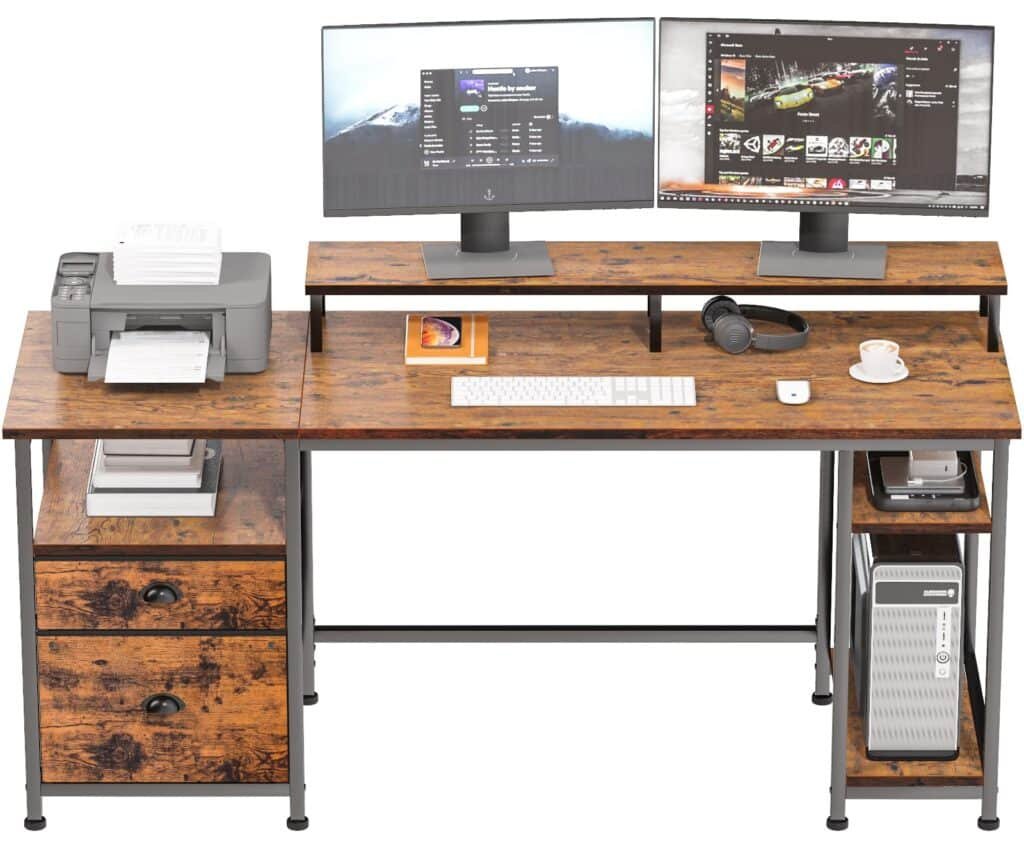
– Desk: For small rooms, look for a 55–60 cm deep desk — anything deeper eats the room. If storage is tight, get one with built-in drawers or shelves rather than adding a separate cabinet later. Wall-mounted fold-down desks are worth it in truly tiny spaces.
– Chair: This is the one thing I’d never cheap out on again. An ergonomic chair with adjustable height and lumbar support matters more than how it looks. My first study room had a beautiful rattan accent chair that I lasted forty minutes in before my back gave out. Function beats aesthetic here, every time.
– Task lighting: Layer it. One ceiling light for general brightness, one adjustable desk lamp aimed at your work surface, and one softer ambient lamp for evenings so the room doesn’t feel like an interrogation room after dark.
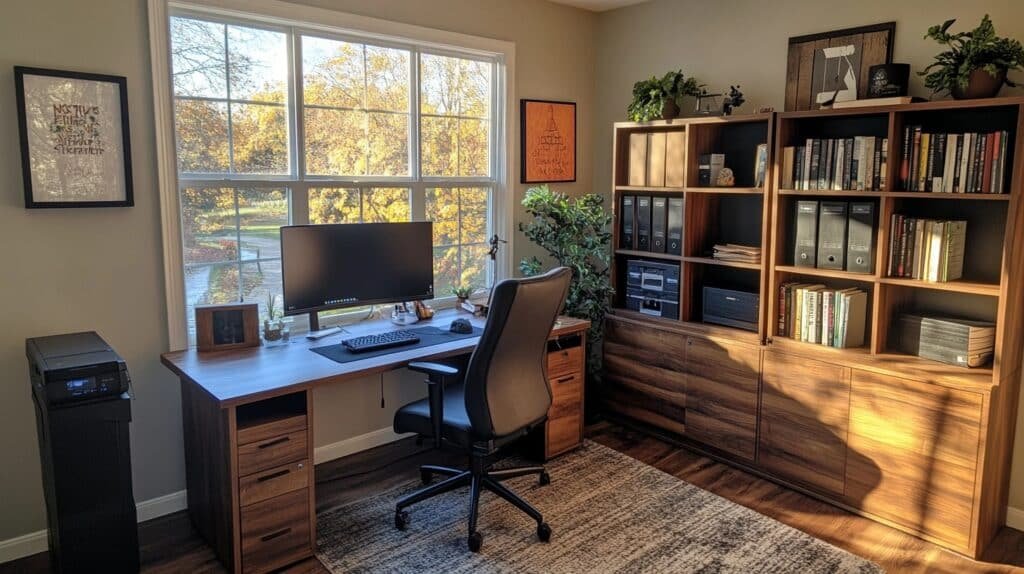
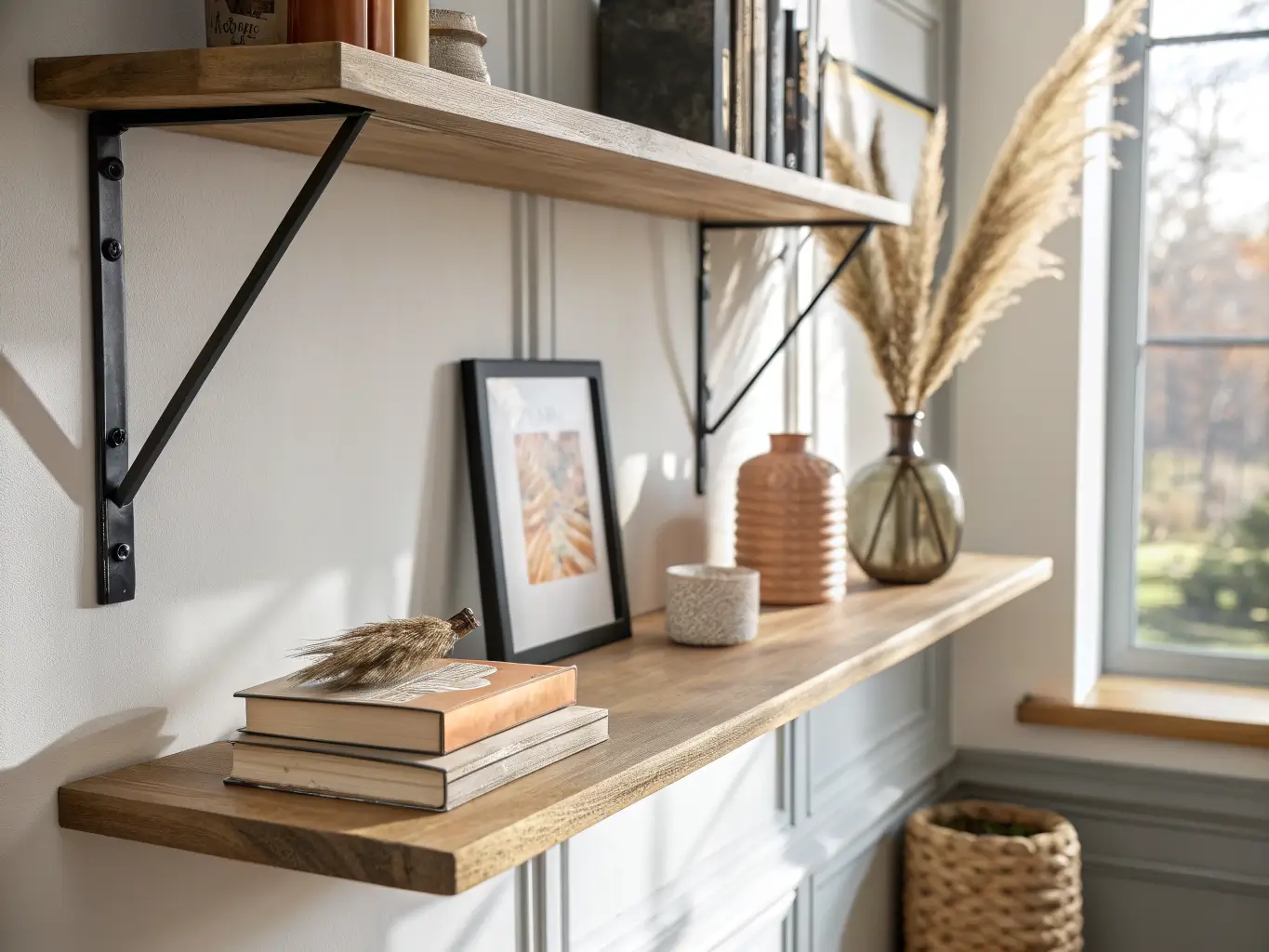
– Storage: Floating shelves, a closed cabinet for the stuff that doesn’t look good on display, drawer dividers, a pegboard, or a rolling cart if you need flexibility.
– Cable management: Cord clips, a cable channel that runs along the desk leg, or a grommet through the desktop itself. This one detail does more for how “finished” a room looks than almost anything else.
– Soft finishing pieces: A small rug, a desk mat, a throw blanket on the back of the chair. These make a work zone feel like part of your home instead of a cubicle.
– Decor accents: One wall art print, one plant (real or good faux), a corkboard. That’s it. That’s the ceiling, not the floor.
Optional Enhancements Worth Considering
Once the essentials are handled, these add personality without adding chaos:
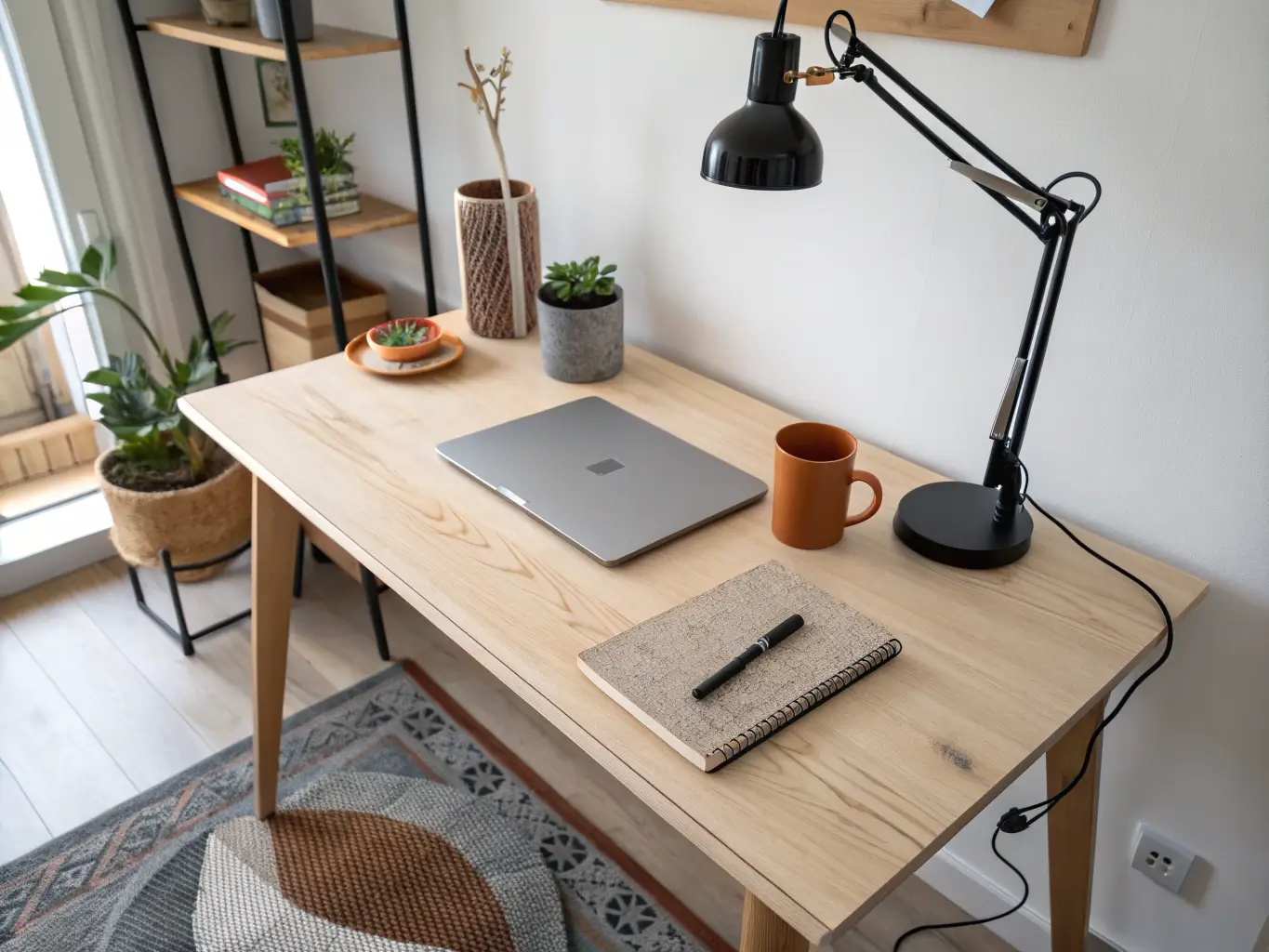
– Organic touches: a woven basket for loose supplies, a linen curtain instead of blinds, a wood tray to corral the lamp and pen cup
– Seasonal swaps: rotate a throw blanket, switch the desk mat color, change the print in the frame
– Small luxe details: a brushed brass lamp finish, a black metal frame, ribbed glass vase — one or two contrast pieces in an otherwise calm room reads intentional, not sparse
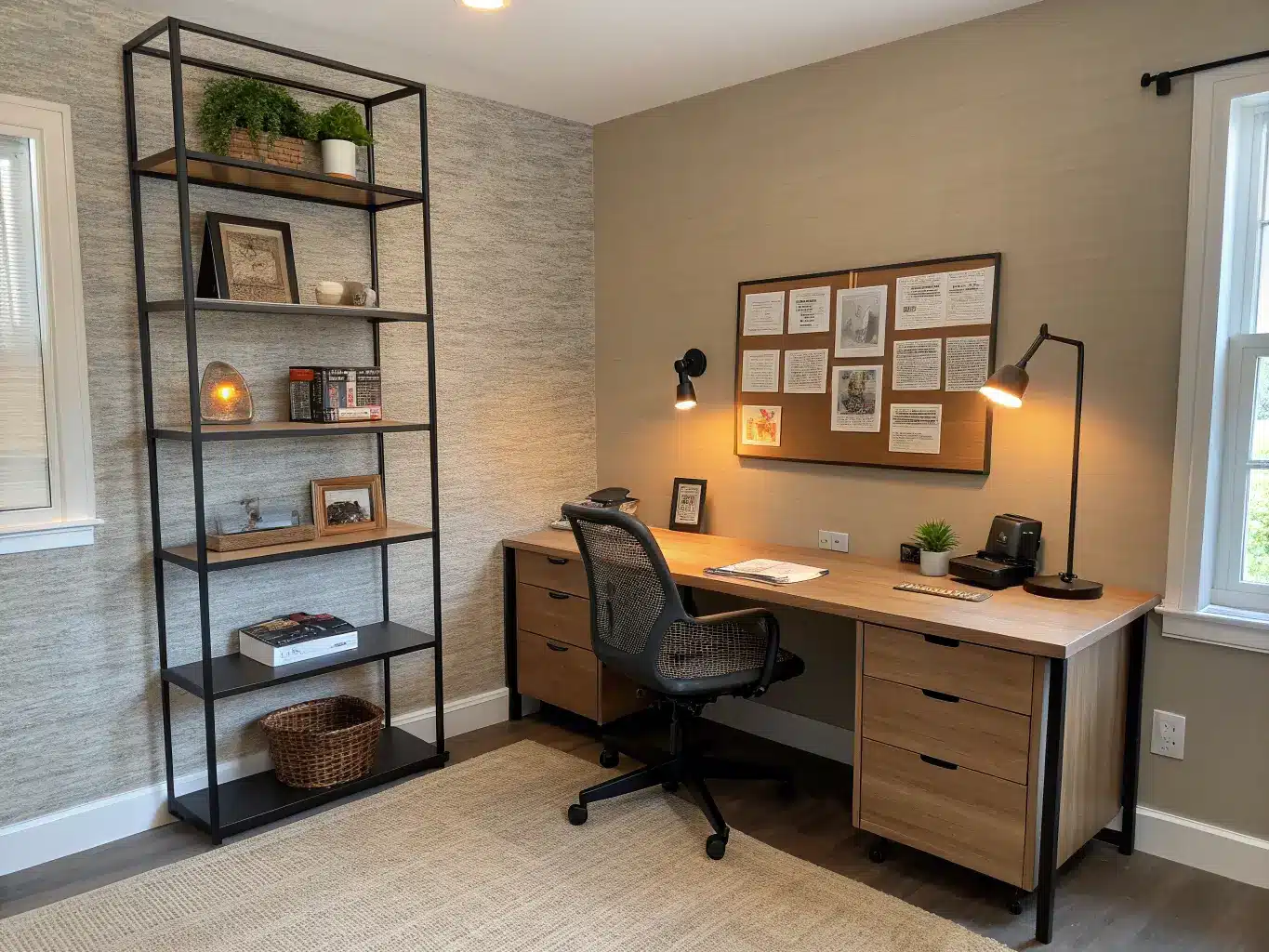
– An accent wall: removable wallpaper or a single painted wall behind the desk gives the room identity fast. I used a peel-and-stick grasscloth-look paper behind my desk for about $45 and it did more work than any amount of decor shopping.
How to Put It Together: Layout, Light, and Layering
Start with the desk placement. Near a window is ideal for natural light, but angle it so you’re not fighting glare on your screen — perpendicular to the window, not facing it directly. This was my first big mistake: I faced my desk straight into the window and spent six months squinting at a washed-out laptop screen every afternoon.
Build in this order: desk and chair first, then lighting, then storage, then decor. Skipping ahead to decor before the bones are right is the single most common misstep, and I did it too — bought a $60 framed print before I’d even settled on where the desk would live.
Mount shelves or a pegboard above the desk, not beside it, to keep the work surface clear while keeping supplies within reach. A desk with nothing but a laptop, a lamp, a pen cup, and one small object looks calm. A desk with six things on it looks like a to-do list.
Add softness last: a rug under the chair, a cushion, curtains. These are what make the room feel like somewhere you want to spend hours, not just somewhere you’re required to.
Finish with the details that make it feel done: cable clips along the desk leg, a small wall calendar, the corkboard, one framed print centered above the shelf line.
Budget: Where to Spend, Where to Save
Spend on:
– The chair — always
– The desk lamp, if you’re doing evening work — cheap lamps flicker and strain your eyes
– Wall shelving hardware — flimsy brackets sag under books within a month (mine did)
Save on:
– The desk itself — a repurposed table or secondhand find works fine if it’s the right depth
– Decor accents — faux plants, a $15 print, a thrifted vase
– Rugs — a small 3×5 jute or cotton rug from a budget retailer does the job
Common Mistakes and How to Dodge Them
– Buying decor before function. Desk, chair, lighting — in that order. Everything else is dessert.
– Ignoring layered lighting. A single overhead light makes a study room feel harsh at night and tired-eyed by 9pm.
– Overcrowding the desk and shelves. More objects means more visual noise means more distraction. Edit hard.
– Choosing a chair for looks over comfort. Your back will remind you of this decision every day.
– Letting cables show. It’s a small thing that reads as “unfinished” the moment you notice it — and once you notice it, you can’t unsee it.
– Oversized furniture in a small room. A deep executive desk in a 9×10 room will make the whole space feel like a hallway. Go slim, go wall-mounted.
Keeping It Fresh Without Redoing Everything
Stay consistent. Repeat the same wood tone, the same metal finish, the same one accent color throughout the room. This is what makes a room feel put-together instead of assembled from twelve different online orders — which, if I’m honest, is exactly how mine started out before I reined it in.
Edit constantly. Laptop, lamp, notebook, pen holder, one decor object. That’s the whole desktop. Everything else goes in a drawer or on a shelf.
Update in stages, not all at once:
1. Lighting first — cheapest fix, biggest impact
2. Chair comfort second
3. Storage third
4. Styling last
Seasonal refreshes cost almost nothing: a new throw blanket, a different plant, a swapped print, a new desk mat color. I switch my desk mat from a cream tone in summer to a deeper olive in fall, and it’s a five-dollar change that makes the room feel considered.
Cross-style combos that work well right now: minimalist paired with natural wood tones, modern softened with beige textiles, or Scandi warmed up with black metal accents. Pick one lane and stay in it rather than mixing all three.
A study room doesn’t need to be Pinterest-perfect to work. It needs a chair you can sit in for two hours, light that doesn’t wreck your eyes by evening, and a surface clear enough that you actually want to open your laptop on it. Everything else is just the fun part.
For another angle on this, my study room decor ideas diy guide covers the same space from a different starting point.