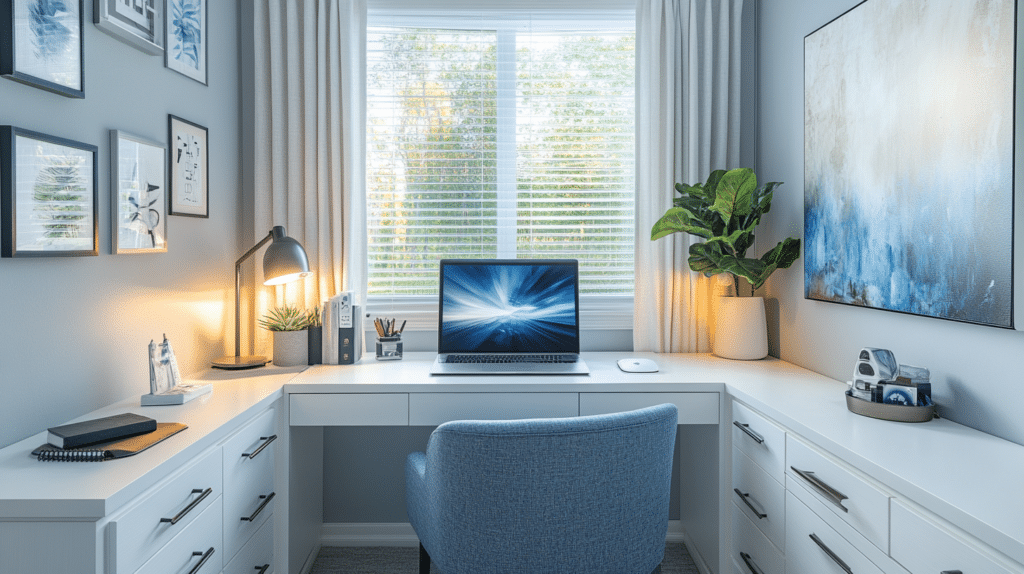
I turned a closet into a home office before “cloffice” was even a word people used, and I want to tell you what nobody tells you upfront: the desk is not the hard part. The hard part is everything around it — the lighting that makes your eyes ache by 3pm, the cords tangled behind the chair, the shelf that looked great empty and looks like a junk drawer three weeks later. If you’re searching for home office ideas, you’ve probably already got a desk in mind. What you actually need is a system.
I’ve built four home offices in five years, moving twice and changing jobs once from an office with two monitors to fully remote. Here’s everything I’d tell you if you were standing in my kitchen asking where to start.
What You’re Actually Signing Up For
Time: A simple refresh — new desk, chair, lamp, some shelving — takes a weekend. A full makeover with paint, built-ins, lighting, and cable management is a 1–2 week project, and that’s if you’re not waiting on custom furniture.
Cost: Be honest with yourself about which tier you’re in.
– $300–$800 gets you a real budget setup: a laminate desk, a decent task chair, a clamp lamp, a couple of wall shelves, and some drawer organizers.
– $1,000–$3,000 is the sweet spot for most people — a solid wood or metal-frame desk, an ergonomic chair, layered lighting, and proper storage.
– $3,500+ is where you’re talking built-ins, a sit-stand desk, and an upgraded chair with lumbar adjustment.
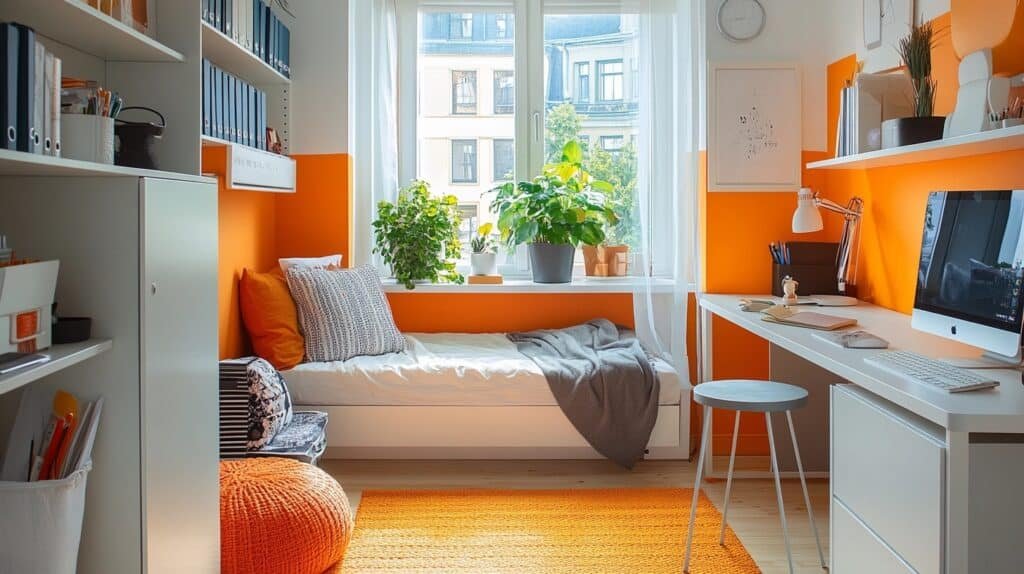
Space: I’ve fit a working office into a 3-foot-deep coat closet. You don’t need a spare room. An 8×10 room comfortably fits built-ins along one wall; a 10×13 gives you room for a floating desk plus a full storage wall. Anything smaller just means you get smarter about vertical space.
Skill level: Assembling a desk and styling shelves is beginner-friendly. Converting a closet or building in cabinetry is intermediate to advanced — budget extra time if you’re new to it, and don’t be afraid to hire out the electrical or built-in carpentry even if you DIY the rest.
Seasonality: This is a year-round project. The only seasonal element is swapping textiles, art, or a plant here and there. Nobody’s putting up a pumpkin display next to their monitor.
Picking a Design Identity (Instead of Copying a Pinterest Board Wholesale)
Most home offices are some flavor of modern functional — clean lines, good storage, nothing precious. Where you get to have fun is the finish:
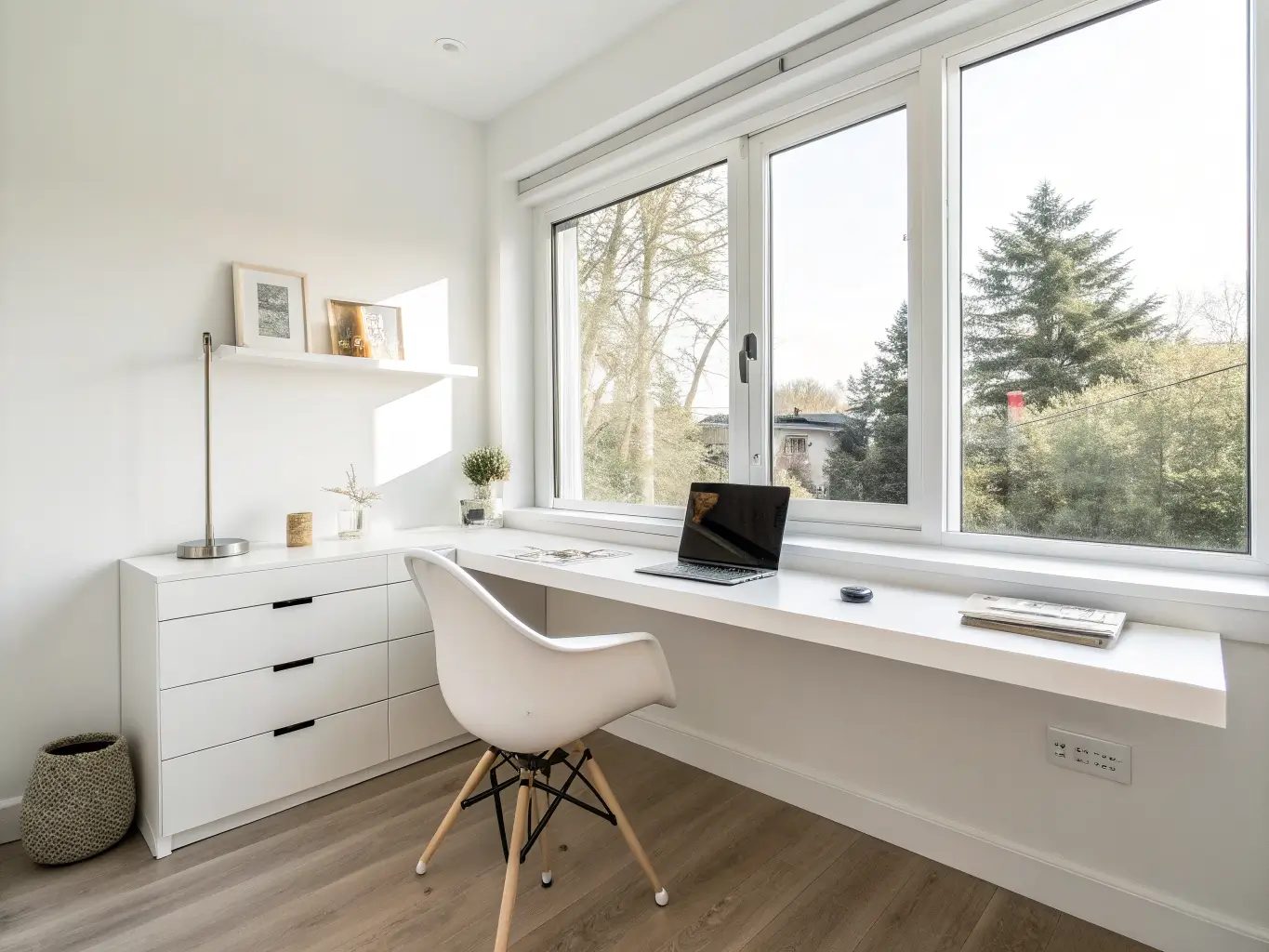
– Minimalist: white or light oak, almost no visible objects, everything behind a door
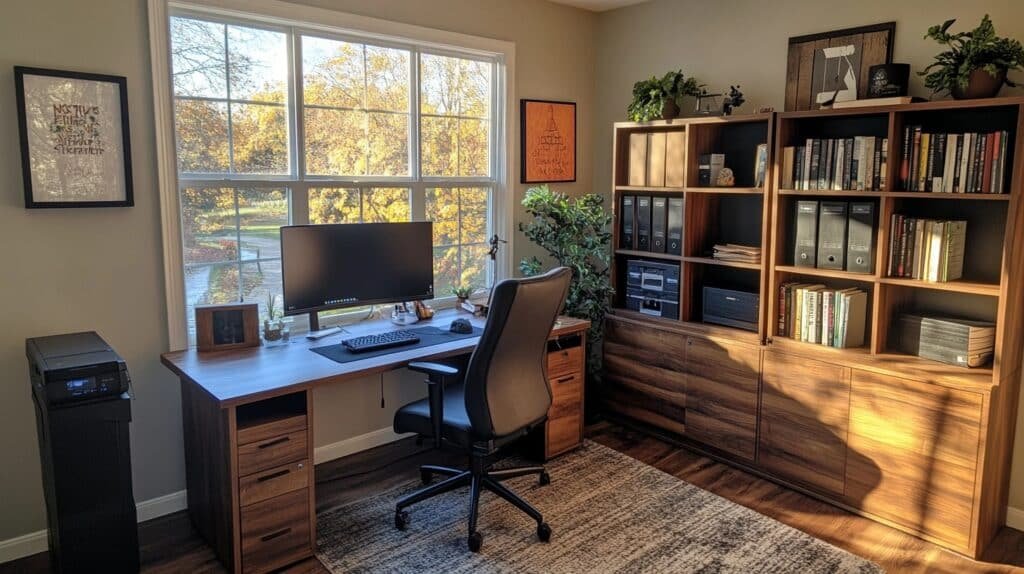
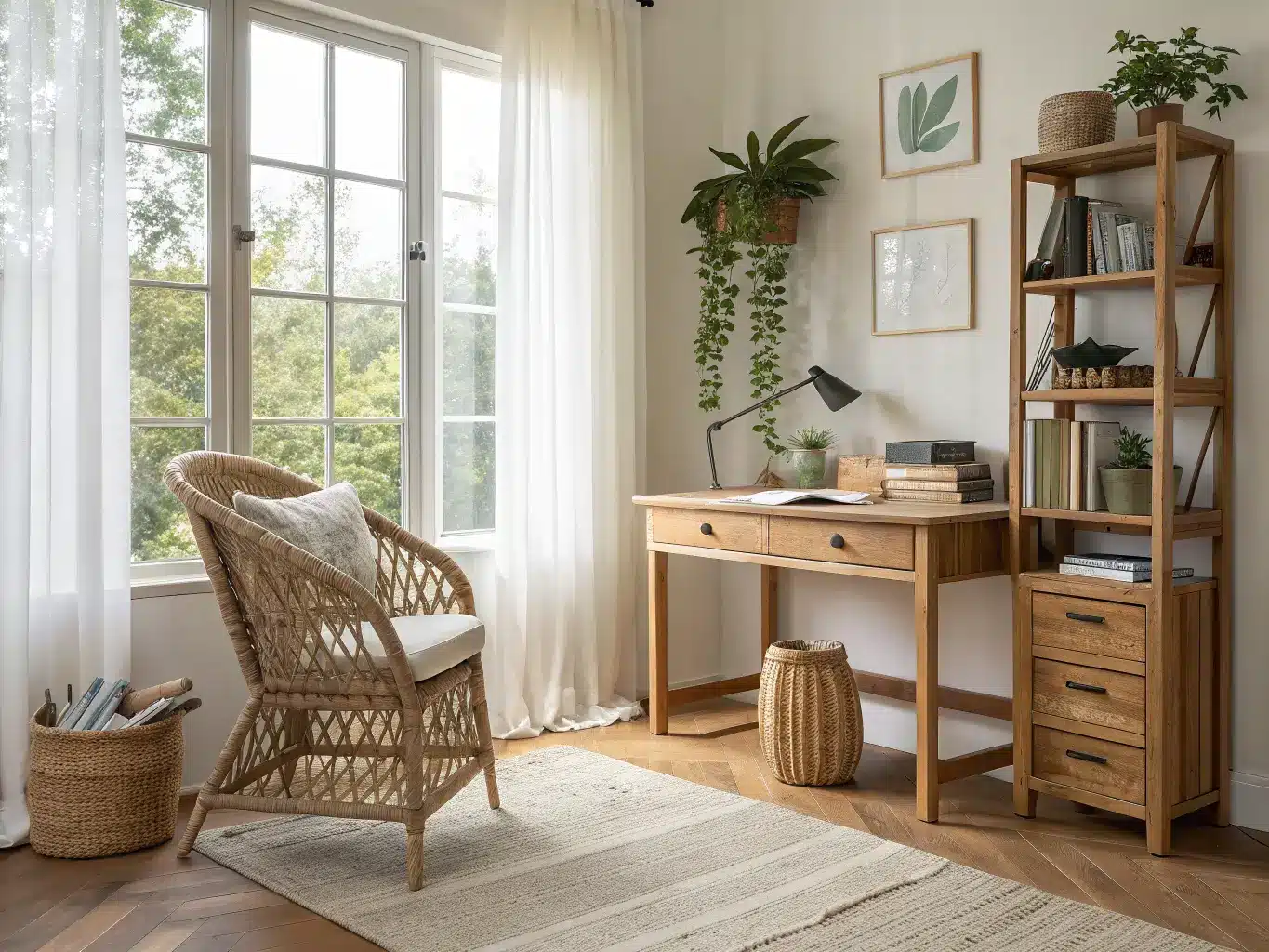
– Cozy: warm wood, a wool rug, a reading chair tucked in the corner
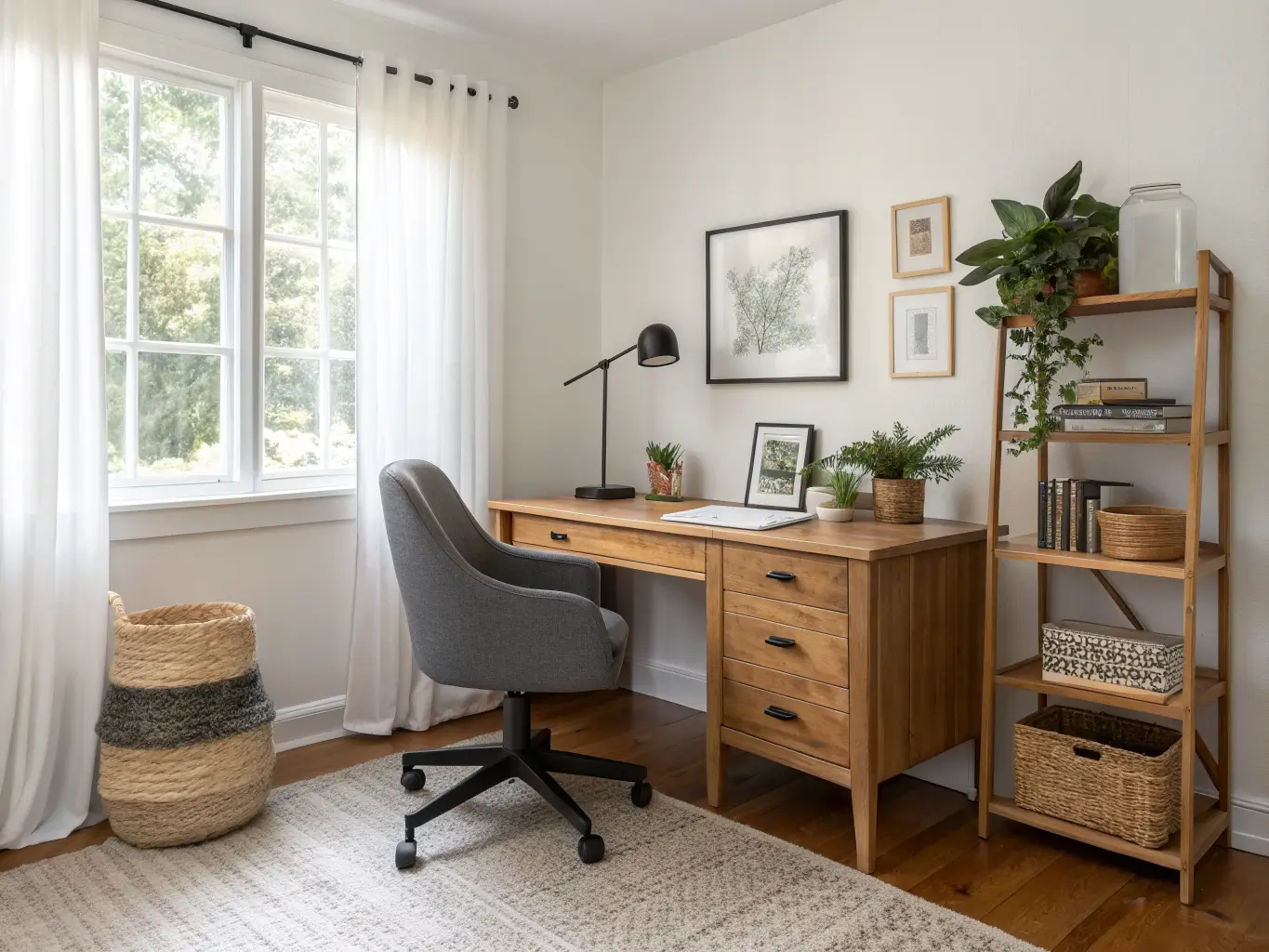
– Nature-inspired: natural wood tones, linen textures, plants doing real visual work
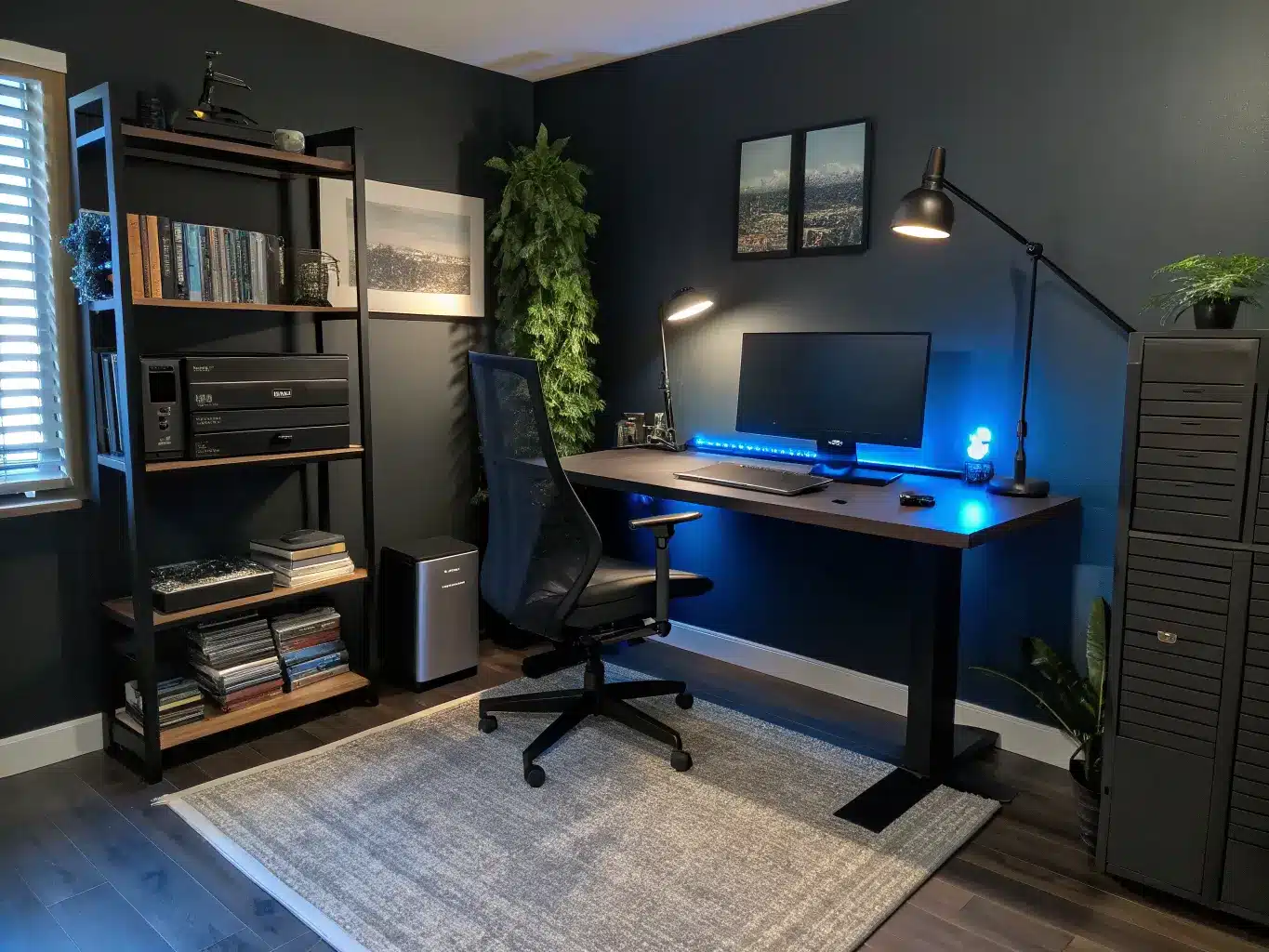
– Tech-forward: black and metal accents, monitor arms, minimal cable visibility, moody paint
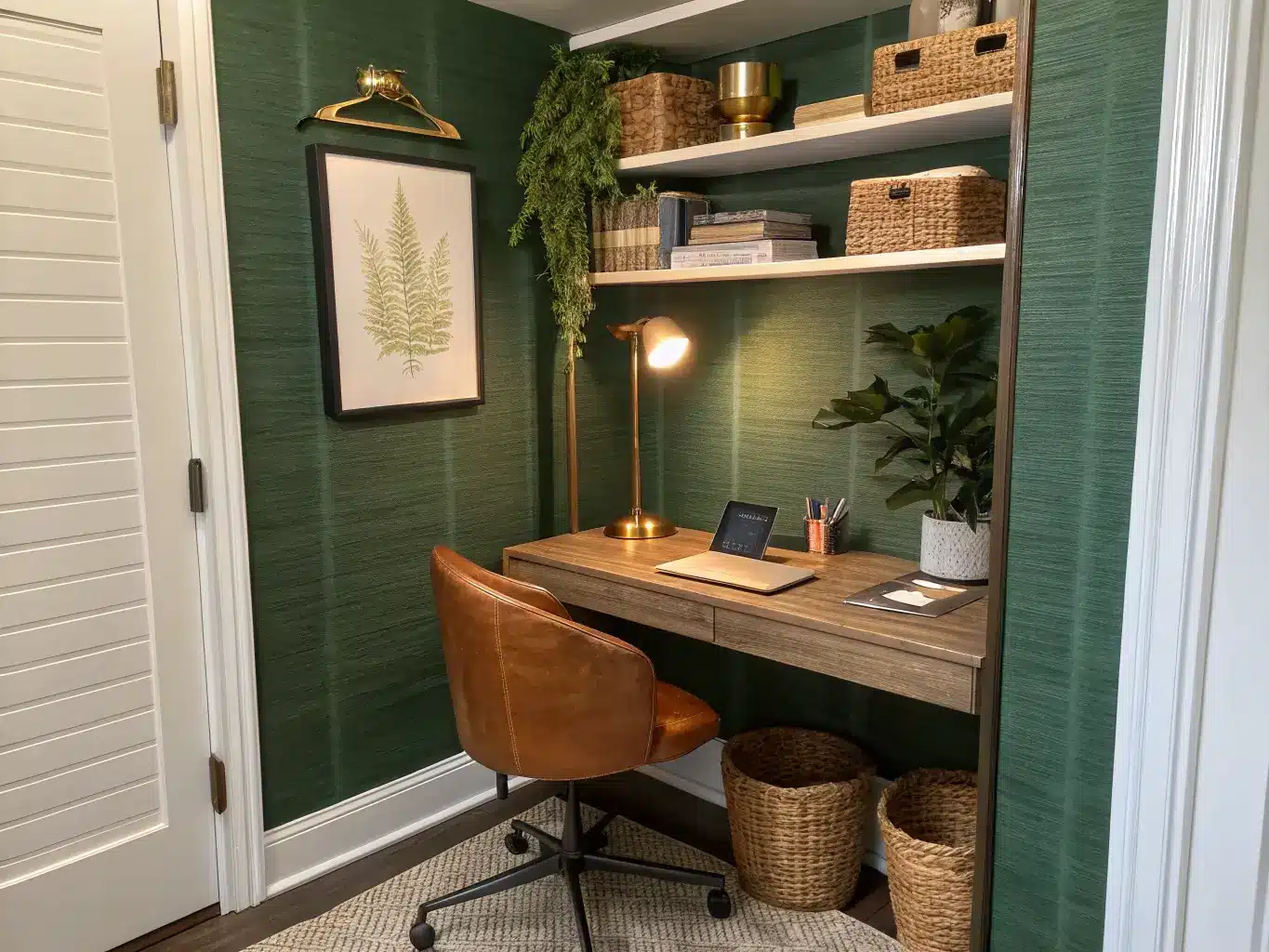
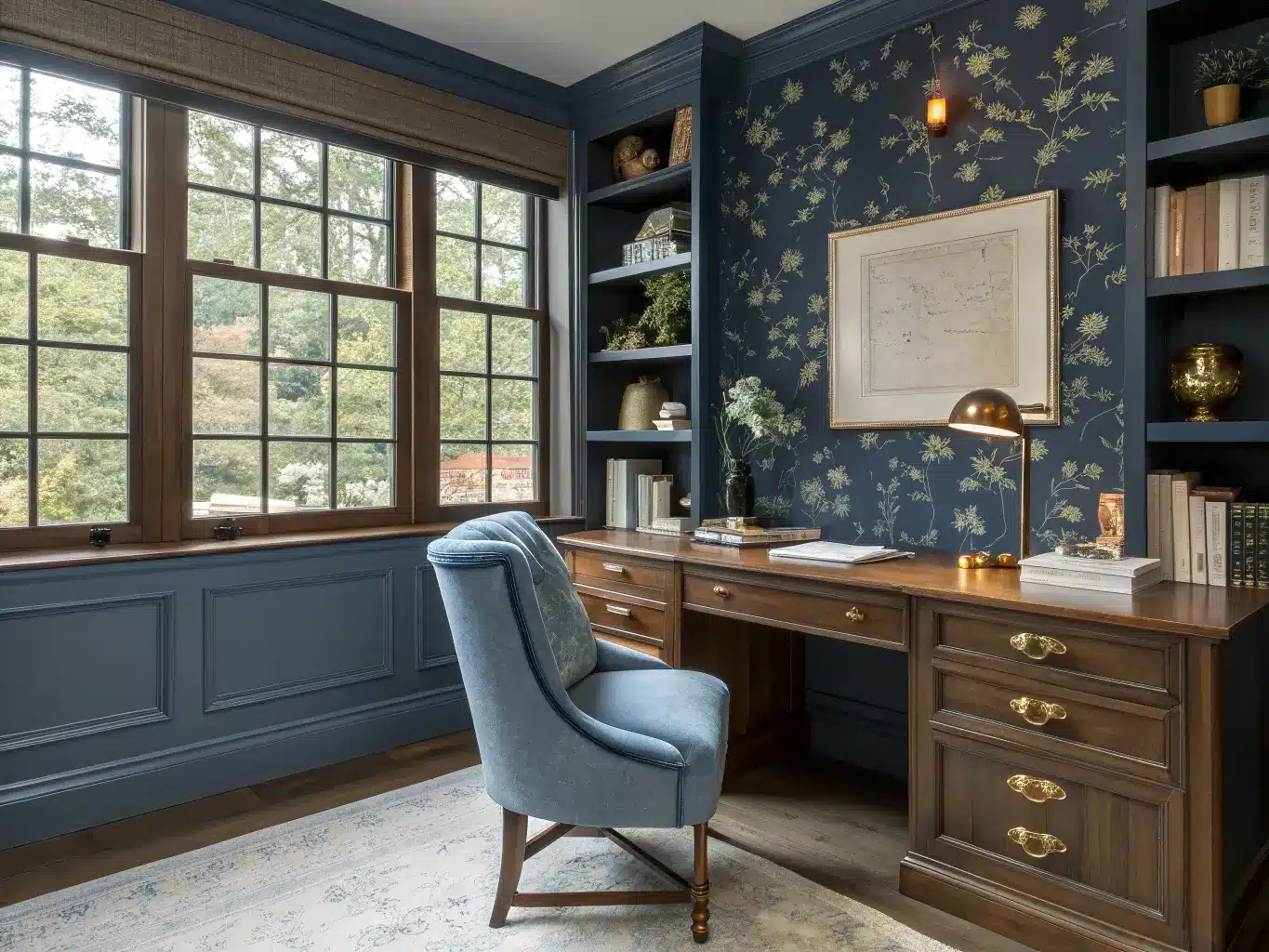
– Traditional chic: wallpaper, brass hardware, a proper desk lamp instead of an LED clamp
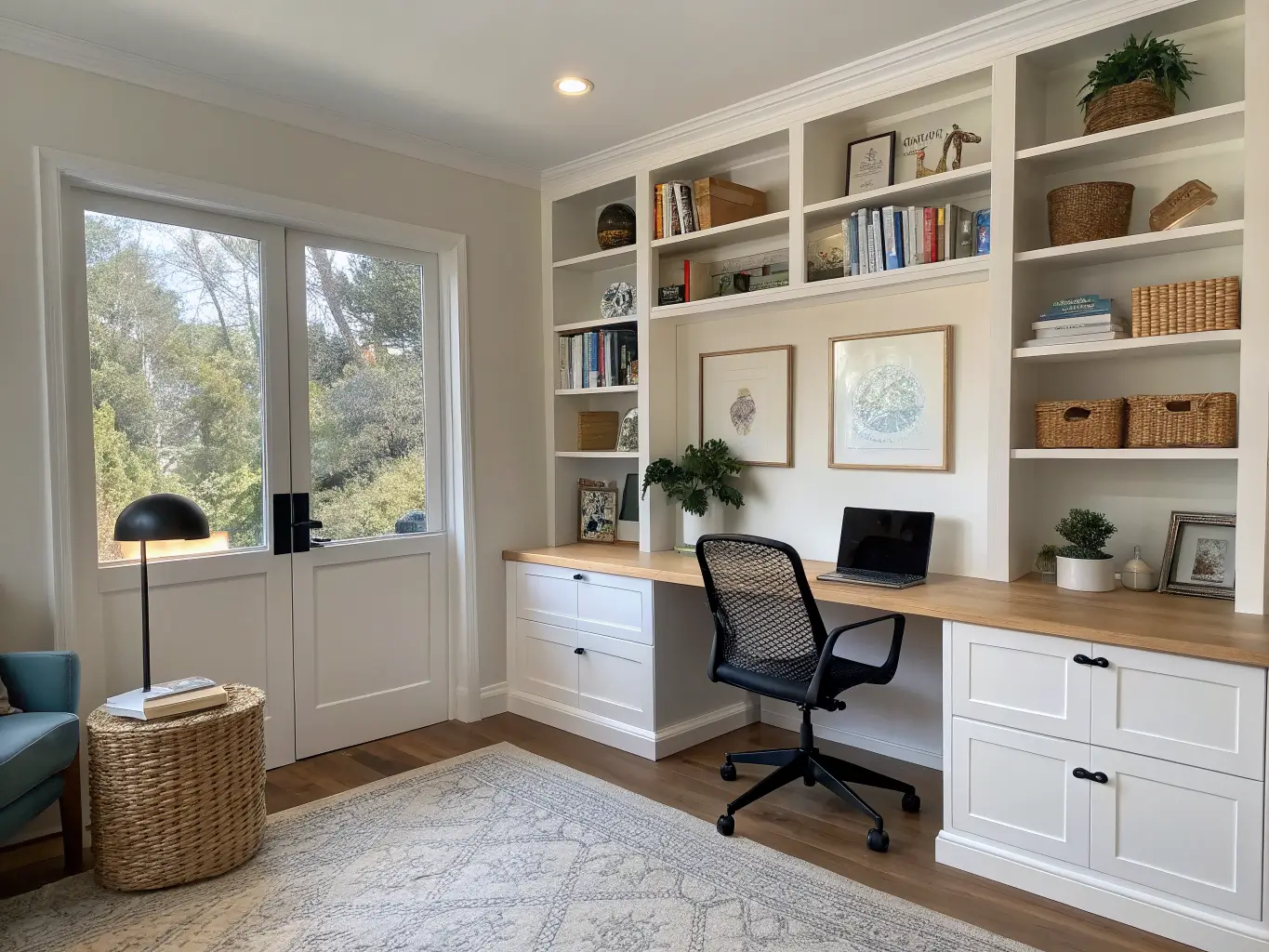
My own office is minimalist-meets-cozy — white walls, a warm wood desk, and one very soft rug because I hated how my old setup echoed on calls.
Colors that keep showing up for good reason: white and warm neutrals as a base, with soft blue, sage, or black as the accent. Blue in particular shows up constantly in office design because it’s calming without being sleepy — think navy desk accessories against a white wall, or a single blue accent chair.
Materials worth knowing: wood finishes for warmth, metal shelving for a leaner look, acrylic/Lucite desks when you want a small space to feel less visually heavy, and closed cabinetry whenever you need to hide a printer.
This setup works for remote workers, hybrid workers, students, and anyone who needs to mentally clock in somewhere that isn’t the couch. It lives well in spare bedrooms, living room corners, closets, under-stair nooks, and garage or attic conversions.
The Essentials — Buy These, Skip the Rest
The non-negotiables
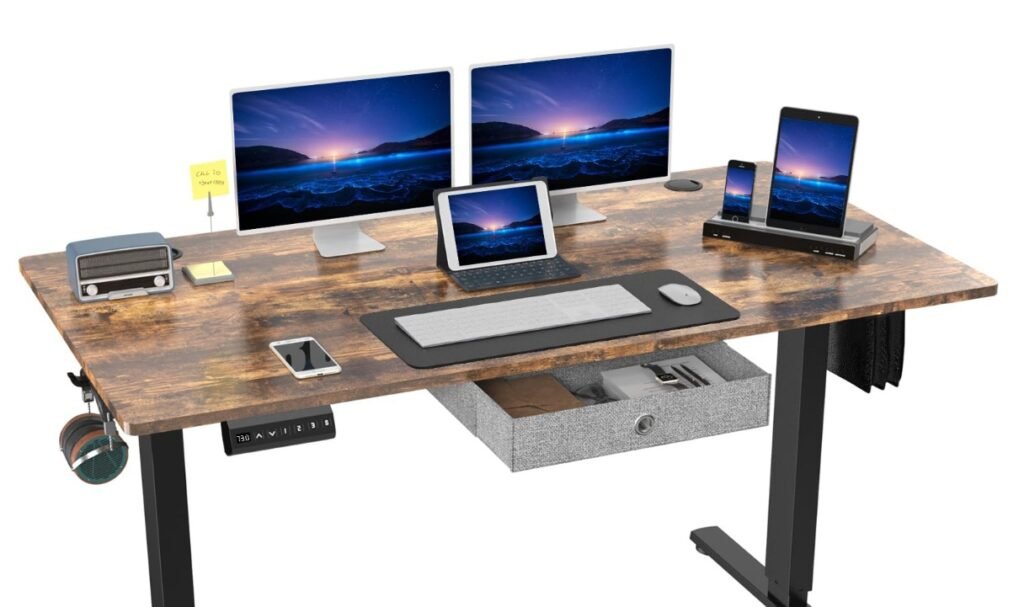
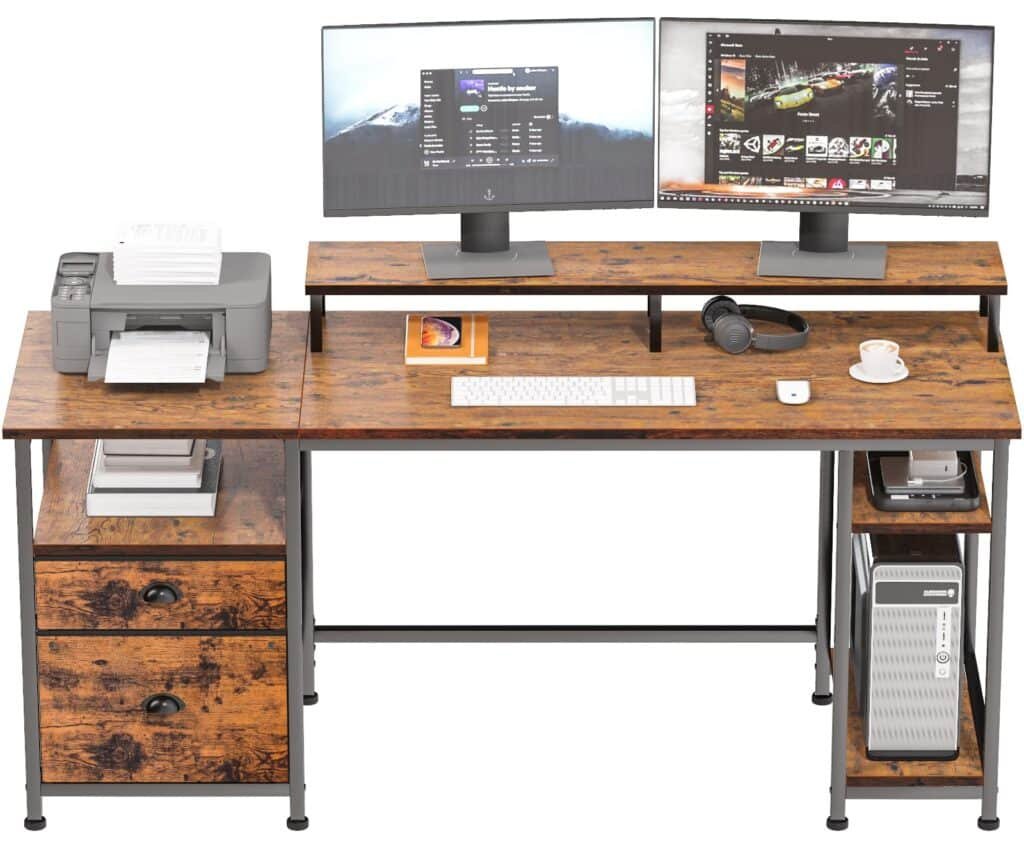
– Desk. Size it to your actual work, not your laptop. If you run two monitors, you need at least 48–60 inches of width. A sit-stand desk isn’t a luxury anymore — it’s one of the highest-value upgrades you can make, and a basic electric one starts around $300.
– Chair with back support. This is the one thing I tell people not to cheap out on. I used a $60 chair from a big box store for eight months and my back still remembers it. Spend $200–$400 here before you spend it on anything decorative.
– Task lighting. One overhead light is not enough. You need a desk lamp at minimum, ideally paired with a window and, if the room allows, a wall sconce for evening work.
– Storage. Shelving above the desk, a filing cabinet, letter trays, drawer organizers — pick a combination based on how much paper and gear you actually accumulate.
– Cable management. A $15 cable sleeve and a basic under-desk tray will do more for how “finished” your office looks than almost any decor purchase.
– Wall support. A corkboard, whiteboard, or gallery wall gives the room function and personality in one move.
– A rug. Wool or low-pile, big enough that your chair rolls on it without catching. It softens sound and stops the room from feeling like a waiting room.
– One or two plants. Not five. A single 3-foot snake plant in the corner does more than a windowsill crowded with succulents.
Nice-to-haves once the basics are handled
– Statement wallpaper on one wall — I did a deep green grasscloth in my cloffice and it’s the first thing people mention
– Open shelving styled with books, a couple of baskets, and one or two framed pieces — not fifteen tchotchkes
– Metallic lamp base or drawer pulls for a slightly more polished look
– A cushion or throw for a nearby chair if you use the room for reading too
– Monitor arm, laptop stand, or wireless charger for a cleaner desktop
How to Actually Put It Together
Start with the room, not the furniture. Before you buy anything, figure out what this space needs to store — monitor, printer, files, art supplies, whatever your job or hobby requires — and measure the space itself. I once bought a beautiful vintage desk off Facebook Marketplace that was 4 inches too deep for the nook I wanted it in. It sat in my garage for two months before I resold it at a loss. Measure first. Always.
Build in this order:
1. Desk or built-in goes in first — it’s the anchor everything else responds to.
2. Chair next, with enough clearance behind it to push back and reach a filing cabinet or shelf without hitting a wall.
3. Lighting, layered: whatever natural light you have, plus a task lamp, plus overhead or wall lighting if the room is dim.
4. Storage, added around the desk — shelves above, cabinet below or beside.
5. Styling objects last, and group them instead of scattering them: a tray with a pen cup and a small plant, art above the shelf, a calendar or pinboard nearby.
Pick one focal wall — usually the one behind or beside the desk — and put your visual energy there. Wallpaper, art, a well-styled shelf. Everywhere else stays quiet. This matters more in small offices, where trying to decorate every wall just reads as cluttered.
Desk placement near a window is worth prioritizing, but angle it so you’re not staring into glare or getting washed out on video calls. Side-on to the window is almost always better than facing it directly.
Where Home Offices Go Wrong
I’ve made most of these mistakes personally, so consider this a warning label.
– Decorating before you’ve solved storage. I styled a gorgeous shelf above my first home desk before I had anywhere to put my actual paperwork, and within a month that beautiful shelf had a stack of unopened mail on it.
– Buying a desk sized for a laptop when you run two monitors. Measure your actual gear, then add margin for a notebook or mouse pad.
– No system for the stuff that piles up. Trays, drawer dividers, and a filing cabinet aren’t exciting purchases, but they’re the difference between a desk that stays clear and one that doesn’t.
– One light source. If your only light is overhead, you’re going to feel it in your eyes after a few hours. Add a lamp. It’s a $30 fix for a real problem.
– Overdecorating a small space. A tiny office with wallpaper, a gallery wall, patterned curtains, and a busy rug all at once feels like it’s shouting. Pick one or two moments and let the rest stay calm.
– Visible cords everywhere. This is the fastest way to make an otherwise nice office look unfinished. A $15 sleeve and a bit of Command-strip routing along the desk leg solves 90% of it.
Keeping It From Going Stale
Consistency does a lot of quiet work. Keep the same metal finish across your lamp, shelf brackets, and drawer pulls. Match your wood tones, or at least keep them in the same family — cool oak with cool oak, not oak next to a warm walnut desk. It sounds fussy until you see a room where nothing matches and can’t figure out why it feels off.
A formula I use in every office I set up: lamp + tray + plant + one piece of art + one storage basket. Repeat that combination per shelf or surface and the whole room reads as intentional, even with different objects in each spot.
For seasonal refreshes, don’t overhaul anything — swap the art, change out a pillow cover on the nearby chair, rotate in a different plant, or switch a desk accessory color. Small moves, low cost, real impact.
For budget updates: peel-and-stick wallpaper on one wall, floating shelves instead of a full cabinet, a $40 chair cushion, or refinishing a secondhand desk with new hardware. My current desk is a $50 estate sale find with the original hardware swapped for brushed brass pulls — cost me about $18 in parts and an afternoon.
Cross-style blends work well in small spaces because you don’t have room for one style to overwhelm the other anyway. Minimalist plus natural wood. Modern lines with a blue accent chair. A coastal white-and-blue workspace tucked into a bedroom corner. Pick a lane, borrow one or two elements from another, and stop there.
The truth about home offices is that the good-looking ones and the functional ones are almost always the same room. Chase the system — storage, light, cables, one focal point — and the style takes care of itself.
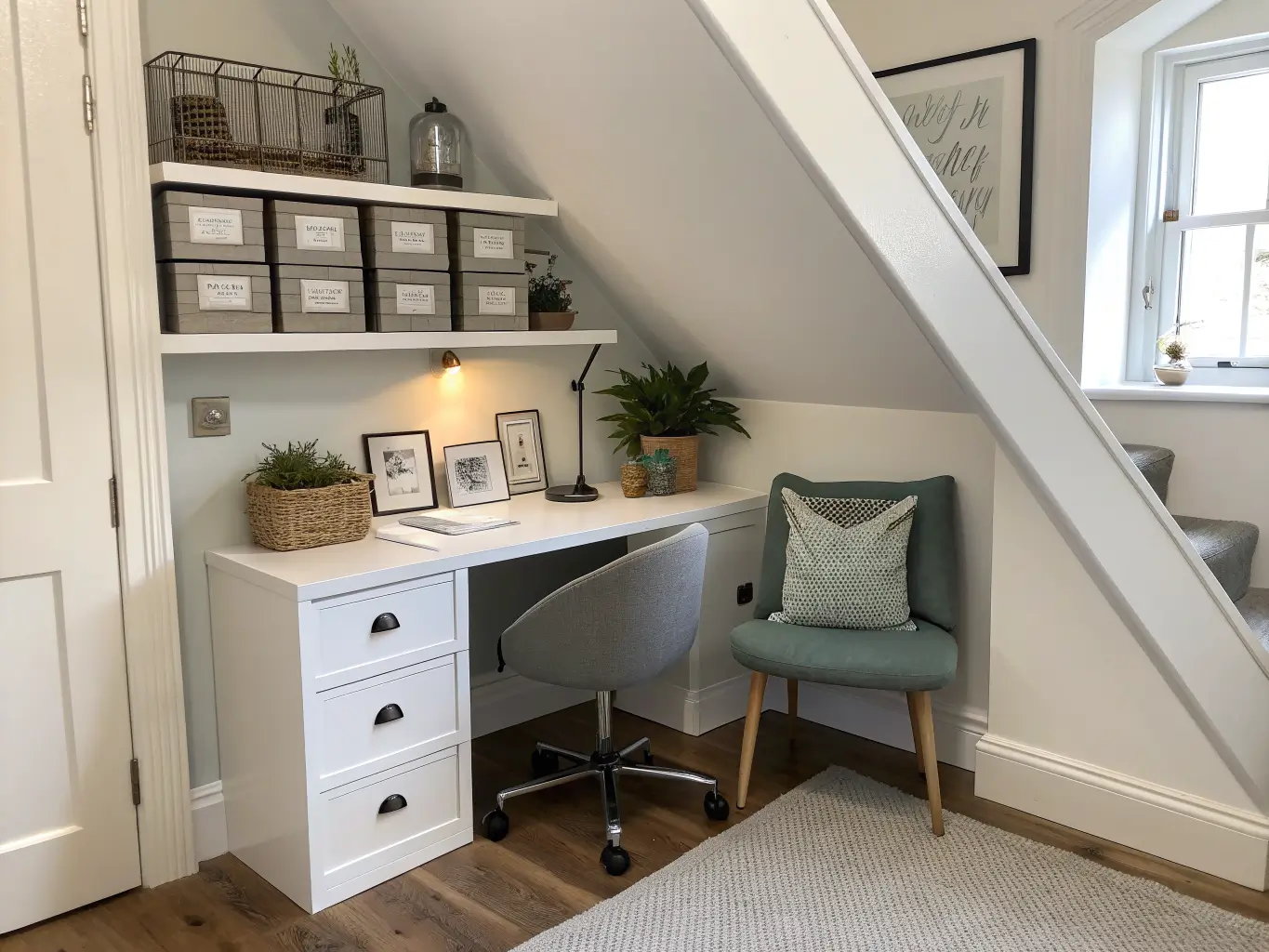
If you want to see how these same principles look in a tighter, cozier footprint, my cozy home office breakdown walks through a small-space build with the same storage-first system.
For a quieter, study-focused take, my study room ideas guide covers desks and layout for focused work.