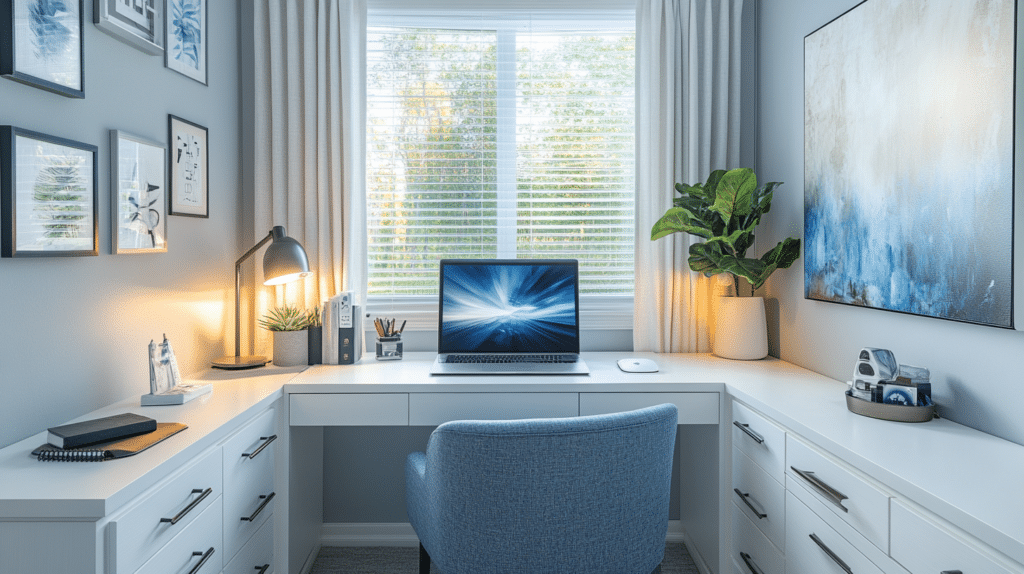
What This Style Actually Is
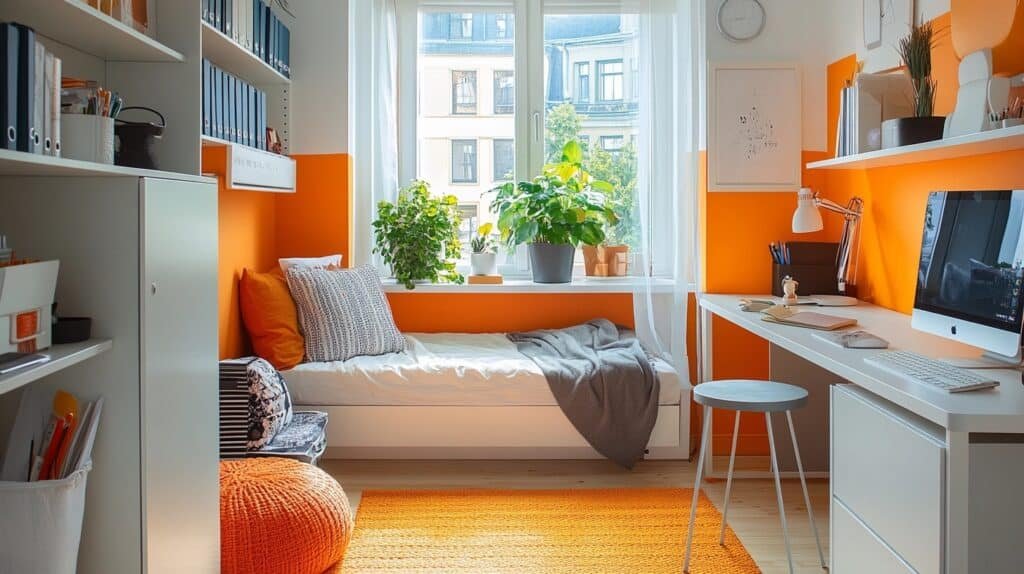
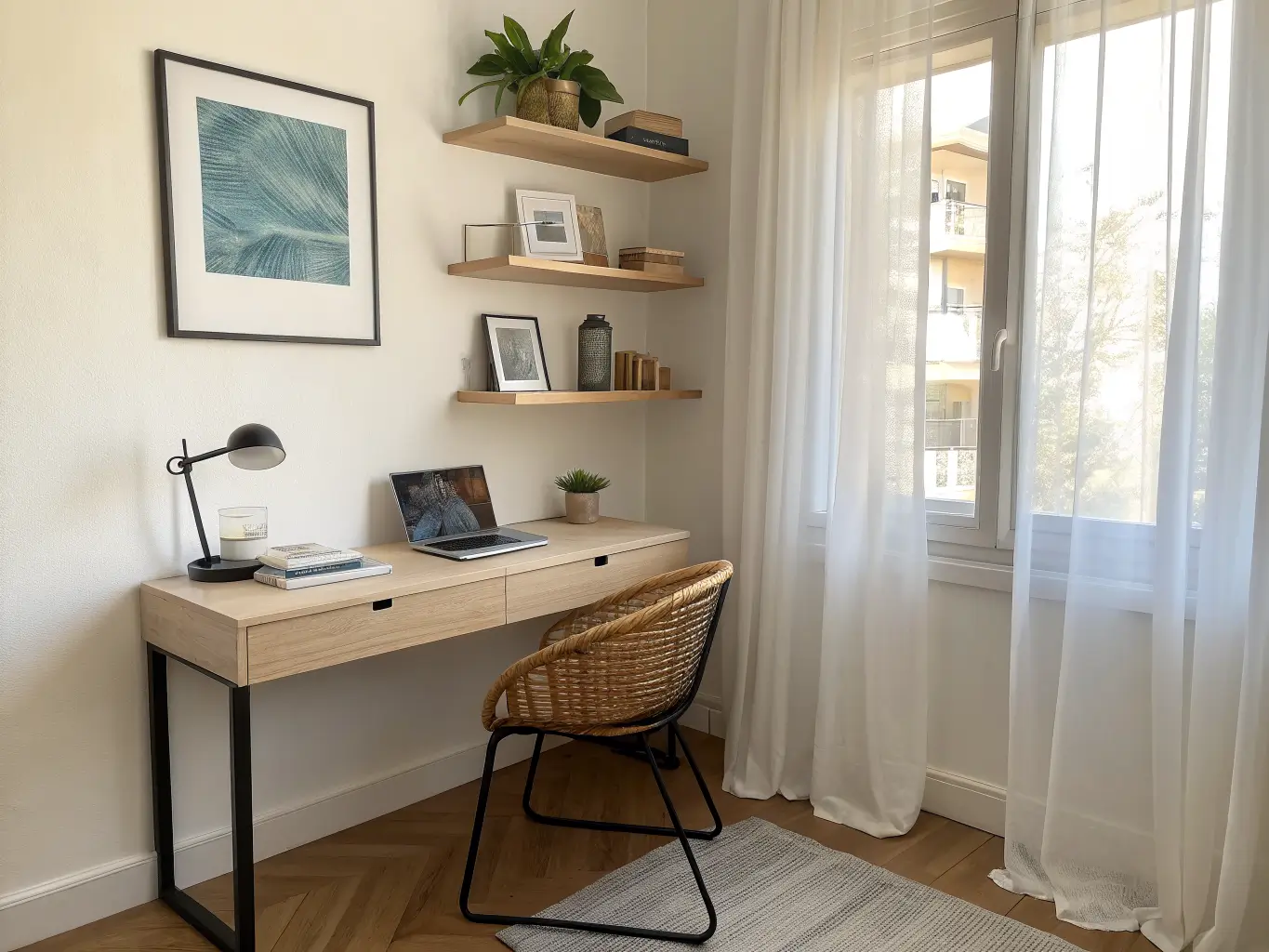
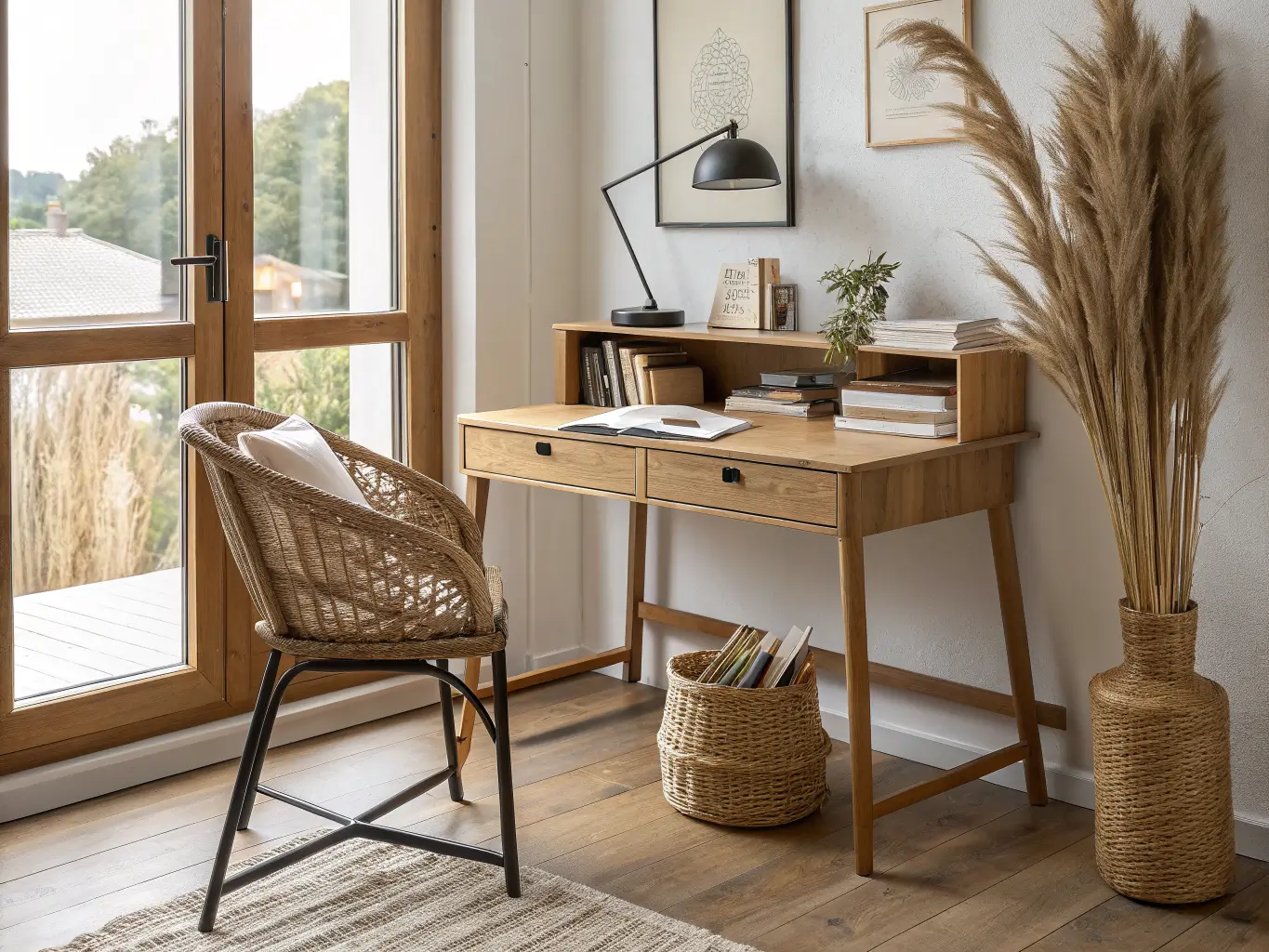
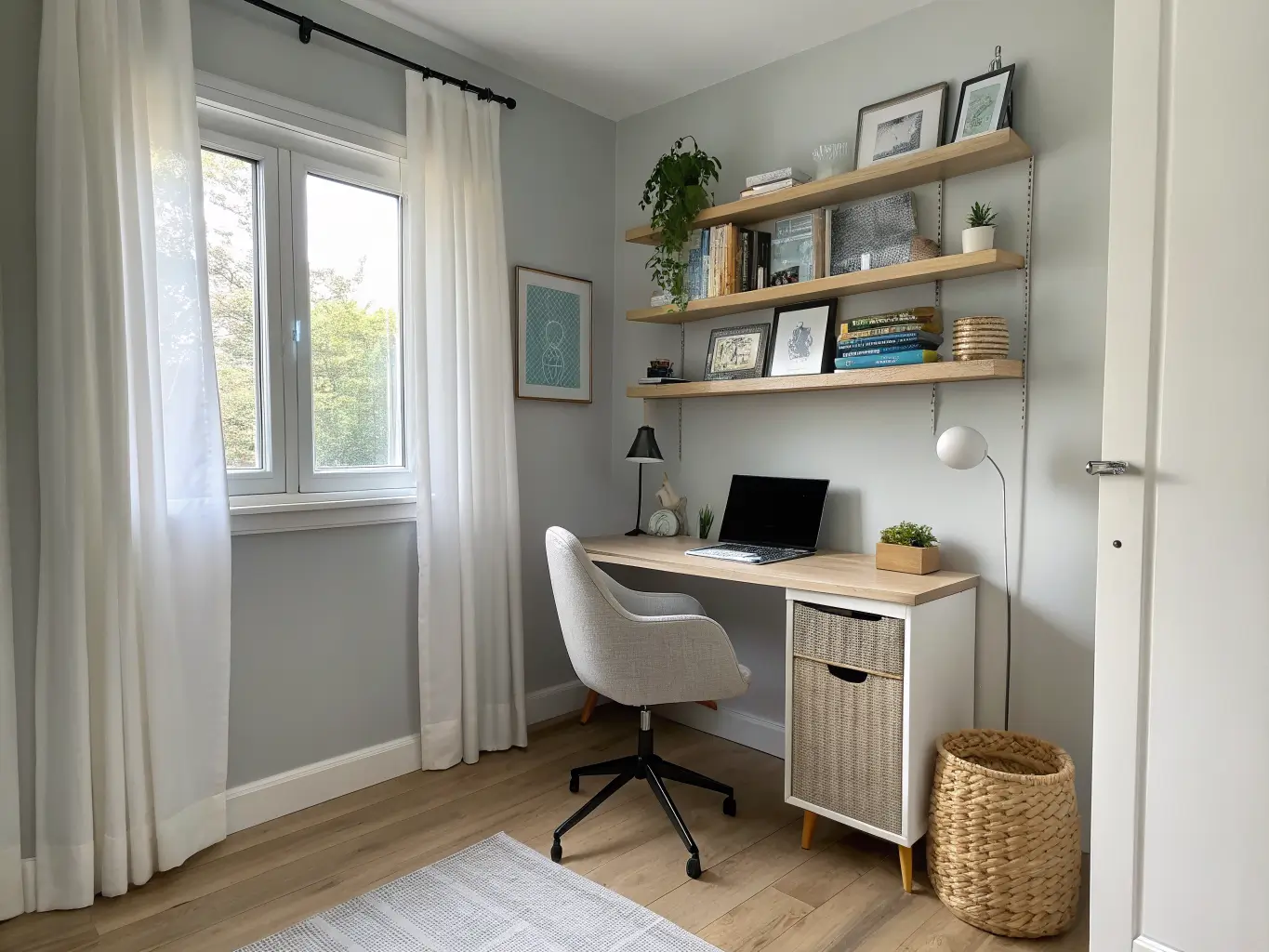
The look I’m describing is minimalist and quiet: clean lines, a calm palette, furniture that doesn’t announce itself. Think off-white or light gray walls, pale wood tones, maybe one black metal accent for contrast. It’s not sterile — a plant and a decent print keep it from feeling like a waiting room — but nothing is fighting for attention.
This works because in a small room, every object is loud. A busy pattern or a heavy dark bookcase doesn’t just look bad, it makes the room measurably feel smaller. Light colors and slim materials do the opposite work quietly.
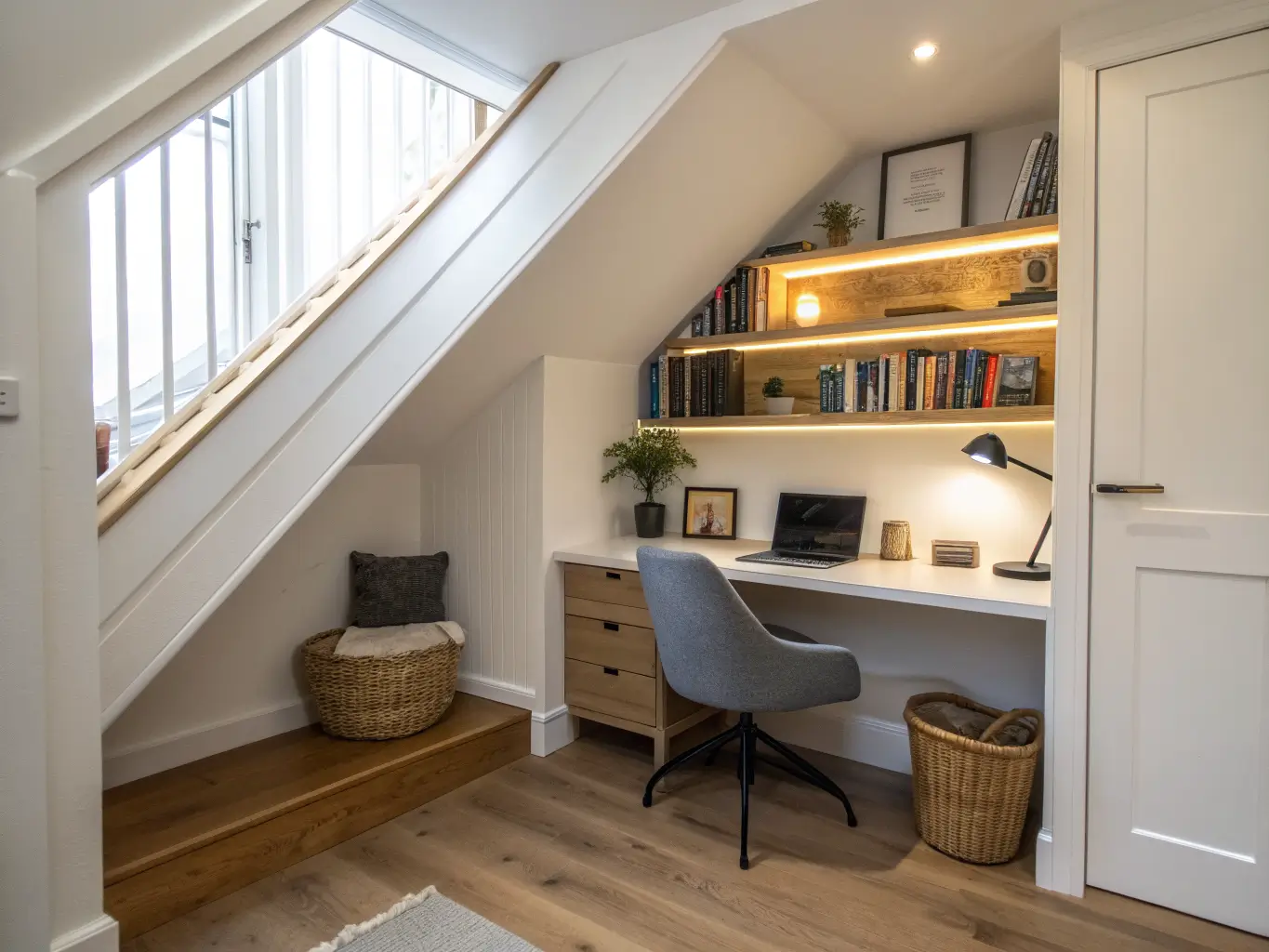
Who this is for: students, remote workers, anyone who reads at a desk, apartment dwellers converting a corner into a workspace. Where it works: bedroom corners, home-office alcoves, under-stair niches, even a sliver of a living room wall. I’ve set up a functional study nook in a 5′ x 7′ space — it’s tight, but it’s enough if you’re deliberate about every inch.
Timeline and Real Costs
A simple refresh — new desk, chair, lamp, some shelves — takes 1 to 3 days. Once you start adding wall-mounted storage, rerouting cables, or building anything custom, budget 1 to 2 weeks, mostly because you’ll be waiting on hardware delivery and second-guessing shelf placement (I did this three times before committing to bracket holes).
Here’s what you’re actually looking at, price-wise:
Budget refresh: $150–$500. A small desk, a simple chair, one lamp, a couple of shelves, and some drawer organizers. This is entirely doable at IKEA or Target.
Mid-range: $500–$1,500. Add an ergonomic chair, a wall-mounted or fold-down desk, a pegboard system, a monitor arm, and better storage bins.
Higher-end built-in: $1,500+. Custom millwork, wall-to-wall desk with integrated cabinetry. Worth it if this is a permanent fixture in your home, not worth it if you’re renting.
Skill level: a basic desk-and-shelf setup is beginner-friendly. Wall-mounted desks, hidden wiring, and anything built-in moves you into intermediate-to-expert territory, or “call someone who owns a stud finder that actually works.”
The Pieces You Actually Need
The desk
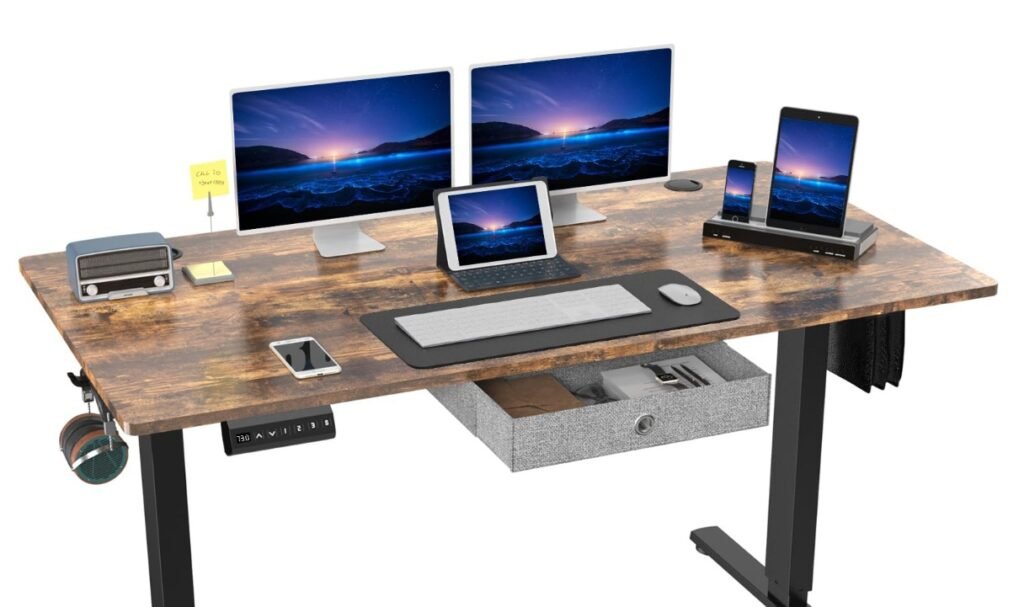
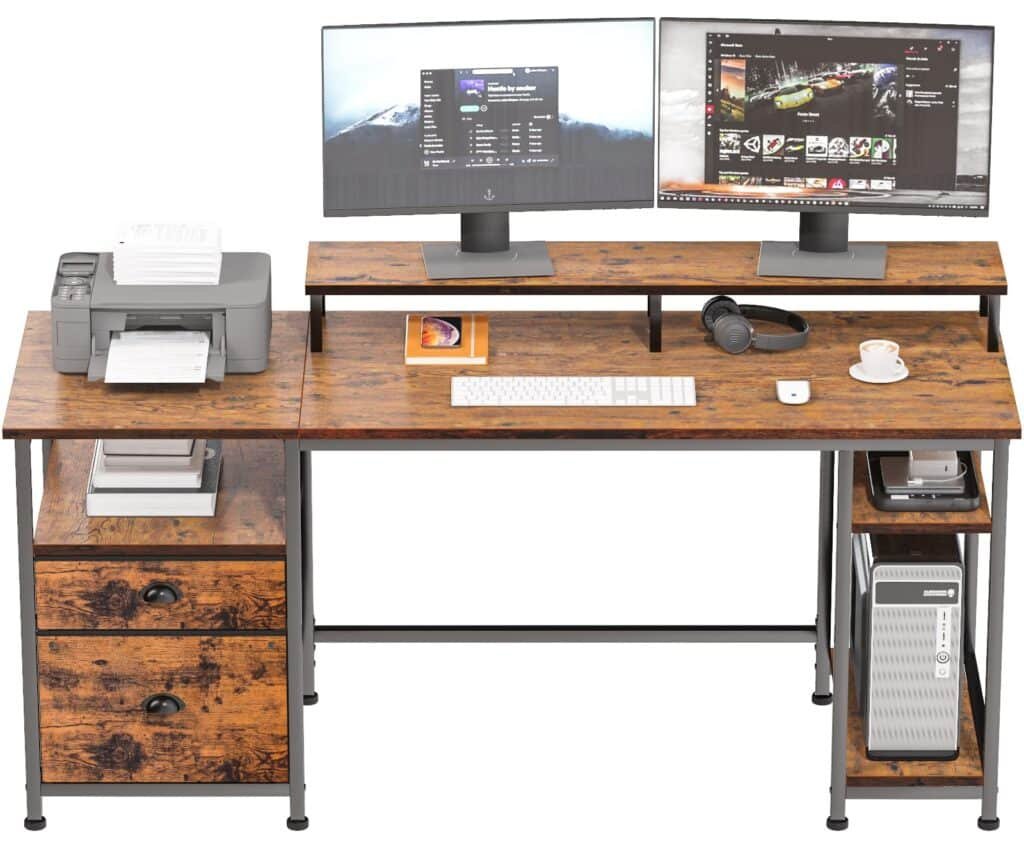
Size is where most people go wrong first. For laptop work, aim for 100–120 cm wide by 50–60 cm deep — enough surface for a laptop, a notebook, and a coffee mug without crowding the walkway behind you. If your space is tighter than that, go with a 20–24 inch deep desk, or better, a wall-mounted or fold-down model that disappears when you’re not using it.
My first desk was a hand-me-down 30-inch-deep office desk that looked fine in the store and ate my entire room. I sold it on Facebook Marketplace for $40 less than I paid and replaced it with a 45-inch-wide floating desk. That six-inch depth difference changed the whole room.
The chair
Slim profile, supportive back, and — this matters more than people think — enough knee clearance that the desk doesn’t feel like it’s swallowing the chair. A chair that’s too bulky visually shrinks a small desk even when the desk itself is the right size.
The lamp
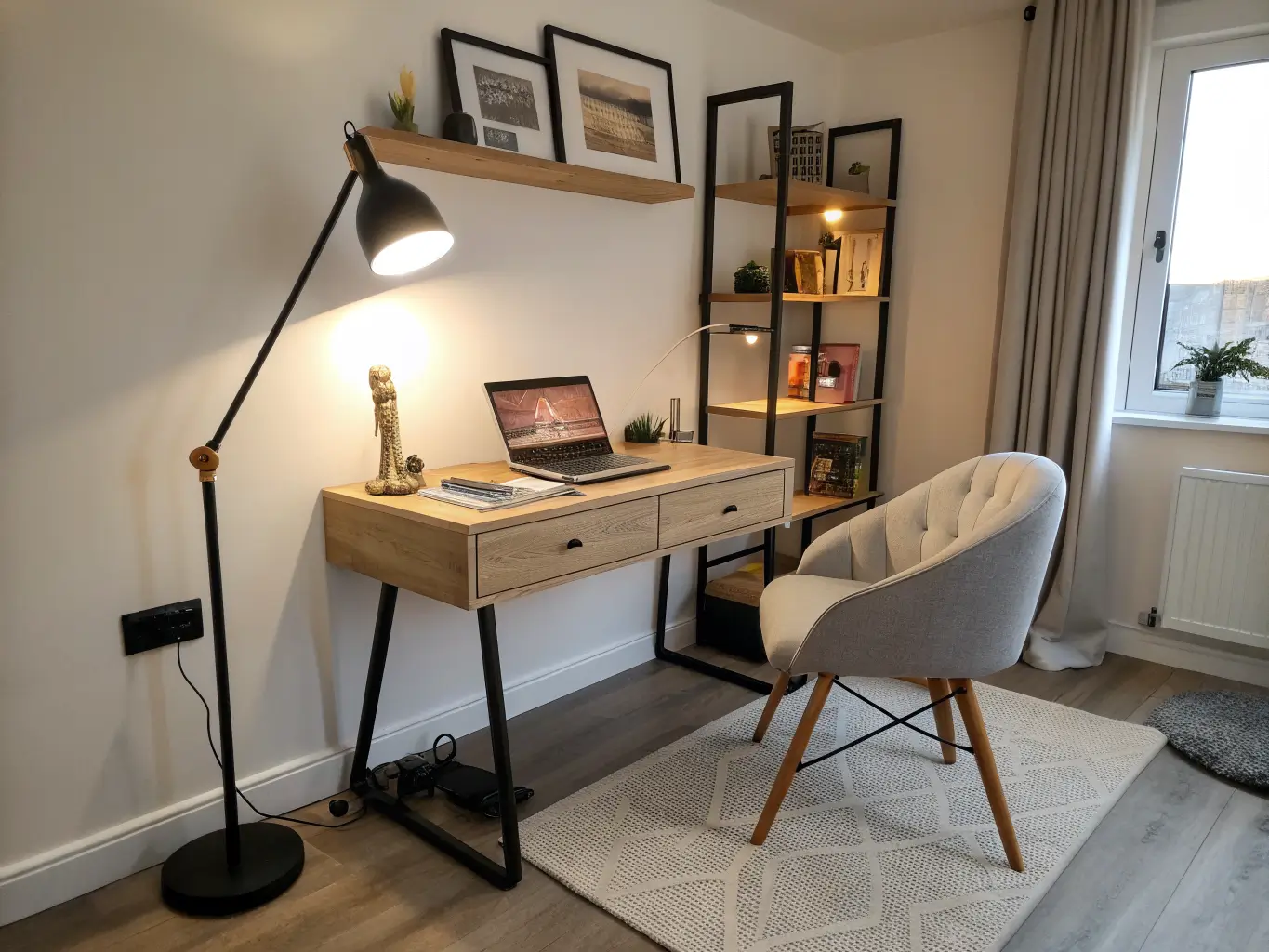
One task lamp with adjustable brightness, warm-white bulb. You’re aiming for 300–500 lux on your actual work surface — a single overhead fixture won’t get you there and will leave you squinting by 8pm. I use a simple articulating lamp with a warm bulb, and it’s done more for my evening focus than any productivity app.
Vertical storage
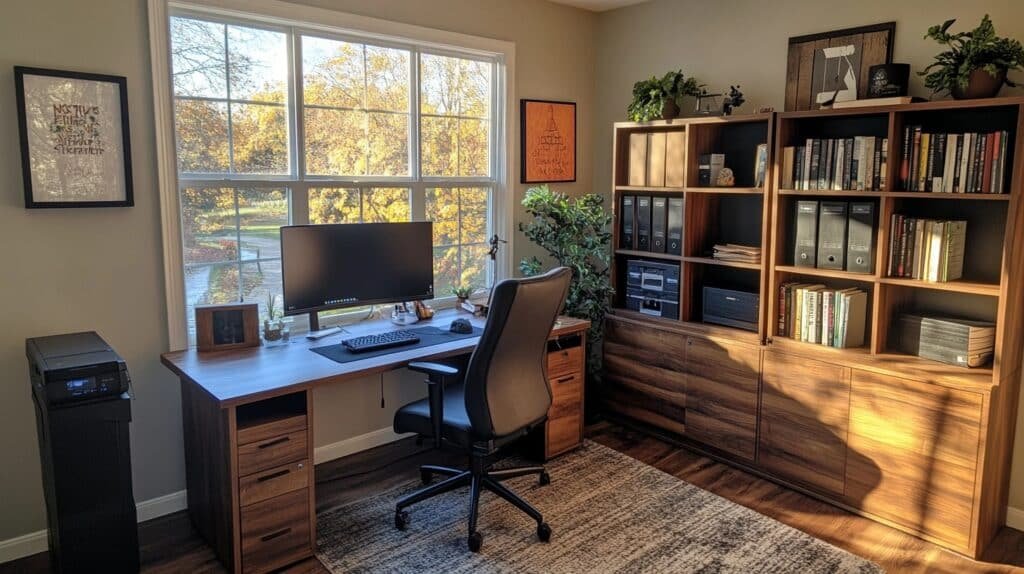
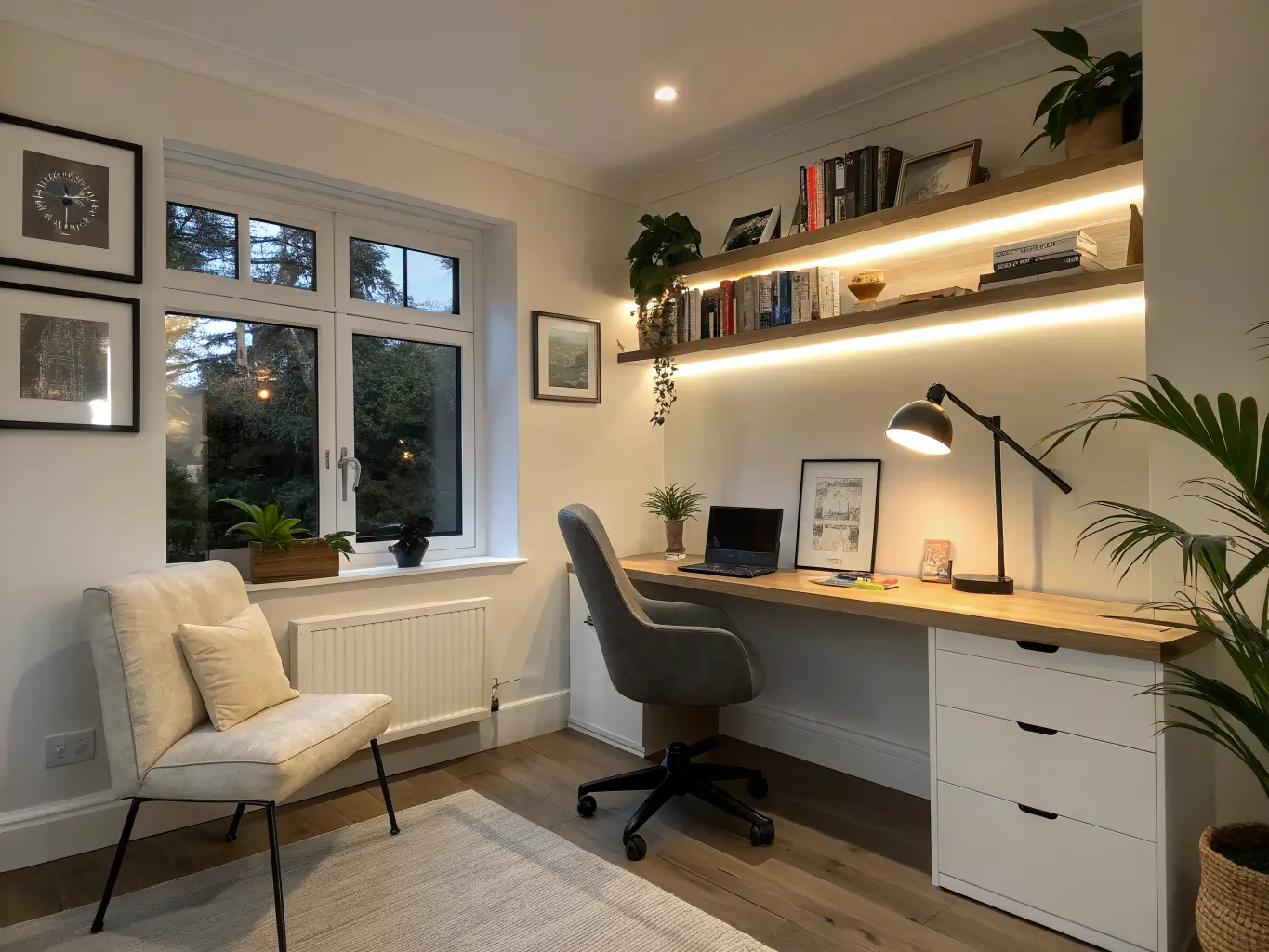
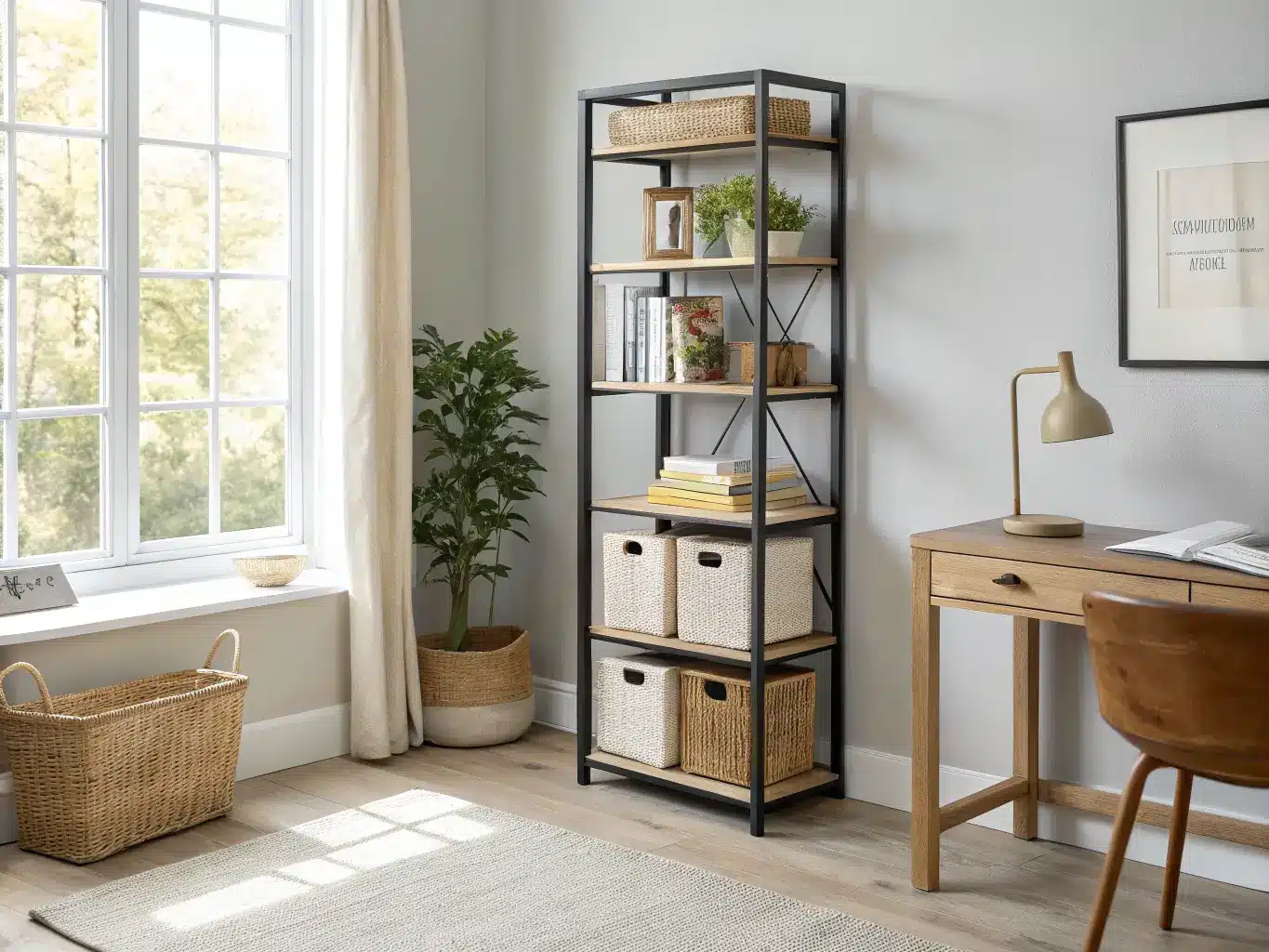
Floating shelves, a narrow tall bookcase, a pegboard, shallow wall-mounted cabinets — anything that goes up instead of out. Shelves around 9–12 inches deep hold books and supplies fine without jutting into the room. If your room is narrow, put storage above the desk, not beside it. This was my second mistake: I initially flanked the desk with a side shelf unit, and it turned a walkable room into an obstacle course.
Cable management
Grommets, a cable tray under the desk, or a small charging cubby. Visible cords are the fastest way to make an otherwise clean setup look sloppy — and in a tight room, you’ll see them constantly because there’s nowhere for your eye to escape to.
Decor — keep it to three things
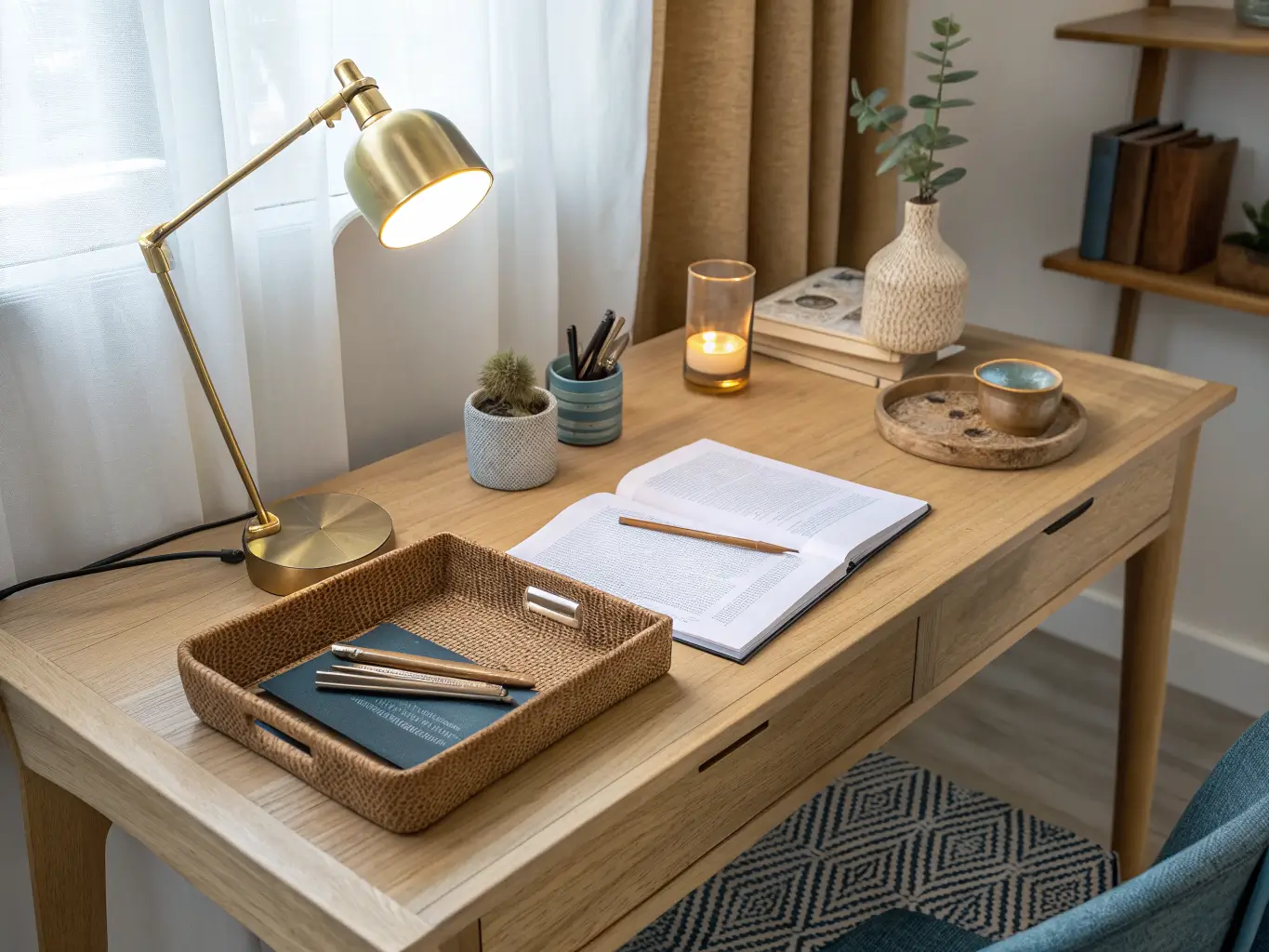
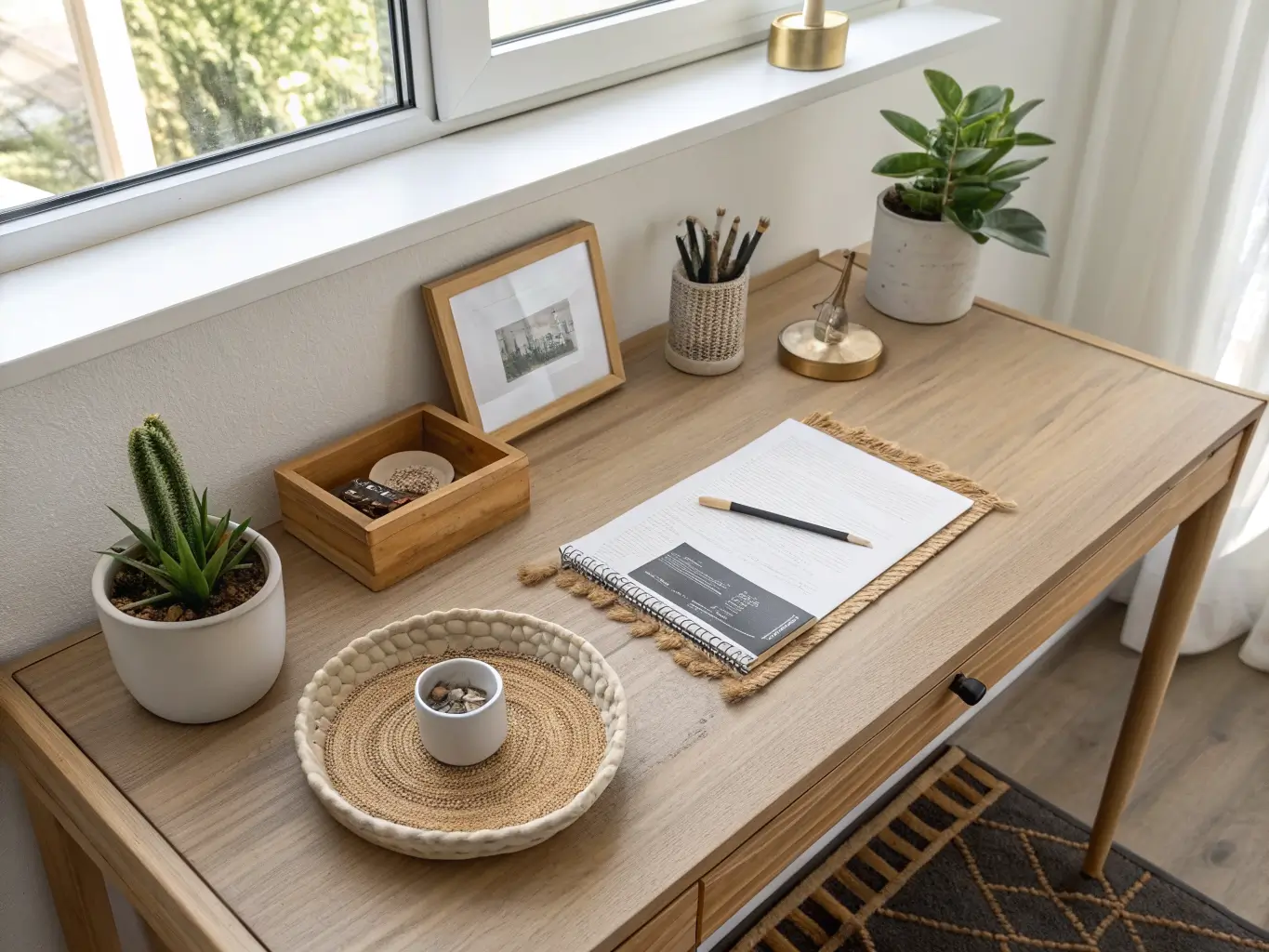
One small plant, one framed print or pin board, one desk tray. That’s genuinely enough. I learned this the hard way after cluttering my first setup with candles, a second plant, a stack of “aspirational” books, and a desk calendar — it looked like a Pinterest board vomited on a 4-square-foot surface. Less object density reads as more intentional, every time.
Optional Upgrades Worth Considering
Seasonal accents: swap the art print or a cushion cover on a nearby chair — keep the base palette neutral so seasonal changes stay easy and cheap.
Organic texture: wood grain, a linen desk mat, one plant — this keeps minimalist from tipping into cold.
Metallic accents: brass or black metal on lamp arms or shelf brackets. Use it sparingly — one or two touches, not on every surface.
Space-expanding tricks: a mirror angled to catch window light, translucent lamp shades, or a soft LED strip behind a shelf. These genuinely make small rooms read larger, not just prettier.
Putting It Together, Step by Step
1. Measure everything first — the wall, the outlet placement, the walking path. I skipped this the first time and ended up with a desk lamp cord stretched across a doorway. Not my finest hour.
2. Clear the space completely. Anything not used for studying gets removed before you style a single shelf.
3. Pick the quietest wall, ideally near a window but positioned so you’re not facing direct glare on a screen.
4. Position the desk so your monitor sits at or just below eye level, roughly an arm’s length from your face.
5. Install upper storage before styling the desk surface — shelves first, then only the books and supplies you use weekly.
6. Layer your lighting: ambient light first (ceiling or floor lamp), then the task lamp, then an optional soft backlight behind the monitor to cut glare.
7. Finish with restraint — one plant, one print, one tray, done.
Keep at least 30 inches of clearance behind the chair. This is the number I ignored most aggressively in my first setup, and it’s the one that made the room feel unusable rather than just tight.
Mistakes I’ve Made So You Don’t Have To
Buying a desk that’s too deep. It eats your walking space and makes the whole room feel like a hallway with a laptop in it.
Choosing bulky furniture because it was “already at home.” A heavy inherited bookcase does not belong in a 5×7 nook. Sell it, thank it for its service, move on.
Relying on one overhead light. Small study spaces need layers — task, ambient, and ideally a soft glow — or you’ll be hunched toward a lamp within a week.
Letting the desk surface become a junk drawer. If it’s not used daily, it goes in a drawer or a basket, not on the desk.
Ignoring cords. A cable tray costs $12. Do it before you convince yourself the tangle “isn’t that bad.”
Keeping It Looking Intentional Long-Term
Stick to 2–3 neutral tones plus one accent color — I run cream, light oak, and black, with a single dusty blue print as the accent. Everything I add gets checked against that palette before it earns a spot on the shelf.
Match your storage finishes. Mismatched bins and shelf brackets are a small thing that reads as chaos from across the room. Use closed bins for the stuff you don’t need to look at — cables, chargers, old notebooks — and keep open shelving for the handful of things you actually want on display.
I do a five-minute reset every Sunday: papers sorted, surfaces wiped, anything that migrated back to its spot. It’s the single habit that’s kept this space from sliding back into clutter.
Refreshing It Without Buying New Furniture
Swap the art print or textiles seasonally — this costs almost nothing and keeps the space feeling current without touching the furniture. A new plant is the cheapest mood shift you can buy. Floating shelves, a pegboard, and a better lamp are the upgrades that give you the most visible payoff per dollar spent.
If you want to push the aesthetic further, this setup pairs naturally with Scandinavian minimalism, light Japandi, or soft modern styling — all three share the same DNA of calm color, clean lines, and storage that doesn’t shout. I’ve leaned my own space more Japandi over the past year, just by swapping in a woven basket and warming up the wood tones slightly. Same bones, different mood.
For another angle on this, my small study room ideas guide covers the same space from a different starting point.