Quick Style Snapshot
Time: A simple chair-and-lamp setup takes 1–3 hours, mostly spent moving furniture around until it stops feeling awkward. If you’re painting the wall, adding shelving, or building a bench, budget 1–2 days.
Cost:
– Basic setup (chair, lamp, throw): $150–$400
– Polished version with rug, shelving, side table, better lighting: $500–$1,500
– Built-in bench or custom millwork: $2,000+
Space needed: My smallest nook was an alcove 38 inches wide by 78 inches long — barely bigger than a twin mattress standing up. That’s genuinely enough. You need a chair, a few feet of clearance to sit down without kicking a lamp, and a wall or window nearby.
Skill level: Beginner if you’re arranging existing furniture. Intermediate once paint, shelving, or wall-mounted lighting enters the picture. Expert territory only if you’re building in a bench.
Seasonal appeal: Year-round, easily refreshed with textiles. This is the one home project that doesn’t demand a seasonal teardown — just a blanket swap.
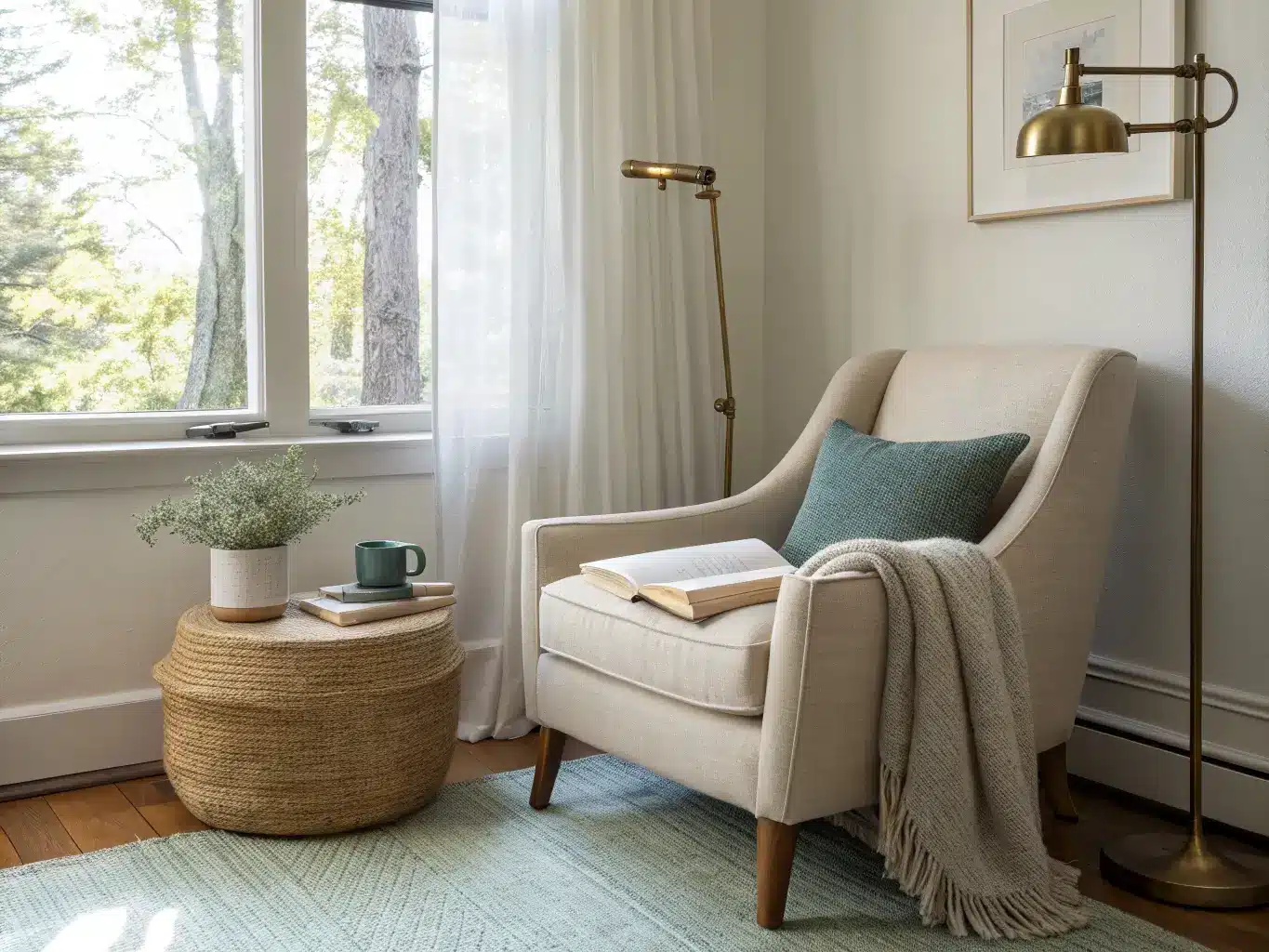
What Style Is a Reading Nook, Really
A reading nook isn’t a style so much as a function wearing whatever style your house already has. That said, most of the ones I see working right now fall into a few camps: cozy contemporary (clean lines, warm neutrals, one soft chair), library-inspired traditional (wood tones, brass lamps, stacked books), window-seat casual (built-in bench, cushions, linen), or soft boho (layered textiles, a woven basket, a plant that’s slightly too big for the corner).
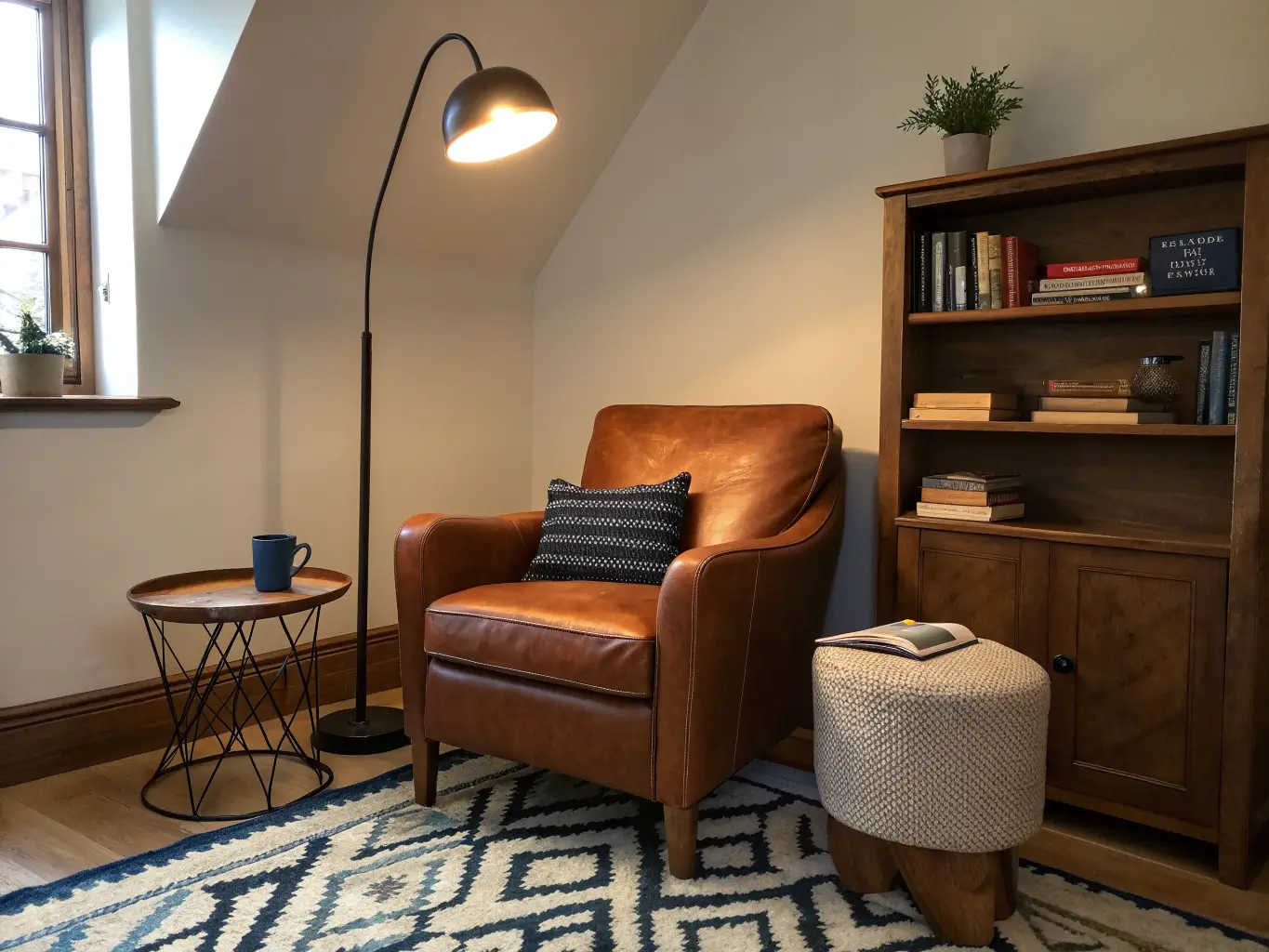
Colors that keep showing up for good reason: oatmeal, cream, tan, muted sage or forest green, and navy as an accent. These read as calm rather than stark. Materials lean toward plush upholstery, wood shelving, linen or cotton textiles, wool or sherpa throws, and metal task lamps — nothing shiny or hard-edged, because the whole point is to counteract the rest of the house.
This works best for book lovers obviously, but also for anyone in a house with no quiet zone — parents needing five minutes away from the living room chaos, apartment dwellers who don’t have a spare room to convert. Put it in a bedroom corner, a window alcove, a landing, under the stairs, or a guest room that mostly sits empty. Avoid anywhere near the kitchen or a main hallway — foot traffic kills the “retreat” feeling fast.
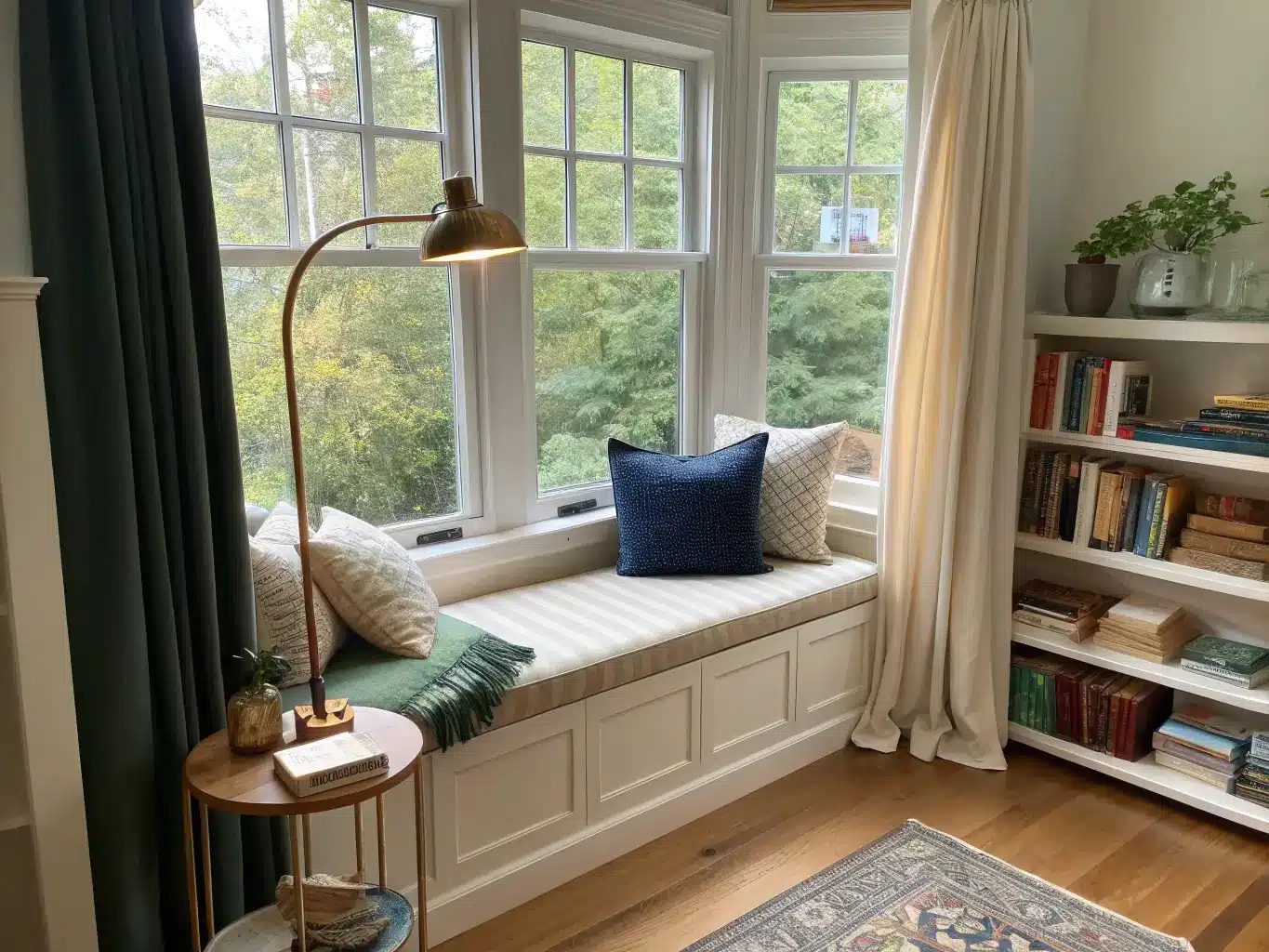
The Essential Pieces You Actually Need
A genuinely comfortable seat.
This is non-negotiable and it’s the mistake I made first. My first nook chair was a slim wingback I bought because it looked right in the corner — narrow profile, nice wood legs, photographed beautifully. I sat in it twice. It was stiff, the arms were too low, and I ended up reading on the floor next to it instead. I replaced it with a deep upholstered armchair with a slight recline, and usage went from zero to daily. Comfort beats silhouette every time. Armchair, small settee, daybed, or a built-in bench all work — just sit in it for at least ten minutes at the store or ten minutes into deciding online whether it’s a return.
Task lighting, not ambient lighting.
A ceiling fixture across the room doesn’t cut it. You want light landing directly on the page. Two options that keep coming up for good reason:
– Articulating wall sconces — save floor space, adjustable arm points light exactly where you need it
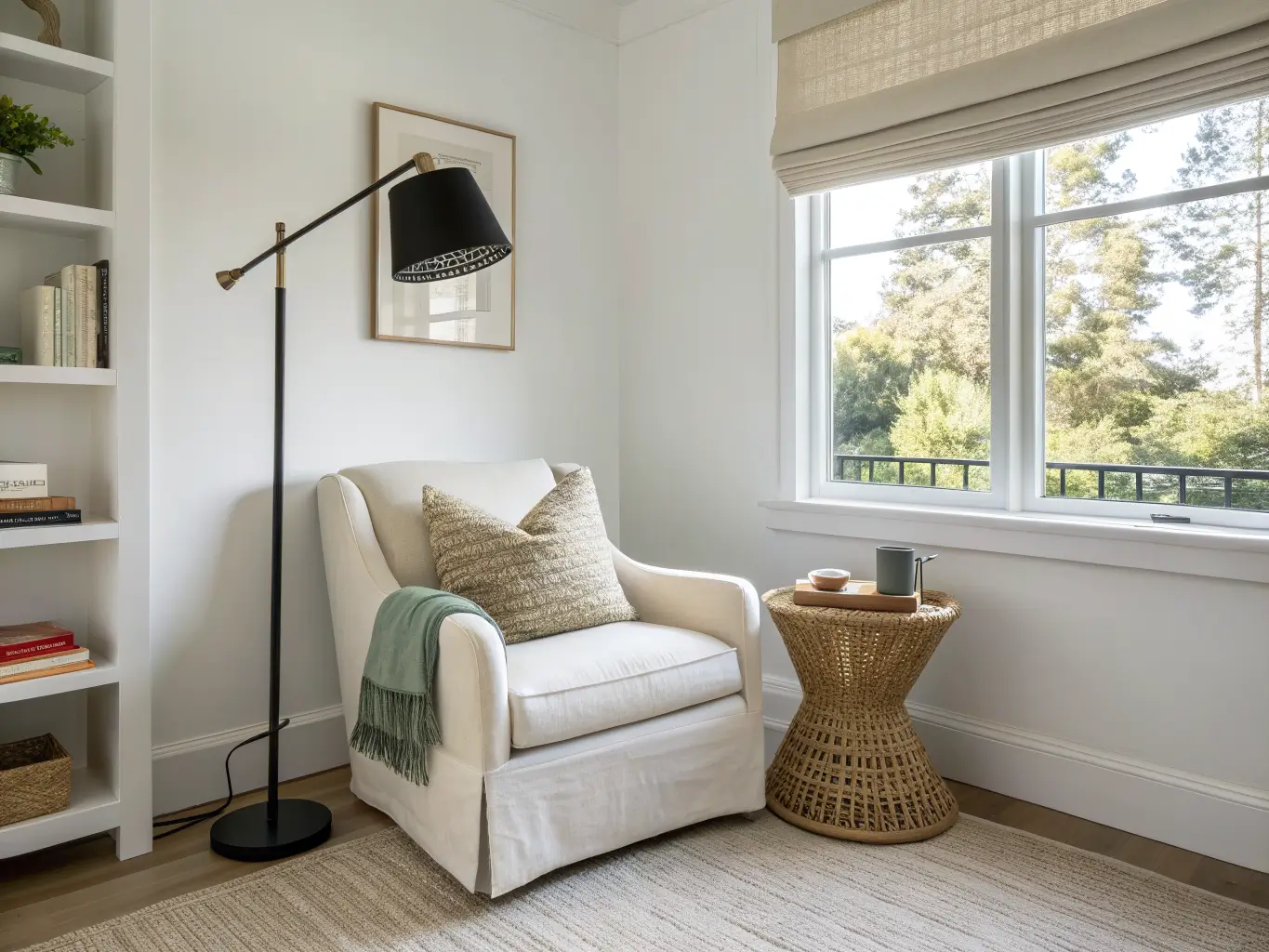
– Pharmacy-style floor lamps — classic, adjustable, work with almost any seat height
Aim for at least 450 lumens, warm-to-neutral white (2700K–3500K on the bulb box). Anything dimmer and you’ll strain; anything bluer and it feels clinical instead of restful.
A side table within arm’s reach.
Something for tea, glasses, whatever book you’re not currently reading. Doesn’t need to be fancy — I use a $40 round rattan table I found at a flea market, wobbly leg and all, because it’s exactly the right height for my chair arm.
A small shelf, not a wall of books.
You do not need built-in floor-to-ceiling shelving to make this feel like a reading spot. A single wall shelf with 8–10 books and one object on it does the job. Overloading the shelf actually undercuts the calm you’re going for.
Soft layers.
A throw blanket, one or two pillows (lumbar-shaped ones fit better in a single chair than square ones), and a small rug underfoot. This is what makes the corner feel finished versus staged.
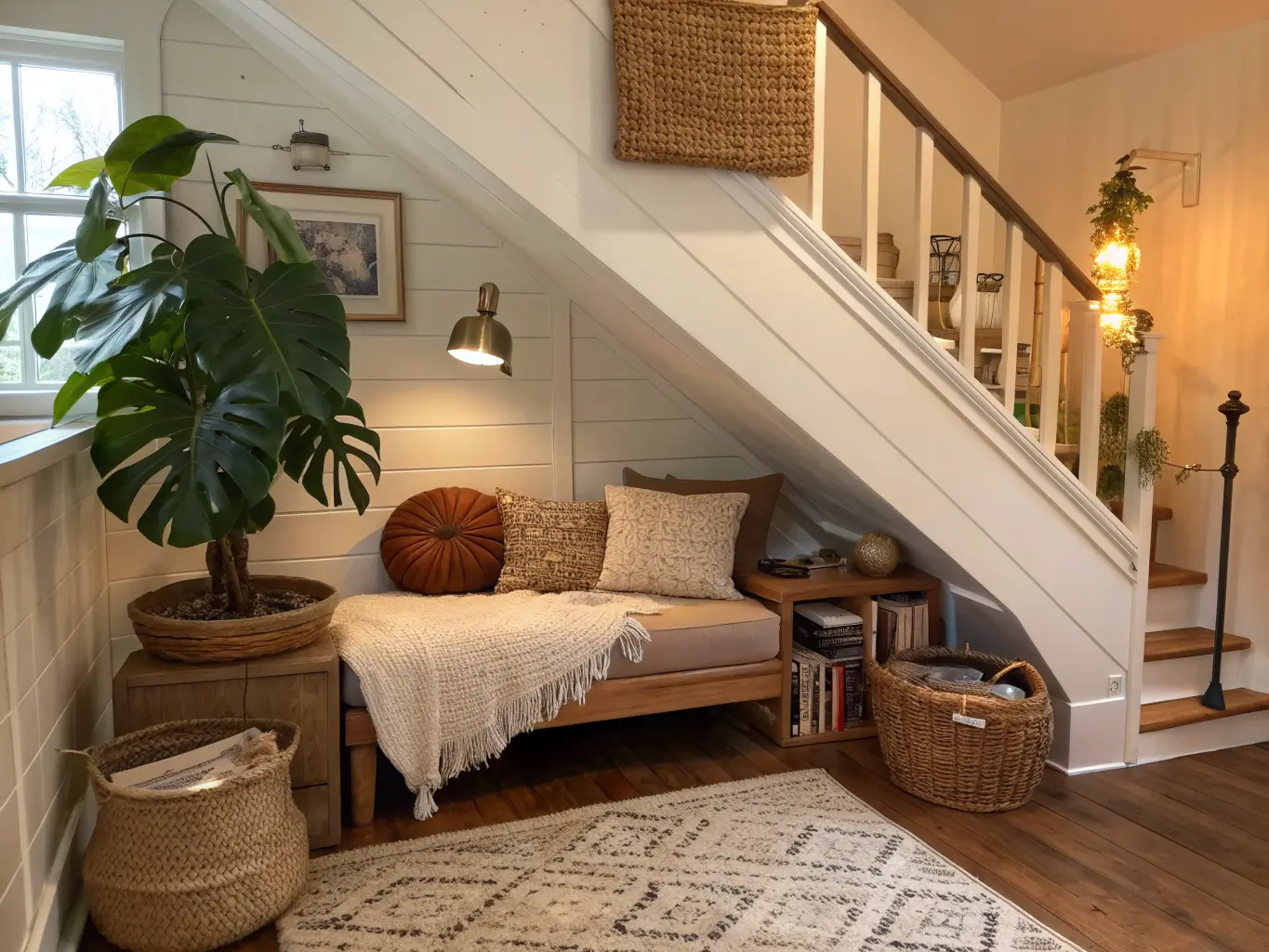
Building It Step by Step
1. Clear the space and measure first. I cannot stress this enough because I’ve broken this rule and paid for it — I bought a chair for my under-stair nook without measuring the sloped ceiling clearance, and it didn’t fit upright. Had to return it. Measure width, depth, and any ceiling slope before you buy anything.
2. Decide what kind of nook this is. Window seat, corner chair, alcove, or bedroom recess — the four most common setups, and all four work fine at small scale. This decision affects everything downstream, especially lighting and seating shape.
3. Fix the wall color if the corner is dark. A light, warm white (I like Benjamin Moore White Dove for corners that get moderate light) opens up a dim space more than any lamp will on its own.
4. Check for an outlet. Obvious, but easy to forget until your lamp cord is stretched across the walking path. If there’s no outlet nearby, a battery or rechargeable lamp solves it without an electrician visit.
5. Place the anchor piece first — chair, bench, or daybed — and everything else gets arranged around it.
6. Add the lamp next, positioned so light falls over your shoulder onto the page, not into your eyes.
7. Slide in the side table or shelf, close enough to reach without leaning.
8. Layer the rug, throw, and one or two pillows.
9. Finish with almost nothing else. One framed print, one small plant, maybe a ceramic bowl. Stop there.
10. Highlight whatever the space already has going for it — a window, an odd architectural nook, proximity to a fireplace. Don’t fight the room’s natural feature, build around it.
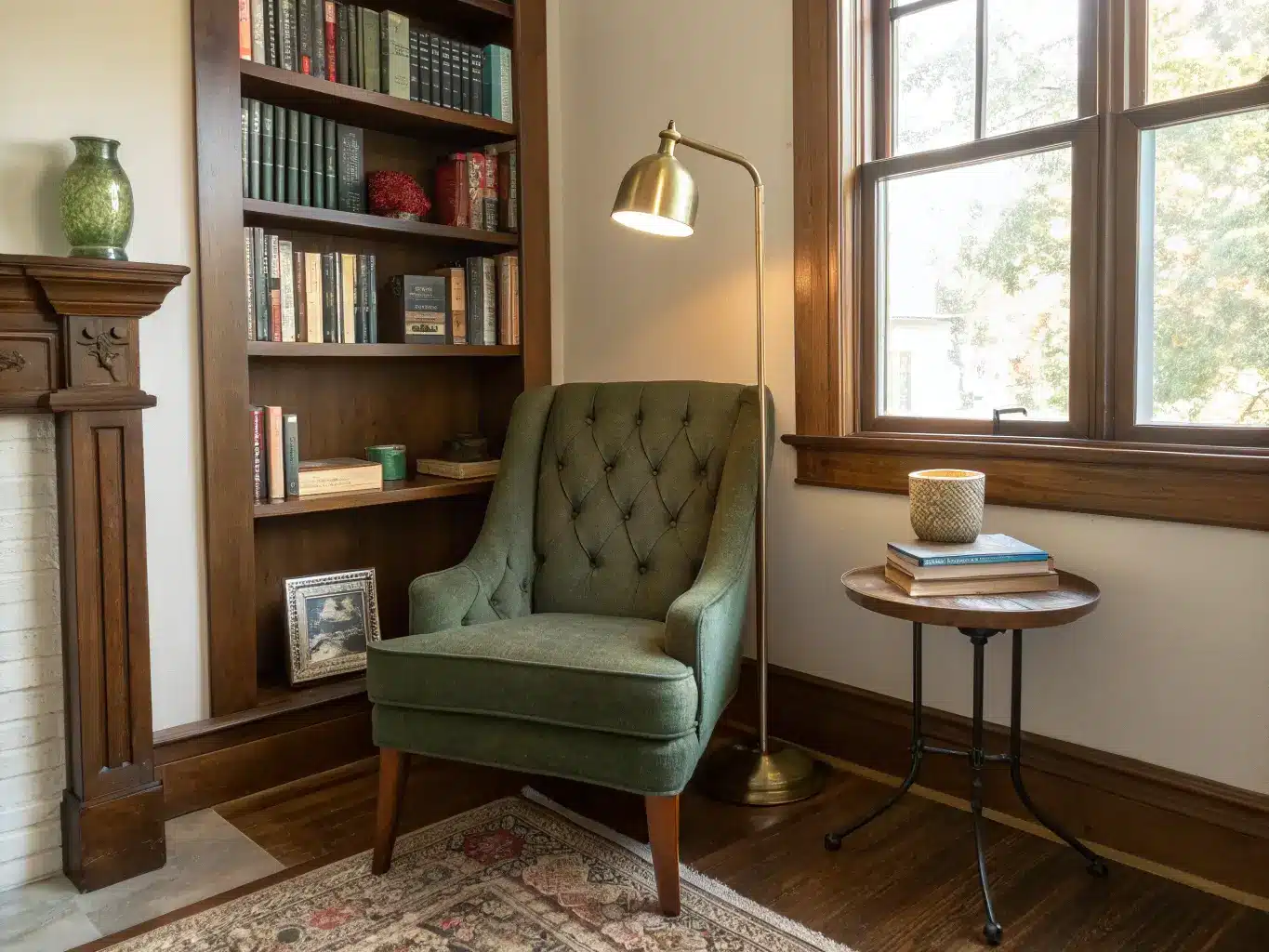
Mistakes That Quietly Ruin a Reading Nook
– Buying the chair before measuring the space. Said it above, saying it again because it’s the single most common and most expensive mistake.
– Skipping dedicated lighting. A nook lit only by the room’s overhead fixture looks fine and functions poorly. You’ll stop using it within a month.
– Over-decorating. A nook with six pillows, four throws, a gallery wall, and a plant collection stops being a reading spot and starts being a storage display. Curate hard.
– Prioritizing looks over comfort in the seat. My wingback story again — if it’s not comfortable after ten real minutes, it’s not the right chair no matter how good it photographs.
– Putting it in a busy or loud spot. Next to the front door, in the main hallway, across from the TV — none of these let the “retreat” feeling actually land.
Keeping It Looking Intentional Over Time
Stick to a consistent palette across the textiles, furniture, and shelf objects — this is what makes a nook read as one considered scene instead of a pile of mismatched stuff that ended up in the corner. Limit yourself to a few recurring materials: wood, linen, ceramic, metal. When everything’s fighting for attention, nothing gets it.
Rotate slowly. Swap one pillow cover or one small art print at a time rather than overhauling the whole corner. It keeps things fresh without losing the cohesion you worked to build.
Seasonal and Budget Refreshes
The cheapest, easiest updates are always textile swaps — a new throw, a different pillow cover, a lamp shade change. None of that requires replacing furniture.
For colder months: heavier knits, boucle, sherpa, deeper tones like forest green or rust, warmer bulb temperature in the lamp.
For warmer months: lighter cotton and linen, brighter neutrals, a lamp shade swap to something lighter.
If you want the nook to bridge into the rest of your home’s style, lean into boho-meets-library, minimalist reading corner, or window-seat retreat as loose directions rather than rigid rules. A signature chair, some plant styling, and a well-arranged shelf will carry the connection without you needing to match everything exactly.
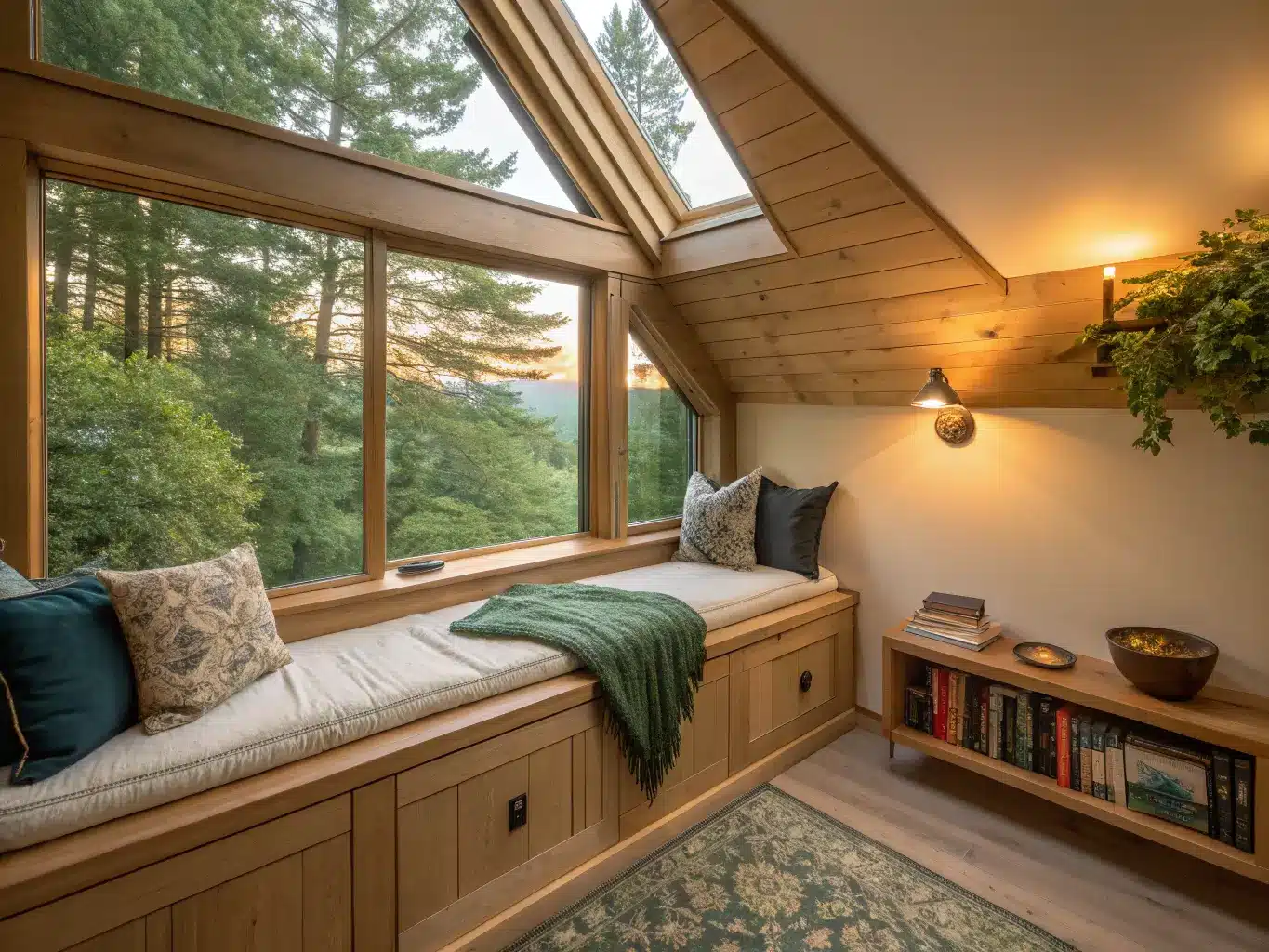
The whole point of this corner is that it asks nothing of you once it’s built. Sit down, the light’s already right, the blanket’s already there. That’s the only metric that matters — not how it photographs, but whether you actually go sit in it on a random Tuesday.
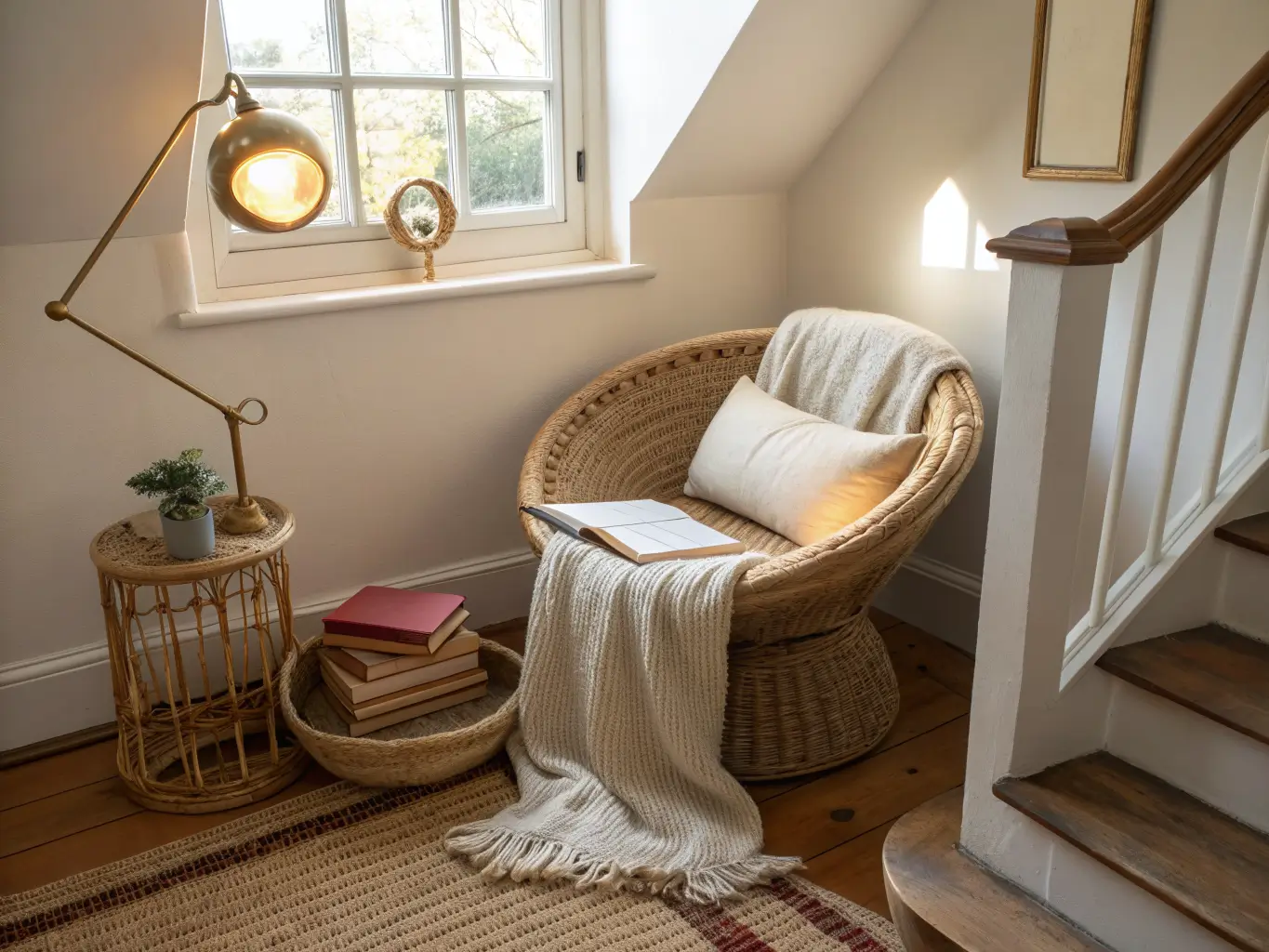
For another angle on this, my cozy reading nook guide covers the same space from a different starting point.