What a Boho Reading Nook Actually Is
Boho — short for bohemian — isn’t a color scheme you buy in a kit. It’s a way of layering things you actually like: natural materials, mismatched textures, a little imperfection. No hard symmetry, no matching furniture sets. The style is built on rattan, wicker, cane, jute, linen, cotton, wood, bouclé, sheepskin, macramé, and chunky knits, in a palette that leans cream, oat, tan, rust, sage green, terracotta, and warm brown.
It’s perfect for renters who can’t renovate, for anyone who wants one genuinely quiet spot in the house, and for people (like me) who buy pillows compulsively and need somewhere to put them that isn’t the couch. It works in bedrooms, living room corners, stair landings, hallway alcoves, and — my personal favorite — a window seat, if you’re lucky enough to have one.
Time and cost, realistically:
– A simple corner refresh takes 1–3 hours
– Adding shelves, a canopy, or built-in-style seating takes 1–2 days
– Budget version: under $200 (thrifted chair, IKEA LOHALS jute rug at $29, an Etsy macramé hanging around $38, a $30 chunky throw, a $13 pothos, a $40 arc lamp)
– Mid-range setup: $250–$700 once you add a real chair, side table, and better lighting
– Skill level: beginner if you’re just styling, intermediate once hardware and shelving get involved
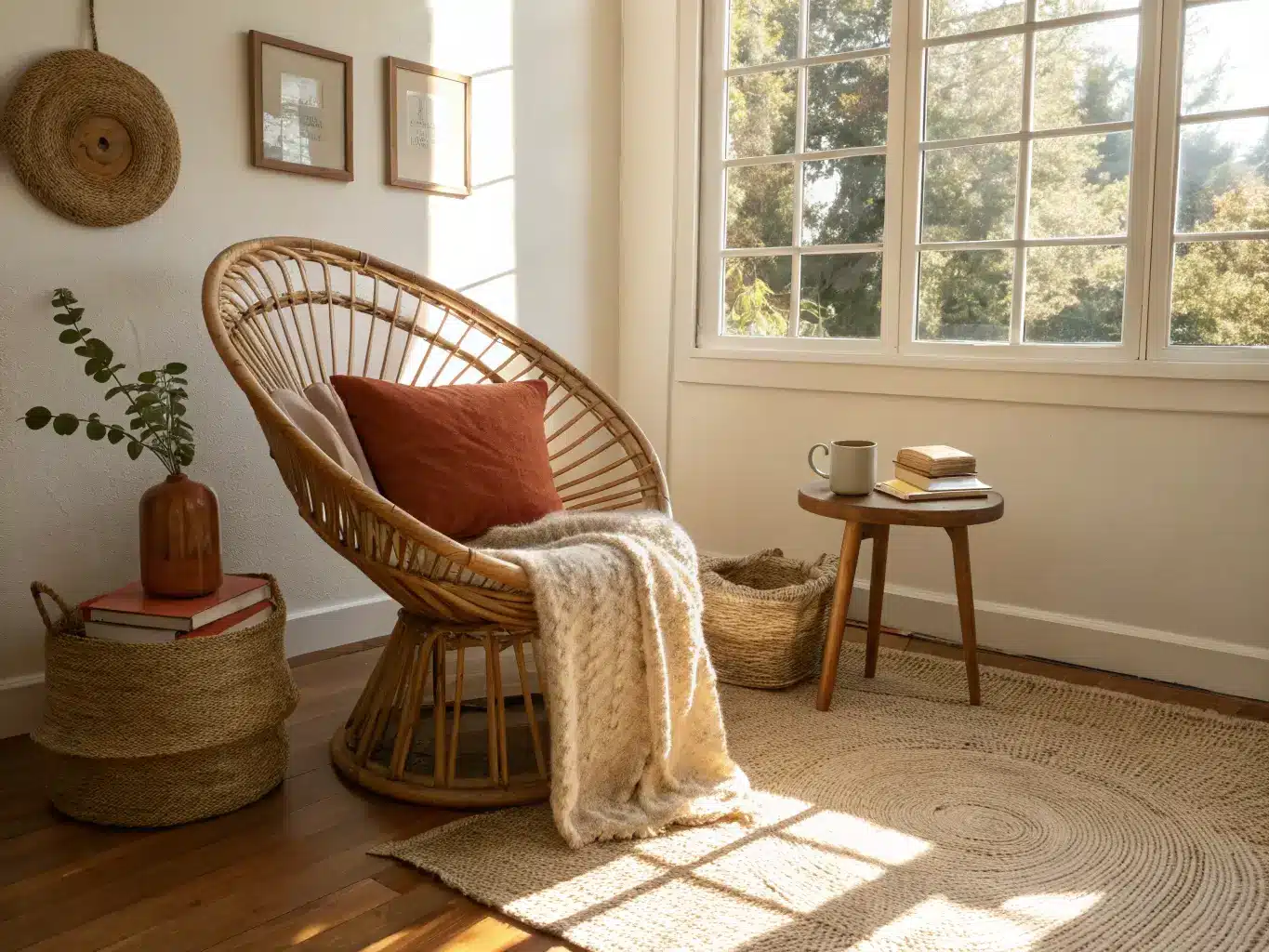
The Must-Have Pieces (Don’t Skip Any of These)
I made the mistake, my first time around, of buying pillows and a throw and calling it done. It looked like a blanket had exploded on a chair. A nook needs structure underneath the softness. Here’s what that structure actually is:
– A hero seat — rattan chair, cane chair, floor cushion cluster, pouf, or small daybed. This is your anchor. Buy this first, before anything else.
– A grounding rug — a kilim, a vintage Turkish runner, or something simple like the IKEA LOHALS jute rug. This defines the footprint of the nook so it doesn’t look like furniture someone forgot to put away.
– Layered textiles — two to three pillows in mixed textures, plus one chunky knit throw, sheepskin, or woven blanket.
– Warm lighting — a lamp, not overhead light. I’ll get into why below.
– A small surface — side table, stool, or even a sturdy crate for your tea and book stack.
– One living thing — a pothos, a eucalyptus stem, a small fern. Just one. It doesn’t need to be a whole jungle.
– A signature wall piece — a macramé hanging, a woven basket cluster, or a piece of vintage-style art.
Once you have all seven of those, you have a nook. Miss two or three and it reads as random furniture near a window.
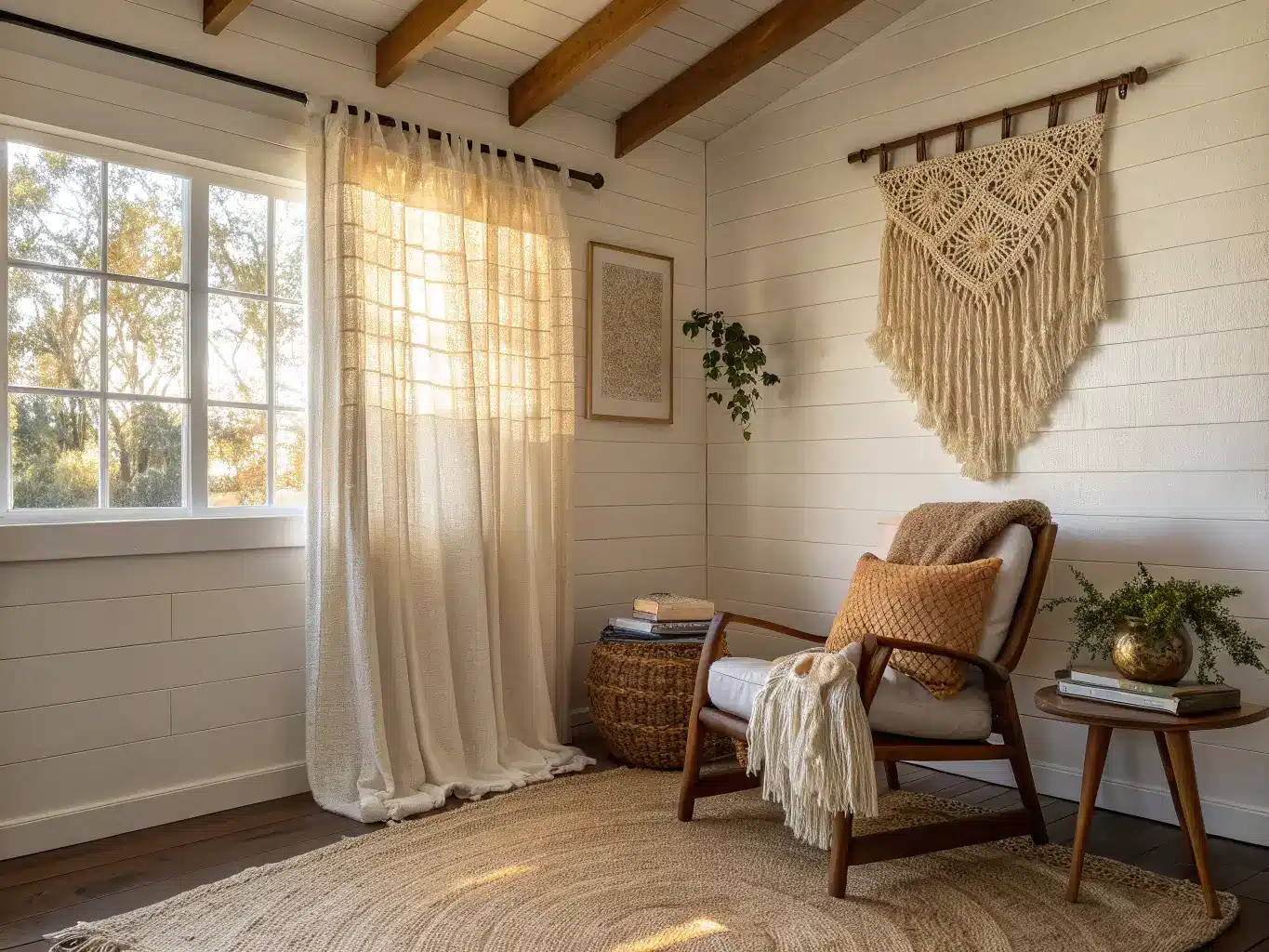
How to Actually Put It Together
Build from the floor up. This is the single biggest fix for that “thrifted jumble” look. The order matters:
1. Rug down first — it sets the boundary
2. Chair or cushion on top of it
3. First pillow layer (solid, neutral — cream or oat)
4. Second pillow with pattern
5. Throw draped over the arm or back, slightly asymmetrical
Doing it in this order keeps your eye moving naturally instead of landing on ten competing things at once.
Pick one pattern and let everything else support it. This was my biggest early mistake — I had a striped pillow, a paisley throw, a patterned rug, and a floral wall hanging all in the same three-foot radius. It was exhausting to look at. Now I pick one statement pattern (usually the pillow) and keep the rug and throw in solid, complementary neutrals. One bold moment, not five.
Mix hard and soft textures on purpose. Rattan and wood need something soft next to them or they feel cold. Pair a cane chair with a sheepskin throw. Pair a jute rug with a linen pillow. The contrast between rough and soft is what makes boho feel tactile instead of sparse.
Lighting is not optional, and it’s not overhead. Skip the ceiling light entirely in this corner. Use a floor lamp, a small table lamp, or string lights, and if you’re buying bulbs, get 2700K — that’s the warm, almost amber tone, not the bluish daylight bulbs. A nook lit by overhead light looks like an office. A nook lit by a warm lamp looks like somewhere you’d actually want to sit at 9pm with a book.
Leave some empty space. One plain cream pillow. One bare patch of wall. Boho gets a bad reputation for looking cluttered, but the good versions always have a breath of negative space somewhere so your eye has somewhere to rest.
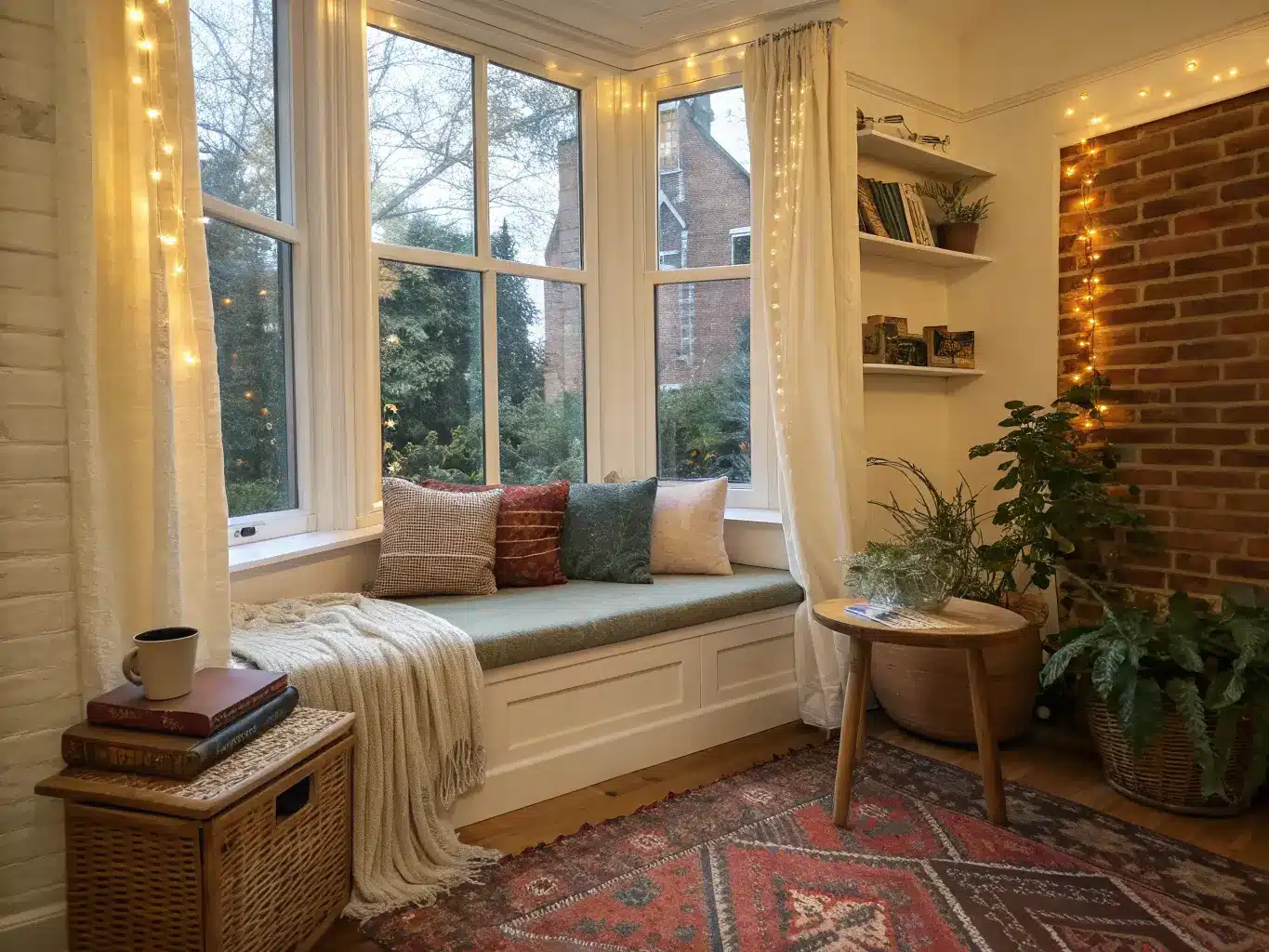
Where to Spend, Where to Save
I’ll be honest about where I’ve splurged and where I’ve cheaped out and not regretted it:
Spend on:
– The chair or seating — you’re going to sit in this for hours, so a $150 rattan chair from a real retailer beats a $40 folding papasan that creaks
– Lighting — a decent lamp with a warm bulb changes the whole mood of the corner
Save on:
– The rug — IKEA’s LOHALS jute rug at $29 does the job just as well as a $200 import
– Pillow covers — buy inserts once, swap covers seasonally for $12–18 each instead of buying whole new pillows
– Wall decor — a $38 Etsy macramé piece or even a DIY one from a $10 kit looks identical to a $120 version from a home store
– The plant — a pothos cutting from a friend costs nothing and grows into the same plant you’d pay $25 for
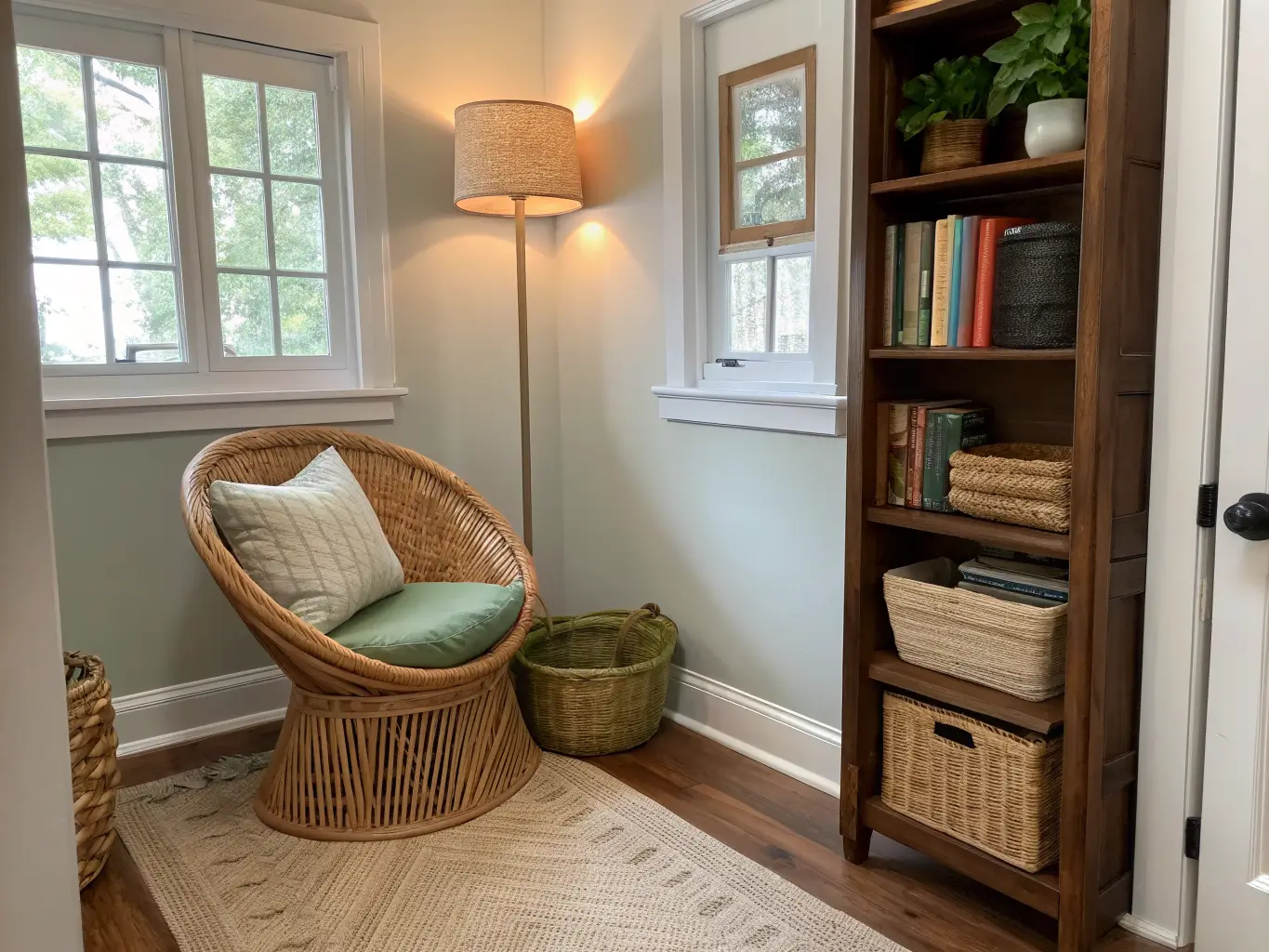
Mistakes I’ve Made So You Don’t Have To
– Too many patterns. I already mentioned this, but it bears repeating because it’s the number one thing that makes a nook look chaotic instead of curated.
– Bright white throws and pillows. I bought a crisp white knit blanket once thinking it would look clean and Scandinavian. It just looked out of place — too cold next to the warm rattan and rust tones. Cream, oat, or rust reads warmer and fits the palette.
– No rug. Without it, the chair just looks like a chair someone put in a corner. The rug is what tells your brain “this is a room.”
– Skipping the plant. Sounds minor, but a nook with zero living elements feels sterile no matter how many pillows you pile on.
– Over-styling the side table. One candle, one mug, one small stack of books. Not five decorative objects. The nook needs somewhere for your actual coffee to go.
Keeping It Fresh Through the Seasons
Once the bones are in — chair, rug, lamp, plant, wall piece — you don’t touch those again. Everything else rotates:
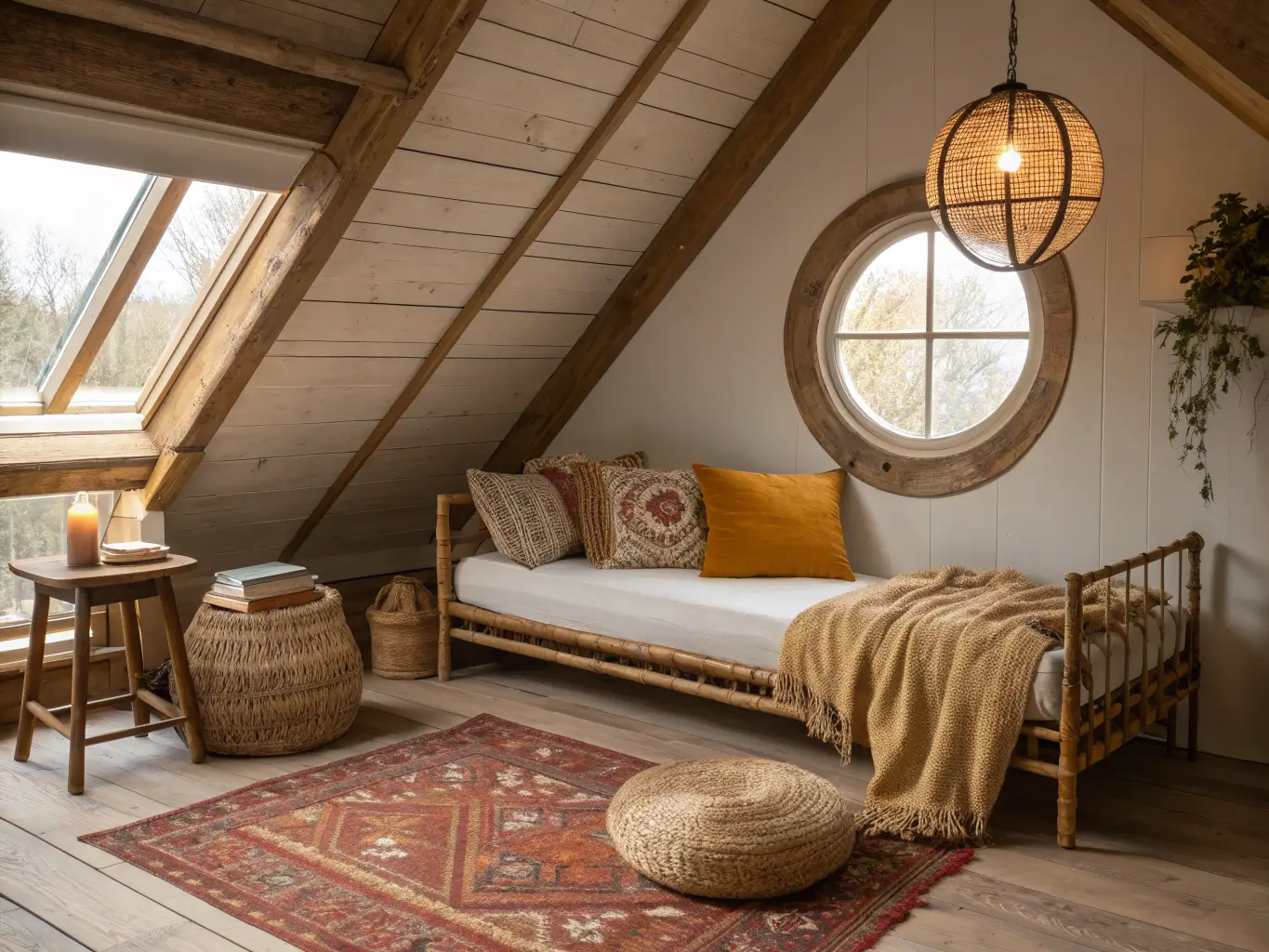
– Fall: rust and clay-toned throws, a mustard pillow cover
– Winter: deep berry or forest green, heavier knit textures
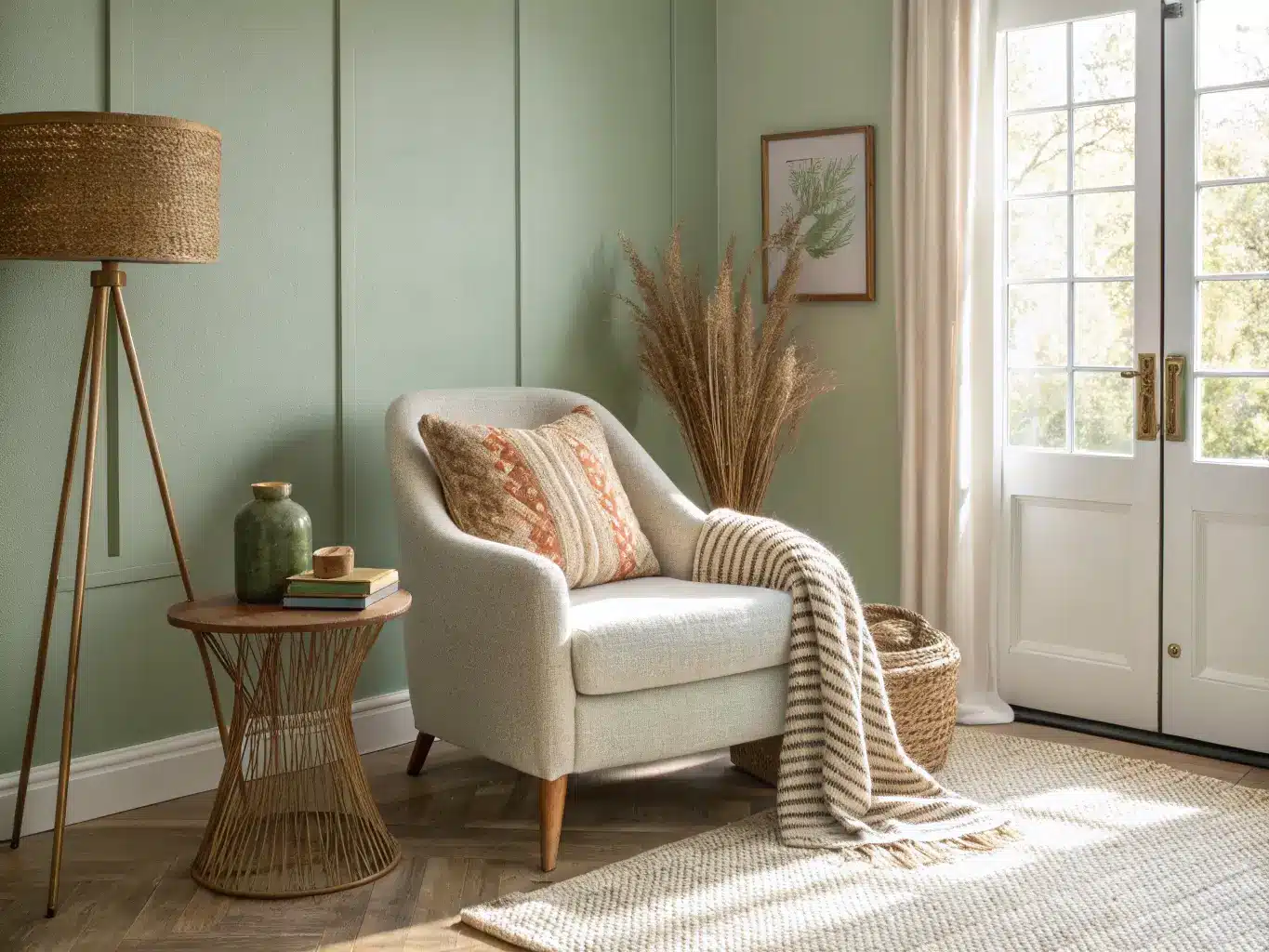
– Spring: sage green and blush pink, lighter cotton throws
– Summer: cream and airy neutrals, let the rattan do the talking
I keep a small bin of swap-out pillow covers and rotate them every few months. Total cost to refresh the whole look each season: usually under $40.
If you want to push the style further, blend it:
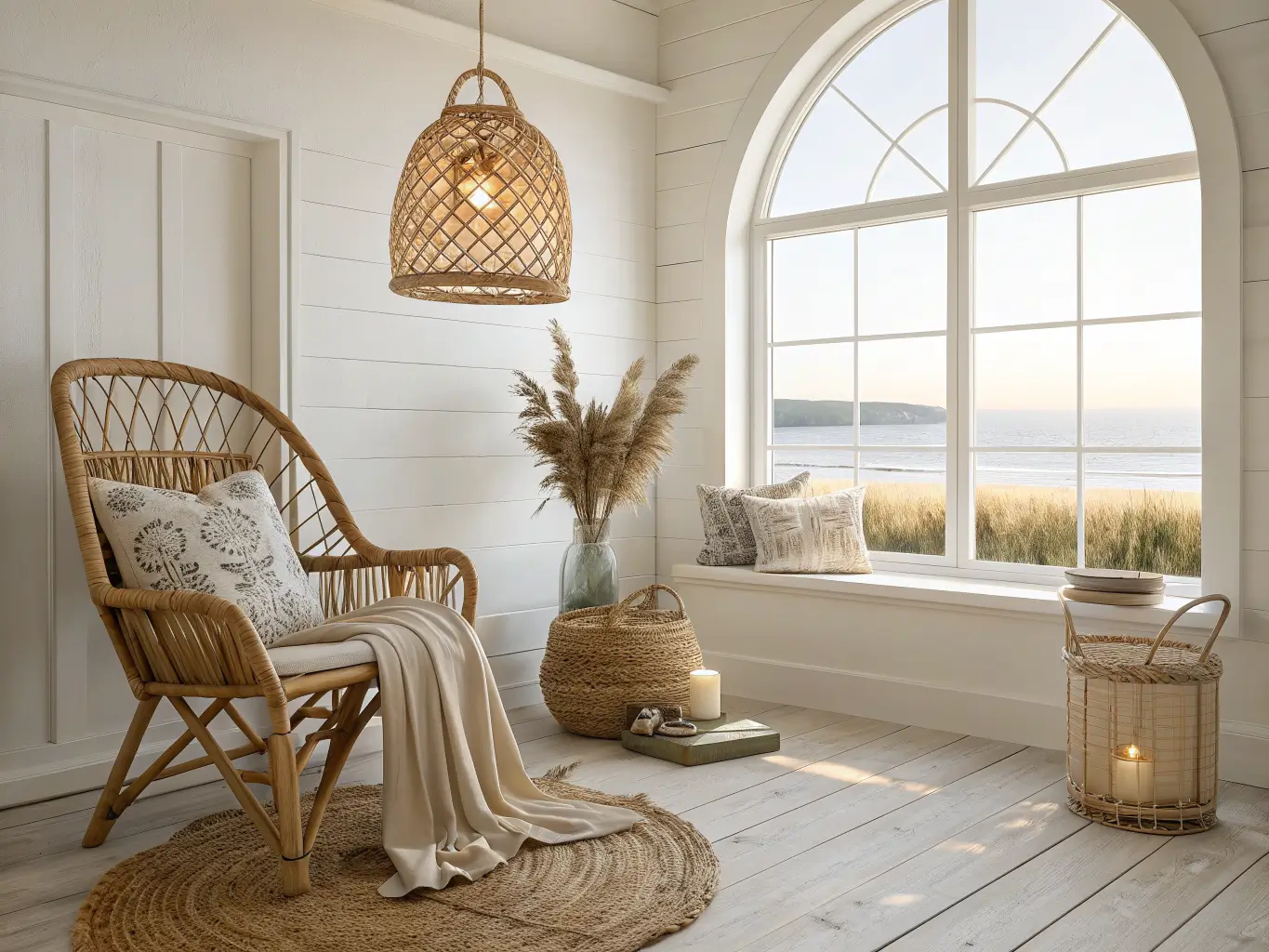
– Boho + coastal — swap in driftwood tones, pale sand colors, more linen
– Boho + vintage — thrifted side table, an old hardcover stack, an antique frame instead of a print
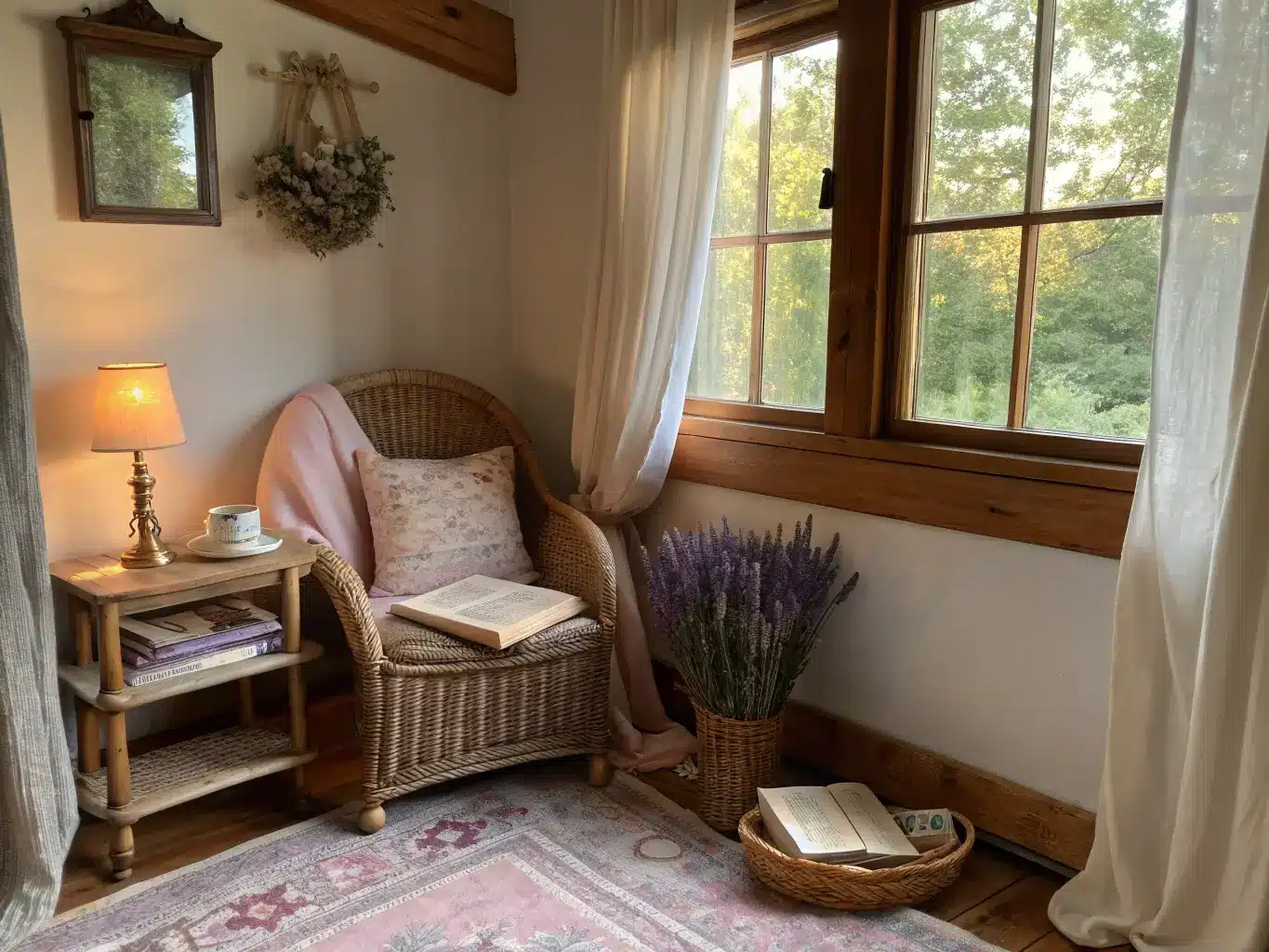
– Boho + cottagecore — dried florals, softer lamp glow, more layered textiles
– Boho + bookish/preppy — a bolder patterned pillow, even a monogrammed cushion, leaning into the “this corner is clearly for reading” identity
The whole point of this style is that it’s never finished in a precious way. You add a pillow, you swap a throw, you find a better lamp at a flea market eight months from now. That looseness is the feature, not a flaw — just keep the palette tight and the pattern count low, and every addition will look like it belongs.
For another angle on this, my cozy reading nook guide covers the same space from a different starting point.