Quick Style Snapshot
Time needed: A basic refresh — new lamp, some shelving, a rug — takes 2 to 6 hours. If you’re painting, adding built-in-style shelving, or converting a closet into an office, budget 1 to 3 days, mostly because paint needs drying time and flat-pack shelving always takes longer than the box promises.
Cost range: You can pull together a functional, good-looking setup for $150–$500 if you’re working with a desk and chair you already own and just adding lighting, storage, and decor. A full room refresh — new desk, upgraded ergonomic chair, real shelving, lighting, rug, and art — runs $600–$2,500+. Custom built-ins or carpentry can blow past that fast; my friend spent $4,000 on a built-in desk wall and doesn’t regret a cent of it, but that’s a different budget conversation entirely.
Ideal space size: This is the good news — a study room doesn’t need to be a room. A 4 to 6 foot wide corner, a spare bedroom, an under-stairs gap, or a genuine closet conversion (a “cloffice,” if you want the internet’s term for it) all work. My closet office is 5 feet wide and it’s the most productive spot in my apartment.
DIY skill level: Styling and basic setup is beginner to intermediate — anyone can hang shelves and pick a rug. Built-ins, custom desk carpentry, or moving electrical outlets is intermediate to expert territory. Know which one you’re signing up for before you start.
Seasonal appeal: Year-round by nature, but it takes seasonal refreshing well through textiles, plants, and swapped artwork — more on that later.
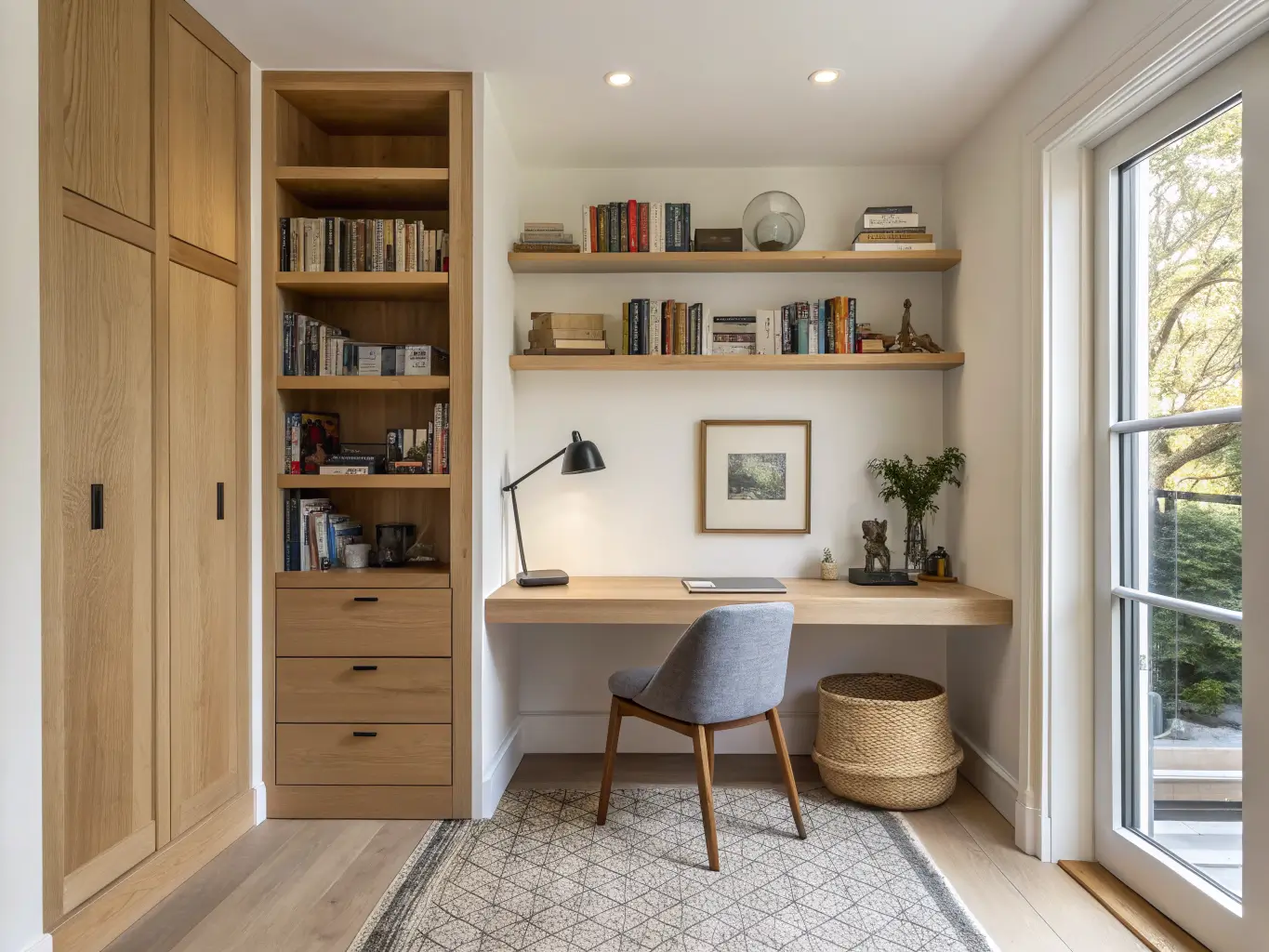
The Design Identity: What Look Are You Actually Going For?
Before you buy anything, pick a lane. The strongest study-room looks right now fall into a few clear categories:
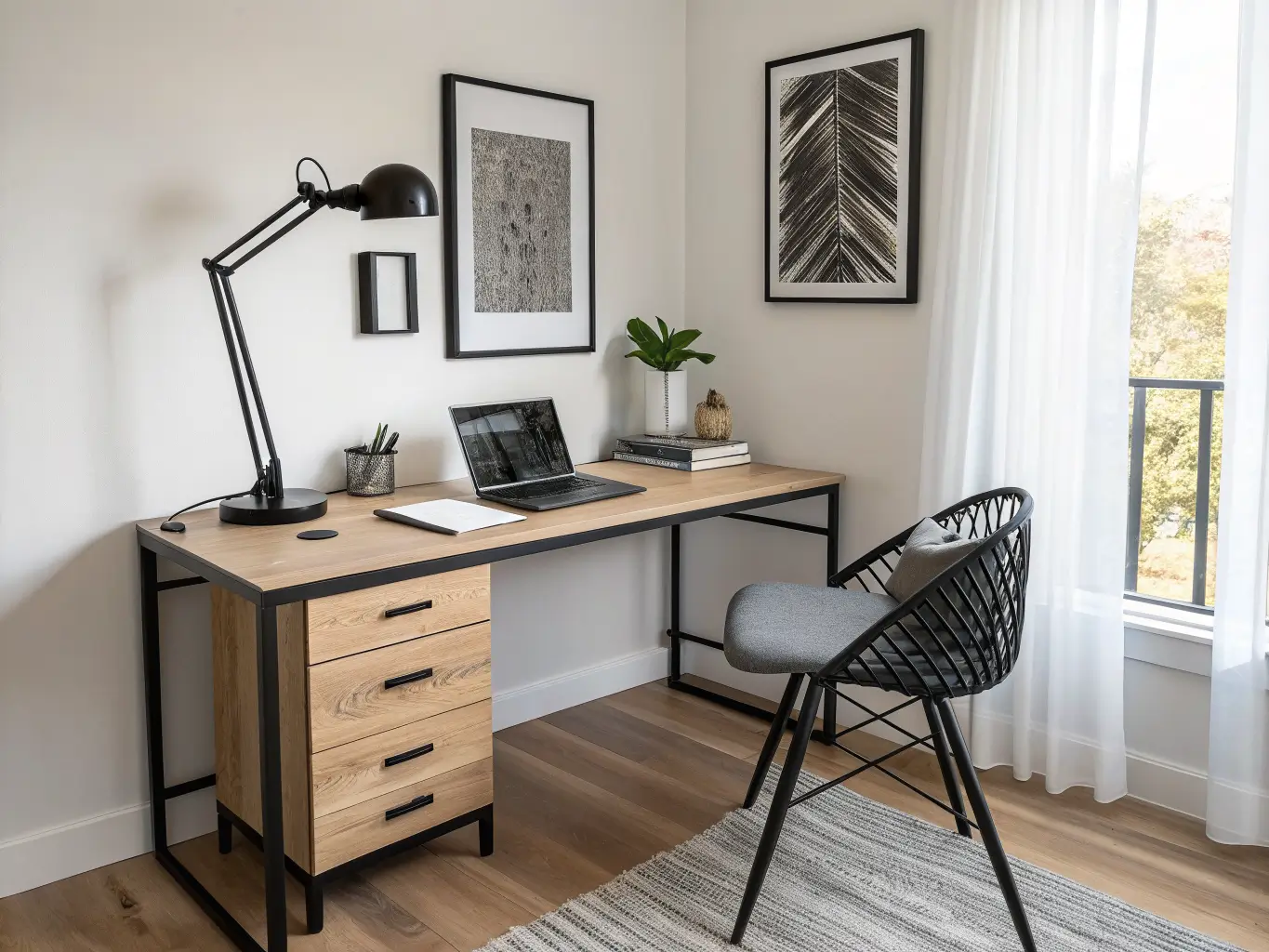
Minimalist modern — white or warm-white walls, pale oak, black hardware, almost nothing on the desk
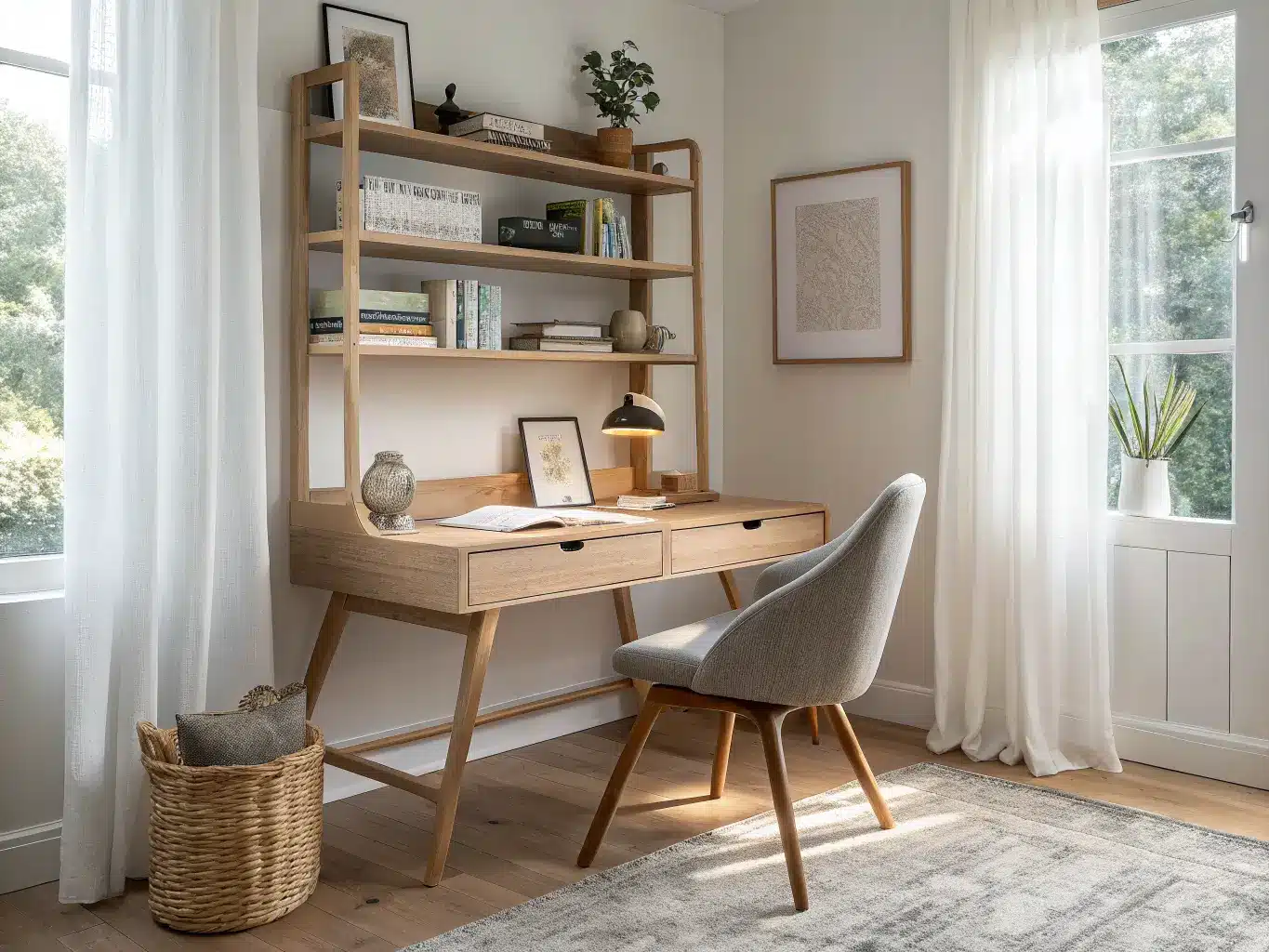
Scandinavian wood — light wood tones, natural textures, simple lines, lots of daylight
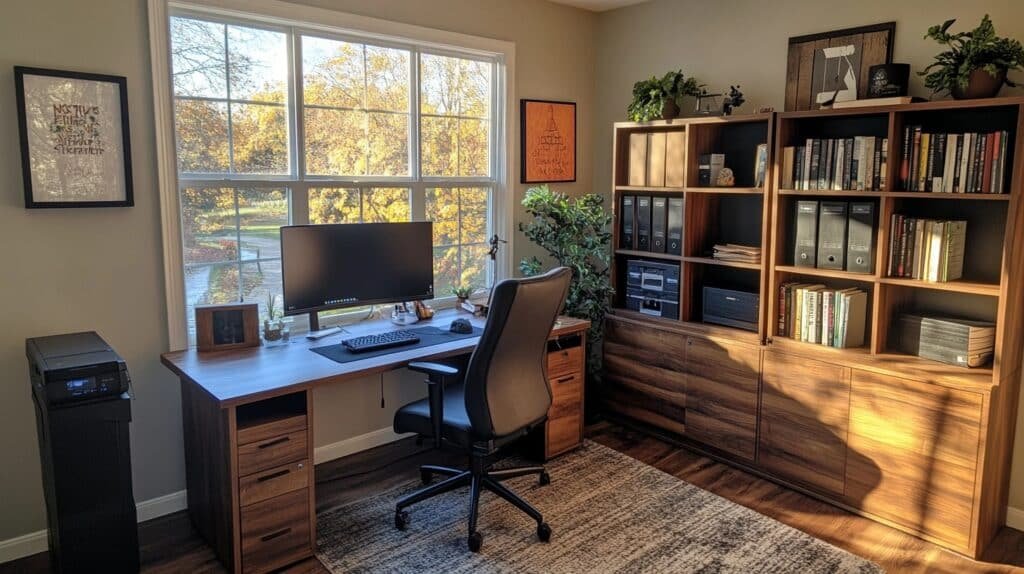
Cozy transitional — mix of wood and upholstery, warmer palette, a lounge chair thrown in
Farmhouse — reclaimed wood, cream textiles, vintage-style lighting
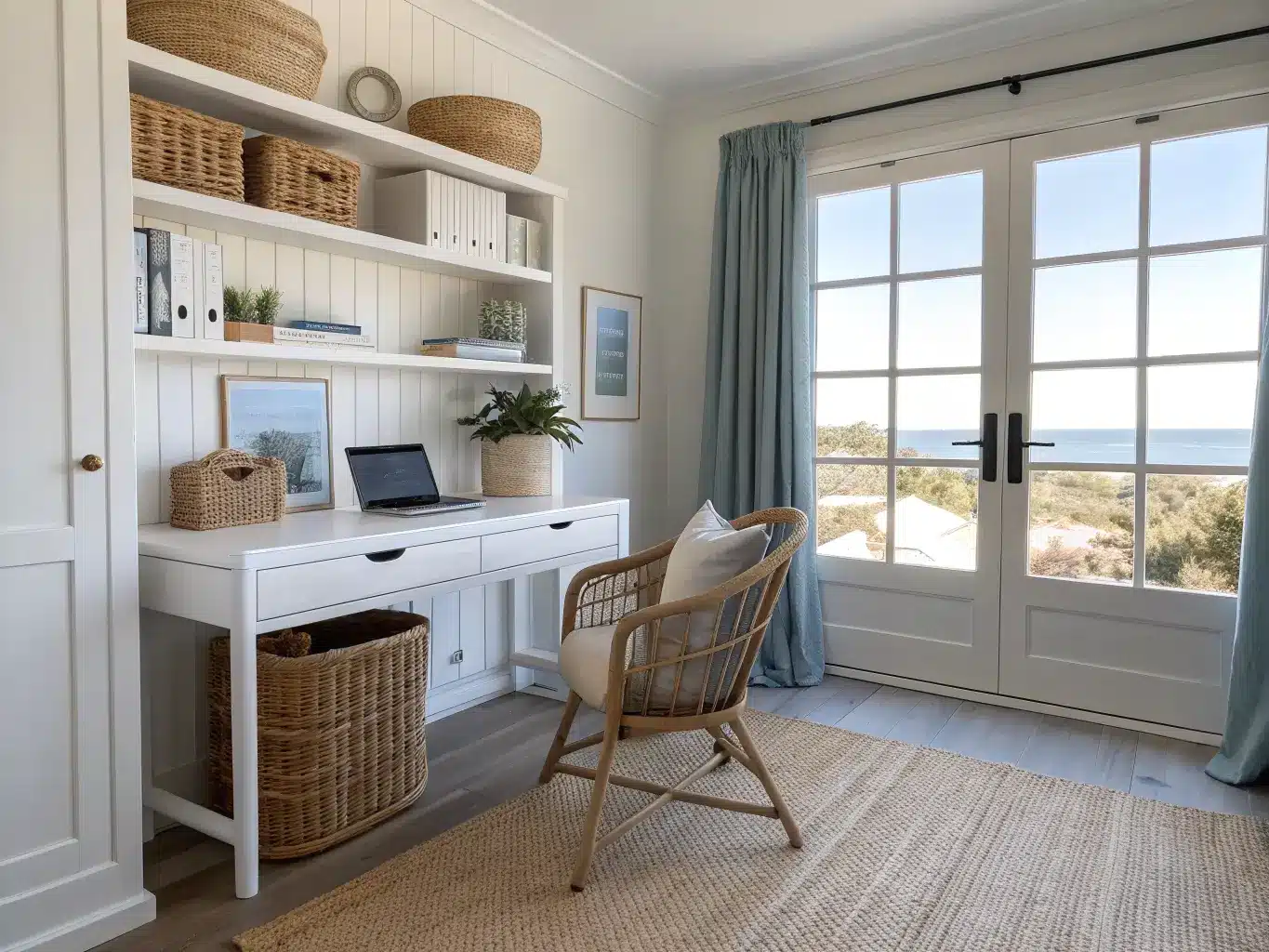
Coastal — white, sandy beige, soft blue, woven baskets
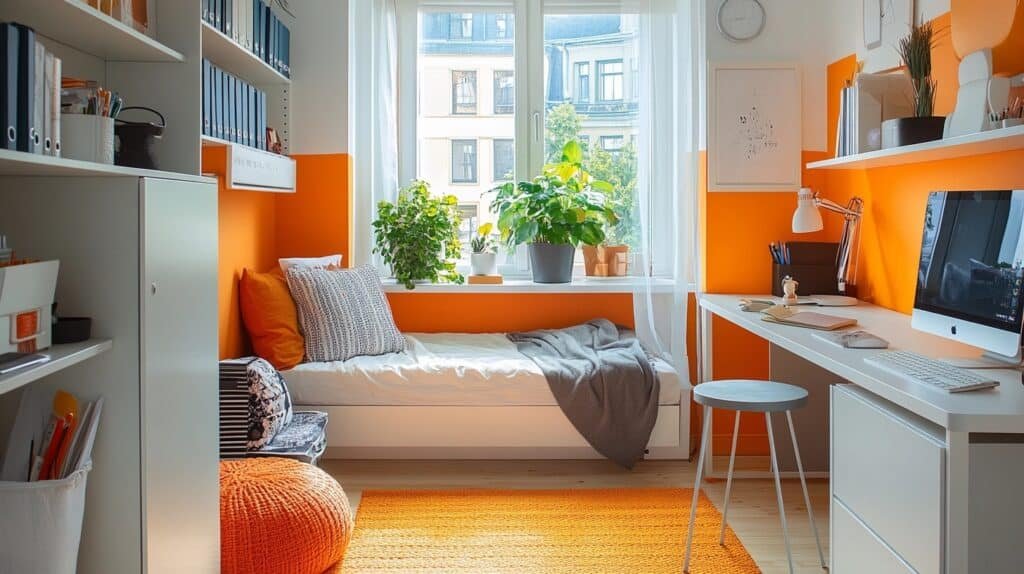
Soft-neutral with an accent wall — everything quiet except one wall doing the work
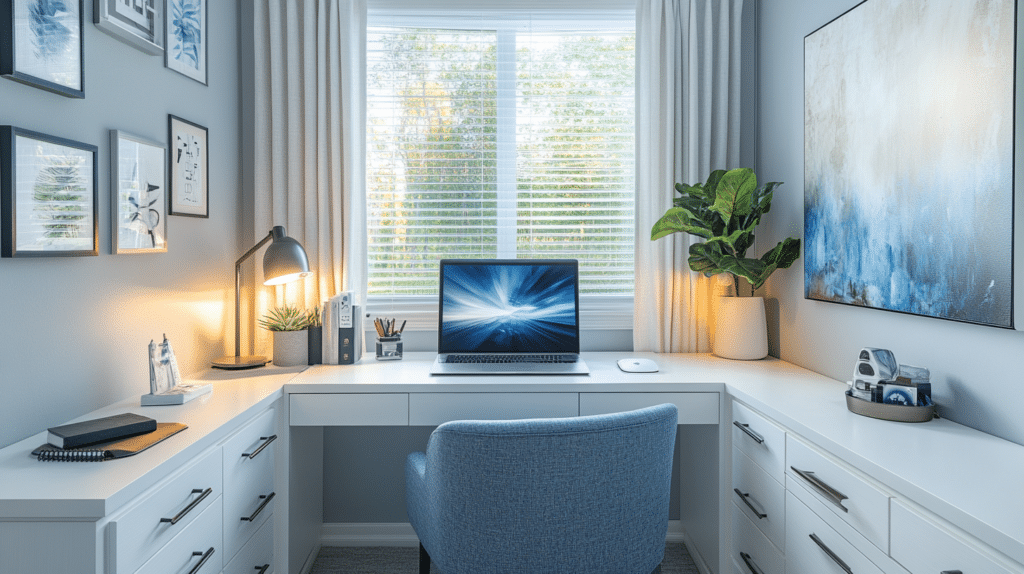
I went Scandinavian-leaning-cozy in my closet office: pale oak desk, warm white walls, one black task lamp, a small wool rug underfoot. It sounds simple because it is — and that’s the point. A study room isn’t a place to show off eight different design ideas at once.
Key colors that show up again and again in good study rooms: warm white, cream, beige, soft gray, navy, sage green, dusty blue, black accents, and muted wood tones. Farrow & Ball’s study inspiration leans hard into soft, nature-derived neutrals, and for good reason — you’re going to stare at these walls for hours. Loud colors get tiring fast.
Key materials: solid or veneer wood (oak especially), reclaimed wood, rattan, wicker, metal task lamps, textured wallpaper, wool or jute rugs, glass, and matte black hardware. These aren’t random — they’re the materials that photograph well and wear well, which matters when you’re touching this stuff every day.
This setup is perfect for remote workers, students, readers, creatives, couples sharing a workstation, and any family that needs a flexible homework-and-laptop zone. It works in dedicated home offices, spare bedrooms, living-room corners, bedroom nooks, closet conversions, attics, hallway niches, and under-stairs spaces. Basically — if you have 15 square feet and an outlet, you have a study room candidate.
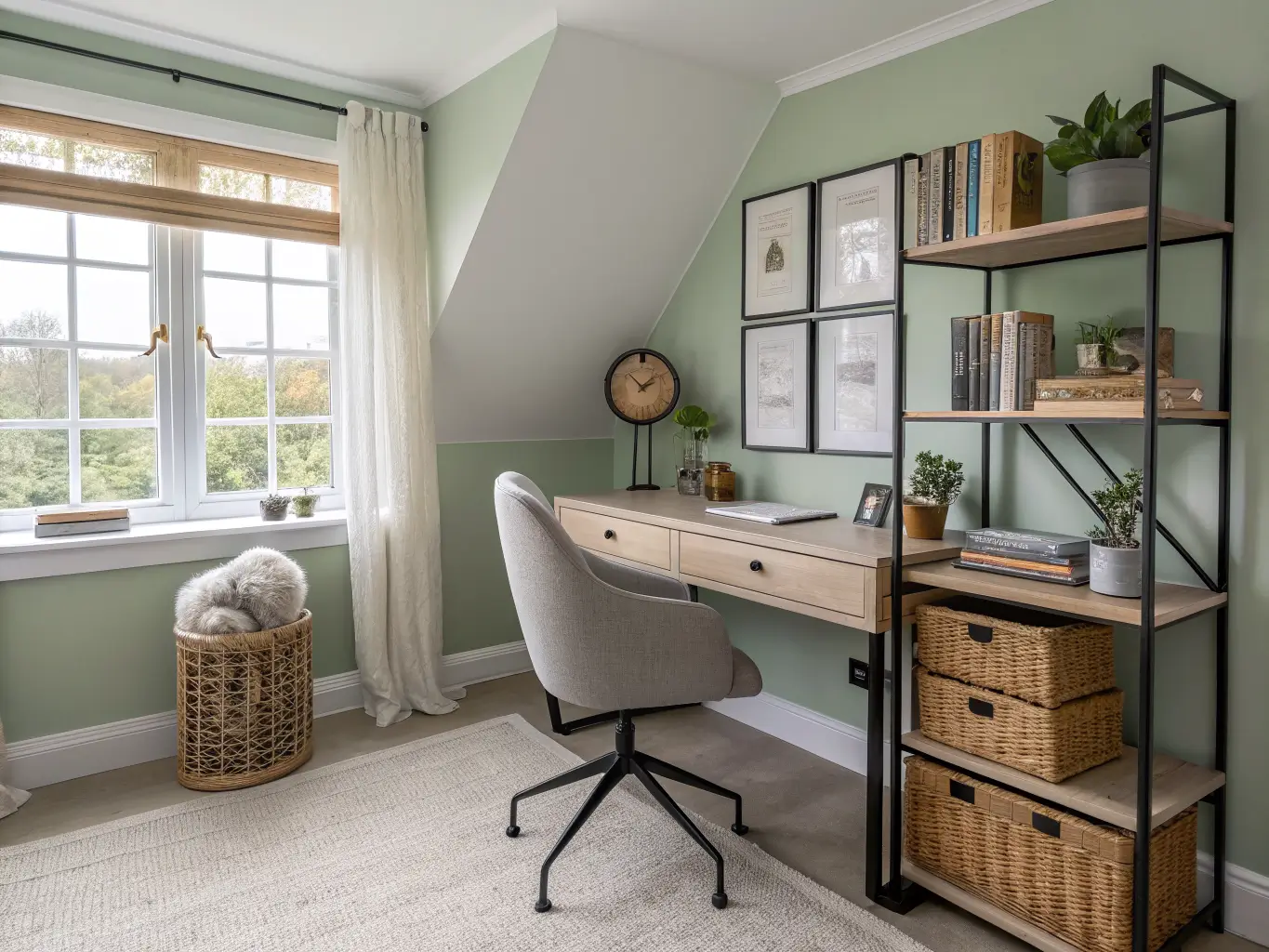
Styling & Decor Essentials
The Must-Haves
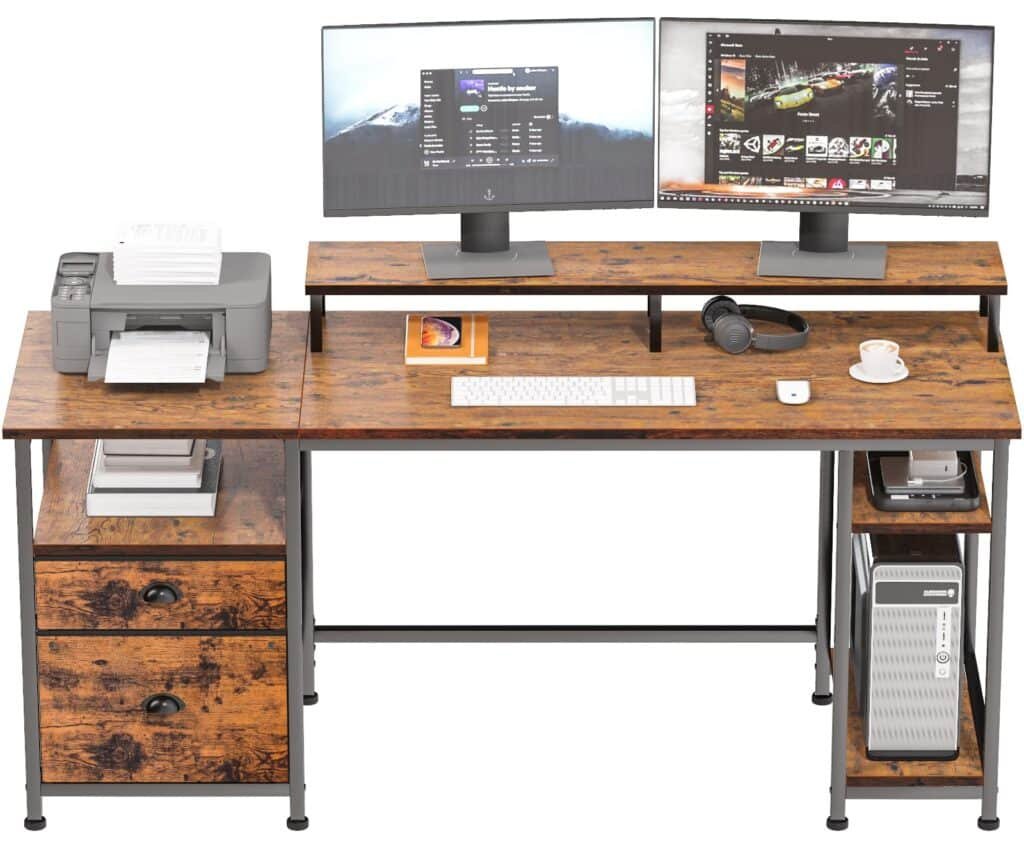
Desk. For one person, a 48 to 60 inch wide writing desk covers most needs. If you’re running dual monitors or sharing the space with a partner, go 60 to 72 inches or an L-shaped desk. Tight on floor space? A wall-mounted or fold-down desk is the smartest move you can make — I almost bought a bulky 60-inch desk for my closet before measuring twice and realizing a 40-inch wall-mounted version would leave me actual walking room.
Chair. This is where I’d tell you not to cheap out. An ergonomic chair with real lumbar support matters if you’re sitting for more than two hours a day — I learned this the hard way after three months in a $70 chair that looked great and wrecked my lower back. If your desk sessions are shorter, a wood-framed task chair or a simple upholstered chair looks better and won’t hurt you.
Lighting. One task lamp or adjustable desk lamp, full stop. Natural light during the day, dedicated task lighting at night — relying on an overhead fixture alone gives you screen glare and eye strain. A clamp light mounted to a shelf edge is a great space-saving option if your desk is small.
Storage. Open shelving, built-ins, floating shelves, a pegboard, drawer units, baskets, file boxes, and something — anything — for cable management. This isn’t optional decor. It’s the difference between a study room that stays nice and one that becomes a landfill by week three.
Visual anchor. Pick one: a rug, an accent wall, an oversized print, or a bookshelf wall. This is what makes the space read as “a room” instead of “a desk someone put in a corner.” In my nook, it’s the rug — a small 3×5 jute one that visually draws a box around the whole setup.
Decor accessories. Framed art, a desk tray, a monitor riser, a document holder, a small clock, a couple of personal objects. Keep this list short. I mean it.
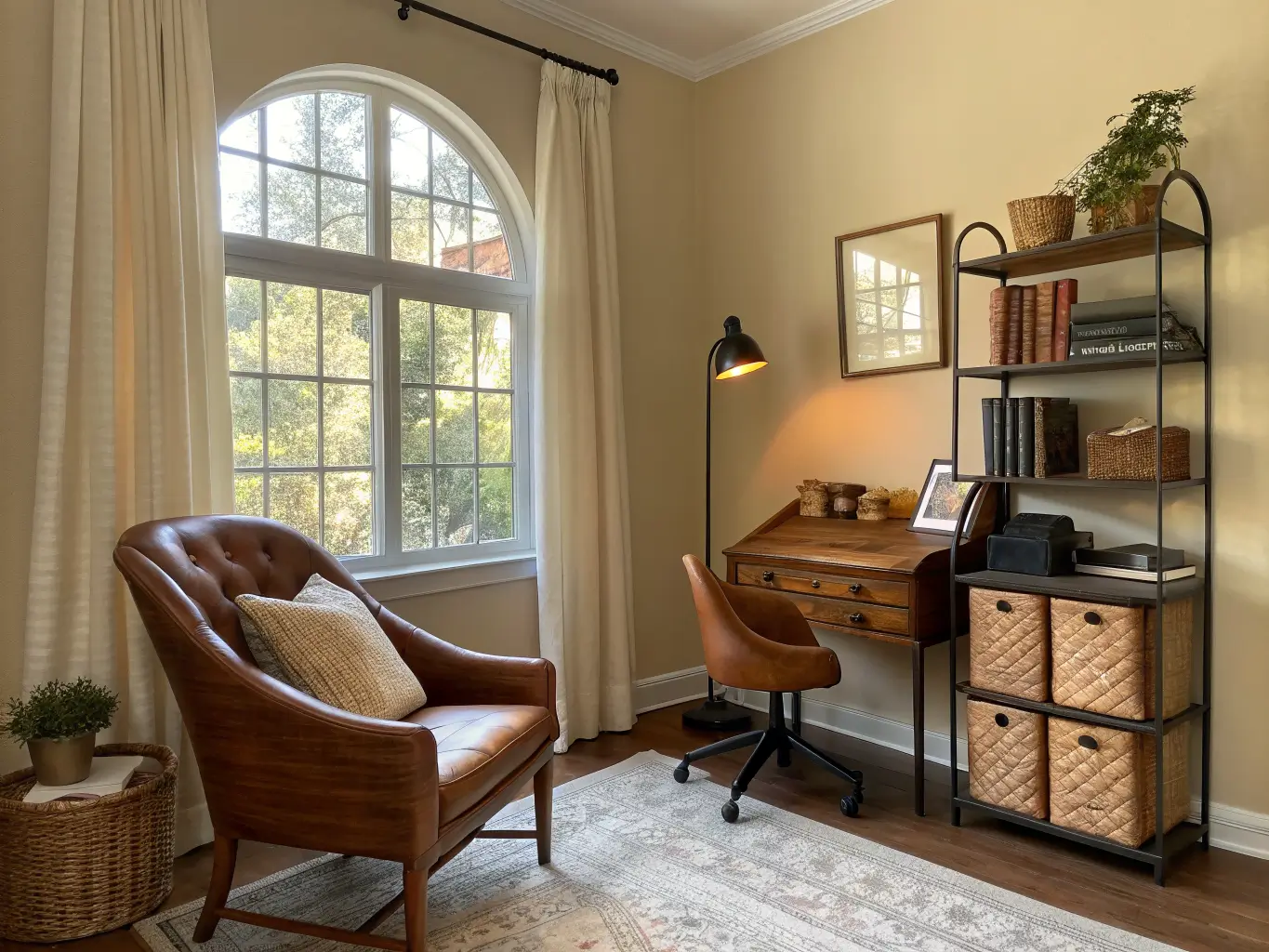
Optional Enhancements
Plants — a small potted plant or trailing pothos softens all the hard edges of a desk setup; a larger floor plant works if you have a full room
Textiles — an area rug, linen curtains, a cushion, a throw if the room doubles as a reading spot
Metallic accents — brass or black lamp hardware, picture frame edges, drawer pulls, for contrast against wood and neutral walls
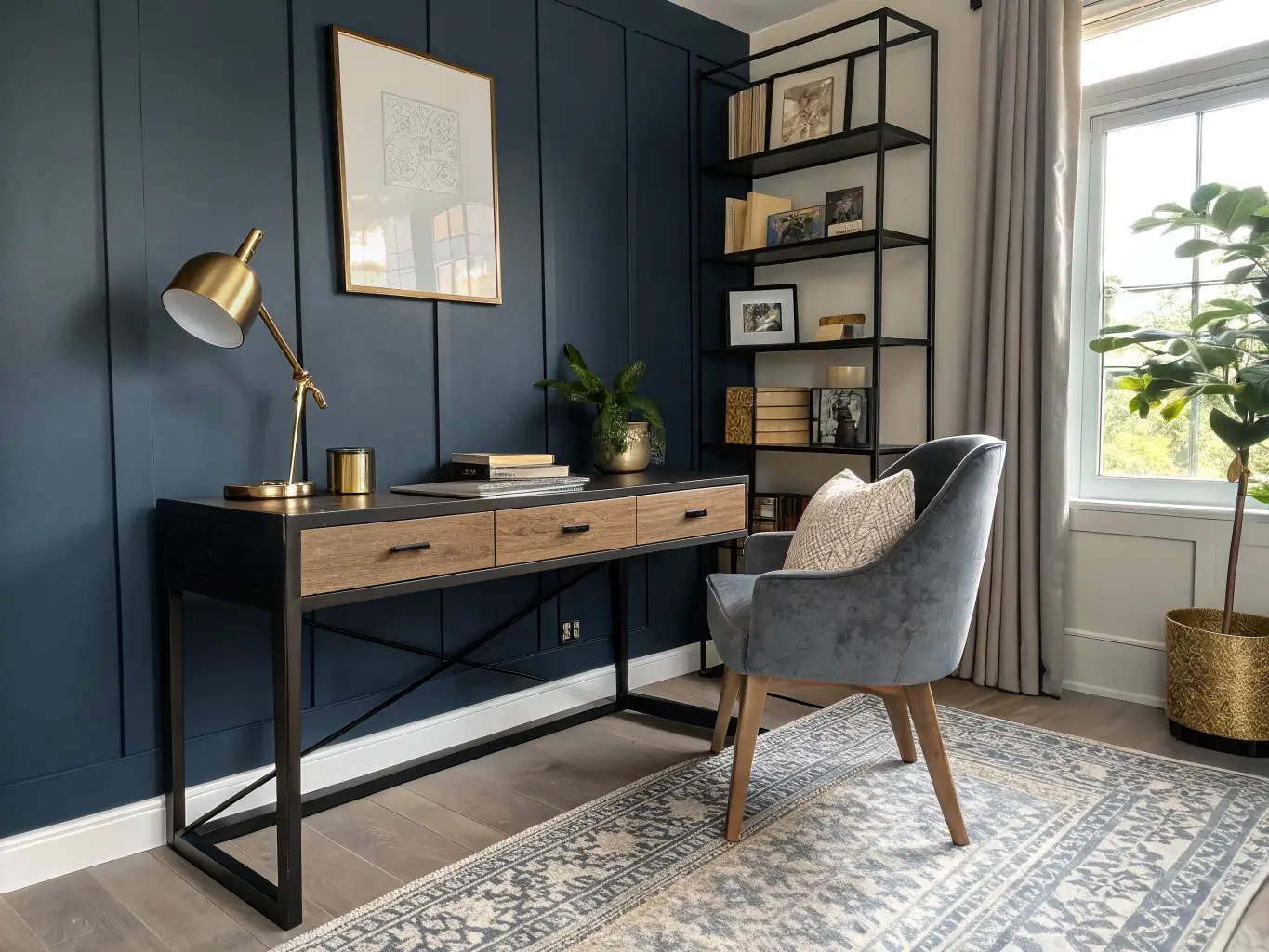
A statement wall — one navy wallpaper wall or muted color block behind the desk adds depth without overwhelming the room
A reading corner — if you’ve got the square footage, a lounge chair and floor lamp turns your study room into a place you actually want to spend time, not just clock hours in
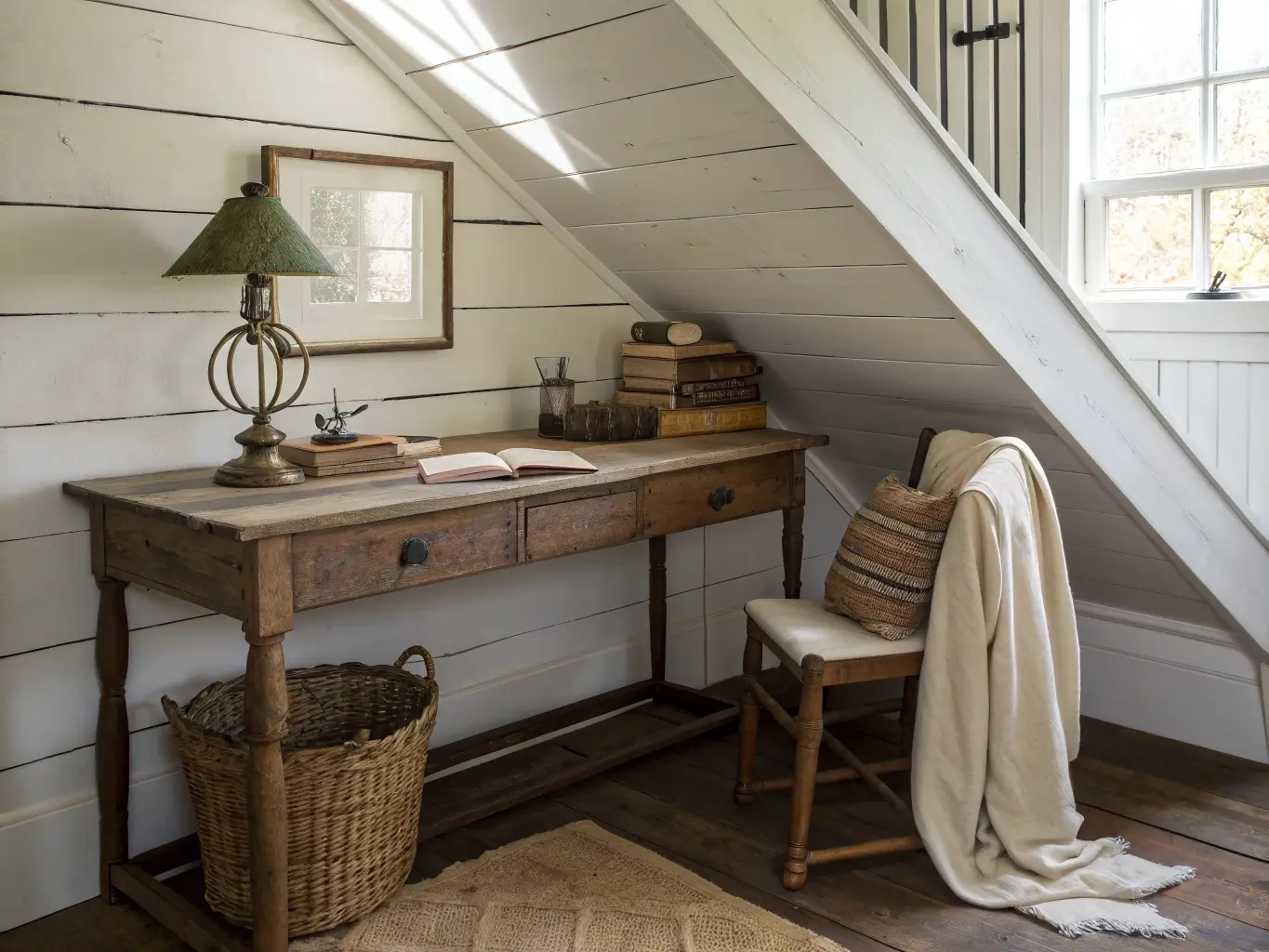
Pro Styling Tips That Make the Difference
Keep the desk surface visually clear. This is the single biggest thing that separates a calm study room from a chaotic one. Move the visual interest to your walls and shelves — the desk itself should look like you could sit down and work in the next ten seconds.
Use a three-material rule. One wood tone, one metal finish, one soft texture (rug, curtain, cushion). Any less and the room feels flat. Any more and it feels busy.
Balance light and dark. White or cream walls pair beautifully with a dark walnut or black desk. Or flip it — a navy or sage accent wall with lighter, pale-oak shelving. Pick one direction and commit.
Repeat 2 to 3 colors throughout the room. Warm white + oak + matte black. Or cream + sage + brass. Pick your combo early and every purchase gets easier because you’re not guessing whether something “goes.”
Place the desk to catch natural light — without facing a screen straight into it. Perpendicular to the window is usually your best bet, not directly facing it or with your back to it.
Use vertical lines if the room is small. Tall, narrow shelving and vertically-oriented art trick the eye into thinking the ceiling is higher and the room is bigger. This mattered enormously in my closet conversion — I went with floor-to-ceiling shelves instead of one wide low unit, and the room reads bigger for it.
Setup & Execution
Prep the Space First
Clear out anything that isn’t earning its spot. Walk the room and find the wall or corner with the best access to daylight and an outlet — this decision drives everything else.
Measure before you buy anything. You need clearance for the chair to pull out, and enough desk depth (at least 24 inches) to work comfortably without your knees hitting drawers. A compact setup works fine as long as the furniture is scaled to the room — this is where a lot of small-space setups go wrong, buying a desk that was designed for a bigger room.
Plan your storage before your decor. Decide what’s going behind closed drawers (cable chargers, random cords, paperwork you don’t want to look at) versus what’s on open shelves for display (books, a few objects, plants). If your study zone shares space with a bedroom or living room, use a rug, a shift in wall color, or even a low shelving unit as a room divider to define the boundary.
Build the Look in This Order
1. Largest functional pieces first — desk, chair, lamp, storage unit
2. Work essentials — monitor, keyboard, notebook tray, pen cup, charging station
3. One or two decorative focal points — art, a mirror, a styled shelf — resist adding more
4. A softening element — rug, curtain, plant, or an upholstered chair to break up all the hard surfaces
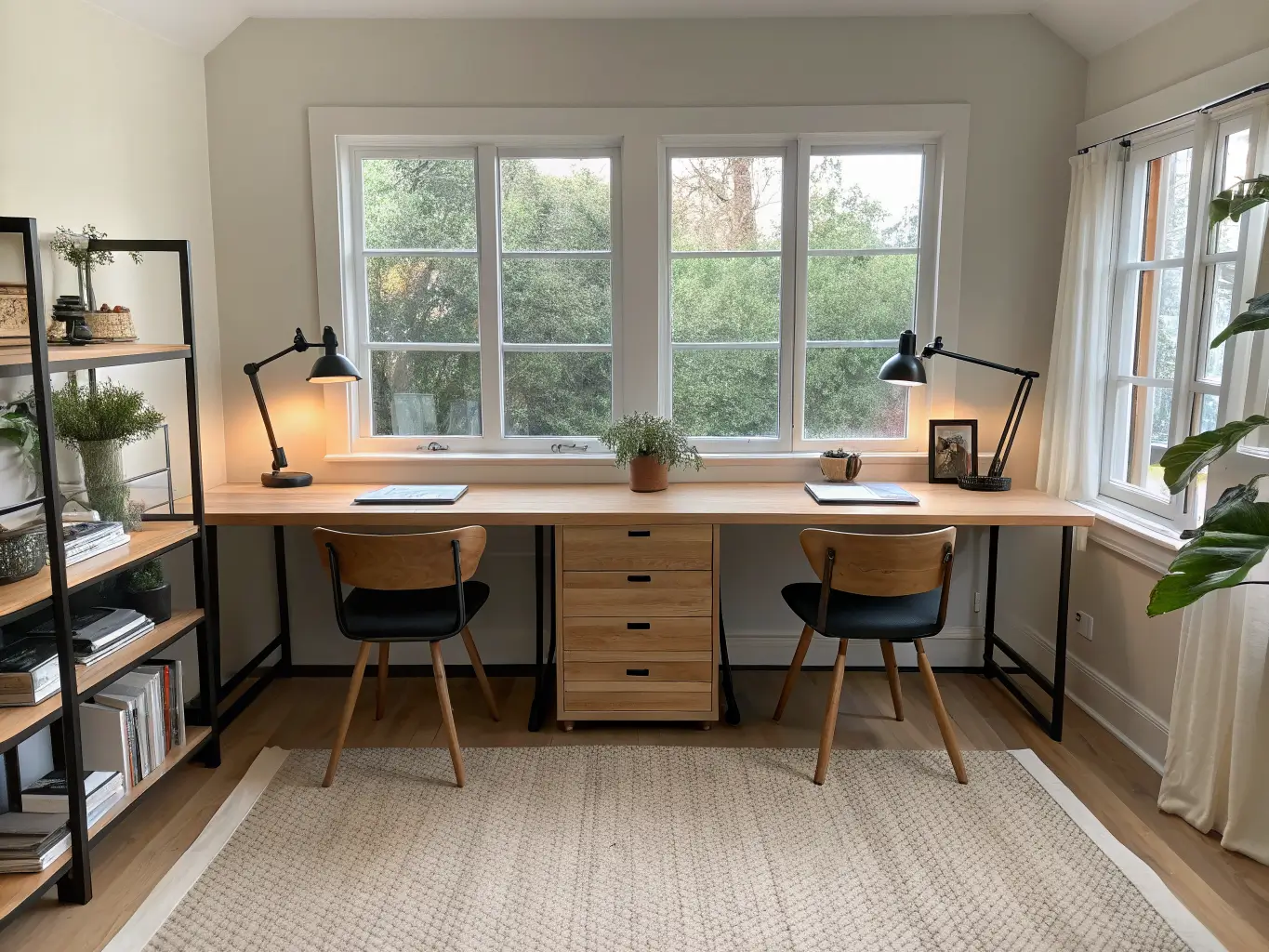
If it’s a shared workspace for two people, matching desks or matching chairs make the room look planned rather than thrown together — mismatched furniture in a shared study room almost always reads as “we couldn’t agree” rather than “eclectic.”
For genuinely tiny spaces, a floating desk, fold-down desk, or full closet conversion protects your floor space, which matters more than you’d think — an extra 18 inches of walkable floor changes how a small room feels entirely.
Mistakes I’ve Made (So You Don’t Have To)
Too much clutter. I once filled every single shelf in my first study setup with books, frames, and knick-knacks and it looked like a garage sale. Empty space on a shelf is doing work — leave some.
Relying on one overhead light. Overhead lighting alone creates screen glare and flat, tiring light. Pair daylight with a dedicated task lamp, always.
Buying furniture too big for the room. A bulky desk or oversized chair in a small nook makes the whole space feel cramped, no matter how nice the piece is on its own.
Prioritizing looks over ergonomics. That gorgeous rattan chair might look perfect in photos, but if you’re sitting in it for six hours a day, your back will remind you daily that style isn’t function.
Going too bold with color. A saturated, busy palette undermines the calm you’re trying to create. Save the boldness for one wall or one accent, not the whole room.
Skipping zoning in shared rooms. If your desk just sort of exists in the corner of your living room with no rug, no wall treatment, nothing to define it, the space always feels unfinished — like you gave up halfway through.
Keeping It Fresh Without Redoing the Whole Room
Stick to your palette. Every new lamp, organizer, or frame should match your existing 2–3 color scheme. This is the easiest way to keep a room looking pulled-together over time instead of accumulating random stuff.
Coordinate your organizers. Matching baskets, boxes, and file holders beat a mismatched pile of whatever was cheapest at the time — this is a small detail that makes a disproportionately large visual difference.
Rotate a few objects, not everything. Swap one framed print or move a plant, and the shelf feels new. You don’t need to redecorate quarterly.
Seasonal and Budget Refreshes
Seasonal: swap the artwork, change a cushion cover, add a plant, switch to a warmer bulb in winter and lighter linens in summer
Budget-friendly: new desk hardware, a new lamp, peel-and-stick wallpaper on one wall, simple floating shelves instead of custom built-ins — all of these cost under $100 and change the room’s whole feel
Cross-Style Combos Worth Trying
Minimalist + Scandinavian: white walls, pale oak desk, black task lamp
Coastal study room: white and sandy beige with soft blue accents, woven baskets for storage
Farmhouse office: reclaimed wood desk, cream textiles, a vintage-style lamp
Modern cozy: navy accent wall, a textured wool rug, brass fixtures throughout
My own setup ended up landing somewhere between the first and last one — pale oak desk, warm white walls, one black lamp, and a navy cushion on the chair that I add in winter and swap for a plain linen one in summer. It took three rearrangements of that 5-foot closet to get there. Worth every one of them.
For another angle on this, my study room decor guide covers the same space from a different starting point.