What This Style Actually Is
A chaise lounge reading nook is a small, dedicated seating zone built around one long, stretch-out-friendly chair instead of a full seating arrangement. Think of it as a one-person destination — a corner, a window bay, a loft landing — that says “this spot is for reading” and nothing else.
Style-wise, it lands somewhere between cozy contemporary, modern, transitional, and boho, depending on what you upholster it in and what you set beside it. A bouclé chaise with a black metal lamp reads modern. The same chaise with a woven basket and linen pillows reads boho. The bones don’t change — the accessories do all the talking.
This works best for:
– Readers who actually want to stretch their legs out, not perch on the edge of a chair
– Apartment dwellers who don’t have room for a full sitting area but have one good corner
– Anyone who wants a spot that doubles as a nap zone, a coffee spot, or a place to scroll your phone in peace
Best locations: a living room corner, a bedroom nook, a sunroom, a study, a window bay, or an awkward loft landing that’s never known what to do with itself. If you’ve got a 5-foot-wide dead zone anywhere in your house, you have a reading nook waiting to happen.
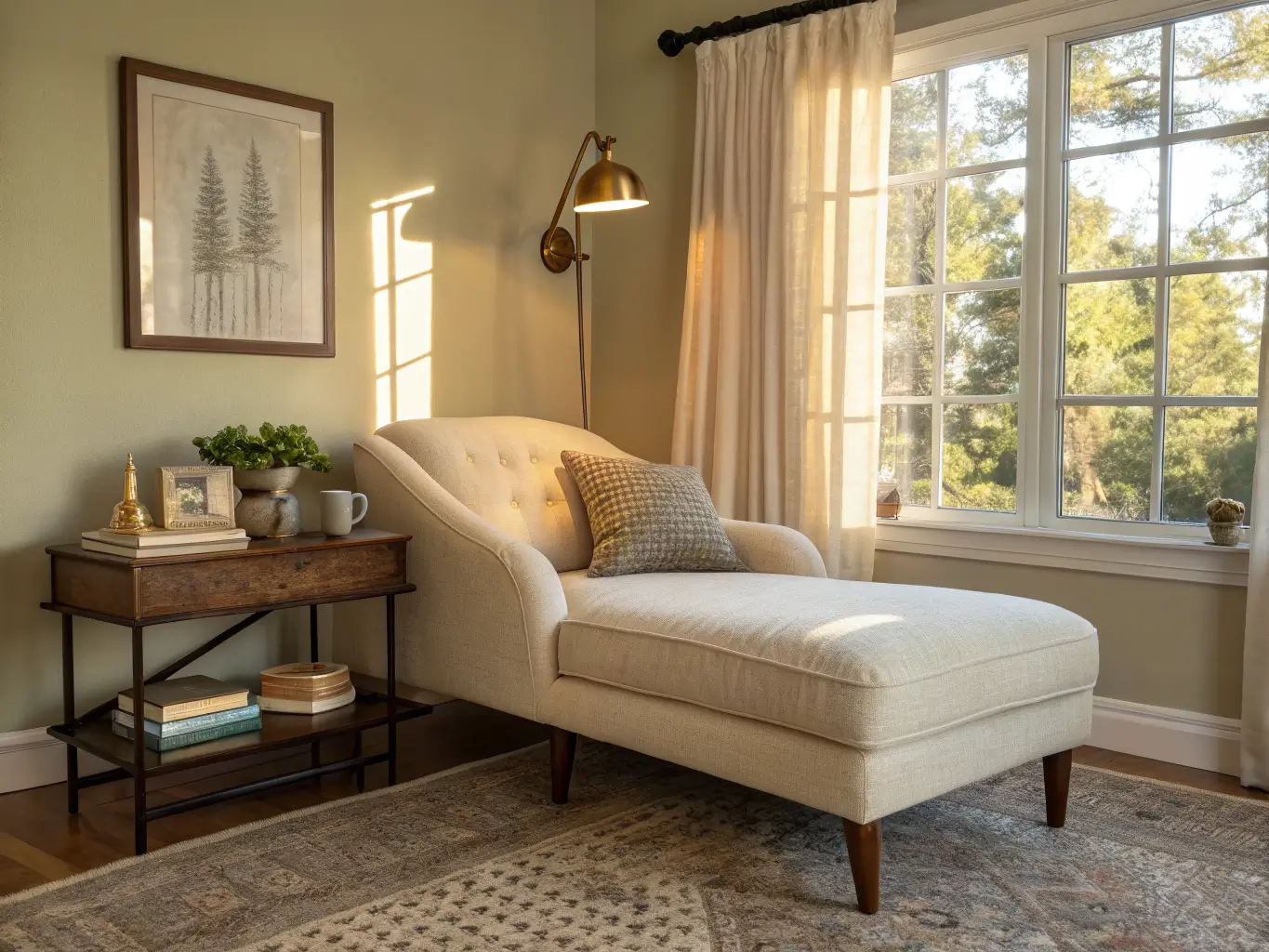
Time, Cost, and Space: The Real Numbers
Setup time: A basic styling pass — chaise, lamp, throw, pillows — takes 1 to 3 hours if you already own the furniture. Give yourself a full weekend if you’re painting the wall, hanging sconces, or waiting on furniture delivery.
Budget: Plan for $200 to $800+ depending on how you source it. I’ve seen decent secondhand chaises go for around $200 on Facebook Marketplace and similar sites — mine was $175, actually, from someone redoing their sunroom. New, a solid mid-range reading chaise typically runs $400–$700. Designer or oversized upholstered pieces climb from there.
Space needed: You want a corner or wall zone that’s at least 5 feet wide. Most chaise lounges measure 45 to 71 inches long and 25 to 51 inches wide — huge range, so measure your actual corner before you fall in love with a floor model that’s too long for it. Leave 18 to 24 inches of clearance behind or beside the chaise if anyone needs to walk past it. Skip this step and you’ll be doing the sideways shuffle every time you walk through the room.
Skill level: Beginner if you’re just styling an existing piece. Intermediate if you’re painting, hanging art, adding a sconce, or building a small shelf.
Seasonality: Year-round, honestly, though it photographs best in fall and winter with heavier textures. Swap textiles and it holds up fine in a bright, breezy spring corner too.
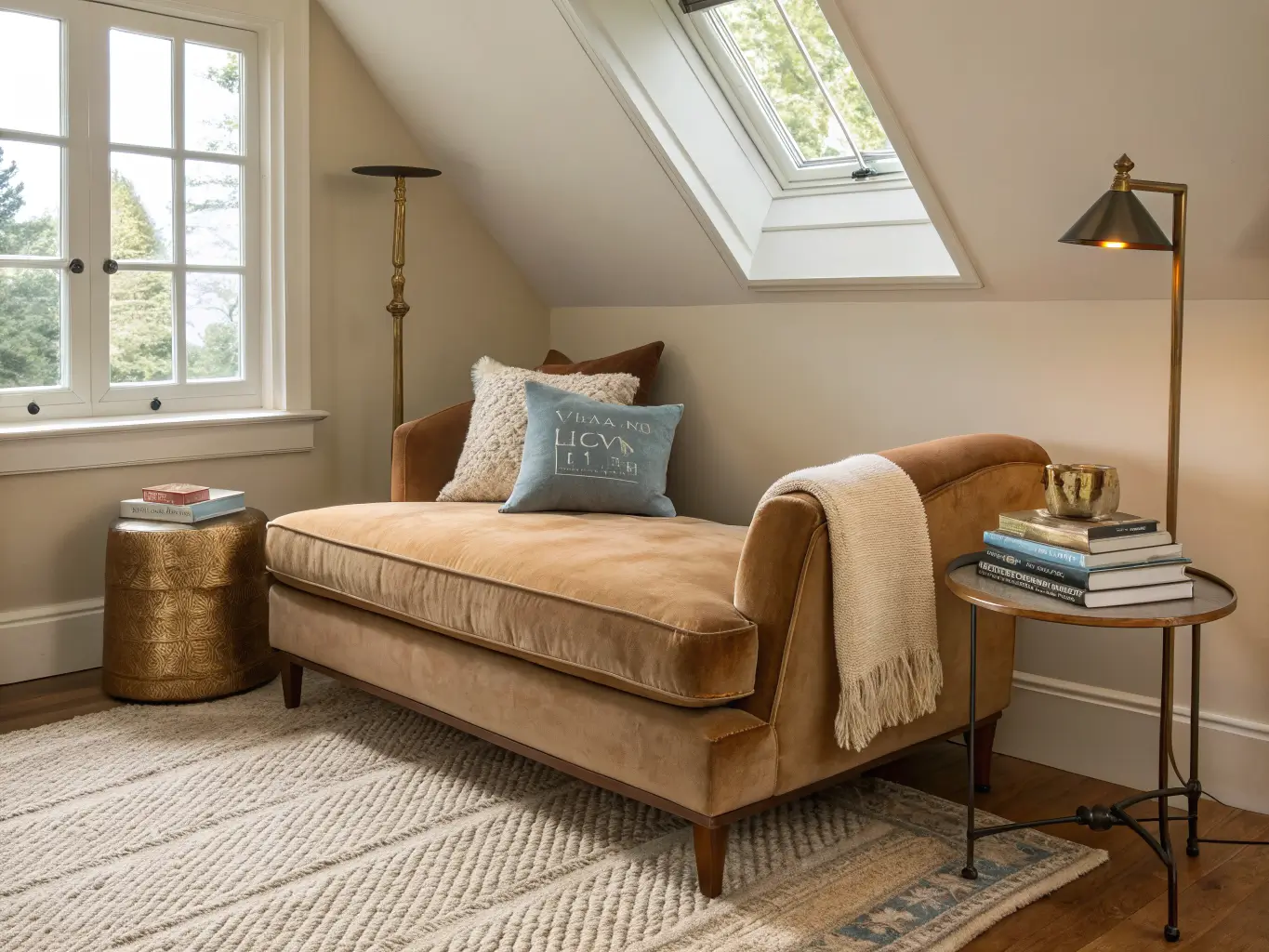
The Must-Have Pieces
The chaise itself
This is the whole point, so don’t cheap out on comfort to save on looks. Look for a slight recline or a genuinely deep seat — anything too flat and firm turns into a chair you sit in for ten minutes and abandon. I made this mistake with my first one: gorgeous bouclé, completely flat cushion, no lumbar support. I sold it within a year. Back support and seat depth matter more than the fabric, even though the fabric is what sells you in the showroom.
Lighting — non-negotiable
Overhead light alone will not cut it for reading. You need a floor lamp or table lamp positioned just behind and slightly above shoulder height, so light falls on the page without glaring in your eyes. Go with warm bulbs, around 2700K — cool white light in a cozy nook feels like a dentist’s office.
A side surface
A small side table, stool, or drink table within arm’s reach. This is where your coffee, your water glass, your reading glasses, and your current book all live. Skip this and you’ll end up balancing your mug on the floor, which I did for an embarrassingly long time before buying an $80 marble-top side table that fixed my life.
Textiles — but restrained
– One throw blanket, draped in a loose fold over the arm or back, not stacked
– 2–3 pillows, max — one lumbar, one larger square, maybe one small accent
– More than that and you’re rearranging pillows every time you sit down, which defeats the purpose of a reading chair
A rug
A 4×6 or 5×7 rug anchors the whole zone, especially if you let the chaise’s front legs sit right on it. This is the trick that makes a corner feel like a designed space instead of “we put a chair here.”
Storage for actual books
A small bookshelf, a wall-mounted shelf, a floor basket, or even a simple magazine holder. This reinforces the whole point of the nook and solves the very real problem of where your library holds overflows to.
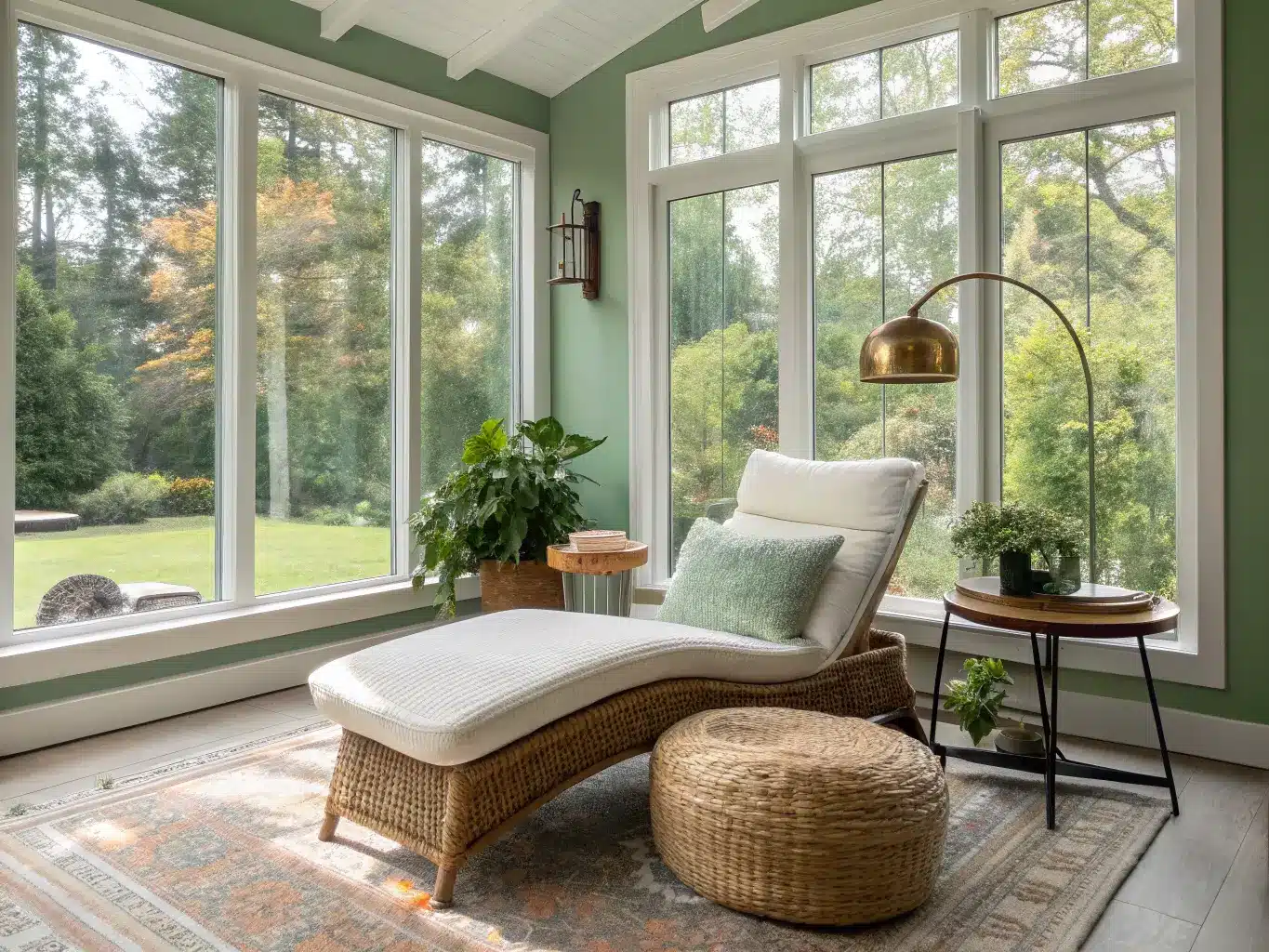
Nice-to-Haves That Push It Further
– Textural upgrades: bouclé, velvet, chenille, faux shearling, or jumbo corduroy — these are the fabrics dominating current reading-nook styling, and they photograph beautifully while feeling genuinely warm to sink into
– A tall plant — a 4-foot fiddle-leaf fig or a snake plant tucked behind or beside the chaise adds depth instead of leaving dead space
– Metallic accents — brass, gold-tone, or black metal in the lamp base or side table sharpens the whole look against soft fabrics
– Tech-friendly chaises — some current models come with built-in cup holders and USB or USB-C charging ports. If you’re the type who reads on a tablet or falls asleep mid-chapter with your phone dying, this is worth the upcharge
– Seasonal textile swaps — linen and lighter pillows in warm months, chunky knits and plaid in cold ones
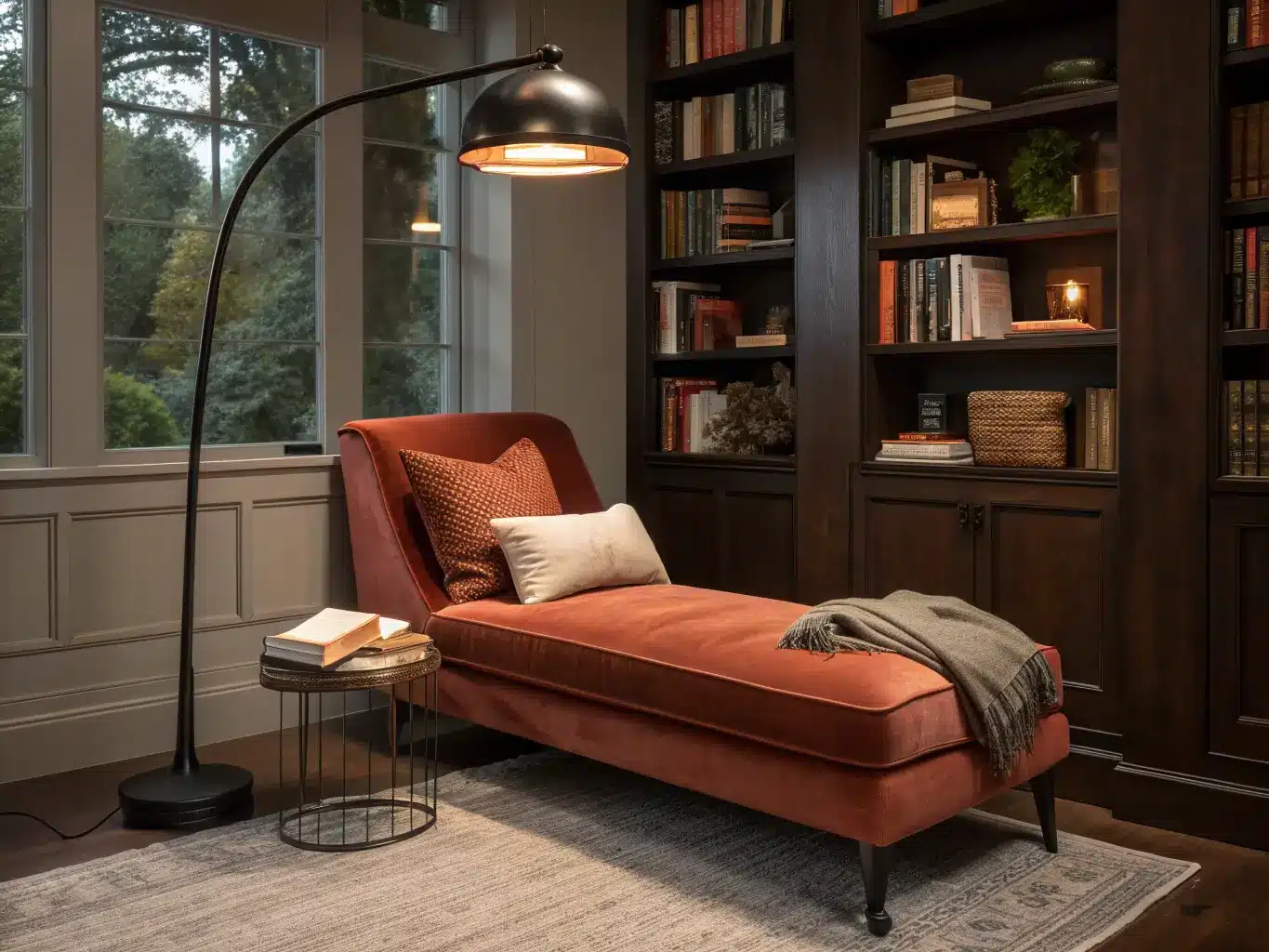
Color and Material Direction
Current palettes leaning hardest into this style: cream, warm white, camel, dusty blue, sage, terracotta, clay, and mocha. Pair those with wood tones, brass or gold-tone metal, and one plush fabric family.
My rule: pick two to four colors total and stop. My redo nook is cream chaise, walnut side table, brass lamp, and one dusty blue lumbar pillow. That’s it. It reads intentional because there’s nothing competing for attention.
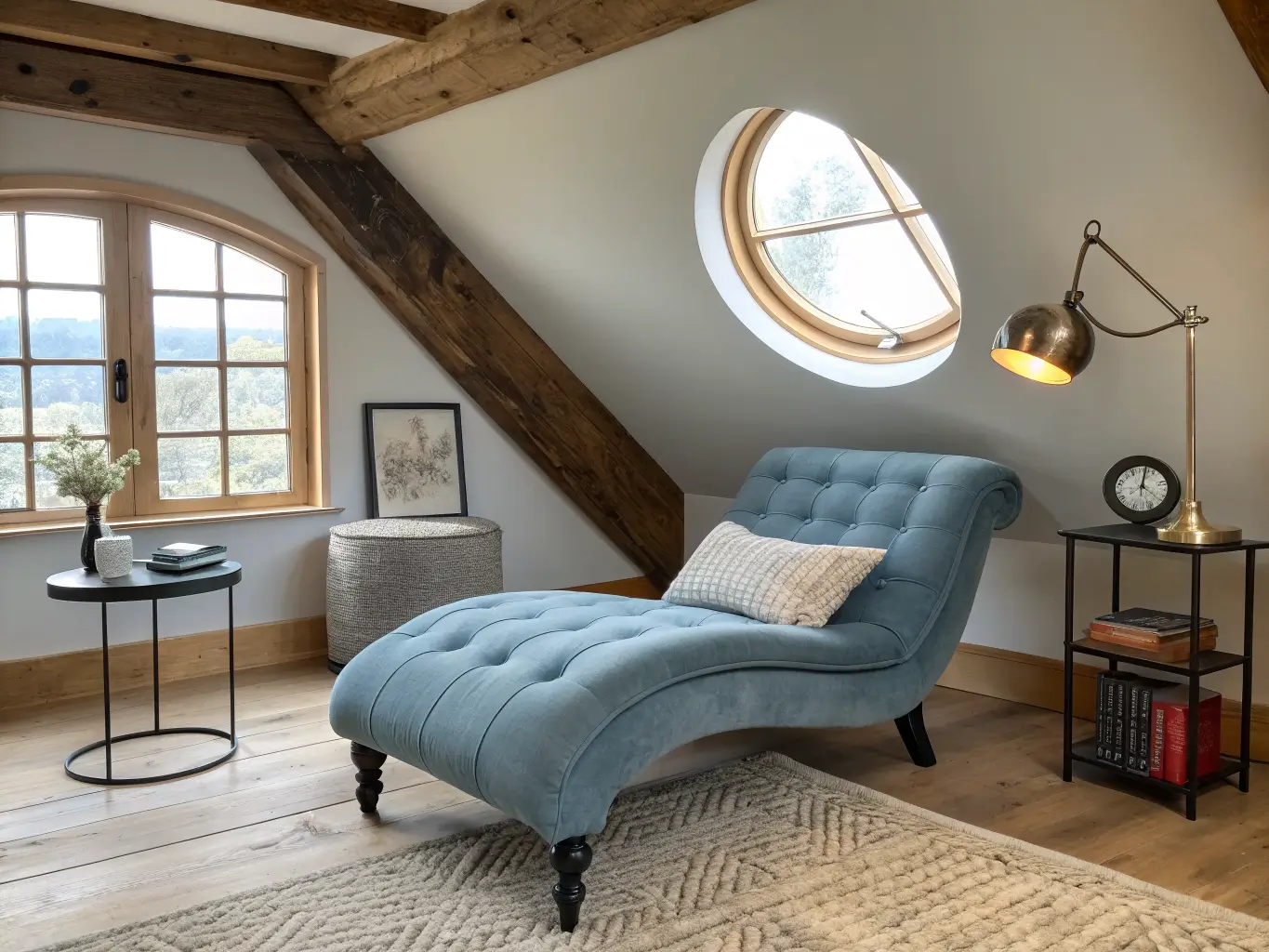
Pro Styling Moves That Change Everything
Pull the chaise off the wall. Even 8 inches of gap behind it makes a corner look designed rather than shoved into place. This was the single biggest fix in my redo — that little sliver of space let me lean a piece of art against the wall behind it, and suddenly the whole thing looked composed instead of accidental.
Angle it toward the light, not square to the wall. A chaise angled 10–15 degrees toward a window looks like someone made a decision. A chaise pushed flat against drywall looks like someone ran out of ideas.
Use contrast on purpose. My first attempt was all cream-on-cream and it disappeared into the wall. Dark velvet against a light wall, or a cream chaise against a terracotta or dusty blue backdrop, gives the eye something to land on.
Restrain the pillows. Two or three, not seven. I know it’s tempting — pillows are the cheapest way to add color — but a nook buried in cushions isn’t a reading spot anymore, it’s a display.
Pick one focal point. The chaise, a big piece of art, or the window. Choose one and let everything else support it quietly. Don’t make your lamp, your rug, and your art all fight for attention at once.
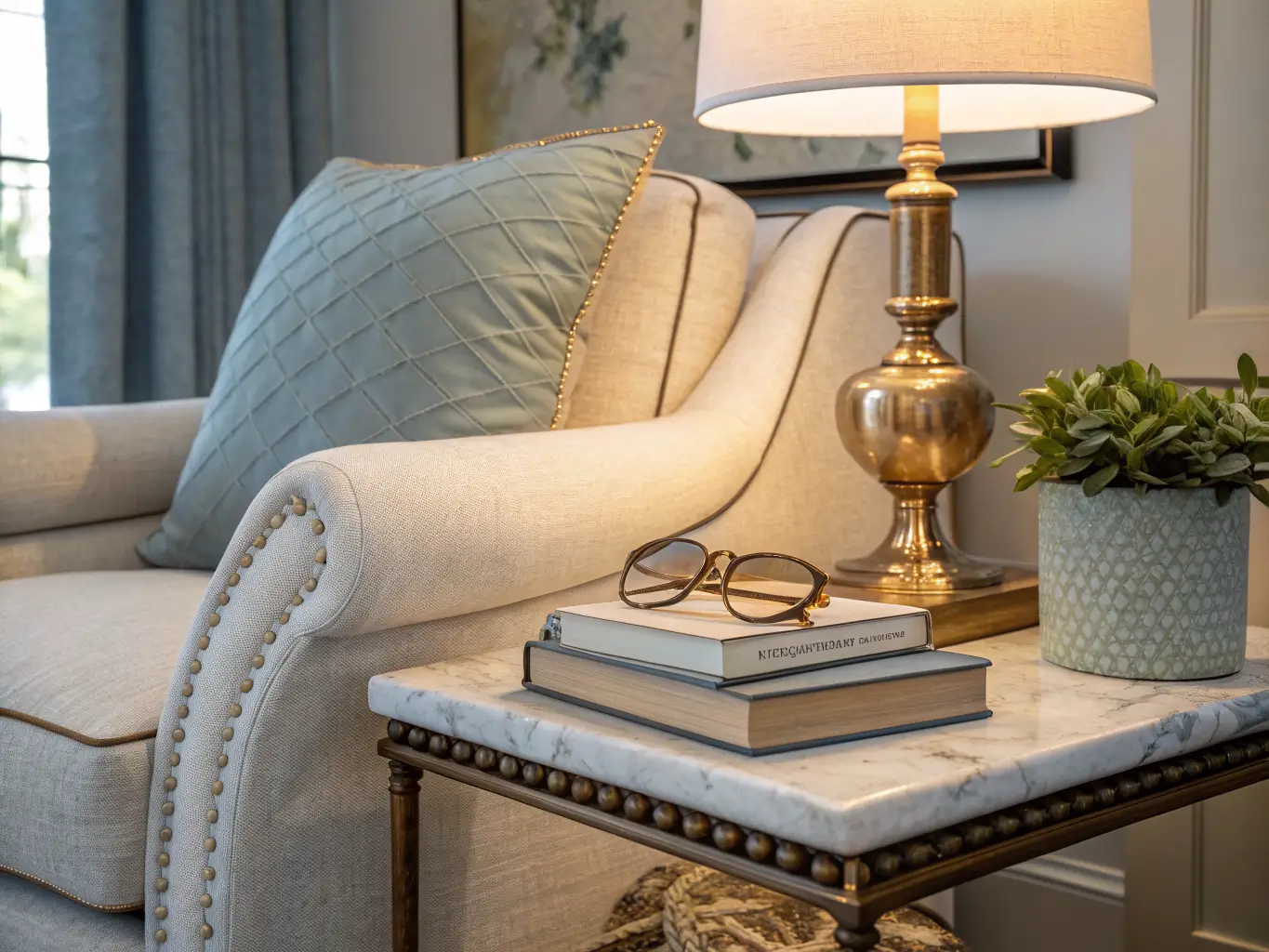
Setting It Up, Step by Step
1. Measure the corner first. Compare it to your chaise’s actual footprint (remember, models run 45–71 inches long) before you buy or move anything.
2. Leave your clearance — 18 to 24 inches if it’s anywhere near a walkway.
3. Place the chaise toward your best light source. Window for daytime, lamp-ready wall for evening use. Ideally both.
4. Lay the rug down first, then the side table, then the lighting. Get the bones grounded before you touch a single pillow.
5. Add the throw in a relaxed fold over the arm or back — don’t fold it into a tight little square, that looks staged and stiff.
6. Add your lumbar pillow and one larger pillow. Stop there.
7. Finish with one final element — a plant, a stack of three books, a small grouping of art, or a shelf. Pick one, not all of them.
8. If your chaise has cup holders or charging ports, don’t hide them. Style around them. They’re part of the appeal now, not something to be embarrassed about.
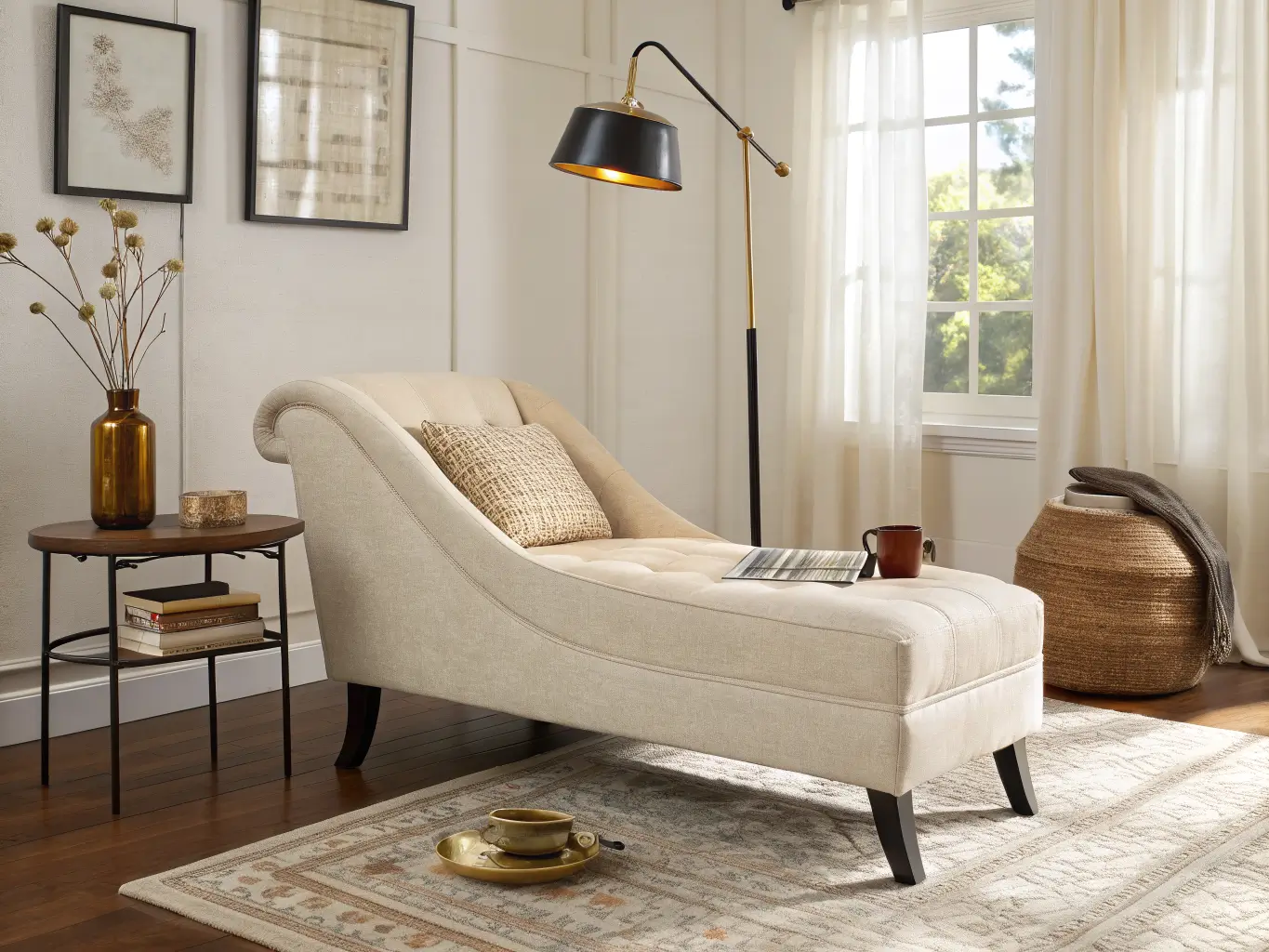
Where People Go Wrong
– Buying a chaise too big for the space. This is the single most common mistake, especially in smaller rooms. A gorgeous 71-inch chaise in a 6-foot-wide corner leaves you with no clearance and a room that feels smaller, not cozier.
– Pushing it flat against the wall. Covered above, but it’s worth repeating because it’s the easiest fix with the biggest visual payoff.
– No dedicated lighting. Relying on a ceiling fixture across the room means you’ll read there twice and then move to the couch permanently.
– Too many pillows. If you have to remove cushions before you can sit down, you have too many cushions.
– Ignoring comfort specs for looks. Seat depth, back angle, and cushion density matter more than fabric choice for whether you’ll actually use this thing. Sit in it before you buy it, if you can.
– Choosing a fragile fabric for a high-use spot. Bouclé is beautiful. Bouclé is also a nightmare with a dog who sheds or a toddler with juice. If your household is rough on furniture, look at performance velvet or a tightly woven corduroy instead — same cozy look, way more forgiving.
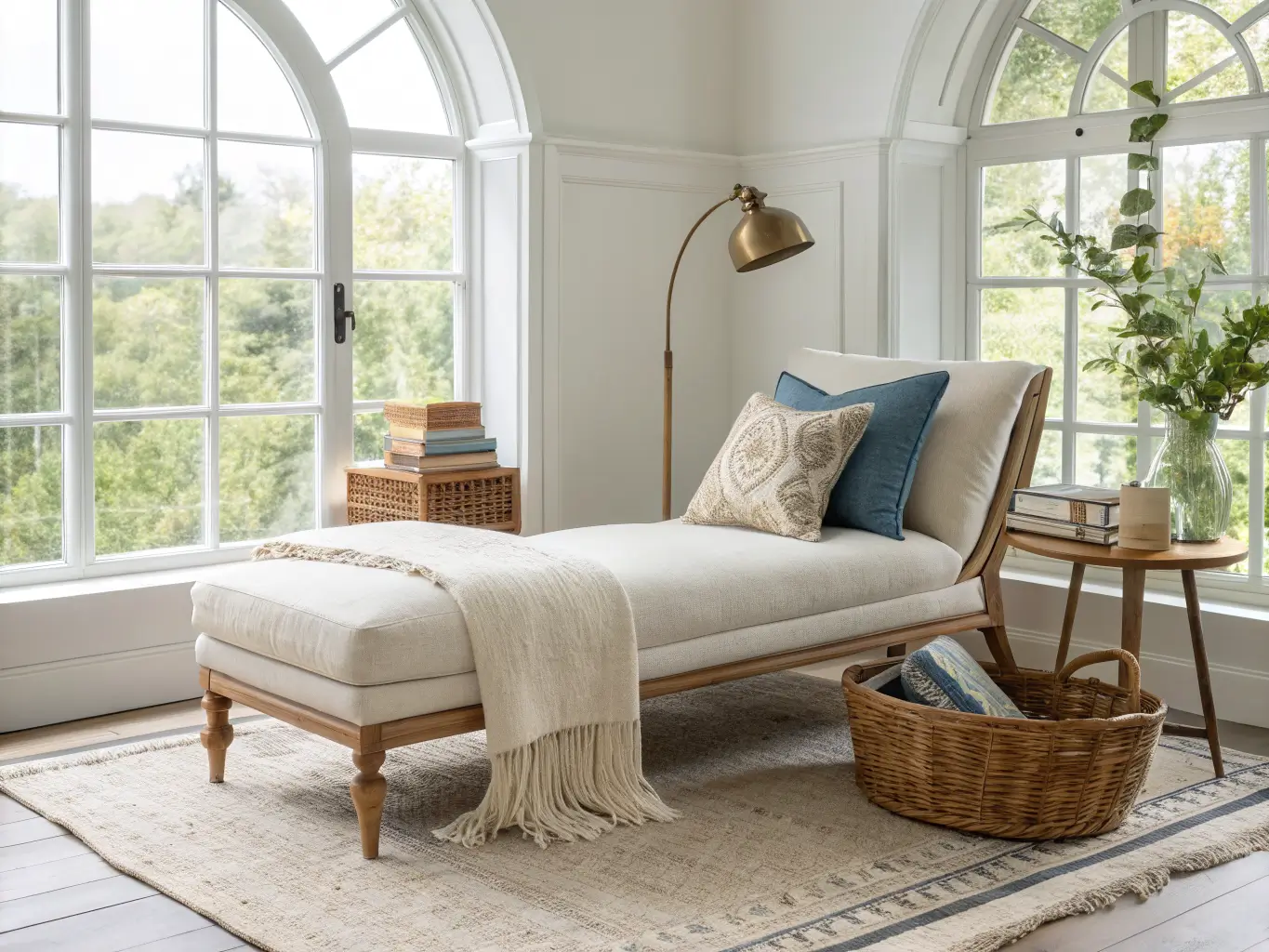
Keeping It Looking Intentional Over Time
Stick to your two-to-four color palette even as you add pieces later. Repeat a material pairing — wood and brass, or bouclé and warm metal — so new additions feel like they belong instead of like they wandered in from a different room.
Resist the urge to keep adding objects. The nooks that actually feel finished have restraint: one seat, one light source, one small surface, one focal point. More stuff doesn’t make it feel more complete — it just makes it feel busier.
Seasonal and Budget Moves
Seasonal: Swap in darker, textured throws and moodier pillow colors for fall and winter. Lighten up with linen and add fresh greenery for spring and summer. Same bones, different mood, zero furniture changes required.
Budget path: Start with a secondhand chaise — they show up often, and $200 for a solid used piece isn’t unusual. Put your money into the lamp, rug, and textiles first, since those are what make the space feel finished. Upgrade the chaise itself later once you know how you actually use the space.
Style variations to try:
– Boho + coastal: cream upholstery, light wood, a woven basket for books, soft blue pillow accents
– Modern quiet luxury: velvet or bouclé chaise, brass lamp, one piece of understated art, low contrast throughout
– Warm minimalist: clay or sage wall behind it, linen textiles, a natural wood side table, almost no extra decor at all
The version that finally worked for me was closest to that last one — sage-adjacent wall, cream bouclé chaise, one brass lamp, one throw, two pillows. It took three rearrangements to get there, but it’s the first reading spot in my house I actually use every single day instead of just admiring from across the room.
For another angle on this, my reading nook chair guide covers the same space from a different starting point.