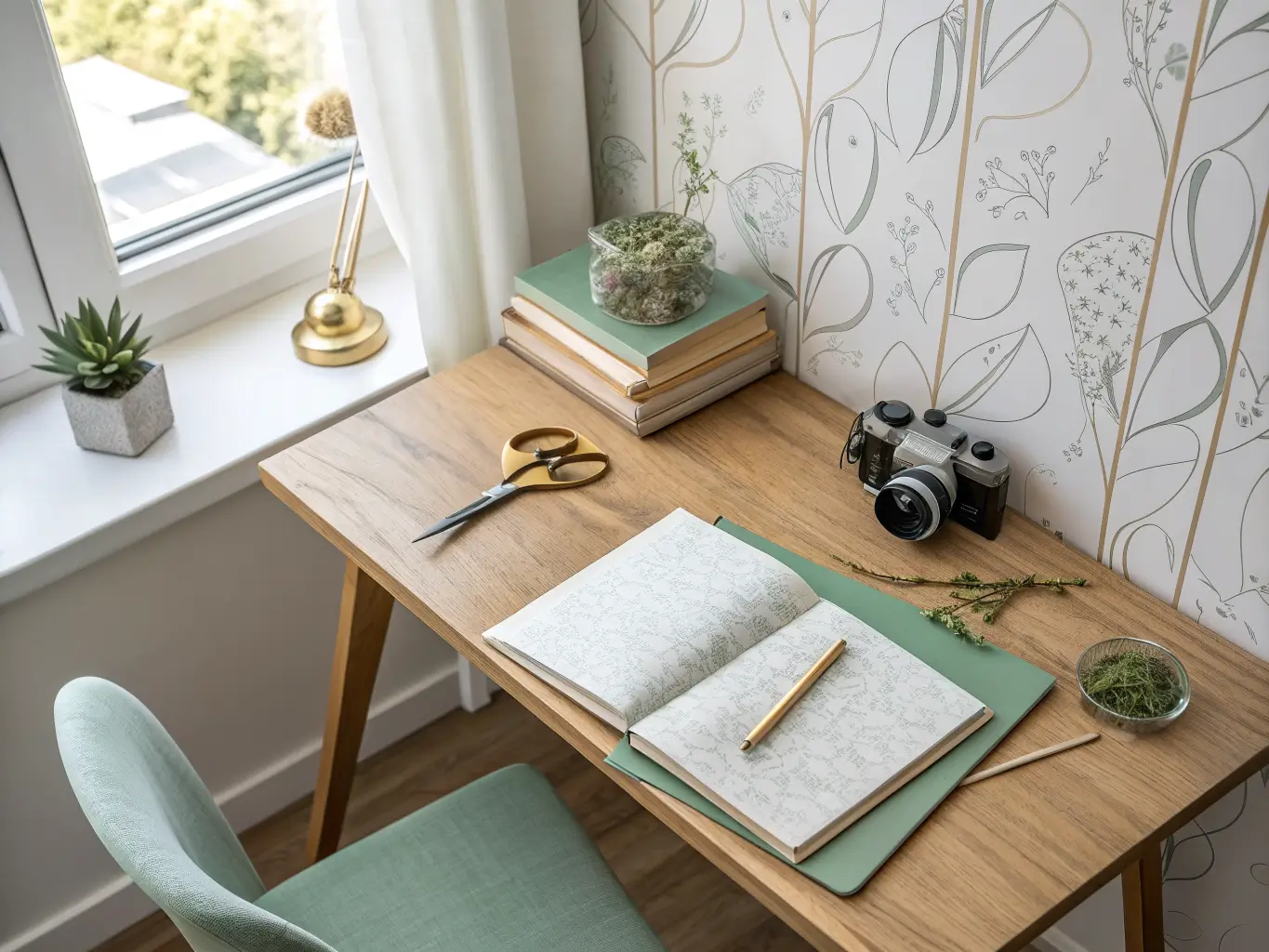
I papered my study three times before I got it right. First attempt was a botanical print so busy I couldn’t look at my laptop screen without feeling like the wall was breathing behind it. Second attempt, I overcorrected into plain oatmeal linen texture and the room went flat and boring in about a week. Third time — a muted sage green on just the wall behind my desk, everything else kept simple — finally clicked. That’s the version I’m walking you through here.
Study room wallpaper is different from wallpaper anywhere else in the house. You’re not decorating a room to impress guests. You’re decorating a room where you need to actually think, and the wrong pattern or color can quietly work against you for hours a day. Here’s what I’ve learned about doing it well.
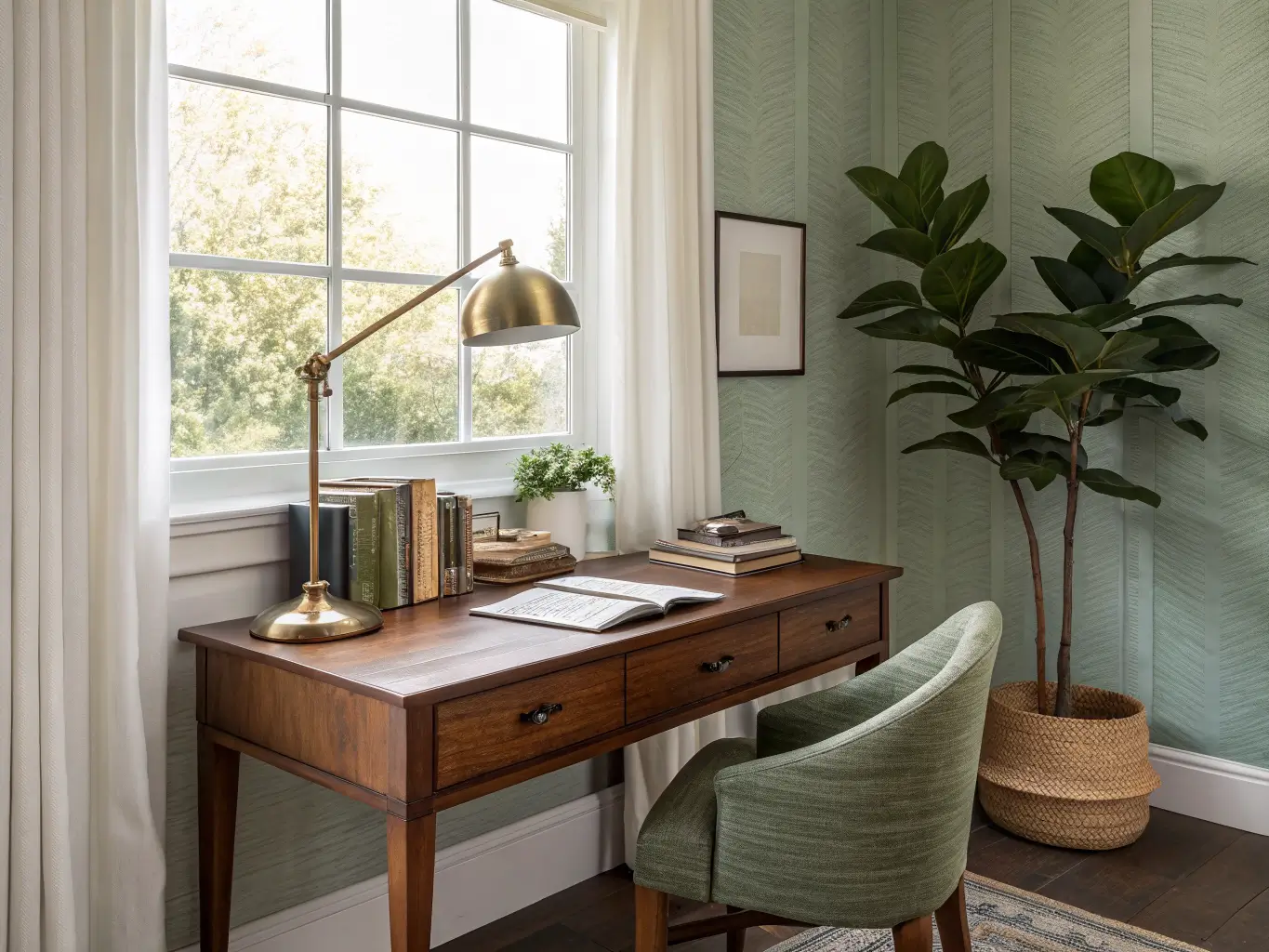
What This Look Actually Requires
Time: A single accent wall — the realistic move for most people — takes 2 to 6 hours, including wall prep and cleanup. A full-room wallpaper job, especially with furniture moved out and back in, is closer to 1 to 2 days once you factor in drying time and getting your desk setup back in order.
Cost: This is a wide range, and it depends heavily on material. Digital mural wallpaper can start as low as ₹99 per square foot for decorative stock designs — landscapes, maps, that sort of thing. Once you move into premium custom-sized collections, pricing climbs based on material weight and wall dimensions; catalogs like Wallism carry over 6,500 study-room-specific designs across that spectrum, so there’s real room to shop up or down.
Space size: Small-to-medium studies are the sweet spot. A 6×8 foot desk nook handles an accent wall beautifully. Bigger home offices can still work, but you’ll want to either commit to one feature wall or pick a genuinely quiet repeating pattern if you’re doing all four walls — busy pattern on every wall in a big room turns into visual noise fast.
Skill level: Peel-and-stick is genuinely beginner-friendly — I did my sage green wall myself on a Saturday afternoon with a credit card for smoothing and a utility knife for trim. Full paste-on murals with seam matching are a different animal. If you’re not confident cutting straight lines while slightly panicking, hire it out or start with peel-and-stick.
Seasonality: None, really. This is a year-round choice. You’re not decorating for a holiday, you’re building a backdrop for focus, so the palette and pattern should hold up in every season without needing a refresh.
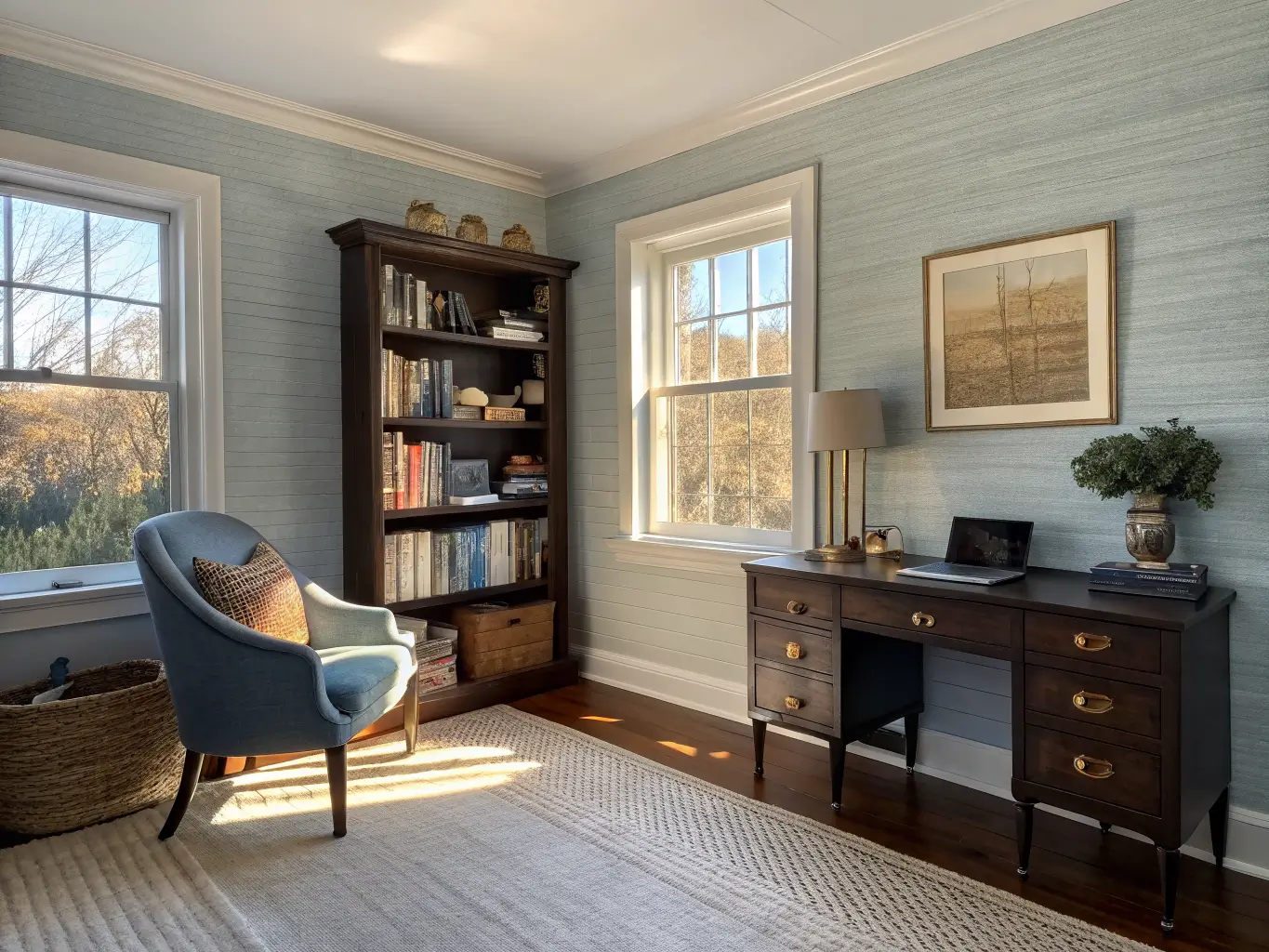
The Design Identity: What Makes a Study Wallpaper “Study” Wallpaper
Study room wallpaper sits at the intersection of three moods: calm modern, library-traditional, and soft contemporary. You’re rarely going full maximalist here — even bold choices tend to be controlled.
Colors that actually work:
– Muted sage green
– Dusty blue
– Warm off-white
– Navy blue
– Silver
– Beige
– Light gray
Materials worth knowing:
– Vinyl-coated (durable, wipeable, good if the desk area gets marker or coffee splashes — mine has)
– Peel-and-stick (best for renters or anyone who might redo this in 2 years)
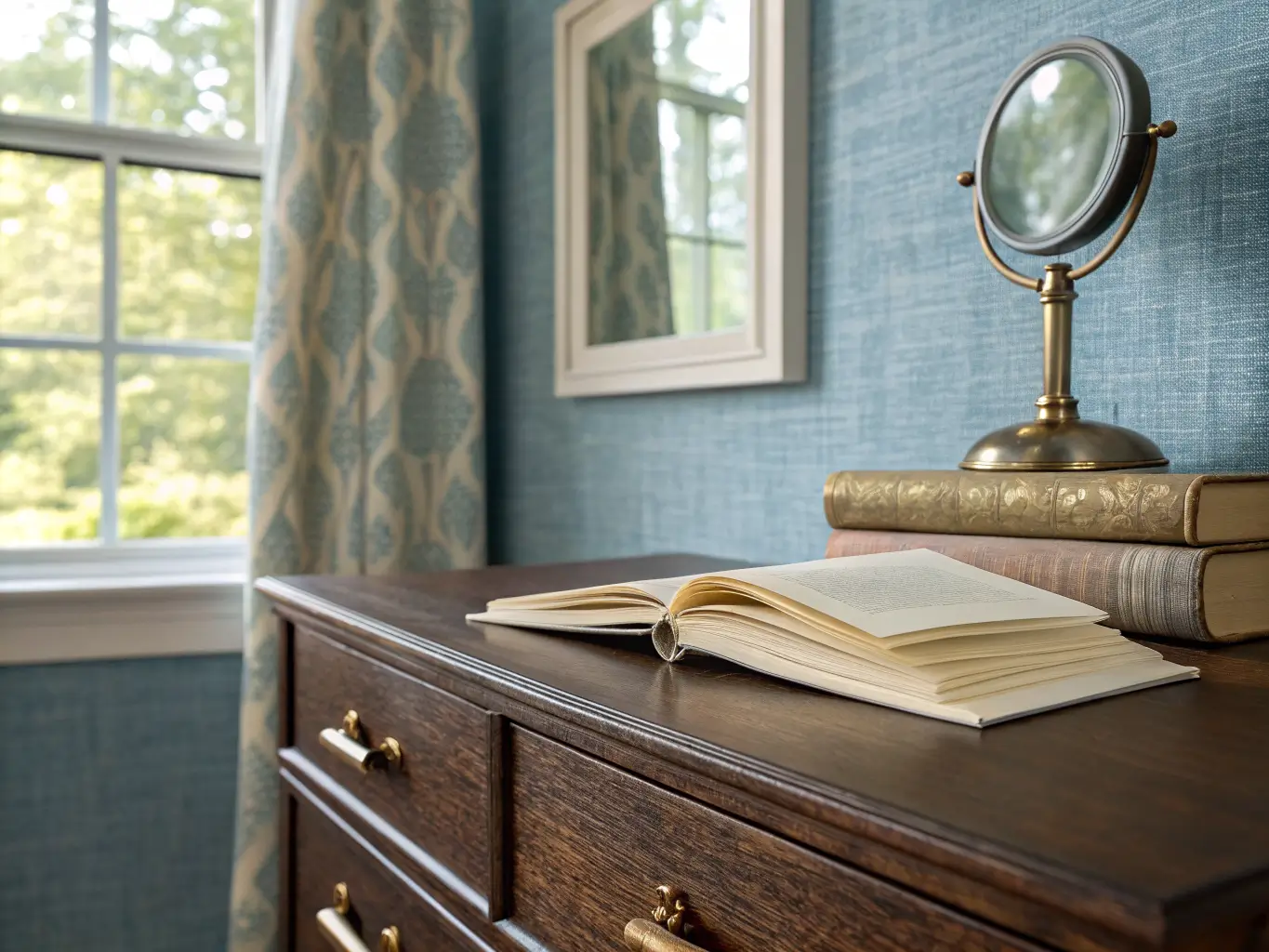
– Linen-look texture (soft, non-reflective, good for reducing glare near a monitor)
– Grasscloth-look finish (adds texture without adding color intensity)
– Mural wallpaper (for a single dramatic scene — maps, botanicals, landscapes)
This look is built for remote workers, students, and anyone whose desk sees real hours — not a guest room that occasionally functions as an office.
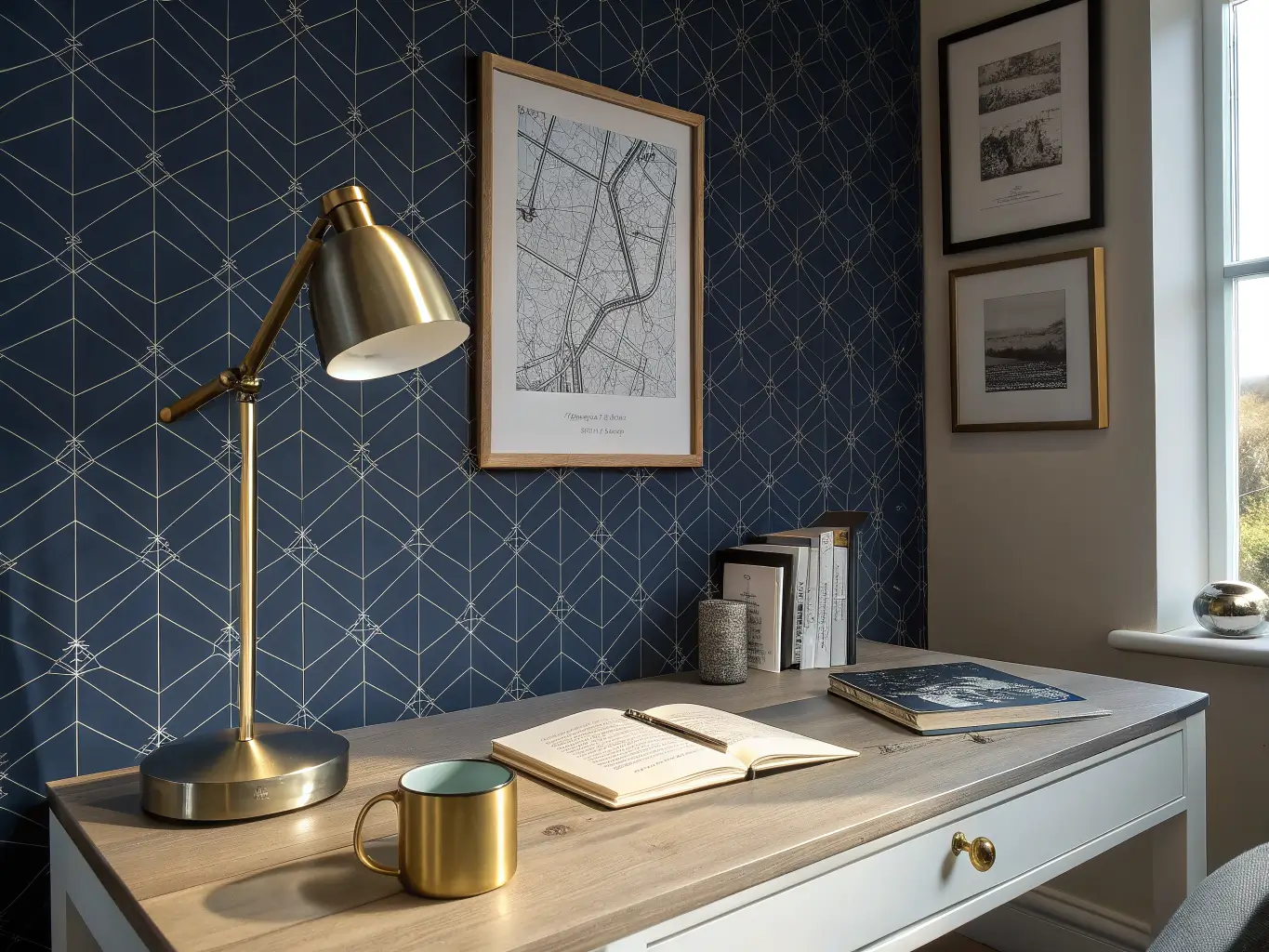
The Pieces That Make It Work
Pick your hero wallpaper first. This decision anchors everything else.
– Single feature wall behind the desk — the most practical choice for almost everyone, and where I’d tell you to start if you’re unsure
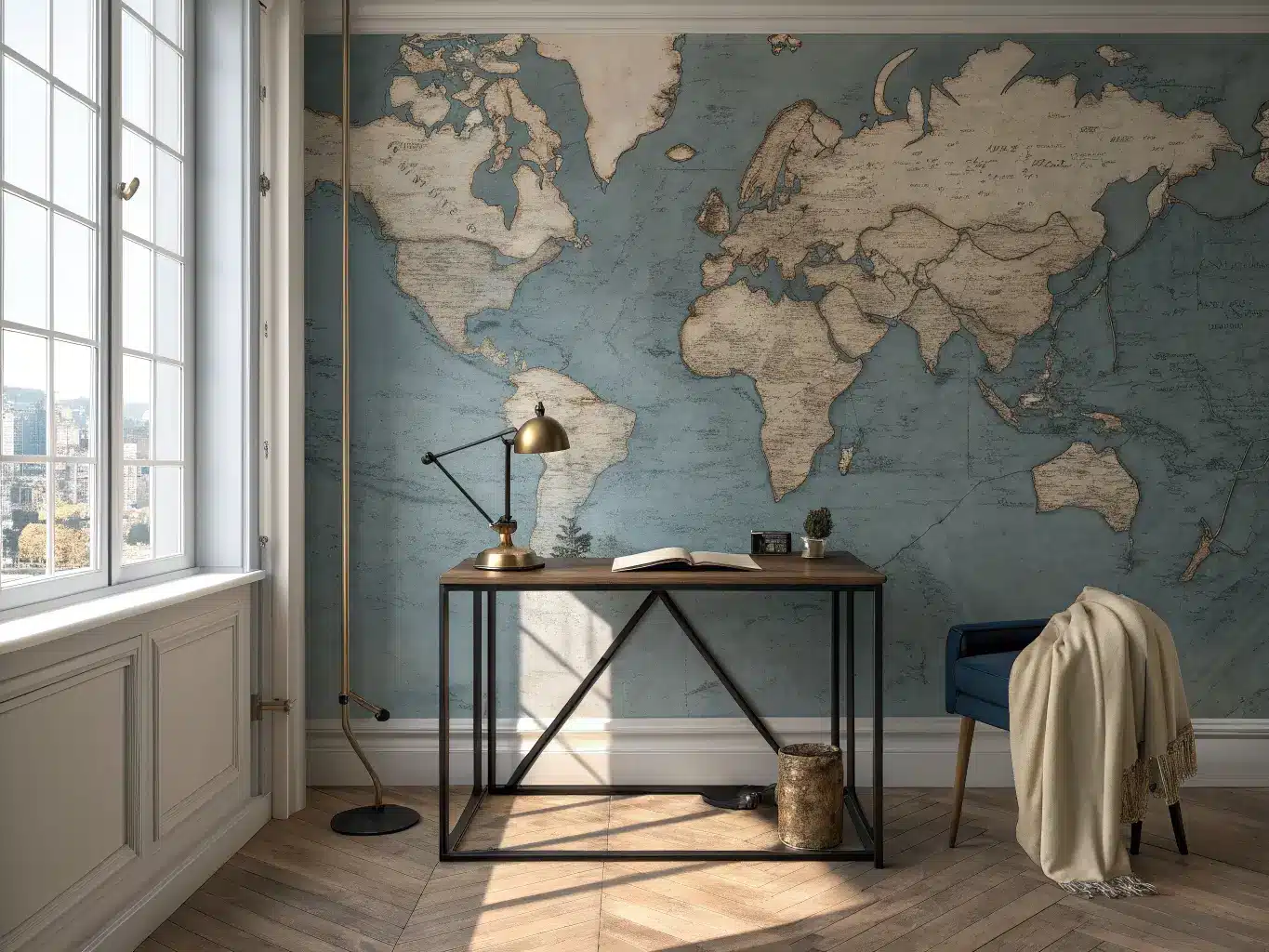
– Mural wallpaper with botanical prints, map designs, or architectural line drawings, for a library-adjacent, intellectual mood
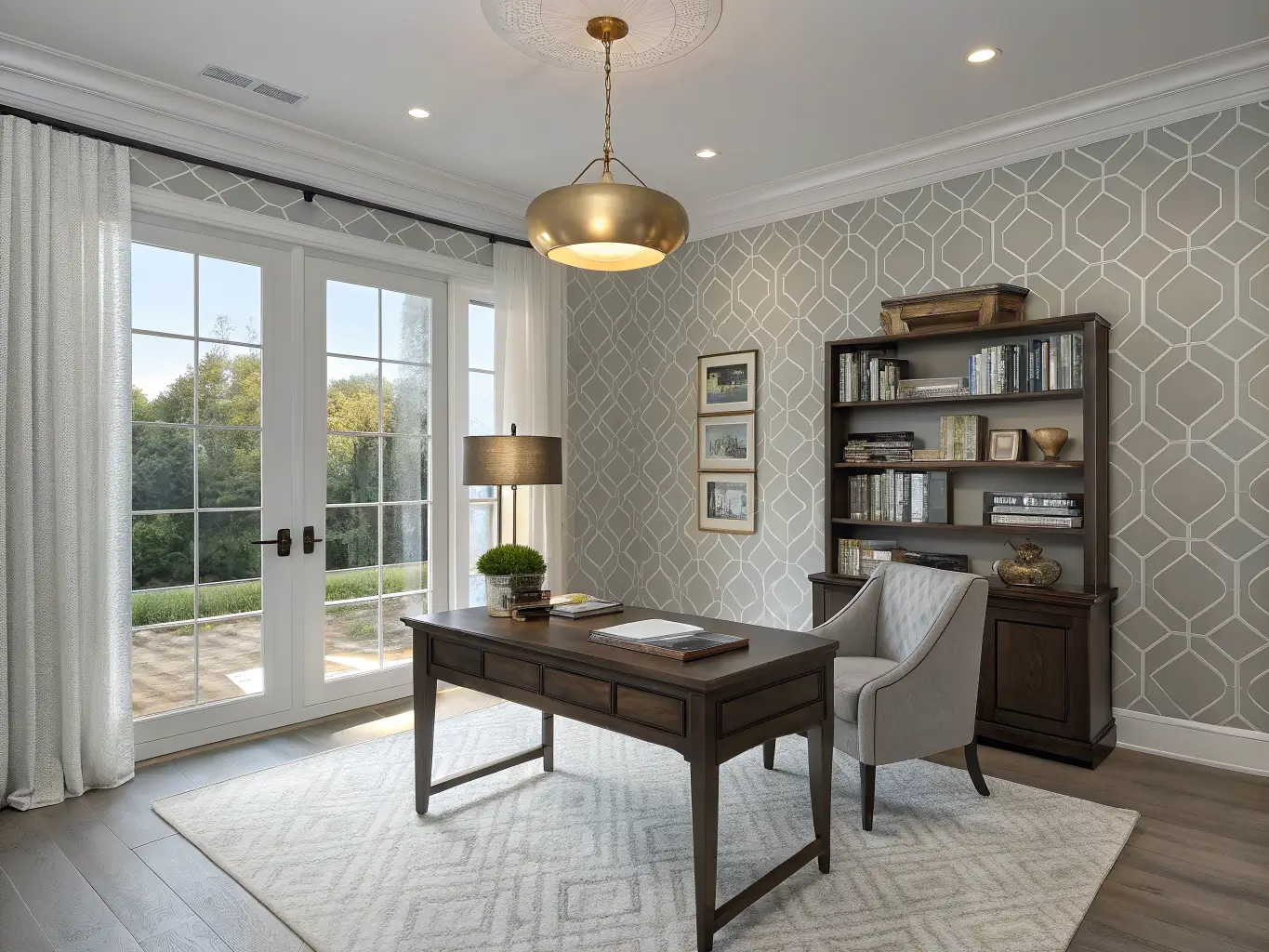
– Geometric or abstract pattern, for a study that wants energy without becoming distracting
Once the wallpaper’s chosen, everything else should either echo it or step back and let it lead.
Complementary furniture:
– Dark wood desk and shelving if you’re leaning traditional
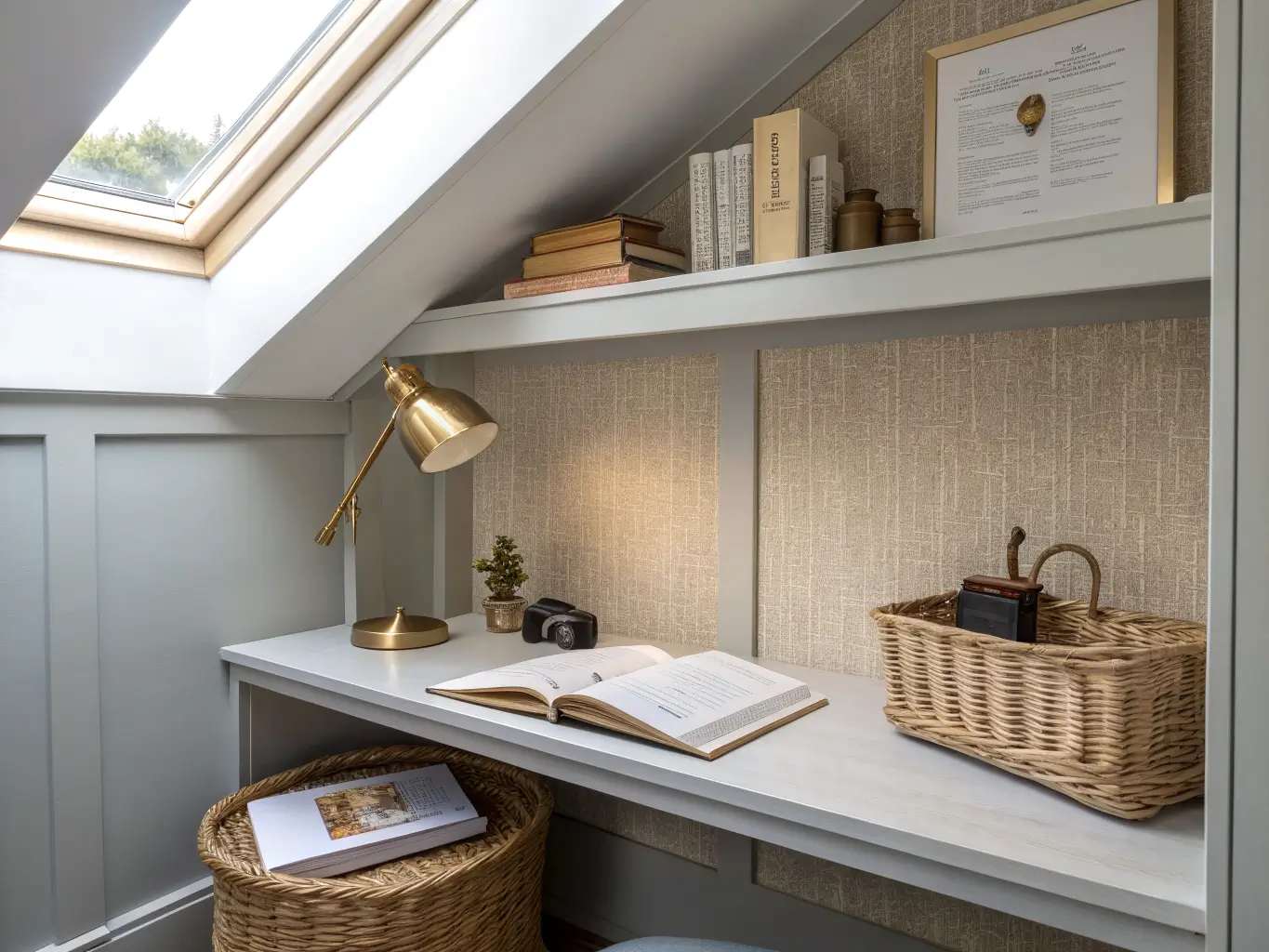
– Brass fixtures and warm task lighting — a brass gooseneck lamp does more for a “serious study room” feeling than almost anything else I own
– Clean-lined, minimal furniture if your wallpaper already has pattern — don’t fight it with more shape
Signature accessories:
framed maps, an actual bookshelf (not styled shelf-porn, real books you use), a desk lamp, pinned notes, art that repeats a color from the wallpaper. If you went botanical, a single real plant — I keep a 3-foot snake plant in the corner near my window — ties the printed leaves to something living in the room.
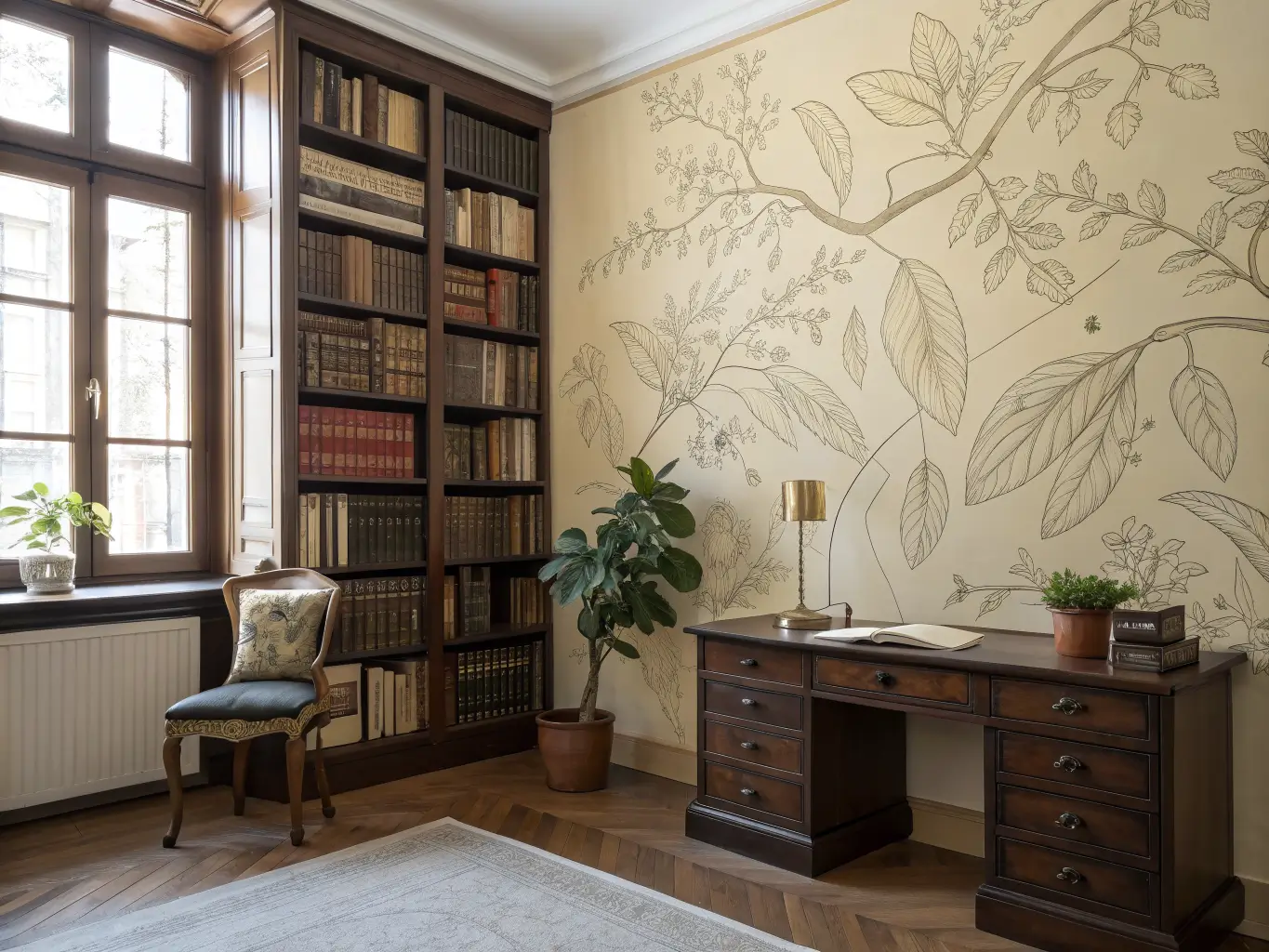
Optional Layers: Texture, Metal, Seasonal Touches
Once the core is set, small additions add depth without adding visual competition:
– Organic touches — grasscloth texture, linen-look paper, an unfinished wood shelf bracket
– Metallic accents — brass hardware, a silver-framed mirror, subtle metallic detailing within the wallpaper pattern itself
– Seasonal swaps — change the cushion on your desk chair, rotate the art, swap a throw. Leave the wallpaper alone. It’s your constant; everything else can move around it.
Pro Styling Rules I Actually Follow
One accent wall, always behind the desk, if you’re unsure of anything else. This single rule prevents 90% of study wallpaper mistakes. It gives your eye one clear place to land and keeps the rest of the room from competing with your screen.
Small room? Go light-reflective or muted. Dark saturated wallpaper in a small study with limited windows will make the room feel like a closet by 4pm. I learned this the hard way with a navy grasscloth sample that looked moody and rich in the store and claustrophobic on my actual wall.
Big room, quiet pattern only, if going all four walls. A repeating pattern across an entire large office only stays cohesive if it’s subtle enough to disappear into peripheral vision. Bold prints on every wall in a big room read as a themed restaurant, not a workspace.
Match intensity to furniture, inversely:
– Bold wallpaper pattern → restrained, simple furniture
– Quiet texture wallpaper → stronger furniture silhouettes, darker wood, more presence
Match mood to function:
– Calm tones (sage, dusty blue, off-white) → concentration-heavy work
– Geometric/abstract → creative work, brainstorming-heavy roles
– Botanical or map motifs → reading, writing, slower thoughtful work
Setting It Up: Prep, Install, Style
Before you buy anything, measure your walls properly — height, width, and account for any doors, windows, or sloped ceilings. Mural wallpapers especially have maximum panel dimensions, and I’ve seen people order a scene that simply doesn’t fit their wall width without an awkward seam through the middle of a tree or a building.
Prep the wall. Clean it, prime it if it’s raw drywall or previously painted in a glossy finish. Skipping this step is the single biggest cause of bubbling and peeling seams down the line — I skipped priming on my first attempt and had a bubble the size of a fist appear two days later.
Gather your tools before you start: smoothing tool or credit card, sharp utility knife, a level, a seam roller if you’re doing a pattern match. Mural installs especially need careful seam alignment — measure twice, cut once applies here more than almost anywhere else in home decor.
Decide your composition before you hang anything: is this wallpaper the backdrop to a desk-centered scene, or is it wrapping the whole room? That decision changes where you center the pattern on the wall.
Install first, furnish second. Get the wallpaper up and fully set before moving the desk back into place. Then position the desk so the pattern reads clearly behind it — centered on a mural’s focal point, or positioned so a repeating pattern doesn’t cut off awkwardly at the desk’s edge.
Add supporting pieces last — shelving, lamp, chair — chosen to repeat a color or material from the wallpaper rather than introduce something new. If your wallpaper is a mural, keep everything else quieter. A busy bookshelf next to a detailed map mural is visual competition your brain doesn’t need while trying to focus.
Common Mistakes (And How I’ve Made Most of Them)
– Picking a pattern too busy for actual work. What looks great in a sample swatch can feel chaotic across an entire wall you’re staring at for eight hours. If in doubt, go quieter than your instinct.
– Ignoring the room’s actual light. A wallpaper color shifts dramatically between a north-facing room and one that gets afternoon sun. Always look at a sample in your room, at your actual desk hours, before committing.
– Wallpapering every wall in a small room. Without enough plain space to rest your eyes, a small study starts to feel like a box. Leave at least two walls simple if the room is under 80 square feet.
– Skipping wall prep. Bubbles, lifting seams, and visible imperfections almost always trace back to a dirty or unprimed wall.
– Mismatching wallpaper style and furniture energy. Ornate botanical mural plus overly busy, cluttered desk decor equals a room that never feels finished. Pick one thing to be the star.
Keeping It Fresh Without Redoing the Whole Room
Stick to two to four core tones total in the room — for example, sage green, off-white, warm wood, and brass. Or navy, silver, white, and black if you’re going more contemporary. This keeps the wallpaper as the room’s one clear pattern statement instead of competing with a busy rug or patterned curtains.
Style your bookshelf with intention, not decorative overload. A study room reads calmer when the shelf looks organized and purposeful rather than styled like a living room mantel.
For a seasonal refresh, change the small stuff — a cushion, a throw, the art leaning on your shelf — and leave the wallpaper as the constant. This is the cheapest, lowest-effort way to keep the room feeling current.
For a budget refresh, do one wall, not four. I’d rather see someone do a great single accent wall for a fraction of the cost than compromise on quality to cover an entire room.
Combinations worth trying, if you want to mix directions:
– Traditional + botanical, for a room that feels like an old study
– Modern + geometric, for energy and focus
– Calm minimalist + soft abstract, for a gentle creative space
– Library-inspired + map mural, for a room built around reading and reference
The wallpaper you pick for a study isn’t just decoration — it’s the thing you’ll be staring past every time you look up from your screen. Choose it like you’re going to actually work in that room, because you are.
For another angle on this, my study room decor ideas diy guide covers the same space from a different starting point.