How to Build a Corner Reading Nook (Even in a Tiny Space)

Cozy reading nook with a bouclé armchair, warm lamp light, and books in a corner.

How to Build a Corner Reading Nook (Even in a Tiny Space)

Start with the corner you already have

You’ve got a dead corner somewhere in your house. Maybe it’s next to your bedroom window, maybe it’s that weird gap in the living room where nothing else fits, maybe it’s the void under your stairs. You keep looking at it thinking “that could be something” — and it can. A corner reading nook is one of the few decor projects that costs almost nothing, takes an afternoon, and actually gets used every single day. I built mine three times before I got it right, and I’m going to save you the two wasted attempts.
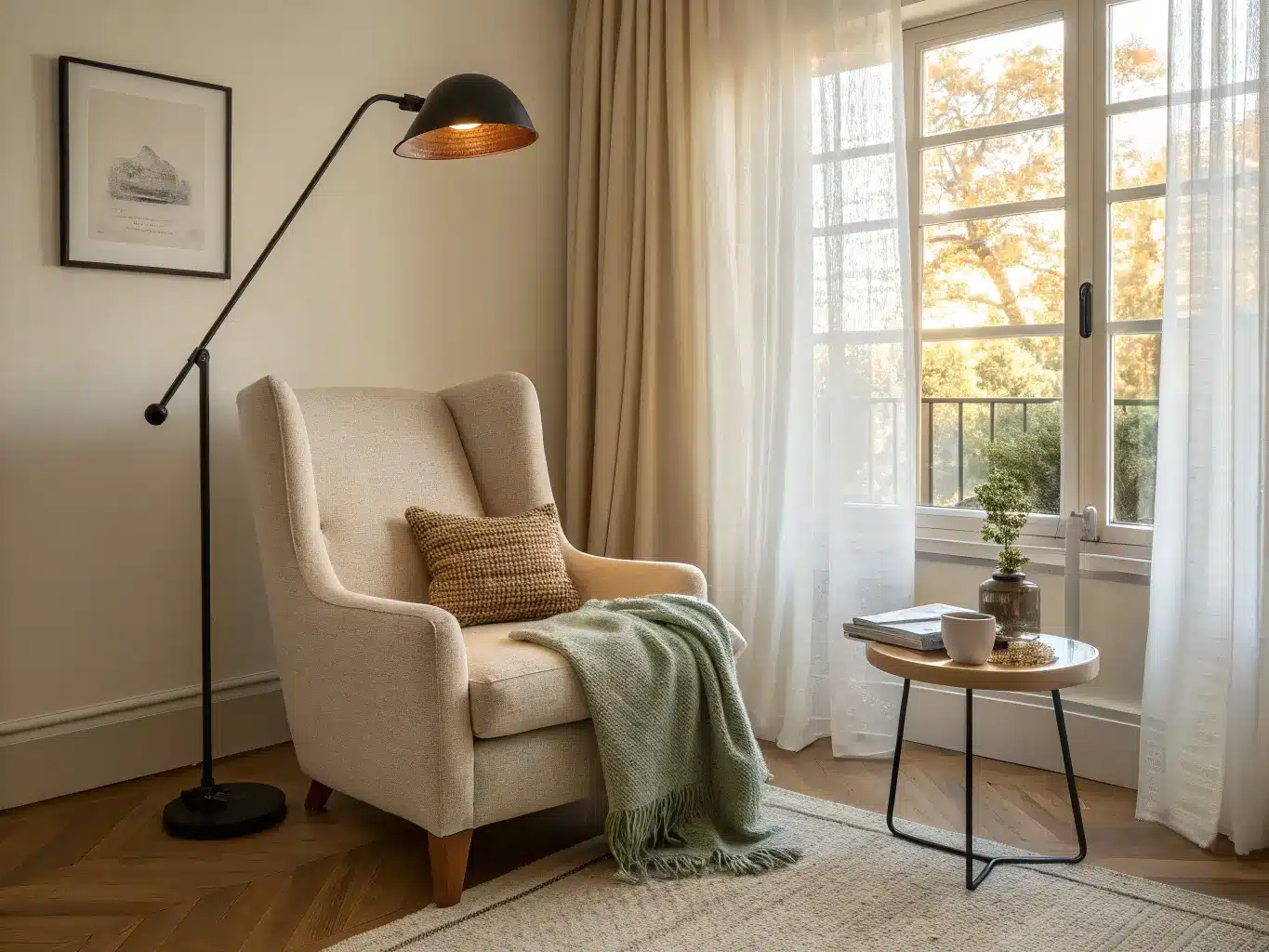
Cozy golden-hour bedroom reading nook with oatmeal boucle armchair by a window, black floor lamp, oak side table with mug and glasses, and sage throw on jute rug.

What This Look Actually Is

A reading nook isn’t a room. It’s a corner that’s been given a job. The whole point is enclosure — you want to feel slightly tucked away, even if you’re technically still in your open-plan living room. Done well, it reads as cozy and intentional: modern-cozy with a boucle chair and matte black lamp, boho with linen and rattan, or old-school library with a wingback and brass reading light. Done badly, it just looks like a chair someone forgot to put away.

This works for almost anyone: apartment dwellers with one awkward corner and no spare room, parents wanting a dedicated book spot for their kid, or anyone who just wants a place to sit that isn’t the couch in front of the TV. It works in bedrooms, living rooms, home offices, hallway recesses, bay windows, under-stairs spaces, even a corner of a finished basement.

Time and cost, realistically:

– A simple setup — chair, lamp, table, no construction — takes 1 to 3 hours to pull together once you have the pieces.
– Adding floating shelves, a wall sconce, or a curtain enclosure pushes it to 1–2 days.
– Budget-wise, you can do this properly for under $500. A more layered version with better textiles and lighting lands around $800–$1,200. If you fall in love with an Eames lounge chair, you’re well past $1,500 — I don’t think you need to go there, but I understand the temptation.
– Skill level is beginner if you’re just arranging furniture, intermediate if you’re mounting shelves or hardwiring a sconce.
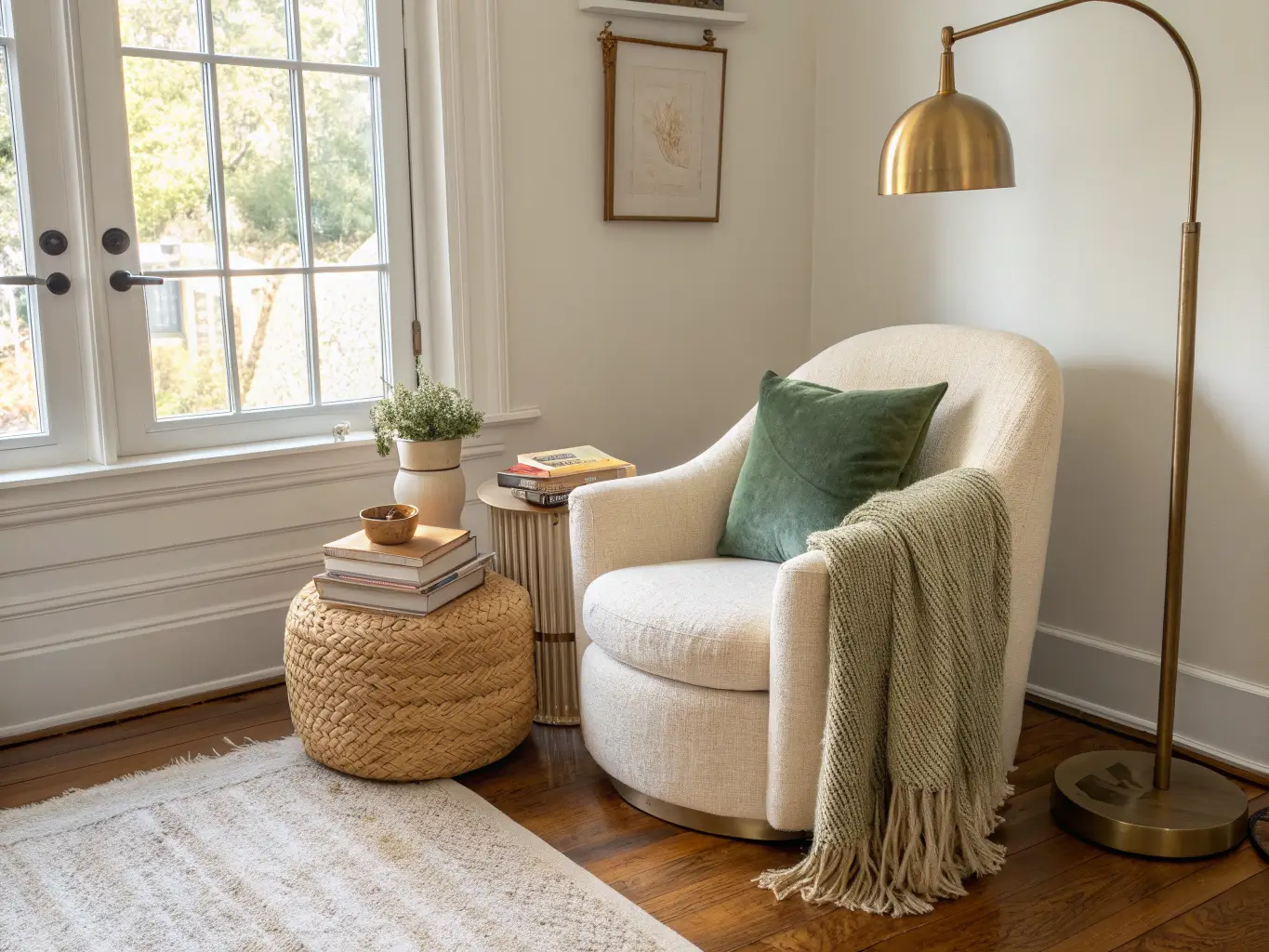
Wide-angle photorealistic modern-cozy living room corner with a cream boucle chair, brass floor lamp, rattan side table with books, sage pillow, knit throw, and jute rug in warm afternoon light.

The Pieces That Actually Make It Work

I made the mistake, the first time, of starting with a side table I loved and building around it. Wrong order. Here’s the actual hierarchy.

The chair (start here, always)

This is 90% of the nook. Your options:
– A deep armchair — my personal pick, because it has arms to rest a book or your elbow on
– An oversized accent chair for a more sculptural look
– A papasan chair if you want boho and don’t mind less back support
– A chaise lounge if your corner is long rather than deep
– A built-in window seat if you’re near a bay window and willing to do light carpentry

Whatever you pick, sit in it for at least ten minutes at the store or before you finalize the return window. I bought a gorgeous slipper chair once — clean lines, blush velvet, looked perfect in photos — and it had zero back support. I lasted maybe 20 minutes in it before my lower back gave out. It now lives in my office as a “decorative” chair nobody sits in. Comfort has to win over looks here, not the other way around.
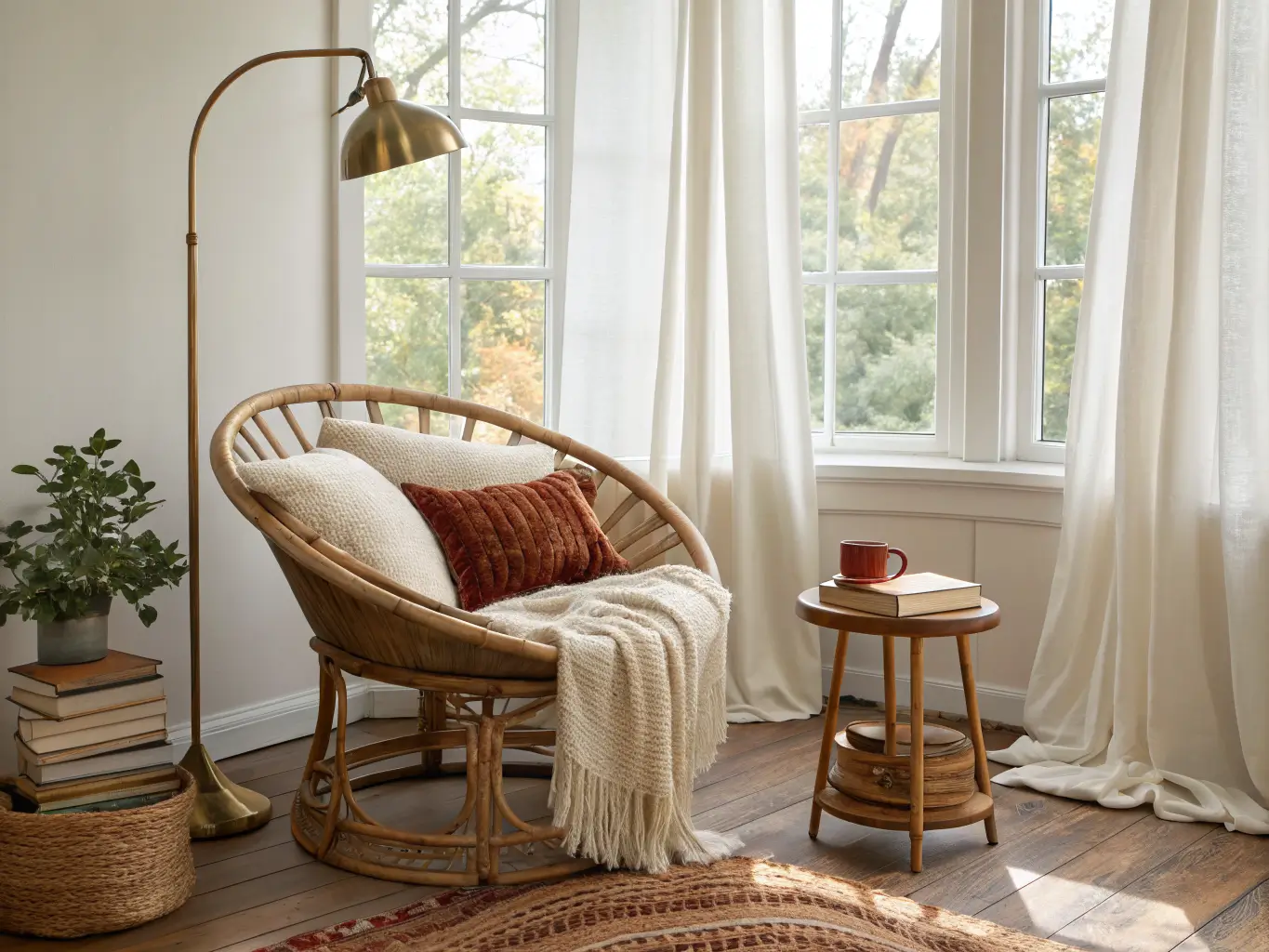
Sunlit boho reading nook with rattan papasan chair, macramé throw, stool with books and terracotta mug, brass lamp, kilim rug, and trailing pothos by an arched window with sheer curtains.

Lighting — non-negotiable

Ambient room light is not enough to read by. You need direct task lighting:
– A floor lamp with an adjustable arm, positioned so the light falls over your shoulder onto the page
– A wall sconce if you want to save floor space and have access to wiring
– A table lamp on your side table if there’s room

Put the light on the same side as your dominant hand holding the book — sounds fussy, but a lamp on the wrong side means you’re either squinting or casting a shadow with your own arm.

A surface within actual reach

A small side table, C-table (the kind with a base that slides under your chair arm), or even a wide stool. It needs to hold a mug, your glasses, and a book without you having to lean. Mine is a $40 IKEA side table I’ve had for six years — it’s not fancy, but it’s the right height, which matters more than the finish.
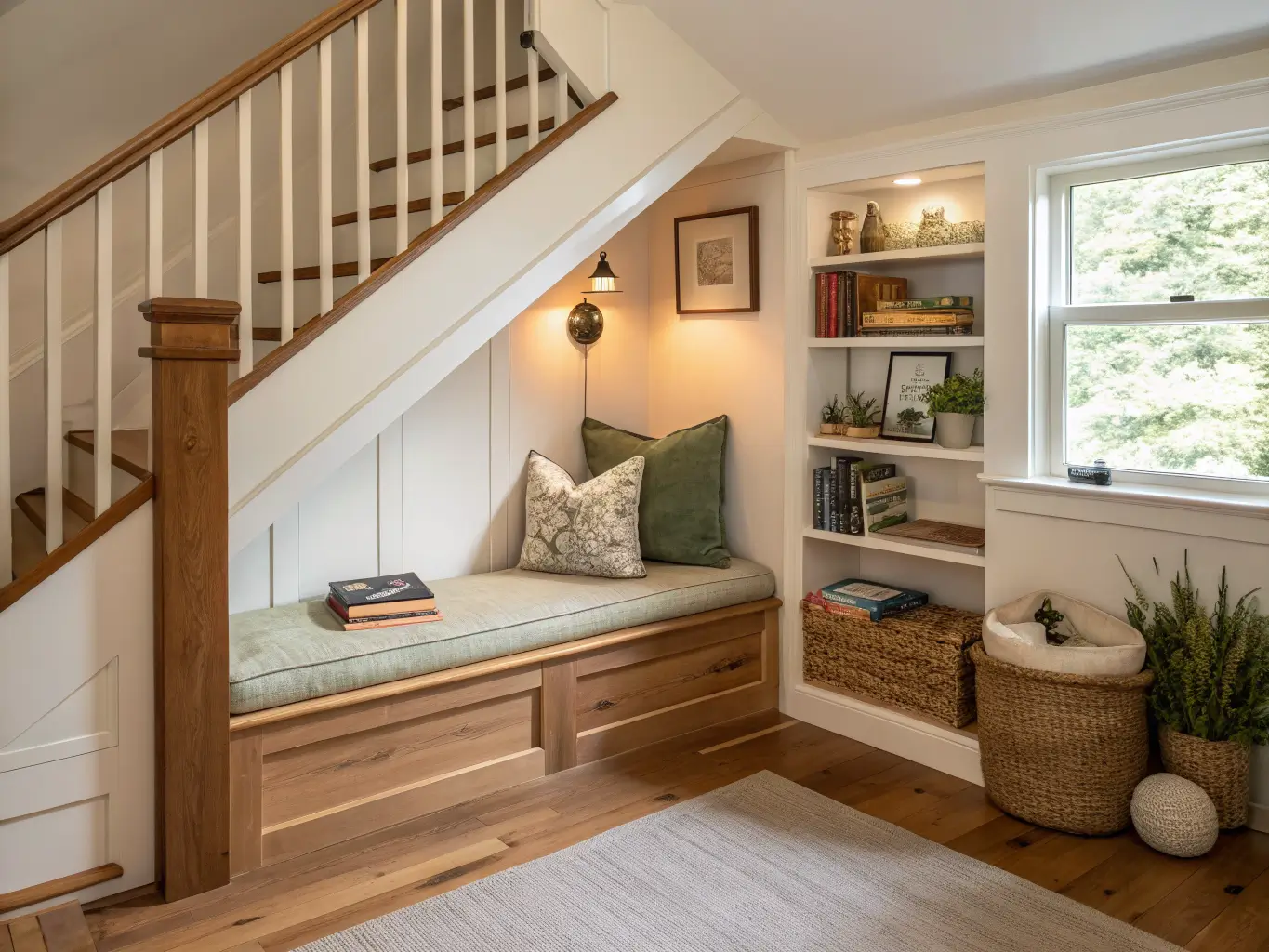
Photorealistic under-stairs reading nook with cushioned wooden bench, brass sconce, sage and cream pillows, wool throw, floating oak shelf with books and pampas grass in warm afternoon light.

Somewhere for books

Floating shelves above or beside the chair, a small bookcase, or a rolling book cart if you want flexibility. In a tight corner, wall-mounted shelves save floor space and look intentional rather than like a pile you haven’t dealt with.

Soft layers

One throw blanket, one or two pillows (a lumbar pillow does more for comfort than a decorative one), maybe a sheepskin draped over the arm. This is where the coziness actually lives.

A rug

Even a small 3×5 rug under the chair and table visually “frames” the nook — this matters most if your corner is part of an open room and doesn’t have walls doing the enclosing for you.
Optional: an ottoman. If your chair doesn’t recline and you’re planning to sit for long stretches, your feet will thank you.

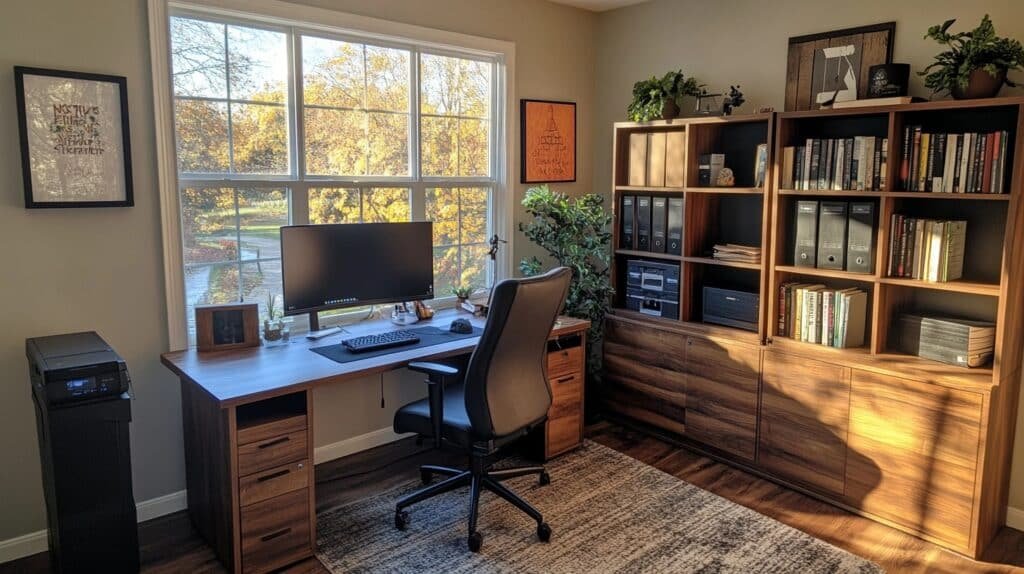
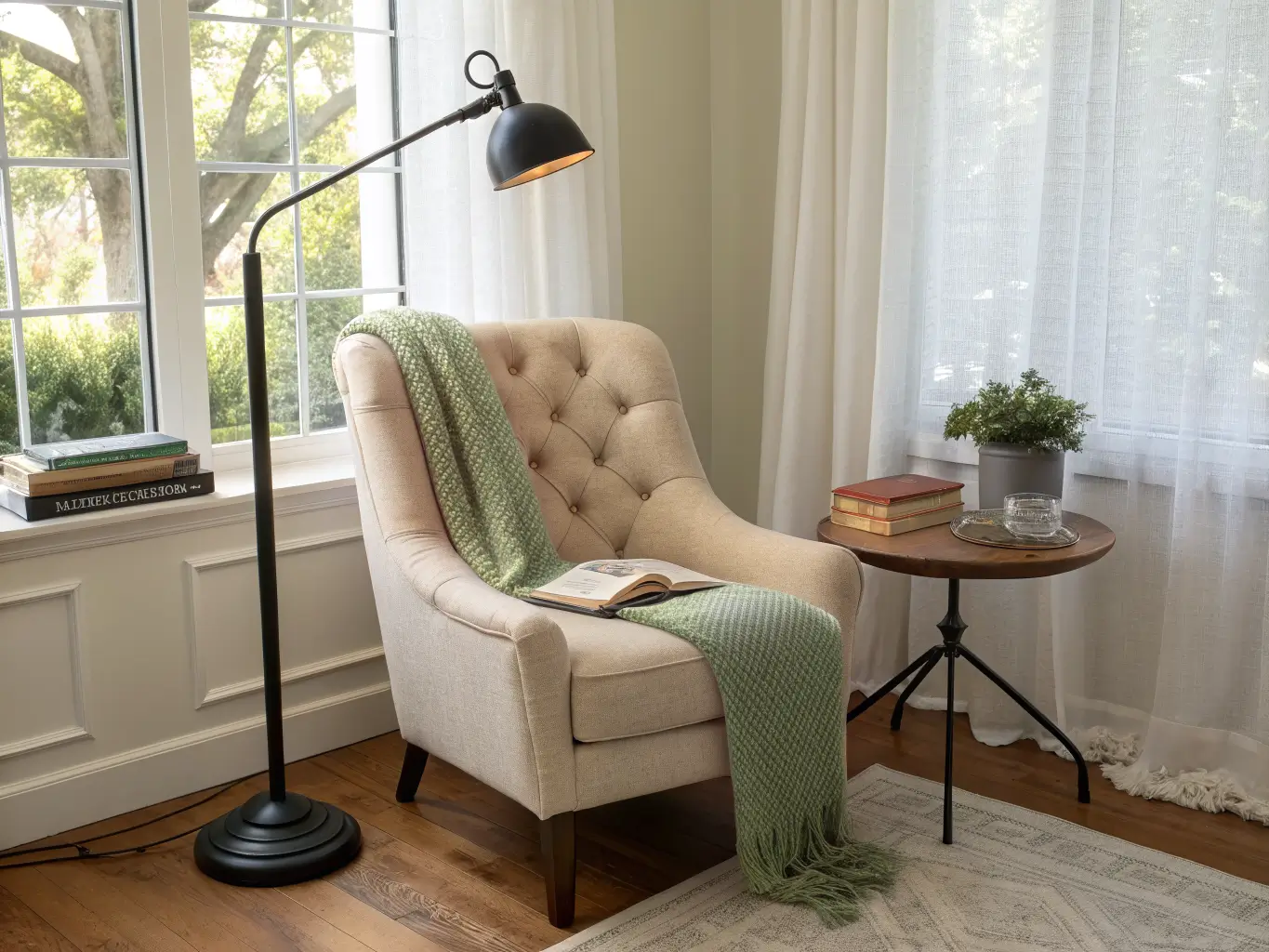
Photorealistic home office nook with an oatmeal tufted armchair by a window with sheer curtains, a matte black floor lamp, marble side table with books and glasses, and a cream rug in soft morning light.

Putting It Together, Step by Step

1. Clear the corner completely first. Cords, random furniture, that box you’ve been meaning to deal with — gone. You need to see the actual empty space before you can fill it right.
2. Measure before you buy anything. An oversized chair in a small corner blocks foot traffic and just feels wrong. I once bought a papasan chair for a corner that was 4 feet wide — the chair alone was 4.5 feet at its widest point. Had to return it. Measure the space, then measure the chair, including arms.
3. Place the chair first, angled slightly into the corner so your back is toward the wall, not toward the room’s main walkway. This is the enclosure trick — it’s subtle but it’s the difference between “nook” and “chair in a corner.”
4. Add the lamp next, positioned for the reading angle, ideally near an outlet (this sounds obvious until you’re 8 feet from the nearest one and running an extension cord across your floor).
5. Bring in the table, positioned so you can reach it without leaning forward.
6. Layer the textiles — throw over the arm, pillow behind your back, rug underneath.
7. Finish with books and personal touches — a small stack of what you’re currently reading, not your entire collection crammed onto one shelf.

If you’re doing floating shelves, mix horizontal stacks with vertical rows. All-vertical looks like a library display; all-horizontal looks like a pile. Mixing the two gives the shelf actual movement.
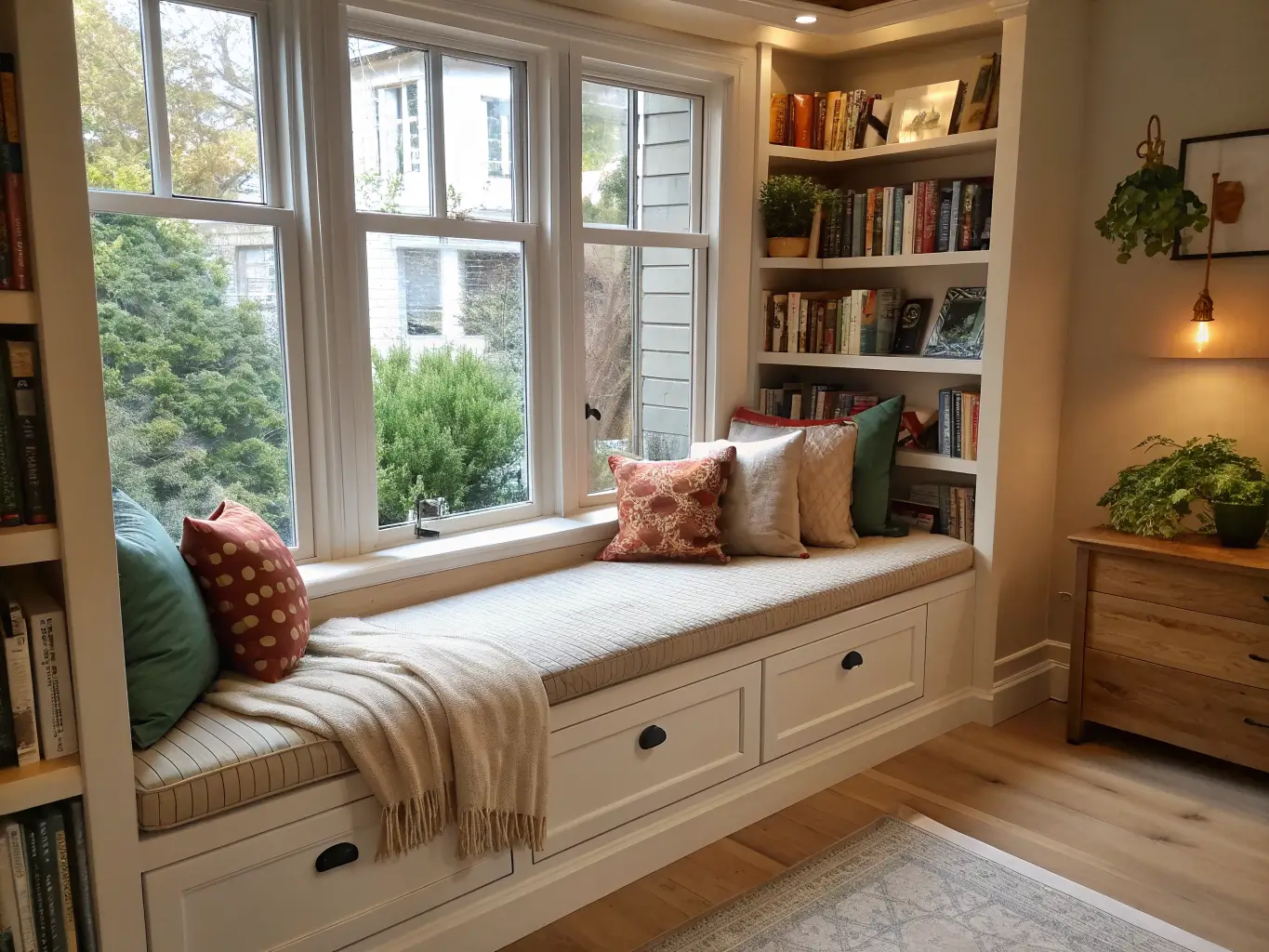
Photorealistic bay window reading nook with cream linen window seat, sage and rust pillows, chunky knit throw, oak shelves with books and plant, and a brass sconce glowing at twilight.

Where to Spend, Where to Save

Spend on:
– The chair — this is the one piece you’ll touch every day
– The lamp — cheap lamps often mean weak, yellow-toned bulbs that make reading harder, not easier

Save on:
– The side table — a $40–60 table does the same job as a $300 one
– Throw pillows and blankets — thrift stores and HomeGoods are full of good options here
– Shelving — basic floating shelves from a hardware store, painted to match your wall, look just as good as designer versions
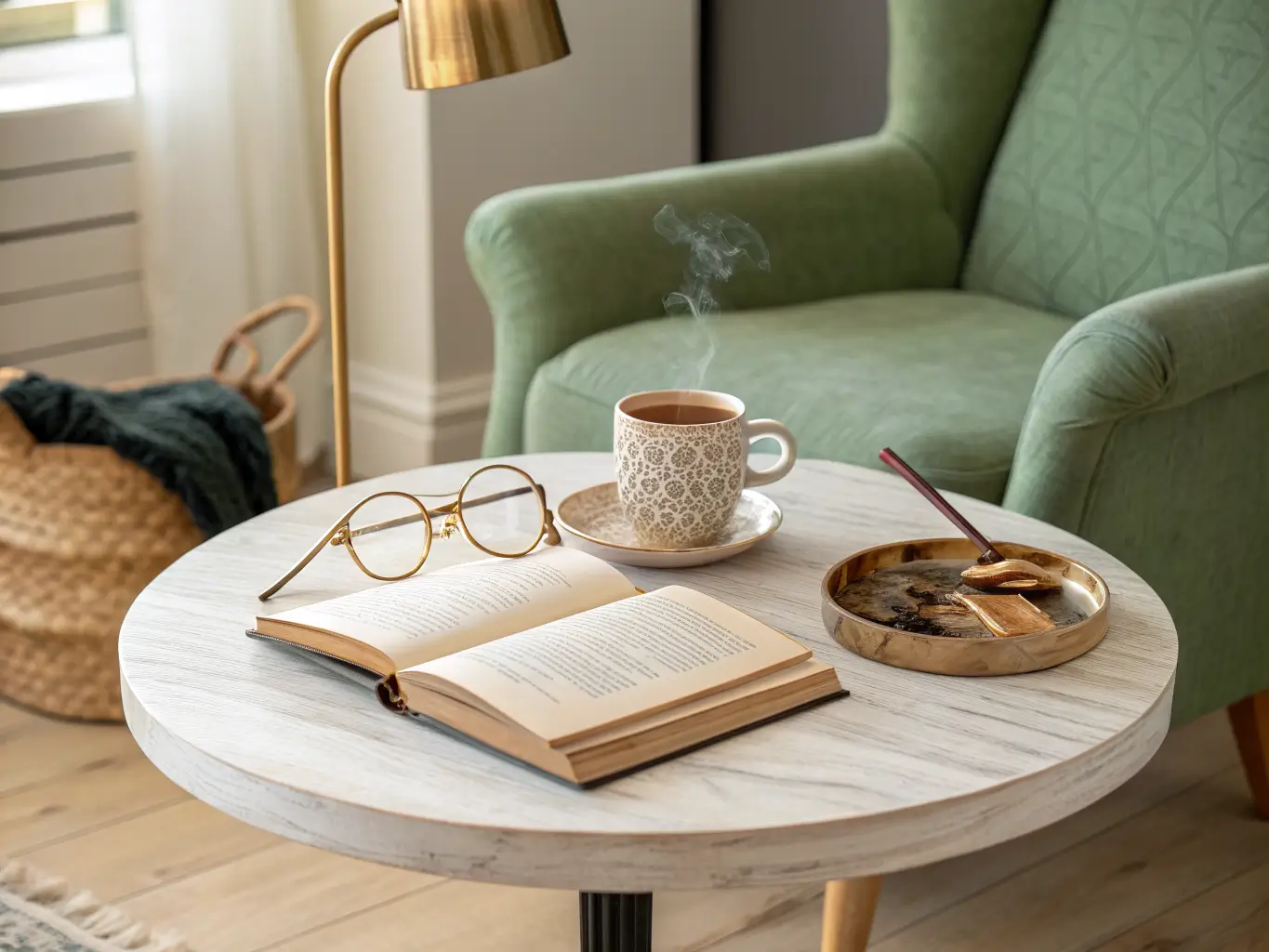
Close-up of a whitewashed oak round side table with a steaming ceramic mug, tortoiseshell glasses on an open book, and a brass dish with dried eucalyptus, with a cream boucle chair and warm floor lamp softly blurred behind.

Mistakes I See Constantly (and Made Myself)

Picking the pretty chair over the comfortable one. Already covered this — I paid for the lesson so you don’t have to.
Skipping task lighting. A nook lit only by an overhead fixture or a nearby window looks nice during the day and becomes useless by 6pm.
Overdecorating the shelf. Five books, one plant, one framed print reads as curated. Twenty books, three candles, and a collection of ceramic animals reads as clutter. Edit hard.
A side table that’s too small or the wrong height. If your drink doesn’t fit next to your book, or the table sits below the arm of your chair, you’ll stop using it and start putting things on the floor.
Ignoring scale entirely. Oversized chair in a small corner, or a tiny accent chair swimming in a big alcove — both look accidental instead of designed.

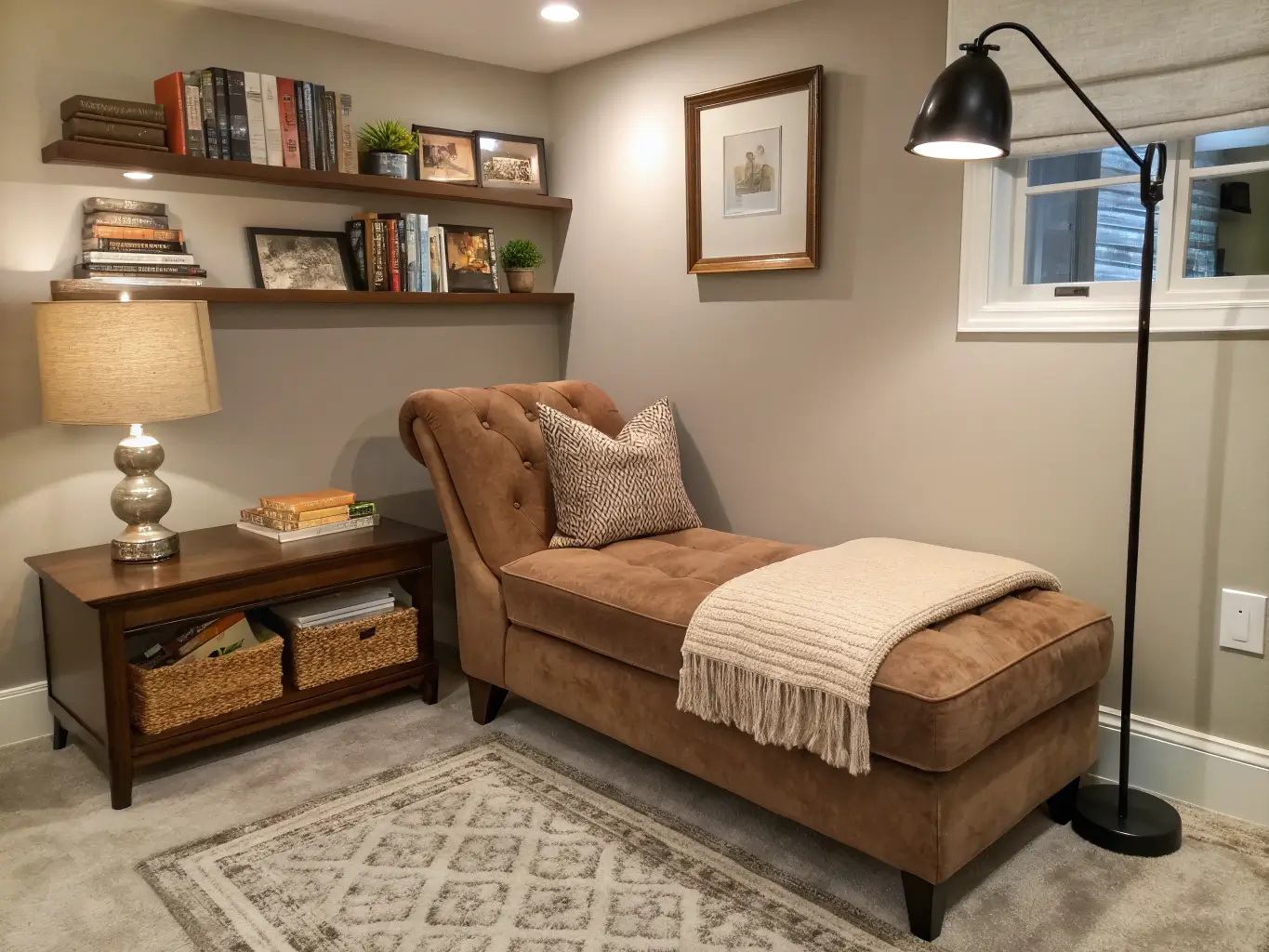
Warmly lit basement corner reading nook with taupe velvet chaise lounge, floor lamp, wooden bench with books and cream throw, floating shelf, and cream-and-charcoal rug on concrete-look floor.

Keeping It Looking Good Long-Term

Pick one mood and stay in it. I went boho for about a year (rattan, macrame, way too many plants), then simplified into what I’d call soft neutral minimal — linen chair, sage and cream palette, one plant instead of six. Both looked fine. What didn’t work was the six months in between when I was mixing both and it just looked unfinished.

Repeat your materials in small doses — brass lamp base echoed in brass bookends, linen chair fabric echoed in a linen pillow. It’s a cheap trick that makes everything feel chosen rather than accumulated.

Seasonal swaps take five minutes:
– Summer: linen or cotton throw, lighter palette
– Winter: wool throw, sheepskin, maybe a candle on the side table

Budget evolution, if you’re starting minimal: chair, lamp, table first. Add the rug next. Shelves and better textiles come last, once you know how you actually use the space. I didn’t add my shelves until eight months in, once I knew exactly how many books I actually kept nearby versus how many just looked good.

If the corner concept takes over your life the way it did mine, the natural next step is expanding it into a full alcove with built-in shelving, or even carving out a small reading room if you’ve got the square footage to spare. Mine stayed a corner. I’m fine with that.

Desk Hive
Your go-to source for desk inspiration, organization tips, and workspace transformations. Pin with us for the ultimate desk-spiration! 🖥️🪑 #DeskHive