If you’ve ever painted an office wall dark and immediately regretted it — hello, cave — you already know the real question isn’t “should I go moody?” It’s “how do I do this without it feeling like a basement.” I’ve painted my own office three different colors chasing this exact look, and the difference between a moody home office that feels expensive and one that feels like a mistake comes down to about five decisions. Let me walk you through them.
What “Moody” Actually Means Here
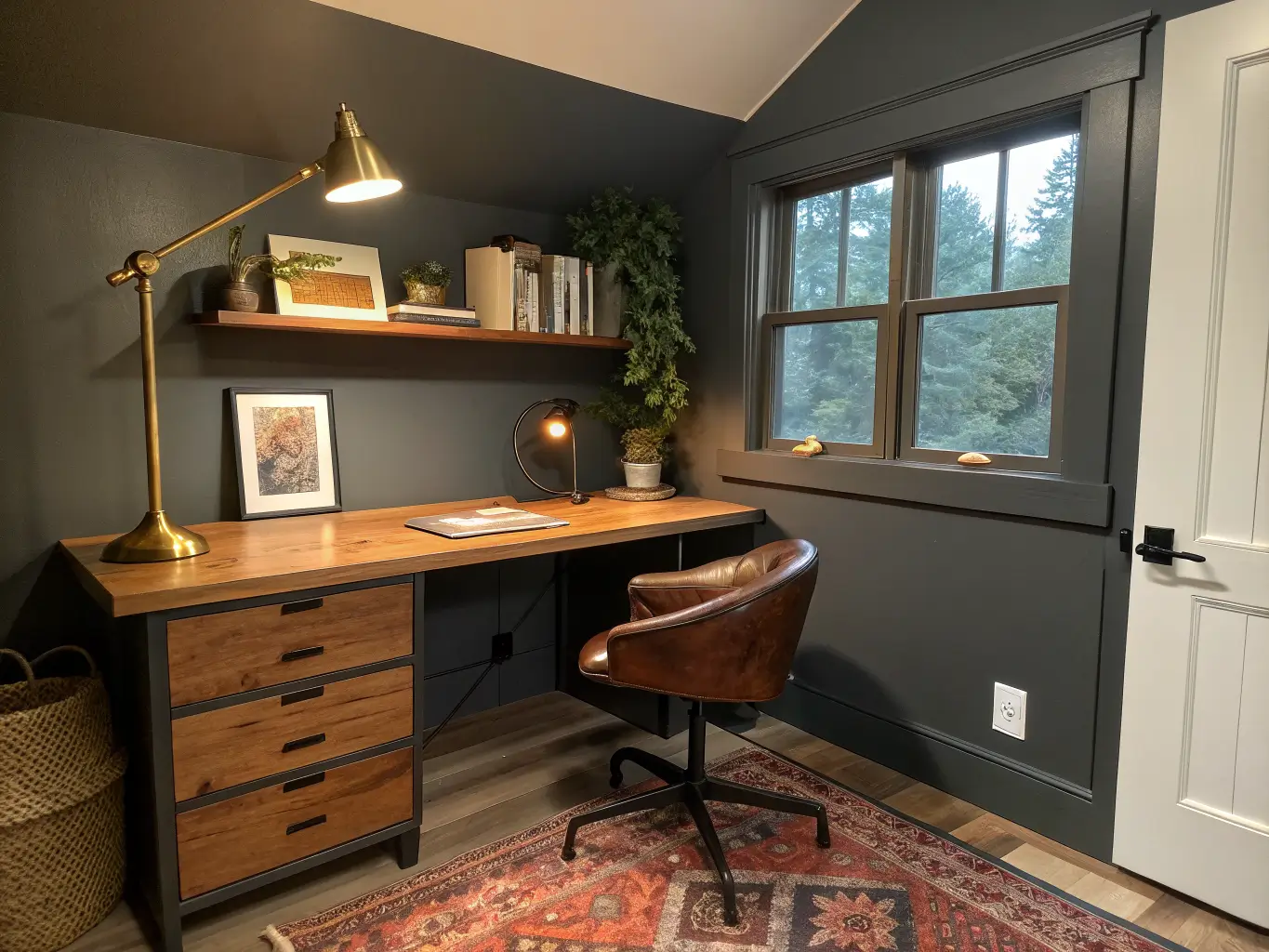
A moody home office isn’t just dark paint. It’s dark paint plus contrast plus warmth plus texture — miss any one of those and the room reads as dreary instead of intentional. Think charcoal walls with a walnut desk and a brass lamp, not black walls with black furniture and one sad overhead light.
The palette usually lives somewhere in this range: charcoal gray, stormy blue, deep navy, forest green, aubergine, burgundy, or near-black. Pair that with walnut or dark-stained wood, black metal, brass, velvet, leather, and wool, and you’ve got the material language of the whole style.
This look is for people who find bright, white, minimalist offices a little sterile — who want a room that feels like it’s holding you while you work instead of exposing you under fluorescent light. It’s especially good in a small spare room or a closet-turned-office, because a small bright white room often just looks like an afterthought, while a small dark room reads as deliberate. I converted a 6×8 closet nook into an office two years ago, and painting it dark was what finally made it look like a real room instead of storage with a desk shoved in it.
Time, Cost, and Skill Level — What You’re Actually Signing Up For
Time: If you’re just restyling with what you own plus some new decor, budget one weekend. If you’re painting walls, trim, or ceiling, or adding wallpaper or paneling, plan for 2 to 5 days, mostly because dark paint often needs a second coat and a tinted primer to look right.
Cost:
– Budget refresh: $300–$1,500 — paint, a new lamp, a rug, some frames
– Full room makeover: $1,500–$5,000+ — new desk, upholstered chair, real wool rug, layered lighting, wall treatment
If you want to spend on paint specifically, Farrow & Ball Railings, Benjamin Moore Iron Mountain, and Benjamin Moore Black Panther are the three I see used over and over in moody offices that actually work, because they all have enough depth to not go flat and lifeless on the wall.
Skill level: Styling is beginner-friendly. Painting trim and ceiling, or hanging wallpaper, is intermediate — doable on a weekend if you’ve painted before. Custom built-ins or millwork is expert territory; hire that out unless you already know your way around a miter saw.
The Must-Have Pieces That Make This Style Work
You don’t need all of this on day one, but these are the pieces doing the actual work:
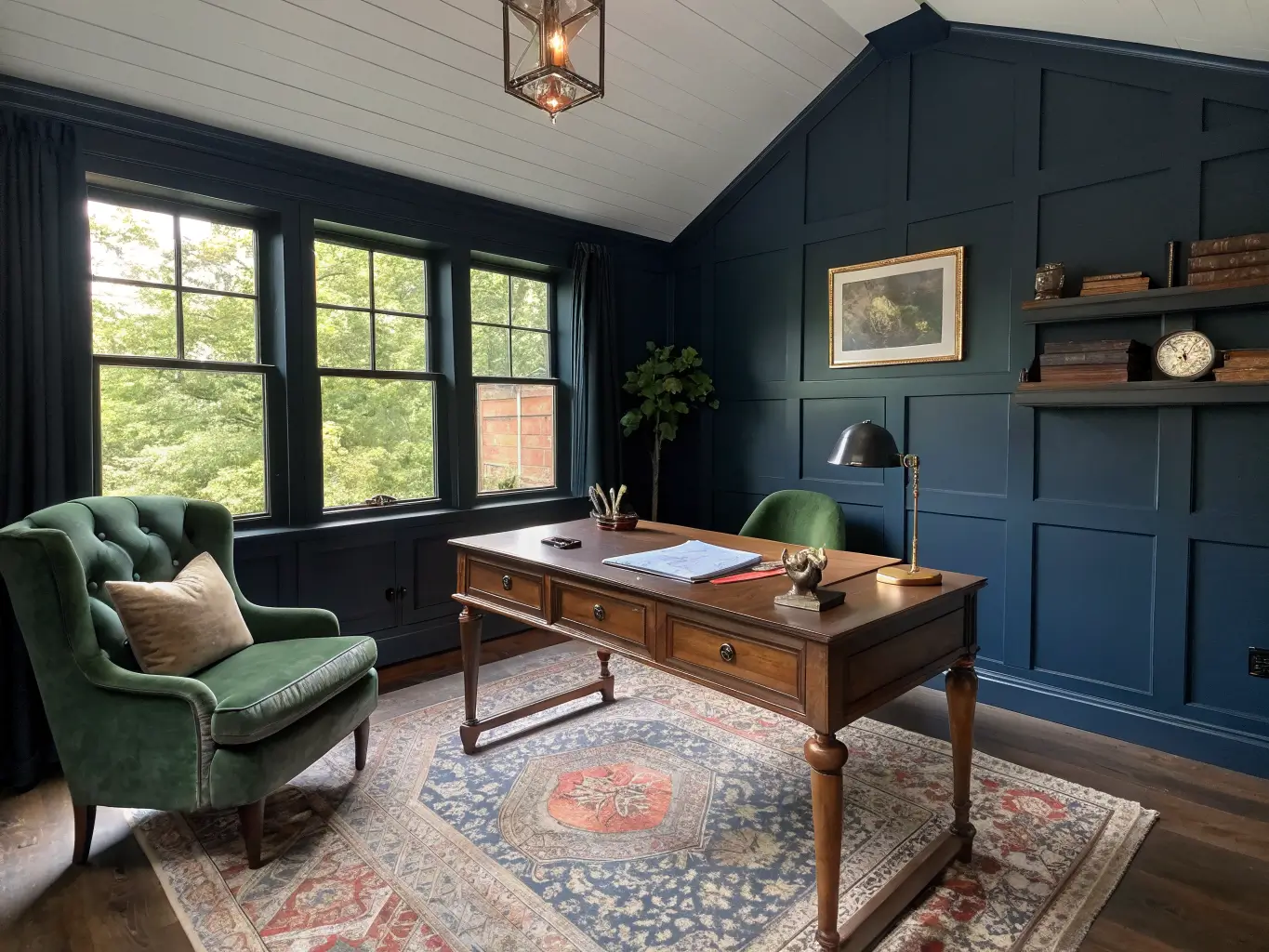
– Dark-painted walls — charcoal, navy, green, or near-black. This is the foundation everything else sits on top of.
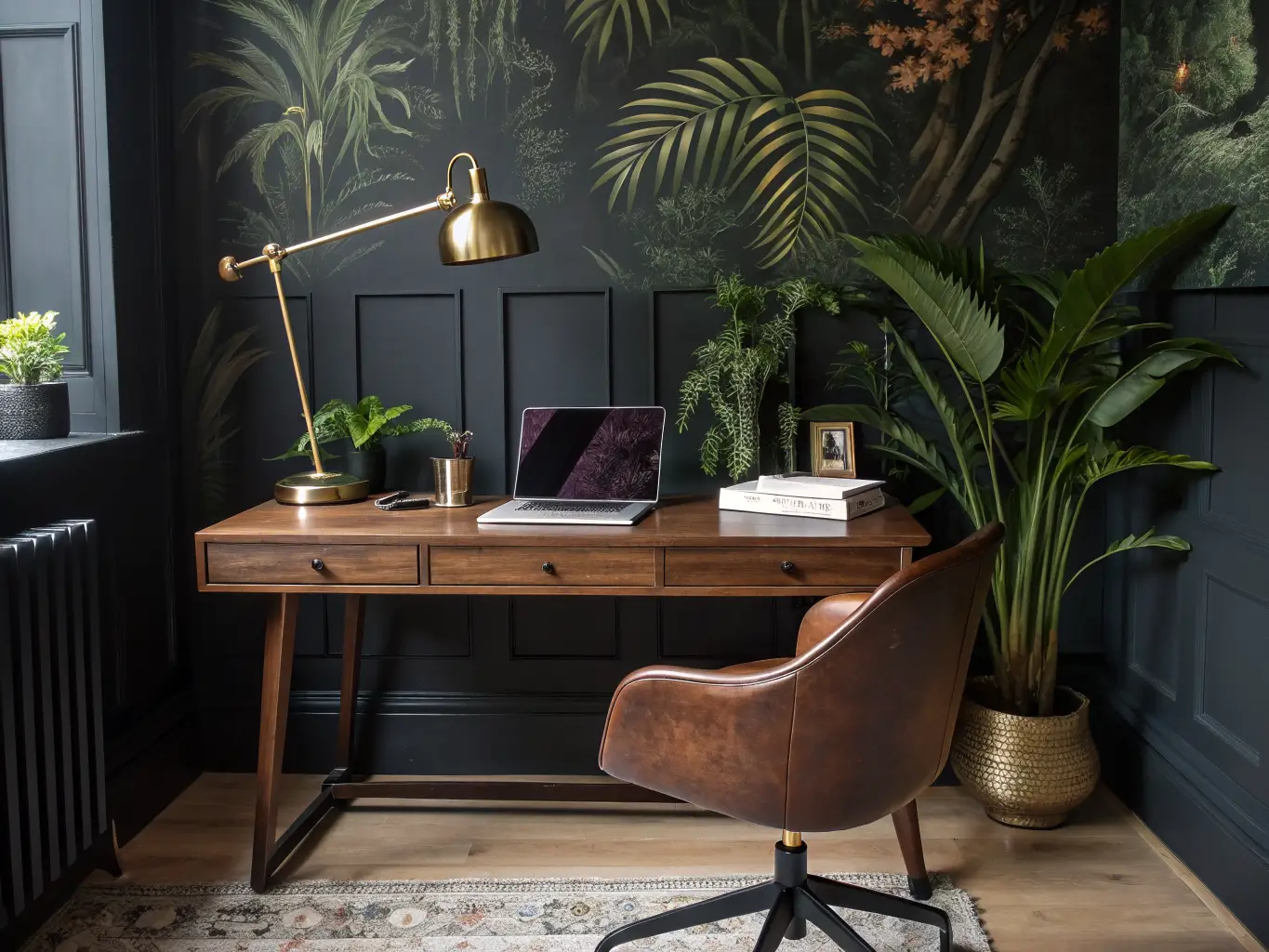
– A desk with contrast. If your walls are dark, your desk should not also be dark and matte — go light butcher-block or warm honey wood so the eye has somewhere to land. If you love an all-dark look, at minimum add contrast through the chair or rug instead.
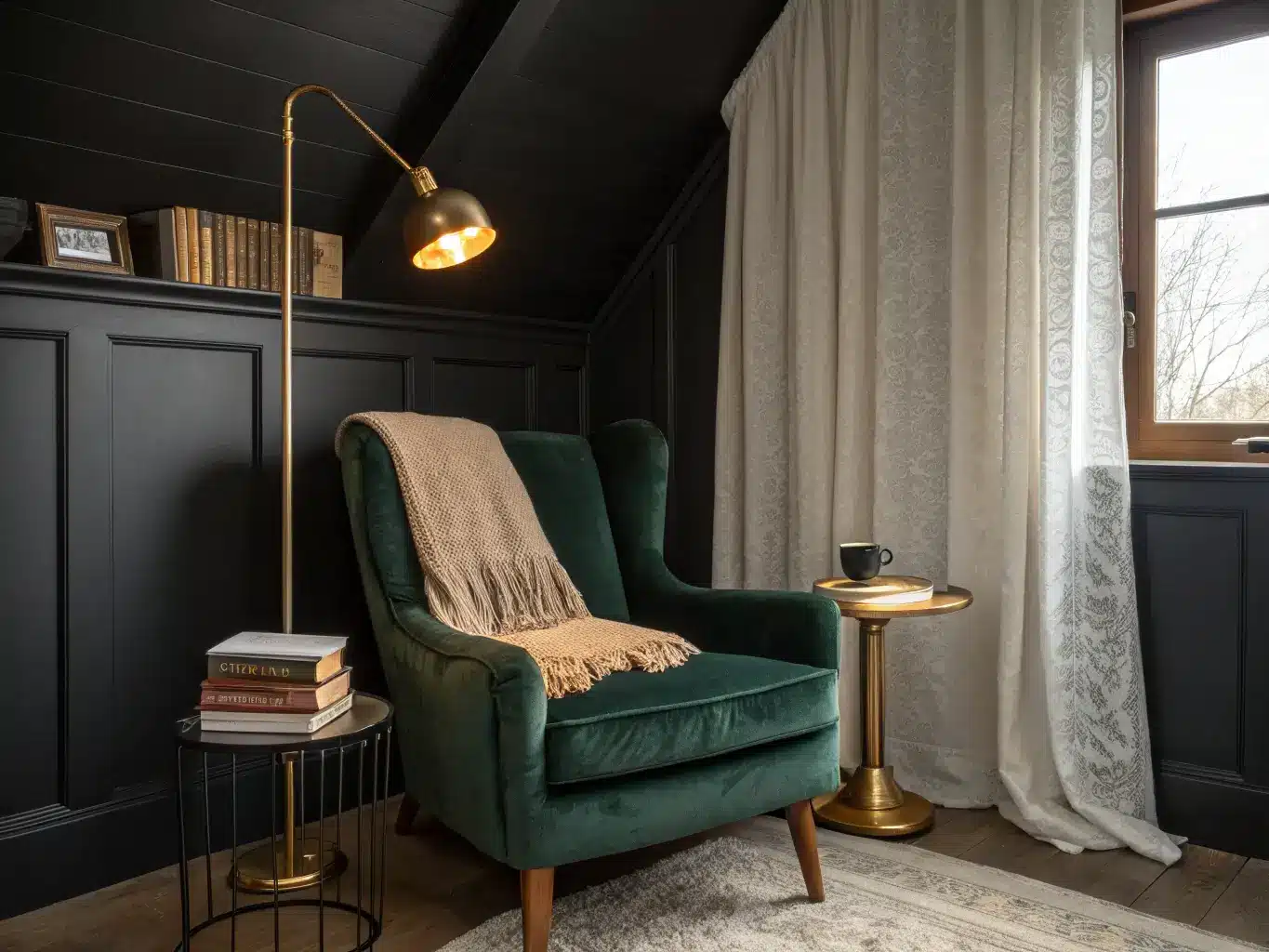
– An upholstered chair in velvet, leather, or a boucle-type texture. This is the single fastest way to make a home office feel like a room instead of a workstation.
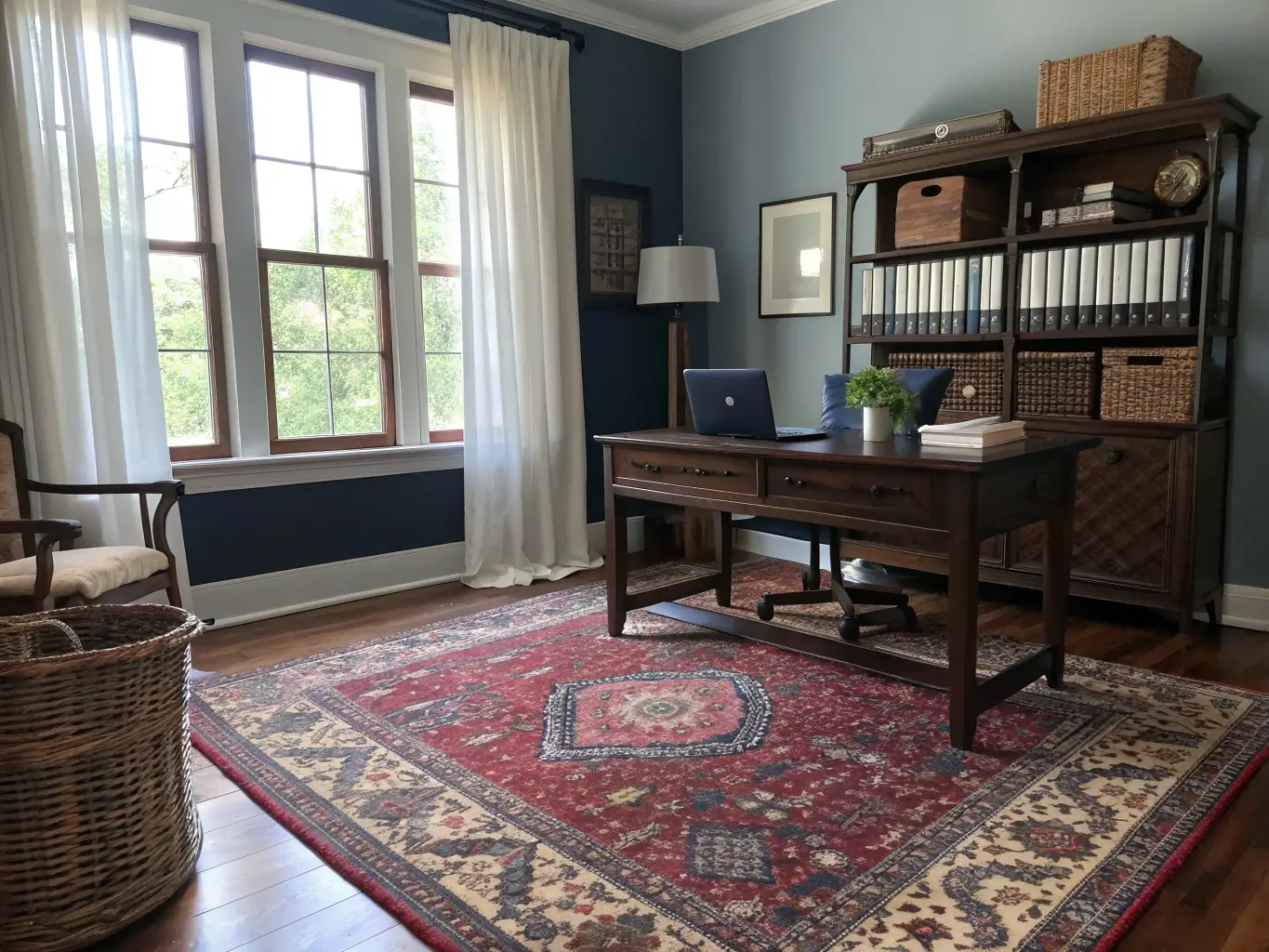
– A substantial rug — wool, vintage or Persian-style, low pile. Go bigger than feels necessary; a too-small rug is the number one thing that makes a moody office look unfinished.
– Layered lighting — a desk lamp plus at least one more source (floor lamp, pendant, or sconces), all in warm bulbs.
– Artwork in dark frames, brass or dark wood, botanical or vintage-leaning.
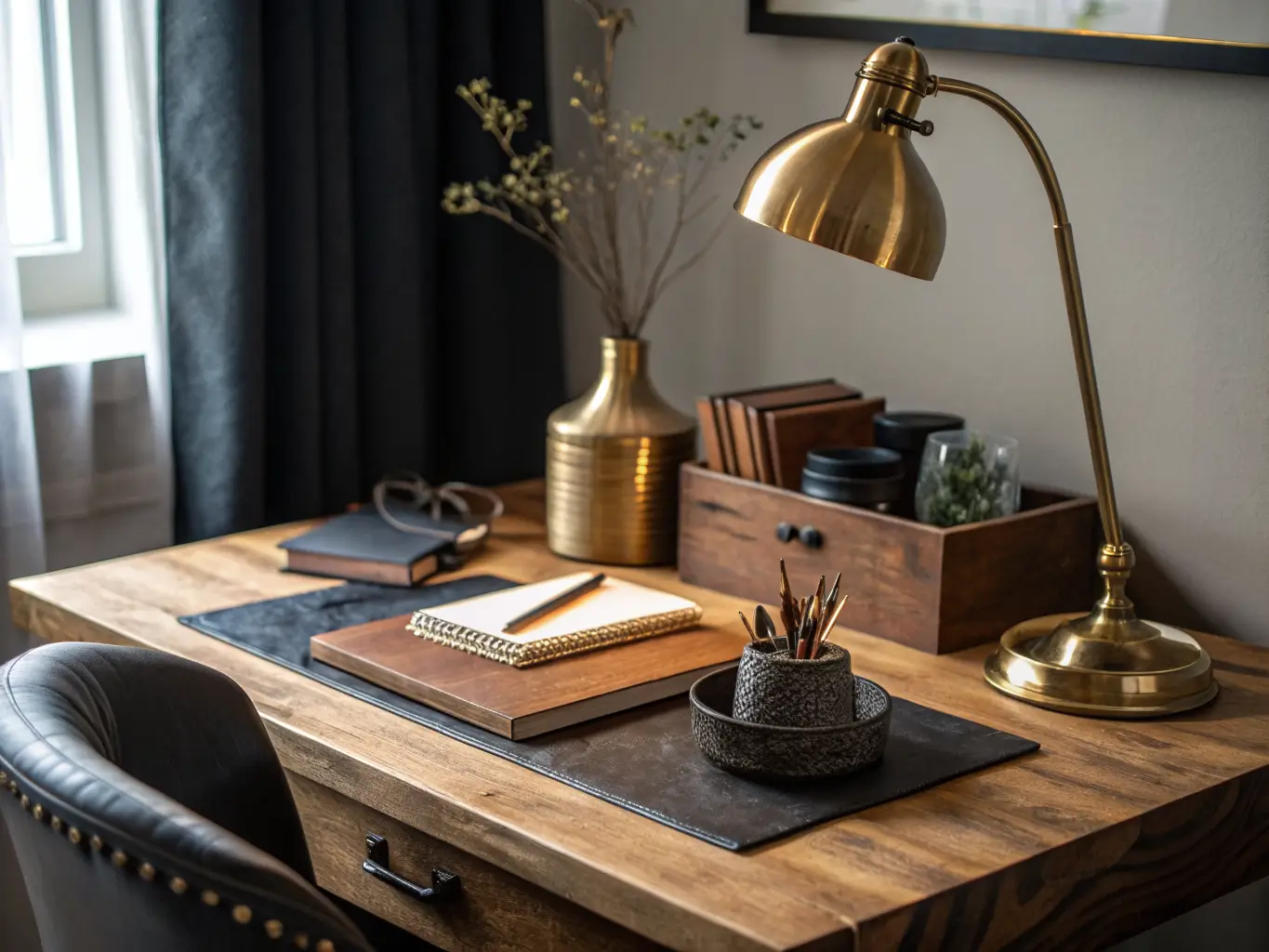
– Brass or gold hardware — lamp bases, drawer pulls, small trays — to keep the palette from feeling cold.
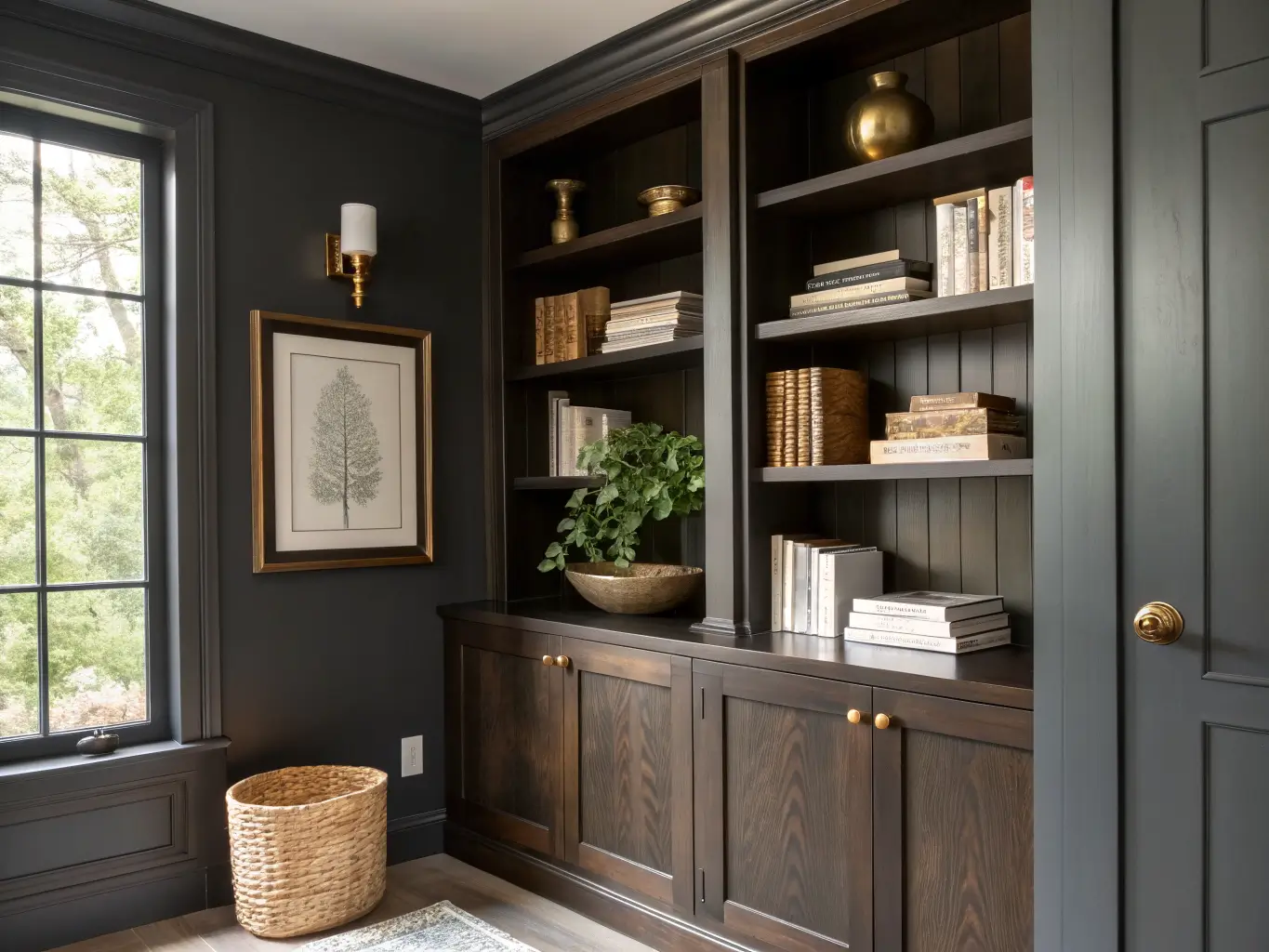
– Closed or blended storage — dark shelving, wood cabinets, baskets — so paper and cables don’t fight the styled look.
– One or two sculptural plants — a snake plant or ZZ plant handles low light and breaks up all that dark wall with something alive.
Optional Upgrades Once You’ve Got the Basics Down
Once the core room works, these are the moves that take it from “nice dark office” to “did you hire a designer”:
– Wallpaper or a mural on one wall — a moody botanical or landscape pattern behind the desk gives you a real focal point without painting the whole room.
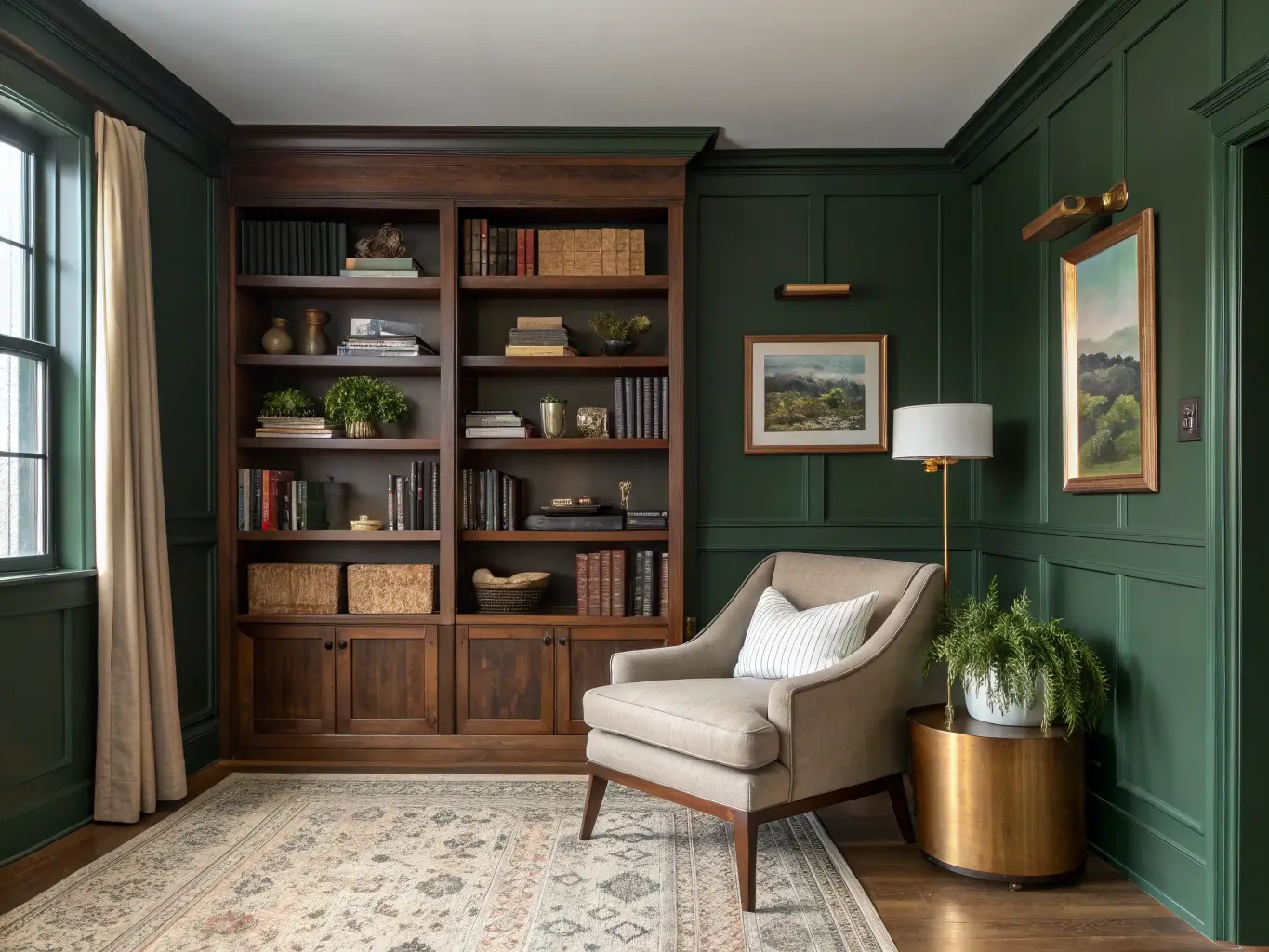
– Wall paneling, wood battens, or tambour panels for texture and shadow line — this is what separates a flat painted box from something that looks custom-built.
– A painted ceiling, matching or slightly deeper than the walls, for full envelopment. In a small room this sounds like it’ll feel claustrophobic; it actually does the opposite and makes the walls disappear.
– Mixed finishes — matte wall paint against a glossy desk or lacquered tray, glass lamp shades against brass bases. Flat-on-flat is what makes rooms look cheap.
– Organic textures — linen curtains, a jute basket, a raw wood bowl — to soften all that velvet and metal.
How to Actually Put It Together, Step by Step
1. Decide what the room needs to do. Desk-only? Desk plus a reading chair? Desk plus storage for files and supplies? This decides your layout before you buy anything.
2. Pick your anchor wall. If this room doubles as your video-call background, that wall gets the paint, the art, or the wallpaper — it’s the one everyone will actually see.
3. Paint the biggest surface first. Walls, then decide if trim and ceiling are getting the same treatment. Going monochrome (walls, trim, and ceiling all one color) is a legitimate strategy in small rooms — it removes the lines that make a room look choppy.
4. Bring in desk and chair. This is where you make your contrast decision. Dark desk on dark wall reads moodier and more dramatic. Light desk on dark wall reads warmer and more livable day-to-day. I went dark-on-dark once in my first attempt at this style and ended up repainting the desk lighter within a month because I couldn’t see my own keyboard cord to find the outlet.
5. Lay the rug. Size up rather than down. A rug that’s too small under a desk just looks like a bath mat that wandered in.
6. Layer your lighting. Desk lamp for actual work, then a floor lamp or pendant for ambient warmth, then sconces or a picture light if you’ve got a focal wall. Warm bulbs only — anything above 3000K will fight the whole palette and make your walls look muddy instead of rich.
7. Style shelves with restraint. Books, one or two framed pieces, a ceramic object, a plant. Leave gaps. Negative space is what makes a shelf look curated instead of crammed — it’s just the empty space you leave on purpose, and it’s doing more work than another trinket would.
8. Add metal and one soft texture. A brass tray, a leather desk pad, a velvet throw pillow if there’s a chair for it. Stop there.
Where to Spend and Where to Save
Spend on: the rug and the chair. These are the two things you touch and see every day, and cheap versions of both look cheap fast — a thin polyester rug pills and flattens within a year, and a stiff faux-leather chair cracks.
Save on: art (thrift stores and vintage shops are full of moody landscape and botanical prints for $10–$30 — I’ve got a $12 flea market oil painting of a ship that looks more expensive than anything I’ve bought new), lamp shades, and small brass accessories, which you can find secondhand or at HomeGoods for a fraction of designer prices.
The Mistakes That Make a Moody Office Feel Like a Cave Instead of a Room
– Relying only on the overhead fixture. Dark walls absorb light instead of bouncing it around, so one ceiling light will leave the room feeling dim and flat no matter how bright the bulb is. You need at least two light sources at different heights.
– Going dark with zero texture. Flat matte paint on every surface with nothing to catch the light is what makes a room feel heavy rather than warm. Wood grain, fabric weave, and metal sheen are what save it.
– No contrast anywhere. If the walls, desk, chair, and rug are all the same tone, the room loses its edges and starts to feel like a blur. Pick one lighter element — rug, desktop, curtain, or art mat — and let it do the work of defining the space.
– Undersizing your furniture and rug. Small pieces get swallowed by dark walls in a way they never would against white. Scale up more than you think you need to.
– Cluttering every surface. Moody should read as edited, not chaotic. If you can’t see the wood grain of your desk under the pile of papers, the whole effect is lost.
– Cool-toned bulbs. This one’s sneaky — a bulb that reads as “fine” in a white room will make dark walls look gray and sad. Stick to warm white, roughly 2700K.
Keeping the Room Cohesive Over Time
The trick to a moody office not sliding into cluttered chaos is picking a tight lane and staying in it. Charcoal, black, and brass. Or deep green, walnut, and cream. Pick one dominant wood tone, one metal finish, and one main upholstery texture, and make every new purchase answer to that list. When I started allowing myself “just one more” brass thing and “just one more” black-frame thing without checking them against each other, the room went from curated to yard-sale in about six months. Now I keep a note on my phone with my three colors and two materials before I buy anything for that room.
Seasonal and Budget Refreshes
You don’t need to repaint to keep this feeling current:
– Cheap swaps: new lamp shades, dark picture frames, peel-and-stick wallpaper on one wall, a secondhand chair reupholstered in velvet
– Colder months: heavier textiles, deeper florals, an extra throw on the chair
– Warmer months: swap in amber glass accessories, lighter linen curtains, fresher greenery — keep the wall color and big furniture the same, just lighten the small stuff
– Cross-style options: moody plus modern means black metal and clean lines; moody plus vintage means worn leather and antique frames; moody plus organic modern leans into raw wood and plants; moody plus traditional brings in grasscloth and paneling with classic desk shapes
The paint color is the commitment. Everything else is just seasoning you can change whenever you get bored.
For another angle on this, my moody home office guide covers the same space from a different starting point.