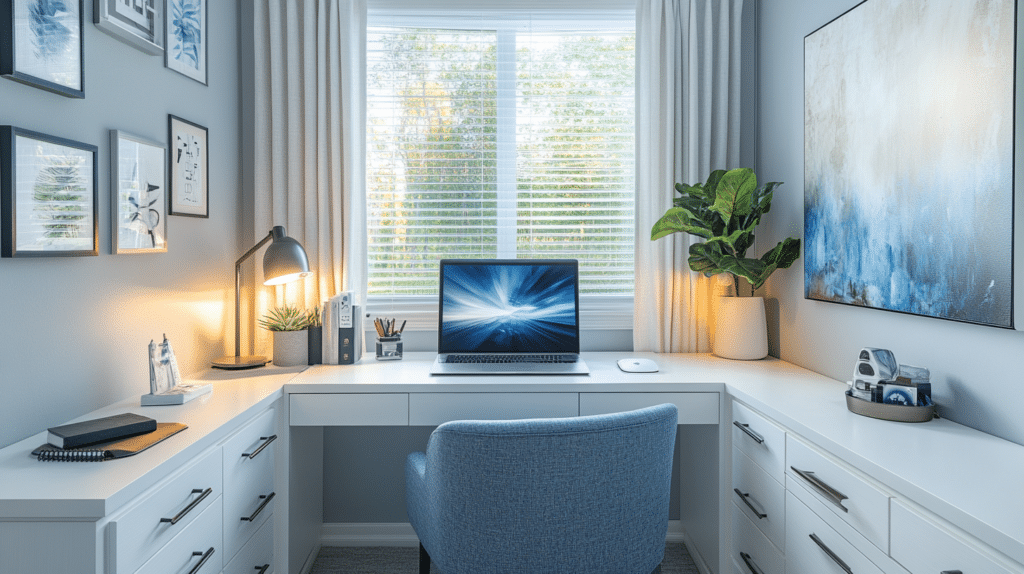
Quick Style Snapshot: Time, Cost, and Space Requirements
Before you buy anything, know what you’re actually signing up for.
Time: A simple desk-and-storage refresh takes one weekend — I’ve done it in a Saturday when I moved my desk under the window in my old apartment. If you’re painting, adding built-ins, hanging wallpaper, or running new outlets, budget 1 to 3 weeks, mostly waiting on paint to cure or furniture to ship.
Cost: This scales fast depending on ambition.
– $250–$600 — a basic corner setup: a slim desk, a task lamp, a couple of floating shelves
– $800–$2,500 — a mid-range room with an ergonomic chair, real storage, a rug, and layered lighting
– $3,000+ — built-ins, custom millwork, or a designer-level room
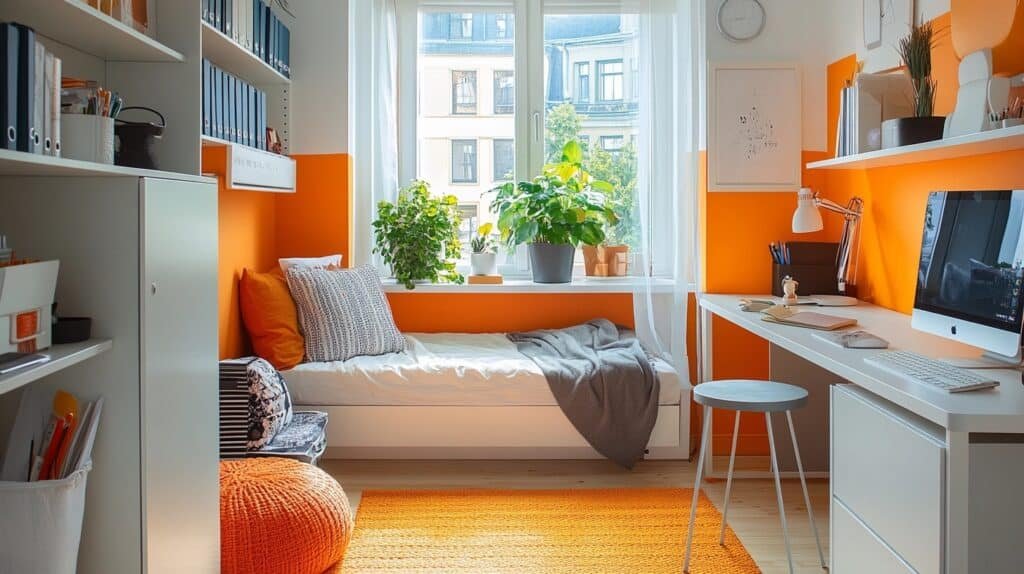
Space: You don’t need a spare bedroom. A 4 to 6 foot wide nook works fine with a slim desk and wall-mounted shelving. I’ve squeezed a functional setup into a closet that used to hold winter coats.
Skill level: Furniture-and-decor styling is beginner-to-intermediate — anyone can do it with a drill and a level. Custom millwork or closet conversions push into intermediate-to-expert territory; that’s when I call an electrician instead of YouTubing it.
Seasonality: This is a year-round project. You refresh it with textiles and greenery, not a full overhaul every few months.
What Style Actually Fits a Study Room
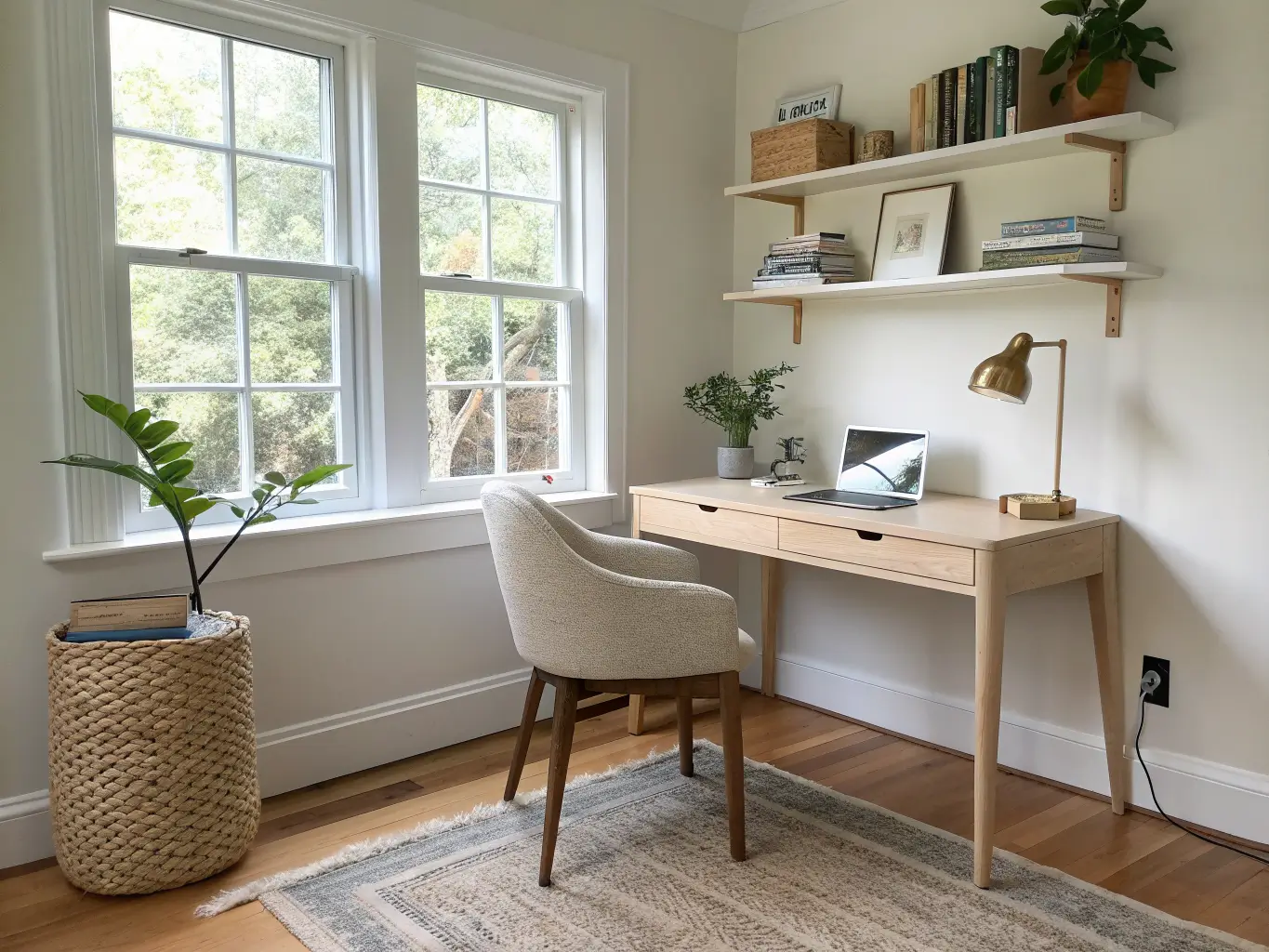
The five directions showing up everywhere right now: minimalist modern, warm neutral, Scandi-inspired, organic modern, and cozy boho. They all share the same bones — calm palette, natural materials, low visual noise — just different accent choices.
Colors that work: white, warm beige, light gray, pale birch, soft sage, muted blue-green, terracotta as an accent (never a wall color, too much for a focus space).
Materials that work: light oak, birch veneer, rattan, bamboo, linen, wool, a little acrylic, matte black metal for contrast.
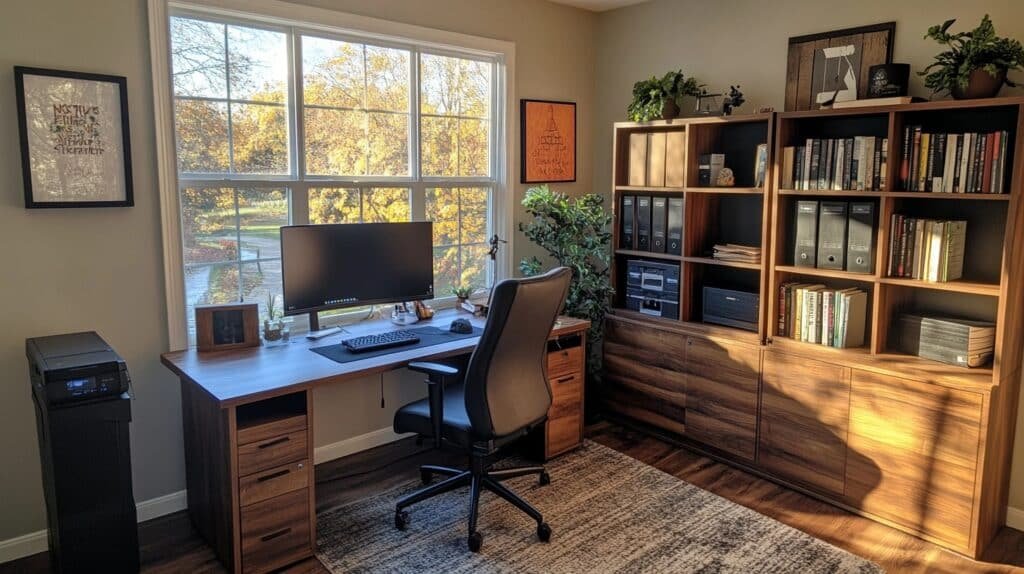
This setup is built for students, remote workers, parents carving out a homework zone, and anyone who needs a visually quiet space that still feels like part of their home — not a spare-office afterthought. It works in a dedicated home office, a bedroom corner, a window alcove, a converted closet, or even the edge of a living room, as long as you can carve out a clear boundary.
The Must-Have Pieces for Any Study Room
Skip the temptation to buy decor first. Function comes first, always.
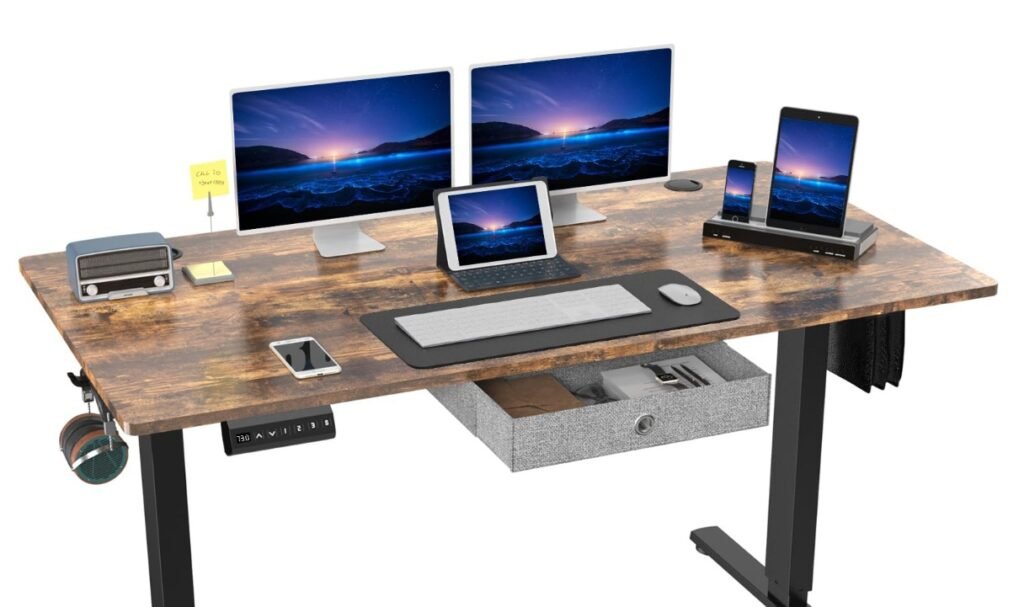
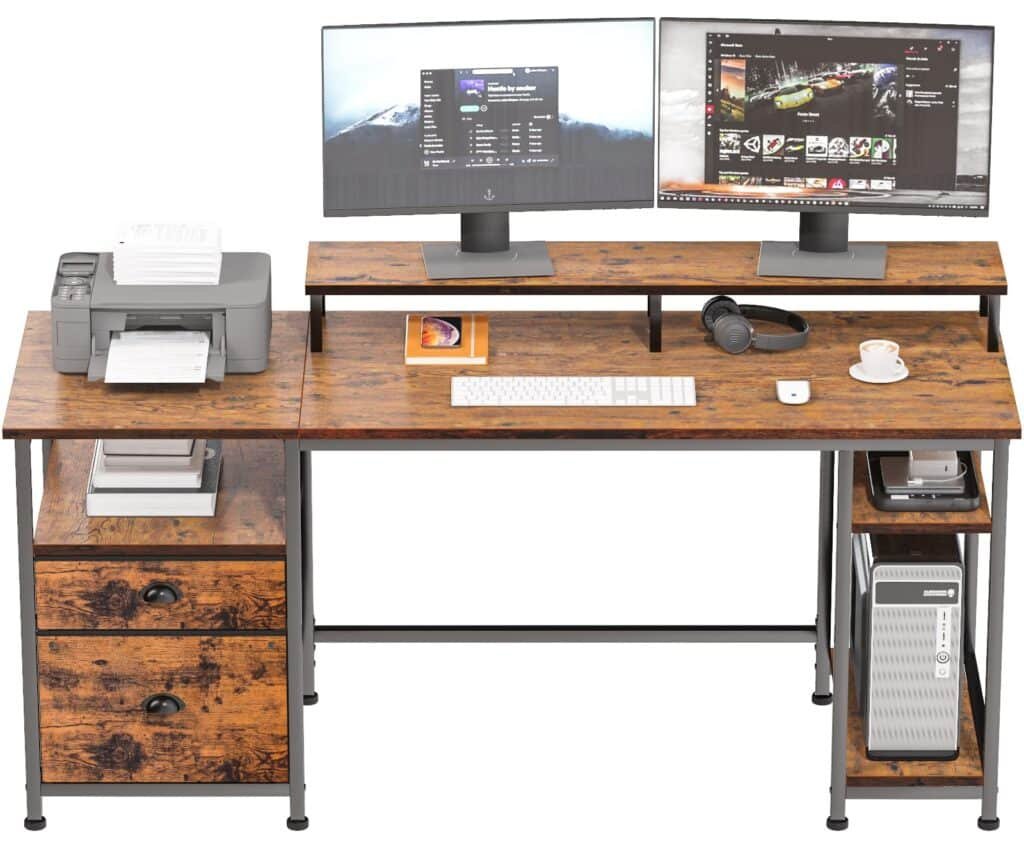
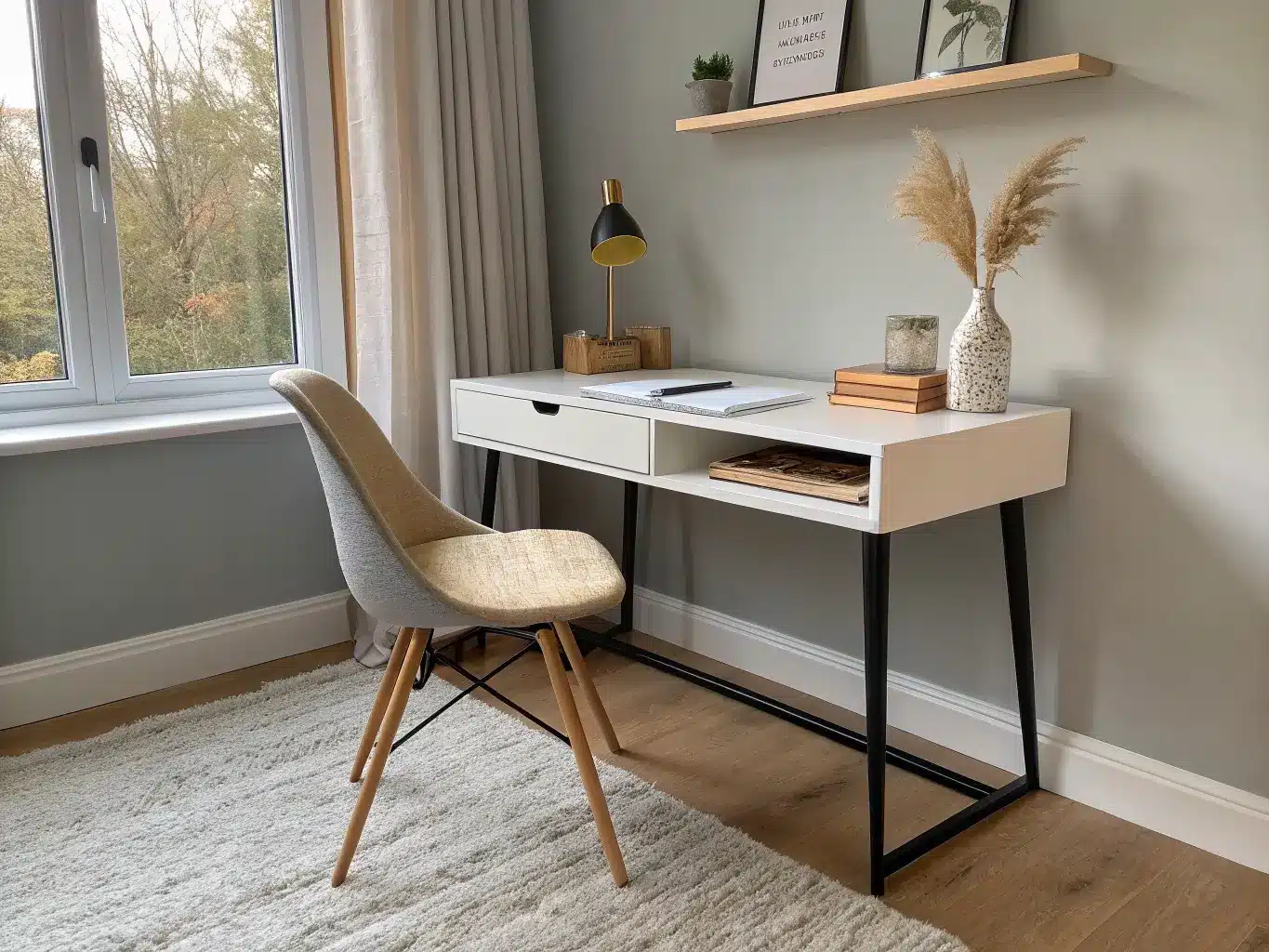
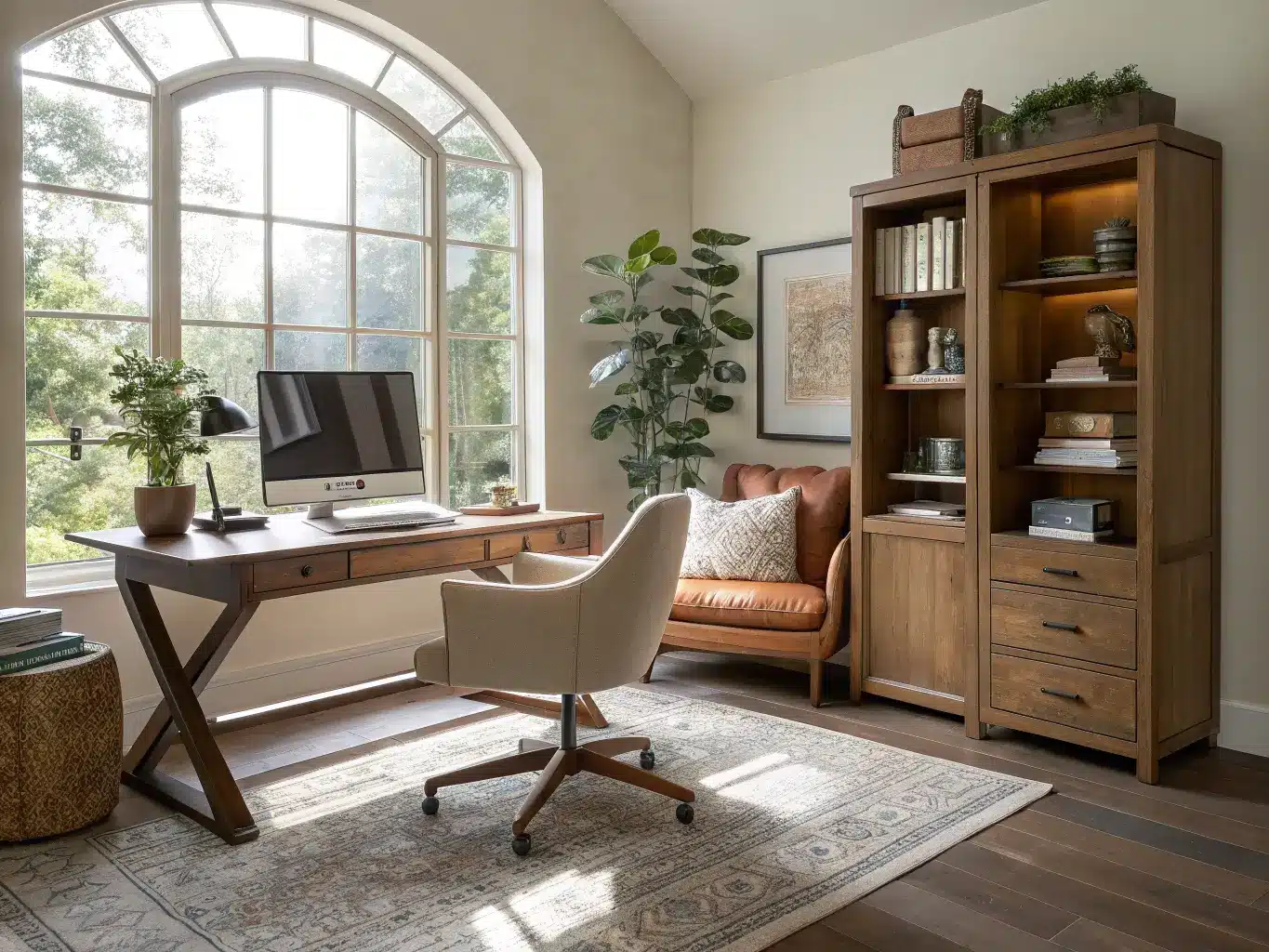
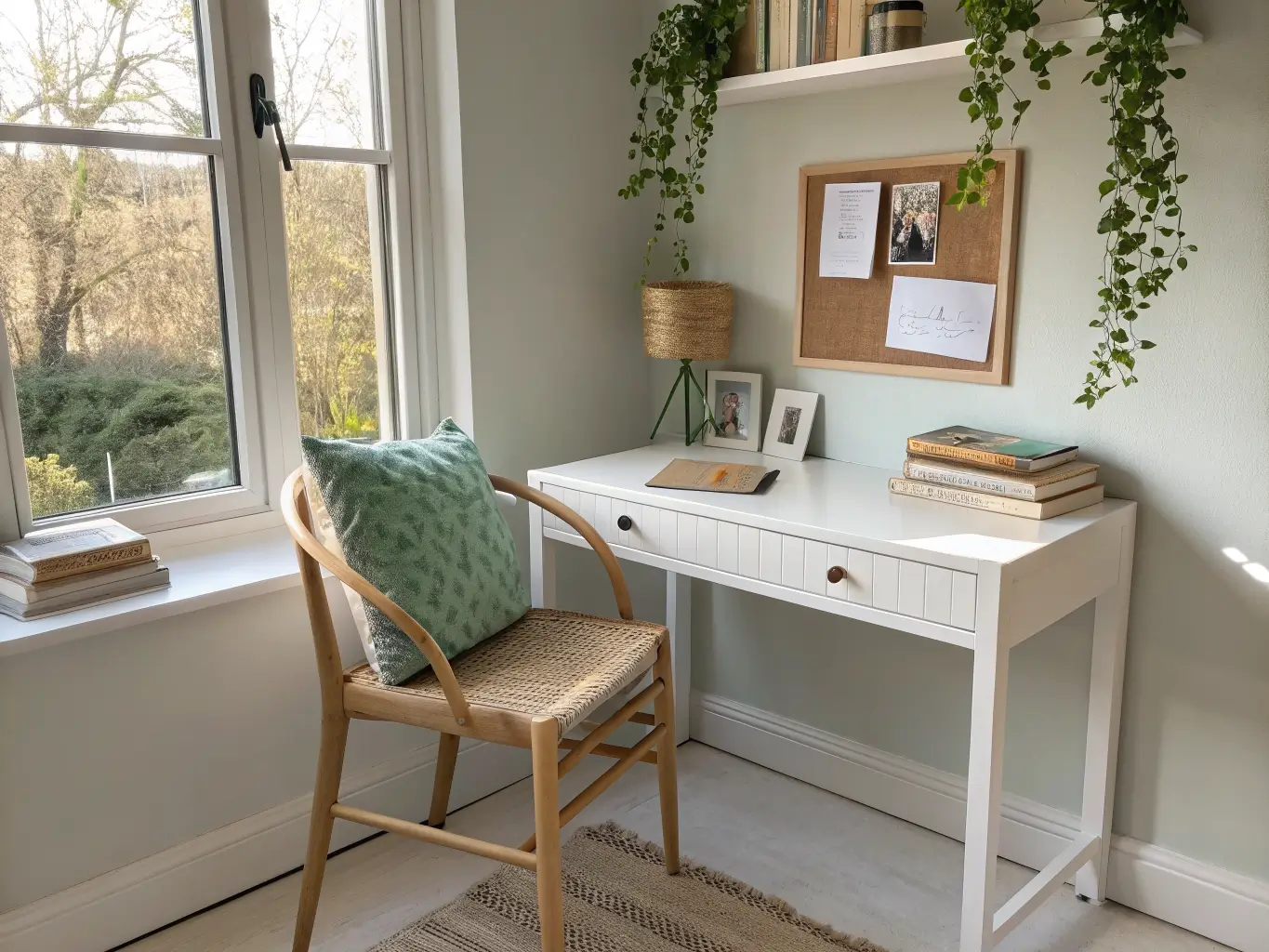
– Desk: A rectangular desk in pale birch, light oak, or white reads current and stays flexible. In tight spaces, go wall-mounted or slim-profile — I switched from a 60-inch desk to a 40-inch one and gained almost two feet of walking room.
– Chair: Pick your lane. If this room is for real work, get an actual ergonomic task chair — your back will thank you after month two. If it’s more of a reading/writing nook, a lighter accent chair like a wishbone style looks better and takes up less visual space.
– Lighting: Non-negotiable. A desk lamp or task light prevents eye strain once the sun goes down, and daylight should hit the desk directly if you can manage it. Overhead light alone is never enough.
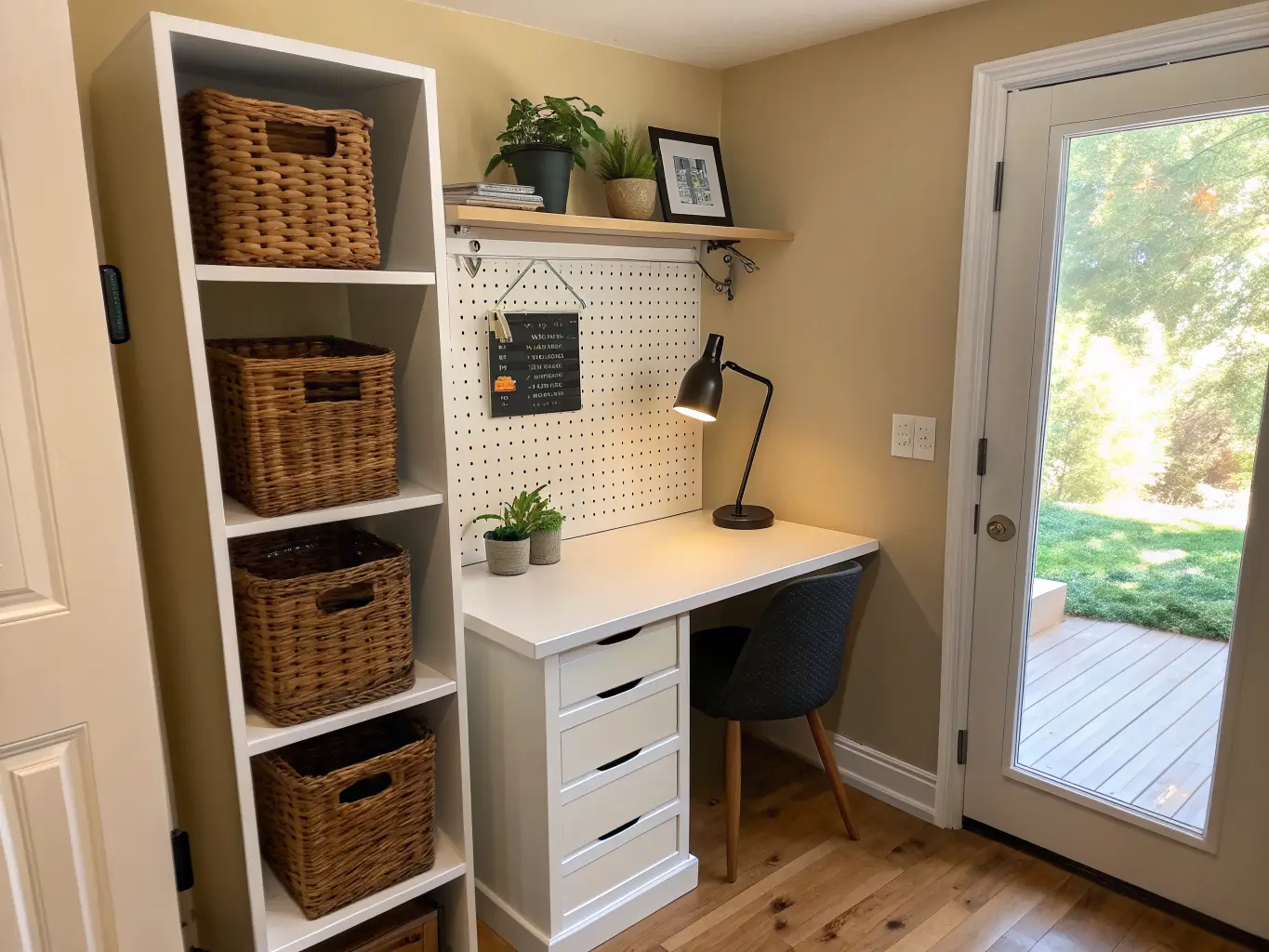
– Storage: Floating shelves, a bookcase, cabinets, drawers, a pegboard — pick at least two of these. A study room with nowhere to put things becomes a pile within a week.
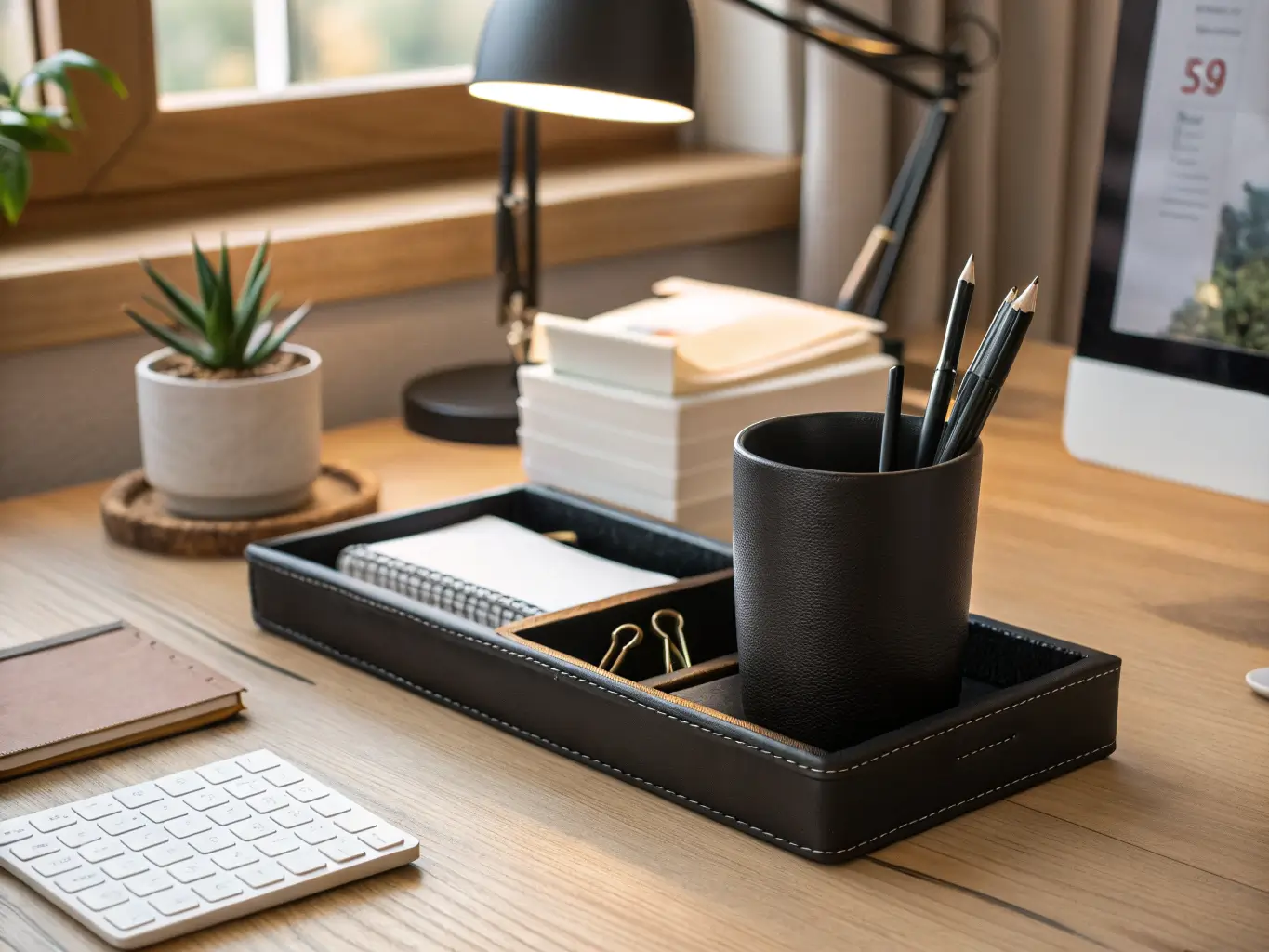
– Desktop organization: A tray, a pen cup, a cable clip or two, a file sorter, maybe a monitor riser. Small, boring, essential.
– Softening decor: One rug, one piece of art, a corkboard or whiteboard, one or two plants. That’s it — this is the layer that makes the room feel like yours instead of a showroom.
Optional Touches Worth Adding
Once the essentials are in place, these are the details that make people ask where you got your ideas.
– Plants: a pothos or trailing ivy on the shelf, a small fiddle-leaf fig in a corner if you have floor space, or a low-maintenance succulent right on the desk
– Textiles: a wool, jute, or low-pile rug under the desk area — warms the room instantly without cluttering it
– Luxe accents: brass drawer pulls, a black metal lamp, a small marble-look tray — use maybe two of these total, not five
– Seasonal rotation: swap a throw pillow on the accent chair, change the desk mat, rotate artwork twice a year
How to Actually Put the Room Together
Prep the space first
Pick the quietest spot in the house, ideally near a window but positioned so sunlight doesn’t hit your screen directly — I learned this the hard way after three weeks of squinting at a laptop with the sun behind it. Clear out old furniture, tangled cords, and anything that doesn’t belong before you bring in the desk. Measure the space. If it’s under 6 feet wide, you need a slim or wall-mounted desk, full stop — a standard 60-inch desk will make the room feel like a hallway. Check your outlets before you finalize placement so your cable situation doesn’t turn into a mess later. And decide upfront: is this a dedicated study room, or does it double as a guest space or reading corner? That answer changes how much storage you actually need.
Build it in order
1. Desk first — it anchors everything else
2. Chair second — sit in it before you commit; comfort matters more than looks here
3. Storage third — floating shelves or a pegboard above the desk keeps the floor clear
4. Lighting fourth — a lamp on the desk, plus a floor lamp if the room reads dim
5. Desktop styling last — lamp, notebook, pen holder, one small tray, one decorative object. Resist adding a second decorative object.
Add personality through a pinboard, framed photos, or a couple of prints rather than more furniture. Finish with a rug and a plant, and the room stops looking like a furniture showroom and starts looking lived-in.
Common Mistakes That Undercut the Whole Room
Too much clutter. I used to keep every notebook I owned on my desk “for inspiration.” It did the opposite. Clutter reads as visual noise to your brain even when you’re not looking directly at it — clear the surface down to what you use daily.
Bad lighting. Overhead light alone creates glare and shadows on your work surface. Add a task lamp with a warm bulb (2700K–3000K) for evening work, and never place your desk so a window is directly behind your monitor.
Furniture that’s too big. A bulky desk in a small nook doesn’t just look wrong, it makes the whole room feel cramped. Measure first, buy second.
No real storage plan. If there’s nowhere for papers, cables, or books to go, they’ll live on the desk. Add at least one closed storage piece — a drawer or cabinet — for the stuff you don’t want visible.
Decorating over function. That gorgeous ceramic vase looks great until it’s sitting where your elbow needs to be. Every item on the desk should earn its spot.
Keeping the Room Feeling Intentional Over Time
Stick to a palette and repeat it. White + oak + sage. Or beige + black + natural fiber. Pick two or three tones and repeat them across the desk, shelf, and chair pad — this is what makes a room look designed instead of assembled piece by piece.
Repeat materials on purpose. Wood desk, wood shelf, a woven seat pad, matching file boxes. Consistency here does more work than any single “statement” piece.
Edit, don’t accumulate. Every few months, pull one thing off the shelf that’s stopped earning its place. I do this every fall and always end up donating at least two items I forgot I owned.
Budget-friendly refreshes
– Swap desk accessories instead of buying new furniture
– Add peel-and-stick wallpaper behind the desk for a $40–$80 focal wall
– Thrift a wood chair or shelving unit and refinish it — my current bookshelf cost $15 at an estate sale and just needed new hardware
Seasonal tweaks
Rotate greenery, add a wool throw or warmer desk mat in winter, switch to lighter linen curtains in spring.
Cross-style variations
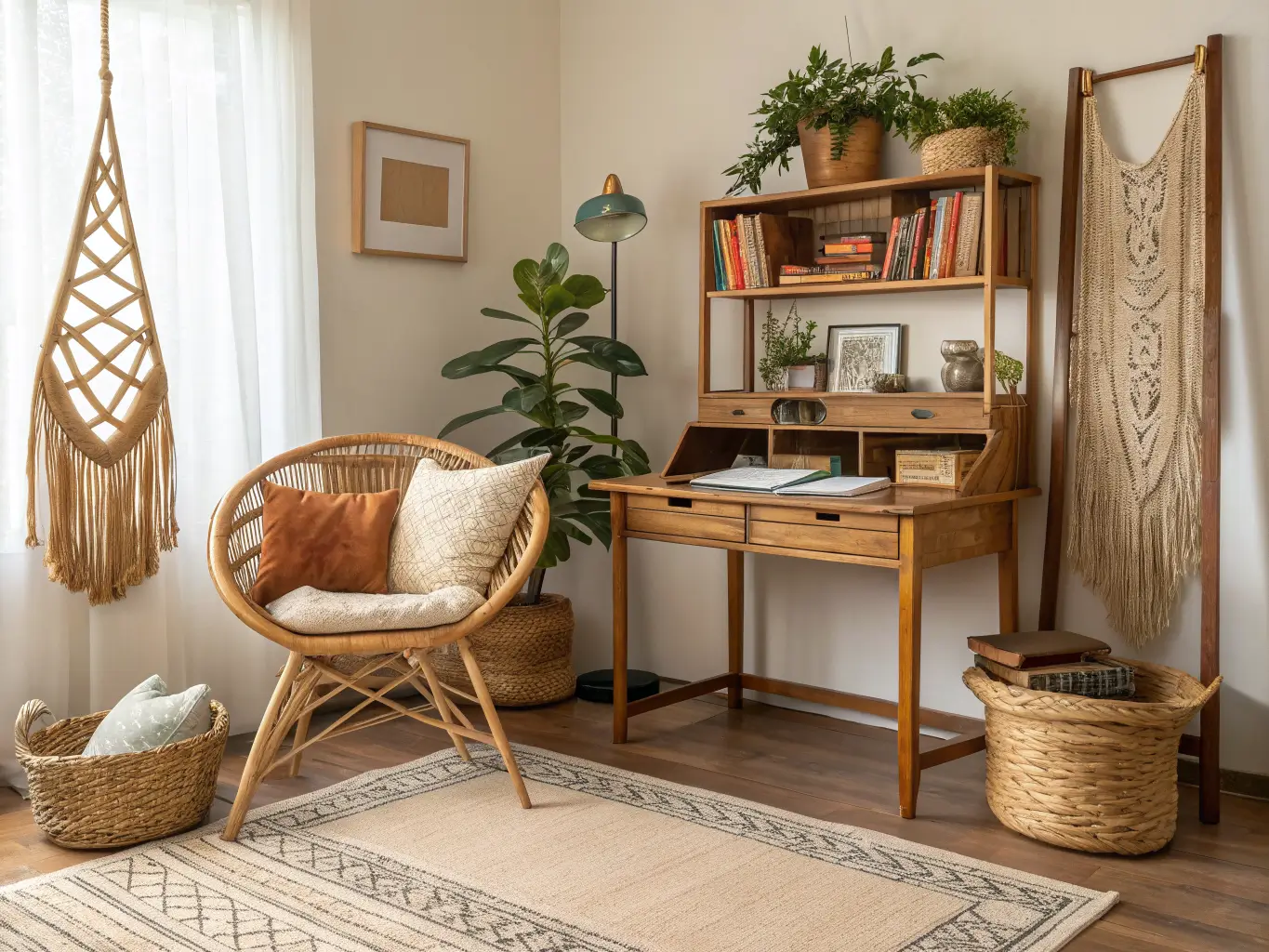
– Boho study room: jute rug, woven basket storage, trailing plants, warm wood tones
– Scandi study room: pale birch, white walls, one simple shelf, almost no decor
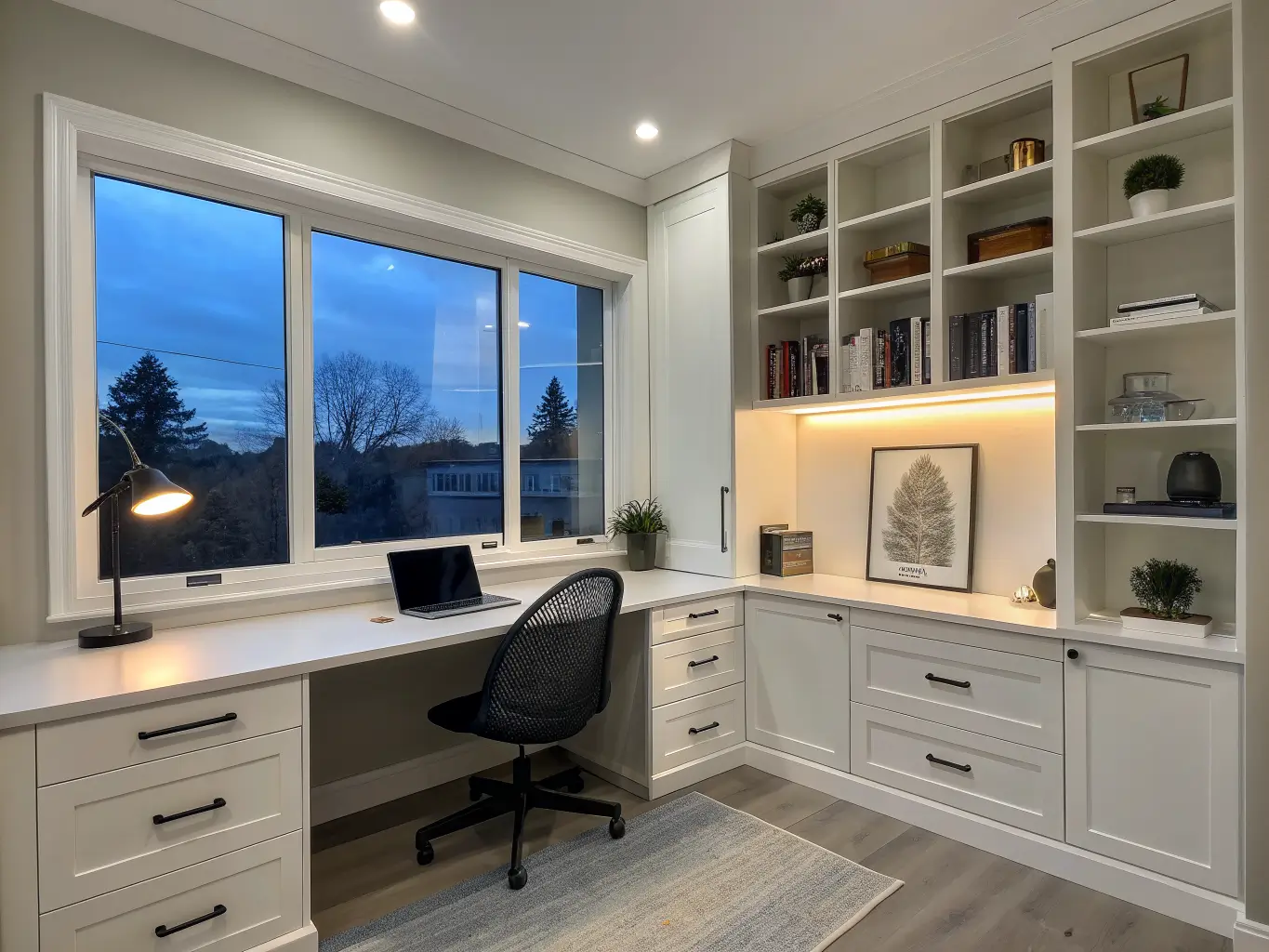
– Modern study room: matte black hardware, clean lines, hidden storage, neutral palette throughout
– Organic modern study room: oak desk, linen chair cushion, a clay vase, layered greenery
None of this requires a full room or a big budget. It requires picking a direction, buying function first, and stopping before you over-decorate the one surface you actually need to use.
For another angle on this, my study room ideas guide covers the same space from a different starting point.