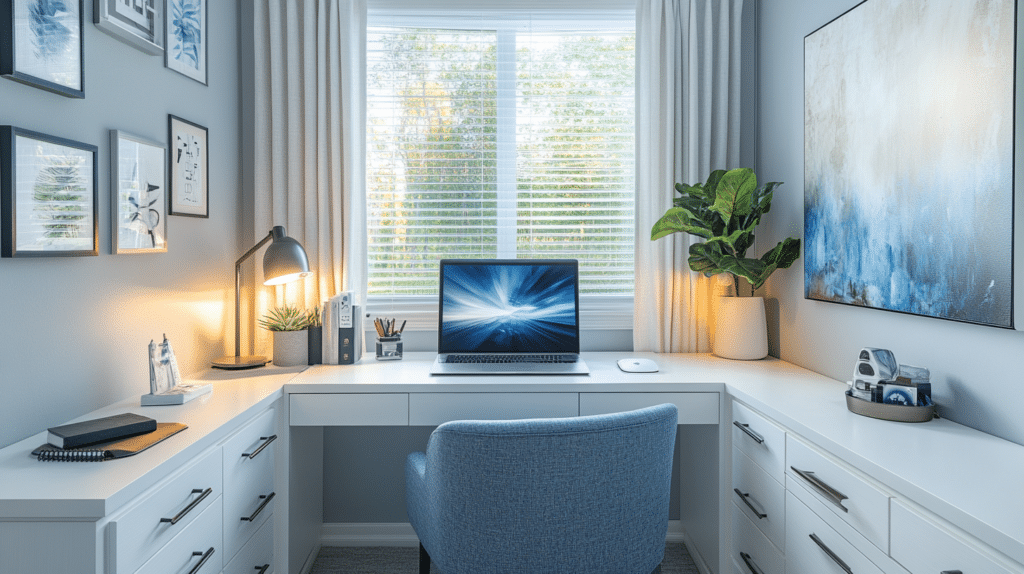
If you’ve ever sat down to study and found yourself rearranging pens instead of opening your textbook, the problem probably isn’t your motivation. It’s your desk.
I redid my daughter’s study corner three times before I figured out that student study room decor isn’t about making a space look impressive — it’s about removing every reason to get distracted. Once I stopped treating it like a mini home office photoshoot and started treating it like a tool, everything clicked.
Here’s what I’ve learned setting up study corners in a dorm room, a shared bedroom, and now a proper desk nook — what’s worth spending on, what’s a waste, and the mistakes that quietly wreck an otherwise good setup.
What This Style Actually Is
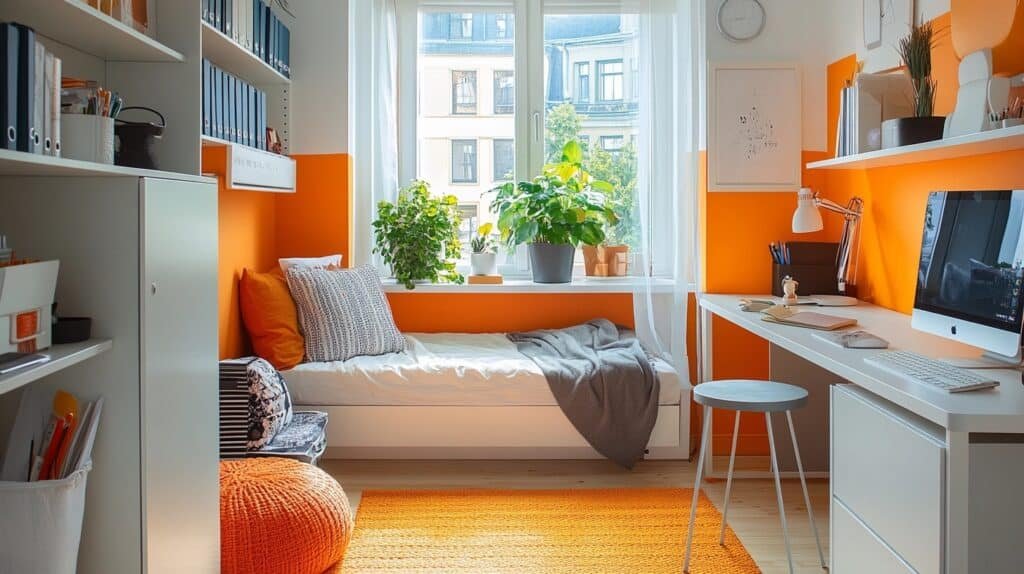
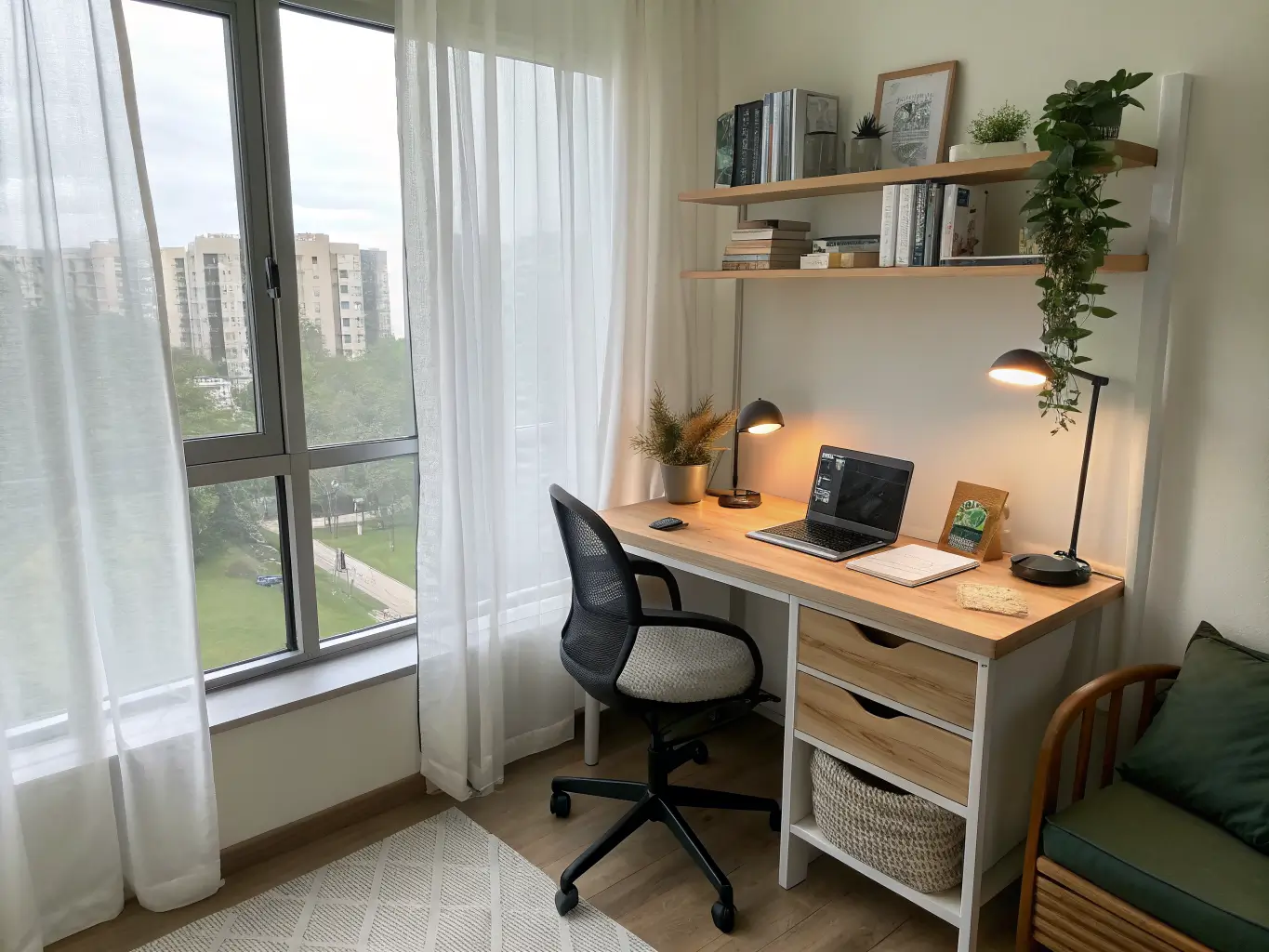
Think functional minimalism with a little warmth thrown in — not a stark, Pinterest-perfect white desk with nothing on it, but not a cluttered command center either. The goal is a space that feels calm enough to concentrate in but still looks like a real person uses it.
The palette that works:
off-white, beige, light wood, sage green, soft blue, muted gray. Pick one neutral base and let one accent color repeat throughout — a sage cushion, a sage lamp base, a sage folder. That’s it. I made the mistake early on of letting my daughter pick “fun colors” for everything — yellow chair, red organizer, blue lamp — and the room looked like a toy store. It wasn’t restful. She couldn’t focus in it. We stripped it back to cream and wood tones with black accents, and it instantly felt calmer.
The materials that hold it together:
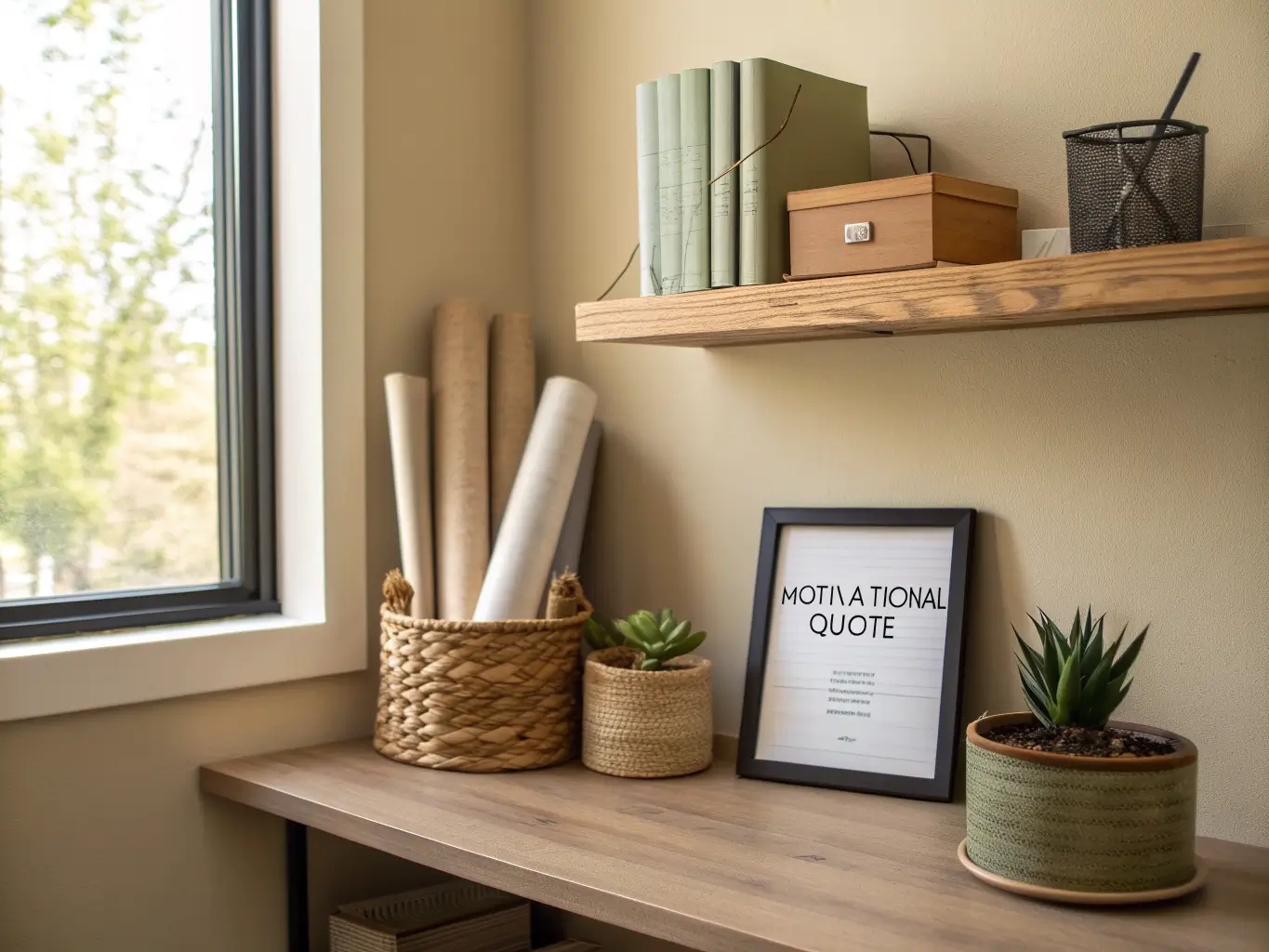
light wood or wood veneer, matte black metal, cork or fabric pinboards, woven baskets, a soft rug underfoot. Mixing textures — hard desk surface, soft rug, woven basket — keeps the room from feeling like a sterile office.
This works best in dorm rooms, shared bedrooms, or a leftover corner nobody’s using. You don’t need a spare room. You need about 6 square feet and a wall.
Time, Budget, and Space: What to Actually Expect
Setup time:
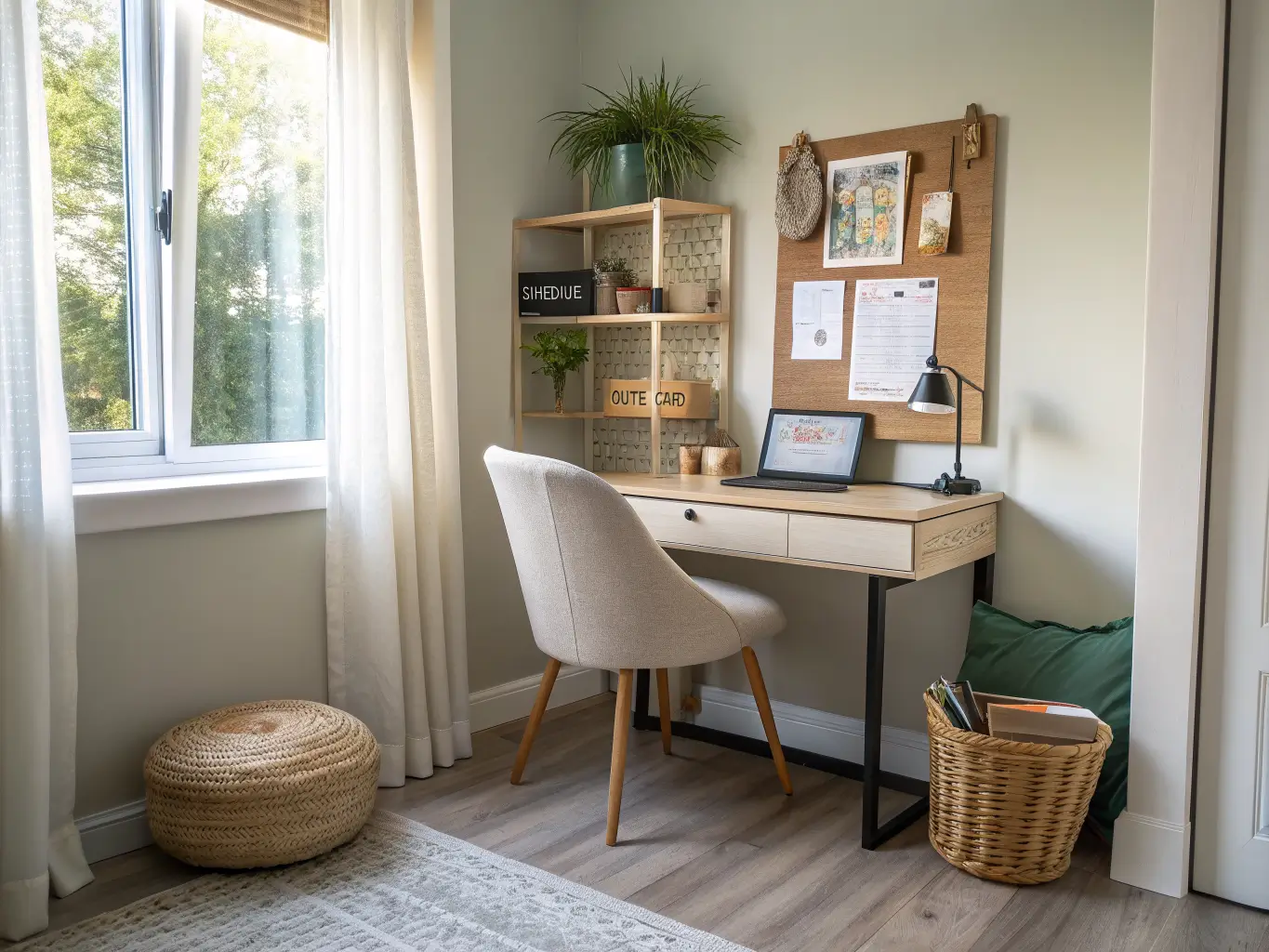
A basic corner — desk, chair, lamp, a little organizing — takes 2 to 6 hours. If you’re adding shelving, a pinboard, cable management, and wall decor, budget 1 to 2 days, mostly because mounting shelves and figuring out cord routing always takes longer than you think.
Budget breakdown:
$60–$250 — a genuinely functional budget setup: secondhand desk, a clip-on lamp, a few bins
$250–$700 — a polished student room: real ergonomic chair, proper shelving, a decent desk lamp, storage furniture
$700+ — once you add a quality ergonomic chair, layered lighting, and built-out storage systems
I’ll save you some searching: Amazon alone returns over 40,000 results for “study room decor,” and the price spread is enormous. A desk organizer can run $8 or $45 depending on the material. Don’t get lost in browsing — decide your must-haves first, then shop.
Space needed:
A desk 24–30 inches deep works in almost any small bedroom or dorm corner. If you’re really tight on room, a wall-mounted fold-down desk saves floor space without sacrificing function.
The Must-Have Pieces (Don’t Skip These)
These are the pieces that make the space work, not just look nice:
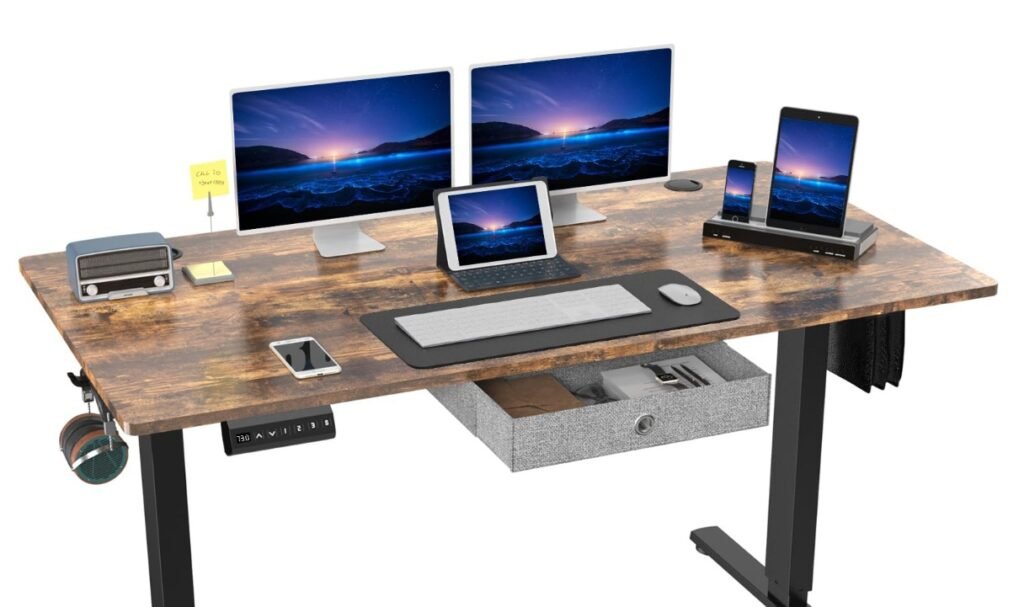
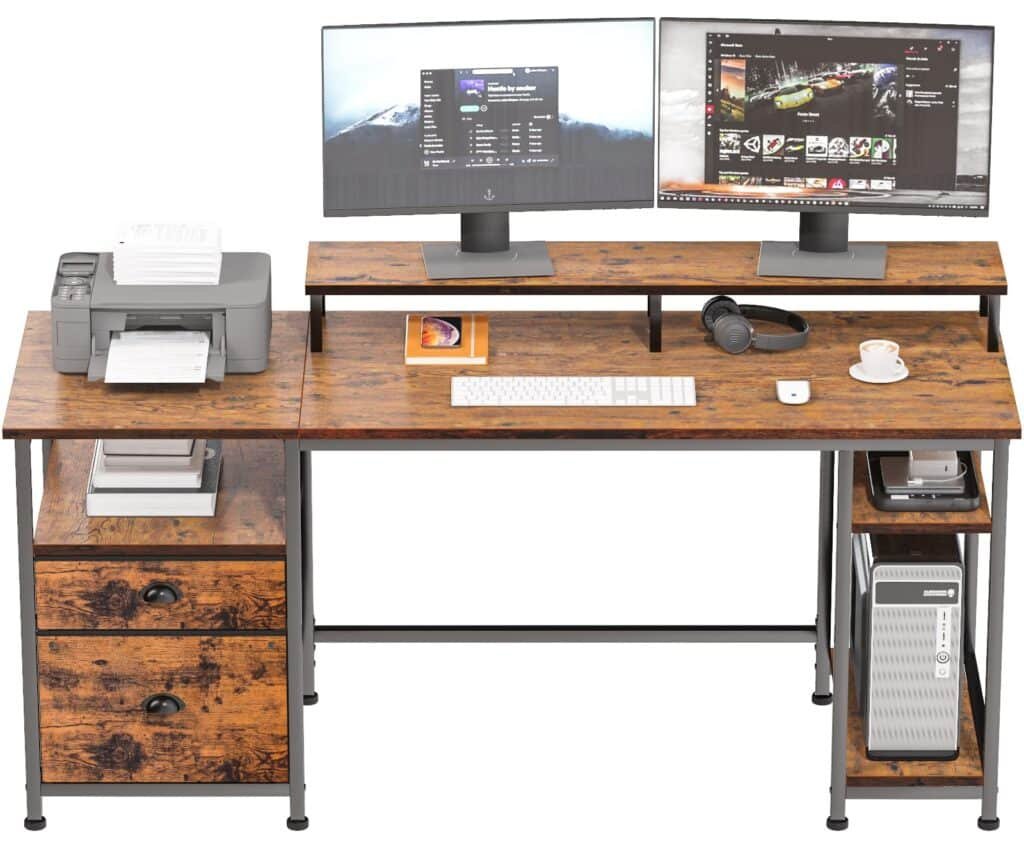
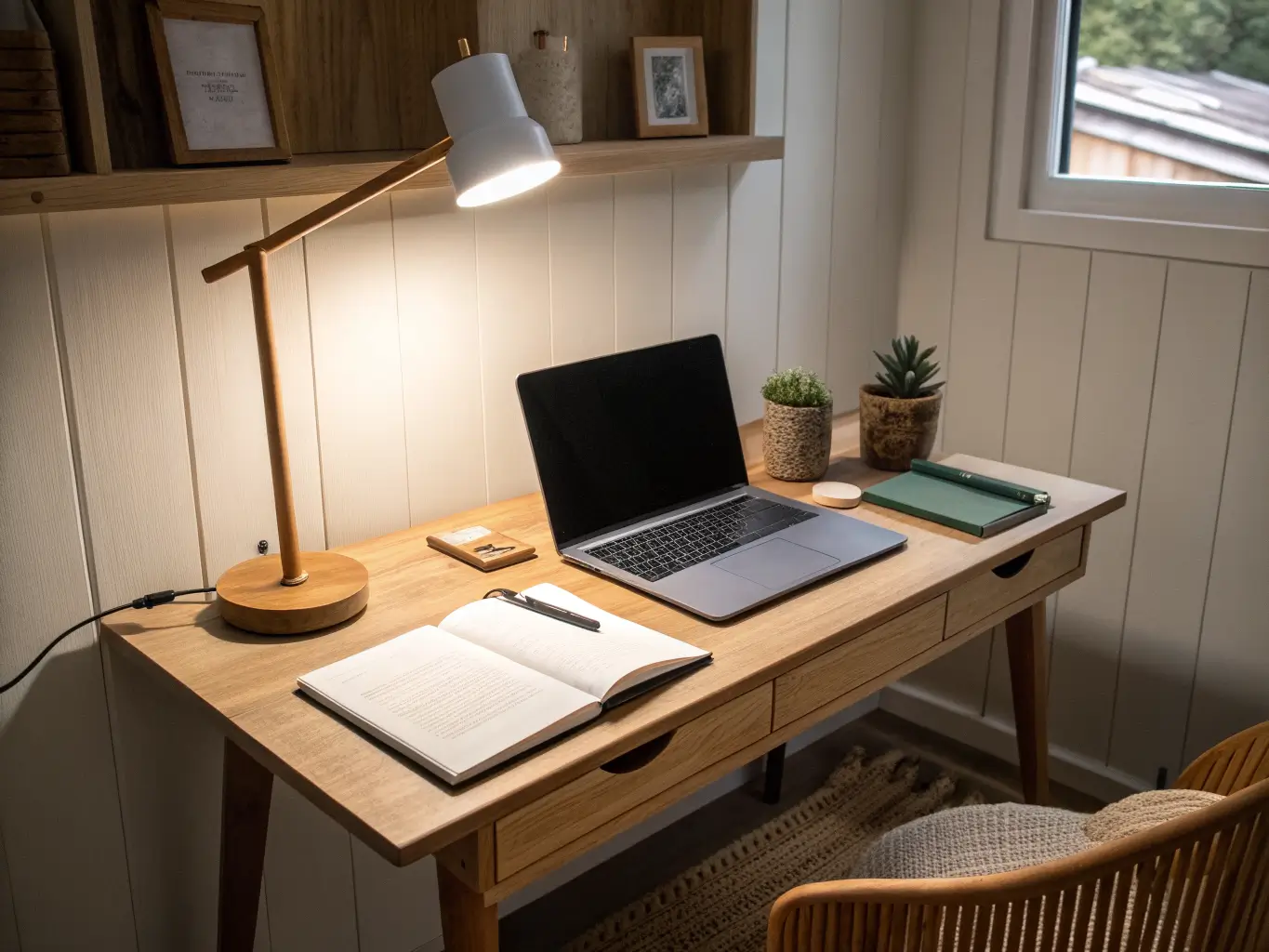
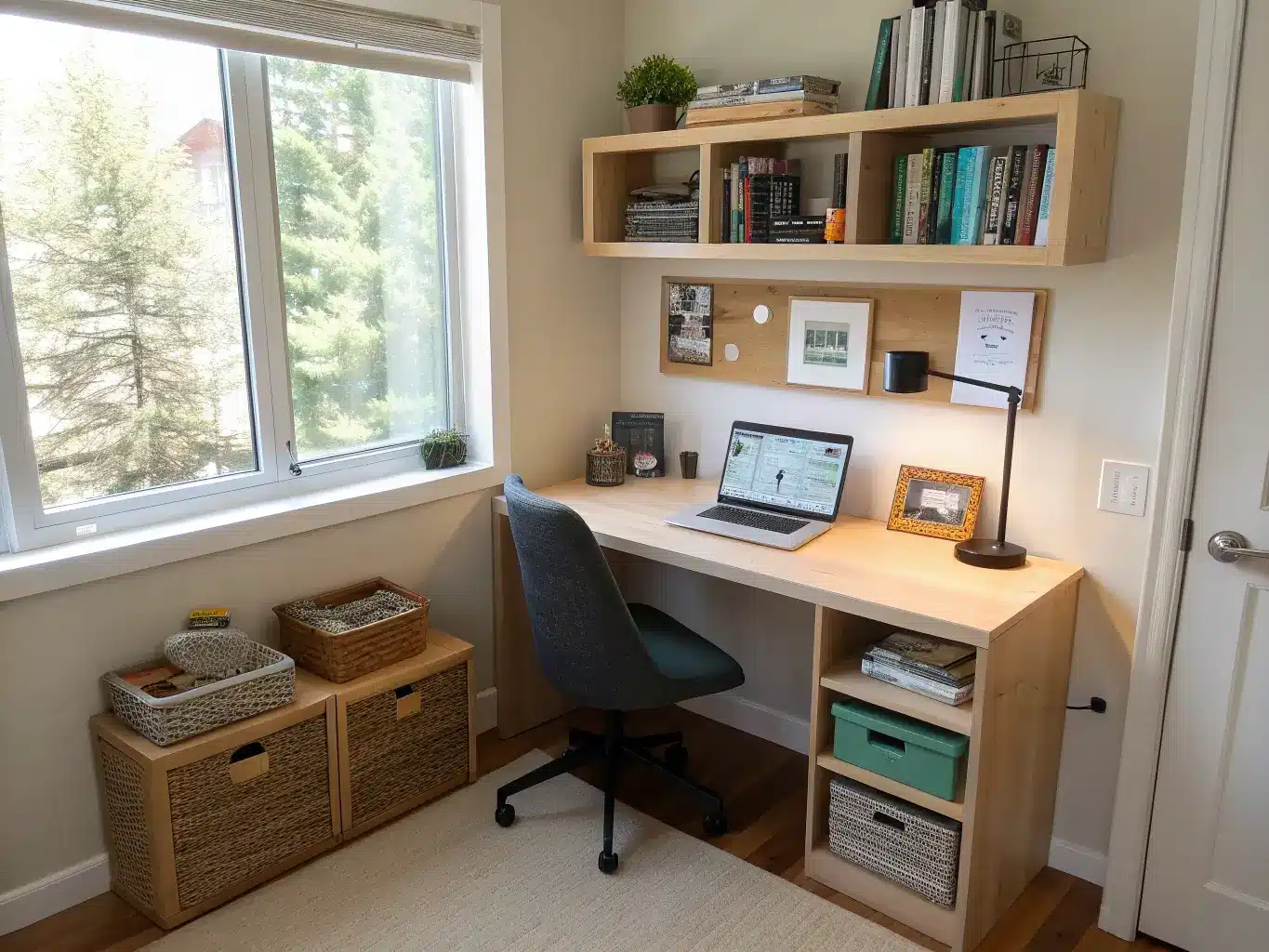
A compact desk — 24–30 inches deep, enough for a laptop, notebook, and lamp. Don’t buy a deep executive desk for a small room. I did this once — a beautiful, oversized secondhand desk that ate a third of the bedroom and made the door hard to open. Returned it within a week.
An ergonomic chair with lumbar support and height adjustment. This is not optional decor, it’s the piece that determines whether a two-hour study session is possible or miserable.
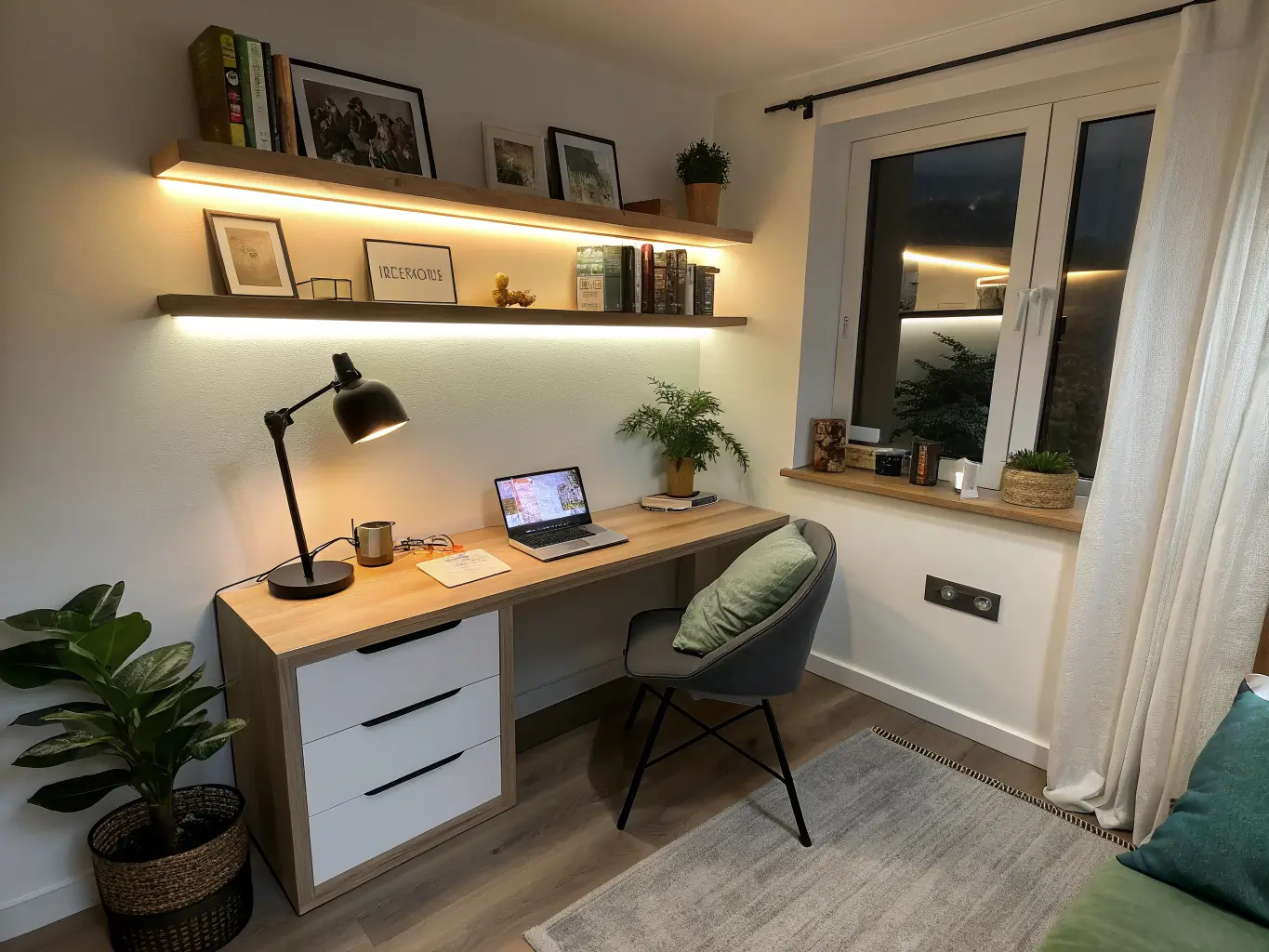
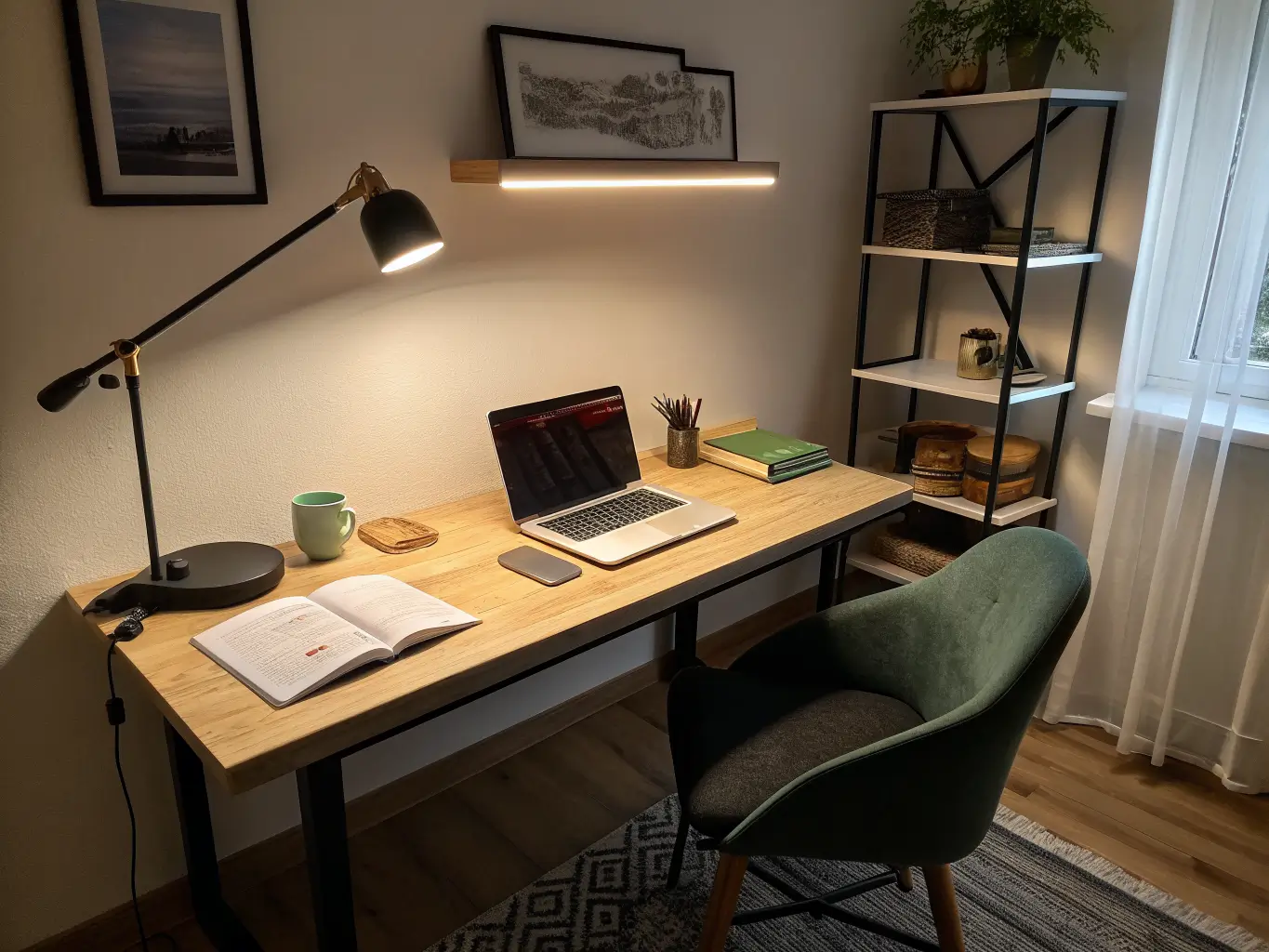
A dimmable LED desk lamp, ideally in the 3500–4000K range — bright enough for focus without the harsh blue-white glare of a cheap 6000K bulb. This single item made more difference to my daughter’s evening study sessions than anything else we bought.
Floating shelves above the desk — keeps books and supplies off the desktop and off the floor. Two shelves is usually plenty for a student room.
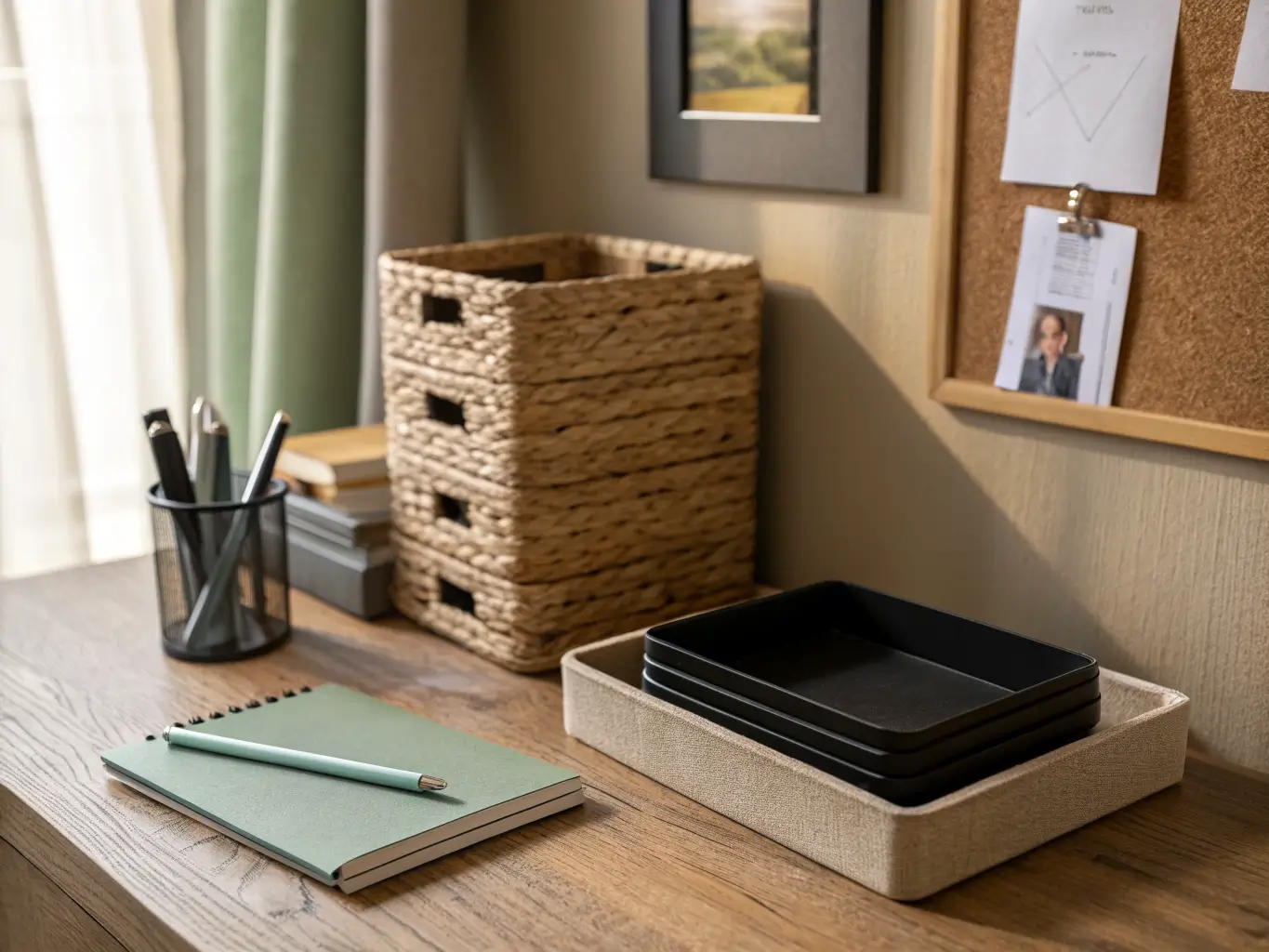
A cork board or pegboard for schedules, reminders, and the occasional printed motivational quote. This is the single most repeated feature in every student-room setup I’ve researched or built, and for good reason — it gives your eyes somewhere to land that isn’t a phone.
Cable management — clips, a cord sleeve, a surge protector. Do this before you style anything else. Cables you deal with last always end up visible in the final look.
Storage bins or boxes, labeled, under the desk or on a shelf — separate what you use daily from what you’re archiving.
One small plant — a pothos or a small succulent on the windowsill. Softens the whole setup without any upkeep drama.
A framed print or small quote board — one or two pieces, not a gallery wall. Personality in small doses.
A rug or cushion — this is what keeps the space from feeling like a cubicle.
Optional Extras Worth Considering
Once the essentials are in place, these add character without adding chaos:
LED strip lighting behind the desk or along a shelf for after-hours ambiance — not for studying, just for winding down
Sheer curtains to cut glare on a screen without blocking natural light
Removable wall decals — perfect for dorms where you can’t paint or drill
Jute or woven baskets for an organic, less “office supply store” feel
Small brass or matte black accents on frames or lamp hardware for a little contrast
How to Actually Put It Together
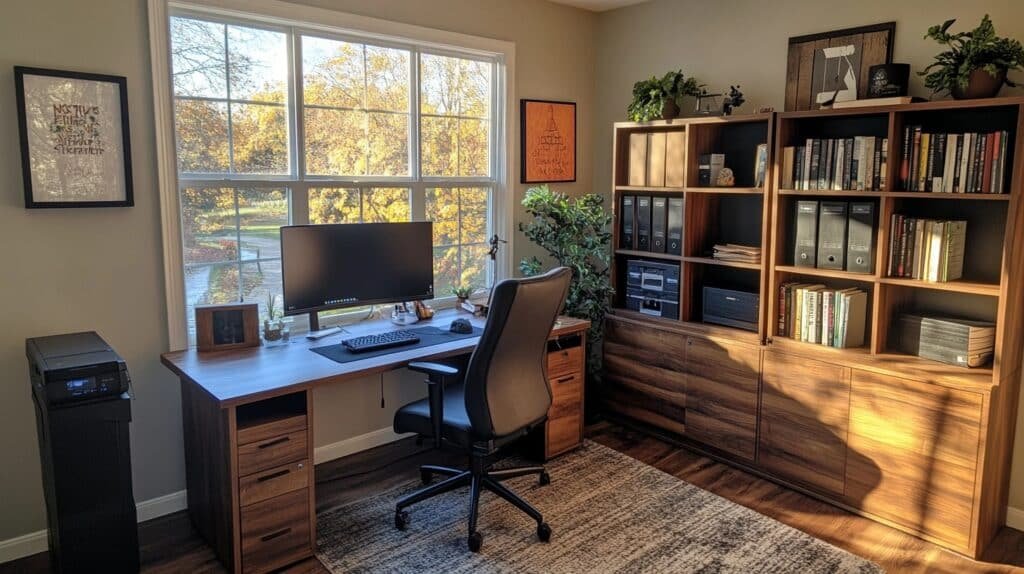
Start with light. Position the desk near a window if you have one. This is the single change that made the biggest difference in every study space I’ve set up — natural light during the day means less eye strain and less reliance on the lamp.
Layer your lighting in three parts:
1. Ceiling or ambient light for general brightness
2. Task lamp directly on the desktop for focused work
3. A softer accent light — a strip light or small lamp — to prevent the harsh contrast of one bright lamp in an otherwise dark room
Skipping this layering is one of the most common mistakes I see. A single overhead light or a single desk lamp alone creates hard shadows and eye strain within an hour of use.
Build in this order:
1. Desk, chair, lamp — your functional anchor
2. Shelves above the desk, then the pinboard
3. Storage — bins for daily items, closed boxes for backup supplies (this two-tier system is the difference between a room that stays organized and one that’s a disaster by week three)
4. One personal touch — plant, print, or photo
5. Soft finishing layer — rug, cushion, curtain
Keep the desktop nearly empty. Laptop, notebook, lamp, pen holder, maybe one small plant. That’s the whole list. Every extra item on that surface is a distraction waiting to happen.
Mistakes I’ve Made So You Don’t Have To
Overloading the desktop. I once let a display of five framed photos and a small ceramic collection take over half the desk. Pretty, useless. It all moved to a shelf.
Single-source lighting. Relying only on an overhead light gives you flat, tired eyes by 9 p.m.
Buying furniture too big for the room. Measure the actual space, not the imagined one.
Ignoring cords until the end. Retrofit cable management is twice the work of doing it during setup.
Loud, high-contrast color schemes. Bright red desk accessories, neon accents, too many competing colors — it reads as stimulating, not motivating.
No storage zoning. Without a clear “daily use” pile and an “archive” pile, papers multiply and the desk disappears under them within two weeks. Ask me how I know.
Keeping It Fresh Without Starting Over
Stick to one palette. Choose your neutral base and one or two supporting colors, then repeat them across furniture, textiles, and storage. Consistency reads as calm; randomness reads as clutter, even when everything’s technically “put away.”
Limit yourself to one zone per category — one shelf system, one plant, one art area, one catch-all bin. More than that and the room starts working against you.
Reset weekly. Five minutes clearing the desktop and refiling papers keeps the whole setup functional instead of just photogenic for day one.
Seasonal refresh ideas that don’t require new furniture:
Swap in cooler blues and greens during exam season for a calmer, lower-stimulation feel
Add warm beige or peach textiles in colder months for coziness
Change one print or the desk mat instead of buying new furniture
Mixing styles works if you’re intentional about it:
Minimalist + boho — natural textures, woven baskets, simple lines
Minimalist + soft pastels — gentle accessory colors, warm lighting
Modern + coastal — pale wood, white textiles, airy fabrics
If you’re only upgrading a few things, spend on the lamp, the chair, the shelving, and storage bins. Skip the decorative extras until those four are solid — they’re what actually make a study space usable, day after day, not just nice to look at once.
For another angle on this, my small study room ideas guide covers the same space from a different starting point.