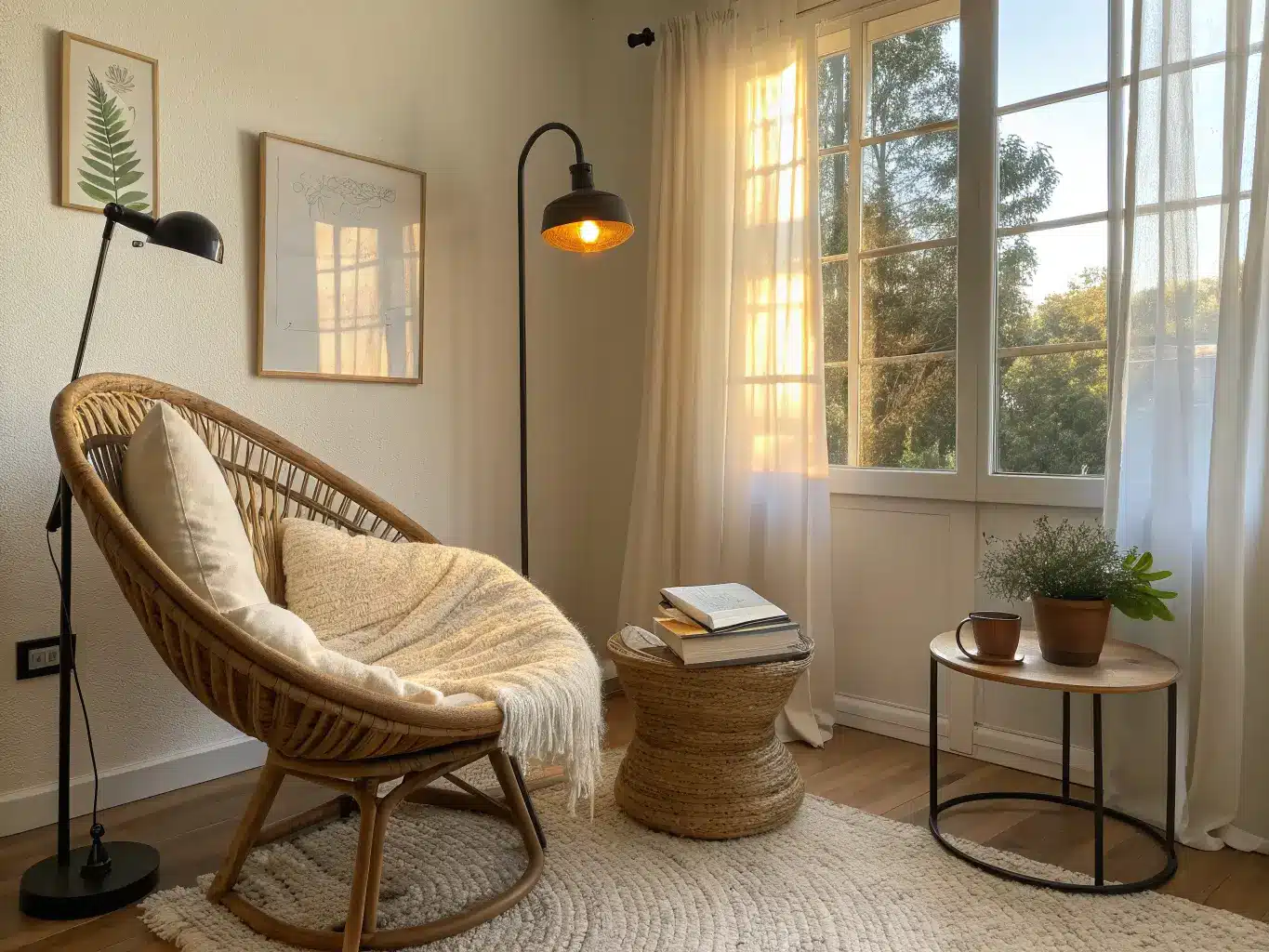
I bought my first papasan chair for $40 off a neighbor’s porch and spent an entire year not knowing what to do with it. It sat in the corner of my bedroom looking like a leftover from 1998, cushion going flat, nothing around it doing it any favors. Then I actually styled it — rug, lamp, a chunky throw, a stack of books on a stool — and now it’s the spot in my house people ask about. A papasan chair reading nook isn’t complicated, but it does need a few deliberate choices, and getting those wrong is exactly why so many papasan corners look sad instead of inviting.
Here’s what I’ve learned building and rebuilding mine three separate times.
What This Style Actually Is
A papasan nook lands somewhere between boho, eclectic, and modern-casual — the deep bowl shape and woven frame do a lot of the visual work, so whatever else you add should support that shape, not fight it. Think natural materials, soft textiles, warm light. It’s currently having a moment too — I’ve watched “papasan reading nook” searches climb on Pinterest the same way rattan and cane furniture crept back into everyone’s living rooms over the last few years.
This setup works for anyone who reads curled up rather than sitting upright — legs tucked under you, shoulder against the side of the bowl. If you’re someone who needs firm back support for a desk-style read, a papasan isn’t your chair. But for lounging with a book, scrolling before bed, or an afternoon nap, nothing beats it.
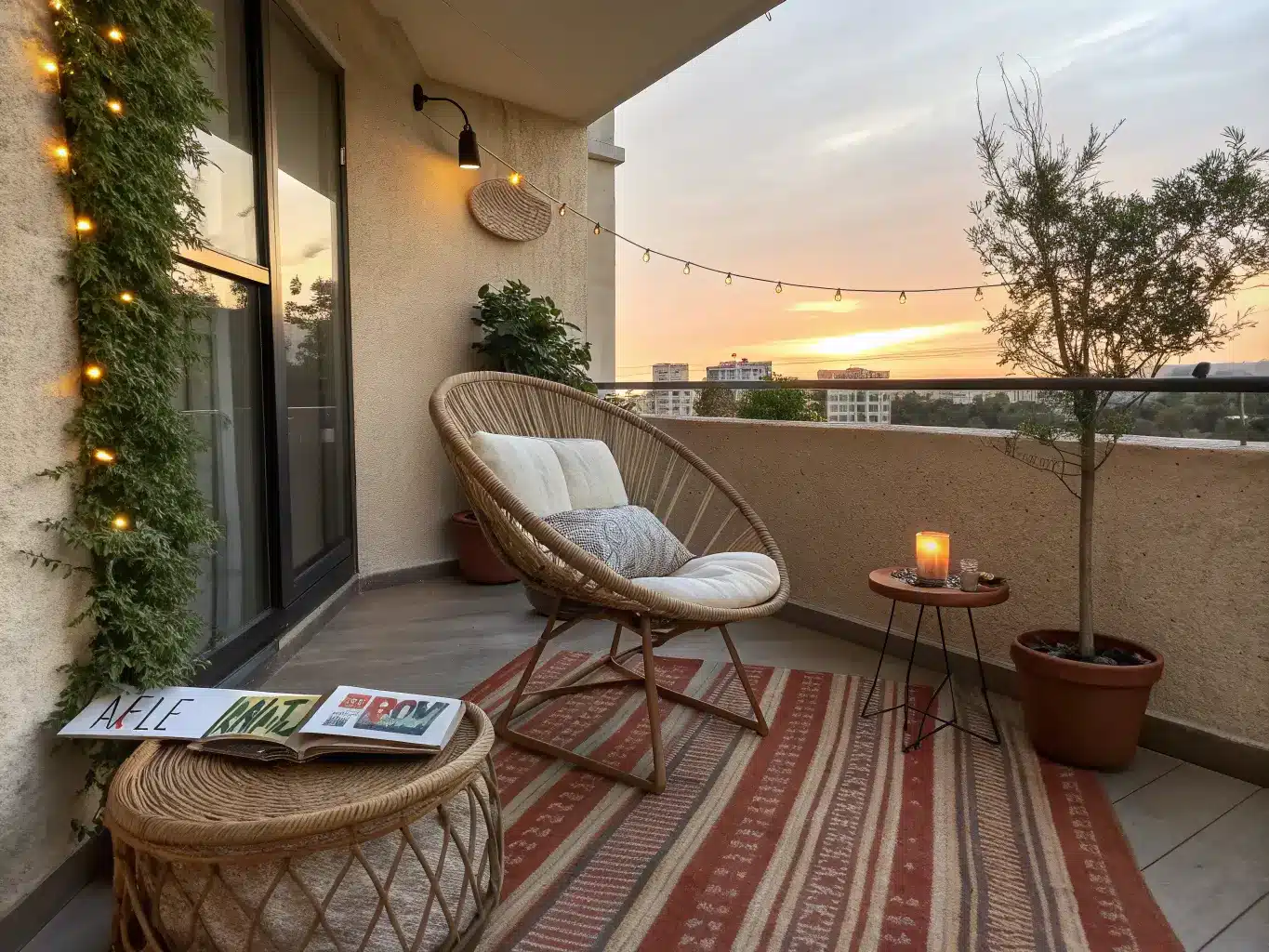
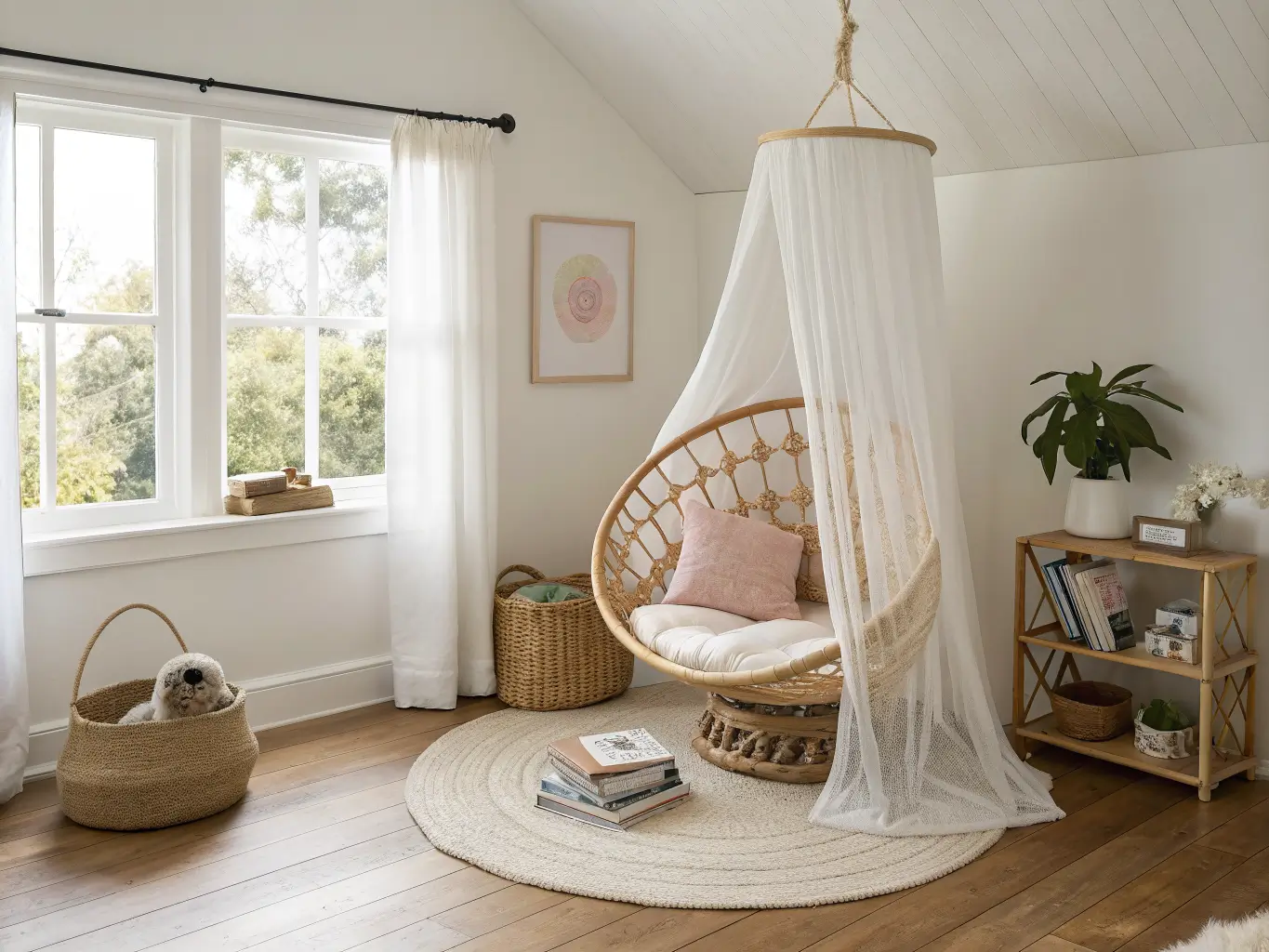
Where it works best: bedroom corners, a quiet patch of living room, sunrooms, dorm rooms, even a covered balcony. I’ve also seen parents build canopy versions of these in playrooms, which is a genuinely smart move — kids love the enclosed, nest-like feel.
Time, Cost, and Space: What to Actually Expect
Setup time: A basic nook — chair, cushion, lamp — takes 1 to 3 hours, most of that spent figuring out furniture placement rather than assembly. Some papasan chairs now ship fully built. If you’re adding shelving, a canopy, or wall styling, budget 3 to 6 hours.
Cost: You can get a decent papasan chair for $60–$95. A full mid-range nook — chair, rug, pillow, lamp — typically runs $150–$300. If you want something nicer, oversized or swivel-base models run $160–$220, and I’ve seen a natural rattan version marked down to £199 at a UK retailer during a clearance sale. Spend the extra money on the cushion before you spend it on anything else — more on that below.
Space: A standard 40-inch papasan needs about a 5×5-foot footprint. If your room is tight, look for a smaller saucer-style chair that can work in 3×3 feet. Swivel or rocking bases need extra clearance on top of that — don’t wedge one into a corner where it can’t actually move.
Skill level: Beginner if you’re just placing a chair and lamp. Intermediate once you add shelving or a canopy. Full DIY canopy builds with fabric draping and structural framing edge into expert territory — that’s a weekend project, not an afternoon one.
The Pieces That Actually Make a Papasan Nook Work
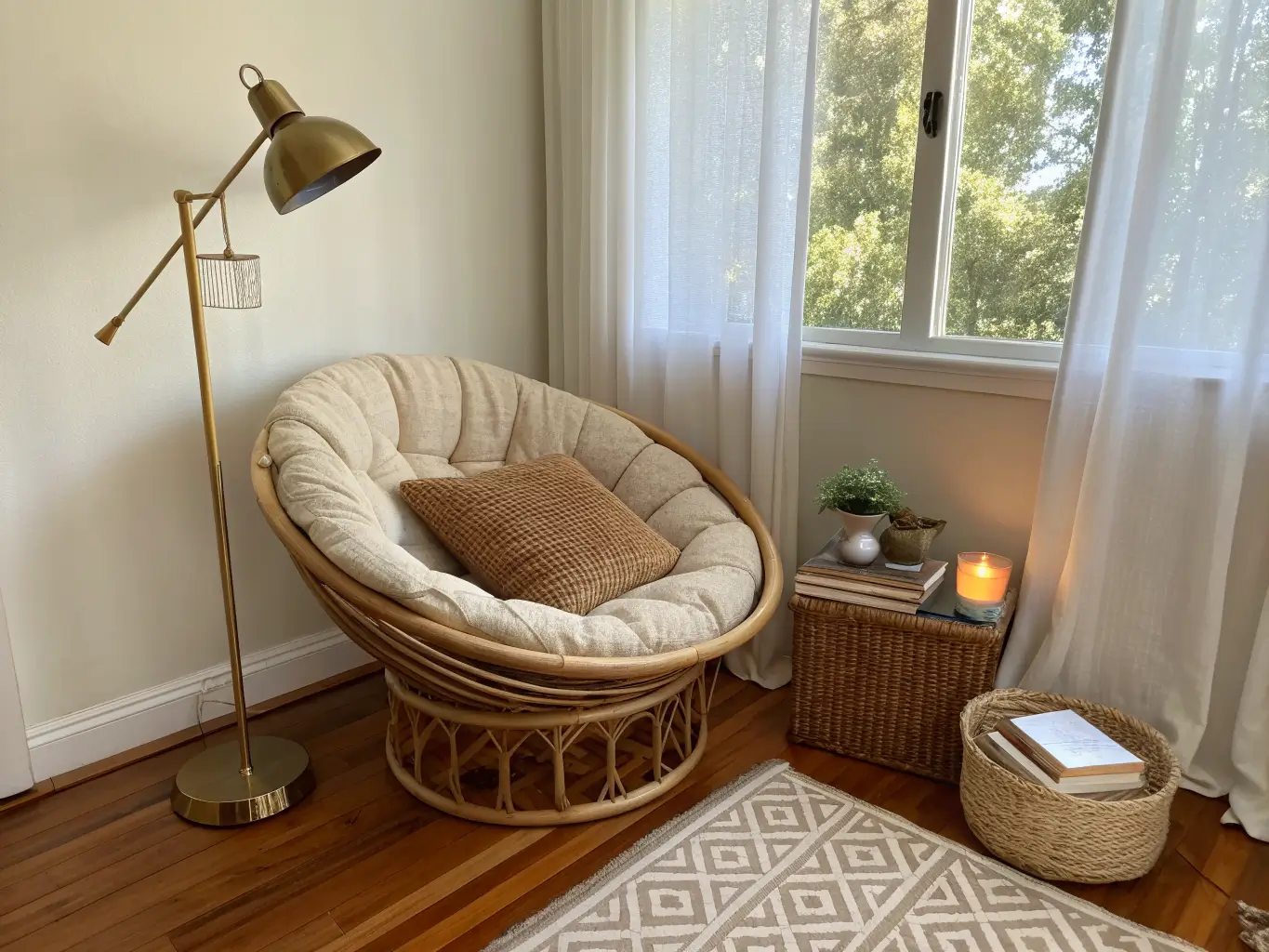
The chair itself. Go with a 37–40 inch bowl with a genuinely thick cushion — not the thin, flattened pad that ships with a lot of cheap sets. Look for 400–450 lb weight capacity, adjustable levelers so it doesn’t rock unevenly on an uneven floor, and if you want to spend a little more, a 360° swivel base. I skipped the swivel option on my first chair to save $40 and regretted it within a month — being able to turn toward the window or the room changes how much you actually use the chair.
Cushion thickness matters more than people think. If you’re reading for under two hours at a stretch, 4.5 inches is fine. If you’re the type to disappear into a chair for an entire Sunday, go for at least 5 inches. My first cushion was 3 inches and I could feel the wicker frame through it within twenty minutes.
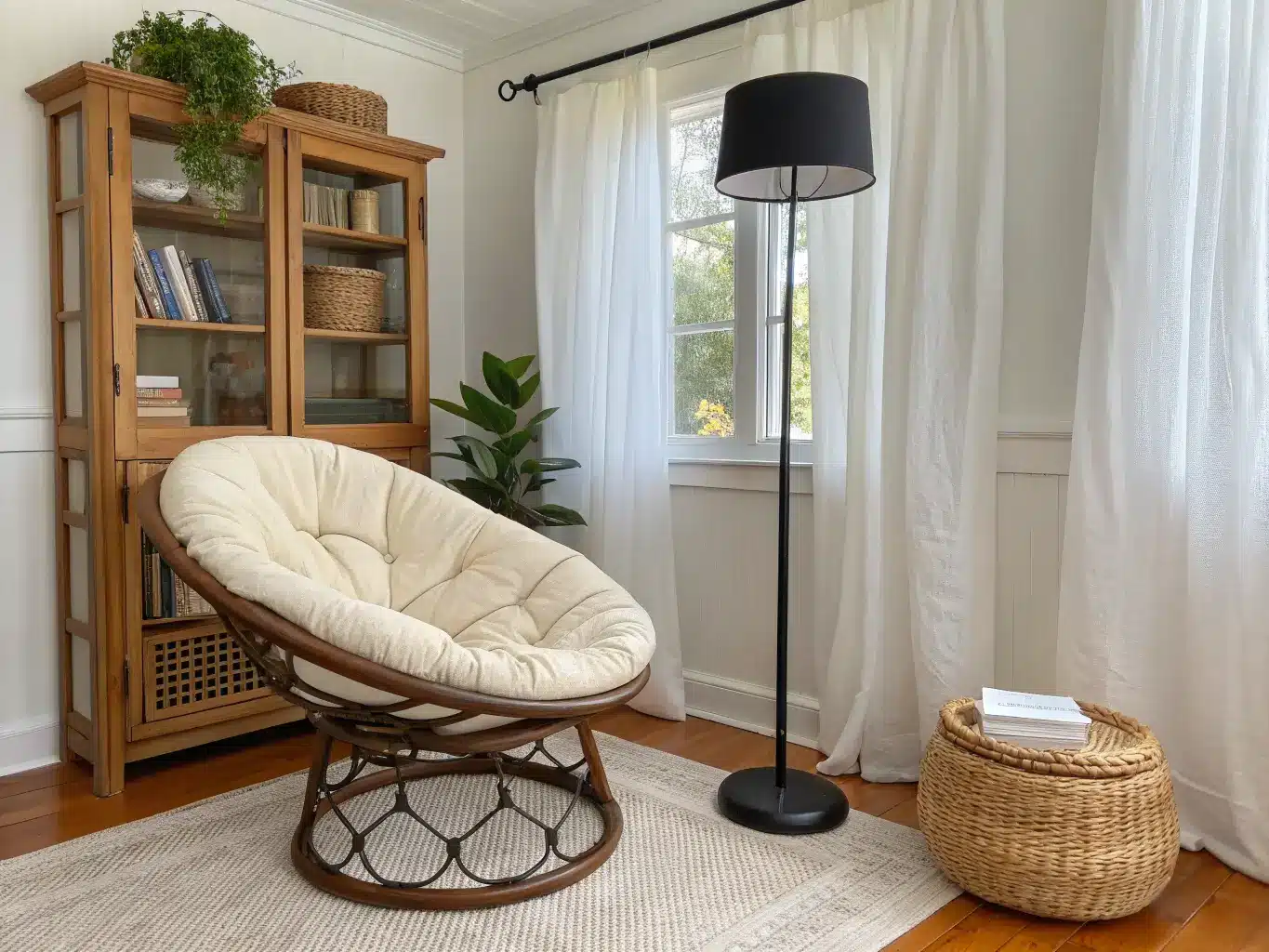
An anchor rug. This is the single biggest upgrade I made to my own nook. The round shape of a papasan just floats in a room without something underneath it grounding the space. A plush or patterned rug — even a small 4×6 — does the trick.
A reading light. Floor lamp, task lamp, or warm string lights. Don’t rely on ceiling light alone; papasan chairs sit low, and overhead light casts a shadow right onto your book.
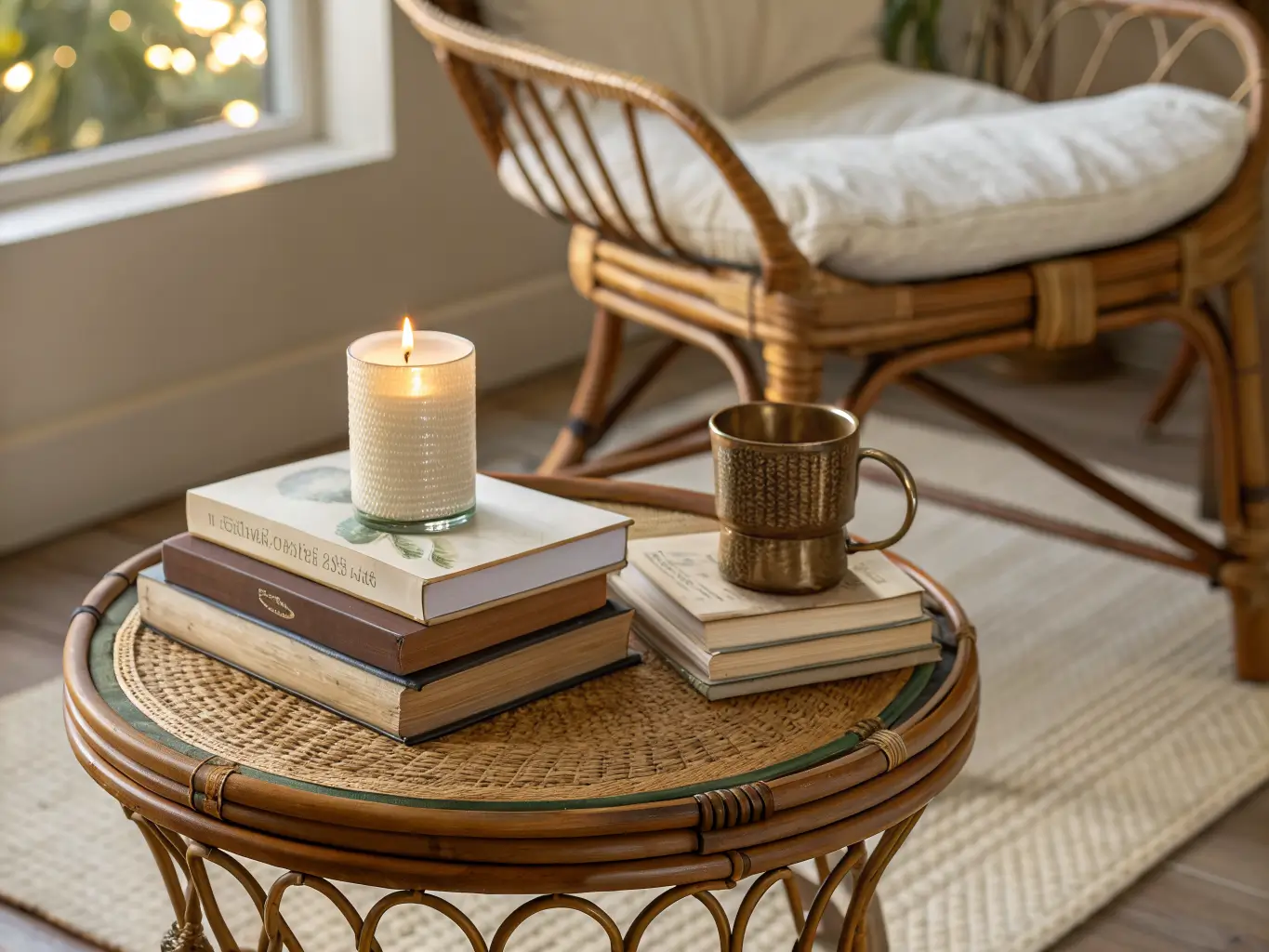
A side surface. Small round table, stool, or even a wide plant stand — something within arm’s reach for tea, glasses, your phone. Because you’re tucked into the bowl, you can’t lean far to reach a table across the room.
One throw, one or two pillows. This is where I overcorrected the first time — I piled on five pillows and the chair looked like a nest that swallowed a Pier 1. One lumbar pillow plus one throw is enough. Faux fur, chenille, or a chunky knit throw all read well against a woven frame.
A small storage piece. A basket beside the chair for the current read and a spare blanket keeps the whole thing from turning into a pile of stuff on the floor.
Optional Layers Worth Adding
Once the basics are in place, a few extras take the nook from “nice chair” to “the corner I actually photograph”:
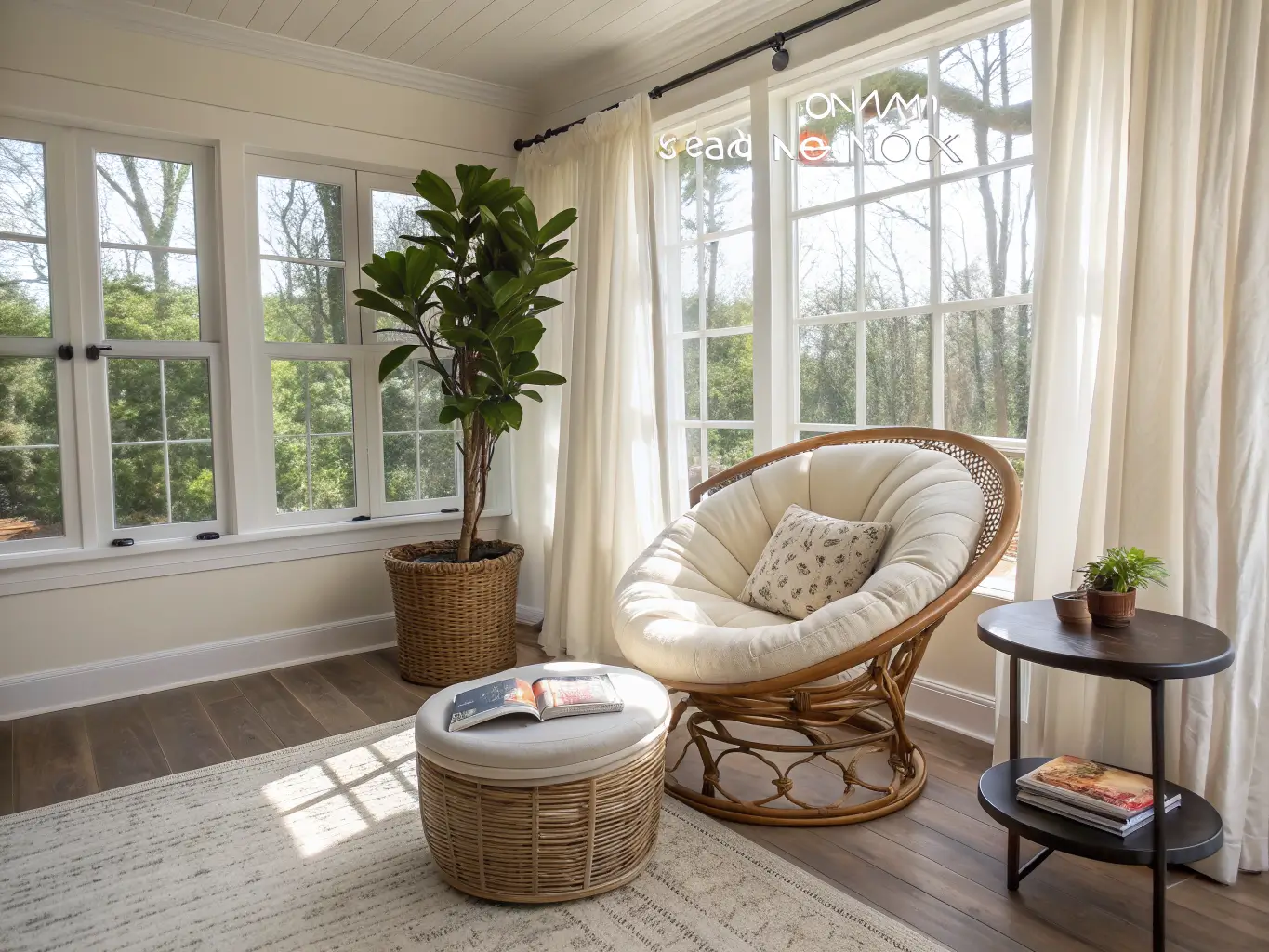
– A canopy or sheer drape overhead for a more enclosed, retreat feel — I’ve seen people do this with $15 mosquito netting and it looks far more expensive than it is
– A plant — mine has a snake plant beside it because I’ve killed everything fussier
– Natural material accents — jute basket, cane side table, unfinished wood shelf
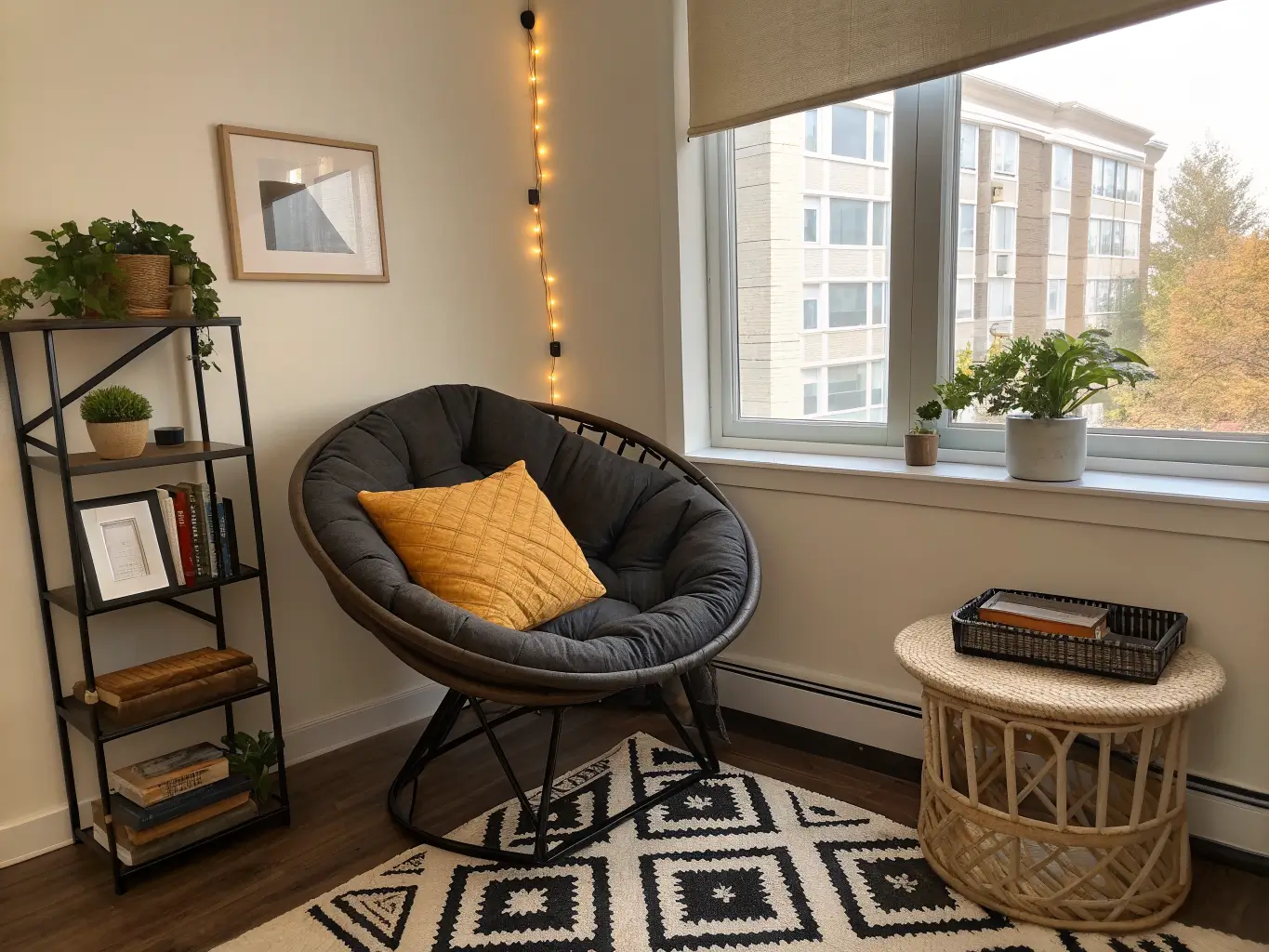
– Metallic touches, used sparingly — a brass lamp base or black metal side table keeps things from feeling too soft and shapeless
– A faux fur cushion topper if you want the plush, high-end version of this look without replacing the whole seat cushion
Putting It Together: Order of Operations
I learned this order the hard way, after rearranging my own nook three separate times before it clicked.
1. Measure the corner first. Don’t buy the chair and hope. A 40-inch papasan needs real breathing room — 5×5 feet minimum, more if it swivels or rocks.
2. Clear the area completely. Random clutter around the nook makes even a well-chosen chair look like an afterthought.
3. Lay the rug down first. This defines the boundary of the whole nook before anything else goes in.
4. Place the chair on the rug, angled toward the best light source in the room — near a window if you can, but positioned so you don’t get glare across the page.
5. Add the lamp and side table next, while you can still judge the spacing clearly.
6. Layer in the throw, pillow, and small decor last — plant, basket, candle. Two items max at this stage. The nook should feel calm, not curated within an inch of its life.
Offset the round shape with something vertical — a floor lamp, a tall plant, a stack of hardcovers on the side table. A papasan chair is visually heavy and round; without a vertical counterweight nearby, the whole corner reads flat.
Where People Go Wrong
Buying a chair too small for the room or the person. A cramped papasan defeats the purpose — measure before you buy.
Skimping on the cushion. I’ve said it twice now because it’s the mistake I made first and the one I see most often. A flat cushion turns a great chair into a chore.
Piling on decor. Too many pillows and baskets around a round shape reads as clutter fast. Restraint is what makes these nooks look finished rather than accidental.
No dedicated light source. A beautiful nook that’s unusable after 6 p.m. isn’t a reading nook, it’s a plant stand with ambitions.
Wrong footprint for a rocking or swivel base. These need room to move. If your space is tight, get a stationary saucer-style chair instead — don’t force a swivel base into a corner it can’t use.
Ignoring maintenance. Look for a removable, washable cushion cover before you buy, especially if this chair is getting daily use. Mine didn’t have one for the first year and I regretted it every time I spilled tea.
Keeping It Looking Intentional Over Time
Match your palette to the frame. Natural wicker or rattan pairs best with cream, sand, and tan tones. A black frame looks sharper against white, charcoal, and walnut. Stick to 2–4 tones total — this is the fastest way to keep a boho-leaning space from tipping into visual noise.
Repeat a texture at least twice. If the chair frame is woven, echo that somewhere else — a jute rug, a cane side table. It makes the room feel planned rather than assembled from whatever was on sale.
Leave negative space around the chair. Don’t crowd it. The whole appeal of a papasan is its shape — let it be seen.
Update seasonally without replacing anything big. Swap in a linen throw and lighter pillow for spring and summer, then bring back the faux fur and heavier knits once it gets cold. The chair and rug stay constant; the throw and pillow do the seasonal work.
Upgrade in stages if budget’s tight. Buy the cheaper chair now, then put money toward a better cushion cover, then a rug, then a proper lamp. Cushions are replaceable — you don’t need to buy a new chair to refresh the whole look.
My own nook now costs maybe $220 all in, spread out over a year of slowly replacing things. The chair’s the same $40 porch find. Everything around it just finally does its job.
For another angle on this, my reading nook chair guide covers the same space from a different starting point.