IKEA home office setups lean into modern Scandinavian minimalism — clean lines, light wood, and storage that hides more than it shows. It’s not sterile, though. Done right, it looks calm instead of empty.
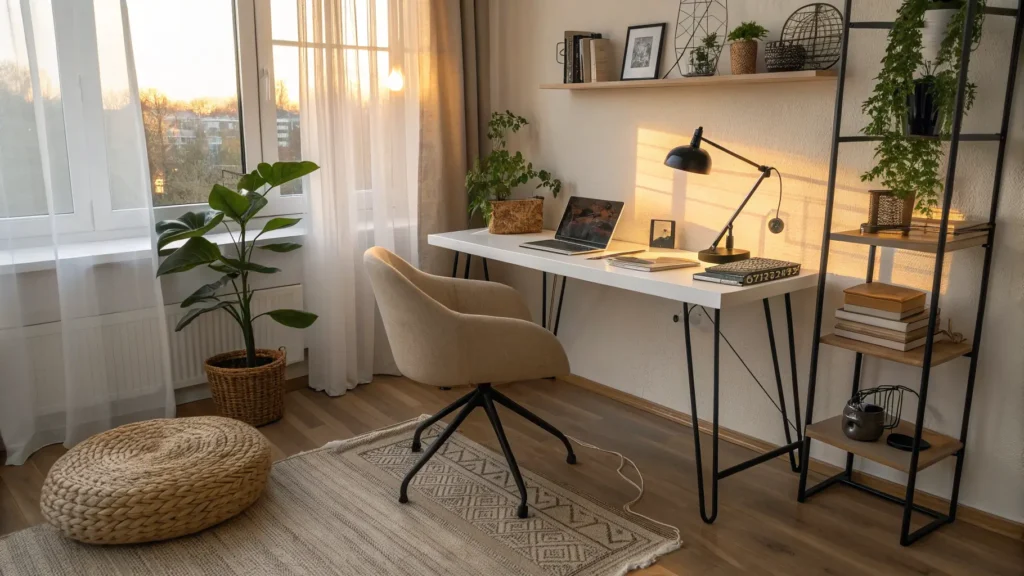
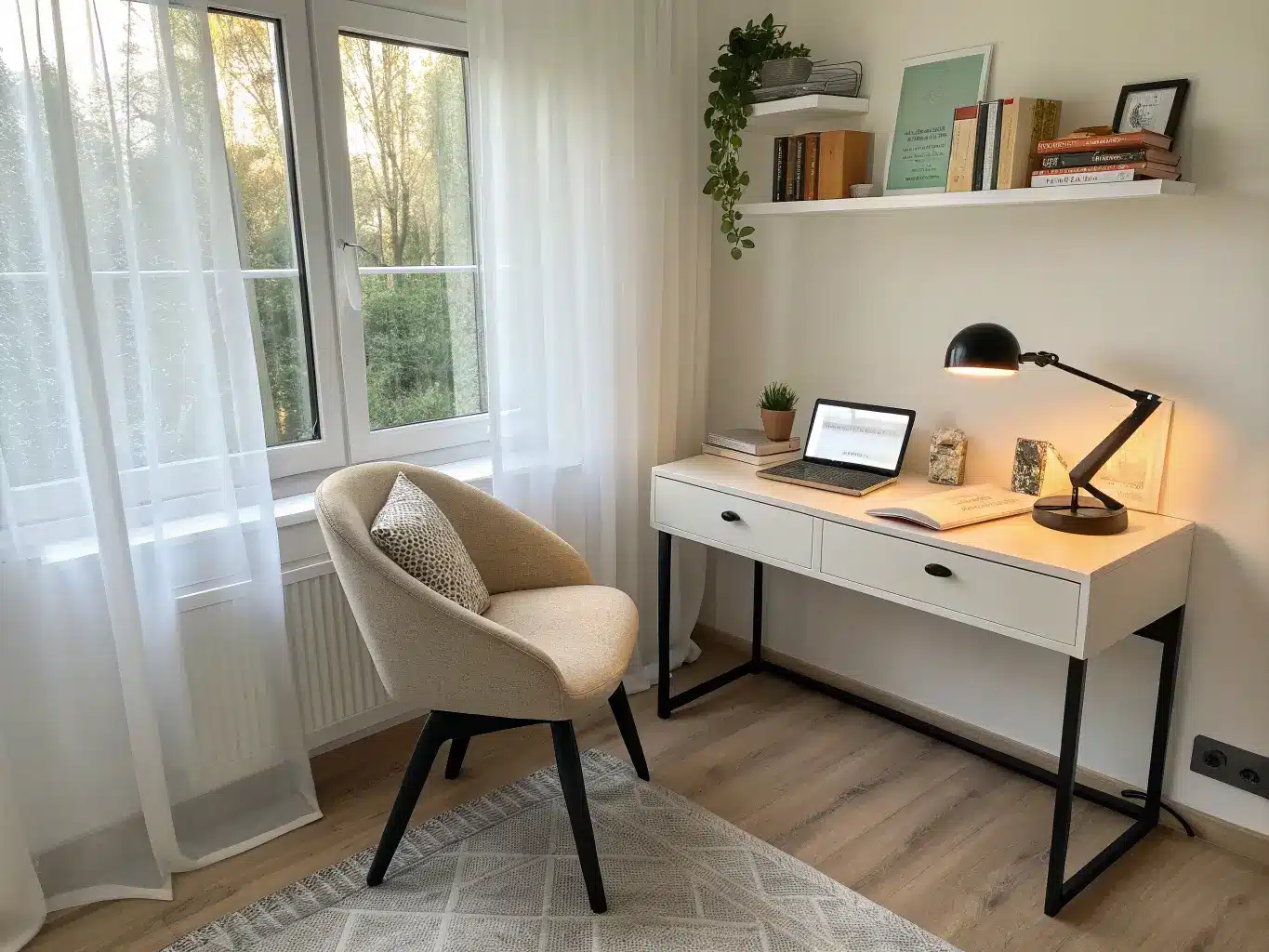
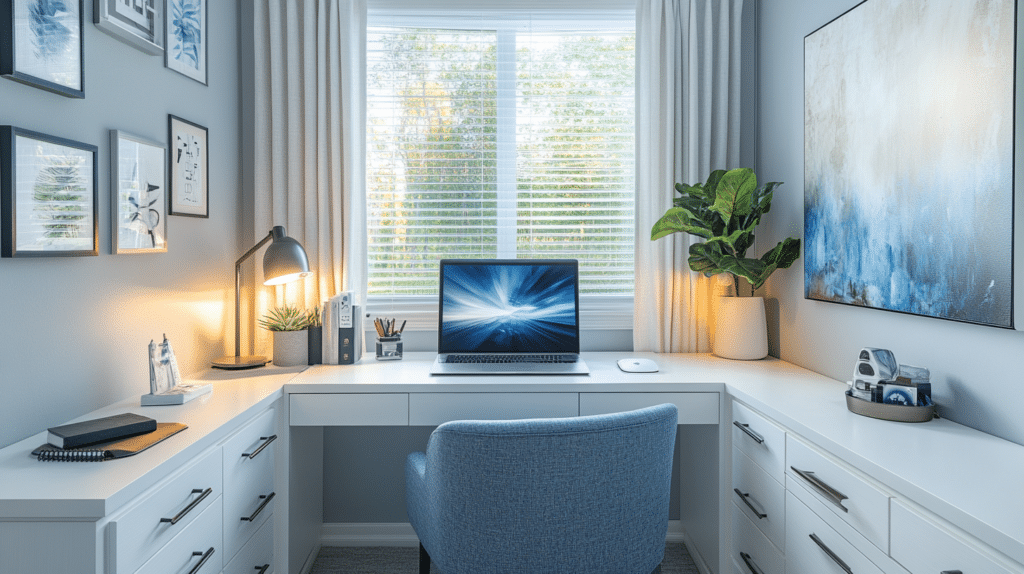
The palette is narrow on purpose: white, beige, light oak, black, gray. I have a beige FLINTAN chair pulled up to a white desk with black hairpin-style legs, and that contrast is doing most of the visual work in the room. You don’t need much else once that pairing is set.
Who this is for: remote workers, students, hybrid employees, anyone in an apartment who needs a desk that doesn’t scream “office” the second guests walk in. It works in a dedicated room, but honestly it’s built for corners — bedroom corners, living room corners, that weird dead space next to a closet.
Time and cost, realistically:
– A basic desk-and-chair setup: 2–4 hours, most of it assembly
– A full system with storage and cable management: 1–2 days, spread out
– Budget range: $199.99–$369.99 covers a full modern setup at the low end; a single ergonomic chair alone can run $150–$250 depending on the model
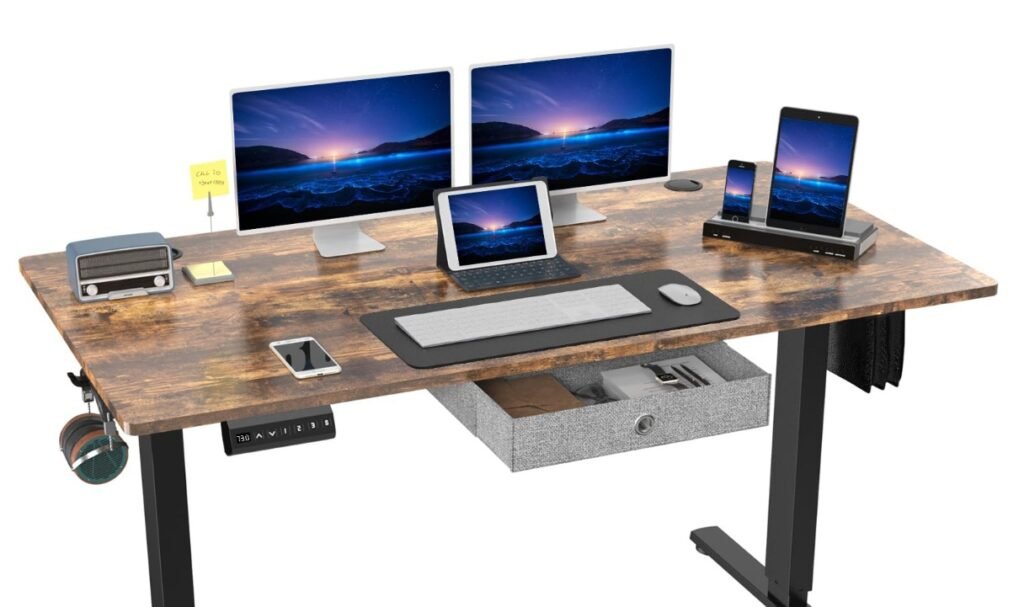
– Skill level: beginner for a basic desk, intermediate once you’re adding modular shelving or a sit-stand system
This isn’t seasonal decor. It’s driven by function, so it looks right in January and July alike.
The Must-Have Pieces
You need six things. Not seven, not ten — six. Everything else is optional.
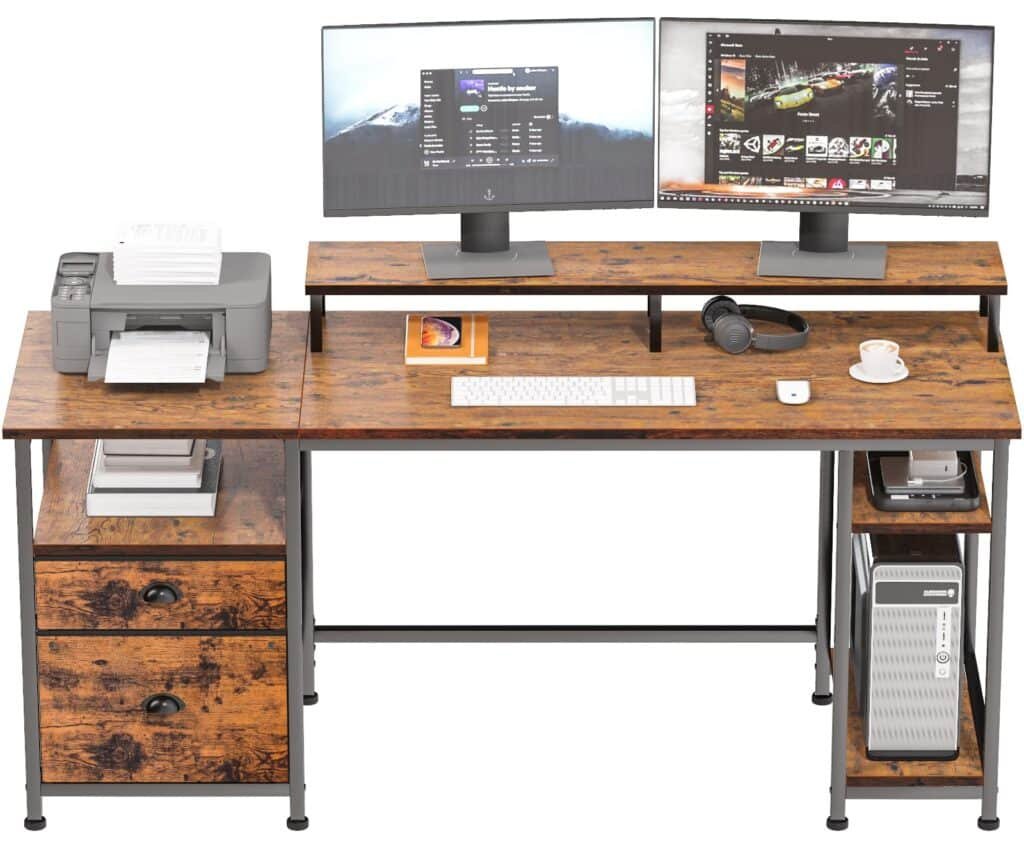
– A desk that fits your actual space. Measure first. I made the mistake of buying a 63-inch desk for a room that fit 47 inches comfortably, and I lived with a door that wouldn’t fully open for two months before admitting defeat and returning it.
– An adjustable office chair. Looks second, ergonomics first. A chair that’s merely pretty will wreck your back by week three of full-time use.
– A filing or storage cabinet. Keep it within arm’s reach of the desk. This is the single biggest thing that keeps a desktop clear.
– Shelving or a bookcase. Mix open and closed — open for what you grab daily, closed for what you don’t want to look at.
– A task lamp. Not overhead lighting alone. A dedicated lamp aimed at your work surface cuts eye strain in a way ceiling light never will.
– Cable management. A cheap under-desk tray or clip set. This is the detail that separates “put together” from “still looks like move-in day.”
Optional Layers That Keep It From Feeling Sterile
Minimalism tips into cold fast if you don’t add texture. A few things that help:
– One plant. I keep a 12-inch pothos on my filing cabinet because it’s nearly impossible to kill and it softens every hard edge in the room.
– A woven basket on a shelf for loose cables, receipts, whatever doesn’t have a home yet.
– A black metal lamp base against white or oak surfaces — this is the cheapest contrast trick in the book.
– One framed print or pinboard so the space feels like yours, not a showroom.
How to Actually Put It Together
Start with the anchor pieces in order: desk, then chair, then storage, then lighting. Don’t buy accessories before you’ve committed to the big four — I’ve watched friends build a “vibe” around throw pillows and lamps before they even had a desk that fit, and it’s backwards every time.
A few rules that make the difference between looking styled and looking like a pile of furniture:
– Cap your palette at 2–3 neutrals, plus one darker accent (black or charcoal) for definition. White desk, beige chair, black lamp — done.
– Go vertical. A shelving unit that climbs the wall instead of spreading across the floor saves square footage and draws the eye up, which makes a small room feel taller.
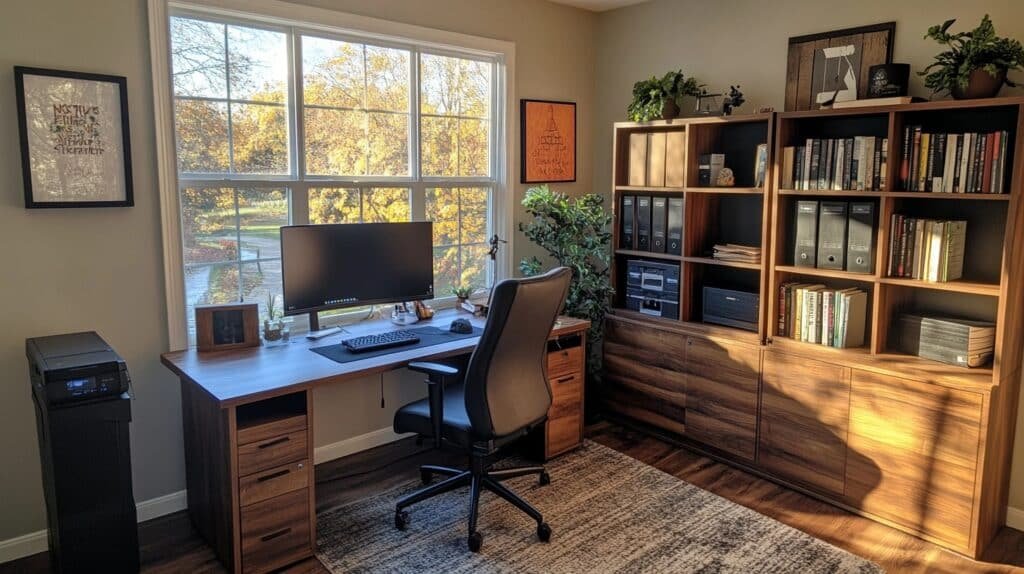
– Position the desk beside a window, not facing it or with your back to it. Front-on, you get glare on your screen all afternoon. Behind you, you get backlit video calls where nobody can see your face. Side light is the only angle that works for both screen visibility and Zoom calls.
– Mix open and closed storage. Open shelf for the stuff you touch daily — notebook, headphones, coffee mug. Closed cabinet for paperwork, cables, the stuff that makes a desk look busy.
Setting Up: Room by Room Logic
Before you buy anything, walk through this:
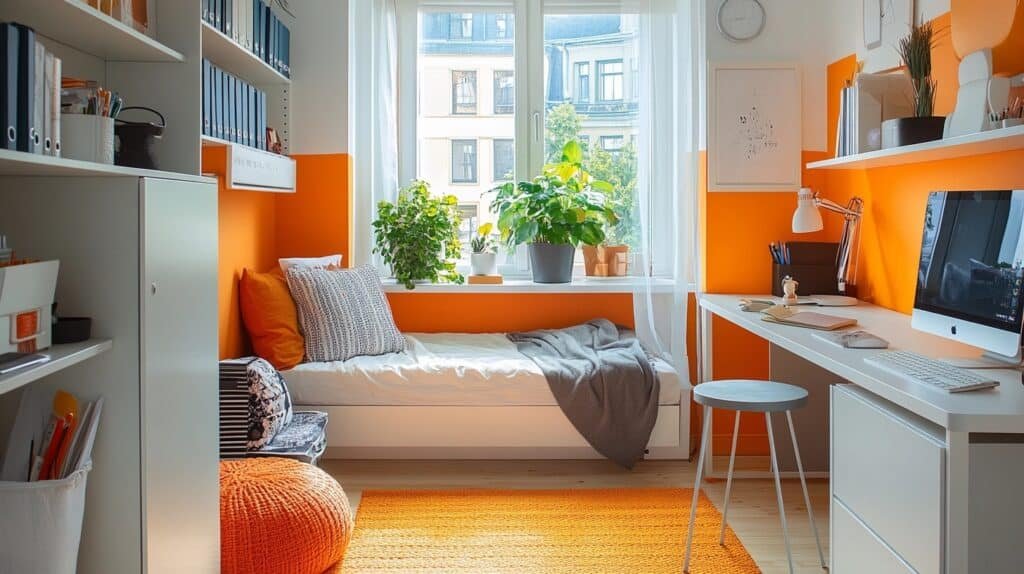
1. Measure the space, including door swing and any radiator or outlet placement. This matters more in a bedroom, where IKEA’s room-divider approach (a bookshelf or screen splitting the sleeping and working zones) only works if you’ve got the floor space to back it up.
2. Sort what needs to be within reach — laptop, charger, notebook, pen — from what can live in a drawer. If it’s not a daily item, it goes in the cabinet, not on the desk.
3. Decide if this is permanent or multi-use. A fold-down desk or a rolling storage cart makes sense if the room doubles as a guest room or gym. A full desk system makes sense if it’s dedicated.
Mistakes I’ve Made So You Don’t Have To
Overfilling the desktop. I used to keep everything visible because I thought I’d “forget” things in drawers. What actually happened: the desk looked like a junk drawer exploded, and I worked worse, not better. Now everything not in active use goes in the filing cabinet. Desktop stays clear except laptop, lamp, and one notebook.
Buying the chair for looks. My first office chair was a wood-and-canvas number that looked great in photos and gave me lower back pain within two weeks. I replaced it with the FLINTAN, which is less photogenic and infinitely more livable. Adjustable height and lumbar support aren’t negotiable if you’re sitting there eight hours a day.
Putting the desk directly in front of the window. I did this for the “natural light” of it all and spent six months squinting at a washed-out monitor every afternoon. Moved the desk perpendicular to the window instead — light comes from the side, screen glare disappeared.
Too much stuff, not enough system. If you can see more than four or five objects on your desk at any time, something needs a home. Trays, drawer dividers, a pen cup — cheap fixes, big visual payoff.
Keeping It Looking Right Over Time
Repeat one material across pieces. I use light oak on the desktop, the shelf, and the picture frame. That repetition is what makes a room feel decorated instead of just furnished, even though every piece was bought separately, in some cases years apart.
Do a weekly reset. Sunday night, I put back anything that’s drifted onto the desk during the week — return the stapler to the drawer, the mail to the tray. Five minutes, and it means the space never spirals into clutter.
Update with soft goods only. A new cushion on the chair, a different desk mat, a seasonal candle on the shelf — that’s plenty. You don’t need to replace furniture to keep a space feeling current.
Budget-build in stages if you have to. Start with just the desk and chair — that’s your $150–$250 entry point. Add the filing cabinet next paycheck. Shelving after that. I built my current setup over about four months this way, and it never felt like I was living with an unfinished room, because each stage was fully functional on its own.
A Few Directions to Take It
– Warm minimalist: beige chair, oak desk, white storage — the softest version of this style
– Modern industrial edge: black metal lamp, black shelf brackets, keep everything else neutral
– Soft organic: add linen cushions, woven baskets, and two or three plants instead of one — leans less office, more studio
Whatever direction you pick, the bones stay the same: clear desktop, comfortable chair, storage that actually gets used, and light that hits your work from the side. Everything else is just how much personality you want layered on top.