What “Cozy Home Office” Actually Means
It’s a warm, layered, comfort-first workspace — think hygge crossed with modern traditional, or soft rustic with a little cottage mixed in. Warm neutrals, wood, linen, wool, a little brass. Not sterile, not stark, not a Pinterest-perfect minimalist box with a single succulent on it.
This works whether you’ve got a full spare bedroom or a 6-foot-wide nook under the stairs. Small spaces actually respond really well to this style, because multi-functional furniture and light-bouncing tricks (mirrors, pale wood, sheer curtains) do double duty in tight square footage.
Time and cost, honestly:
– A weekend refresh with what you already own, plus a rug and some lighting: $300–$800
– A full setup — ergonomic chair, real desk, layered lighting, textiles, storage: $1,200–$3,500+
– Skill level: styling is beginner-friendly. Wallpaper, built-ins, or new lighting circuits bump it to intermediate.
This look also doesn’t care about seasons. The formula — warm light, layered textures, wood, organized storage — holds up in July and January both, which is more than I can say for the all-white “modern minimalist” office I tried in 2026 and abandoned by October because it felt like a hospital hallway once the sun started setting at 5pm.
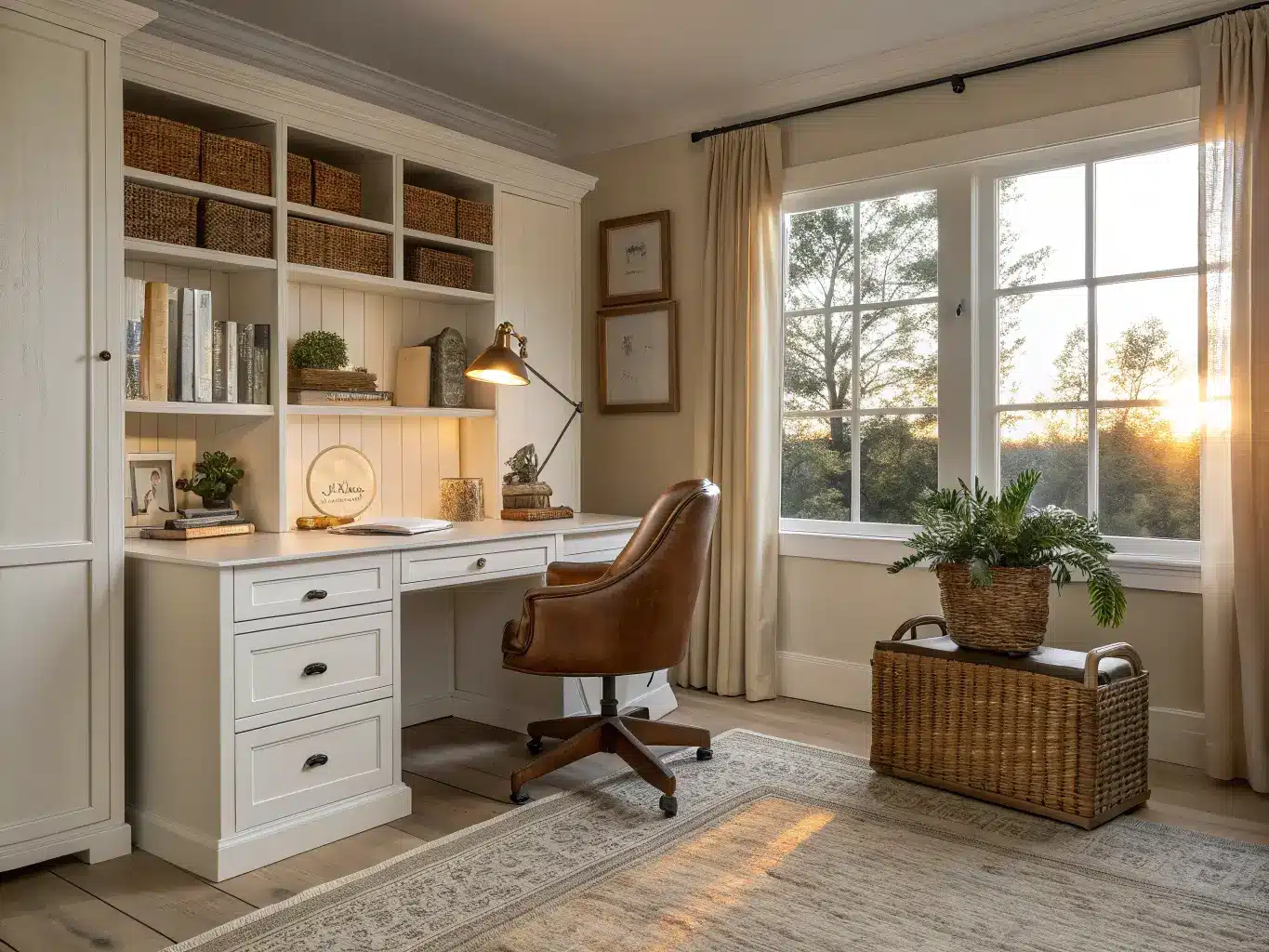
The Essential Pieces That Actually Make It Cozy
Skip decor shopping until you have these four things sorted. I mean it — I bought a beautiful vintage brass lamp before I had a decent chair, and I regretted it every single day I sat hunched over my laptop for the next four months.
1. A chair with real lumbar support.
Not a chair that photographs well. One that holds your lower back up during hour six of a workday. This is the one place in the whole room where looks should lose to comfort every time.
2. A desk with actual surface room — and ideally, storage.
You need space for your laptop, a notebook, and a lamp without everything touching. A desk with drawers or a shelf underneath keeps the surface visually calm, which matters more for the “cozy” feeling than any accessory you’ll add later.
3. Layered lighting, not just an overhead fixture.
This is the single biggest fix if your office feels cold and clinical. Add a task lamp on the desk, plus one ambient source — a floor lamp or a second table lamp in the corner. Use warm bulbs, around 2700K–3000K. That number matters more than the lamp itself; a $15 lamp with the right bulb temperature will beat a $200 lamp with a cool white bulb every time.
4. A rug big enough for the desk and chair to sit on.
A too-small rug is the most common mistake I see (and made myself, twice). If your chair rolls off the edge of the rug when you scoot back, it’s too small. As a rule of thumb, leave at least 18–24 inches of rug showing beyond the desk on the sides you can see.
Round out the room with:
– Curtains in linen or heavier cotton — even faux ones — to soften hard window light and add texture
– Woven baskets, wood shelves, or fabric boxes for hiding cords, paperwork, and supply clutter
– One or two personal objects — real photos, a stack of books you’ve actually read, something you found at a flea market
– A plant in a neutral pot — I use a plain terracotta one, nothing fancy, and it’s done more for the room than half the art I’ve hung
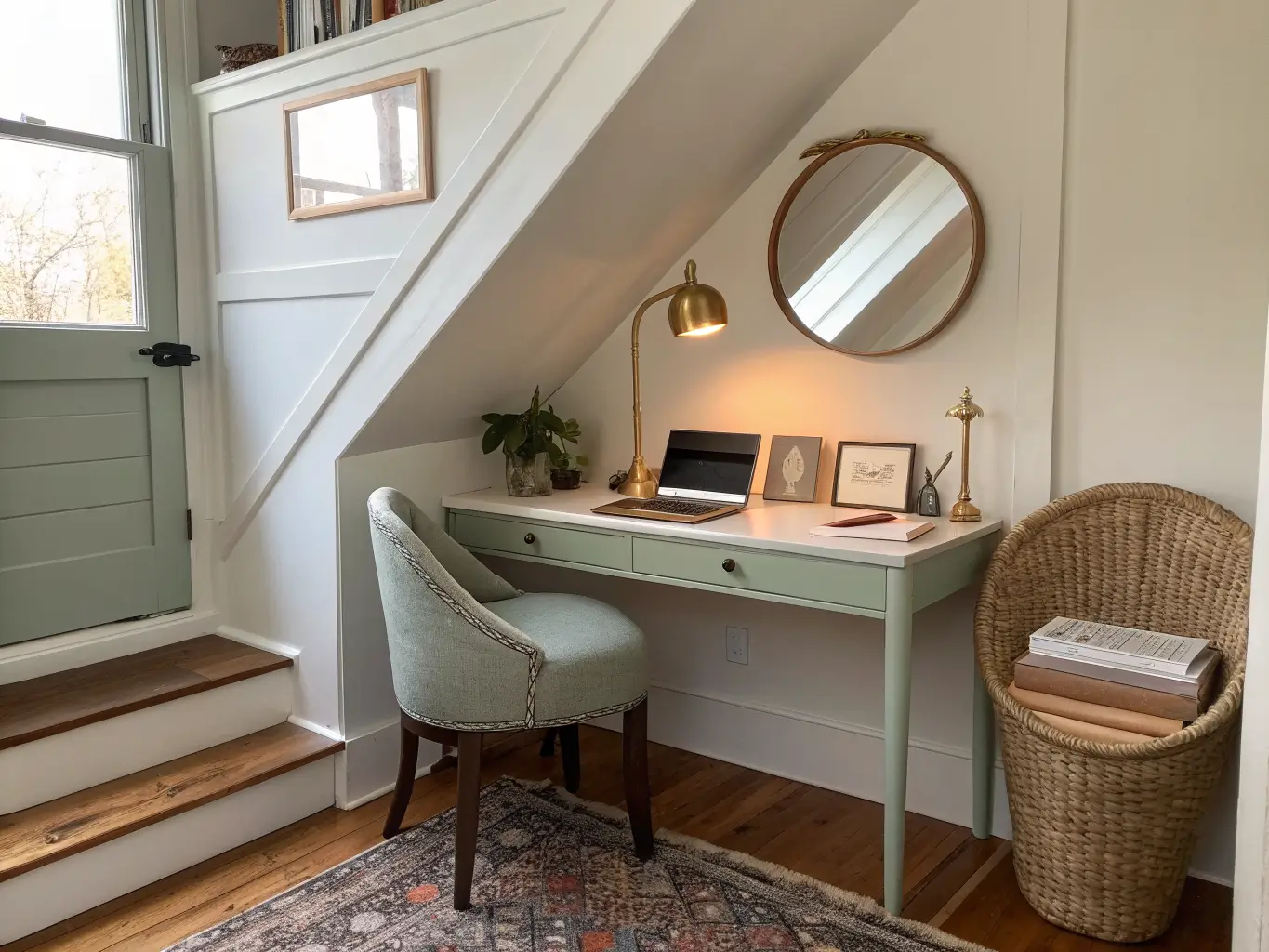
Optional Layers Worth Adding Later
Once the essentials are in place, these push the room from “nice” to “I don’t want to leave this chair”:
– Grasscloth or patterned wallpaper on one wall — adds warmth and texture without needing more furniture
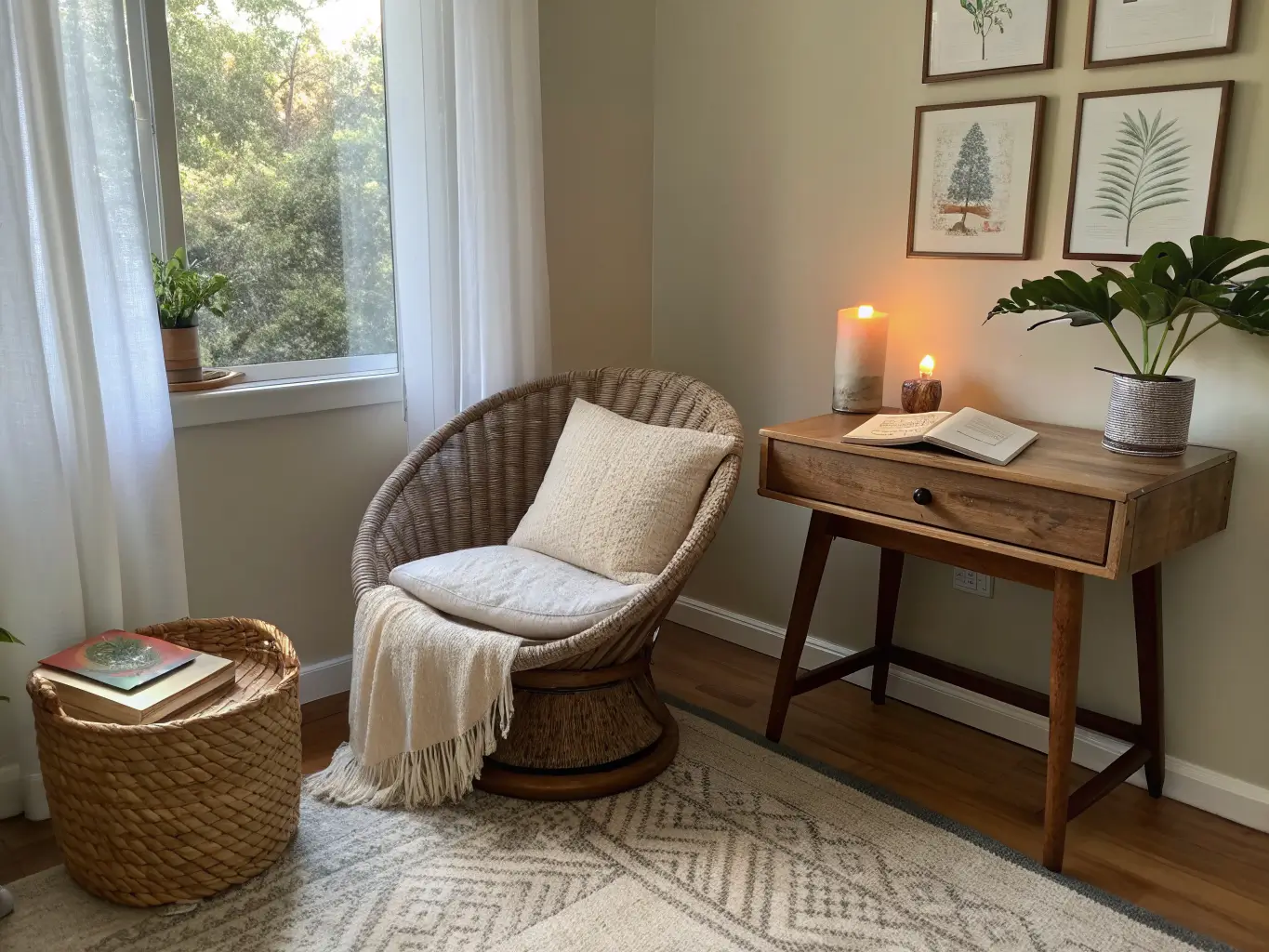
– A small accent chair or reading corner for phone calls or breaks from the desk
– Heavier curtains, rugs, or acoustic panels if your video calls pick up every sound in the house
– A candle or diffuser — scent is an underrated part of “cozy,” and it’s the cheapest fix on this whole list
– Brass or aged-gold accents, used sparingly — a lamp base, a picture frame, a drawer pull. Too much metallic and the room stops feeling calm and starts feeling like a hotel lobby.
Seasonal swaps: a knit throw over the accent chair in winter, lighter linen in summer, a small dried-flower arrangement any time you want an update without spending real money.
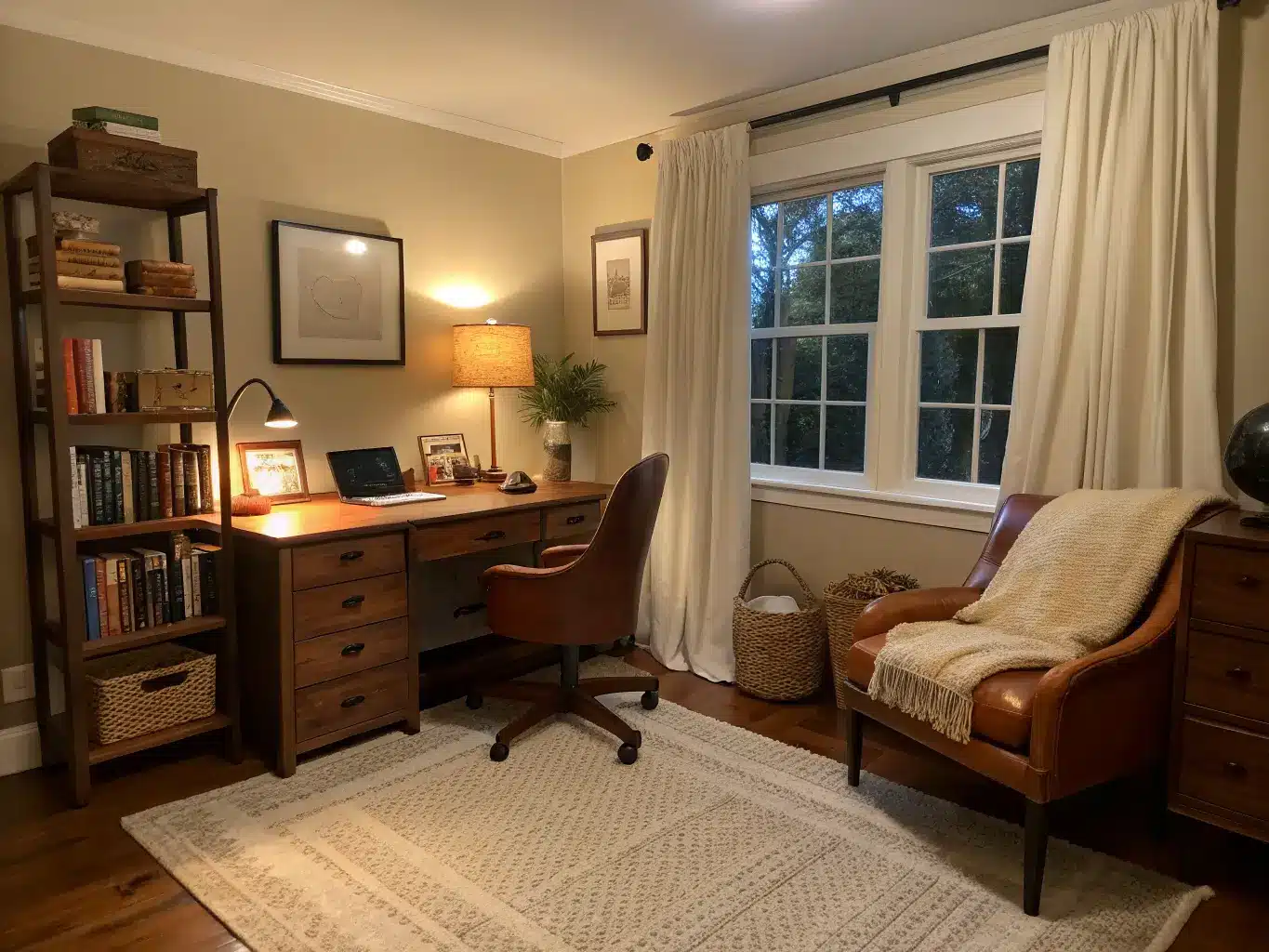
Styling Rules That Actually Make a Difference
Layer at least three textures. Something soft (velvet cushion, wool throw), something structured (wood desk, leather chair), something natural (woven basket, jute rug). This is the difference between a room that feels considered and one that feels like a furniture showroom.
Pick warm neutrals as your base, then add one or two accent colors — no more. Think oatmeal, warm greige, soft terracotta, muted sage. Skip pure white walls and cool gray if cozy is the goal; they read clean, not warm, no matter how many blankets you throw at them.
Put the desk near a window if you can, but watch for screen glare. If your room doesn’t get much natural light, lean on mirrors to bounce what you’ve got — I hung a large round mirror across from my one small window and the room reads noticeably brighter without adding a single extra bulb.
Give the room one clear focal point. A styled wall behind the desk, a full bookcase, a cluster of framed art. Without this, cozy decor just looks scattered.
Keep the desk surface almost empty. This was the hardest habit for me to build. Everything that isn’t actively in use — extra pens, mail, chargers — goes in a drawer or basket. A cozy room still needs visual quiet to actually feel restful.
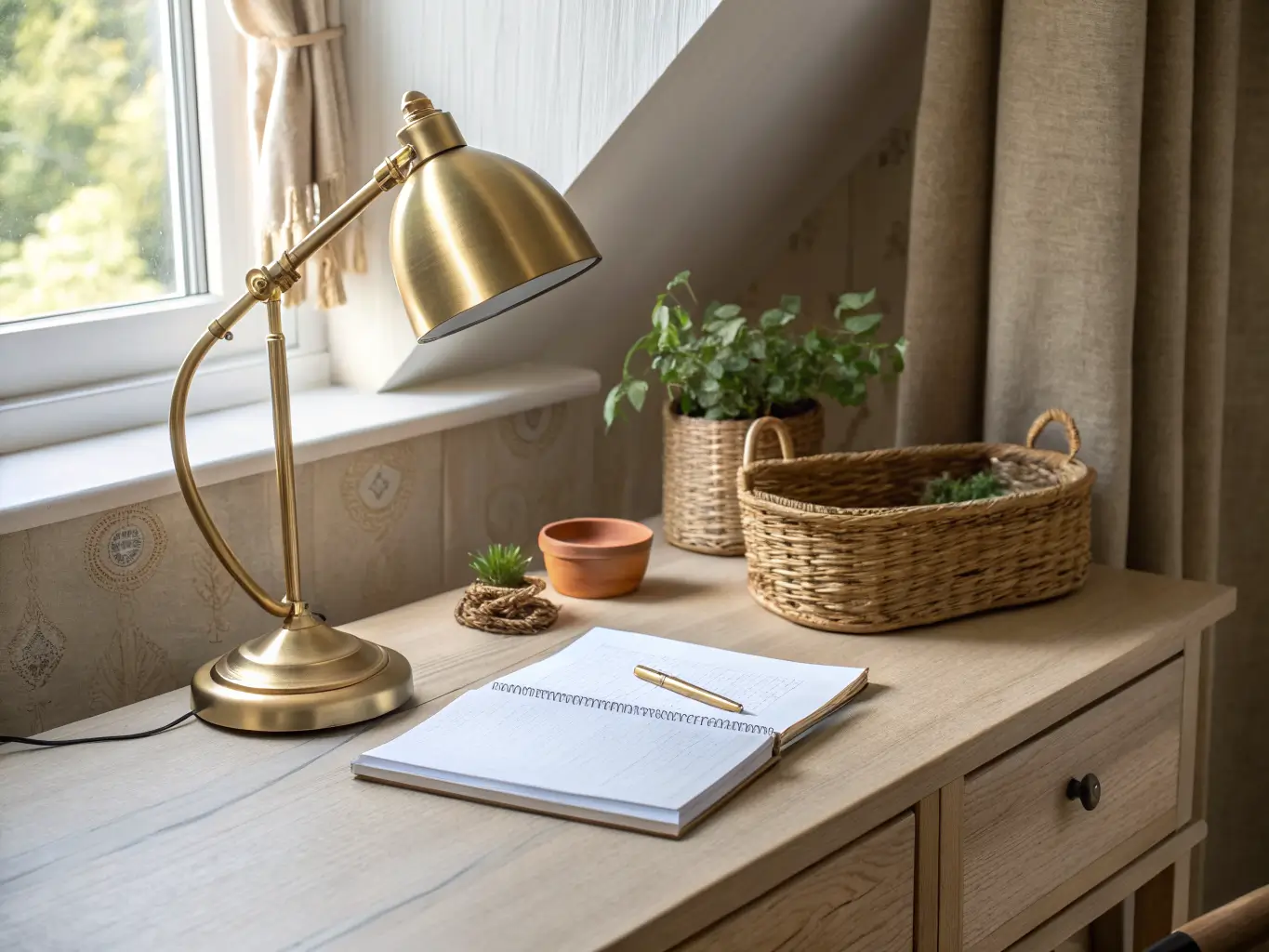
Setting It Up: Order of Operations
1. Clear everything first. Papers, extra cables, decor that’s just taking up space. You can’t judge what a room needs until it’s empty.
2. Decide what the room is actually for — focused solo work, video calls, or creative work — before you place furniture. A desk angled for great Zoom lighting is different from one angled for deep-focus writing.
3. Position the desk. I like a solid wall behind my chair (nobody walking up behind you mid-task) with the desk itself angled toward, not directly under, the window. Straight-on window placement sounds nice until you’re squinting at a glare-washed screen by 10am.
4. Add the big soft layers first — rug, then curtains, then the chair. These set the tone before a single accessory goes on the shelf.
5. Layer in lighting — desk lamp, then ambient lamp.
6. Add storage that also looks good — baskets, shelves, boxes.
7. Finish with personal objects last. Art, books, plants, the one weird ceramic thing from your grandmother’s house. This step is what makes it feel like your office instead of a stock photo.
Mistakes That Quietly Kill the Cozy Feeling
– Relying only on an overhead light. Flat, cool, and the fastest way to make any room feel clinical. Layered lamps fix this almost instantly.
– Choosing your chair for looks over support. You will regret this by week two of full-time use. Ask me how I know.
– Buying a rug too small for the furniture on it. It makes the whole layout look unfinished, like the room isn’t done being decorated.
– Overloading the desk with decor. Two or three objects max. More than that and it stops feeling curated and starts feeling cluttered.
– Skipping storage entirely. Pretty decor next to a pile of loose cables and old mail cancels itself out.
– Going too cool-toned. Crisp white walls and industrial gray metal read modern and sharp — not warm. If cozy is the goal, warm up your palette first.
Keeping the Room Feeling Fresh Without Redoing It
Stick to your palette. Warm neutrals plus one or two accent colors, and don’t wander outside it every time you buy something new. This is what keeps a room feeling pulled-together a year in instead of like a pile of unrelated purchases.
Repeat materials on purpose. If you’ve got a wood desk, echo it in a wood shelf or picture frame. Woven basket on the floor, woven basket on the shelf. Repetition reads as intentional, even if you didn’t plan it that way from day one.
Rotate small stuff seasonally, not big stuff. Swap a throw blanket or a candle scent, not the whole rug.
On a budget? Change your bulbs to warm LEDs before anything else — it’s a $20 fix that changes the whole feel of the room. After that: thrifted frames, a secondhand wood chair, baskets from a discount store. Save the big spending for the desk and chair, since those get used daily and cheap versions of both show their weaknesses fast.
Want to push the style further? A few directions that layer well on top of this base:
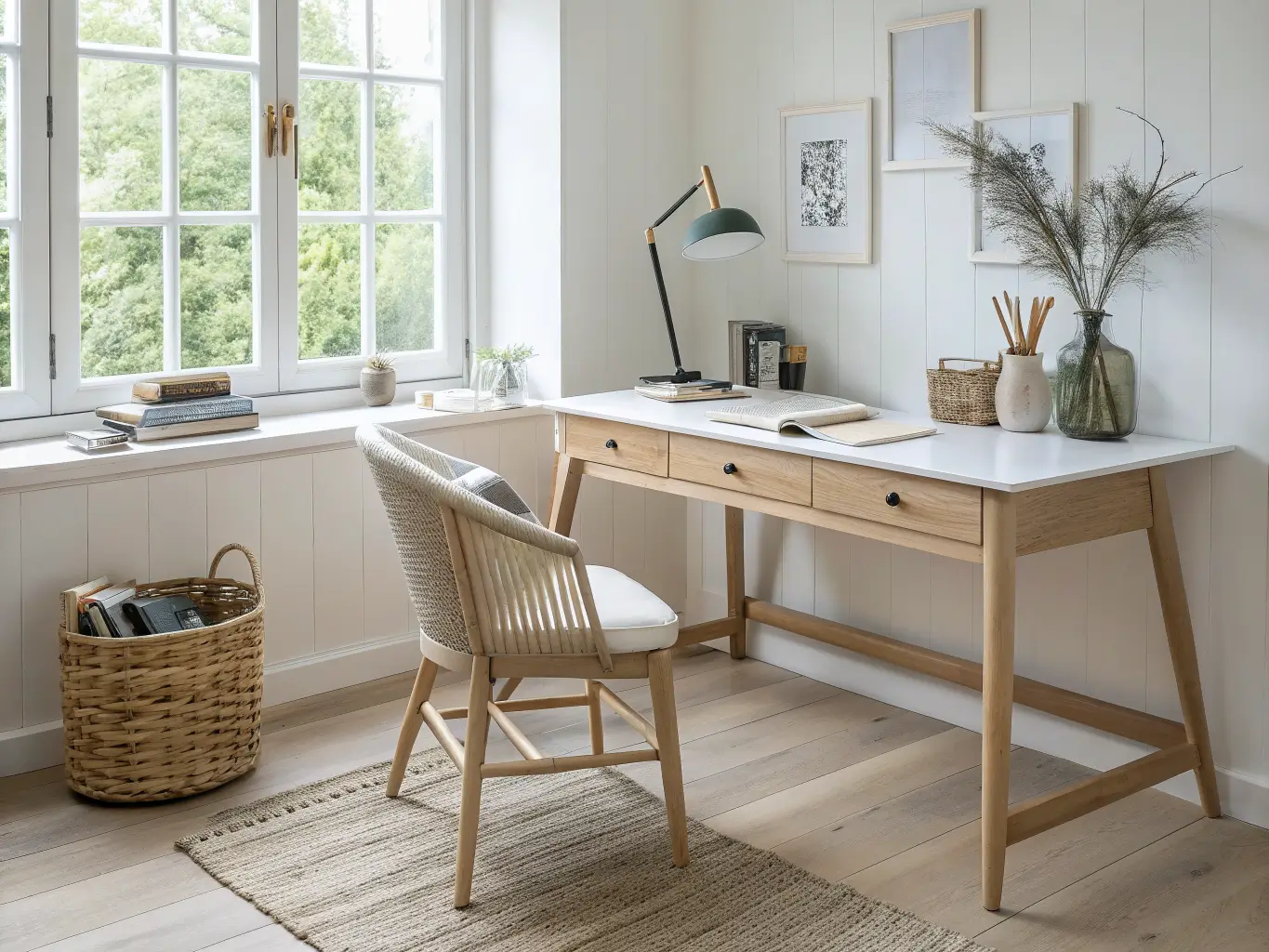
– Cozy Scandinavian: pale oak, white walls, linen, very restrained decor
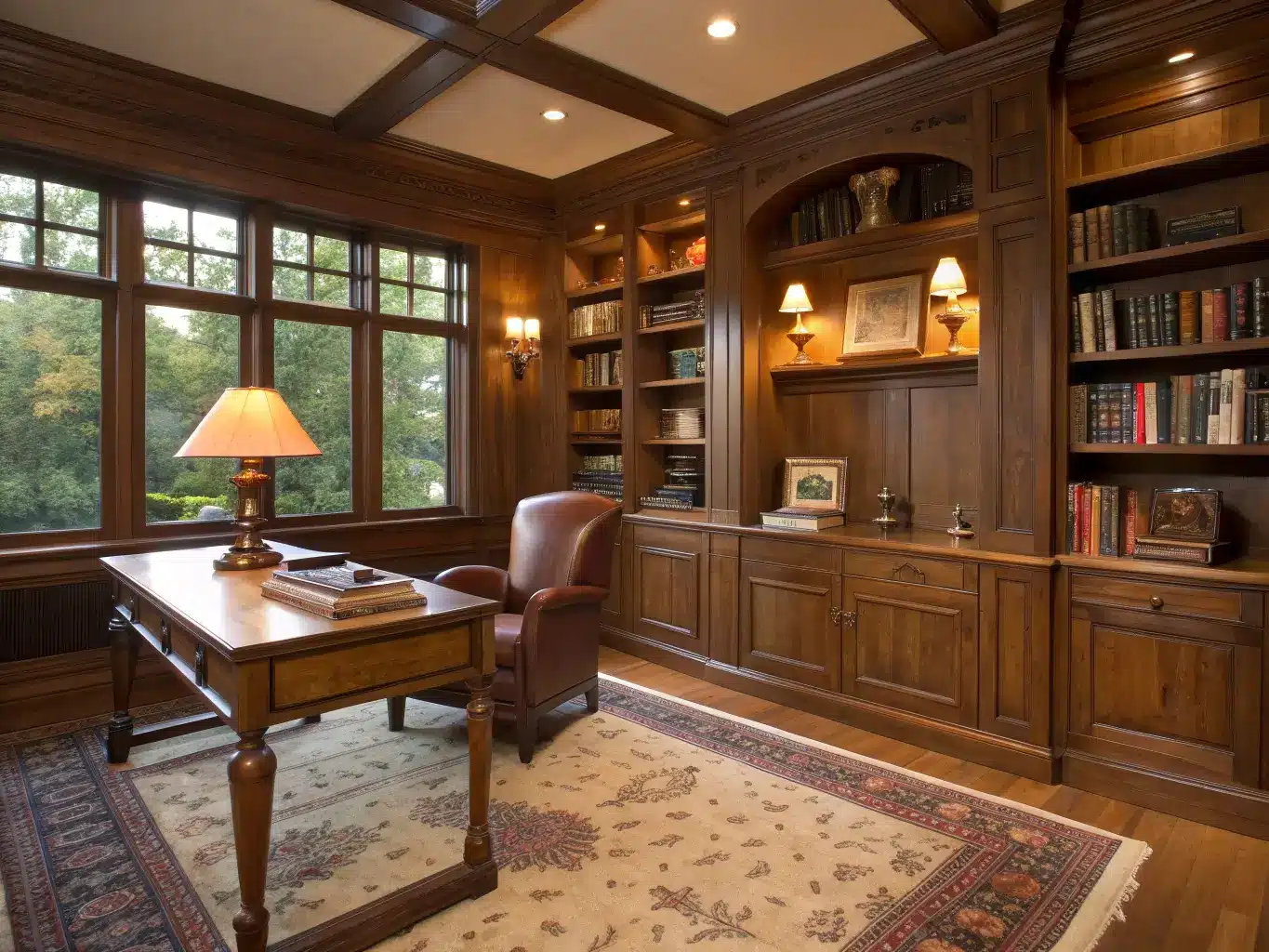
– Cozy traditional: paneled walls, fabric lamp shades, a classic wood desk, floor-to-ceiling bookshelves
– Cozy cottage: floral fabric, painted furniture, extra soft layering
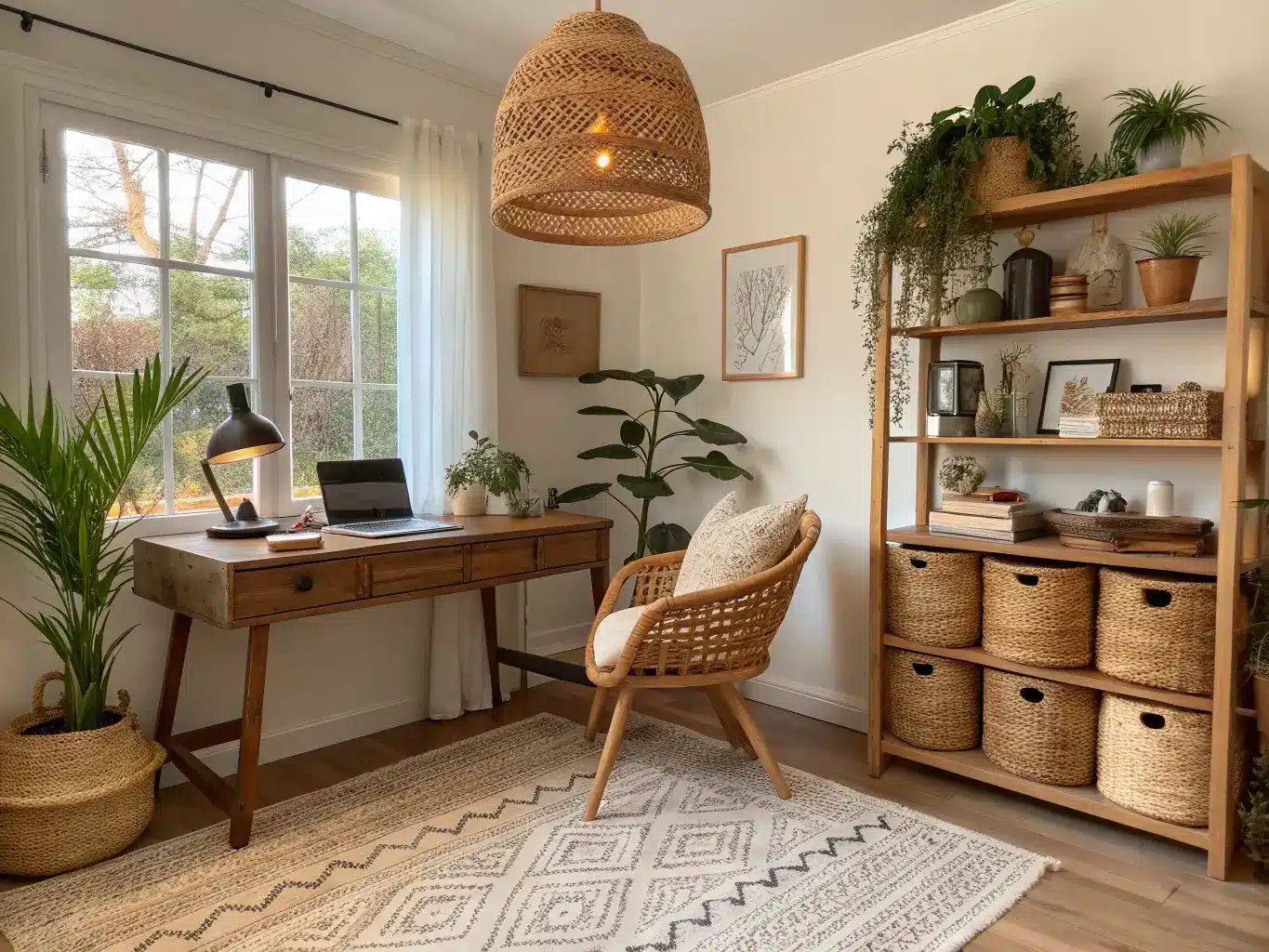
– Cozy boho: rattan chairs, more plants, textured rugs, open shelving
None of these need a full overhaul to try. Swap one lamp, one rug, one wall color, and see how the room shifts before you commit to anything bigger.
How to Make a Cozy Home Office (Without It Turning Into a Cluttered Mess)
If your home office feels like a place you tolerate instead of a place you actually want to sit for eight hours, the problem is usually lighting and layout, not a lack of decor. I redid my own office three times before I figured that out — the first version had a great desk, a nice rug, and one overhead light, and it still felt like a waiting room. Cozy isn’t about adding more stuff. It’s about warmth, texture, and a few smart choices that make a small functional room feel like part of your home instead of an afterthought bolted onto it.
Here’s everything I’ve learned setting up (and re-setting-up) a home office that actually feels good to work in.
For another angle on this, my home office ideas guide covers the same space from a different starting point.