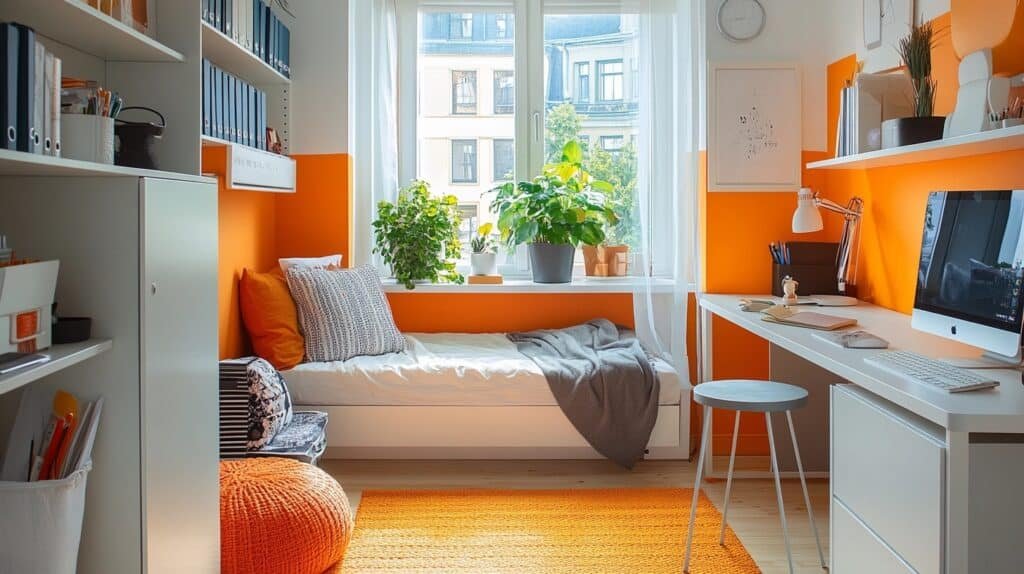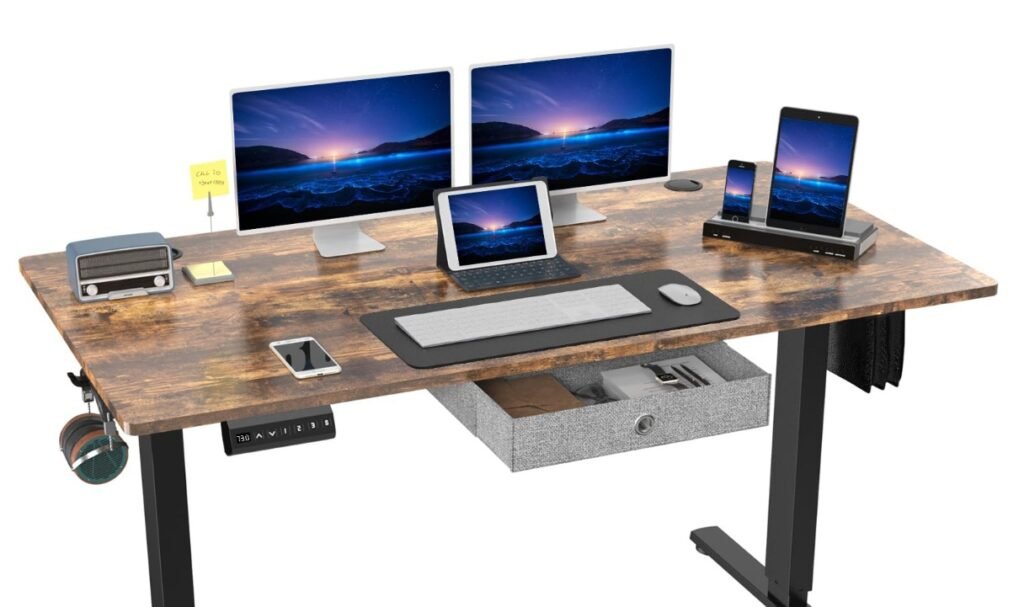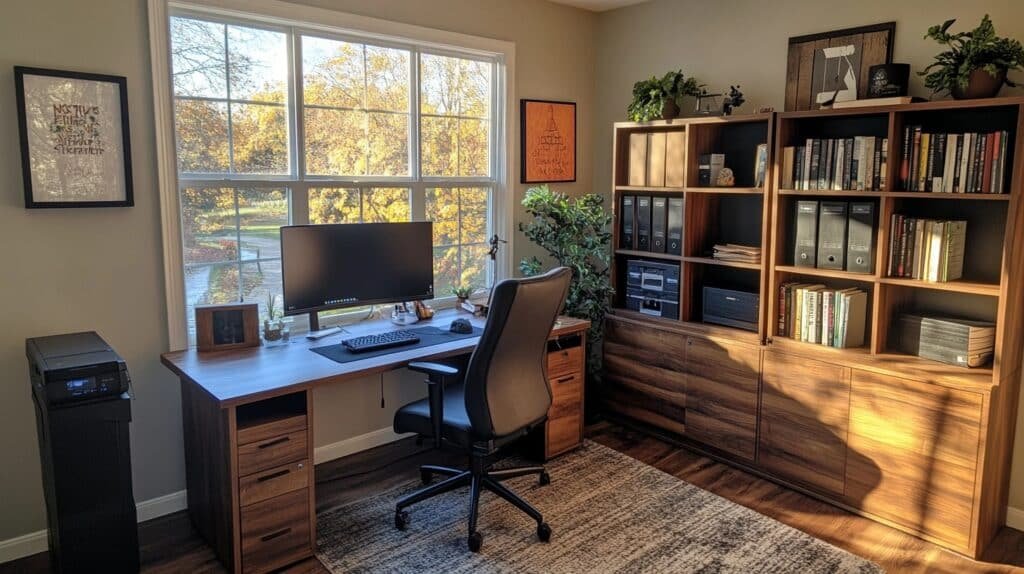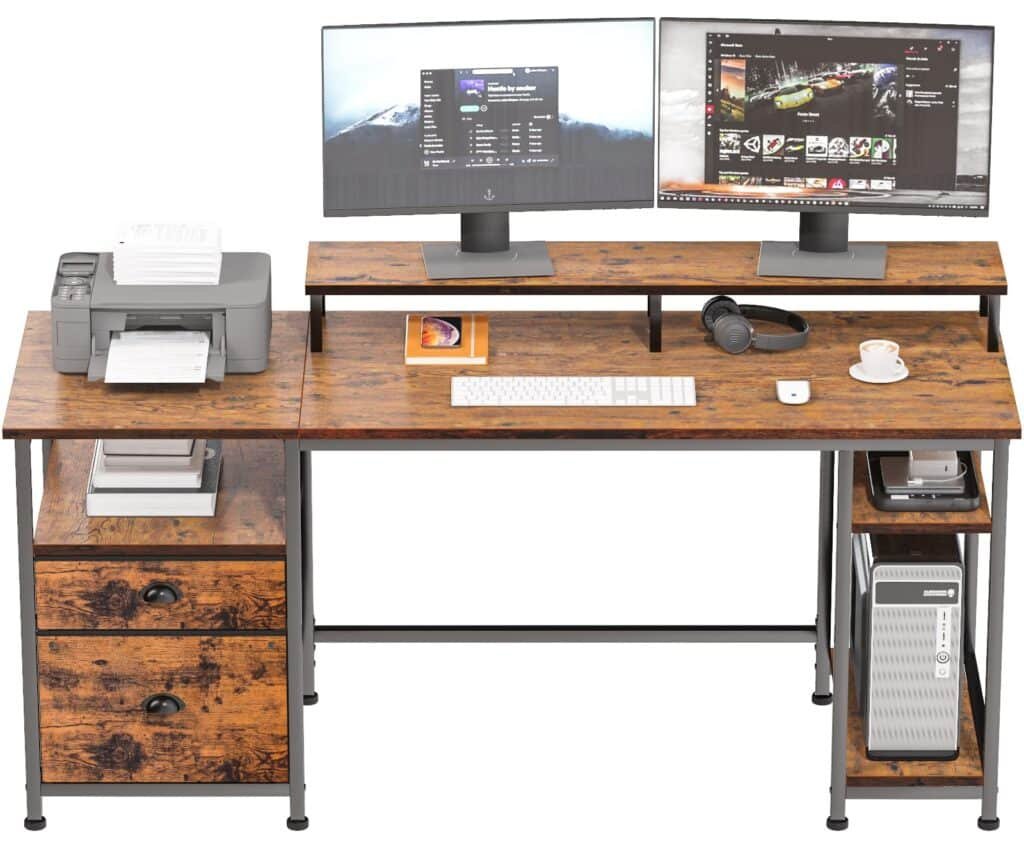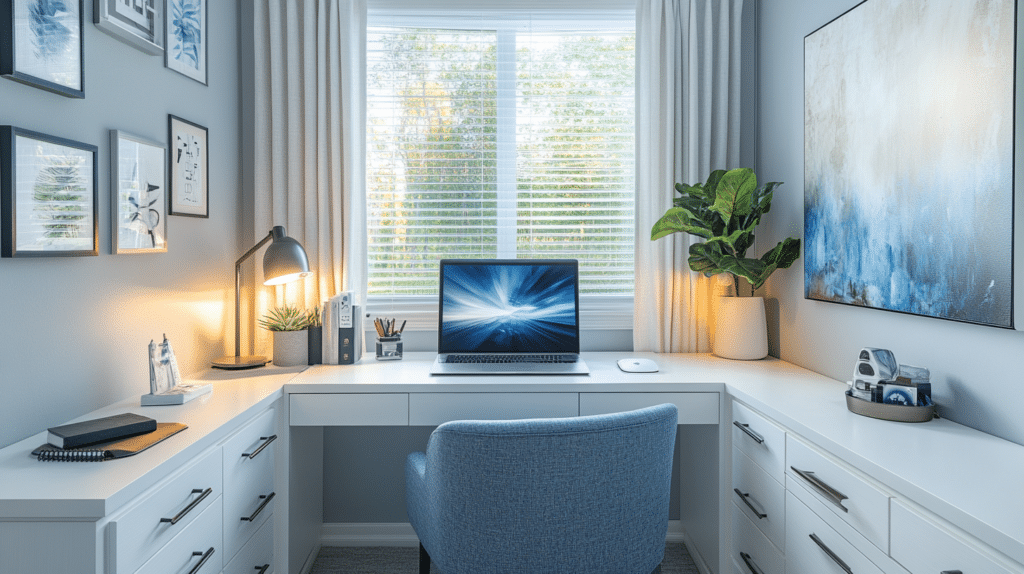
A wabi sabi office is about what age does to the materials. I left the wood bare and the walls matte, so the calm came from the imperfection.
1. Quiet Desk
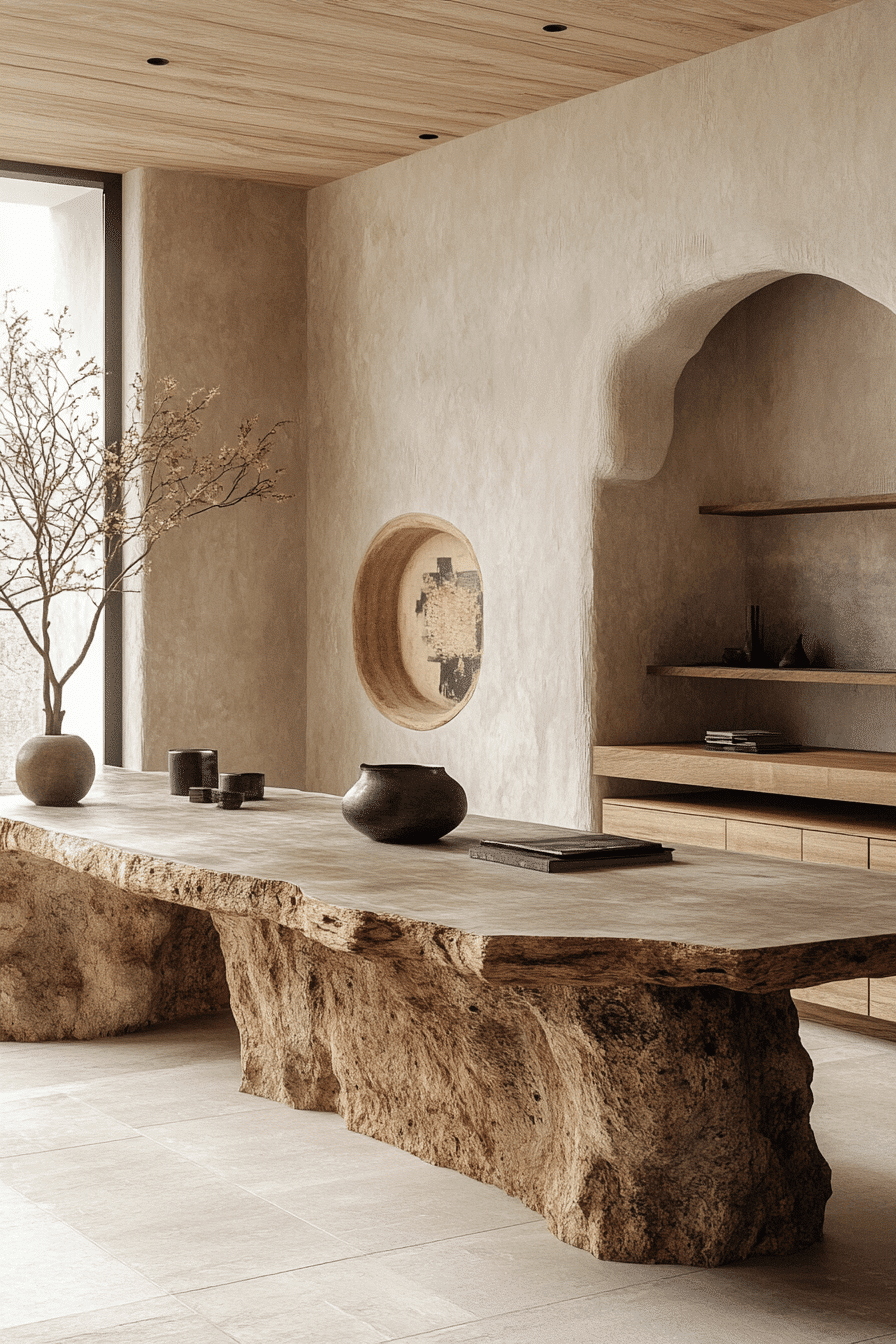
A quiet desk setup in a wabi sabi office embraces negative space, allowing the mind to breathe and focus. The simplicity of raw edges and muted colors creates a calm, grounded feeling. Soft lighting enhances the understated elegance without distraction. The workspace prioritizes presence and function. Each element is intentionally placed for clarity and comfort.
🎨 Steal This Look
- Paint Color: Sherwin-Williams Accessible Beige SW 7036
- Furniture: Solid wood desk with natural grain and raw edges, minimal metal hardware, low-profile wooden chair with natural finish
- Lighting: Warm brass or matte black desk lamp with linen shade, positioned to avoid glare
- Materials: Unfinished wood, natural linen, soft matte metals, stone or concrete accents
A quiet desk is where wabi sabi truly lives—it’s not about perfection, but about creating enough emptiness that you can actually think. This approach transforms work from overwhelming to meditative.
2. Soft Minimal
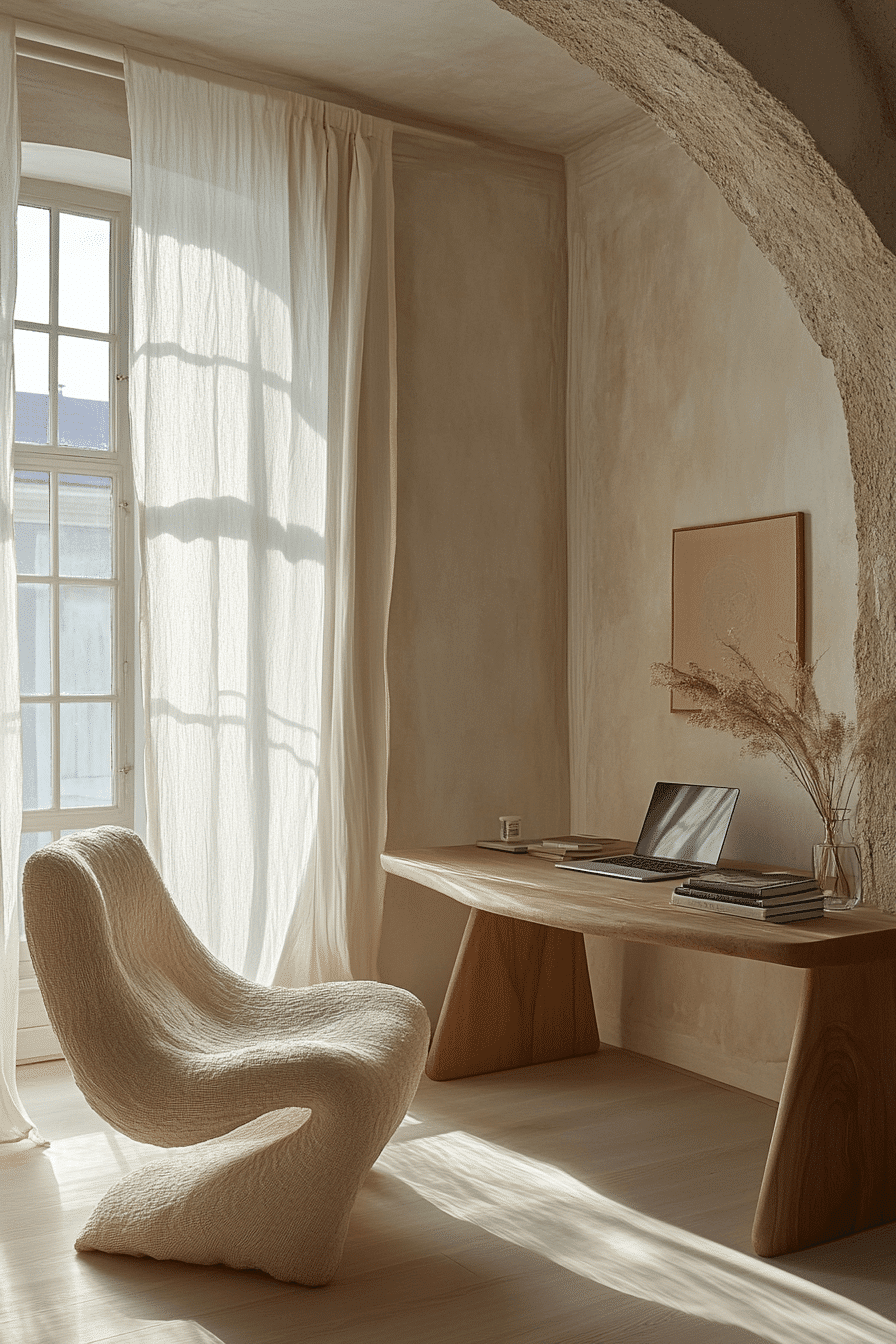
A soft minimal layout reflects the wabi sabi office ideal of beauty in restraint. Gentle textures and soft surfaces create an inviting yet contemplative workspace. Imperfect materials like clay-toned ceramics and lightly textured walls add subtle charm. The lack of harsh lines encourages relaxation and openness. It’s a space that invites mindfulness, not productivity pressure.
🖼 Steal This Look
- Paint Color: Benjamin Moore Accessible Beige HC-94
- Furniture: Low-profile desk with natural wood or light oak finish, simple wooden chair with woven seat, low open shelving in natural materials
- Lighting: Soft diffused pendant light or paper lantern-style fixture with warm 2700K bulbs
- Materials: Raw clay ceramics, linen, unfinished wood, soft wool felt, handmade pottery, natural fiber textiles
Soft minimal wabi sabi offices celebrate impermanence and the beauty of aging gracefully. This approach transforms work into a meditative practice rather than a task-driven grind.
3. Stone Surface

A natural stone surface grounds the wabi sabi office in organic imperfection. The matte finish and irregular edges give it timeless character. Combined with soft ambient lighting, the desk becomes both functional and reflective. Paired with simple accessories, it creates a space of quiet strength. This design encourages slowing down and working with intention.
✎ Steal This Look
- Paint Color: Farrow & Ball Cornforth White 228
- Furniture: Natural stone desk with live edge or irregular surface; solid wood office chair with natural finish; simple wooden shelving
- Lighting: Soft brass or bronze arc floor lamp with warm diffused glow; or adjustable desk lamp with warm linen shade
- Materials: Honed or tumbled stone (limestone, slate, or travertine); raw wood; natural linen; unglazed ceramic
A worn stone surface tells a story of time and use, making your office feel grounded and intentional rather than sterile. This is a workspace designed for deep work, not Instagram moments.
4. Neutral Nook

A neutral nook embraces beige, ivory, and clay hues to calm the senses within a wabi sabi office. The limited palette prevents visual overwhelm while enhancing warmth. Subtle cracks or irregular finishes remind us that beauty isn’t perfect. A low desk and textured wall enhance the grounded effect. This corner feels private and secure without feeling closed off.
🖼 Steal This Look
- Paint Color: Behr Accessible Beige N290-2
- Furniture: Low wooden desk with natural grain variations, simple lines, minimal hardware
- Lighting: Soft paper lantern or linen pendant light with warm diffusion
- Materials: Raw plaster or clay-textured wall finish, unfinished wood, linen, jute, handmade ceramics
A neutral nook isn’t boring—it’s a sanctuary. The restraint actually amplifies calm, letting your mind settle into focused work without distraction. Wabi sabi thrives here because imperfection becomes the design itself.
5. Clay Workspace
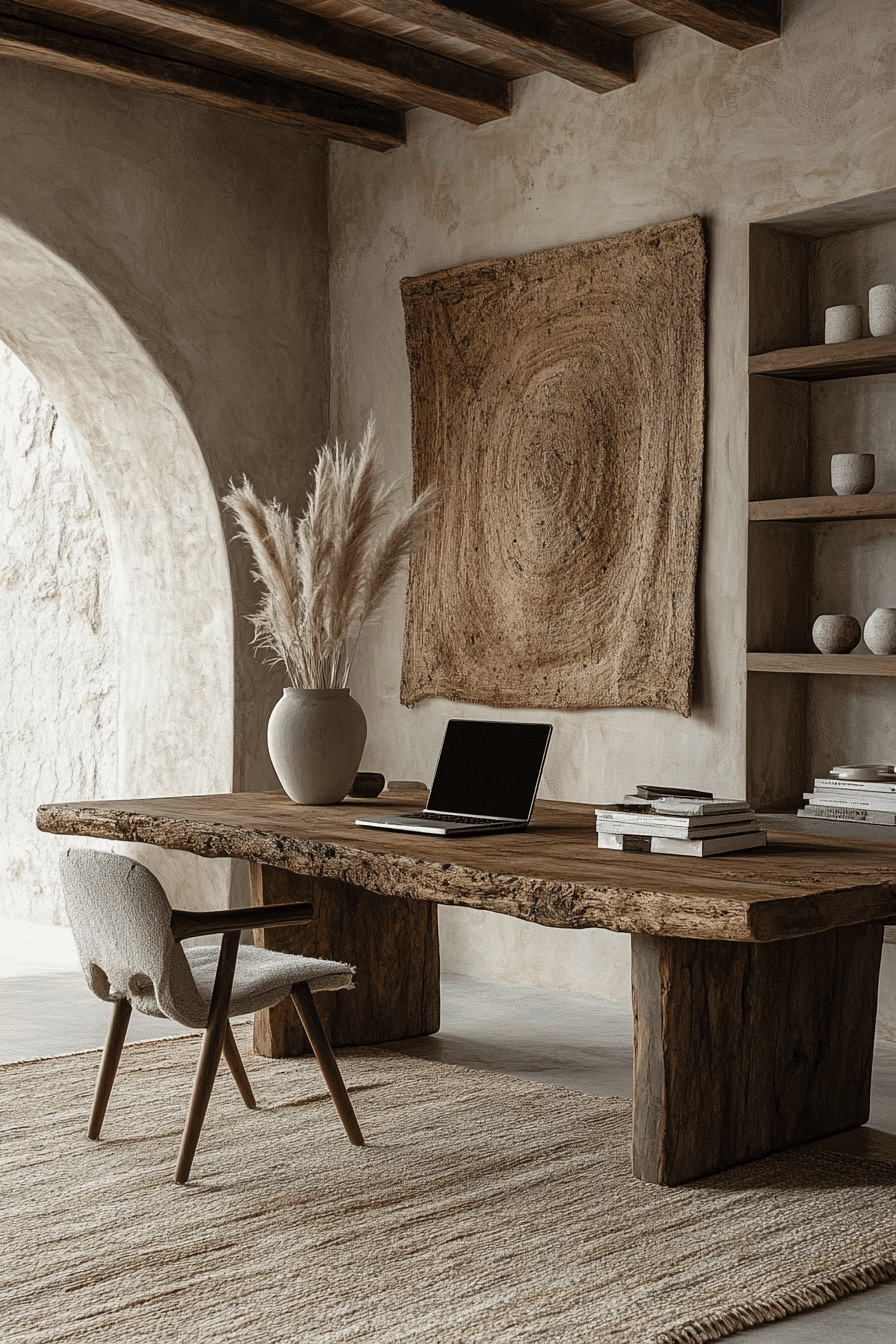
A clay-toned palette defines this wabi sabi office workspace with warmth and authenticity. The desk may have rough, tactile surfaces that invite your hands to connect. Subtle cracks or patinas give it a lived-in feel that’s comforting, not worn out. Gentle lighting and natural fibers further support the calming mood. The whole area whispers calm without needing to shout design.
🌟 Steal This Look
- Paint Color: Valspar Redend Point VLG91D
- Furniture: Solid wood desk with visible grain and hand-finished surface; natural wood task chair with woven seat
- Lighting: Warm brass arc floor lamp with linen shade or paper pendant light casting soft, diffused glow
- Materials: Raw wood with natural patina, linen, jute, unglazed ceramic desk accessories, cork or sisal rug
A clay workspace is about honoring the tactile, grounded feeling of earth—your hands should want to rest on every surface. This palette invites focus without tension, making it ideal for creative or contemplative work.
6. Earth Tones

Earth tones enrich the wabi sabi office by connecting the user to grounded, organic elements. Think sandy beiges, quiet browns, and soft grays layered intentionally. This color scheme soothes the eye and minimizes mental distractions. The setup is purposefully pared back with functional yet beautiful pieces. Every item feels like it belongs.
🌟 Steal This Look
- Paint Color: PPG Accessible Beige PPG1088-3
- Furniture: Solid wood desk with natural grain finish, low-profile shelving in walnut or oak, simple linen upholstered office chair in warm gray
- Lighting: Paper or linen pendant light with warm brass or natural wood fixture for soft, diffused light
- Materials: Unfinished wood, natural linen, raw ceramic, stone or concrete accents, jute or sisal area rug
Earth tones ground a work space psychologically, reducing decision fatigue and creating a sanctuary for focus. This palette whispers rather than shouts, allowing your mind to settle into deep work.
7. Linen Desk
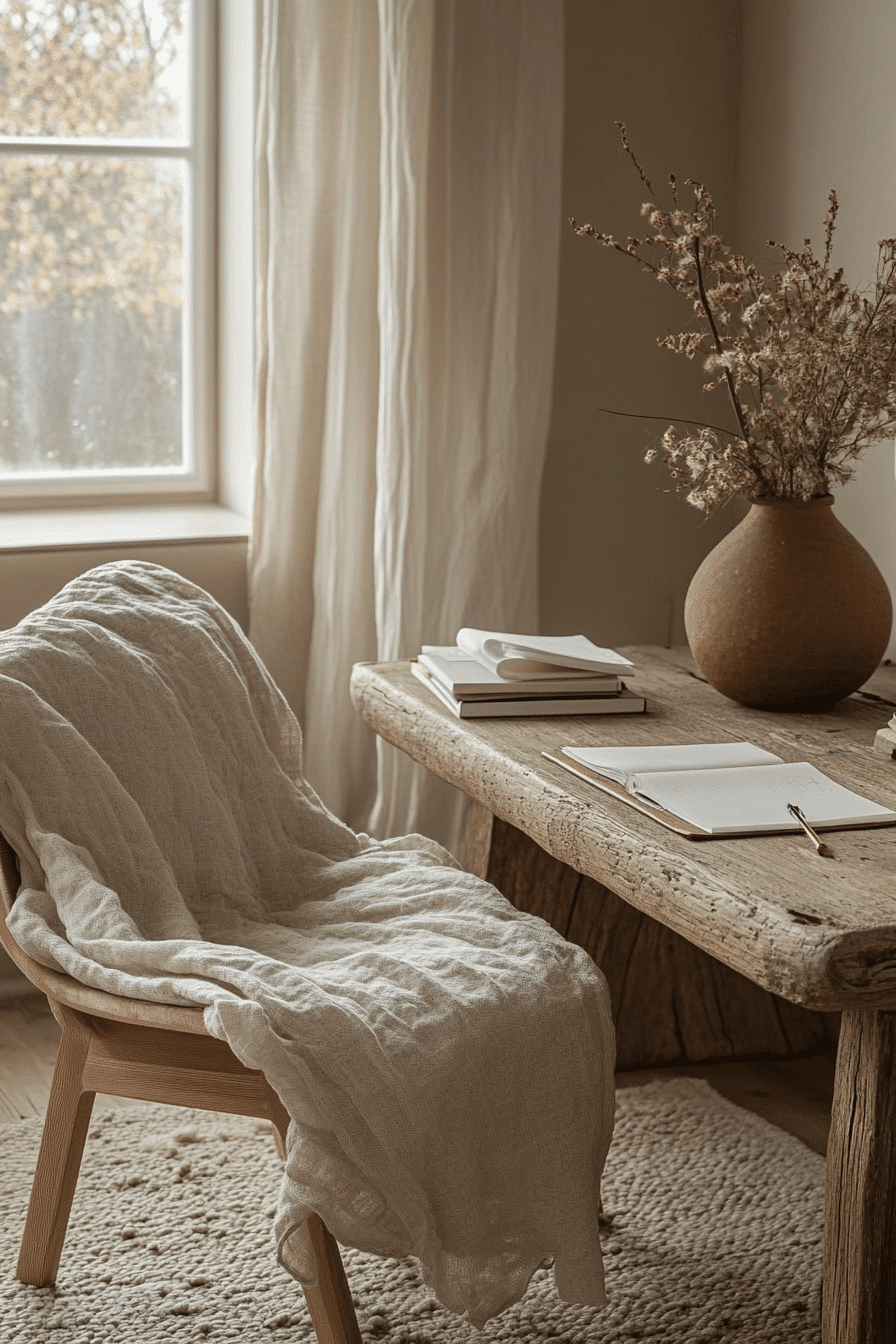
A linen-covered desk in a wabi sabi office blends texture with tranquility. The fabric adds softness to an otherwise hard surface, echoing the theme of impermanence. Neutral tones keep it understated while the texture invites interaction. Small wrinkles and uneven fibers add to its charm. This tactile detail elevates the entire space.
🏠 Steal This Look
- Paint Color: Dunn-Edwards Bleached Vellum DE6259
- Furniture: Linen-upholstered desk with natural wood frame, tapered legs, minimal hardware
- Lighting: Adjustable brass or matte black task lamp with linen shade
- Materials: Raw linen fabric (natural, undyed), reclaimed or light ash wood, matte metal accents, exposed grain texture
A linen desk transforms your workspace into a sanctuary of calm intentionality. The soft texture under your hands reminds you daily that imperfection and wear are beautiful.
8. Rough Texture

Embracing rough textures is central to a wabi sabi office that values imperfection. Uneven surfaces like raw plaster or weathered wood create visual and tactile interest. These materials remind us that life isn’t polished, and neither is beauty. When paired with minimal furnishings, the space feels sincere and grounded. The textural contrast fosters sensory awareness during work.
🖼 Steal This Look
- Paint Color: Clare Paint Limestone CODE – a warm, slightly textured off-white that complements raw plaster and weathered materials without competing
- Furniture: Solid wood desk with visible grain and natural edge, low platform shelving in reclaimed or rough-hewn timber, simple linen upholstered chair with exposed wooden frame
- Lighting: Pendant fixture with aged brass or blackened metal and frosted glass—soft, non-reflective light that respects raw surfaces
- Materials: Raw plaster walls, weathered wood flooring, untreated concrete desk surface, linen textiles, natural fiber area rug (jute or sisal), exposed wood beams if possible
A wabi sabi office embraces the beauty of aging and imperfection, turning rough textures into a meditative design choice. Working in a space that celebrates honest materials—not slick finishes—naturally grounds your mind and honors the reality that nothing is, or needs to be, perfect.
9. Light Wood

Light wood enhances the wabi sabi office with softness and natural warmth. Knots, grain patterns, and slight irregularities are celebrated, not hidden. The pale finish reflects natural light gently. Combined with soft-toned accessories, it offers a sense of harmony. This material creates a workspace that feels alive and welcoming.
🌟 Steal This Look
- Paint Color: Fine Paints of Europe Cashmere 1223 – soft warm greige that complements light wood without competing
- Furniture: Solid ash or white oak desk with visible grain and natural edge, paired with a simple wooden office chair in light wood with fabric seat
- Lighting: Pendant light with natural linen shade and brass hardware to cast warm, diffused light across the desk surface
- Materials: Raw linen, natural jute, undyed cotton, light wood with visible knots and grain patterns, matte brass accents
Light wood offices feel less corporate and more like a living studio—your workspace breathes with you rather than sitting static and controlled. It’s the perfect antidote to the cold, minimalist office trend.
10. Calm Wall
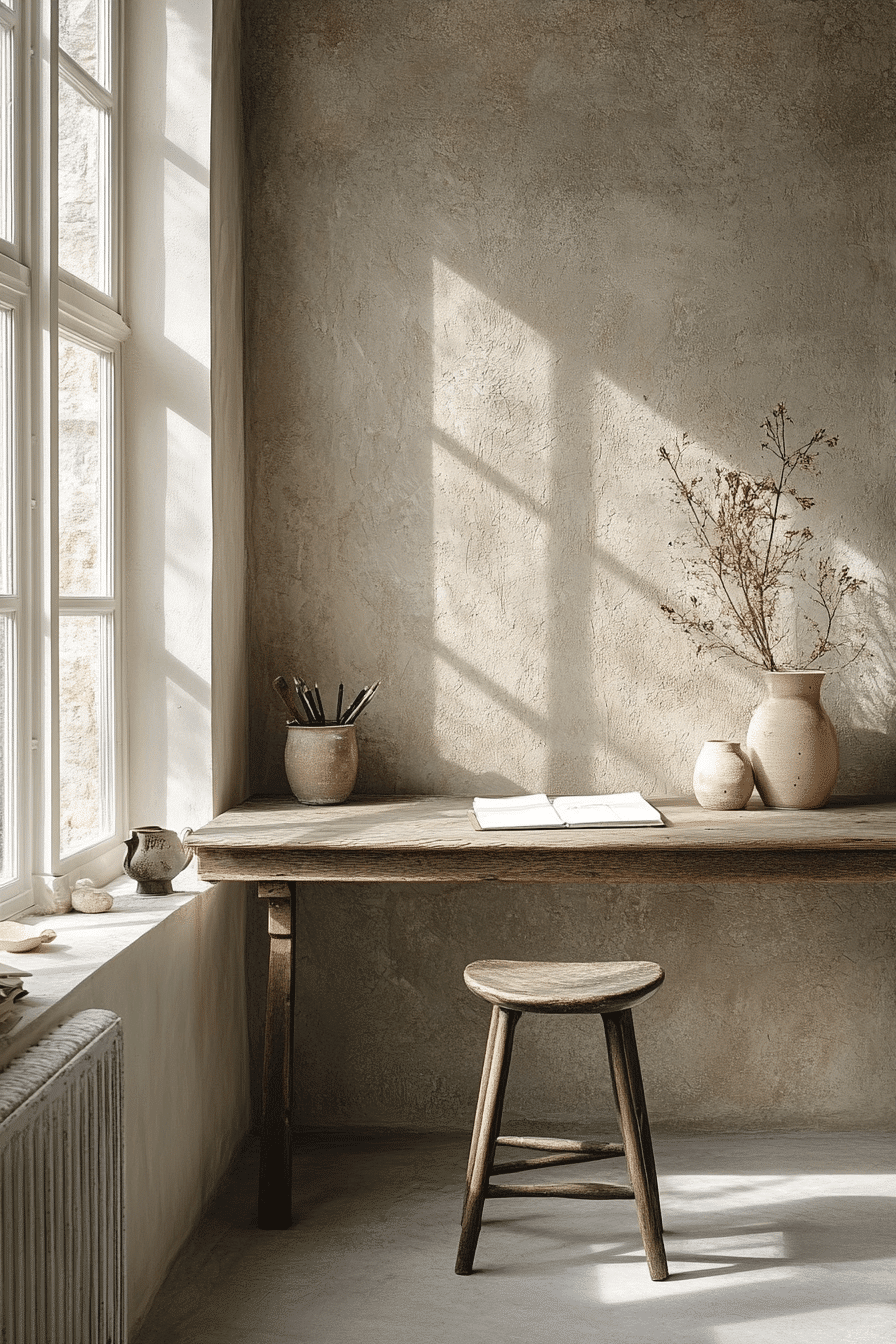
A calm wall—painted in muted, earthy tones—sets a serene tone in the wabi sabi office. Subtle imperfections like brush strokes or uneven texture give it character. The backdrop is meant to relax, not energize, fostering deep focus. This wall works in harmony with quiet decor and minimal furnishings. It anchors the space with presence and intention.
🏠 Steal This Look
- Paint Color: Backdrop Warm Sand WS-240
- Furniture: Minimalist wooden desk with natural grain, low-profile office chair in natural linen, floating wooden shelves
- Lighting: Soft pendant light with paper or linen shade, warm 2700K color temperature
- Materials: Raw wood, natural linen, unfinished plaster, matte finishes, handmade ceramic accents
A calm wall in wabi sabi design celebrates impermanence and imperfection as beauty. This approach transforms your office into a sanctuary that honors both productivity and peace.
11. Faded Hue
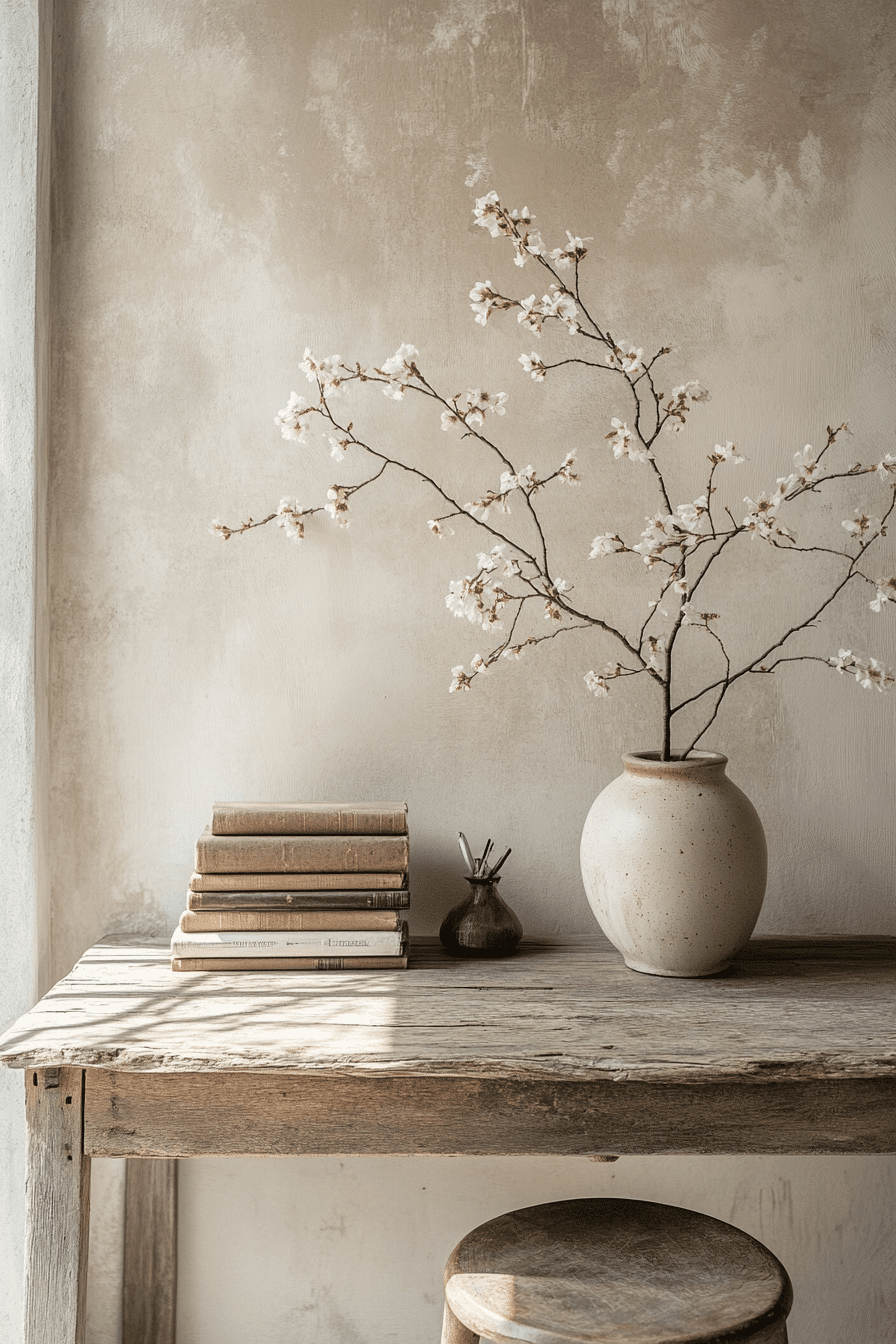
Faded hues bring softness and nostalgia into the wabi sabi office. Gentle washes of color evoke a lived-in, personal environment. The tones aren’t bold but feel emotionally resonant, like sun-bleached linen or worn parchment. These hues reduce visual clutter and help with focus. The subtlety invites prolonged comfort.
🎨 Steal This Look
- Paint Color: Sherwin-Williams Accessible Beige SW 7036
- Furniture: Reclaimed wood desk with soft edges, vintage linen upholstered chair, low floating shelves in weathered oak
- Lighting: Warm brass task lamp with frosted glass diffuser, soft 2700K color temperature
- Materials: Aged linen, weathered wood, soft cotton textiles, matte finishes, worn leather accents
Faded colors transform an office into a sanctuary of gentle focus. They whisper rather than demand, creating space for deep work without the anxiety of perfection—exactly what wabi sabi philosophy brings to a professional room.
12. Concrete Calm

Concrete textures, when softened with matte finishes, embody the wabi sabi office ethos of grounded imperfection. Their subtle inconsistencies create visual intrigue without overstimulation. The cool tone pairs well with warm lighting and simple decor. It’s a contrast that feels sophisticated and peaceful. This setup encourages stillness and presence.
💡 Steal This Look
- Paint Color: Benjamin Moore Concrete Gray HC-165
- Furniture: Minimalist desk in natural wood or light oak with clean lines; low-profile shelving in matte black metal; simple upholstered chair in warm linen
- Lighting: Warm brass or copper pendant light with frosted glass diffuser; desk lamp with adjustable warm-toned bulb (2700K)
- Materials: Polished concrete flooring or concrete-look tiles; matte finish on all surfaces; natural wood accents; linen and wool textiles
Concrete whispers rather than shouts. This is where imperfection becomes your secret weapon—every hairline crack and uneven pour is evidence of authenticity, not failure. Your office becomes a sanctuary for focused work.
13. Silent Corner

A silent corner provides the perfect escape in a wabi sabi office. With low seating, muted textures, and minimal decor, it creates a cocoon of clarity. The space is intentionally quiet—visually and energetically. Each element is subdued yet expressive in texture or tone. It’s designed for pause, reflection, or slow focus.
🖼 Steal This Look
- Paint Color: Farrow & Ball Calluna 270
- Furniture: Low Japanese-style floor cushion seating (zafu), natural wood side table, woven rattan or jute pouf, minimal shelving in light oak or whitewashed wood
- Lighting: Soft ambient floor lamp with linen shade or paper lantern, positioned low to avoid glare and maintain intimate scale
- Materials: Raw linen, unglazed ceramics, natural jute rope, weathered wood, handmade textiles, soft wool blankets
A silent corner honors the Japanese philosophy that empty space is never empty—it holds potential for thought and rest. This is where your office becomes a sanctuary, not just a workspace.
14. Worn Matte
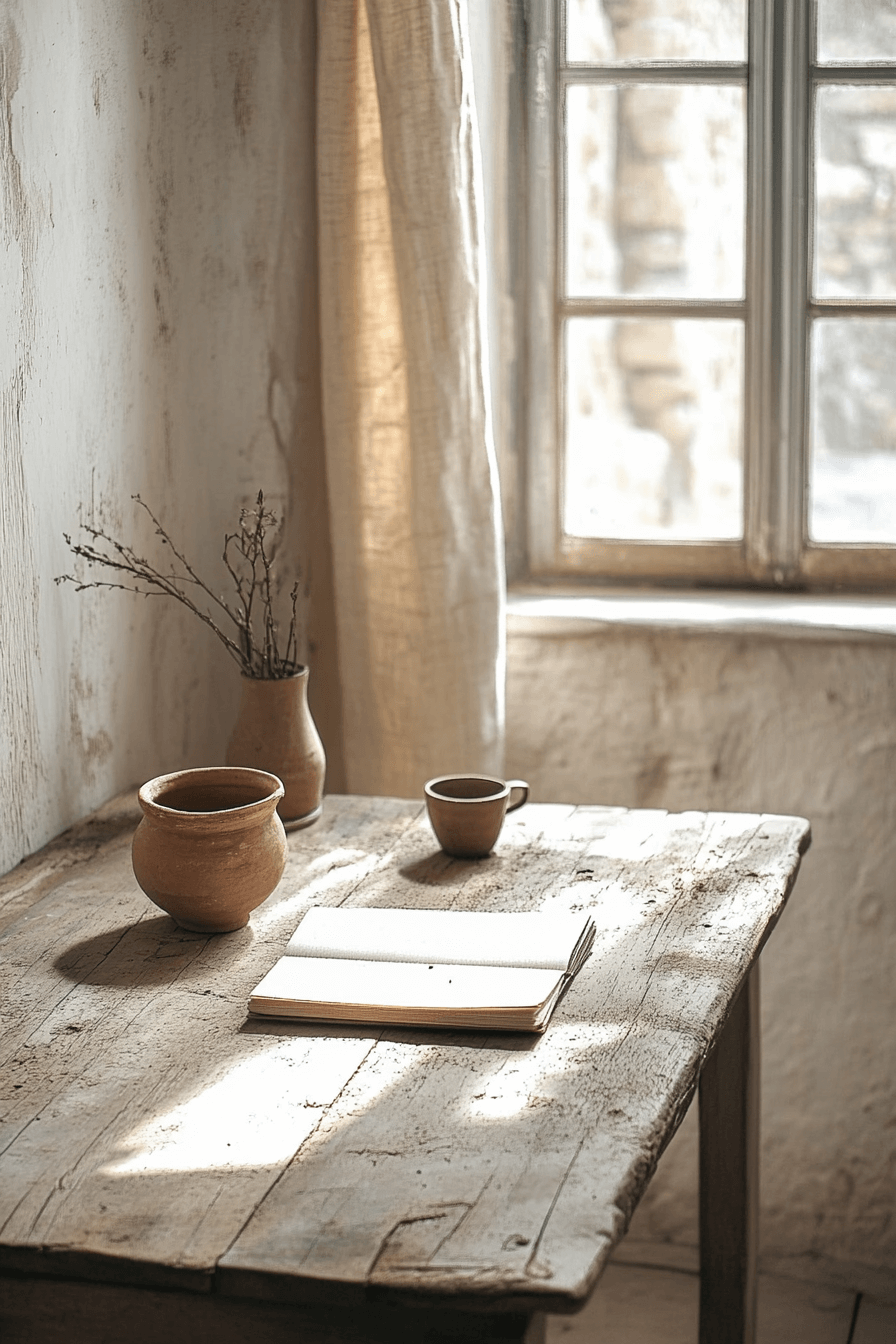
A worn matte surface, whether desk or floor, offers a sense of history in a wabi sabi office. The finish feels soft to the eye and touch. Imperfections enhance the piece’s quiet story. It doesn’t demand attention but invites appreciation. This kind of surface grounds the design in lived experience.
🎨 Steal This Look
- Paint Color: Behr Greige PPU18-11 or Behr Weathered Oak PPU6-12
- Furniture: Matte-finish wooden desk with visible grain and patina; worn wood filing cabinet or shelving unit
- Lighting: Soft warm Edison bulb task lamp with matte metal base; avoids gloss finishes
- Materials: Unfinished or hand-rubbed matte wood, natural linen, worn clay, aged brass accents
A worn matte surface tells a design story that perfection never can. It says your office isn’t staged; it’s inhabited, valued, and real.
15. Taupe Office

Taupe tones offer balanced warmth and neutrality in a wabi sabi office. This soft shade anchors the space without dominating it. It pairs beautifully with textured accessories and rough surfaces. The tone invites calm and works well with both light and shadow. The result is a space that feels intentional and organic.
🎨 Steal This Look
- Paint Color: Valspar Taupe Tone 7003
- Furniture: Low-profile wooden desk with natural grain variations, simple wooden shelving with visible knots, handcrafted ceramic desk organizers, aged leather desk chair
- Lighting: Paper pendant light or linen drum fixture with warm 2700K bulbs to enhance taupe’s soft warmth without creating harsh shadows
- Materials: Raw wood surfaces, unglazed ceramics, linen, rough-woven textiles, aged brass or weathered metal accents
Taupe is the quiet backbone of wabi sabi—it doesn’t demand attention but creates the perfect canvas for intentional, time-worn pieces. This palette whispers rather than shouts, making it ideal for a focused, contemplative workspace.
16. Clay Finish

A clay finish on walls or surfaces delivers earthy authenticity in a wabi sabi office. The texture is slightly uneven, echoing the imperfections of natural materials. The muted tone offers calmness and focus. When paired with minimalist furniture, it becomes a contemplative retreat. The overall effect is grounding and warm.
🖼 Steal This Look
- Paint Color: PPG Balanced Beige PPG1088-3
- Furniture: Minimalist desk in natural wood or pale ash; simple wooden chair with woven seating; low floating shelves in unstained oak
- Lighting: Warm brass or bronze task lamp with linen shade; soft pendant fixture with diffused warm light
- Materials: Clay plaster or textured earth-tone wall finish; raw wood surfaces; linen; natural fiber rugs; unglazed ceramic accents
Clay finishes in an office create a deeply calming workspace that honors natural imperfection. This approach transforms a functional room into a contemplative sanctuary where work feels intentional rather than sterile.
17. Soft Imperfection
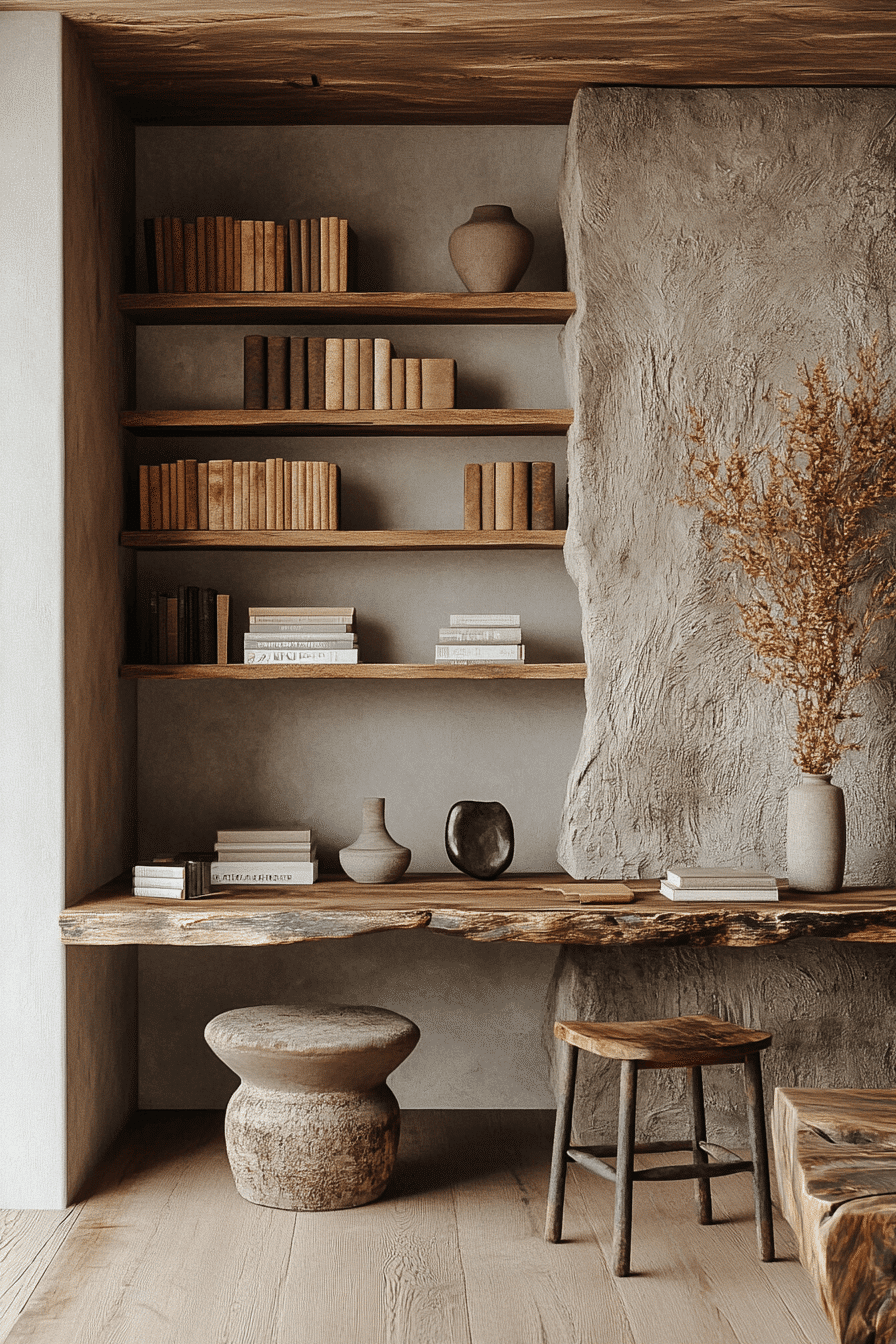
The beauty of soft imperfection defines the wabi sabi office. This design includes uneven lines, frayed edges, and handmade textures. Each item has character and tells a quiet story. These imperfections invite presence and appreciation. The result is a space that embraces the real over the perfect.
★ Steal This Look
- Paint Color: Dunn-Edwards Accessible Beige DE 6190
- Furniture: Reclaimed wood desk with natural edge, hand-turned wooden chair with visible grain, weathered shelving with uneven surfaces
- Lighting: Paper or linen pendant with organic, slightly asymmetrical shape; warm Edison bulb for soft glow
- Materials: Raw linen, natural wood with visible knots and grain, unglazed ceramic, hand-thrown pottery, jute, aged brass
Wabi sabi offices reject the polished corporate aesthetic in favor of humble, handmade authenticity. This approach transforms an office into a meditative space where imperfection becomes the whole point.
18. Sand Palette

A sand palette of light beiges, grays, and creams enhances the gentle flow of a wabi sabi office. These tones feel sun-warmed and calming. They work together to create cohesion without sharp contrasts. Paired with rough or matte textures, the space becomes deeply comforting. It’s a palette that breathes simplicity.
💡 Steal This Look
- Paint Color: Clare Paint Natural Linen NL-100
- Furniture: Low-profile wooden desk in light oak or reclaimed wood with simple joinery; natural fiber area rug in jute or sisal; simple wooden shelving with visible grain
- Lighting: Soft diffused pendant or hanging paper lantern in cream linen; warm brass or bronze fixtures for gentle task lighting
- Materials: Raw wood, unfinished plaster, linen, jute, raw cotton, matte ceramics, rough-hewn stone accents
A sand palette office is where imperfection becomes your competitive advantage. This isn’t minimalism for its own sake—it’s creating a space where worn edges, visible wood grain, and soft shadows make you feel held rather than sterile.
19. Clean Niche

A clean niche carved into a wall provides focused calm in a wabi sabi office. The simplicity of its form encourages presence. With soft lighting and minimal objects, it becomes a pocket of intention. The niche symbolizes containment and clarity. Its design balances utility with beauty.
🌟 Steal This Look
- Paint Color: Fine Paints of Europe Shades White 2017
- Furniture: Floating wooden shelf (natural wood, 12-18″ deep) for niche interior; optional low platform base in natural materials
- Lighting: Recessed warm LED spot light (2700K, 50W equivalent) positioned above niche opening
- Materials: Raw plaster or limewash wall finish; untreated wood shelf; natural stone or clay vessel for niche object
A recessed niche transforms a blank wall into a meditative anchor point—it’s like creating a small shrine to presence itself. In a wabi sabi office, this pocket of intentional emptiness paradoxically creates focus and calm.
20. Off White
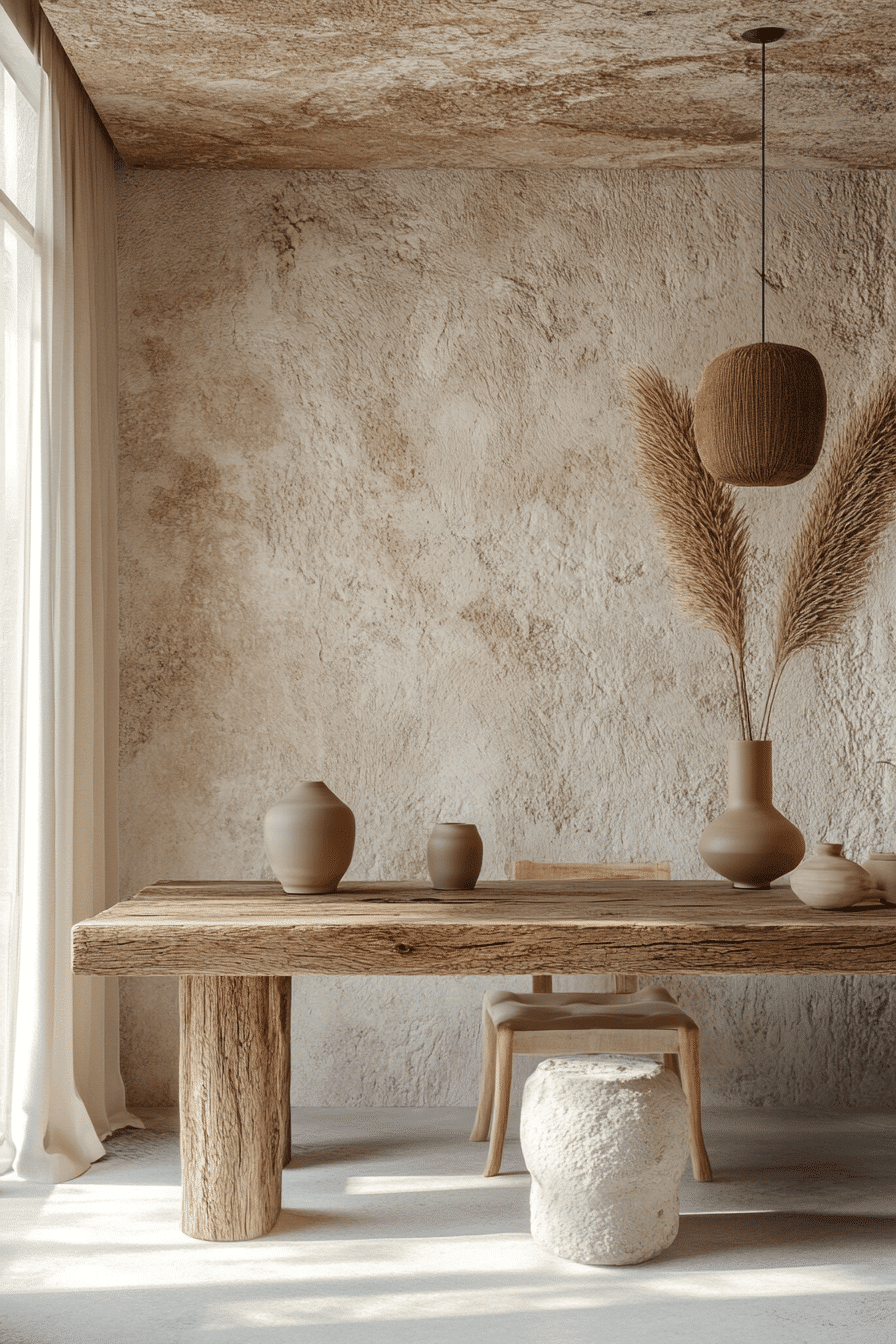
Off white creates a soft glow in a wabi sabi office without the sterility of true white. Its subtle warmth makes the space feel lived-in and open. Slight variations in tone or finish add character. It acts as a backdrop for the quiet story of the room. This shade complements natural textures beautifully.
🏠 Steal This Look
- Paint Color: Backdrop Off-White OW-100
- Furniture: Reclaimed wood desk with natural grain, low-profile wooden shelving, worn leather desk chair, simple wooden file cabinet
- Lighting: Warm brass or bronze task lamp with linen shade, positioned asymmetrically on desk
- Materials: Raw wood, natural linen, aged leather, unfinished plaster, matte ceramics, jute
Off-white is the wabi sabi office’s greatest secret weapon—it honors impermanence and quietness while keeping the space breathable and calm. It’s the color of aging paper, natural linen, and spaces that have earned their softness through use.
21. Neutral Grain
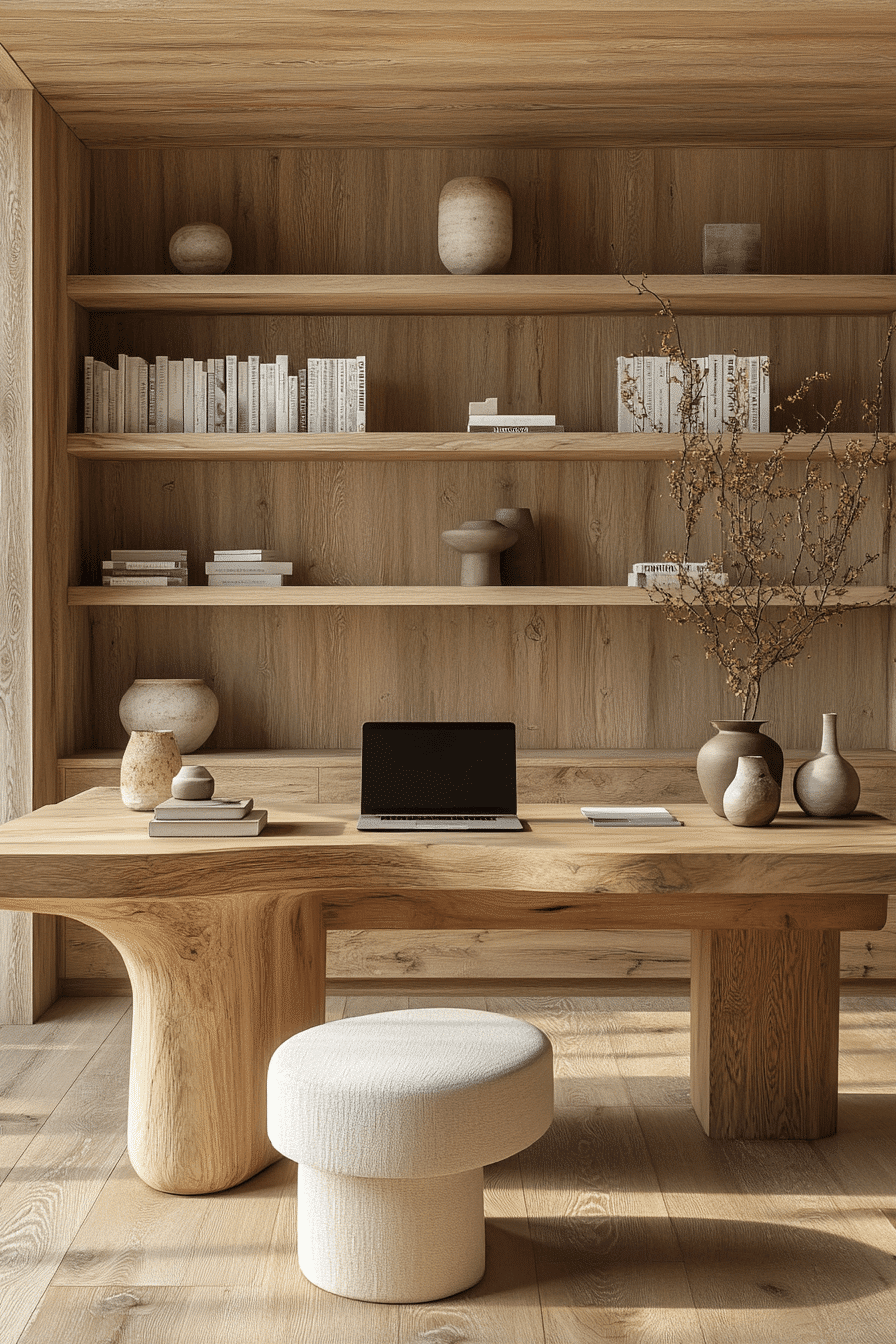
Neutral wood grain surfaces give a natural rhythm to a wabi sabi office. The visible lines offer a grounding texture. Light and shadow play softly across the grain. It creates a soothing, earthy atmosphere that encourages stillness. This texture harmonizes with other quiet design choices.
🎨 Steal This Look
- Paint Color: Sherwin-Williams Accessible Beige SW 7036
- Furniture: Natural wood desk with visible grain, unfinished wood shelving, raw wood storage cabinets
- Lighting: Warm brass floor lamp with linen shade, soft diffused task lighting
- Materials: Exposed wood grain, natural wood veneer, raw timber edges, matte wood finishes
Wabi sabi celebrates imperfection and aging, so the more visible the wood’s natural variations and grain patterns, the more peaceful your office becomes. This approach turns utilitarian surfaces into meditative focal points.
22. Fuzzy Shadows

Fuzzy shadows created by diffused lighting add softness to the wabi sabi office. They create depth without drama and make the space feel safe. Shadows highlight textures in walls, fabrics, and surfaces subtly. The absence of harsh lines contributes to tranquility. This lighting approach supports a meditative working environment.
🌟 Steal This Look
- Paint Color: Benjamin Moore Hale Navy HC-143
- Furniture: Low-profile wooden desk with natural grain, simple linen upholstered chair, floating shelves in reclaimed wood
- Lighting: Frosted glass pendant lights or silk drum shade fixtures with warm 2700K bulbs for diffused glow
- Materials: Raw linen, unfinished wood, plaster walls, natural fiber rugs, raw silk
Fuzzy shadows are the quiet poetry of wabi sabi lighting—they don’t demand attention, they invite contemplation. This gentle interplay between light and shadow transforms an office into a sanctuary where focus feels effortless.
23. Pure Form
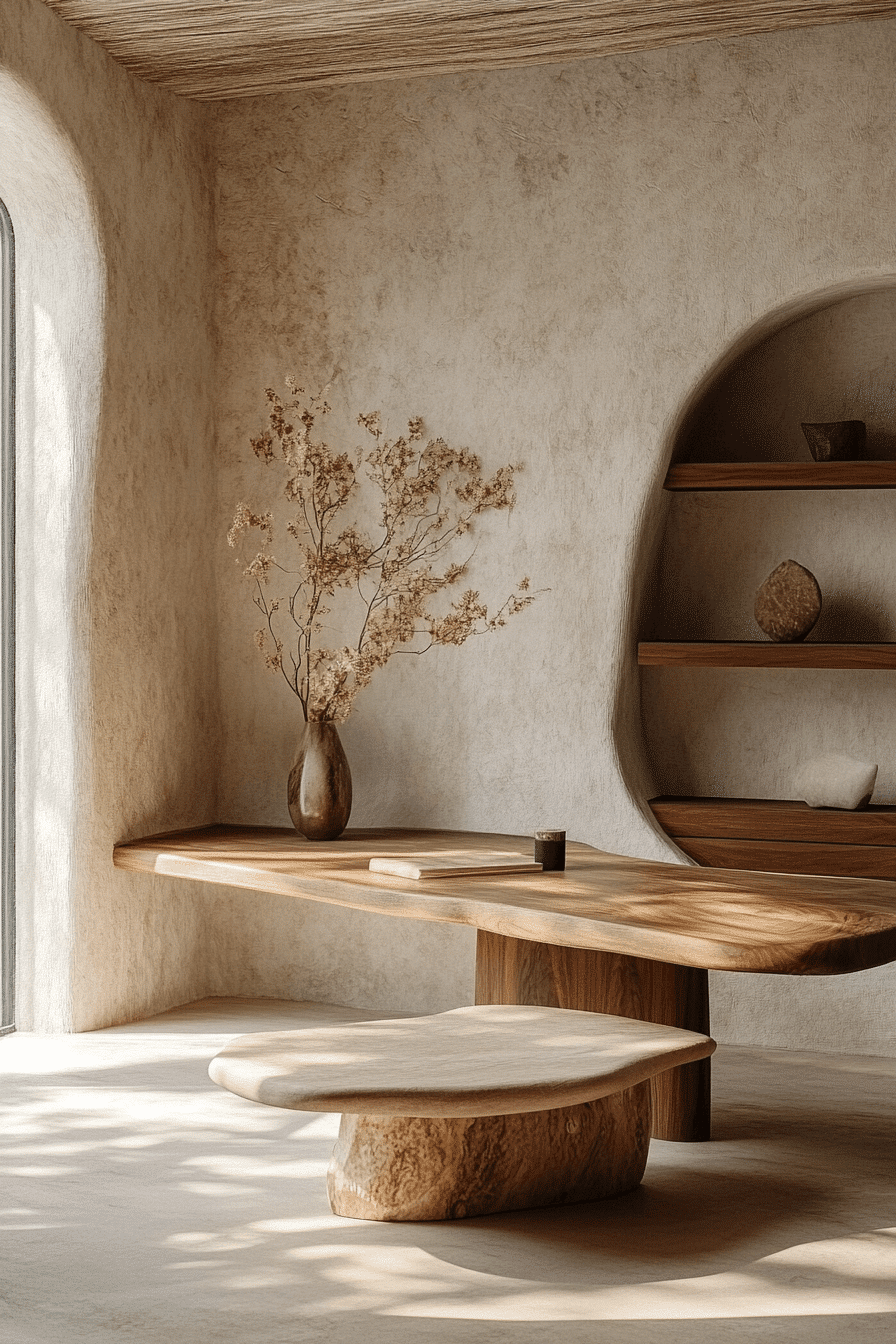
Pure form refers to simple, unembellished furniture in a wabi sabi office. The focus is on shape and proportion, not decoration. These forms allow space to breathe and energy to flow. Minimal materials add elegance without excess. The result is a humble yet refined workspace.
🖼 Steal This Look
- Paint Color: Farrow & Ball Calluna 230
- Furniture: Solid wood desk with clean lines (ash or oak), minimal four-leg chair in natural wood, floating shelves in unfinished timber, simple storage cabinet without ornamentation
- Lighting: Single pendant with matte brass or ceramic shade, minimal arm—no pattern or detail
- Materials: Natural wood grain, unfinished plaster, concrete, linen, raw metal accents, clay ceramics
A pure-form workspace strips away distraction, leaving only what serves your focus. This isn’t minimalism for aesthetics—it’s a philosophy that respects the quiet power of unadorned wood and space.
24. Soft Declutter
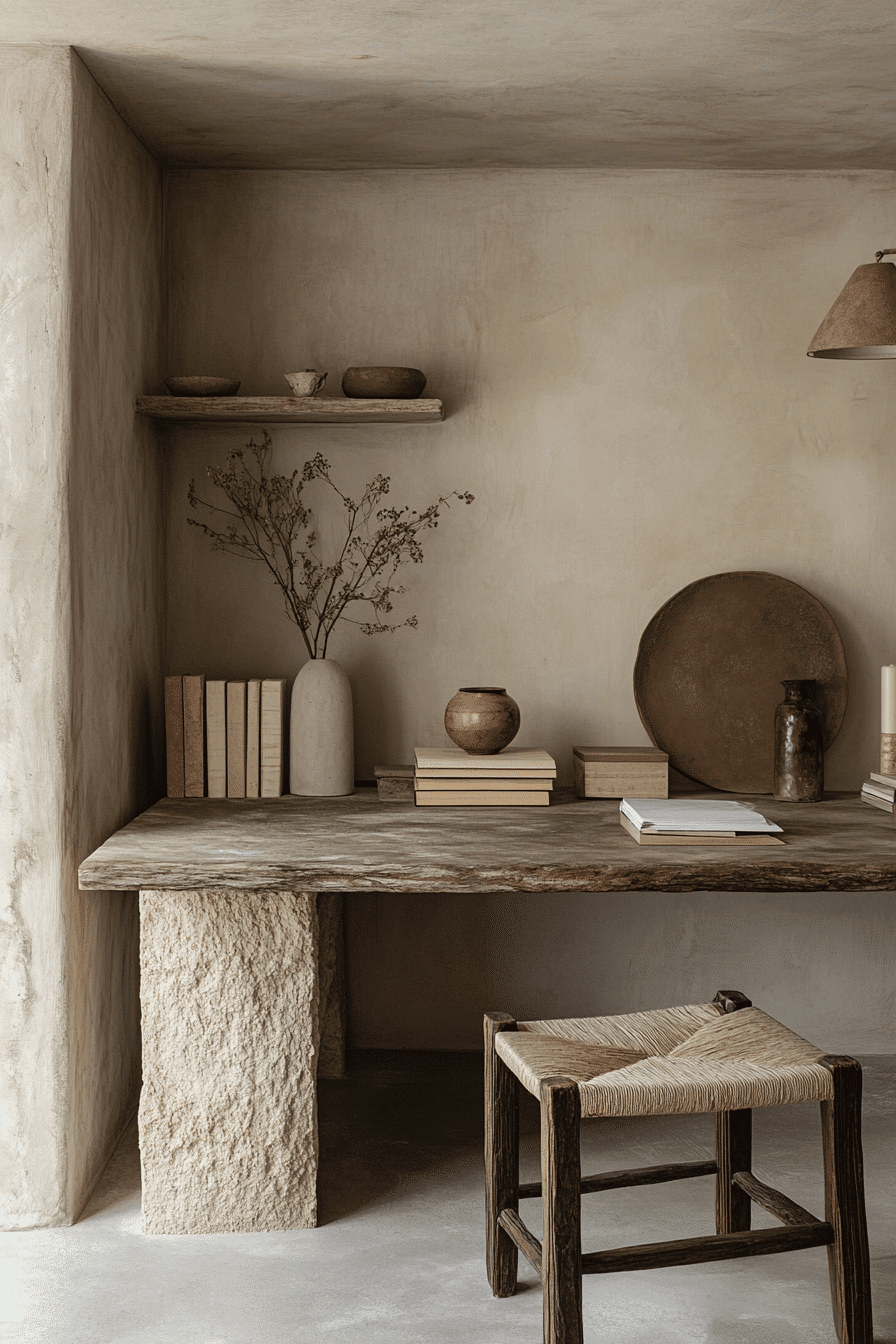
A soft declutter approach keeps the wabi sabi office tidy without harsh minimalism. Objects are few but meaningful, and textures do the visual work. The result is both clean and cozy. This style is about harmony, not strict control. Every element contributes to ease and clarity.
★ Steal This Look
- Paint Color: Behr Wheat Bread PPU7-14
- Furniture: Low-profile wooden desk with natural grain, simple chair with woven seat, floating shelves in reclaimed wood
- Lighting: Paper or linen pendant light with warm diffusion, avoiding harsh overhead fixtures
- Materials: Natural wood, raw linen, unfinished ceramics, woven fibers, soft cotton textiles
Soft decluttering is decluttering with soul. You’re not erasing yourself from the space—you’re curating only what matters, letting texture, patina, and natural materials carry the visual weight that excess objects once did.
25. Subtle Shade
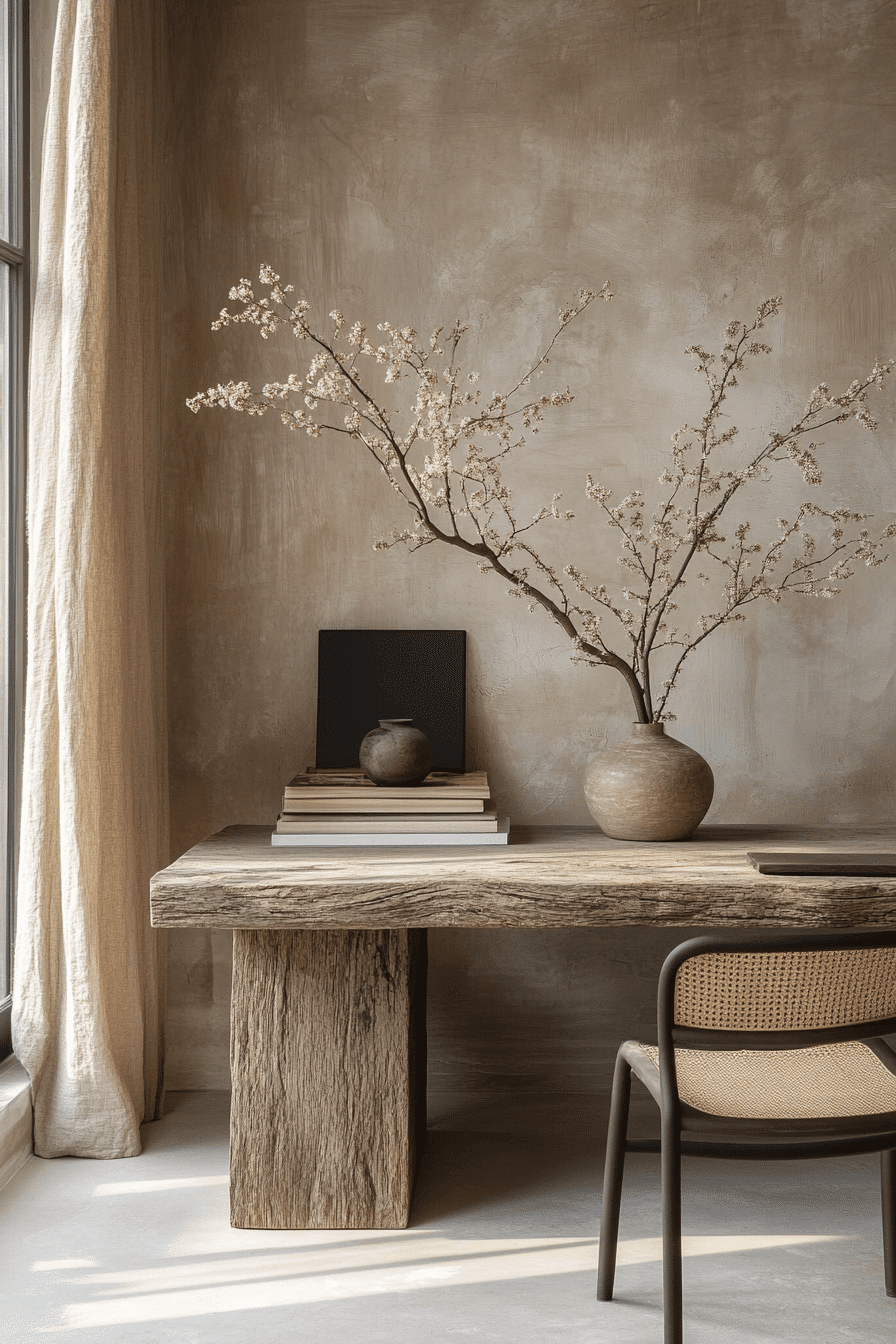
Subtle shade refers to nuanced tones like mist gray, oatmeal, or warm ash in the wabi sabi office. These shades shift with the light, creating quiet beauty. They foster an atmosphere of ease without monotony. Used on walls, fabrics, or furniture, they provide continuity. It’s a timeless palette that supports serenity.
🎨 Steal This Look
- Paint Color: Valspar Hazy Skies 7001-6
- Furniture: Raw wood desk with natural grain, linen upholstered chair in oatmeal, floating shelves in weathered oak
- Lighting: Soft brass pendant with frosted glass or paper shade; warm 2700K bulbs
- Materials: Linen, raw wood, natural stone accents, unglazed ceramics, cotton canvas
These gentle, shifting tones are the heart of wabi sabi—they celebrate imperfection and the passage of time. A mist gray office wall becomes almost alive, breathing with morning light and evening shadow.
26. Ash Workspace

Ash-toned wood brings quiet elegance into the wabi sabi office. The soft grain and cool tint offer a contemporary but earthy vibe. It’s versatile enough for walls, desks, or shelving. The finish feels natural and softly refined. This material anchors the space without overpowering it.
✎ Steal This Look
- Paint Color: PPG Balanced Beige PPG1029-2
- Furniture: Ash wood desk with clean lines, ash veneer floating shelves, ash wood office chair with natural finish
- Lighting: Warm brass or matte black task lamp with linen shade for diffused light
- Materials: Ash wood grain (primary), natural linen, soft metals, unfinished concrete or light stone accents
Ash wood embodies wabi sabi perfectly—its subtle imperfections and soft color palette create a workspace that feels grounded without being austere. This approach turns your office into a sanctuary for focused work, not just a task station.
27. Quiet Zone

A quiet zone is a dedicated area in the wabi sabi office for rest or slow focus. It might include a floor cushion, soft lighting, and a minimal shelf. The zone feels like a pause button within the workspace. Materials are subdued and comforting. It’s a balance of presence and peace.
🌟 Steal This Look
- Paint Color: Dunn-Edwards Accessible Beige DE6129
- Furniture: Low floor cushion in natural linen, minimal wooden shelf in light oak or ash, simple meditation bench
- Lighting: Warm dimmable pendant light (2700K) or soft brass floor lamp with frosted diffuser
- Materials: Raw wood, natural linen, woven rattan, unglazed ceramic, soft wool felt
A wabi sabi quiet zone isn’t about perfection—it’s about permission. The worn cushion, the faded wood, the imperfect shadows all whisper that rest is as valuable as productivity, right there in your workspace.
28. Pale Neutral

Pale neutrals make a wabi sabi office feel expansive and light. These tones reflect daylight gently while warming up under artificial light. The overall mood is spacious, not stark. Subtle textures keep the design from feeling flat. The result is clarity without coldness.
✎ Steal This Look
- Paint Color: Clare Paint Linen White LW
- Furniture: Natural wood desk with visible grain, low-profile shelving in light oak or ash, linen upholstered office chair in cream
- Lighting: Warm brass or warm white pendant light with linen or paper shade; desk lamp with warm 2700K bulbs
- Materials: Linen, raw wood, soft cotton, plaster finishes, unglazed ceramic, natural fiber area rug
Pale neutrals in a wabi sabi office create a sanctuary for focus—the lightness invites clarity while natural materials ground the space in intention. It’s minimalism with soul, not minimalism with cold.
29. Calm Geometry
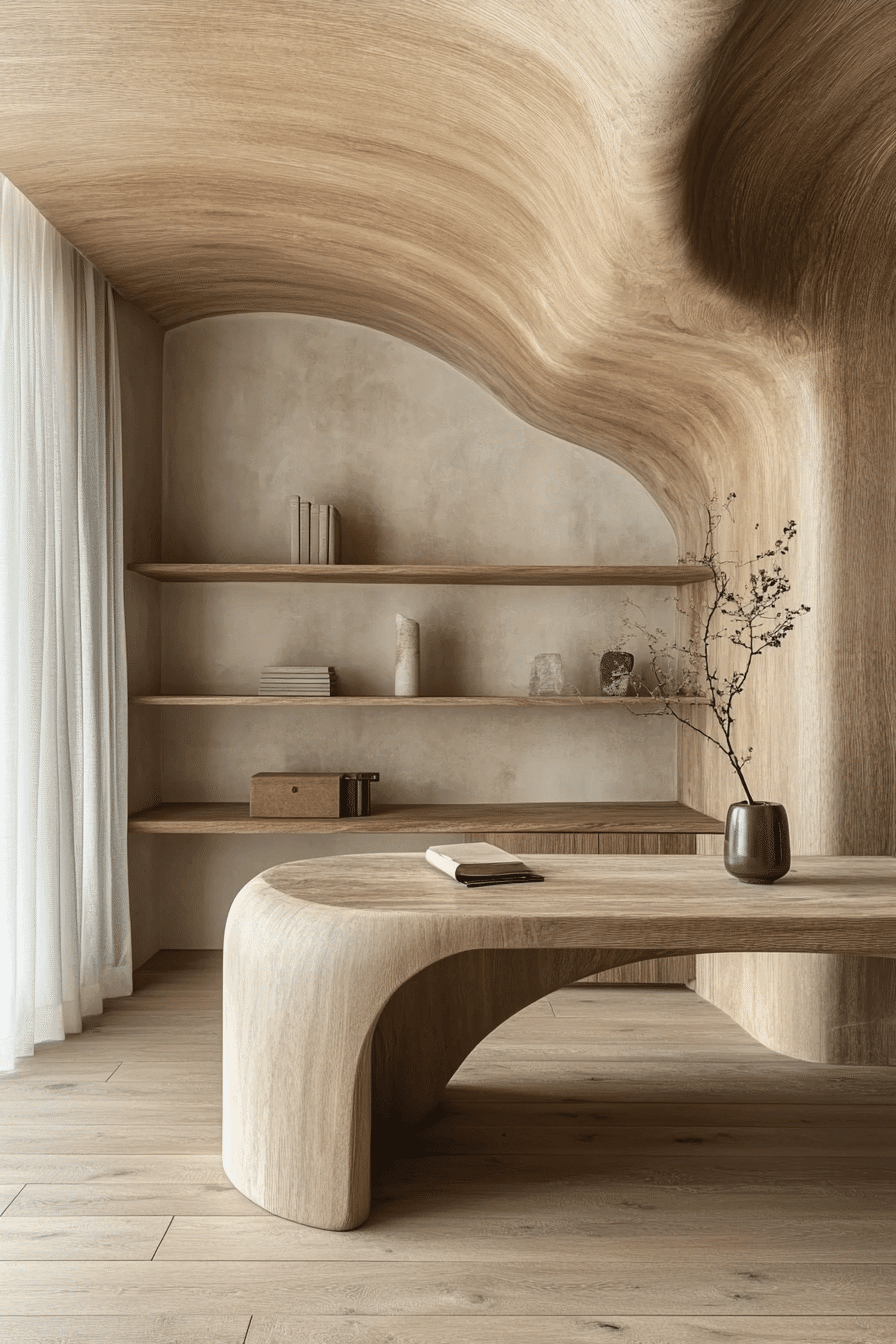
Calm geometry refers to soft, simple shapes in the layout of a wabi sabi office. Rounded edges, balanced spacing, and clean lines create harmony. Nothing feels overly rigid or aggressively designed. This balance allows the mind to settle. It’s a peaceful structure that supports creativity.
The calm comes from using fewer things. Leave the wood bare.
🖼 Steal This Look
- Paint Color: Fine Paints of Europe Farrow & Ball Pointing PE-2804 (warm greige with soft undertones that supports calm geometry)
- Furniture: Low-profile desk with rounded corners, natural wood filing cabinet with curved edges, simple geometric shelving unit with soft lines, minimal office chair with organic form
- Lighting: Soft diffused pendant light with simple geometric shade, warm 2700K color temperature to enhance calm atmosphere
- Materials: Natural wood grain, linen upholstery, handmade ceramic accents, raw plaster or matte finish surfaces, undyed wool textures
Calm geometry is about releasing perfection and embracing the beauty of soft, breathing space. A wabi sabi office with rounded edges and balanced emptiness becomes a sanctuary where your mind naturally quiets and creative work flows more easily.